Somewhere in Kiama, a small seaside town on the New South Wales coast, a library book spent 150 years bricked inside a fireplace inside a tea crate. The book, Antiquities of Athens, was found during home renovations by Ross Simmons, who suspects his great-great-grandfather John Simmons, was the original borrower.
Understandably, John was not available to confirm this or to explain his architectural approach to overdue fees. The accumulated fine, calculated with inflation, sits at around $19,500, which is the most expensive act of literary procrastination in recorded Australian history.
If the book could report on its 150 years in the dark, the first thing it would probably note is that it left a very different world and came back to a completely alien one. When it was last held by human hands, the people reading it did so by gaslight. Queen Victoria was on the throne. The telephone had not been invented yet. Darwin had published On the Origin of Species only thirteen years earlier and was still causing considerable upset at dinner parties.
The book went into that fireplace in a world that was entirely analogue, certain of its own social order, and blissfully unaware of what was coming. It came out into a world of mobile phones and streaming services and a library that, in the intervening century and a half, had transformed itself into something its founders would find completely bewildering. The card catalogue is gone, and the silence is often negotiable.
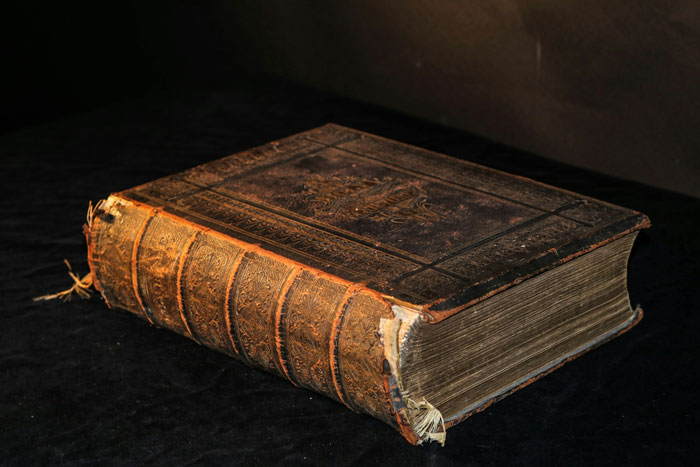
Danika Perkinson / Unsplash (not the actual photo)
The little book that came home
Ross Simmons, 77, is not the kind of man who loses sleep over library fines. “I’ve spent a lifetime dealing with irate customers and being irate with customers myself,” he told the Associated Press. “Just stick to your guns and say, ‘ Do your worst.” It is an amicable attitude for someone returning a book on behalf of a great-great-grandfather who has been beyond the reach of consequences since the nineteenth century.
The book itself, Antiquities of Athens, was published in 1858 and was item number 506 in the Kiama library’s original collection of around 1,000 books. The library opened in 1872, and Michelle Hudson, the library manager who received the return last week, suspects it disappeared within the first few years of opening.
It came back with water damage from its decades in the fireplace, but intact enough to display. “We’ve never had anything that old come back to us,” Hudson said. It will now live in the local history collection, permanently retired from circulation. “We’re not going to allow it to go back out again. We don’t want to wait another 150 years for this book to be returned.”
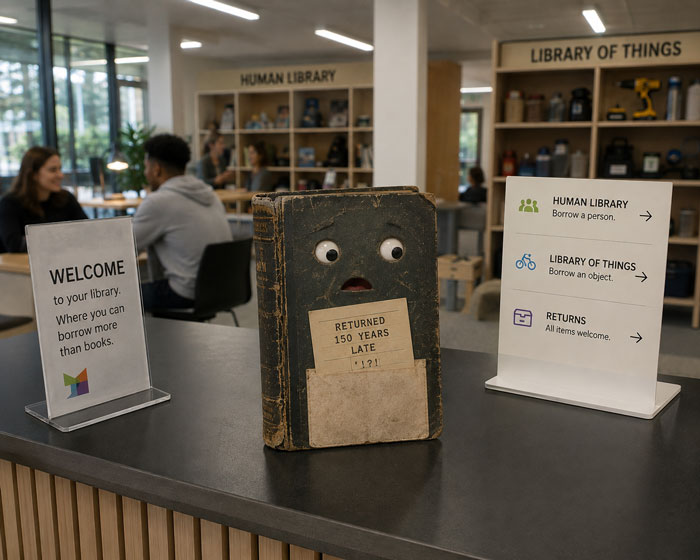
boredpanda (not the actual photo), ai-generated image
The rules printed on the inside cover of the book offer a window into what libraries were in 1872.
Libraries were gatekeepers in the most literal sense, institutions that decided who deserved access to knowledge and under what conditions they could have it.
Luckily for Ross, the fine has been waived. And luckily for others, the proof of literacy requirement has not been enforced for some time. The building that once guarded its 1,000 books behind a strict code of conduct is now doing something that would have been completely incomprehensible to John Simmons and his contemporaries.
Amazon, Kindle, TikTok, Italian brainrot, all part of the bigger problem that is trying to kill the public library system. The last time any of us saw the inside of a library was when Carrie Bradshaw tried to get married in one. That didn’t last long either.
People these days are all doing performative reading for an aesthetically pleasing picture, and Instagram even introduced a “Reading” panner to your profile so you can humble brag about your current obsession. But libraries are barely staying afloat, and have been cornered into getting creative.
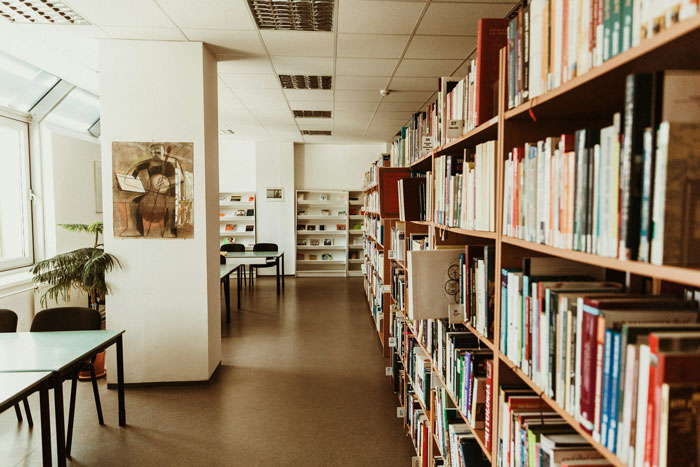
Trnava University / Unsplash (not the actual photo)
The library is not just for books anymore
Across the United States, the United Kingdom, Europe, and beyond, public libraries have been undergoing a transformation that has very little to do with their original purpose and everything to do with redefining what a public resource can be. The Library of Things movement, which began gaining traction in the early 2010s, starts from a simple premise: if a library can lend a book that most people will read once, it can lend anything that most people will use occasionally and cannot justify buying outright.
The results have been more interesting than the premise suggests. The Wellcome Collection in London lends out microscopes. Libraries across California lend seed packets to gardeners who return seeds from their harvest at the end of the season, creating a self-replenishing living collection. The Sacramento Public Library operates a tool lending programme that has been running for decades and includes everything from power drills to tile saws.
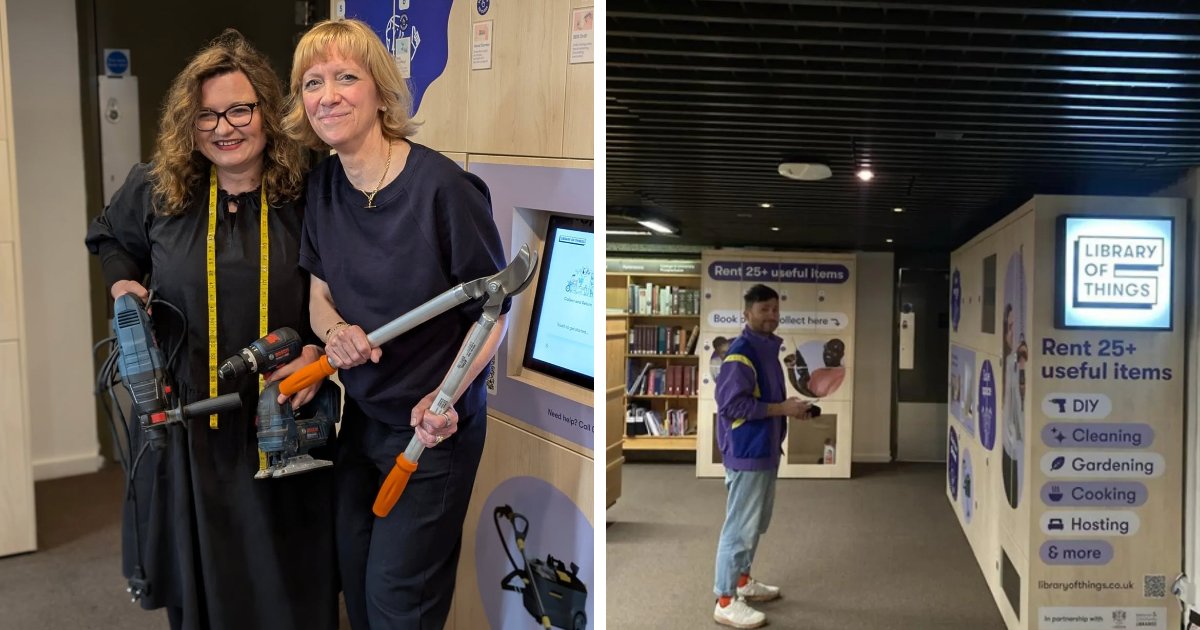
library.of.things, library.of.things
Libraries in Finland (obviously the Scandinavians have to do it better), lend sewing machines, musical instruments, and 3D printers. The Martin Luther King Jr. Memorial Library in Washington, DC lends out cake tins, because you are only going to bake a cake in the shape of an ogre once. The Palafrugell Library near Barcelona has even experimented with lending out art.
The economic logic is straightforward. A library distributes the cost of ownership across an entire community, making things accessible to people who could not justify the individual expense. A power drill sits unused for 95% of its life in the average household. A library drill is in use constantly. The same principle that made book lending revolutionary in the nineteenth century applies to cake tins and circular saws in the twenty-first, and the libraries that have understood this have become the most useful buildings in their neighbourhoods.
Socialism is looking pretty good right about now…
Christina Birkinbine / Wikipedia
The Human Library is taking it even further
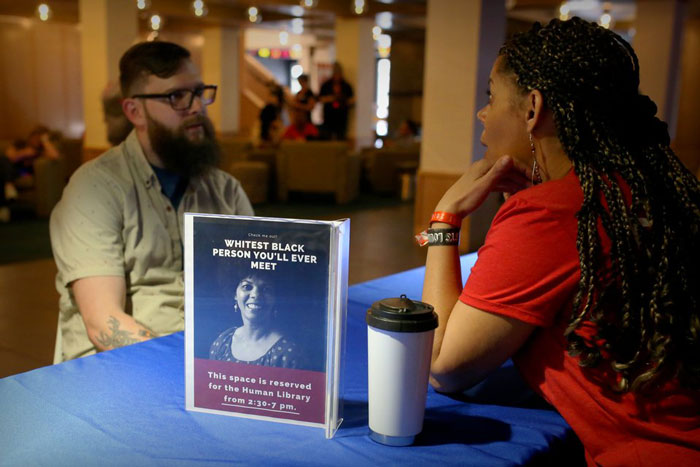
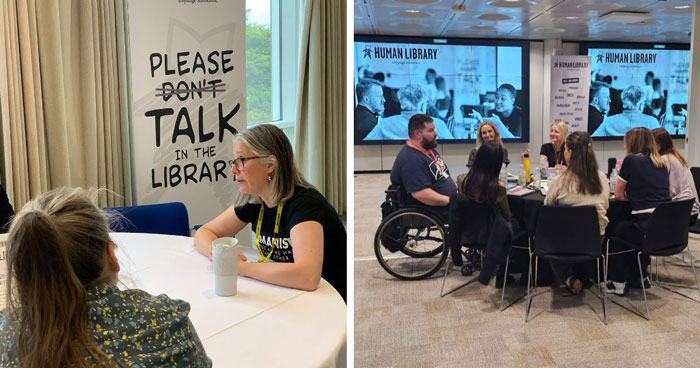
If lending objects stretched the definition of what a library could be, the Human Library movement broke it open entirely. Founded in Copenhagen in 2000 by Ronni Abergel, the concept is exactly what it sounds like. People volunteer to be borrowed. A reader books a thirty-minute conversation with a human book, someone whose life experience, identity, or perspective they would not ordinarily encounter, and the library facilitates the exchange.
Human books have included refugees, people living with mental illness, members of religious minorities, former gang members, people with unusual careers, and individuals whose visible difference tends to generate assumptions that a conversation can dismantle. The premise is that prejudice survives most effectively in the absence of personal contact, and that a thirty-minute conversation with an actual person is more effective at challenging a fixed idea than any written argument.
humanlibraryorganization / Instagram
The Human Library now operates in over 85 countries. It has been hosted in public libraries, universities, corporate offices, and festivals. It has no physical collection, no catalogue in any traditional sense, and no late fees. What it shares with the institution that inspired it is the core belief that access to perspectives and knowledge should be democratised, that the barriers between people and the information they need should be as low as possible.
John Simmons bricked a book about Greek antiquities into his fireplace in 1872, possibly because he could not face the fine, possibly because he simply wanted to keep it. Either way, he was operating in a world where books were scarce, and access was very restricted. Knowledge sat behind institutional gates that not everyone could open. The library he borrowed from had 1,000 books and strict sobriety rules about who deserved them.
The library that received his great-great-grandson last week has seed libraries, tool collections, and programmes where you can borrow a human being for a conversation that might change how you see the world. Antiquities of Athens will sit in its display case and watch all of this happen, which seems like a worthy retirement for a book that has already seen more than most.

Jonathan Francisca / Unsplash (not the actual photo)
Libraries might be the answer to all our problems
Kiama Library now runs a preservation station where you can digitise your childhood VHS tapes and photos. You can play Dungeons and Dragons and borrow toys and seeds. Libraries across the globe are trying every trick in the book to stay alive, and it seems to be working. It seems librarians have been the heroes we all needed, the ones bringing us back to basics as a community in a world where we are becoming increasingly disjointed.
Rachel Noorda, Ph.D, and Kathi Inman Berens, Ph.D did a study on how Gen Z uses libraries, and it was quite surprising. A generation constantly being mocked for their chronic online behaviour is suddenly drawn back into the warm embrace of the library. They trust librarians for recommendations because they won’t be fed the same stale suggestions from the algorithm mill. They noted a 36% increase over a 3-year period in Gen Z people who get their book recommendations from the library.
“The rise in trust in librarians and visits to libraries may be connected to the increased wariness of Gen Z toward social media and influencers,” they write. “This rise in Gen Z identifying as readers indicates that libraries are already doing great work in creating social community-based spaces that Gen Z recognize as valuable.” Suddenly it’s cool to be part of something again, and analog is becoming king. Seems like Gen Z is taking a little more than just fashion inspo from the 90s. Does this mean we are on our way back to landlines?
So don’t be scared of the late fees! Take back your book, check out a power tool, and learn a thing or two about the weird person across the room. They might just have a story worth hearing.
 Follow Us