Birthdays are complicated enough when there’s only one teenager involved. Add a twin, two sets of friends, competing plans, and the rapidly developing desire to have a life that feels like your own, and suddenly choosing between one cake and two becomes a surprisingly serious parenting decision.
That tension sits at the heart of this story. The issue wasn’t really about balloons, party games, or whether there should be two birthday cakes. It was about what happens when twins reach an age where being “the twins” starts to feel less important than being recognized as two separate people with different friendships, interests, and boundaries.
Raising twins is like parenting on hard mode with two birthdays, two personalities, two sets of opinions, and twice as many chances to hear something is not fair

Flowo / Magnific (not the actual photo), ai-generated image

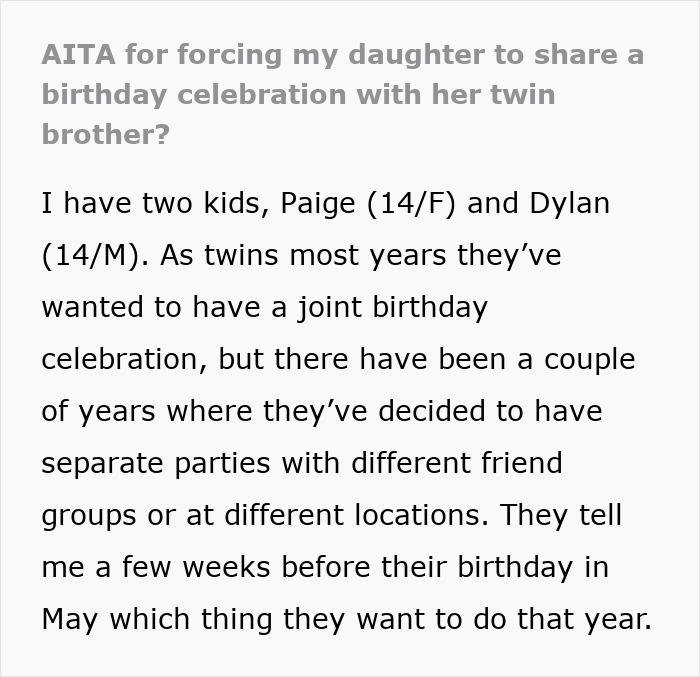
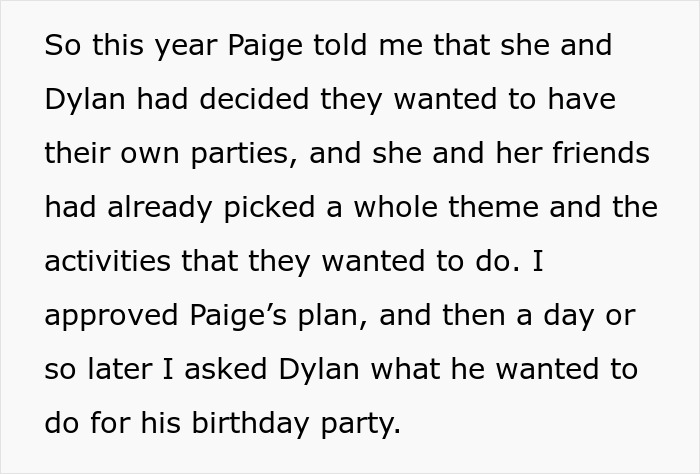
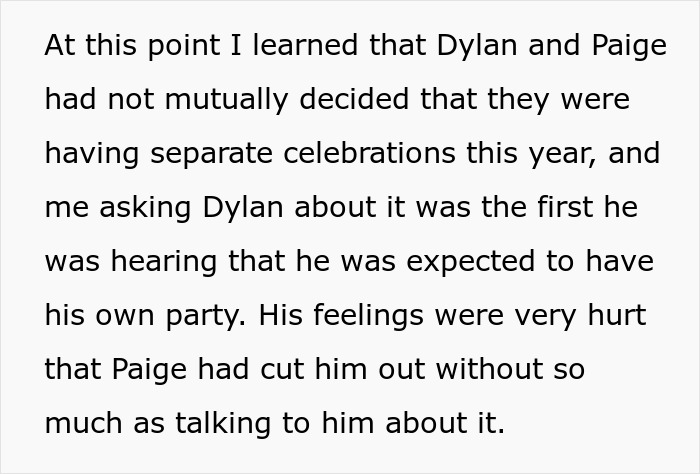
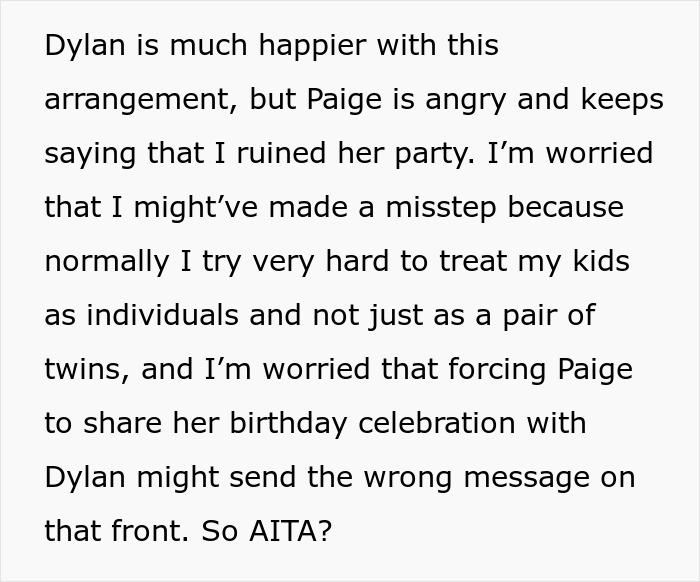
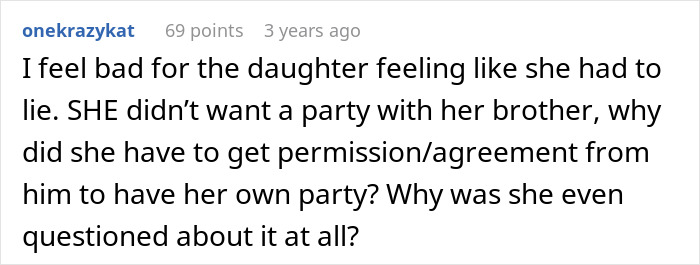
The woman’s daughter told her mom that she and her twin brother had agreed to have separate birthday parties, whereas the brother had never been consulted

fromkazanwithlove / Magnific (not the actual photo)
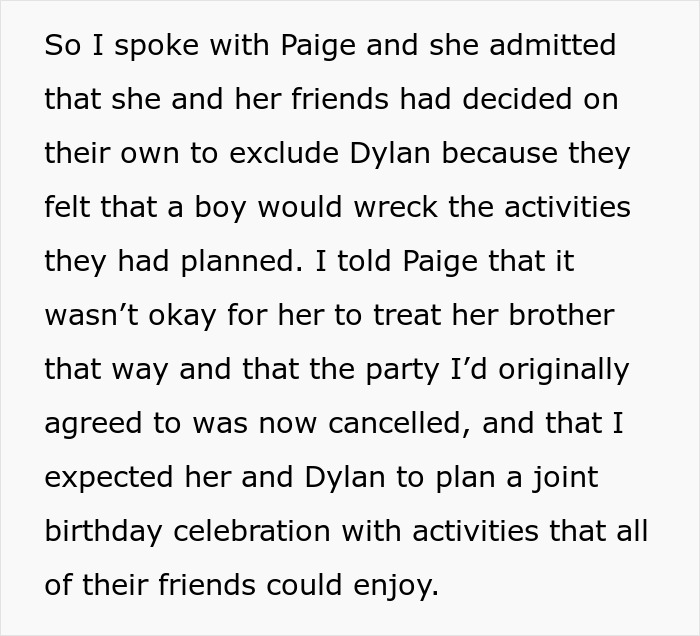
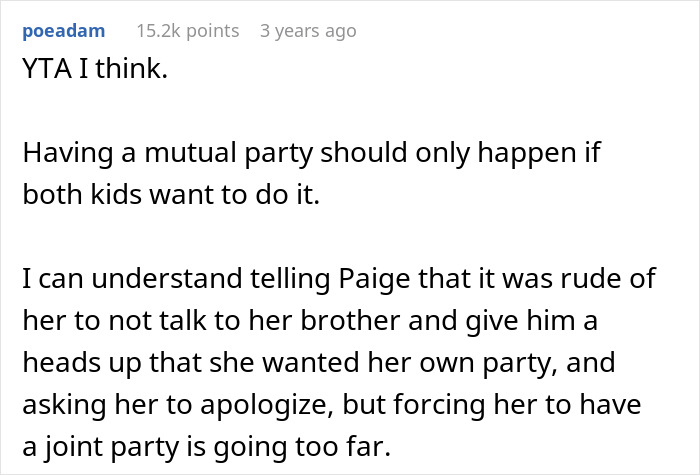
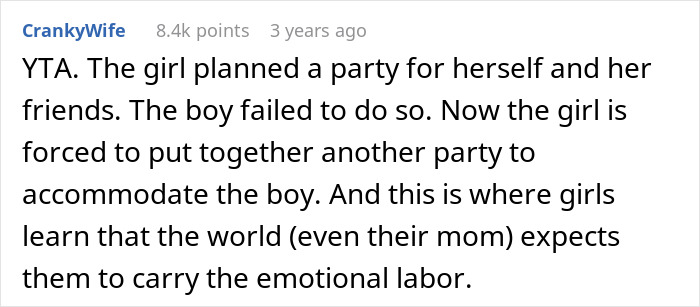
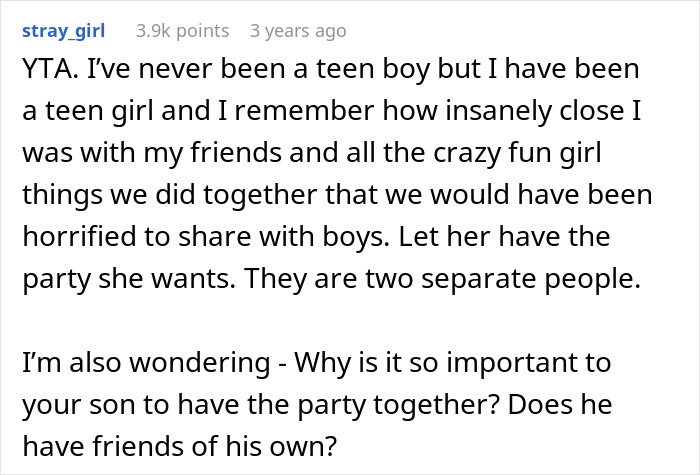
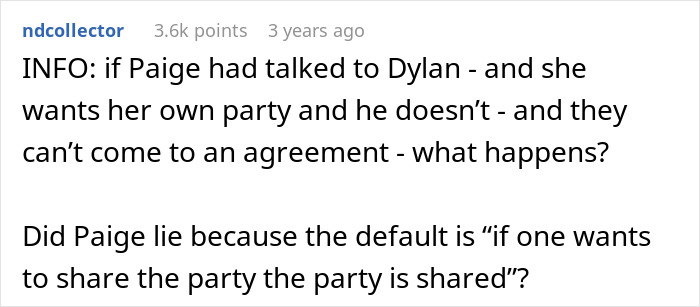
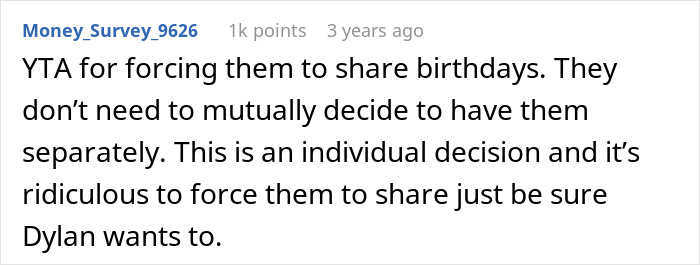
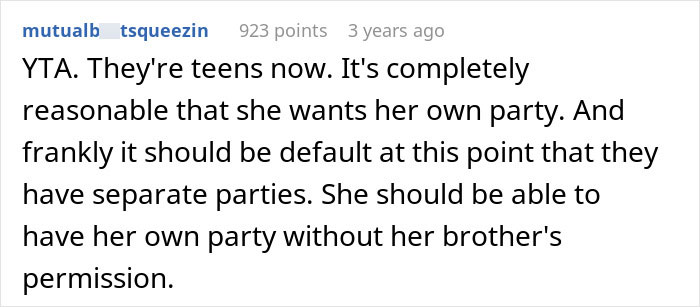
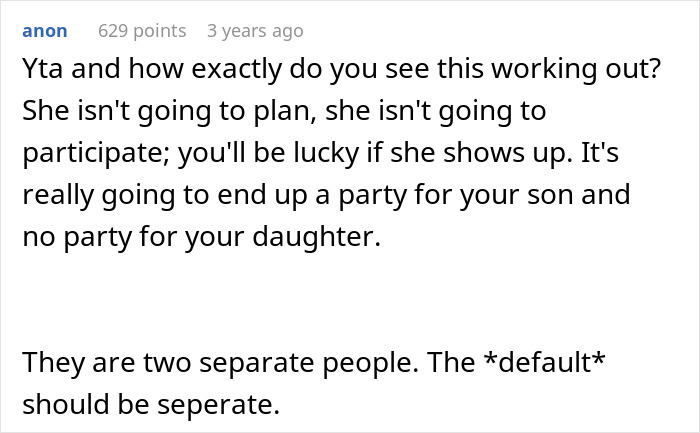
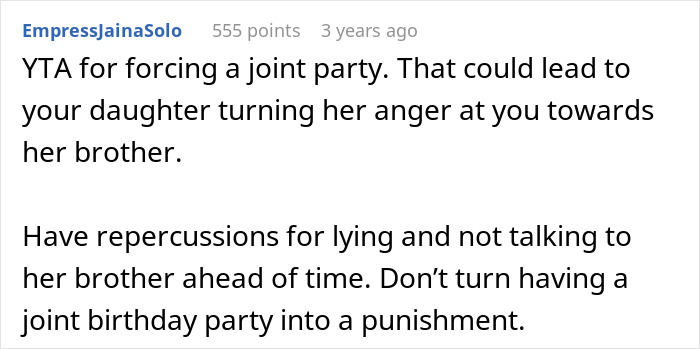
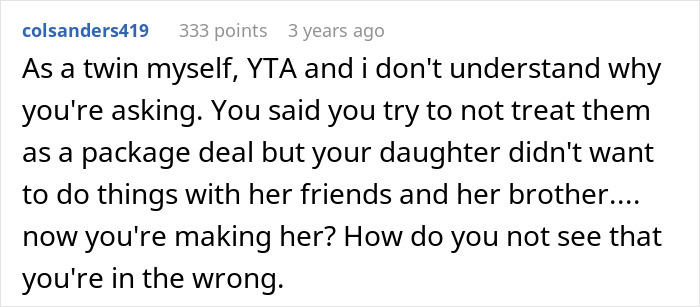
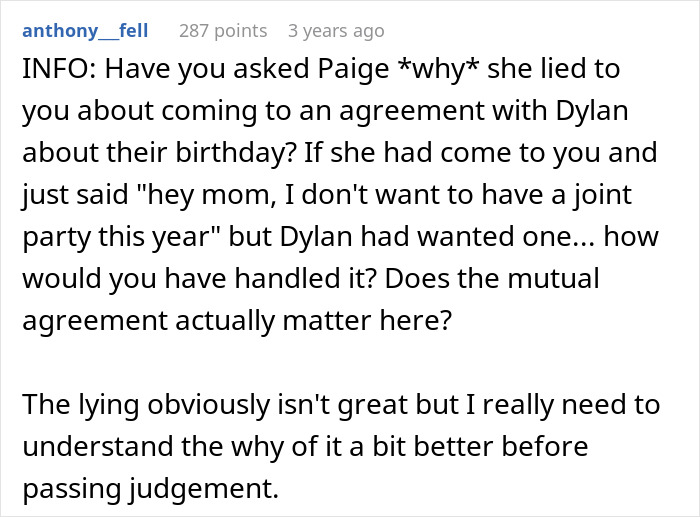
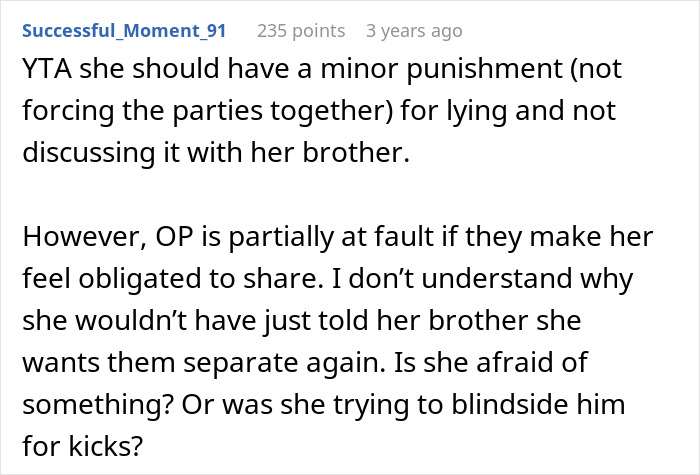
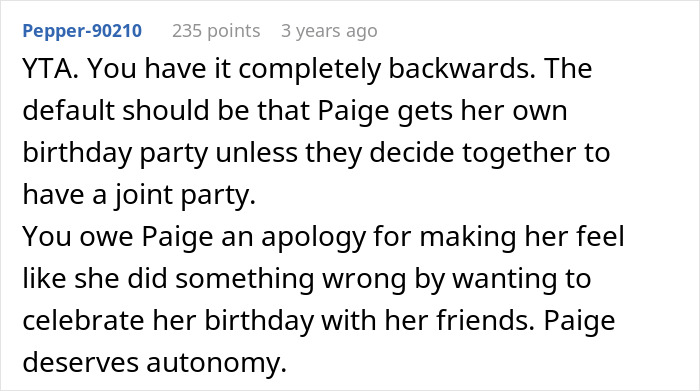
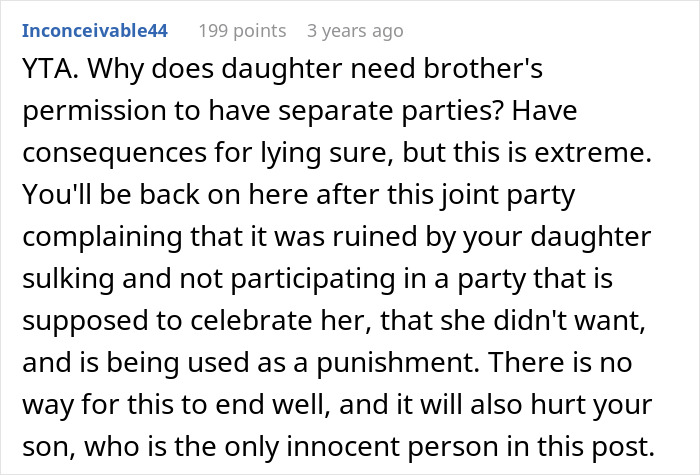
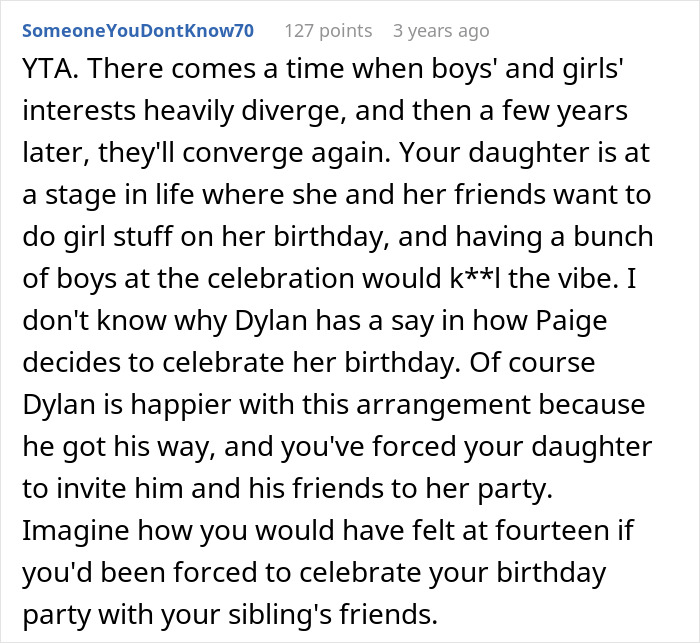
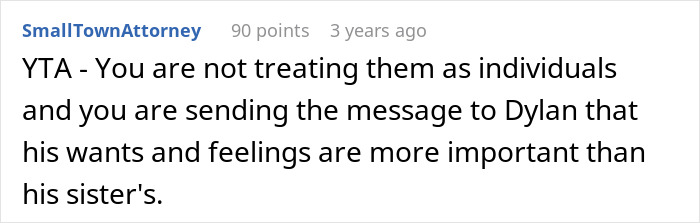
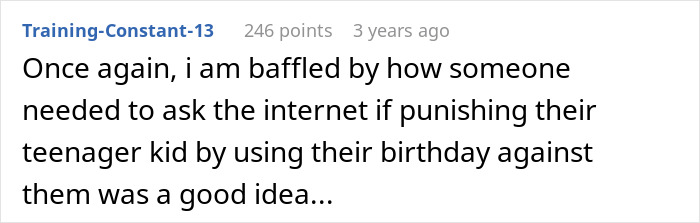
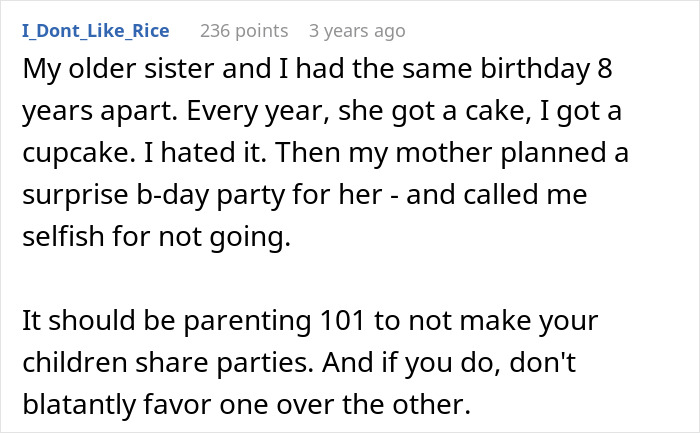
Upset, the woman forced the twins to plan a joint birthday celebration and netizens believed she was wrong for making her daughter feel like she was wrong for wanting a separate party

Wavebreak Media / Magnific (not the actual photo)
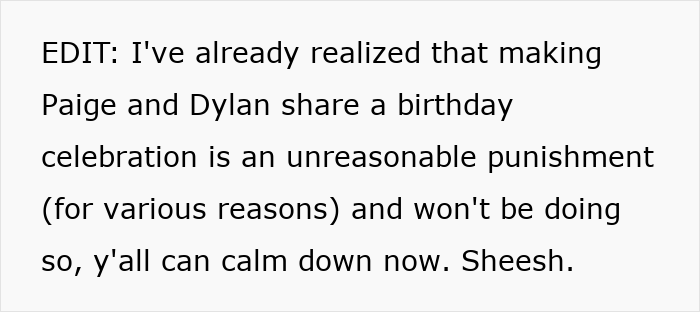
After reconsidering, the woman apologized to her daughter and decided that sharing a party was an unfair punishment, choosing grounding instead
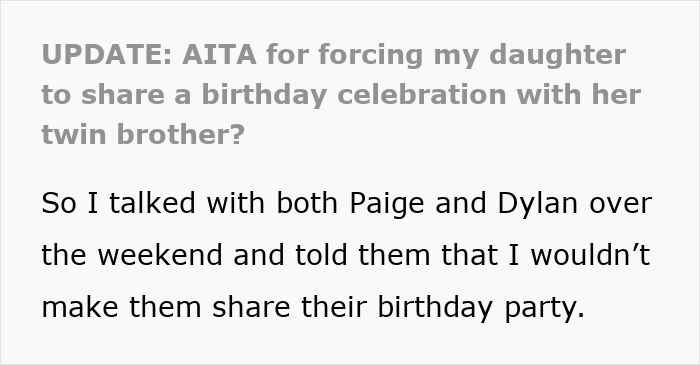
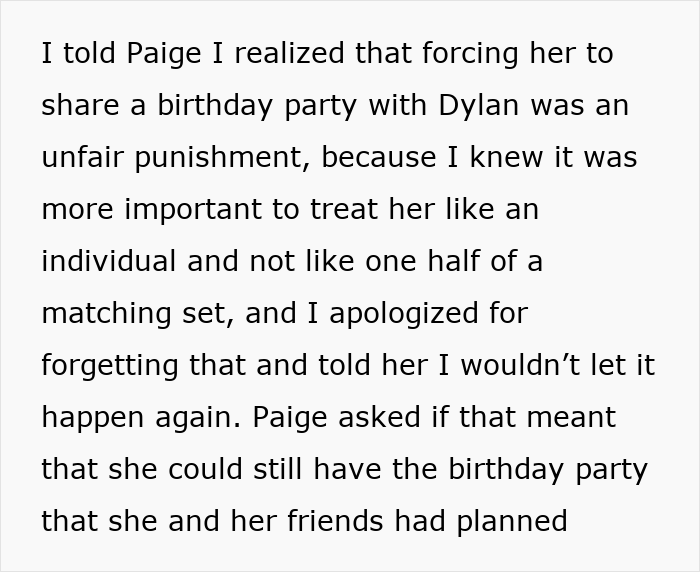
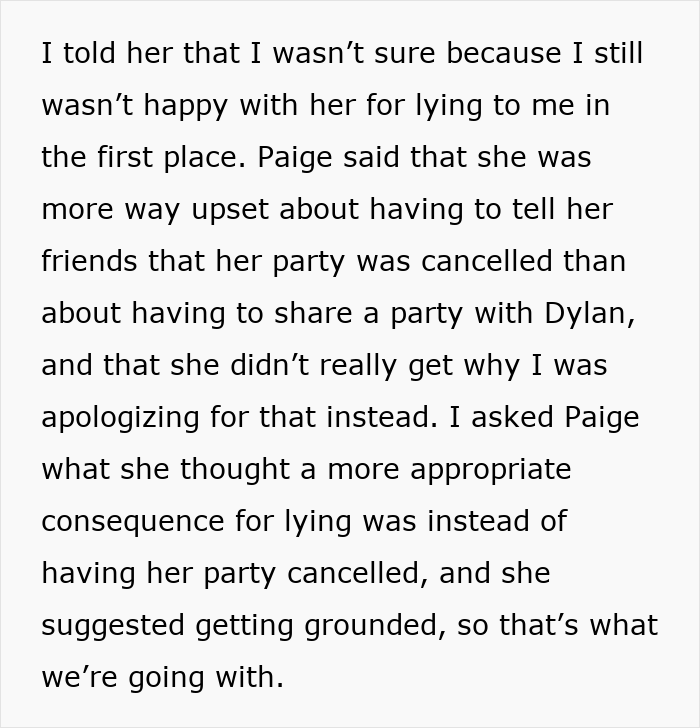
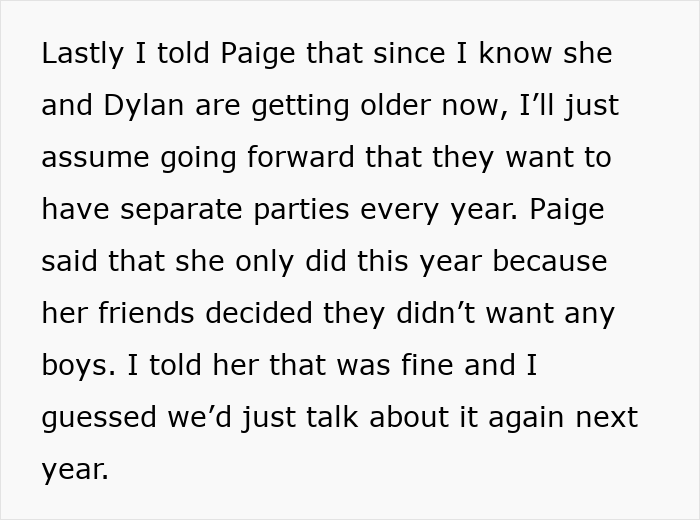
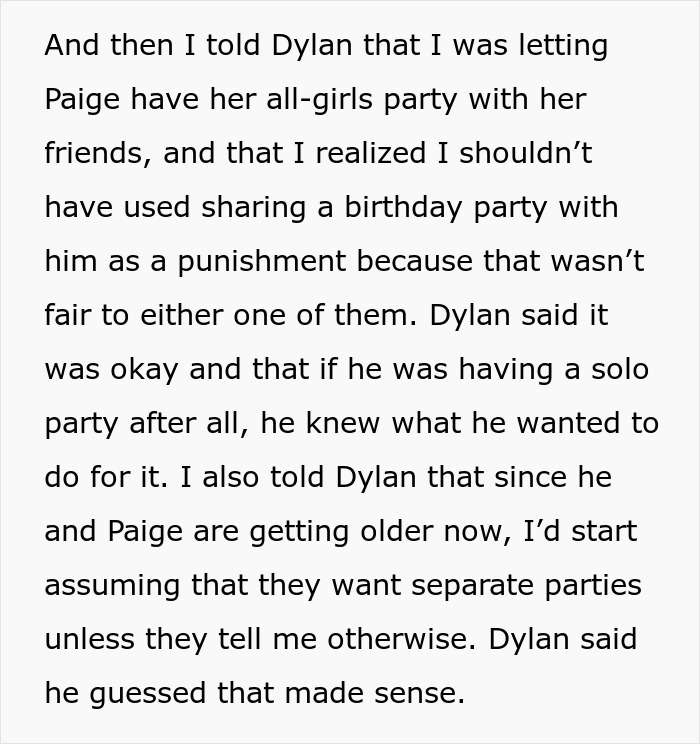
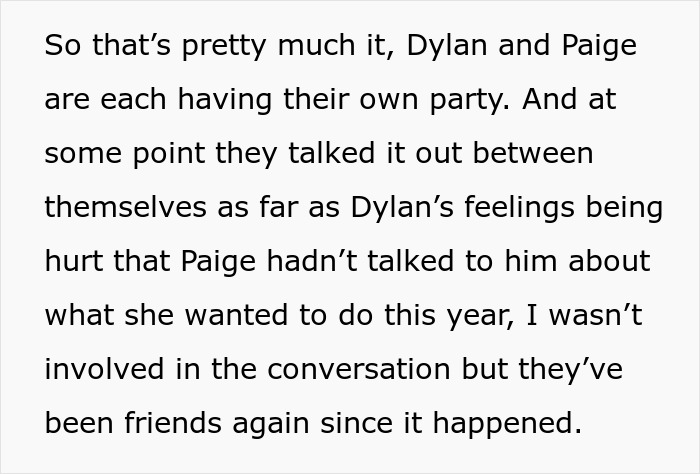
Her twins were ultimately allowed to have separate parties, and they later talked through their hurt feelings and made up
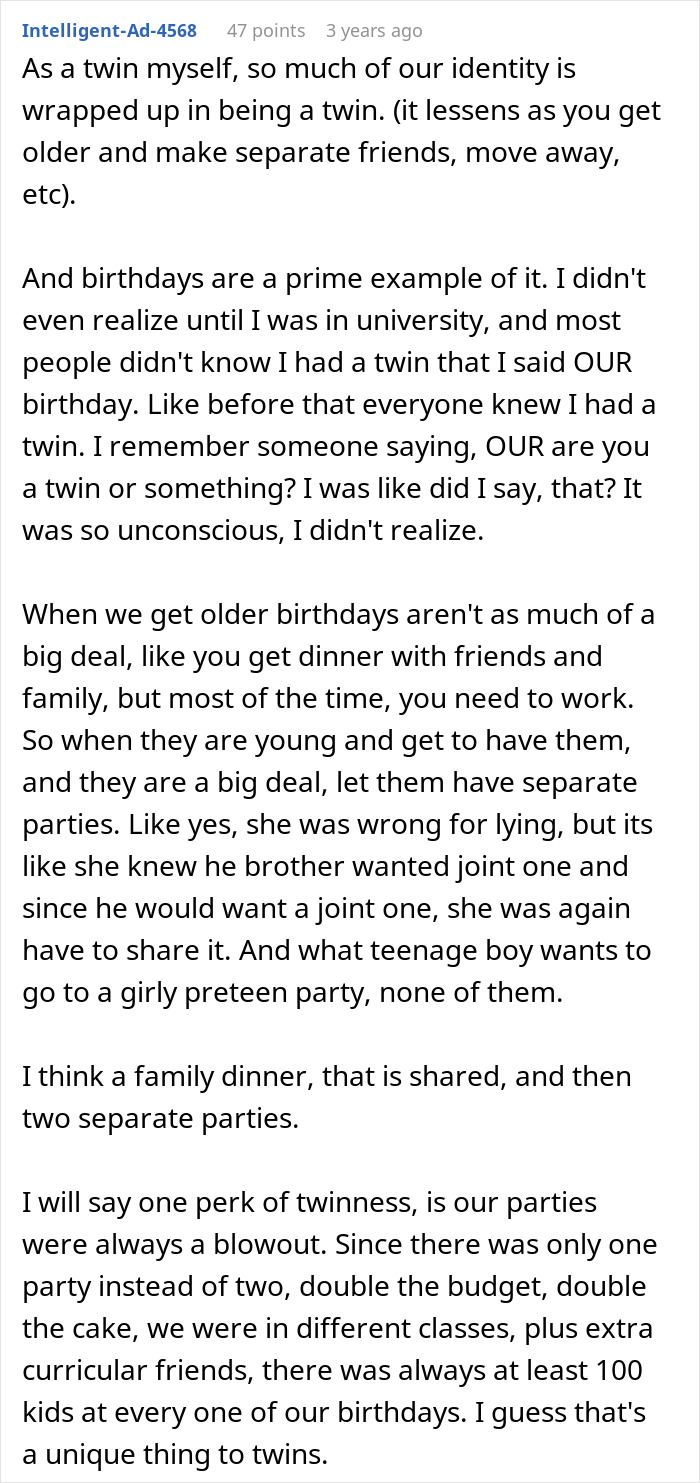
Raising twins can be challenging because their shared birthday and appearance can make their identities seem inseparable to others. Additionally, developing an individual identity can sometimes be complicated by the way parents, schools, and other people emphasize their similarities.
Research on twins has found that individuality developed through a balance between feeling connected as twins and developing separate relationships and experiences. It also notes that twins can benefit from their close connection while also facing challenges in developing independence from one another.
That makes seemingly small decisions, such as whether to have a joint birthday party, potentially more meaningful during adolescence, when individuality is becoming increasingly important. The timing of the conflict is significant, too. At 14, teenagers are increasingly carving out areas of life that belong primarily to them, from friendships and hobbies to social groups, clothing, interests, and activities.
Wanting a celebration that reflects those preferences isn’t necessarily a rejection of family or a sibling. It can simply be part of growing up. For twins, that process is just noticeable because they have spent their entire lives sharing one very obvious connection. A separate party can therefore be less about creating distance from a sibling and more about creating space for a teenager to decide what represents them.

africaimages / Envato (not the actual photo)
It is also important to note that sibling disagreements during adolescence aren’t always about the surface-level issue. A fight over a party, borrowed clothes, privacy, or who gets invited somewhere can actually be a negotiation over personal boundaries. Psychology Today suggests these disagreements can help siblings establish interpersonal boundaries and work through differentiation and individuation.
Perhaps this is where the birthday dilemma becomes particularly interesting from a parenting perspective. Equal treatment can sound inherently fair, but children don’t always need same treatment to be experience fairness. Two teenagers can have different needs, different rules, different consequences, and different privileges without a parent necessarily playing favorites.
Also, siblings can have a perfectly healthy relationship while occasionally driving one another absolutely insane. BBC reports that negotiation and compromise are among the most commonly examined ways adolescents manage conflict. That makes the twins eventually resolving the disagreement between themselves especially relevant as parents don’t necessarily need to referee every fight forever.
As children mature, giving them opportunities to negotiate, apologize, establish boundaries, and repair relationships can become part of learning how to manage relationships independently. The bigger parenting challenge is then finding the balance between encouraging independence and maintaining family connection.
Having two celebrations doesn’t erase their twin bond any more than having one celebration proves that they are inseparable. What do you think about this situation? Do you think forcing siblings to share something as a punishment is ever a good idea? We would love to hear from you!
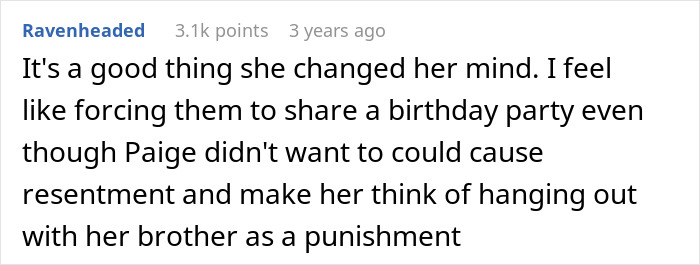
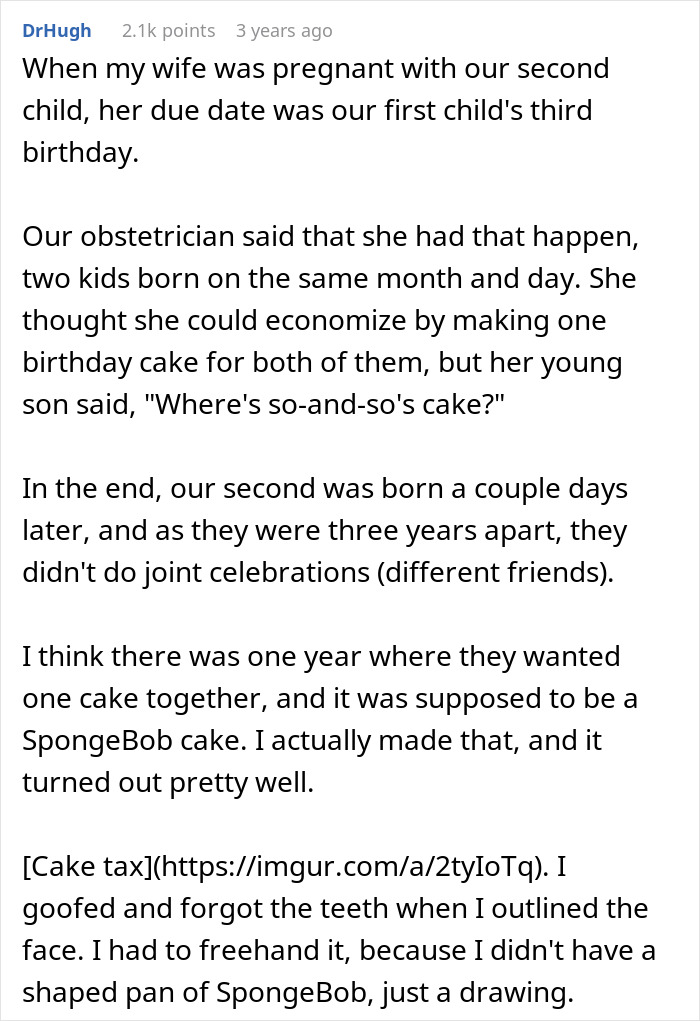
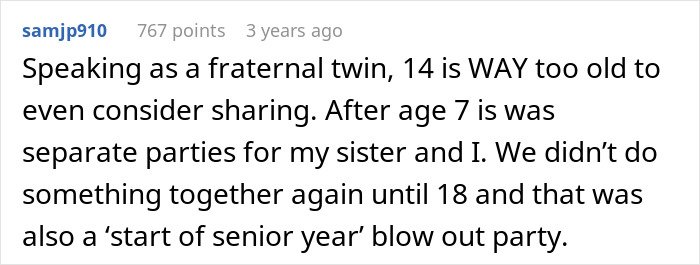
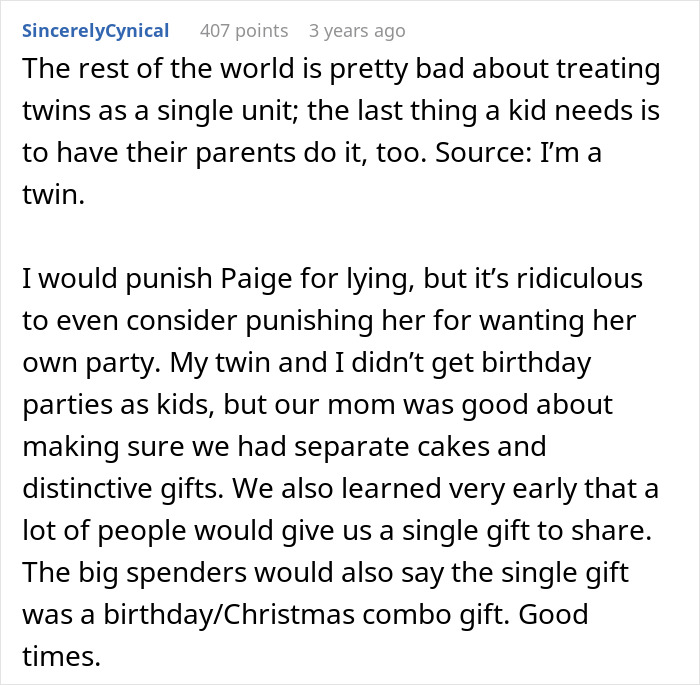
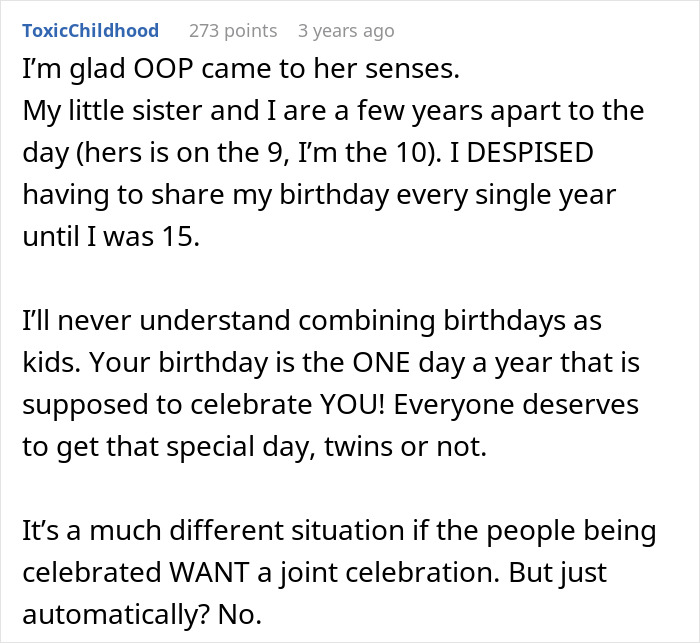
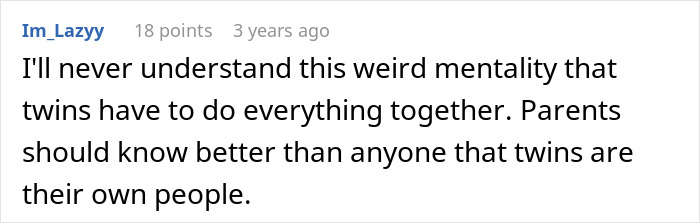
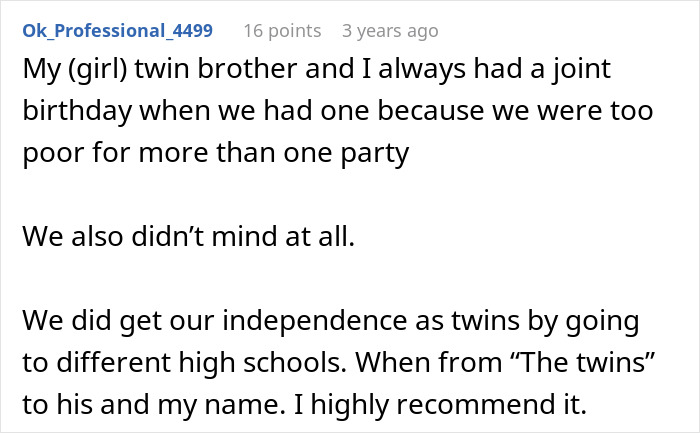
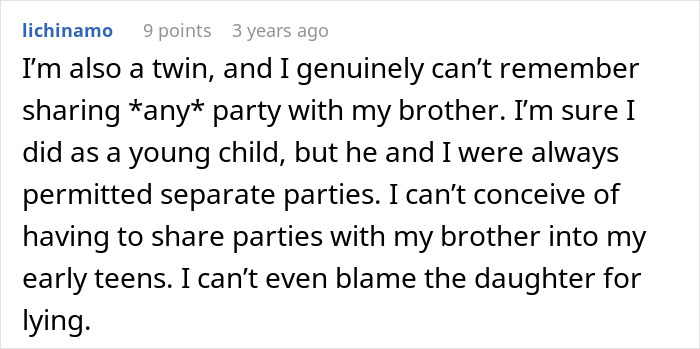
After the update, the netizens applauded the woman for changing her mind and allowing her kids have separate birthday celebrations






 Follow Us