When we think of a tattoo artist, we might often picture flawless lines, crisp details, and millimetric precision. But İzmir-based tattoo artist Doğa Güney sees beauty in something slightly different. Her colorful, textured tattoos embrace the looseness of pastel crayons, broken lines, uneven pigment, soft edges, and colors that occasionally wander beyond where they are “supposed” to be. Rather than correcting these imperfections, she makes them part of the art.
At 25, Güney has been tattooing for around six years, gradually developing her own unique style shaped by background in animation, love of illustration, and fascination with the freedom of childhood drawings. What might look spontaneous or imperfect at first glance is actually the result of careful artistic choices. For Güney, the most important thing is not making a tattoo look perfect, but capturing the perfection of imperfection, those small irregularities that make an image feel alive, personal, and unmistakably human.
More info: Instagram
#1
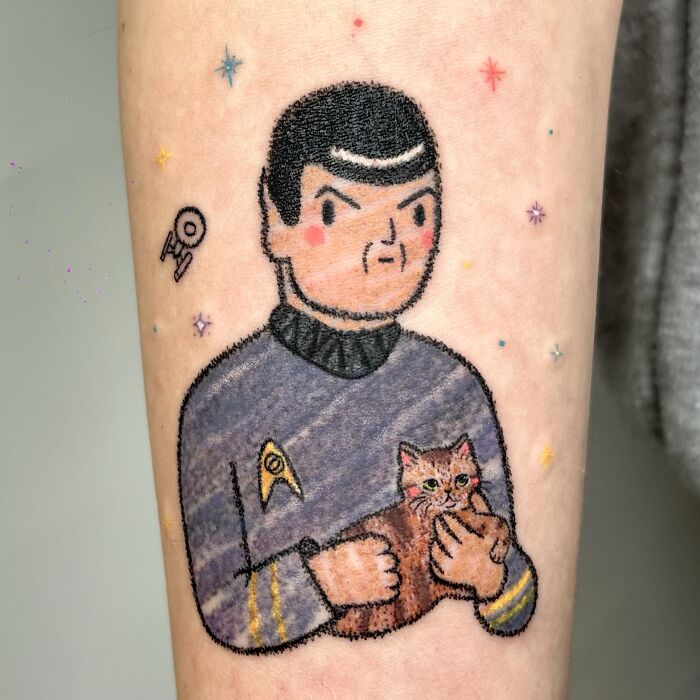
Image source: Doğa Güney
Güney’s tattoo journey began much earlier than her professional career. In high school, she secretly practiced hand-poke tattoos on herself and her friends.
“I guess you could say it was a bit of a secret,” she explained in the interview with Bored Panda. “In high school, I used to do hand-poke tattoos on myself and on my friends at school, but when my mother found out, of course, she said, ‘No!’”
Güney stepped away from tattooing for a while and returned to it only after entering university to study Cartoon and Animation. At that point, however, becoming a professional tattoo artist was not part of her plan.

#2
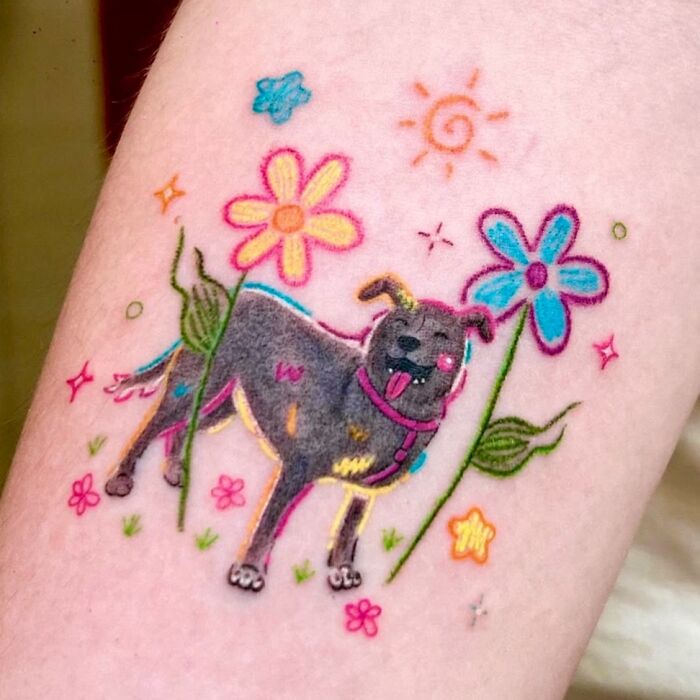
Image source: Doğa Güney
#3
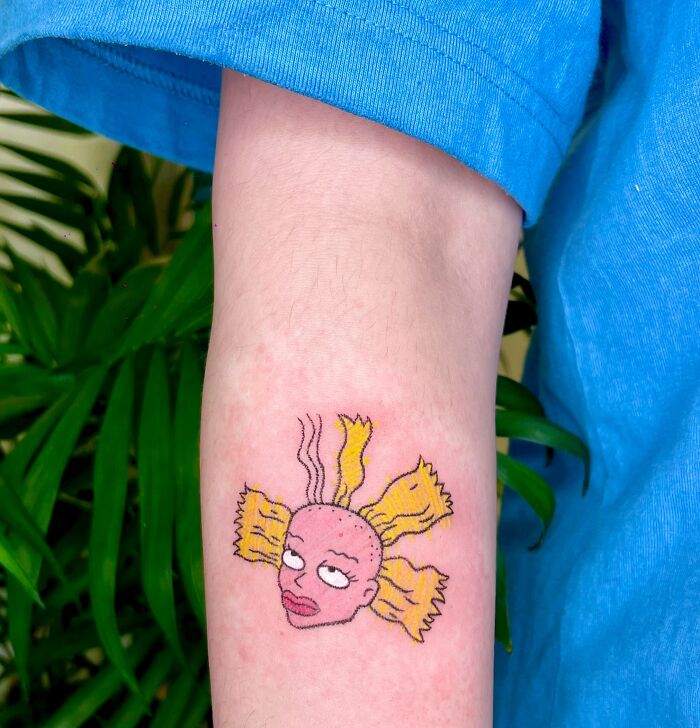
Image source: Doğa Güney
During the pandemic, when university classes moved online, Güney began looking for work. A friend who remembered her experience with tattooing mentioned that artist Yiğit Işıl was looking for an assistant. That chance encounter brought Güney back to tattooing and ultimately changed the direction of her career.
She joined Işıl’s studio and spent the next four years tattooing alongside her university studies. What had started as a hobby gradually turned into a full-time profession.
“At first, tattooing was completely a hobby for me. Then, before I knew it, my hobby had become a job. Honestly, I never complained about it because I genuinely enjoyed what I was doing,” the artist recalled.
#4
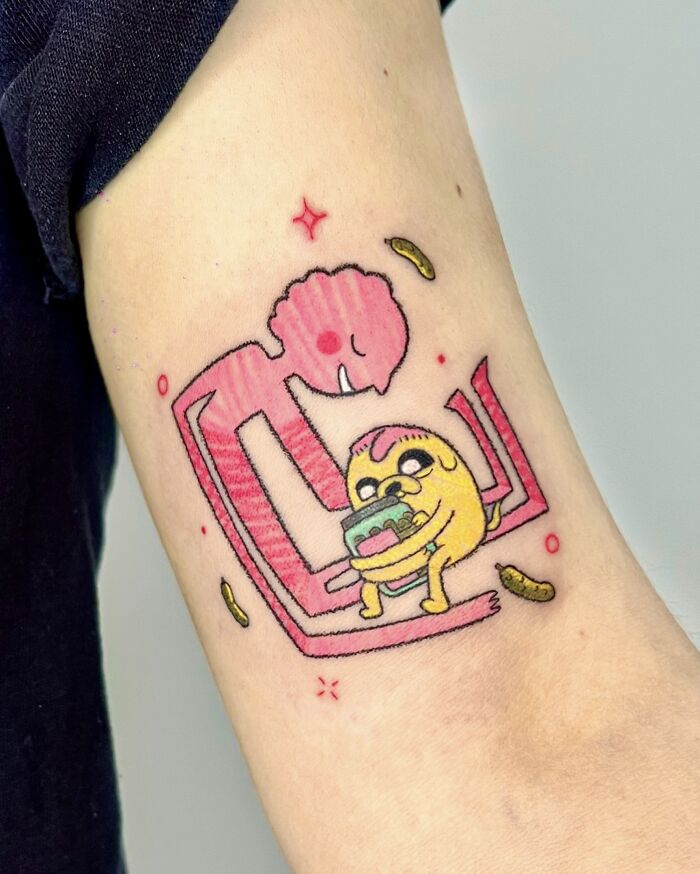
Image source: Doğa Güney
#5
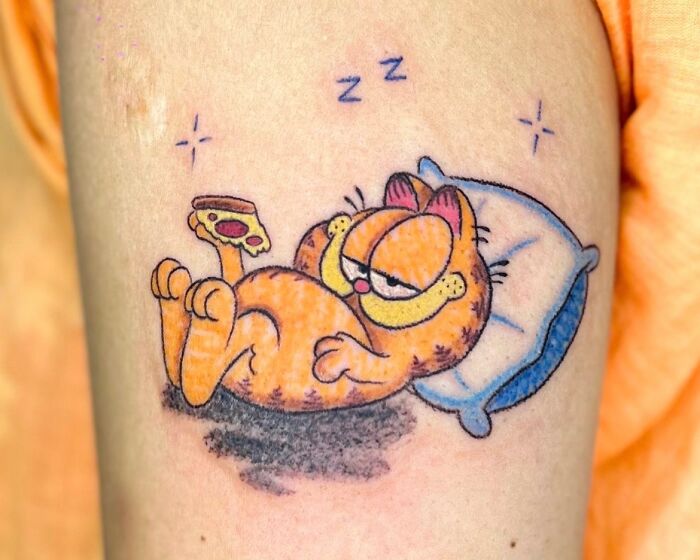
Image source: Doğa Güney
The education in animation also became an important part of Güney’s artistic development. Drawing characters, experimenting with color, and allowing the imagination to remain unrestricted all became fundamental to the visual language eventually brought to tattooing.
At the beginning, Güney’s work focused on fine lines, but over time she began looking for a freer and more organic way to express herself. An artist she discovered in South Korea introduced her to pastel-style tattoos, prompting an exploration of how the medium’s distinctive texture could be translated onto skin.
When she realized that relatively few artists in Türkiye were working in this direction, Güney began developing her own interpretation of the style.
“I’m trying to transfer the slightly messy, loose, sometimes overflowing and seemingly uncontrolled nature of pastel crayons into tattooing,” she explained and added that her understanding of art is somewhat based on the perfection of imperfection.
#6
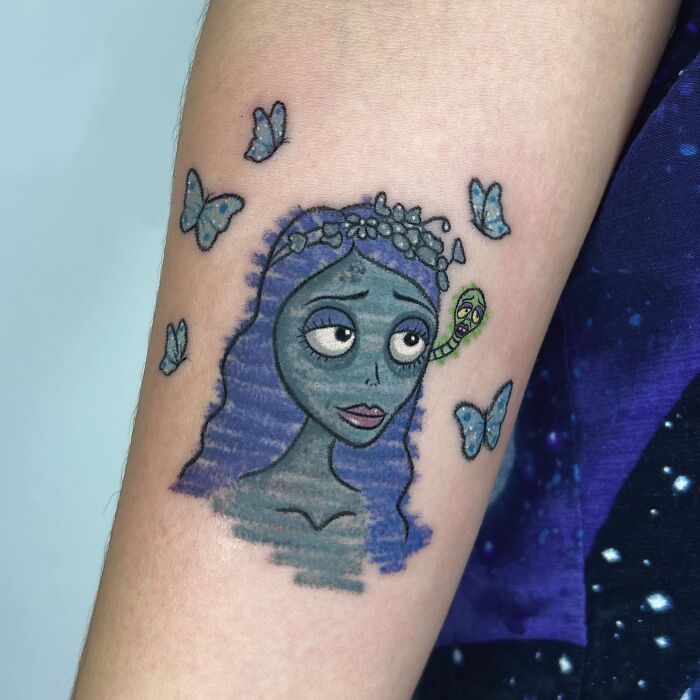
Image source: Doğa Güney
#7
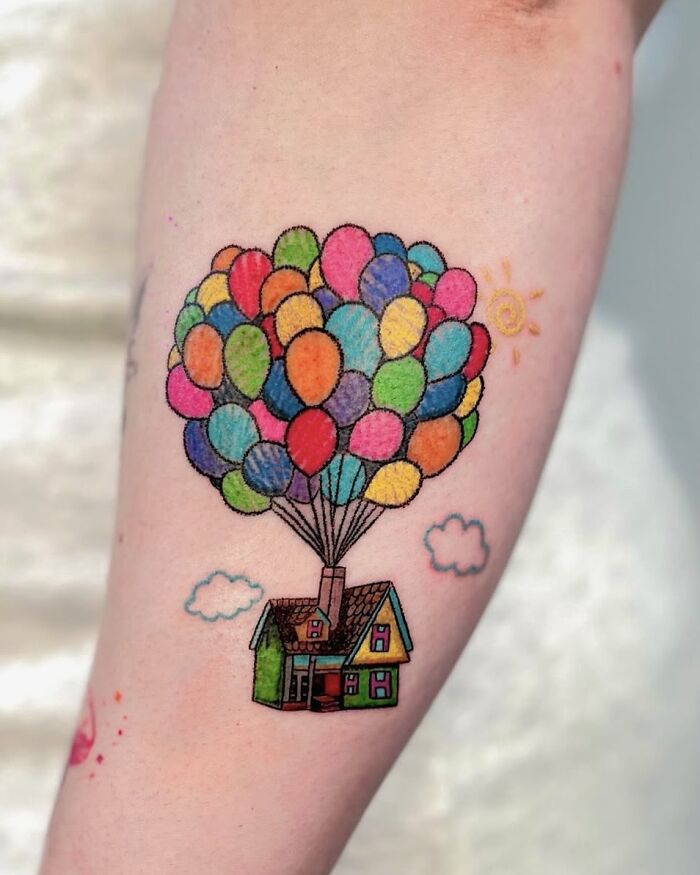
Image source: Doğa Güney
Besides uneven pigment distribution, broken lines, subtle variations in color density, and pigments that extend slightly beyond their intended boundaries, childhood drawings are another major source of inspiration for Güney. Strange proportions, colors spilling outside the lines, and loose strokes give them a sincerity she tries to preserve. “When you’re drawing something as a child, you don’t think, ‘Will people like it if I do it this way?’ I try not to lose that freedom,” the artist explained.
Pastel crayons, animation, and illustration naturally influence the work, but inspiration can also come from everyday life. “Sometimes I get inspired not by a very serious work of art, but by something funny I see on the street,” she said.
That spontaneity extends to tattooing, where the body itself becomes part of the artwork. “A tattoo isn’t on paper after all; it’s going to live on a person,” Güney explained. Its shape, texture, scars, and existing tattoos can all influence the final design. Rather than treating these as obstacles, she asks, “Okay, now how can we turn this into an advantage?”
#8
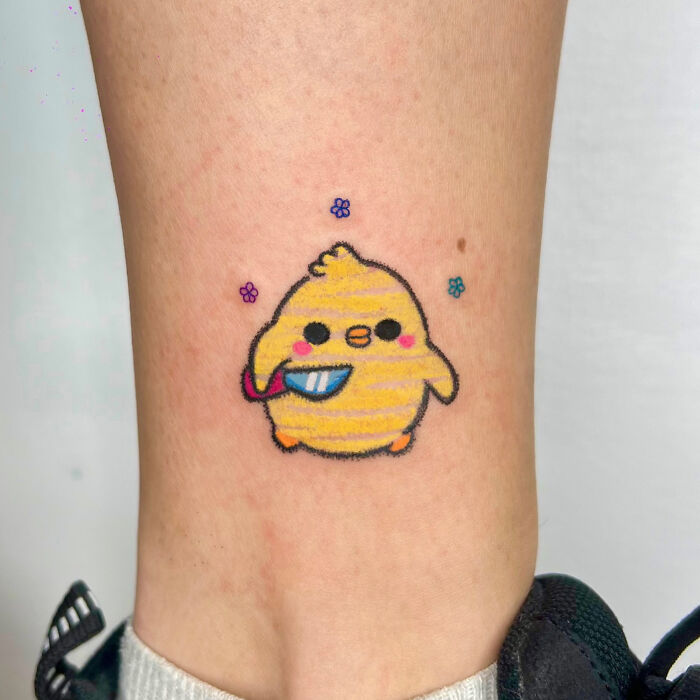
Image source: Doğa Güney
#9
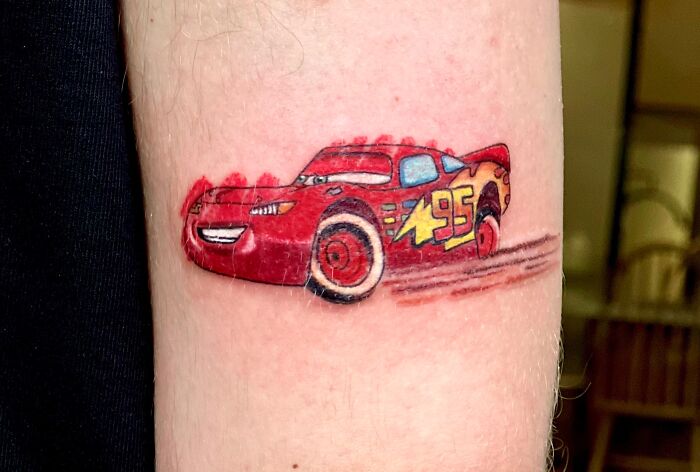
Image source: Doğa Güney
Despite the effortless appearance, achieving the pastel effect requires careful control. Needle choice, pigment application, layering, and pressure all affect the final texture, while Güney continues to experiment. “I kept trying things, always thinking, ‘I wonder if I can do this too?’ And I’m still experimenting,” she said. The apparent looseness is deliberate: “My goal isn’t to imitate pastel crayons as a tattoo; it’s to reflect how pastel crayons feel on the skin.”
The same balance of control and spontaneity extends to her relationships with clients. Spending several hours together inevitably leads to conversations and personal stories. Some tattoos carry deep meaning, while others are simply chosen because a design feels right. Güney prefers to bring those ideas into her own visual language, aiming for the moment when a client says, “This is exactly what I imagined,” while she can also think, “Yes, this is exactly my style.”
Knowing that someone will carry a design for life makes tattooing “a bit of a big responsibility,” she said, “but at the same time, it’s an incredible feeling for me.”
#10
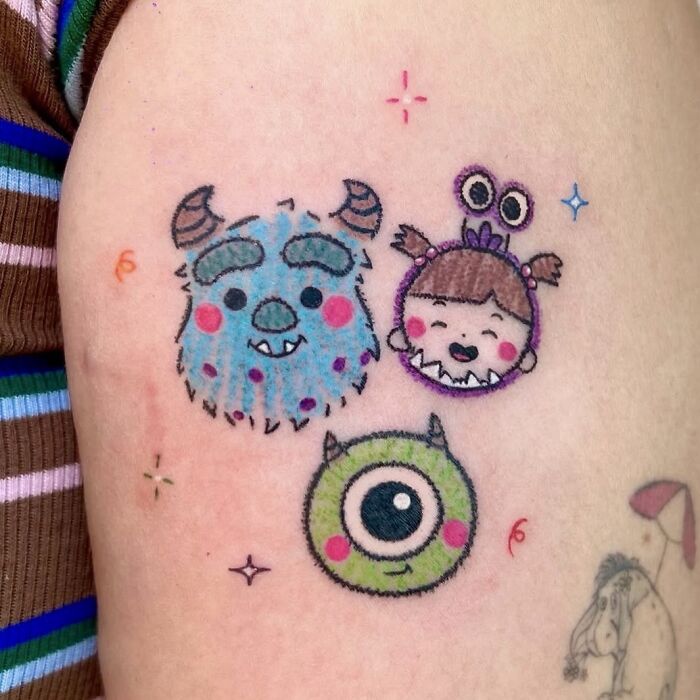
Image source: Doğa Güney
#11
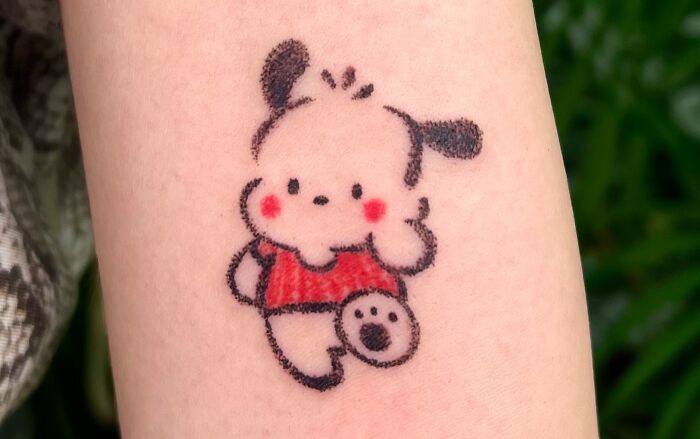
Image source: Doğa Güney
Looking ahead, Güney wants to explore new colors, textures, and larger-scale pieces without losing the carefree creativity at the heart of the style. “I want to preserve what I call the perfection of imperfection,” the artist said, adding that she wants to retain “the unlimited creativity and slightly carefree messiness that a child has when drawing.”
That philosophy also shapes her advice to others searching for their own style: “It’s great to learn the things people say about how tattooing should be done, but then you also need to break some of those rules,” she explained. For Güney, embracing that freedom may mean allowing yourself to be “a little ridiculous,” because “sometimes, the thing you think is a flaw eventually becomes your signature.”
#12
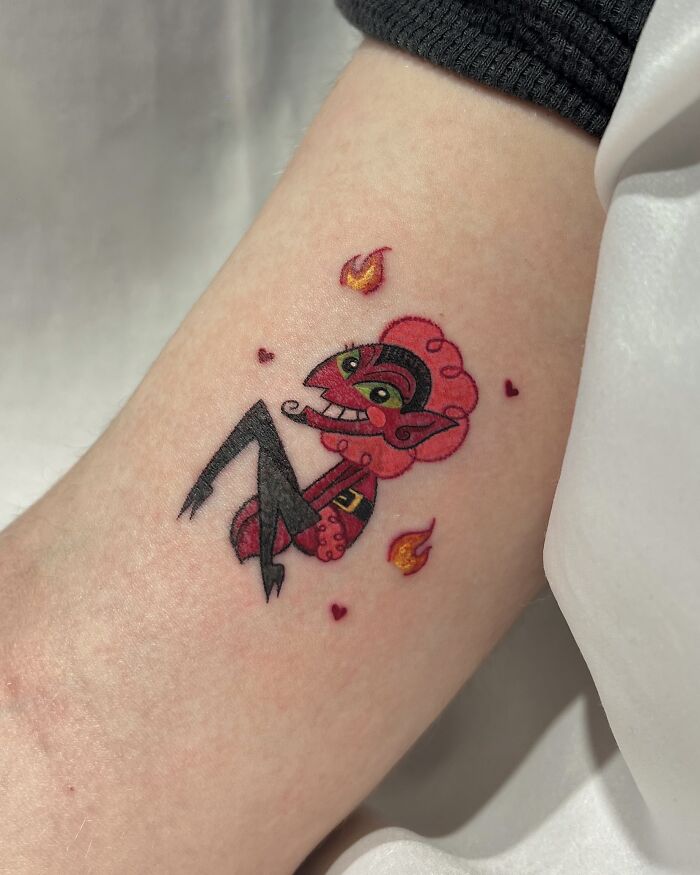
Image source: Doğa Güney
#13
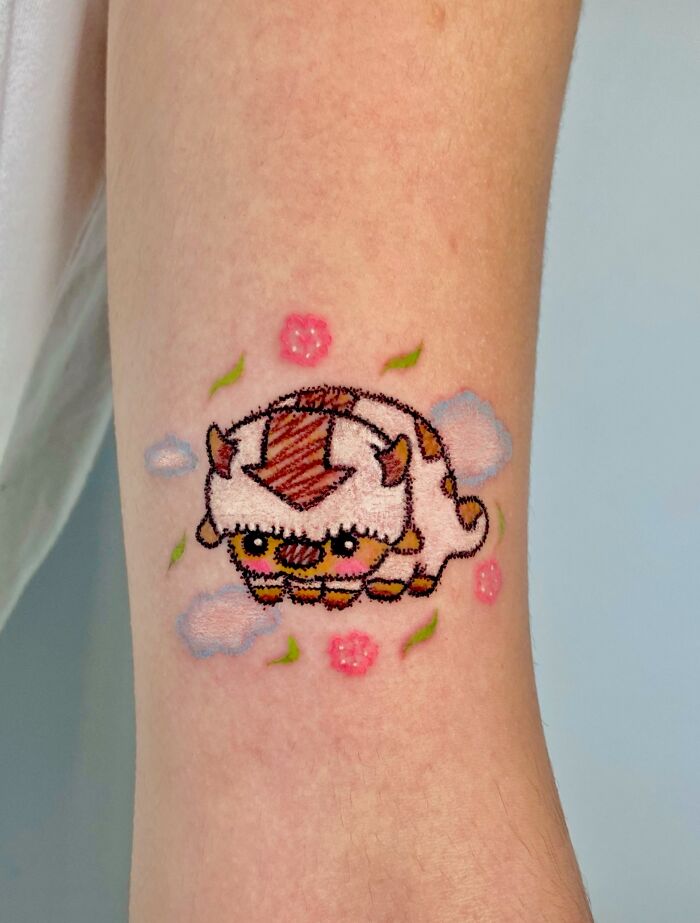
Image source: Doğa Güney
#14
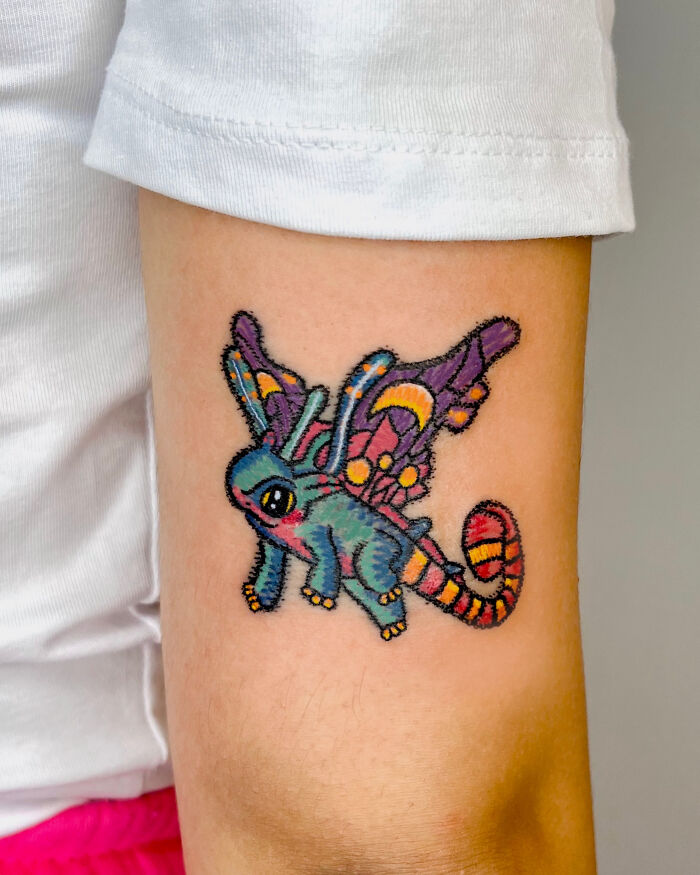
Image source: Doğa Güney
#15
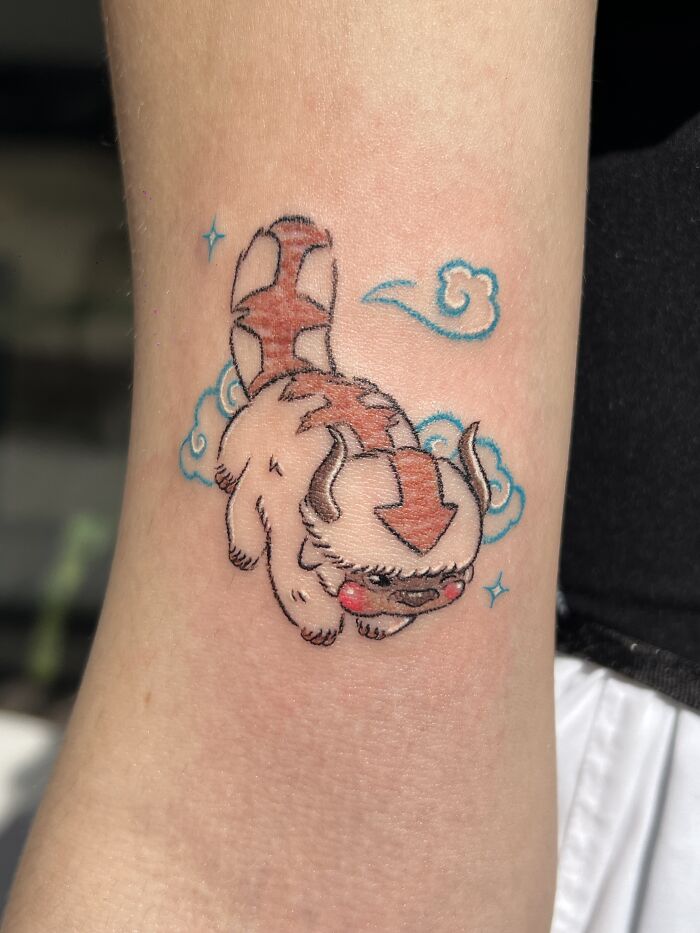
Image source: Doğa Güney
#16
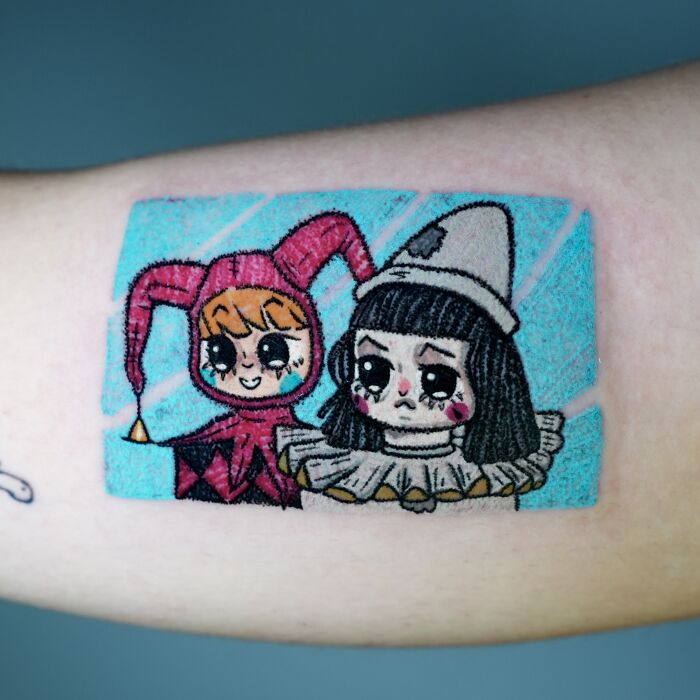
Image source: Doğa Güney
#17
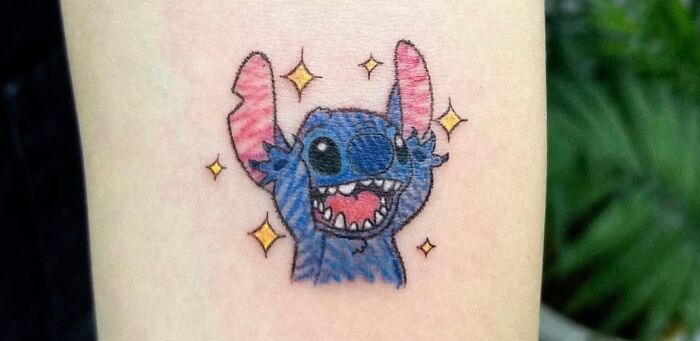
Image source: Doğa Güney
#18
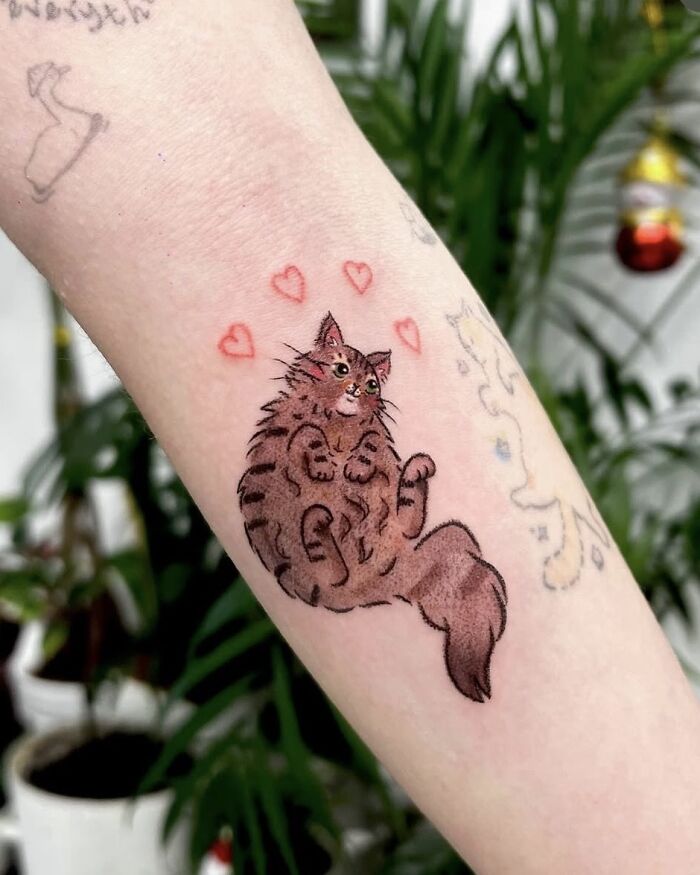
Image source: Doğa Güney
#19
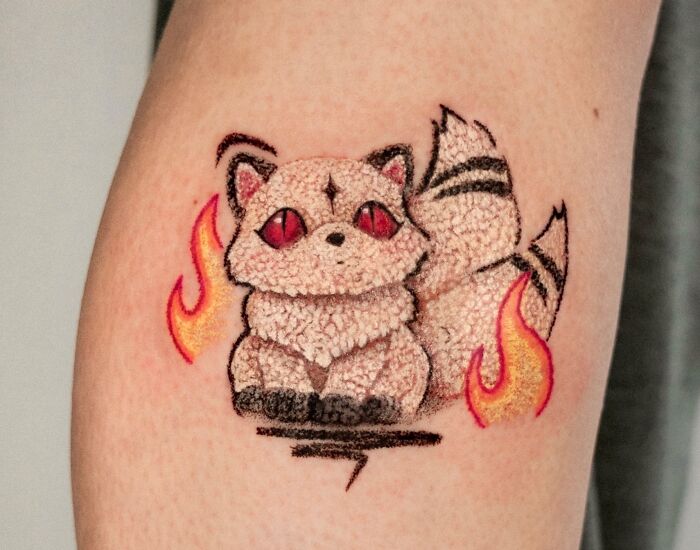
Image source: Doğa Güney
#20
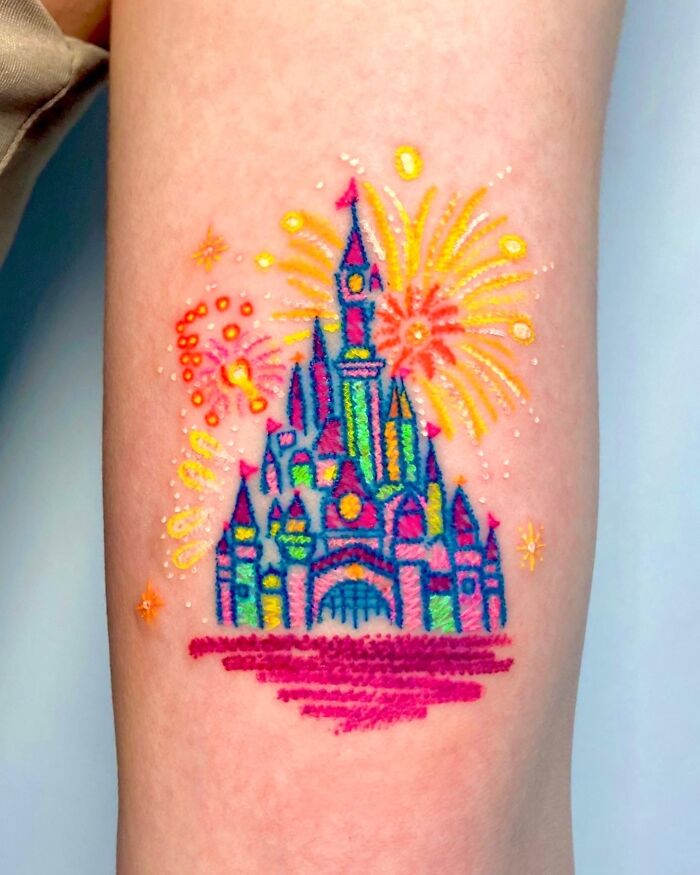
Image source: Doğa Güney
#21
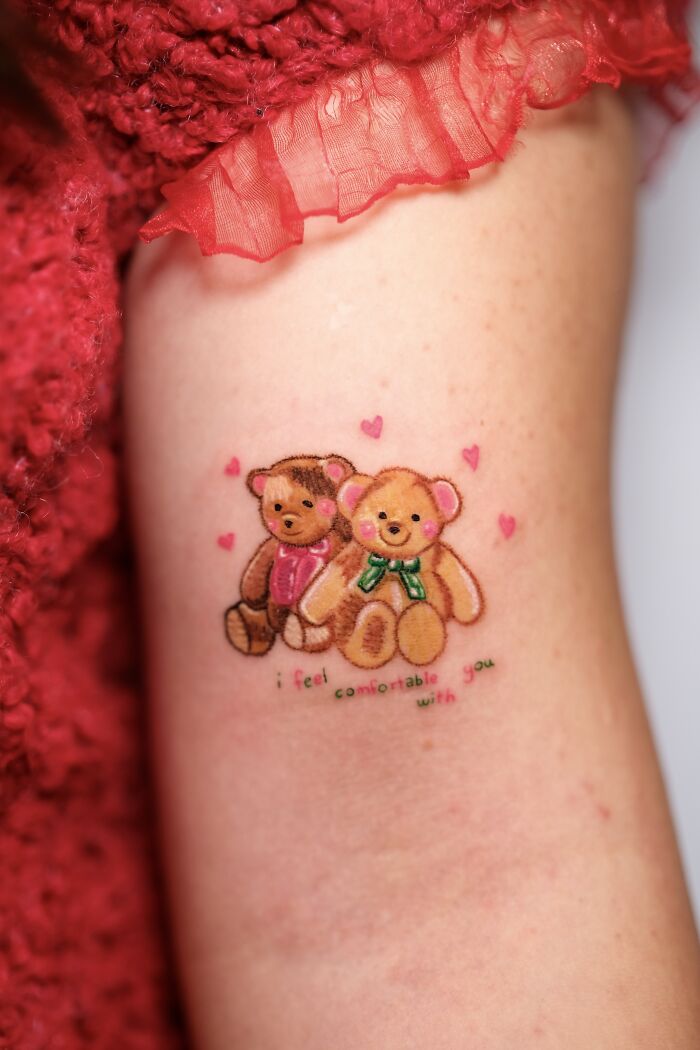
Image source: Doğa Güney
#22
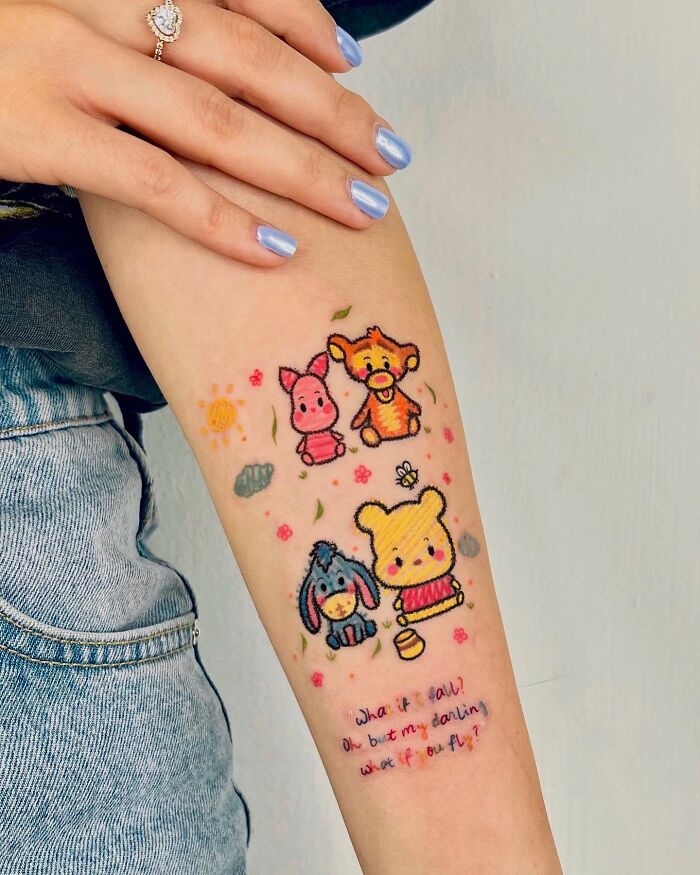
Image source: Doğa Güney
#23
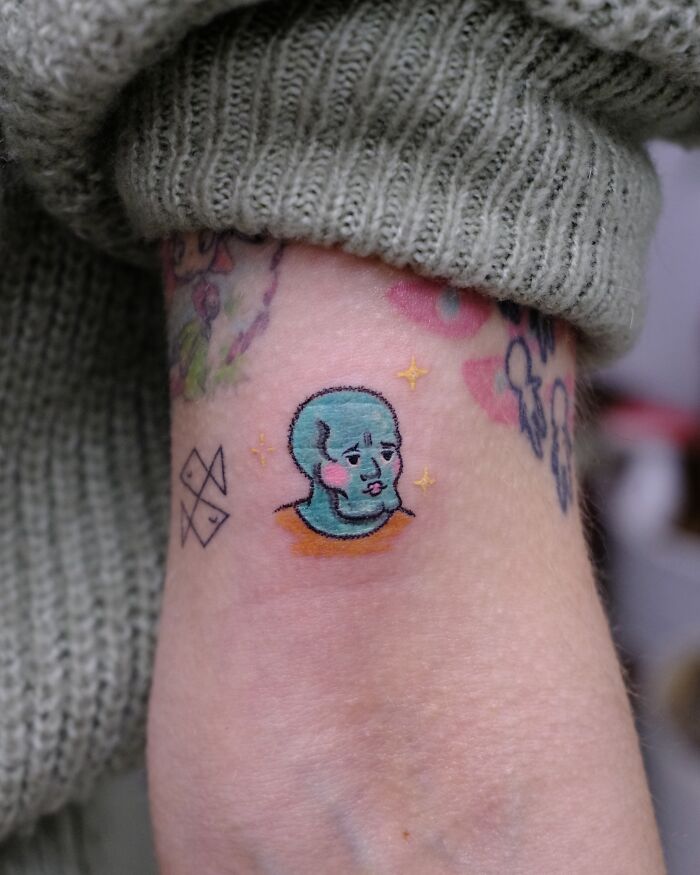
Image source: Doğa Güney
#24
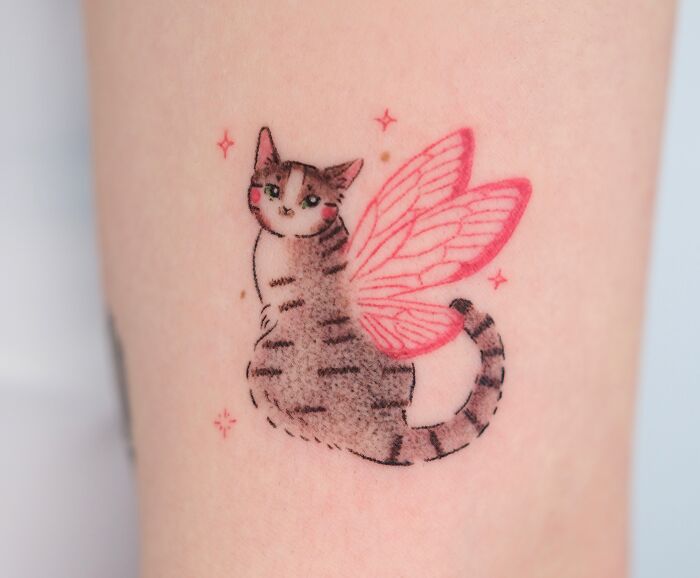
Image source: Doğa Güney
#25
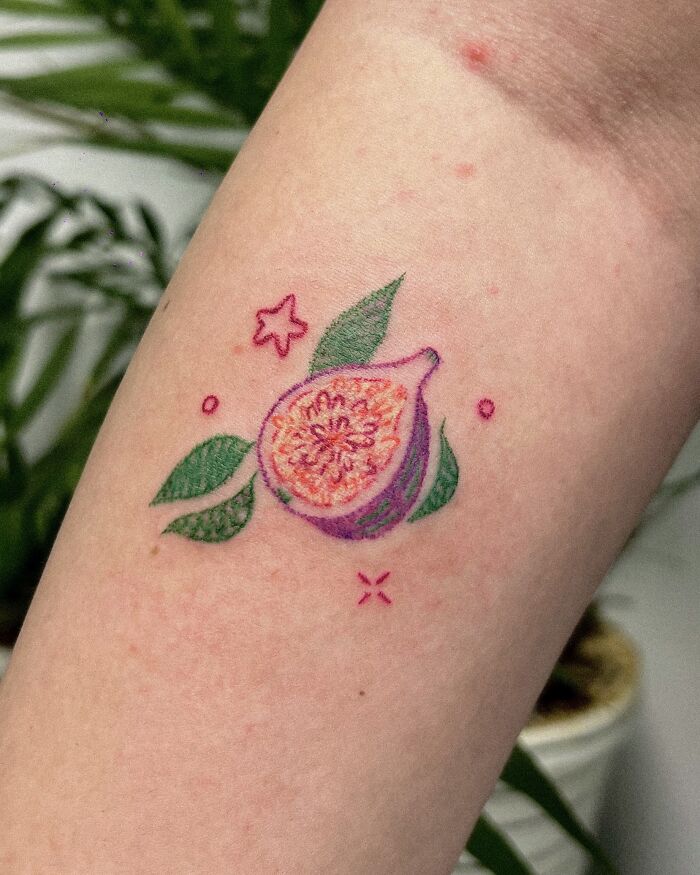
Image source: Doğa Güney
#26
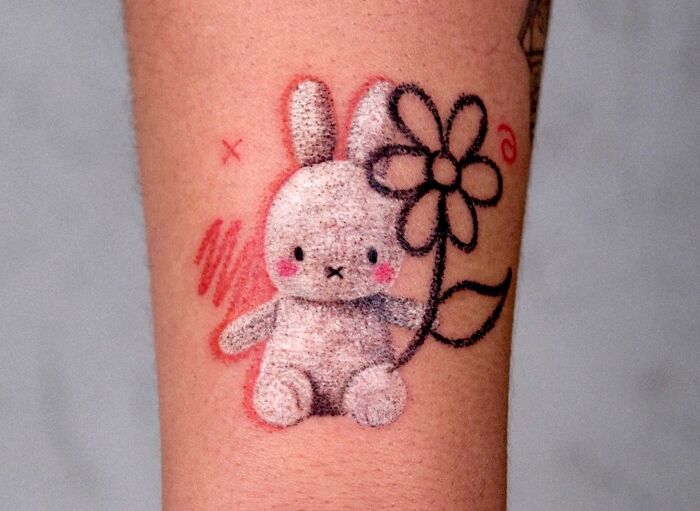
Image source: Doğa Güney
#27
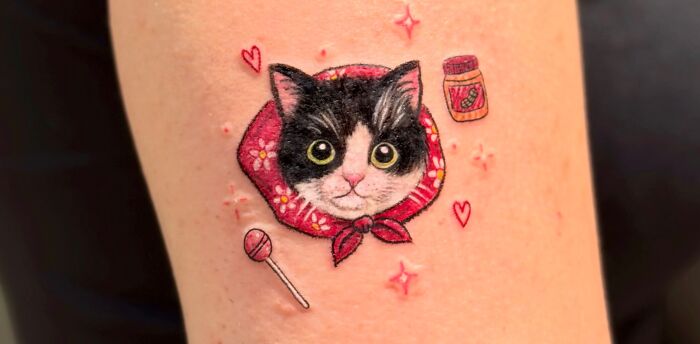
Image source: Doğa Güney
#28
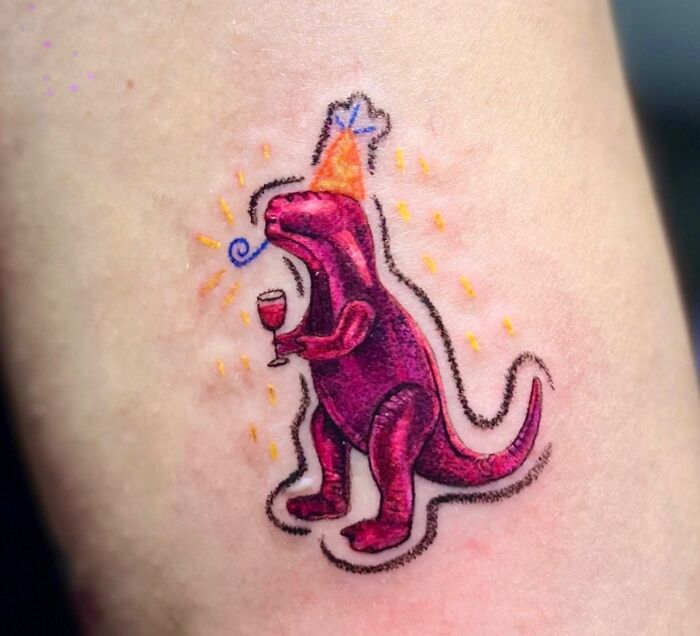
Image source: Doğa Güney
#29
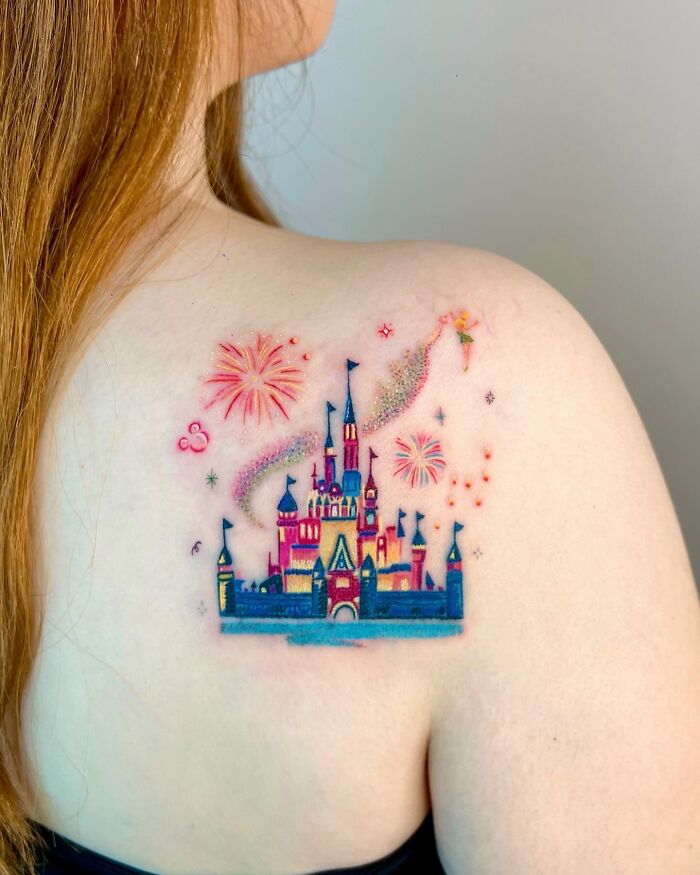
Image source: Doğa Güney
#30
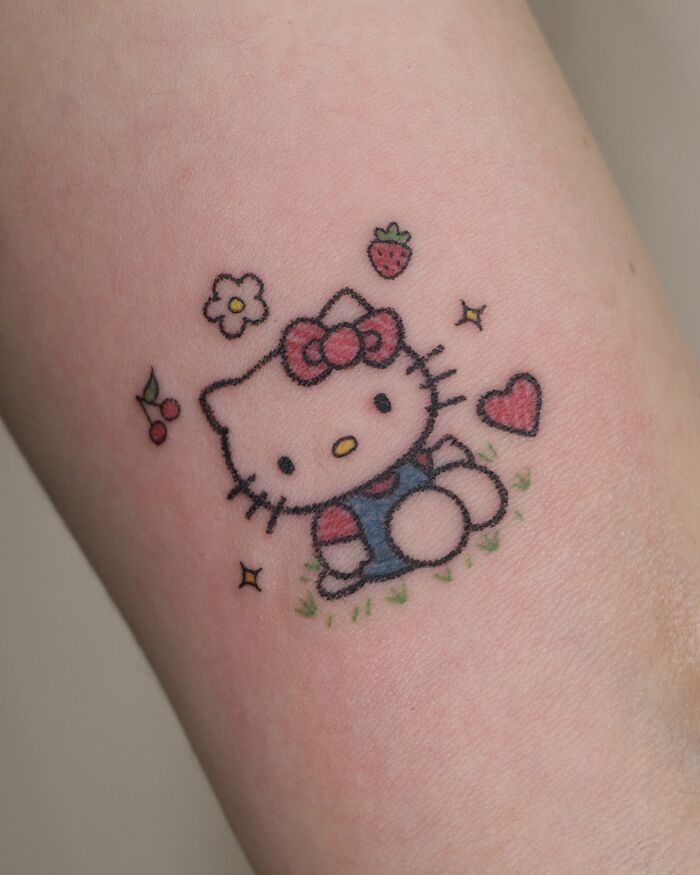
Image source: Doğa Güney
 Follow Us