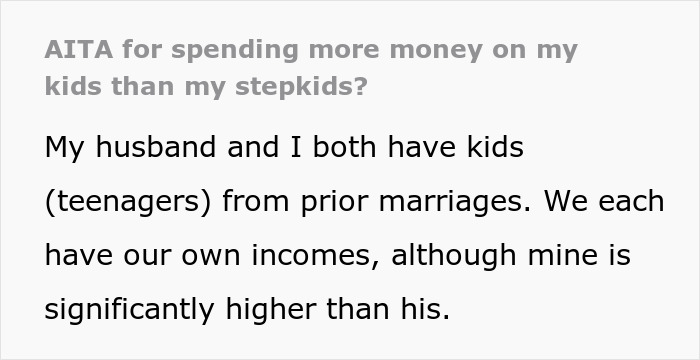
Blended families can make the phrase “what’s mine is yours” surprisingly complicated. Add teenagers, separate bank accounts, different incomes, and a few opinions about who deserves what. In the end, you realize that money can turn ordinary family decisions into courtroom-level arguments, especially when everyone has a different idea of what “fair” is.
That is essentially the dilemma facing today’s Original Poster (OP), who entered her marriage determined to treat her husband’s children like her own. However, after years of disagreements over money and parenting decisions, she and her husband decided that keeping their finances separate was the healthiest option. However, not everyone was thrilled about it.
More info: Reddit
In blended families, “treating everyone equally” can sound simple in theory, but money has a funny way of exposing just how complicated that idea can be

krakenimages.com (not the actual photo), ai-assisted image

The author and her husband initially merged their finances and the wife treated her husband’s children like her own by helping pay for their expenses





Their arrangement became strained when her husband repeatedly ignored their financial agreements and excluded her from decisions involving his children



vgstockstudio (not the actual photo)
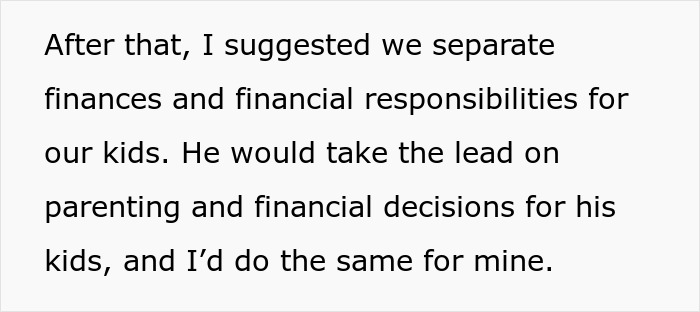
After a major disagreement with her stepdaughter, they separated their finances and agreed that each parent would handle their own children’s expenses


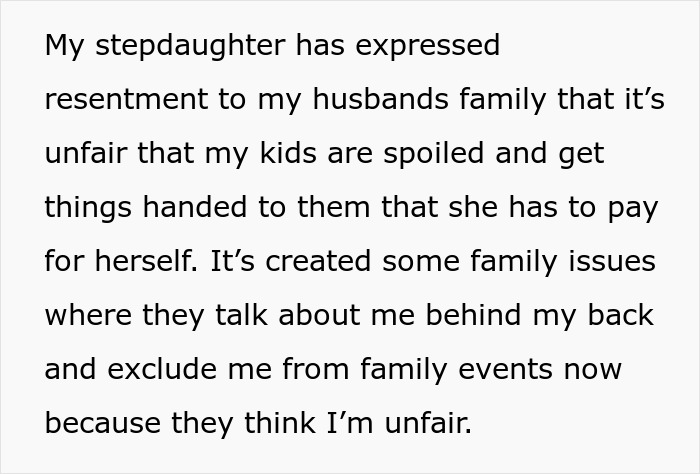
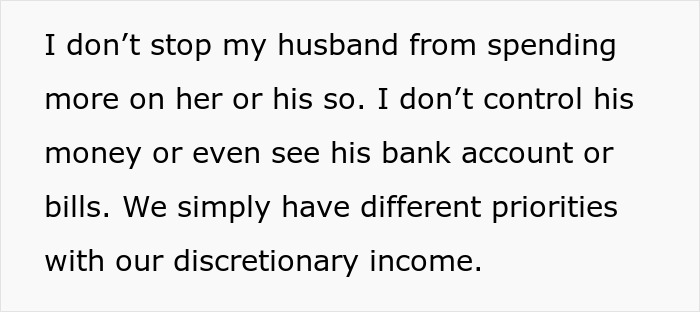

Image credits: Normal_Cherry6538
The arrangement reduced their money conflicts, but the stepdaughter and extended family now resent that the author’s children receive more financial support
The OP shared that both she and her husband entered their marriage with teenagers from previous relationships. They each had their own income, although hers was considerably higher, and initially they chose to merge their finances. Still, she paid for sports, clothes, vacations, and other expenses for all the children, making an effort to ensure nobody felt like a “stepkid”.
However, as the teenagers got older, parenting became more complicated. The OP and her husband would agree on financial limits, only for him to disregard them or privately tell the children not to mention certain purchases to her. In fact, at one point, the OP’s stepdaughter told her that whatever her father spent on her was none of her business.
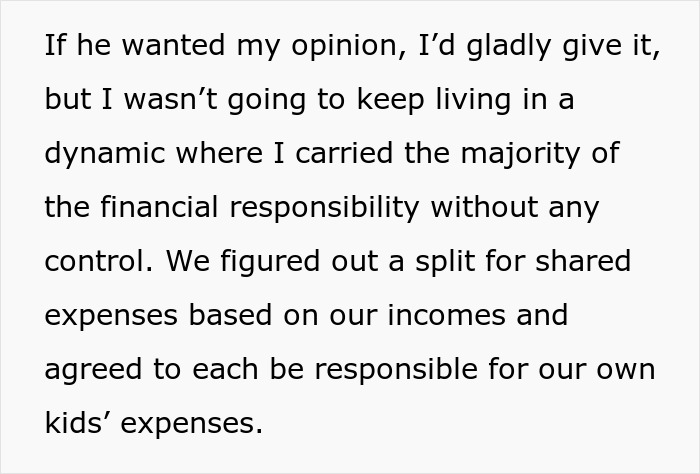
The husband didn’t support the OP when the disagreement happened. At that point, she proposed a different arrangement in which they would separate their finances and become primarily responsible for their own children’s expenses. They would still contribute to shared household costs except discretionary spending on the children.
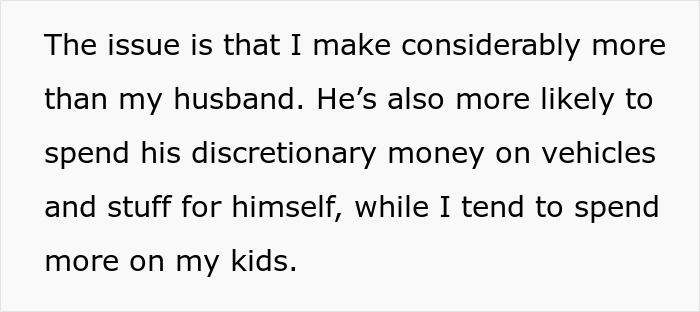
According to the OP, the new system has actually worked remarkably well for the marriage. However, because she and her husband had different spending habits, her biological kids seemed to enjoy a lot more things than the stepkids. After noticing this, the stepdaughter complained to her father that the OP’s kids were spoiled because they receive things she has had to pay for herself.
Some relatives also now discuss her behind the OP’s back, and are excluding her from family events because they consider her treatment of her stepkids unfair. The OP noted that she has no hand in preventing her husband from giving his daughter more money. She was then left wondering if she was wrong for still sticking to what she and her husband had agreed on.

lookstudio (not the actual photo)
Blended families can face difficulties when parents and stepparents aren’t clear about their roles and who has the final say in parenting decisions. BBC notes that establishing realistic expectations and responsibilities can help families adjust to new dynamics after remarriage.
When it comes to handling those financial responsibilities, The Dollar Stretcher points out that there isn’t one correct way for couples to organize their money. Partners can combine finances, keep them separate, or use a mixture of both, as long as they openly agree on how expenses and responsibilities will be handled.
However, reaching a practical financial agreement doesn’t necessarily make the situation feel fair to the children involved. Family Life explains that young people can be highly sensitive to how resources are distributed, particularly when they believe another child is receiving more. They add that while the adult may see different spending as the result of separate parental responsibilities, a teenager may see it as favoritism.
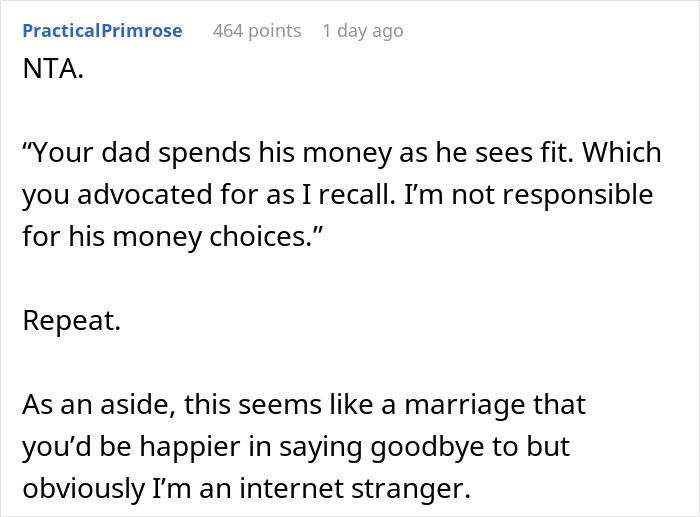
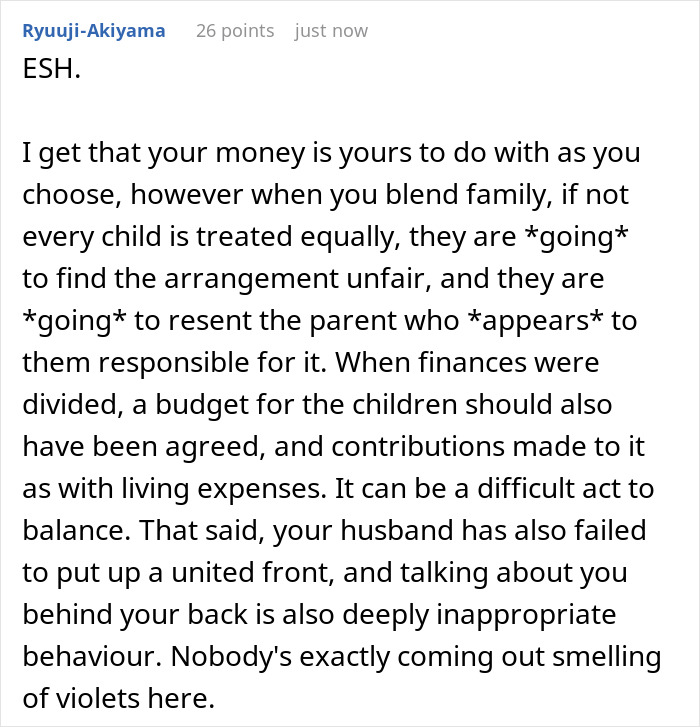
Netizens largely agreed that the OP wasn’t in the wrong, pointing out that her stepdaughter had previously insisted that her father’s spending was none of her business, anyway. What do you think about this situation? Is separating finances the best solution for this couple, or could it create more resentment? We would love to know your thoughts!
Netizens argued that the author’s husband hiding purchases from her and involving the children in keeping secrets suggested deeper problems in the marriage


















 Follow Us