Stepping up to the lectern at the front of the Colombian Senate last month, Juliana Domicó pulled the mic closer to be heard over a boisterous chamber. The renowned Emberá leader was in jubilant mood having just witnessed history: Colombia had become the first country in the Americas to pass a law aimed at eradicating female genital mutilation (FGM).
“This is not a cultural practice, ladies and gentlemen. It is a harmful practice that was imposed on our reservations and our communities,” declared Domicó, a senior representative of the Confederation of the Emberá Nation of Colombia (CONNPEC).
The June 10 vote came just ten days before the legislation was due to be shelved and marked a major milestone in a years-long campaign led by Indigenous women, several of whom were in the Senate chamber to witness the fourth and final vote needed to pass it into law.
Yet even now, no one, not doctors, not officials, not the government, can say with certainty how many girls have undergone the procedure, or how many remain at risk today.
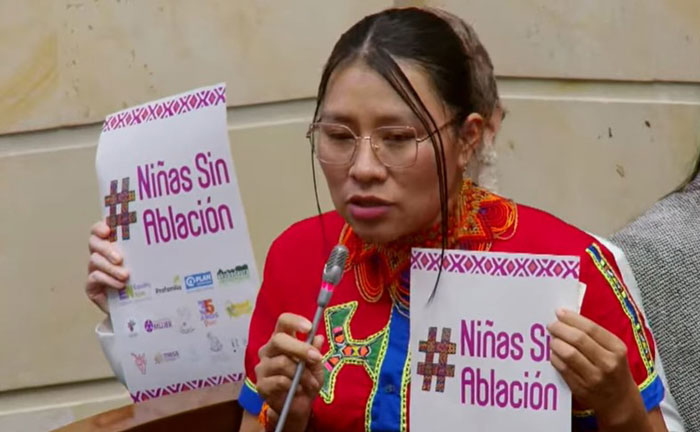
Juliana Domicó, a senior representative of CONNPEC, addresses the Colombian Senate on June 10, 2026 (Image credits: Canal Congreso Colombia)
FGM affects hundreds of millions of women and girls worldwide, but in the Americas the practice has only ever been documented among a handful of communities in western Colombia
“We, the Emberá women, have fought from within our territories and brought this proposal to Congress so that senators and members of the House of Representatives would help turn this bill into reality,” Domicó declared from the podium. “This law is a tool that will allow Emberá communities to continue this work.” FGM affects hundreds of millions of women and girls worldwide, however documented cases in Latin America have been confined to a handful of Indigenous communities in western Colombia, especially in the region where the departments of Chocó, Risaralda and Valle del Cauca meet.
That tri-border area sits inside ancestral territory of the Emberá Indigenous nation and is home to at least four distinct subgroups, of which the Embera Chamí have been a major focus of academic studies of FGM in Colombia over recent years. But the practice has also been reported in other subgroups, such as the Emberá Katío, as well as within other Indigenous nations, including the Nasa.

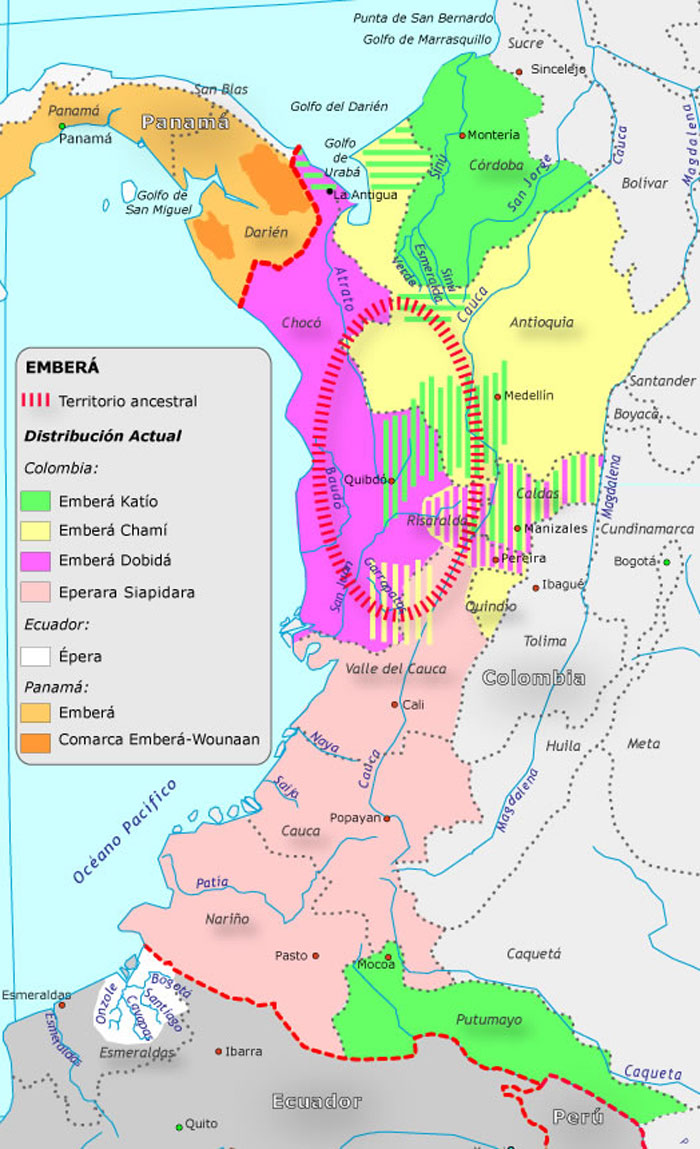
The distribution of major Emberá communities in the tri-border area (Image credit: Pueblos Originarios)
FGM came to national attention in Colombia in 2007 after the deaths of three baby girls, but the path from that scandal to a law took nearly two decades
FGM came to widespread attention in Colombia in 2007, after a report from local newspaper El Tiempo highlighted the deaths of three baby girls in Risaralda between 2004 and 2005 due to infections stemming from genital mutilations carried out within days of birth.
The exposé drew public outcry and prompted a years-long process of community dialogue, health initiatives and collaboration between Indigenous leaders and state institutions. The recently passed legislation came about after Indigenous women leaders sought support from lawmakers to push back on more punitive legislation that had been proposed.
In a conversation with Bored Panda held days after the final Senate vote, Domicó explained that Emberá communities had learned through experience how counterproductive hard-line measures against FGM can be.
“We also tried a punitive approach, but it proved ineffective,” she told me in a café in downtown Bogotá. “Instead, it simply drove the practice further underground.”
Domicó says the law she helped create in its place is built around prevention, education and community participation. But while she celebrates its passage, she also makes clear it is a watershed moment, not an end point, for the campaign.
“It requires sustained support, carried out in coordination with the communities,” she says, highlighting the need for “funding guarantees” from the government.
Implementation is hampered by the fact FGM persists in some extremely remote areas with a long history of state absence, where irregular armed groups control territory and often impose themselves as local authorities. Successfully applying the law therefore requires considerable and unrelenting effort from the government.
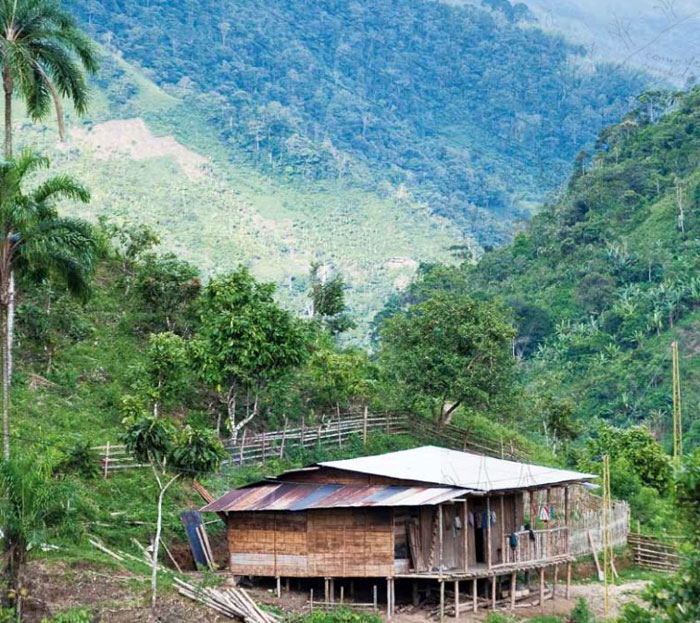
Some of the Emberá communities where FGM is most prevalent are in extremely remote and mountainous regions (Image credit: UNFPA)
Turning the new law into practice won’t be easy: many of the Emberá communities most affected by FGM lie in remote territories where the state has little presence and armed groups often hold real power
Commonly known in Colombia as ablation (ablación), FGM involves the partial or total removal of the external female genitalia for non-medical reasons. It has been documented in dozens of countries across Africa, the Middle East and parts of Asia.
An estimated 230 million women and girls alive today have undergone the procedure, according to the World Health Organization (WHO). Yet Colombia remains the only country in the Americas where the practice has been documented.
While researchers continue to debate how FGM came to the country, there is no evidence that it has ever been widespread among any of Colombia’s Indigenous populations. As Domicó points out, the practice does not appear in the Emberá Law of Origin – a sacred mandate detailing the ancestral science, knowledge, and spiritual laws of the nation.
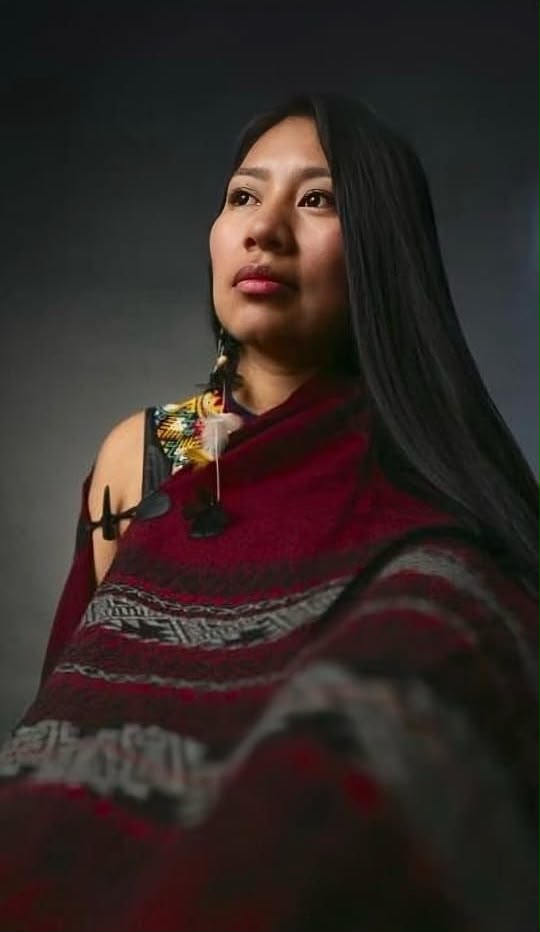
Juliana Domicó, senior representative of CONNPEC (Image credits: CONNPEC / supplied)
“None of our narratives or origin stories mention this type of practice,” she says. “In conversations with the communities, there is a belief that our practice was adopted during the colonization process. We think that one [explanation] might be our coexistence with the Afro-descendant population.”
Since the public outcry in 2007, governments, hospitals and community leaders have worked alongside Emberá women to better understand the practice and the factors that have allowed it to persist. But reliable data remain elusive.
Researchers and community leaders say FGM has been sustained among Indigenous communities by a range of superstitions. Some families believe cutting the clitoris prevents it from growing into a male organ or protects girls from future illness, while others regard it as a form of healing. Another common belief is that it makes women and girls more submissive and less promiscuous.
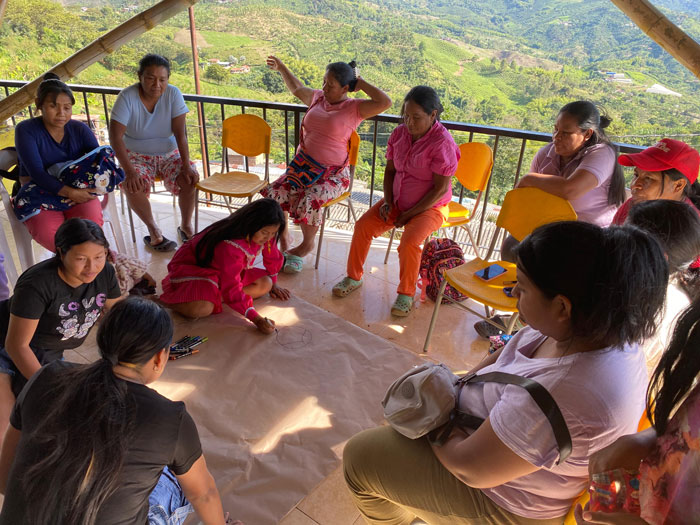
A women’s health workshop held in a remote Emberá community (Image credit: CONNPEC / Supplied)
No one knows how many girls have undergone FGM in Colombia, but one study suggests the death toll from the procedure could be as high as 30 percent
FGM is reportedly usually carried out within the first fifteen days of birth, and health professionals and child protection officials say many of the babies subjected to it are born far from formal health services. Cases are also often identified through different institutions that do not share a single reporting system. As a result, no one knows with certainty how many girls have undergone the procedure or how many remain at risk.
“There are no real figures,” says Dr. Leonardo Quintero Suárez, a forensic physician and researcher who has worked in Risaralda for three decades and has published multiple academic studies on FGM in the region. “Many births and even deaths occur outside the institutional health system, making the true scale of the problem difficult to determine.”
According to health sector officials and Indigenous women leaders consulted for a study co-authored by Quintero and published in 2021, up to 30% of the girls who undergo the procedure may die, mainly due to haemorrhaging or secondary infection.
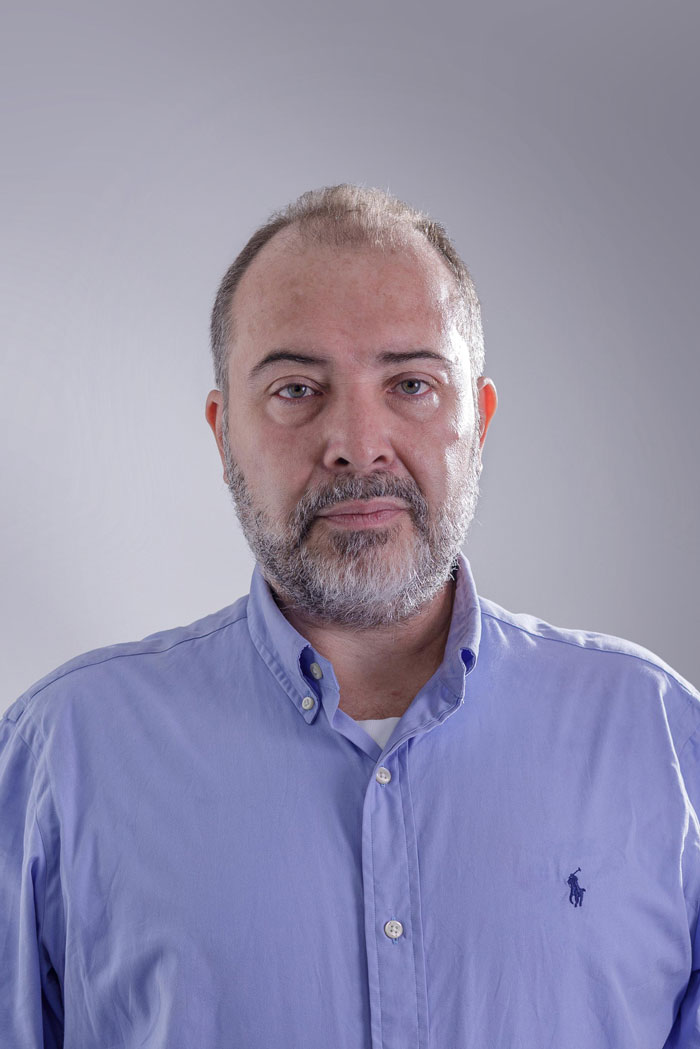
Dr. Leonardo Quintero Suárez (Image credit: supplied)
“And of course, the vast majority would be buried in their own community,” reads the study, pointing to the fact that a significant number of girls die without the state ever being aware they existed.
For those who survive, the consequences can still be severe. Depending on the type of procedure performed, girls may suffer persistent infections, chronic pain, complications during childbirth and lasting psychological trauma.
For campaigners seeking to end the practice, however, understanding those medical risks has only ever been one part of the challenge. Equally important has been finding a way to address them without alienating the communities whose cooperation is essential to protecting future generations.
A WHO educational video on FGM
What became known as the Girls Without Ablation Law (Ley Niñas sin Ablación) was first proposed in 2024, but years beforehand efforts to stop the practice were being led by Emberá women inside their own communities.
The 2007 outcry brought a wave of political will for change, and one of the most influential initiatives to emerge was Emberá Wera, a United Nations-backed program that ran from 2007 to 2012 and worked with traditional authorities to train Indigenous women to become community leaders and advocates against gender-based violence.
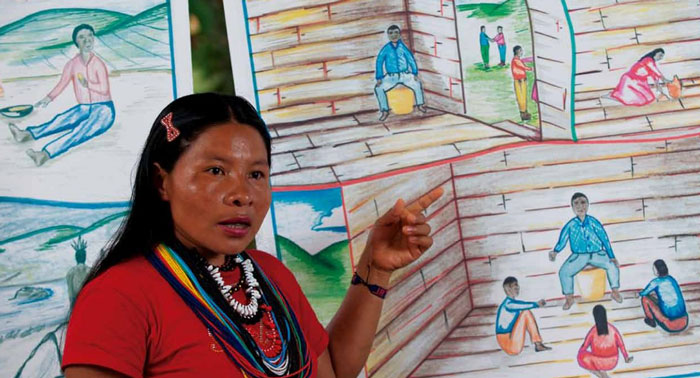
An Emberá woman leads a community discussion as part of the Emberá Wera project (Image credits: UNFPA)
According to Lina Marcela Tobón Yagarí, director of Indigenous legal advocacy organization Akabadaura, the programme was successful because it sought to create change from within communities, rather than impose it from outside.
That included strengthening Indigenous institutions by ensuring that traditional authorities and community leaders were made to feel part of the solution. It also meant educating the older women often responsible for carrying out FGM.
“It’s a belief held by grandmothers,” Tobón tells me in her office in Bogotá. “Many mothers sometimes act under social pressure as well. Grandmothers argue that it’s a cure. That’s what we need to work to change.”
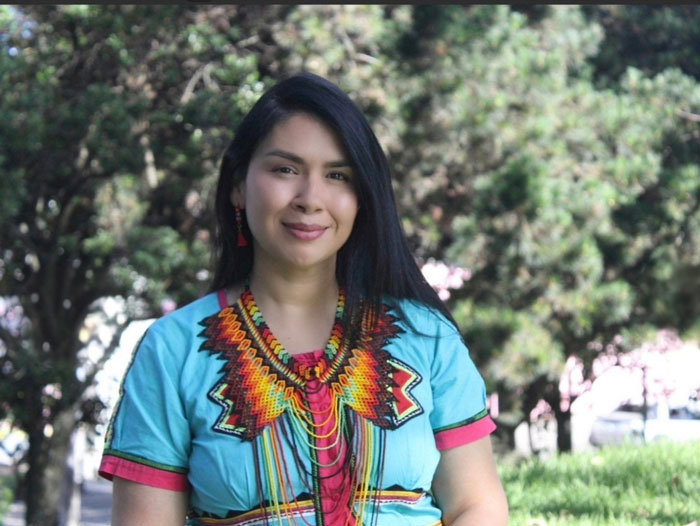
Lina Marcela Tobón Yagarí, director of Akabadaura (Image credit: supplied)
Changing an ingrained belief was never going to be easy, and some of the earliest activists faced threats of exclusion and even traditional punishment from their own communities
But convincing people to discard what has become an ingrained belief over generations is no easy task. Quintero recalls the courage he witnessed while carrying out field work among Emberá activists who challenged the practice despite intense pressure from within their own communities.
“I remember some of the interventions by Emberá women teachers working in rural areas,” he tells Bored Panda during a video call from his office in Pereira, the capital of Risaralda. “They became incredibly important leaders in Valle del Cauca and Risaralda. Despite having their entire community against them, despite opposition from their own families, despite being threatened with exclusion from the community—even being threatened with the cepo, their traditional form of imprisonment—they showed a path that others could follow.”
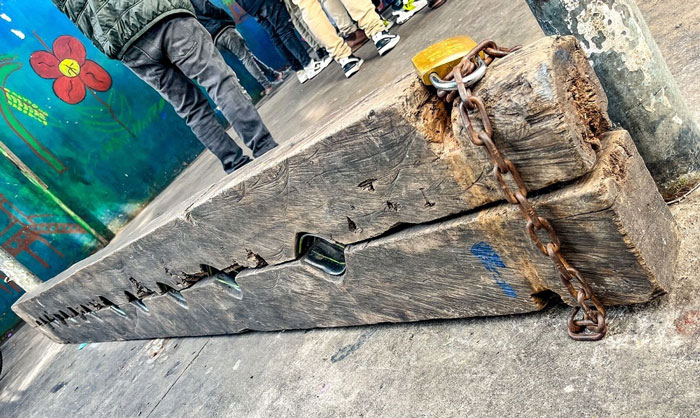
The traditional indigenous punishment device known as a cepo is a type of leg stocks. (Image credit: Bogotá Secretaría de Integración Social)
He also points to the experience of San Vicente de Paúl Hospital in Mistrató, a small town located around 51 miles (83km) north of Pereira, near a large Emberá Chamí reserve, where staff have spent decades working with traditional birth attendants, Indigenous healers and community leaders.
“They have 30 years of experience working with midwives, traditional doctors and the community as a whole, with very good results,” Quintero said, arguing that those efforts provide a model for institutions now tasked with implementing the new law.
For campaigners, such examples illustrate why legislation alone cannot eradicate FGM. Lasting change depends on women within the communities continuing the work they began years before the law was passed—challenging long-held beliefs, building trust with families and ensuring that future generations grow up without the practice becoming part of their lives.
Emberá Chamí women in the Kurmadó – Marsella Reserve
Getting from a punitive bill to one built on education took Emberá women persuading lawmakers across party lines that prison sentences would punish grandmothers, not stop the practice
The Girls Without Ablation Law first reached the Senate in May, almost two years after campaigners had persuaded lawmakers to abandon the original bill introduced in Colombia’s House of Representatives in July 2024, which would have criminalized FGM practitioners with prison sentences of up to 20 years.
As Tobón points out, that approach would have meant imprisoning “a bunch of older women, aged 60 to 80, who are the ones who bring life to their communities,” while risking the stigmatization of the wider Emberá nation, despite the practice being confined to a limited number of communities.
In search of a better alternative, Emberá women approached lawmakers from across the political spectrum to advocate for legislation centred on prevention, education and intercultural dialogue. The resulting proposal, presented to the House a month after the first, ultimately gained the backing of the sponsors of the original bill following consultation with Indigenous leaders and the cross-party coalition sponsoring the new bill.
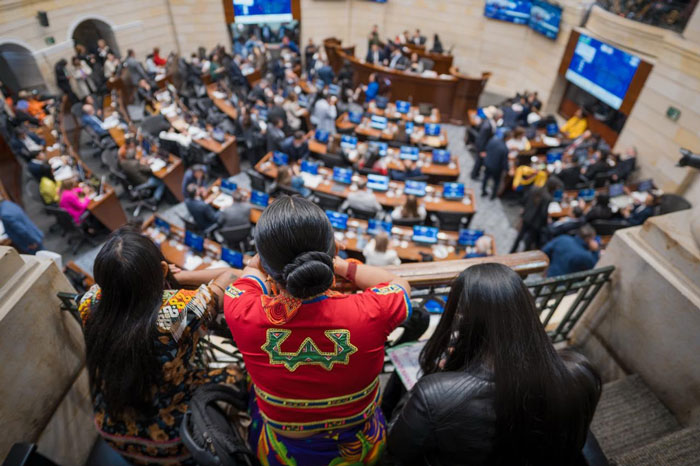
Emberá women leaders watch on during the final Senate vote on June 10 (Image credits: CONNPEC / supplied)
Among those lawmakers was Senator Carolina Giraldo Botero, a Green Party member who represents Risaralda.
“When we first began this work, many people thought punishment was the answer,” Giraldo tells Bored Panda during an interview given at the Colombian Congress days after the final Senate vote. “The women kept telling me, ‘We don’t want punishment, we want education.’ And we don’t want punishment because, even when punishment has been tried, it has only driven the practice further underground.”
According to Giraldo, everything she heard from Indigenous leaders and all of her own research pointed to one viable approach: “What we have to challenge are the beliefs behind the practice,” she says.
The law now requires the government to develop a coordinated national strategy involving the ministries responsible for health, education and equality, alongside child protection agencies and Indigenous authorities. It also mandates a national public policy and action plan aimed at preventing FGM, strengthening healthcare responses, improving reporting systems and expanding education programmes in affected communities.
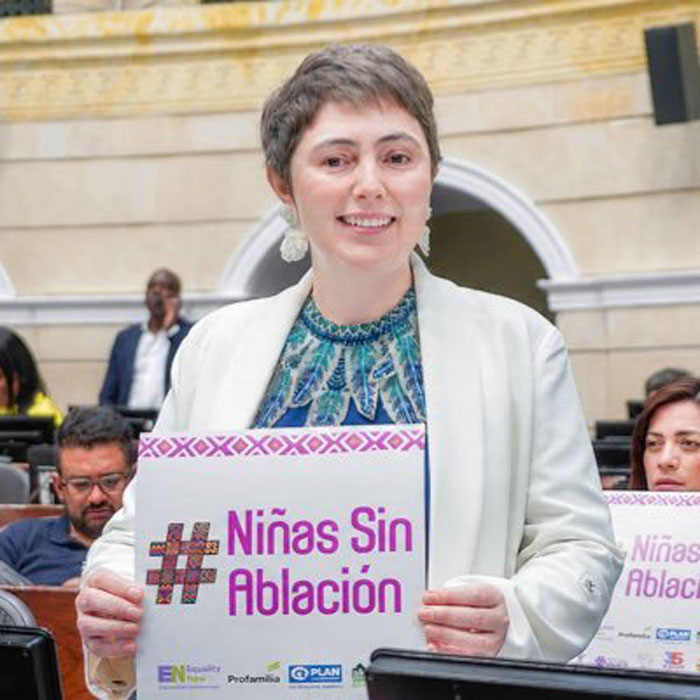
Senator Carolina Giraldo Botero (Image credit: Carolina Giraldo Botero / X)
The state’s own child welfare agency says the new law confirms what nearly two decades of work already taught it: FGM can’t be tackled through institutions alone
The Colombian Family Welfare Institute (ICBF), which has spent almost two decades working alongside Emberá communities on the issue of FGM, says the legislation strengthens an approach that was already moving away from purely institutional interventions toward one built on coordination with Indigenous authorities.
In email correspondence with Bored Panda, a representative for the agency pointed to a new interjurisdictional protocol agreed with the Emberá nation, specialised child-protection teams in Risaralda and new measures to improve information sharing between health authorities, family commissioners and child-protection agencies. The ICBF emphasized its support for the idea that lasting progress depends on sustained, intercultural work led jointly by the state and Indigenous communities, rather than legal sanctions alone.
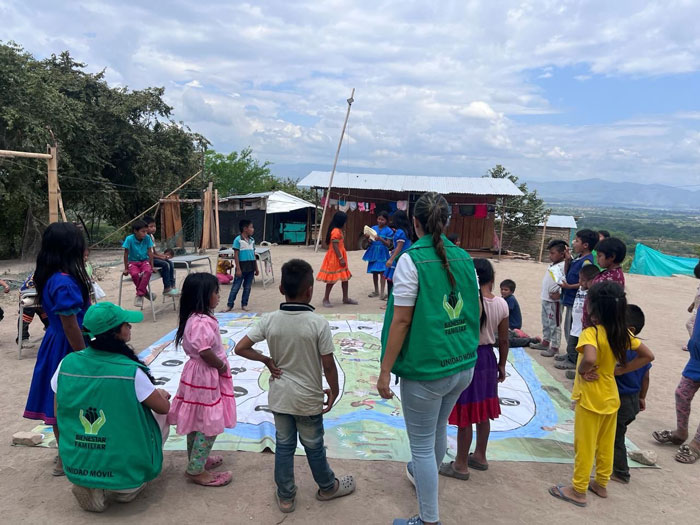
ICBF officials working with an Emberá community in the department of Huila (Image credits: ICBF)
Passing the law was only the first step, campaigners say, and its real test will be whether the government backs it with the regulations and funding needed to make it work
Campaigners, however, say the legislation will ultimately be judged not by what it promises but by what follows. Tobón warns that until the government issues the regulations needed to implement the law and provides dedicated funding, many of its commitments will remain aspirational.
“If the necessary resources are not allocated, the law risks becoming an ineffective legal tool that ignores the intercultural spirit promoted by the communities,” she says. “Without funding it will be impossible to support community dialogue, strengthen Indigenous justice, train traditional midwives and healers, or establish culturally appropriate care pathways.”
It is a warning that echoes the message Domicó delivered to the Senate moments after the historic vote. Nearly two decades after the deaths of three Emberá baby girls first drew national attention to the practice, she argued that the campaign had entered a new phase—one in which success would be measured not by the passage of a law, but by whether it reached the communities where girls remain at risk.
“There are many laws,” she told the chamber. “But for them to be carried out we need funding so we can continue working to eradicate female genital mutilation in our territories.”
 Follow Us