The worst fear of any frequent flyer is becoming a reality more and more frequently in recent years, causing injuries and putting lives at risk.
In the past, air turbulence — a phenomenon in which an aircraft experiences irregular drops, bumps, or jolts due to external causes — was mostly about passengers having to fasten their seatbelts mid-journey and go through a few seconds of worry.
However, turbulence has become more severe and common during flights in the last few decades, especially along some of the world’s busiest flight routes. Sometimes they even occur in otherwise favorable weather conditions, catching pilots by surprise.
A 2023 study by the University of Reading reported that drastic clear-air turbulence has increased by 55% over the North Atlantic regions and 41% over the US since 1979.
But the culprit here isn’t faulty aircraft or inexperienced crews, but an alarming environmental factor that even has pilots and aviation experts concerned.
“Whether we like it or not, the main reason is climate change,” said former airline captain Emma Henderson.
Global climate change is causing a higher number of air turbulence incidents, according to studies
Image credits: Getty Images/Unsplash (not the actual photo)
Thunderstorms usually cause air turbulence, but such severe weather is typically forecast in advance, allowing the crew to prepare accordingly.
Clear-air turbulence (CAT) is an invisible form of rough airflow, unpredictable and undetectable by in-flight weather radar, as it is not caused by clouds or storms but by wind shear (an abrupt change in wind speed or direction) in the jet streams.
A jet stream is a fast-flowing, narrow current of air meandering high in Earth’s atmosphere, typically between 30,000 and 50,000 feet, and driven by the temperature difference between the equator and the poles combined with Earth’s rotation.

Image credits: Hanson Lu/Unsplash (not the actual photo)
The University of Reading study found that wind shear in jet streams has increased by 15% since 1979, and a further 17%-29% increase is projected by 2100.
“Climate change is warming the air to the south of the jet stream more than the air to the north, so that temperature difference is being made stronger, which in turn is driving a stronger jet stream,” explained Professor Paul Williams, an atmospheric scientist at the institution.
“We can expect a doubling or tripling in the amount of severe turbulence around the world in the next few decades. For every 10 minutes of severe turbulence experienced now, that could increase to 20 or 30 minutes.”
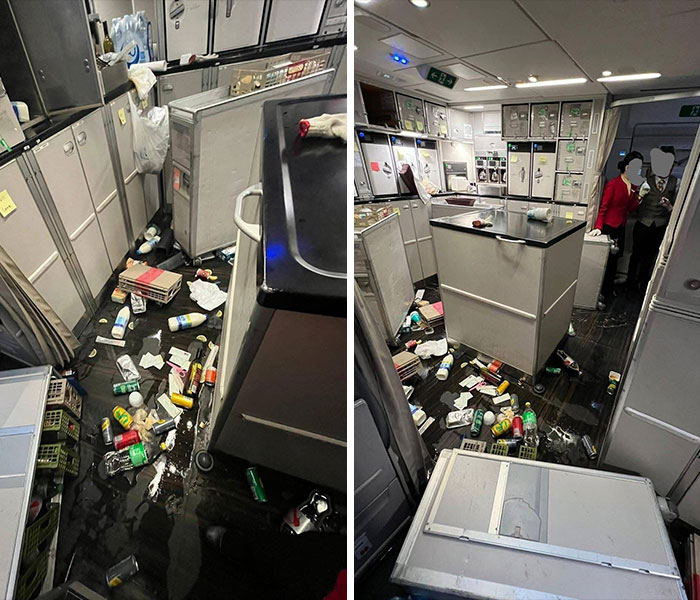
Image credits: Fahadnaimb/X
Ex-captain Emma Henderson, who is now a professional public speaker, explained why that is a problem.
“Climate models suggest that if global temperatures continue to rise, clear-air turbulence could become more frequent and more intense on some major flight routes, particularly across the North Atlantic and North America,” she said.
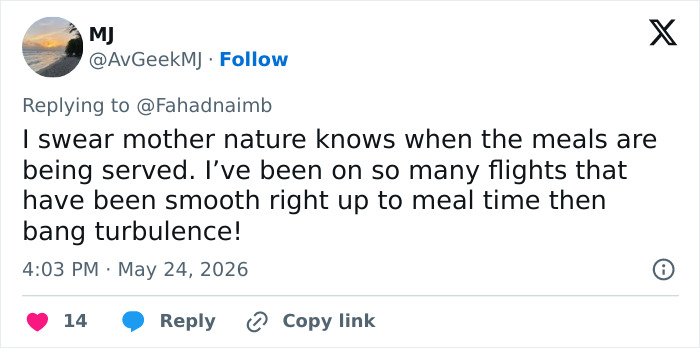
Image credits: AvGeekMJ
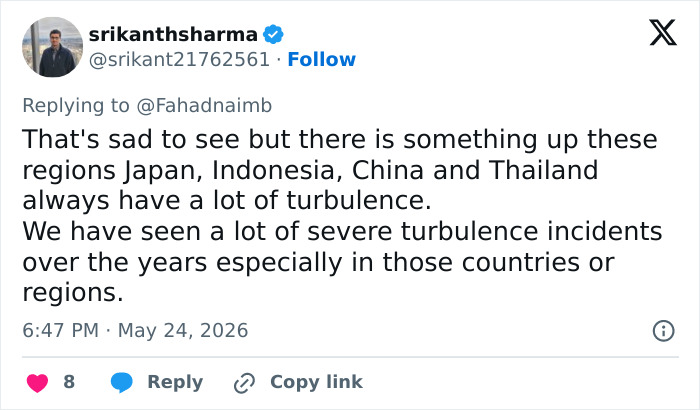
Image credits: srikant21762561
The Reading study found that flight routes in the Middle East and South Atlantic had also seen a significant increase in turbulence.
Henderson added that, with advanced weather forecasting systems, airplanes are now more successful in avoiding thunderstorm-triggered turbulence, and assured that technology can be used to better deal with CAT as well.
An American airline was sued last year over alleged air turbulence-related negligence
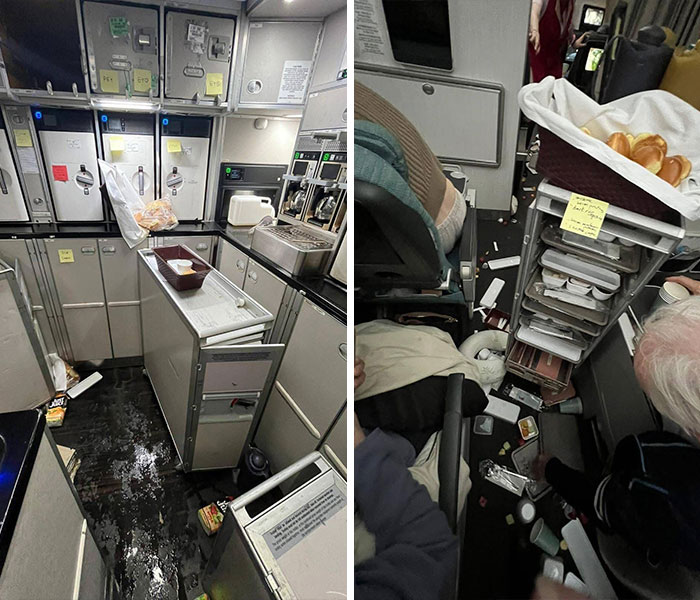
Image credits: Fahadnaimb/X
In general, airplanes are engineered, manufactured, and examined to fly safely through turbulent air, without mishaps, except for occasional violent jerks.
“In a 747 passenger aircraft, under ‘destructive’ testing, the wings are bent upwards by some 25 degrees before they snap, which is really extreme and something that will never happen, even in the most severe turbulence,” Chris Keane, a former pilot and now ground-school instructor, told the BBC in July 2025.
However, even if an aircraft and its crew are fully equipped to handle turbulence, the passengers may not be, and that poses a higher risk, according to Henderson.
“The biggest risk from turbulence isn’t the aircraft. It’s people inside the cabin who aren’t restrained,” she said. “Almost all serious turbulence injuries involve passengers or crew being thrown against the cabin because they weren’t strapped in.”
According to the annual safety report by the International Civil Aviation Organization, nearly 40% of severe injuries sustained by airplane passengers were caused by turbulence. While fatalities are rare, in the US alone, there have been 207 injuries since 2009, as per the National Transportation Safety Board.

Image credits: Andrej Lišakov/Unsplash (not the actual photo)
In 2025, America’s Delta Air Lines was sued by 20 passengers after a July 30 flight from Salt Lake City, Utah, to Amsterdam, the capital of the Netherlands, encountered severe turbulence over Wyoming.
The plane was forced to divert and landed in Minnesota, where 25 people had to be taken to the hospital with varying degrees of injuries.
The passengers reportedly described the turbulence as “2.5 minutes of terror,” and accused the pilots of flying “recklessly” close to a thunderstorm.
The plaintiffs’ legal representative, Aviation Law Group, said in a statement that the flight flew into “an area with dangerous convective activity and extreme turbulence, with the seatbelt sign off, beverage service underway, and without any warning to passengers or the flight attendants.”
Their statement also claimed that the pilots continued on their planned path despite weather warnings and an approved route deviation from the Air Traffic Control (ATC).
Increased turbulence comes with more cost than just safety risks, say experts
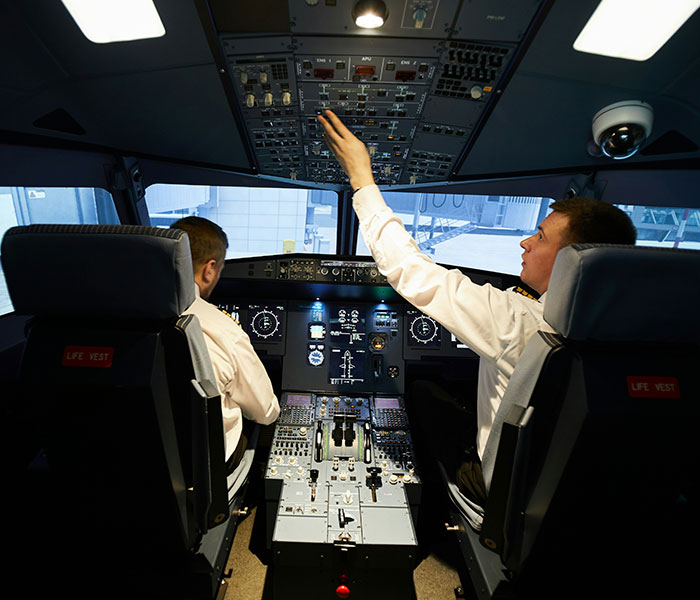
Image credits: Getty Images/Unsplash (not the actual photo)
The higher risk of air turbulence not only endangers lives during flights but also entails a series of back-end cost increases, similar to those in the aforementioned lawsuit, according to industry insiders.
In 2025, the BBC reported that AVTECH, a tech company that helps British authorities predict turbulence, said the cost of the procedure could range from £180,000 (about $243,000) to £1.5 million (about $2.03 million) per airline annually.
This includes the costs of checking and maintaining aircraft after severe turbulence, compensation costs if a flight is diverted or delayed, and costs stemming from the aircraft being in the wrong location.
Changing flight paths could also congest air traffic and make certain busy regions even more crowded, thereby increasing workload for pilots and ATC units.
Then there is the environmental cost, which caused the issue in the first place, thereby making it a cyclical trap.
Eurocontrol, a civil-military organization dealing with the impact of climate change on European aviation, said that in 2019, air turbulence forced airlines to fly one million extra kilometers, producing 19,000 extra tonnes of CO2.”


But the circumstances aren’t as bleak as they appear, according to experts.
Professor Williams suggested that about 75% of CAT can be correctly forecast at the moment, whereas 20 years ago, it was about 60%.
Captain Nathan Davies, a commercial airline pilot, said that airlines “produce a flight plan that details areas of turbulence likely throughout the route, based on computer modeling.”
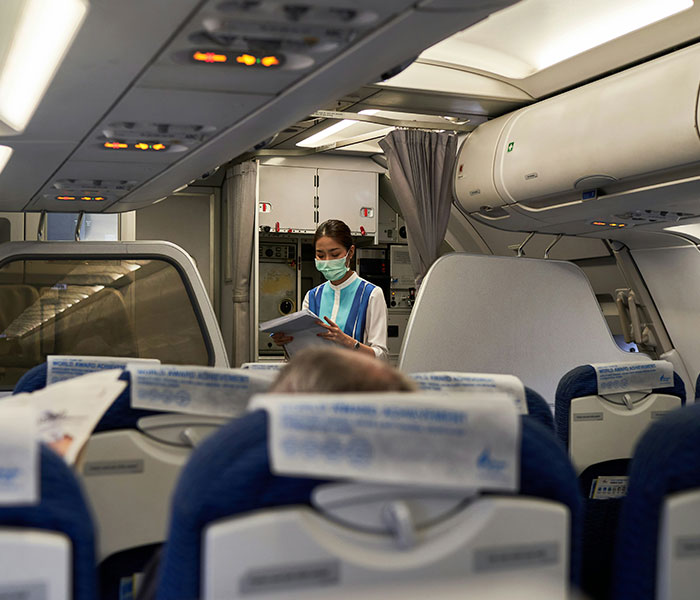
Image credits: Nobert Braun/Unsplash (not the actual photo)
Among other efforts are Southwest Airlines’ decision to end cabin service earlier, at 18,000 ft instead of 10,000 ft, to reduce turbulence-related injuries by 10%, and Korean Airlines’ decision to stop serving noodles to avoid hot-water burns.
The California Institute of Technology (Caltech) is currently researching the FALCON (Fourier Adaptive Learning and Control) technique, which uses AI to observe and anticipate how turbulent airflow over a plane’s wings behaves in real time.
However, they’re unlikely to appear in large commercial aircraft within the next couple of decades.
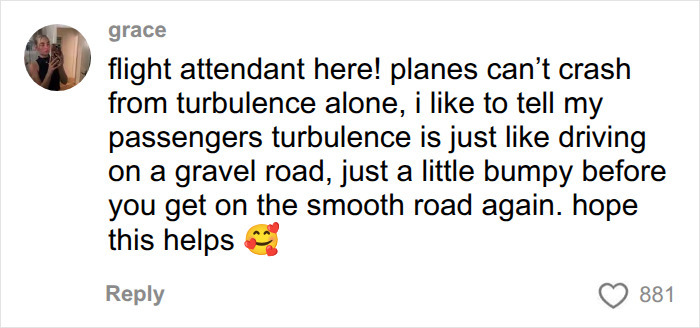
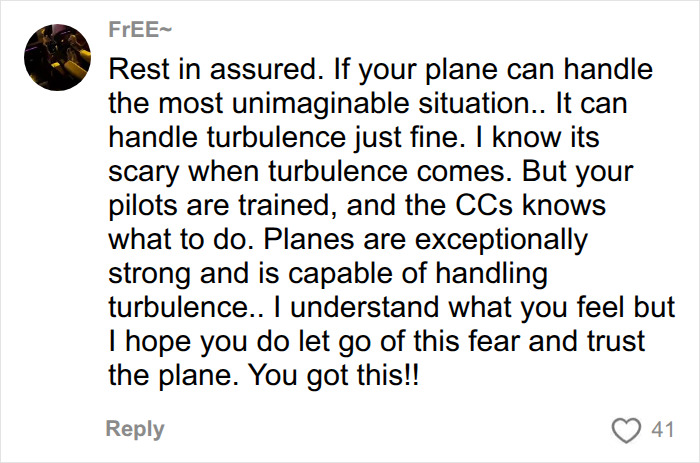
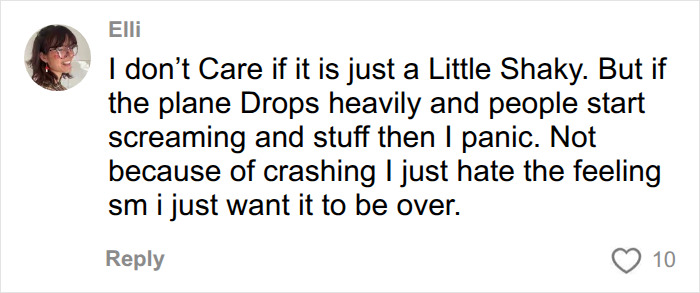
“Planes can’t crash from turbulence alone.” The internet reacted to the trend of increasing flight turbulence






 Follow Us