Children often nod, say “okay,” or quietly go along with what adults say, giving us the impression that they understand. But the truth is that they are often confused, overwhelmed, embarrassed to ask, afraid of disappointing us, or simply unaware that they have misunderstood. As adults, we sometimes forget how much of what feels automatic or obvious to us was learned through years of teaching, practice, observation, mistakes, and life experience.
To better understand this topic, Bored Panda reached out to parenting expert Celia Kibler, who kindly shared her insights on why children often pretend to understand things they actually find confusing or stressful, and what parents can do to better support them.
As the expert points out, parents often mistake familiarity for understanding. Just because we’ve done something thousands of times doesn’t mean our child knows where to begin. As a parent, it’s important to remember that your brain is far more developed than your child’s, and many things that seem obvious to you simply aren’t yet within your child’s ability to understand. They’re not being difficult – they often just haven’t developed the knowledge or experience yet.
With that in mind, here are 19 things children may appear to understand but often interpret very differently from what adults intend.
More info: Instagram | Facebook | beabetterparent.com | dayofcalm.org | funfit.com

#1 General Instructions Like “Clean Your Room,” “Set The Table,” Or “Make Your Bed”
Adults often give children broad instructions because we understand all the smaller steps hidden inside them. We have cleaned rooms, made beds, and set tables hundreds, perhaps thousands of times. The process feels automatic to us.
But a child may hear “Clean your room” and genuinely not know where to begin. Should they pick up the clothes? Put away the toys? Make the bed? Throw away the trash? Where does everything belong? What sounds like one simple request may contain dozens of decisions and individual tasks.
Before expecting children to complete a larger job independently, teach it step by step. Instead of repeatedly saying, “Clean your room,” try: “First, put all the dirty clothes in the hamper. Then come back, and we’ll find the next step.”
As children practice each part, the smaller steps eventually become one familiar routine. Only then does “Clean your room” carry the same meaning for them that it carries for us.


Image source: Celia Kibler, Ivan S / Pexels
Celia explained that one of the biggest parenting mistakes is not expecting too little from children, but expecting understanding before we have actually taught understanding.
“It is important to remember that by 25 years, human brains are fully developed and we must not expect our child to respond to a request or understand one as an adult would.
Children do not learn simply because we explained something once. They learn through repetition and because we teach, model, practice, encourage, and repeat skills over time.
As adults, we have decades of experience that make everyday tasks, social expectations, emotional language, and problem-solving feel obvious. Children are still building that cognitive ability and experience.”
#2 Consequences That Don’t Connect To The Behavior
One of the biggest misconceptions in parenting is assuming children understand the lesson behind every consequence.
If a child leaves toys on the floor and loses screen time later that evening, they may understand that something they enjoy was taken away, but not what the consequence was intended to teach.
The further a consequence is removed from the behavior, the more difficult the connection may be for a child to understand, especially when they are young.
Consequences are most effective when they are logical, timely, and connected to the situation.
If toys are left on the floor, the lesson may be learning to stop and put them away before moving on to another activity. The goal should not simply be to make children unhappy because they made a mistake. It should be to help them understand what to do differently next time.

Image source: Celia Kibler, Monstera Production / Pexels
#3 “Be Good”
Parents usually say “Be good” with positive intentions. We may mean: Be respectful. Listen. Be kind. Follow the rules. Make good choices. But children may hear something very different, “Am I usually bad?”
If children are repeatedly reminded to “be good,” they may begin to associate mistakes or challenging behavior with being a bad person. Children benefit from specific expectations rather than labels. Instead of “Be good at Grandma’s house,” try, “Use your inside voice, keep your feet on the floor, and ask Grandma before taking anything.”
Specific expectations give children something they can understand and accomplish.

Image source: Celia Kibler, Tiger Lily / Pexels
Celia encouraged parents to slow down, be more specific, explain the “why,” break larger expectations into smaller steps, and focus on teaching rather than assuming. When children feel supported instead of judged, they become more confident, capable, cooperative, and more willing to communicate.
As the expert emphasized: “The goal is not simply to raise children who follow directions. It is to raise children who genuinely understand and feel safe enough to tell us when they do not.”
#4 “Good Job”
Parents say “Good job” with wonderful intentions. The challenge is that it can be so broad that children may not know exactly what they did well. If they don’t know what they did well, they won’t repeat it to make you proud (which they actually do want to do).
Specific encouragement gives children more information:
“You kept trying even when that was difficult.”
“I noticed that you shared with your brother.”
“You remembered to put your shoes away without being reminded.”
Compliments can become even more confusing when praise is immediately followed by criticism: “You did a great job cleaning your room, BUT you left a shirt in the corner.”
The parent may believe they offered both a compliment and helpful feedback. But the child may hear, “It still wasn’t good enough.”
The word “but” can erase everything that came before it. Instead of feeling proud that they completed a big task, the child’s attention immediately shifts to the one thing they missed. That compliment has now become criticism.
Try allowing the compliment to stand on its own: “You worked hard cleaning your room. Look how much you accomplished!”
If the forgotten shirt needs attention, address it separately: “There’s one shirt left in the corner. Where does that belong?”
A compliment does not have to mean everything was perfect. It can simply mean we noticed the effort, growth, or accomplishment.

Image source: Celia Kibler, cottonbro studio / Pexels
#5 “Stop Being A Baby”
What does “Stop being a baby” actually mean? Does it mean to stop crying? Stop feeling scared? Stop asking for help? Stop needing comfort?
Depending on the child’s age, they may still be very young. Even older children sometimes need reassurance, connection, and support.
Children may understand that the adult disapproves of their reaction without understanding what they are expected to do instead.
Rather than criticizing the emotion, teach the skill, “I can see that you’re upset. Tell me what happened.”
“Let’s take a breath together and figure out what you need.”
Children grow through guidance and coaching, not shame.

Image source: Celia Kibler, Vika Glitter / Pexels
Celia Kibler is a Family & Relationship Empowerment Coach, parenting expert, international speaker, and award-winning author with more than 40 years of experience working with children and families. She is the founder of BeABetterParent.com and the Be A Better Parent App and the creator of The Parenting Puzzle System™, a personalized approach that recognizes every family is different. By looking at each family’s needs, personality, development, strengths, and challenges, along with the family’s relationships and dynamics, parents discover the tools, strategies, and support that fit their family and create their own formula for a calmer, more connected home.
A mother of five in a successfully blended family for more than 30 years and a grandmother of nine, Celia combines decades of professional experience with real-life parenting wisdom. Her mission is to help 50 million parents stop yelling at their children and create childhoods their children can blossom from, not recover from.
#6 “Use Your Words”
“Use your words” sounds like a simple instruction. But children may not know which words to use.
A child who is angry, embarrassed, disappointed, jealous, frightened, or overwhelmed may not yet have the emotional vocabulary to explain what is happening inside them.
Instead of only saying, “Use your words,” offer language, “Are you angry because your brother took the toy?”
“You can say, ‘I’m still using that. Can I have it back?’”
Children cannot consistently use language they have never been taught or don’t have full command of yet. Emotional vocabulary develops through modeling, practice, and repetition.

Image source: Celia Kibler, Anna Shvets / Pexels
#7 “Calm Down”
In the history of “calm down”, no one has ever calmed down, by being told to “calm down.” This goes for your child. When a child’s nervous system is overwhelmed, calming down may not feel like anything they can do.
“Calm down” tells children what adults want, but not how to get there. Calming is a learned skill.
Children may need help identifying their emotions, slowing their breathing, moving their bodies, taking space, receiving comfort, or feeling understood before they can think clearly again.
Instead of demanding calm, give them a chance to regulate, then help create more calm. You can say things like, “You’re having a hard time. I’m here.”
“Let’s take some slow breaths together.”
Over time, children can learn to use these tools independently. But they learn regulation first through calm, supportive adults.

Image source: Celia Kibler, Meruyert Gonullu / Pexels
Just for our readers, Celia offered a free Parenting Success Snapshot to help parents better understand their parenting strengths, challenges, and areas where they may benefit from additional support. Readers can take the snapshot at Snapshot.beabetterparent.com.
#8 “Be Careful”
Children hear “Be careful” all the time. But careful doing what? Should they walk more slowly? Hold on?
Watch where they are stepping? Move something away from the edge? Use two hands? General warnings may create worry without giving children useful information.
Specific coaching is clearer, “Hold the railing while you walk down the steps.”
“Carry the glass with two hands.”
“The rocks are slippery, so take slow steps.”
Children are more successful when they know what safe behavior looks like and often become fearful about trying new things when always worried that something might happen from hearing “be careful” too often.
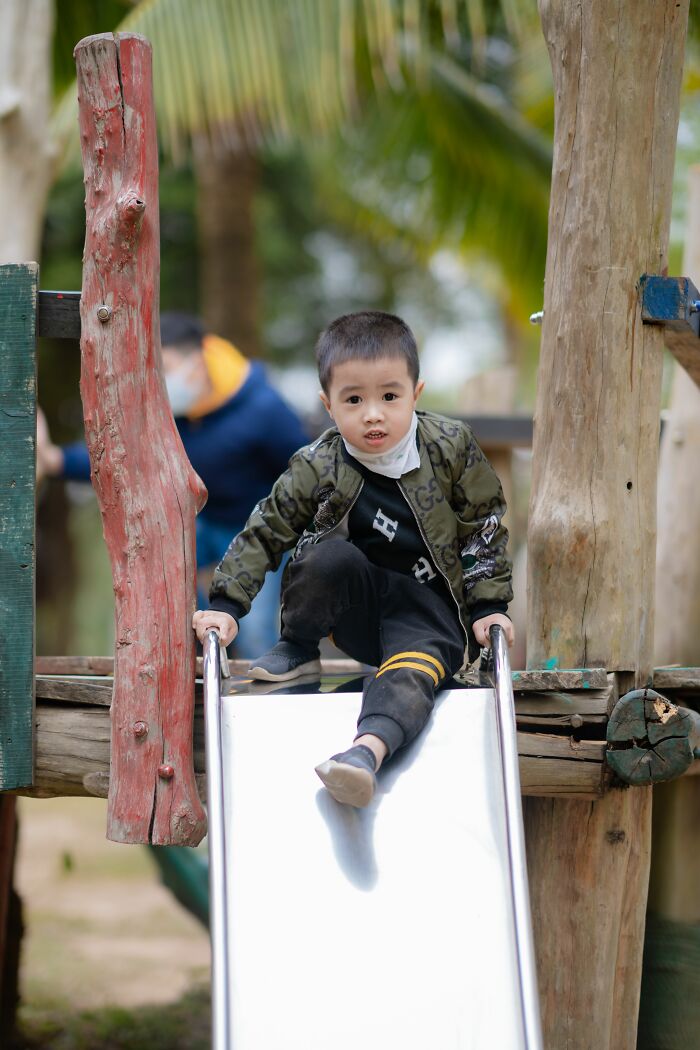
Image source: Celia Kibler, Tuấn Kiệt Jr. / Pexels
#9 “Use Common Sense”
Adults often say “Use common sense” when they believe the answer or appropriate behavior should be obvious.
But much of what adults call common sense is knowledge gained through years of experience, observation, mistakes, repetition, and being taught, something kids don’t have.
A child may not automatically know that wet shoes make a floor slippery, that placing a glass near the edge of a table makes it easier to knock over, or that leaving a wet towel on a bed will make the bedding damp.
Instead of criticizing children for not knowing what seems obvious to us, explain the connection, “Move your glass farther from the edge so it doesn’t get knocked over.”
Children are not born with common sense. They develop good judgment through guidance, experience, and practice.
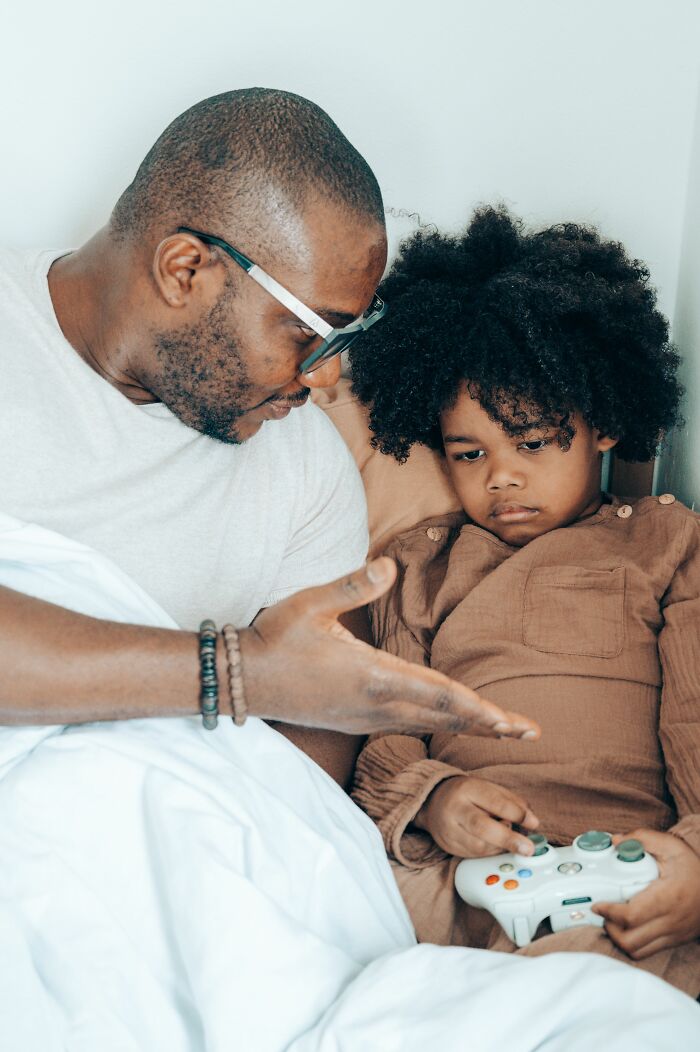
Image source: Celia Kibler, Ketut Subiyanto / Pexels
#10 “You Should Know Better”
Sometimes children truly do not know better.
Other times, they know the rule but cannot consistently apply it yet. A child may remember expectations during a calm moment but struggle when tired, hungry, excited, distracted, embarrassed, frustrated, or emotionally overwhelmed.
Knowing something and consistently doing it are two different developmental skills.
Instead of assuming defiance, ask, “What happened?”
“What made that difficult?”
“What can we do differently next time?”
Children often need reminders and repeated practice before knowledge becomes a dependable skill.
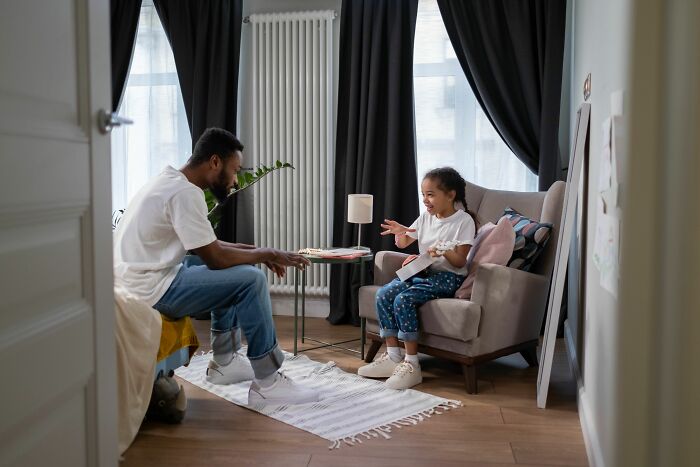
Image source: Celia Kibler, cottonbro studio / Pexels
#11 Sarcasm And Teasing
Many children interpret language literally depending on their age. Up to 5 or 6 years, children don’t truly know the difference between fantasy and reality. When adults use sarcasm, children may believe exactly what was said, even when the adult intended humor.
A parent might look at a messy room and say, “Wow, this room looks amazing.” An adult recognizes the sarcasm. A young child may feel confused or embarrassed. Even playful teasing can be misunderstood when children do not yet recognize tone, exaggeration, or hidden meaning.
Humor is valuable in families, but children should not have to wonder whether they are being laughed with or laughed at.

Image source: Celia Kibler, Skyler Ewing / Pexels
#12 Mixed Messages From Adults
Children pay attention to much more than words. A parent may say: “I’m fine.” But their facial expression, tone of voice, body language, or silence communicates anger or frustration.
Children notice the mismatch but may not understand it. Some begin wondering whether they caused the problem or whether they can trust what they are being told.
Clear, age-appropriate honesty is often less stressful, “I’m feeling frustrated right now, but it isn’t your responsibility to fix it. I need a few minutes to calm down.” When our words and behavior match, children feel more secure.

Image source: Celia Kibler, Keira Burton / Pexels
#13 “That’s Not Fair”
When children say, “That’s not fair,” adults often respond, “Life isn’t fair.”
While that may be true, fairness may not be what the child is really trying to communicate.
Often, “That’s not fair” means “I’m disappointed.”
“I wanted another turn.”
“I wish I could have what my brother has.”
“I’m sad that I wasn’t chosen.”
Children may not yet have the language to identify disappointment, so they describe the experience as unfair.
Acknowledging the feeling does not mean changing the decision, “I understand. You really wanted another turn, and you’re disappointed that it’s time to leave.”
Children are often better able to accept a limit after they feel understood. It doesn’t hurt to explain fairness either. Not getting the color they wanted in school is actually very fair, as a teacher cannot cater to every request. Help them to understand disappointment vs. fair.

Image source: Celia Kibler, Ejov Igor / Pexels
#14 Time: “Soon,” “Later,” “Tomorrow,” Or “Next Week”
Time is invisible and surprisingly abstract for children.
Five minutes may feel like an hour when they are waiting for something exciting. “Next week” may have very little meaning without something concrete to help them understand it.
Visual timers can make shorter periods easier to see. Large wall calendars can help children understand longer periods of time. They can cross off days, count how many sleeps remain, and see birthdays, vacations, school events, family visits, or schedule changes approaching.
Making time visible can reduce repeated questions, improve patience, and help children feel more prepared.

Image source: Celia Kibler, Mikhail Nilov / Pexels
#15 Lying Versus Storytelling
Young children are sometimes accused of lying when they may actually be experimenting with imagination or blending fantasy and reality. Remember that a young child does not know the difference between fantasy and reality, so they are not saying certain things to spite you.
A preschooler may insist, “A dinosaur broke it. There was a dragon outside.”
Adults know these things are unlikely, but young children are still developing their understanding of what is real, imagined, possible, and pretend. Children have been taught storytelling almost from birth.
Intentional lying involves deliberately trying to deceive someone. Storytelling and imaginative thinking are part of normal development.
That does not mean honesty should not be taught. It means adults should consider the child’s age, development, intention, and understanding before assuming dishonesty.
We can respond with curiosity, “That sounds like an exciting story. Now tell me what really happened.”

Image source: Celia Kibler, Ketut Subiyanto / Pexels
#16 “Share”
Adults often use the word “share” when they mean, “Please give someone else a turn.” But a child may hear, “Give away something that belongs to you.” Imagine an adult walking up to you while you are using your phone and saying, “You need to share.”
Most adults would want to know why, with whom, and when they would get it back. Children benefit from learning the specific skills involved, “You may finish your turn, and then your brother may have a turn.”
“Ask before taking something that belongs to someone else.”
“She said no, so you need to choose another toy.”
It’s important to remember that we are not born with compassion. Sharing is an act of compassion and therefore needs to be taught. Taking turns, asking permission, waiting, and respecting belongings are clearer skills than simply telling children to share.
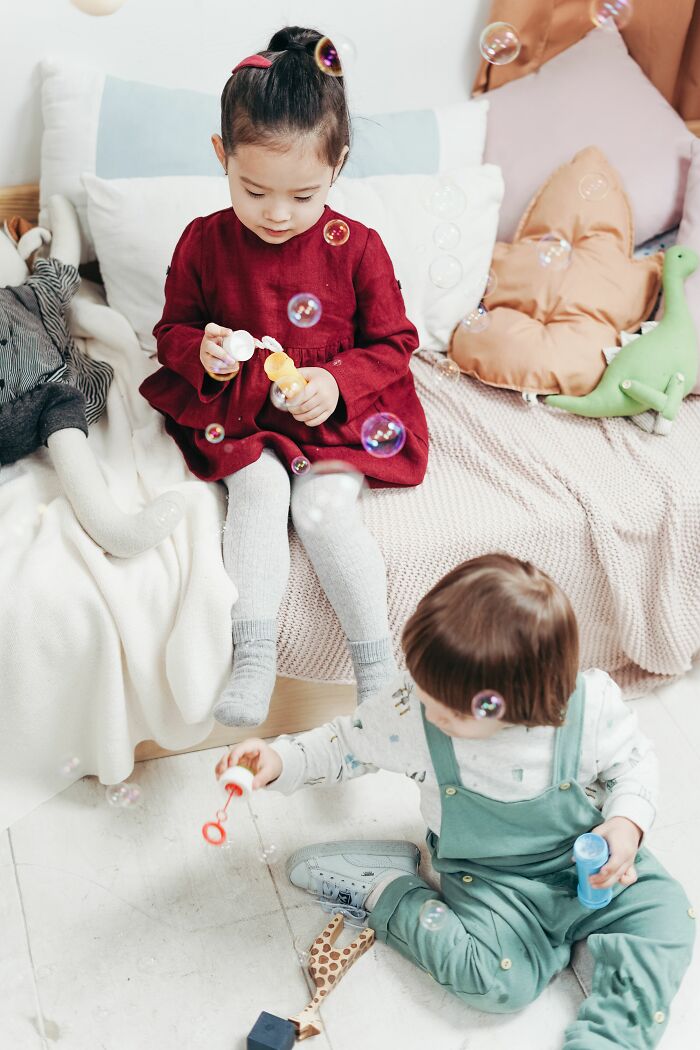
Image source: Celia Kibler, cottonbro studio / Pexels
#17 Adult Conversations They Overhear
Children hear more than adults realize.
They may overhear conversations about money, work, illness, divorce, relationships, moving, school concerns, or family conflict.
Even when they do not understand the words, they often absorb the emotions. Children naturally try to fill in missing information, and their imagined explanation may be more frightening than reality. They may also assume they caused a problem that has nothing to do with them.
When children overhear something concerning, offer a simple, age-appropriate explanation and allow questions.
“You heard us talking about money. The adults are working on it, and you are safe and cared for.”
Children do not need every adult detail, but they do need reassurance and clarity.

Image source: Celia Kibler, Ketut Subiyanto / Pexels
#18 “You Can Tell Me Anything”
Most parents mean this sincerely. We want our children to come to us when they are worried, confused, in trouble, or facing something difficult.
But children do not decide whether it is safe to talk to us based only on what we say. They watch how we respond to smaller things first.
If admitting a mistake leads to yelling, a long lecture, immediate punishment, criticism, or disappointment, children may hesitate to share something bigger later, even after being told, “You can tell me anything.”
Creating open communication does not mean parents approve of every choice or avoid consequences. It means listening before reacting, asking questions before assuming, and helping children understand that telling the truth will not cost them their connection with us.
Children are more likely to bring us their biggest problems when we have shown them that we can calmly handle their smaller ones.

Image source: Celia Kibler, Monstera Production / Pexels
#19 That Mistakes And Questions Are Safe
Children sometimes pretend to understand because they do not want to disappoint us, appear incapable, be embarrassed, or get in trouble.
They may nod when they are confused. They may say “okay” because they think they are supposed to know. They may avoid asking for help because they are worried an adult will respond, “I already explained this.”
They may not even speak up for fear that they will say the wrong thing and be judged.
“You weren’t listening. You should know this by now.”
When adults respond to questions and mistakes with curiosity rather than criticism, children become more willing to admit confusion and genuinely learn.
Try asking, “Would you like me to explain that another way?”
“Do you want me to show you the first step?”
“What part feels confusing?”
The safest learning environment is not one where children never make mistakes. It is one where children are not afraid to make them.

Image source: Celia Kibler, Kampus Production / Pexels
 Follow Us