Your first impulse when you meet a new person is probably to trust them. Why wouldn’t you? You don’t know anything about them, so why would you assume the worst? Well, apparently, not everyone deserves to receive the benefit of the doubt. But it might take extreme attention to detail to determine who does and who doesn’t.
Highly observant people have recently been opening up on Reddit about the nearly imperceptible traits that they notice to determine a person’s true intentions. Whether it’s reading into every word they say or noticing small changes in body language, these traits and behaviors might provide some insight into what a person is really thinking. Below, you’ll find all of their most fascinating replies, so be sure to upvote the ones that you’ll start noticing from now on too.
#1
How they treat people they don’t need anything from. It’s surprisingly hard to fake consistently.

Image source: tretschinken, cottonbro studio

#2
You can get a pretty good sense of a person’s deepest fears and insecurities by paying close attention to the things that upset them. People react angrily when they are confronted by things that invoke their inner fears.
This is true in many contexts, but I’ll give an extreme example to illustrate: neither securely heterosexual men nor openly gay men get angry if you call them gay, but a latent or closeted gay man will get furious if you call him gay. Whenever you come across a homophobe, 99 times out of 100 that dude is fighting down some inner demons.

Image source: sharkthemark420, Timur Weber
#3
When someone is effusively nice. I’m not talking about genuinely kind people, I mean fake niceness. It means they want something.
I used to work with a guy who was like this. I give a presentation, “oh my god, that was brilliant.” I write a video, “you have more talent in your pinky than I have at all.” Direct quotes. I’d ask him to stop, and he’d say something like “but I can’t ignore your talent!”
It stopped the literal day he realized that I did not have the power to promote him. Within a week, he was making comments to me like “stick to your job” and “you’re a little [drama]-stirrer.” Saw it coming from jump.
Image source: Call_Me_Egg, Xhemi Photo
#4
How they talk about other people when they are not around is one of the biggest things I pay attention to. I don’t just base my opinion of people off of how they treat me directly but how they treat others, especially when they don’t get their way. Are they happy for their friends or are they just thinking, “must be nice for them” when they get opportunities they don’t have? Are they ever the villain in their stories or are they always the victim with zero account of their own actions? Do they respond to the things you say, or just move onto whatever semi-related thing they already decided they want to say? Do they ignore harmful behavior in their friends just because they aren’t personally affected?

Image source: hexensabbat, Nataliya Vaitkevich
#5
The assumptions they make about other people’s intentions tells you more about a person than almost anything else.

Image source: dinkinflicka02, A. C.
#6
Notice how they handle disagreement. Character usually shows up under stress, not comfort.
Aerhyce:
Admitting mistakes as well.

Image source: EldritchflareiveRot, Liza Summer
#7
Doing something good when they think no one is watching.

Image source: GordonGartrellShirt, Julia M Cameron
#8
When there is always an excuse and no accountability.

Image source: MercyDivineOF, Roberto Hund
#9
If it’s not an immediate yes, it’s a no. Also the opposite is true.
People usually dont want to outright give you the answer you dont want to hear and are happy to dress it up rather than being straightforward.
Image source: HigherDimension, Pavel Danilyuk
#10
Outward denial of their true intent. “I’m not here to make trouble for you…” Yes you are. “I would never say that about her.” Yes you did.

Image source: psilome, Mimi Thian
#11
How people treat their kids. I had a neighbour who was so falsely nice to everyone, but I kept catching her sneering and seething at her kids for the most benign reasons. I could see her mean streak a mile away but everyone thought she was a ray of sunshine. Low and behold it all came out her and her boyfriend have been putting her hands on her 14 year old son and he’s just been sent to live with his grandmother by social services.

Image source: Wooden-Coat7162, Gustavo Fring
#12
The subtle way that they treat people who are “below their social status”. It’s hard to explain, but they will act really bubbly and talkative with people who they view as their equals. But if someone else tries to talk to them who they see as not good enough for them, they will give them this blank stare and one word answers.
Image source: Joyful_cheesecake, ABNER LOBO
#13
People often accuse others of their worst personal traits. This is especially true for people who are emotionally immature or have narcissistic traits. When their egos are threatened, they will randomly accuse you of whatever mean spirited traits they themselves feel. This is because they can’t handle the reality of how terrible they feel, so they project their negative feelings onto others.

Image source: Repossessedbatmobile, Nini FromParis
#14
How they talk about other’s success. If they’re upset and jealous anytime anyone in their life is doing well/better than them, I steer clear. The world is big enough for everyone to win, and people who get upset over other’s success is a huge red flag.

Image source: shepardmutt, Brooke Cagle
#15
Their word choice. Its very specific words that most people would miss that entirely change the meaning of the sentence and reveal the underlying perception behind the idea.

Image source: XxHoneyBadger77, Sandra Seitamaa
#16
How they handle something going wrong. I have a boss that has a crazy short fuse – he slipped while squeegeeing once and destroyed the squeegee. He got his finger caught in something, got mad about it, punched a steel door and broke his hand.
BUT
Whenever any of us under him make a mistake, its always a calm conversation, making sure we know how it went wrong, what to do next time, etc. The most ive ever seen him yell at another human being is just stuff like “cmon man, weve been over this.”
Hes an ex-marine who was in Fallujah and nearly passed on the field, revived by the combat medic.
Hes an awesome guy and id do anything for him.

Image source: bawapa, Yan Krukau
#17
For me is I think is how they act in front of you if you are winning or having some positive achievement in life, and you see them smiling feeling happy at you. But if you catch that small split second where their eyes go flat or they do that rolling eyes?

Image source: Striking-Panda5772, Kate Bezzubets
#18
I play a lot of board games with a lot of people. Ive come to figure out you can learn a lot about someone based on how they play.
I think people tend to lower some of those walls because “it’s just a game”, but really you can see how a person lies, how aggressive their moves are, and even how good of a loser they are. It’s pretty revealing imo.

Image source: Wraith176, Pavel Danilyuk
#19
I really notice people’s lack of situational awareness. Like, those who stop in a doorway to look at their phone, those in a group taking up an entire path or hallway even though other people are trying to walk by, people who park their shopping cart in the middle of an aisle blocking everyone else, that sort of thing.
I shouldn’t HAVE to say “Excuse me” in order for you to realize other people exist. I pretty consistently come up on groups of people on the path here and they SEE ME, they look right at me, but just stand there until I’m like, “Uhhh, hey, just need to squeeze by you…” Again, I shouldn’t have to say anything nor should I have to come to a full stop and wait for you all to move – you made eye contact with me when I was 10+ yards out.
It’s just SCREAMS main character syndrome to me. Or a lack of survival instinct? These are the people who, if we weren’t in a modern, cushy society and instead were back in our hunter/gatherer days, would be picked off by predators. How are you not getting mugged/pick-pocketed when visiting a big city? How have you not been hit by a car yet?
The survival instinct aspect aside, I tend to look at it more as selfishness and again, main character syndrome. Can’t be bothered to notice other people exist. Can’t be bothered to have the thought process of, “Oh look, another person doth approach, they obviously are looking to traverse this space, I shall move my lazy b*m out of their way so that they may carry on with their pursuit unimpeded.”
Really grinds my gears, as the saying goes. Use your eyes and your ears, get out of your own head and frackin’ look around you. Be courteous for God’s sake. How many times here in my community do I see people walking, on bicycles, or in little vehicles (we are a car-free community but we have ATVs and golf carts and such) having to come to a complete stop to wait for people to move, when they obviously SAW YOU long before that. It’s like establishing dominance and control or something? So I guess it’s not always a case of being oblivious, just not noticing other people, sometimes they notice and just choose to not get out of the way.

Image source: tenakee_me, Kate Bezzubets
#20
Beware of people that boost your ego if they are in a position to gain from you. Sometimes people who are giving praise to those around them are only doing it because they want to start a praise feedback loop that comes back their way. They know that by boosting your ego it will favour them and build social rapport. The more people they butter up, the higher they feel their social standing will be. They use this as banked social currency that they can later withdraw from. Perhaps one day when someone crosses them in some way, they will call on those around them to ostracize that person, even if that other person was morally superior and calling out the social banker’s bad behaviour. Alternatively, they might be too lazy to accomplish tasks, and will call on people to help them, not because they are incapable, but because they are lazy. They spend lots of time crafting the perfect social image, but they are completely vacuous people. If you call on them for anything that takes real effort they will have an excuse why they cant help you every time. Their morals will likely be very flexible, but they will portray themselves to be paragons of morality. The obsession comes from deep insecurity and these people can’t be trusted.

Image source: imperialguy3, Sophia Richards
#21
The difference in action, words and how others perceive them especially kids and animals… I’m not autistic or anything but my social skills are lacking bad, some learning disabilities but just an observation i noticed….

Image source: Original-Rest197, Alena Darmel
#22
When someone keeps glancing at their watch or phone while you’re telling them something important, but they try to hide it. They think we don’t notice but it’s so obvious they want to leave or stop listening.
Also people who agree with everything you say immediately without thinking. That’s usually not genuine, they just want something from you.

Image source: Opposite-Occasion220, Ivan S
#23
I always find folks out themselves during general conversation. Theyll slip in an unnecessary jab or piece of what should have been confidential info about a person that would cast a negatice light on them, seemingly for conversation and to add detail but all it does is show their true feelings and that they’re someone you can’t trust.

Image source: Gravey89, Felicity Tai
#24
Notice whether they listen to *understand* or to *respond*.
You can see it in their eyes—if they are genuinely listening, they are processing what you’re saying and waiting for the right moment to continue the thread. If they are just listening to *respond*, they are already planning their next sentence while you’re talking, their eyes are darting around, and they’re just waiting for you to stop so they can pivot the conversation back to themselves. It’s the ultimate indicator of whether someone is actually interested in people or if they just view people as an audience for their own internal monologue.
Image source: Dry-Letterhead4043, William Fortunato
#25
Animals don’t like them.

Image source: megtwinkles, Büşra Boduroğlu
#26
People who are constantly complaining about others to you are also complaining about you to others.

Image source: Radical_Dingus, Vitaly Gariev
#27
How they react to a minor, inconvenient mistake you make. If you spill a glass of water and they get a flash of genuine anger instead of helping, they’re probably a nightmare under real pressure.
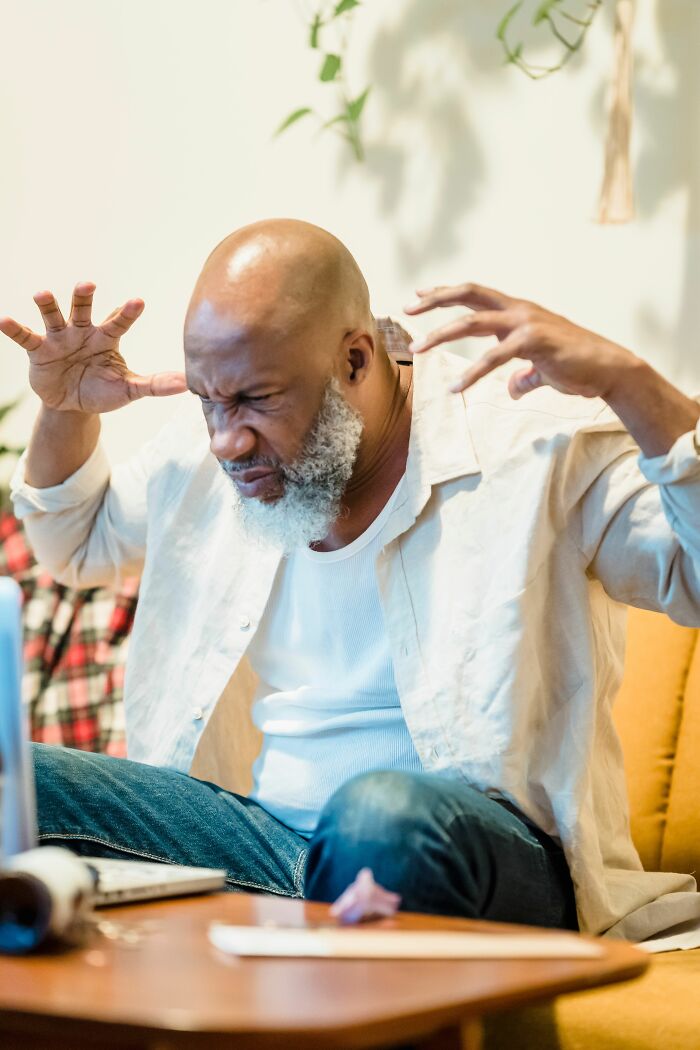
Image source: Gold-Tour5010, Nicola Barts
#28
I took a Positive Persuasion (which is just a fancy term for interrogation) class for my job. One of the big takeaways for me is if you ask a person a direct yes or no question, and they restate what you just asked, they’re likely going to lie to you or are guilty.
“Did you take the money from the till?”
“Why would I take money from the till? Of course I didn’t!”
The average person would not steal money from work and therefore would outright answer with “no”.

Image source: crinklycuts, Ketut Subiyanto
#29
One fairly common one for spotting a liar is to look for wider eyes or a look of aggressive unconcern when confronted or asked.
The latter is incredibly common these days. You can almost read “I know I’m wrong here but I’m committed to pretending otherwise and my commitment to this lie will change the laws of reality or make them go away” on their forehead.

Image source: DarthDregan, www.kaboompics.com
#30
I have C-PTSD so hypervigilance is my constant state of being. You can tell a lot about someone just by figuring out if they have the ability to consider how their actions affect others around them. Example – if you have no spacial awareness – constantly taking up a lot of space when there are people around you, not making room for wheelchairs or prams, stopping suddenly in front of people etc. – and you are genuinely oblivious to how you are affecting other people around you then I already know that you are likely emotionally immature and/or selfish. I’m not talking about people who are clumsy or have issues with spacial processing but people who routinely are unable to think about other people. I tend to find that this kind of behaviour is the precursor to similar behaviour that routinely doesn’t consider the other person in the interaction. If a person is unable to think ahead of time how they affect someone else, to me it’s a classic sign of not having empathy or being able to emphasise with someone – and that’s a major red flag.

Image source: No_Dingo_8158, Michael T
#31
I was making a cup of tea in the kitchen at work with the new guy. He makes himself one and then casually chucks the teaspoon into the sink, and turns back to talk to me.
In hindsight, it perfectly represented his attitude of a lack of consideration for other people. The dishwasher was right there, but instead he just tosses the used spoon in the sink without a second thought that someone else would now to have to extract it from the grubby sink and put it in the dishwasher.
This is the attitude that he brings to a lot of his working relationships.
Image source: Parasaurlophus
#32
Not really “tiny” or “invisible”, just not something you think about until you’re prompted to – at which point you will notice it every time without fail.
The internet is full of right-wing concern trolls who have learned all the rhetorical devices to engage in bad faith discussion on serious issues. They are fantastic at misleading you with subtle whataboutisms and holding superficial positions they don’t agree with but know well-intentioned people can’t resist.
But the one thing they cannot fake is **genuine empathy**.
Once you know to look for it, you’ll see their rhetoric never acknowledges victims or expresses personal sympathy. Not even in passing. They’ll stick to more technical and arm’s length phrasing.
This is because they have learned all the linguistic shorthand to present as the kind of person who holds those positions, but they don’t *actually* have any human empathy for victims and so they don’t understand that these positions come from a place of empathy, or even how one might articulate empathy for a victim.
So if you ever suspect someone of concern trolling, even if they’re saying all the “right” words, take another look at the basis for their position. Are they pushing a policy position just because, or to advocate for the needs of people who have suffered?
Image source: funkme1ster
#33
I personally don’t know but my dad has an insane intuition and a decent understanding of those things. He would very often warn me about people I first introduced to him and he was spot on on some pretty specific things.
I introduced him to a friend once and as soon as he was gone my dad says “watch him, he’s a thief”. I have had many mutual friends with that guy for most of my life and he turned out to be the biggest thief I ever knew! All he could tell me about that interaction was that the guy had really shifty eyes and had lingering stares at our belongings.
Another thing he has done several times was to warn me about friends exhibiting concerning anti-social behaviors. He would mention how they walk, how they stared at the ground and avoided eye contact. At the time I was angry that he was being so judgemental about my friends but in a lot of those cases, I honestly let those people be net negatives in my life and infuse me with some pretty unhealthy behavior. I eventually apologized to my dad for exploding on him so many times for judging my friends.
Image source: Degutender
#34
People who are being dishonest tend to make their explanations too “tidy.” Everything wraps up overly perfect. Real life usually has stuff like, “and then this other guy speaks up but I don’t know who he was,” or they’ll leave out a worthwhile detail but be able to instantly tell you if you ask. Someone being dishonest will usually provide an explanation for everyone and every fact in their story. Real life isn’t ironclad. Liars subconsciously try to fill any “holes” they can think of in their stories before anyone has to ask.
Image source: Darnitol1
#35
If they keep mentioning how honest and reliable they are and that you can trust them… Don’t trust them.
Image source: Shadowlady
#36
Hi. I’m highly observant. And I’ve been to prisons in two states. I’ll share my observations.
“Character” is meaningless really. The truth is that other people are ultimately unknowable. You cannot know what is in another person’s heart. Whatever you think they are thinking or feeling is a -projection- that is coming from you.
Between two human beings there are two types of exchanges: words and actions.
The closest thing to knowing a person is accurately predicting their behavior and speech. Will they continue to match your expectations of them?
The most lizard and primitive parts of the brain is responsible for sorting people into roles of expected behavior.
And at its most basic level it is a thing that is trying to sort out one question,” is it safe to be with this person”
So the brain, whenever you come into the presence of another human being, decides if that person is okay to share physical space with, and it sets expectations of behavior and speech within that space.
But there’s different rules of social expectations depending on the context of the situation.
So prison- a place with an unusually high concentration of people who are statistically more likely to have bad intentions. And more practice.
Every word or act is the result of an intention unless involuntary.
There are different levels of safe space sharing.
Someone who is okay to sit next to on the bus would not be cool in my living room. My co-worker is fine when we’re in the car together but if he was in my bedroom that would not be welcome.
Oftentimes, the words a person chooses to speak can reveal their intentions, you can see how they’re framing it mentally.
There’s always a reason why a word or act was chosen.
Generally speaking, someone who is telling you something that is true doesnt really care too much if you believe them or not. They won’t waste energy trying to persuade you that they’re not lying.
Because they don’t really care.
But the liar will need you to believe that a thing isn’t true, and will keep trying.
Image source: Cold_Faithlessness47
#37
A big one is how someone reacts when they have a tiny bit of power over someone who can’t really benefit them.
Not “how they treat the CEO” or “how charming they are at a party.” I mean the almost invisible moments: the server gets something wrong, the cashier is slow, a junior coworker asks a basic question, someone interrupts them by accident, a kid is in the way, an elderly person is taking too long.
Some people stay basically the same person. Maybe annoyed, but still decent.
Other people change instantly. Their tone sharpens. Their face drops. They suddenly need the other person to feel small. And it’s usually not dramatic enough for everyone to notice — just a little contempt, a little impatience, a little “you are beneath me” energy.
To me, that’s one of the clearest tells. A person’s character shows up most clearly when there’s no social reward for being kind and no immediate penalty for being cruel.
Image source: AdhesivenessOwn3459
#38
If someone really likes you, they’ll mimick/mirror you. Talk to a friend, coworker, mailman, whoever. Cross your arms. Uncross them. Put your hand on your chest. Play with your hair. Fidget. Start walking. Lol
….and just watch.
Also, if they don’t like you, watch them be super chatty with others, and only stare you down/barely talk to you/avoid you.
Watch how someone acts after you’ve set a healthy boundary. I’ve had a few people totally avoid me after politely telling them a healthy boundary of mine, probably due to embarrassment at their behavior I wasn’t willing to put up with. I’ve had others turn it around and minimize what they were asking of me, to make me look bad/selfish and paint them as a victim.
Image source: allycat907
#39
Zero Sum Mindset. When they genuinely believe someone else must lose so they can win. Everything, every interaction, seems very transactional or involves some kind of negotiation. Usually they rank higher on the “Dark Tetrad” spectrum.
Image source: warmgefroren
#40
“Name, I’m want you do know, Name, I’m using your name excessively in a sentence because I want to manipulate you, Name. Come on Name, bro: I think it will make me more relatable to you, Name. Are you with me Name? Did I use your name enough times yet Name?”
-Salesbros.
Image source: _haha_oh_wow_
#41
Trying to think of one, but it’s more like a correlation of all factors and recognizing the connections and patterns.
Maybe it’s a micro expression that doesn’t add up with what they’re saying, maybe it’s a verbal inconsistency or like a prepositional choice they make, listening to how they rationalize or narrate, energy mood and emotion levels – what factors get them excited, what deflates them, etc., how they hold their bodies and carry themselves, etc etc
There’s a smoothness and an awkwardness in everyone that you can see if you pay attention, and almost look through them; you can see gaps where masks falter. (I’m clearly very suspicious and overly socially vigilant, plus I watch too much Columbo and criminal psychology videos, mentalism/mind-reading magic tricks).
Personally, I love and am so endeared to foibles and fumbles and awkwardness, the smaller the gap in masking the better. I don’t trust anyone who is too smooth or does too good of a job of hiding their humanness and mistakes. I kind of love vulnerability and embarrassment, it’s pro-social and honest, and people connect better with it, people love it.
Image source: peppersnchips
#42
My supervision grad school once told me, if you love or hate someone immediately at first meeting, it’s a red flag for a personality disorder.
Image source: SweetPickleRelish
#43
Highly observant people track over time, not instantly. True behavior, however hidden is seen through action over time.
Though I can usually tell if someone’s lying based on their micro expressions, tone, word usage, etc.
Image source: skempoz
#44
When you figure out something before they do or you attempt something they were unable to do and you succeed. If you’re aware of facial expressions, and even tones in how they react, they’ll easily show you how unstable their ego is. I’ve taken many labs in my undergrad and can’t tell you how many times I’ve had to intentionally downplay my own knowledge/findings/insight or even little things noticed by mere chance, just to make their fragile egos comfortable…now I just let people sulk in their own misery :).
Image source: Annual-Call-4829
#45
Someone who act like they’re my best friend the moment I meet them, even though we don’t know anything about each other. It reads as lack of boundaries and suggests to me that it will be an ongoing issue.
Image source: RIPJimmyPesto
#46
When every conversation turns into being about them.
Image source: slave_to_gravity
#47
The jokes they laugh at.
Image source: cannabisinfluencer
#48
Unnecessary/excessive explanations are often clumsy misdirections.
Image source: OondahDooha
#49
I always ask, how does this person want me to perceive them by the things that they’re telling me.
Image source: Lead_Housekeeper
#50
Keep a watchful eye on anyone who claims to be a “nice person”.
Image source: NinKenDo_64
#51
They never say a positive thing about anyone who is not within earshot.
Image source: butimean
#52
How they treat their significant other when they think no one is paying attention. If you can’t treat your other half with compassion, respect, and decency, there’s zero chance you’re a shining example of humanity with anyone else.
Image source: RavenForrest
#53
I was out to eat with my bf and his newer friend. As soon as my bf went to the bathroom, friend was talking in a negative way to me about my bf.. trying to intentionally make him look bad. Same friend was mocking bf another day behind his back and I caught it. Don’t like said friend at all. I mentioned the comments to my bf and the red flags but bf brushed it off and still hangs out with him. I will intentionally not tag along anymore if he will be there.
Image source: croqueen07
#54
You can just tell in how they carry themselves and how they want to appear.
But generally IMO, disingenuous people tend to stay away from those they know they’re not fooling or can’t fool. So for me, it’s pretty easy cus they pretty much self report.
If you just act or behave uninterested and unimpressed to these people or react in a way that says “I hear what you’re saying, I don’t care (whether true or untrue) what you’re saying..”… they usually think/know you see through them.. (or through whatever it is they know is fake/untrue about them) and will avoid you or suddenly be uncharacteristically low key/quiet and avoid talking or drawing attention to themselves when in a group and you are present.
Image source: ladylemondrop209
#55
When people are ‘acting’ they are partly focused on how they look, how body language is and facial expression. I think you can mostly see in the eyes that people look focused instead of receiving or curious.
Image source: Elephiant
#56
Who they pay attention to in conversation. When someone who’s not as popular says something, do they ignore it and focus on the people at the center of the conversation.
Image source: gulyman
#57
Worked with someone for four years. She never asked me a single question in all that time. Went from “there’s something kinda weird about my working relationship with this person” to “this is the most arrogant loser I’ve ever met.” She thought she was smart, but not too smart that she didn’t give away the game.
Image source: slackartist
#58
This isn’t really something I can communicate effectively about, but the precise location and nature of pauses in someone’s communication pattern. The things they are thinking about before saying vs the things that they are saying without thinking.
Paying attention to this gives you the ability to model someone’s internal train of thought to some extent, and you can then wonder why they would be putting more or less thought into those areas. Of course it’s not foolproof but in combination with other things it helps.
Image source: IdentifiableBurden
#59
If someone shares private information about someone else with me that was never theirs to share, I pay attention. Doesn’t matter if they’re a friend, partner, or family.
When friendships / relationships end, and one person starts exposing secrets just to bring the other down. To me, that’s a sign.
If they’ll do it to someone they were once close to, they’ll do it to you too. It also shows a lack of integrity. Just because you’re no longer friends doesn’t give you the right to expose information you were trusted with.
I keep my guard up around people like that.
Image source: fiery_softy
#60
Serious answer; theory brain dump first.
Humans have evolved to have six fundamental psychological drives, which are:
1. Security (protection of resources)
2. Significance (ego, dominance of resources)
3. Stimulation (novelty, seek resources)
4. Love/ Connection (mutually share resources)
5. Growth (gain future resources)
6. Community/ higher purpose/ contribution (maximise communal resources)
Psychological traits emerge from the prioritization of these drives. Prioritization of a higher drive creates a virtuous trait; prioritization of a lower drive will cause problems for you or others.
Examples:
*Denial* is an observable trait that emerges from valuing significance (ego) over growth;
*Compassion* is an observable trait that emerges from when connection is valued more highly that ego (being right);
*courage* occurs when growth is more important than security.
There are 30 primary traits- 15 virtues and 15 opposite vices, each of which have many facets.
You can systematically test this idea by asking what traits you might see when each of the six drives is prioritized over each of the other five.
So- if you want the deep answer to your excellent question- *do the work* of asking these 30 questions. Put your answers into table, and you’ll see all kinds of interesting patterns… the most obvious of these is that a person with significance is on top will have the traits of a narcissist. Avoid them. If you can, seek to disempower them.
People have their needs ordered optimally (6 to 1) are true servant leaders who seek to lift the people around them; they are empowered but not entitled. Join with them.
Image source: fractiousrhubarb
#61
You don’t need to be super observant. You just need to actually listen to people. People tell on themselves all the time. Pay attention to the kinds of things they think about, how they perceive other people’s motivations (they’ll often project their own) and don’t ignore little comments here and there that reveal their character. And pay attention to what they want you to think about them, and why that might be.
And a lot of “tells” aren’t conscious. Use your intuition and trust it. How you feel is usually the truth, don’t rationalize it away, and don’t worry about their feelings about it.
Image source: hologram137
#62
I pay attention during my commute very carefully and am very good about remembering faces and car models. Ones ability to follow the law or do the right thing unsupervised completely reveals if someone will take shortcuts in their work when no one is looking.
This helped 1 time when we had an interview and we saw their car pull up and I knew the car from my commute and they always broke traffic laws because cops are never around. They didn’t get the job. I expect the rules to be followed even if a supervisor isn’t around. How you drive tells a metric fk ton about someone’s thought processes.
Image source: Packagedpackage
#63
I look for facial micro expressions. I had an angry controlling alcoholic dad. I got very good at deciphering his future moods on several “tells.’ I still do it today. People tell you quite a bit about themselves facially. Same for good people. They have expressions that are looser, more open, less pinched. Look at their mouths. It’s almost like watching a symphony of what they’re feeling.
Image source: _PrincessButtercup
#64
The way people talk about people they dislike.
Its interesting because I’ve heard a lot of difference throughout different friendgroups and people. There are those who blatantly insult people, and those who still try to see the benefit of the doubt.
However, this one time I was talking to a friend of mine why this specific person had a falling out with the group. She said things such as what happened, who was involved and what was said. Then she added things how she doesn’t blame the person for the way they acted etc etc.
Then within the same group, about 3 people we’re just smack talking that person and bringing things up that had no correlation to the whole drama.
Image source: Electrical_Gear4193
#65
How they react when asked to hold something real quick.
Image source: Suitable-Isopod6642
#66
My name is Elizabeth, and I introduce myself as such. 100% of people who have started calling me “Eli” without asking if they may call me by a nickname have eventually proven to be extremely manipulative at best or full blown narcissists at worst.
People who ask to call me a nickname (“can I call you Eli?” etc) are fine. But if someone shortens my name without asking it seems to be an a very reliable indication that they are controlling by nature.
Image source: The31Readers
#67
When people reject me with confidence, it’s a sign that they’re good at navigating boundaries, which makes me feel safe around them.
Image source: Thepluse
 Follow Us