As kids, many of us treated history like that one school subject we couldn’t wait to escape. It seemed packed with endless dates, unfamiliar names, and events that felt far removed from our everyday lives. But somewhere along the way, something changes. As adults, we begin to realize that history is much more than memorizing timelines—it’s the story of how our world came to be, how civilizations rose and fell, and how people lived, loved, built, and survived long before us.
That’s why today we took a dive into an Instagram page dedicated to sharing fascinating glimpses into the past. From hidden temples to breathtaking 2,000-year-old mosaics that have somehow survived the centuries, these posts reveal just how incredible human history can be. Some will leave you amazed, others might make you curious, and a few may completely change how you look at the past. Keep scrolling, Pandas—the history books never looked this interesting.
#1
This 9000-year-old stone mask is the oldest mask in the world, and was found in the Judean Desert in Israel.
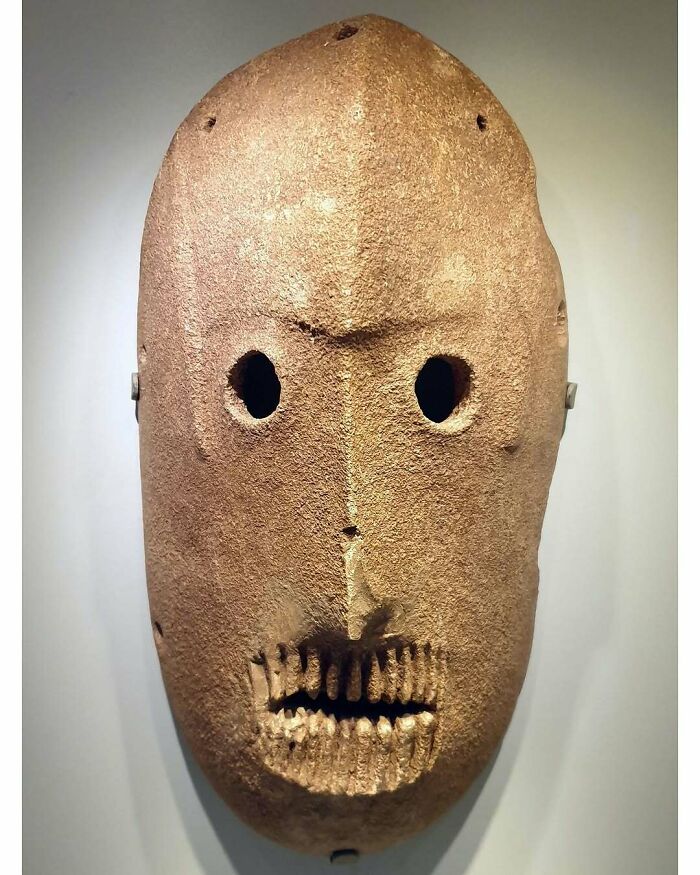
Image source: heraldofages

#2
The footprint of a Roman baby in red clay, which was left during drying, is about 2000 years old. Its location is Vaison-la-Romaine, France.
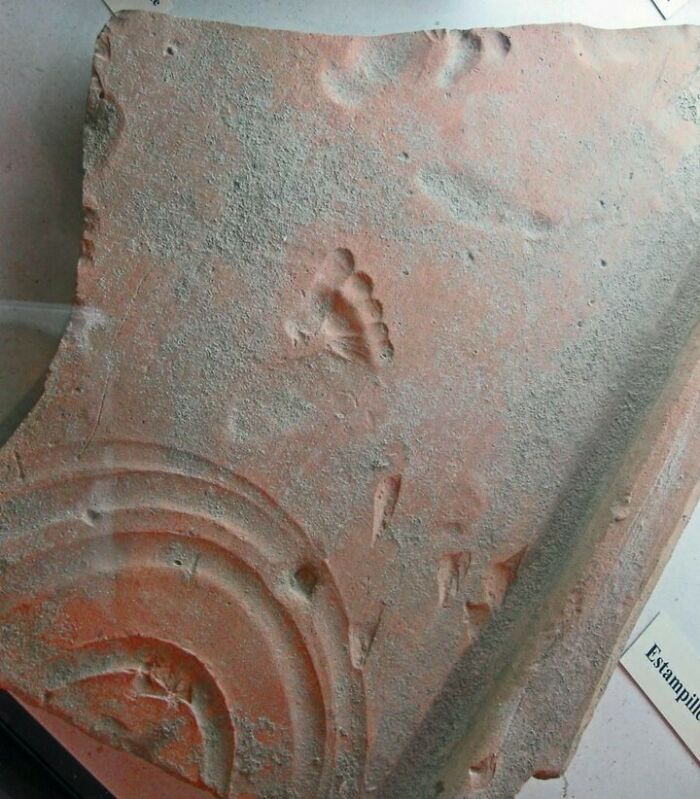
Image source: heraldofages
#3
This photograph shows 10,000-year-old Dabous Giraffes located in Niger.
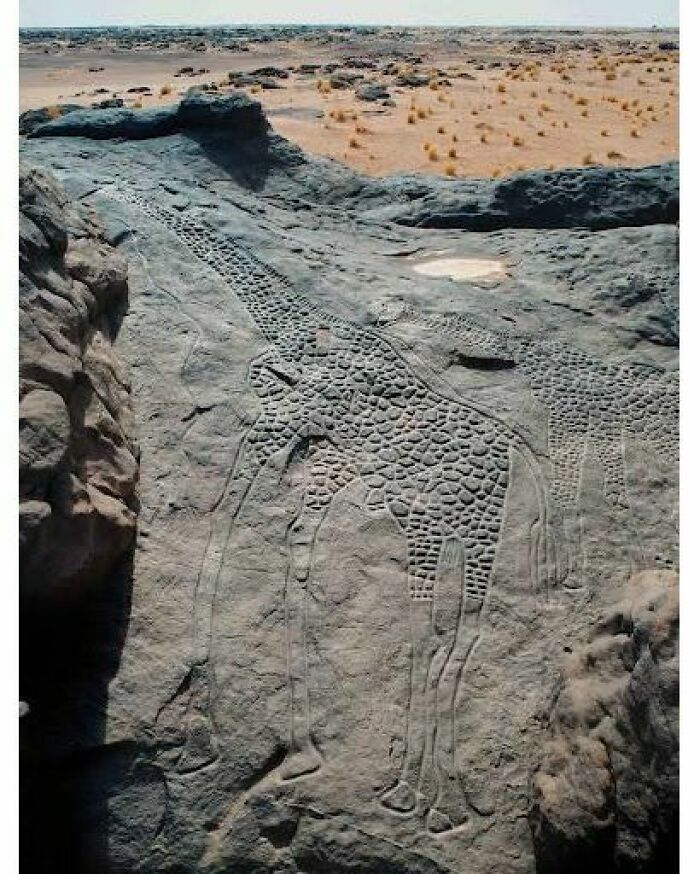
Image source: heraldofages
Human history is incredibly rich, layered, and full of surprises. Just when we think we have a clear understanding of where we came from, a new discovery comes along and challenges everything we thought we knew. One fascinating example comes from China, where researchers studied a million-year-old human skull and suggested that the emergence of our species, Homo sapiens, may have begun at least half a million years earlier than previously believed.
The findings also indicate that our ancestors may have coexisted with other human relatives, including Neanderthals, for far longer than scientists once assumed. According to a report by the BBC, the researchers argue that their analysis could dramatically reshape our understanding of human evolution. While some experts remain cautious and say the conclusions are still open to debate, the discovery highlights just how much there is left to learn about humanity’s earliest chapters. History, it seems, is still rewriting itself.
#4
Bats illustrated in a 13th century medieval manuscript.
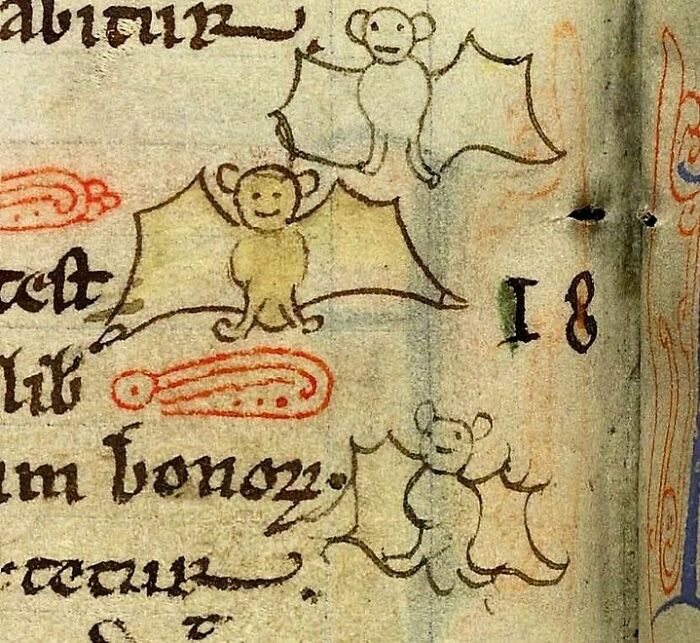
Image source: heraldofages
#5
A papyrus illustration of a lady mouse sitting elegantly, being offered a drink by one of the cats standing nearby, while another cat is depicted arranging her hair. Tuna el-Gebel, ca. 1129-1111 BC.
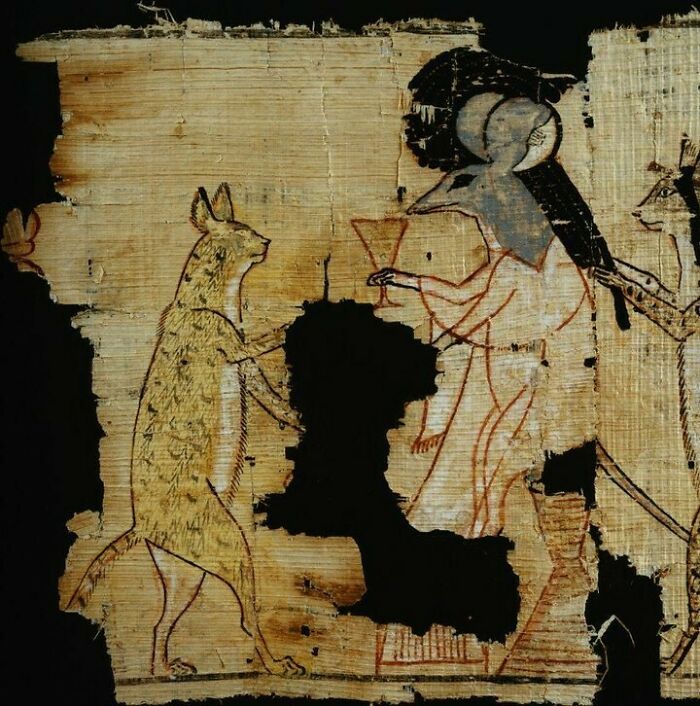
Image source: heraldofages
#6
A wheelchair made for the Holy Roman Empress Elisabeth Christine of Brunswick-Wolfenbüttel, 1740.
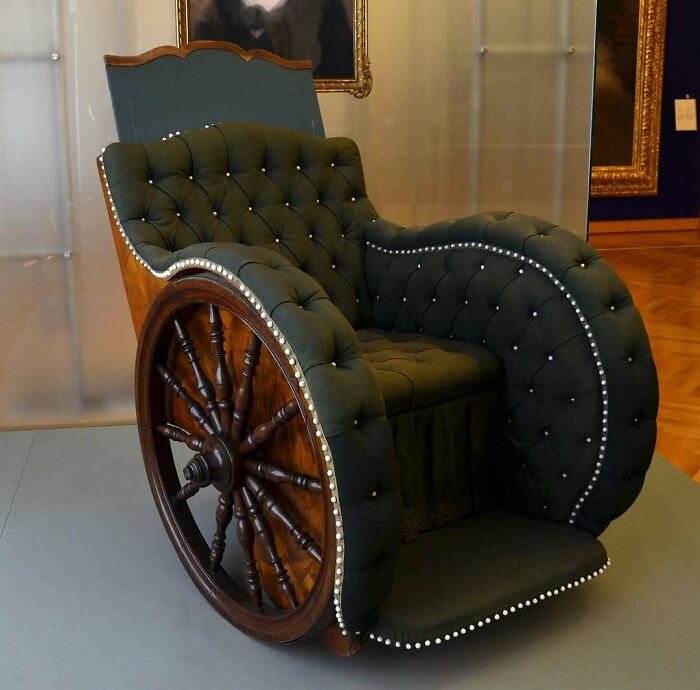
Image source: heraldofages
Some of the most extraordinary historical discoveries come from unexpected places. According to Reader’s Digest, a series of caves in southern Germany’s Swabian Jura mountain range contains evidence that Ice Age humans lived there around 40,000 years ago. Archaeologists have uncovered campfires, tools, weapons, jewelry, and intricate carvings made from mammoth ivory. Among these discoveries was the famous Venus of Hohle Fels, a tiny 2.5-inch figurine considered the oldest known sculpture of a human figure.
The carving depicts an exaggerated female form, featuring prominent breasts and genitalia, leading many researchers to believe it may have served as a fertility symbol. Archaeologist Nicholas Conard, whose team discovered the artifact, famously remarked that “you couldn’t get more female than this.” Despite its small size, the sculpture offers a remarkable glimpse into the creativity, beliefs, and symbolic thinking of some of humanity’s earliest artists.
#7
Egyptian faience beaded fishnet dress dating from the Fourth Dynasty, c. 2550 BCE.
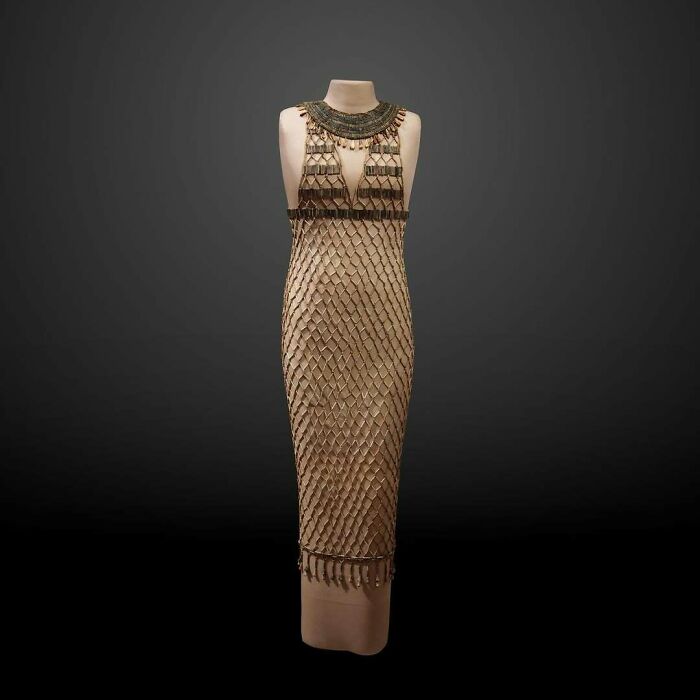
Image source: heraldofages
#8
Two violins crafted in 1748 by French instrument maker Joseph Gaffino.
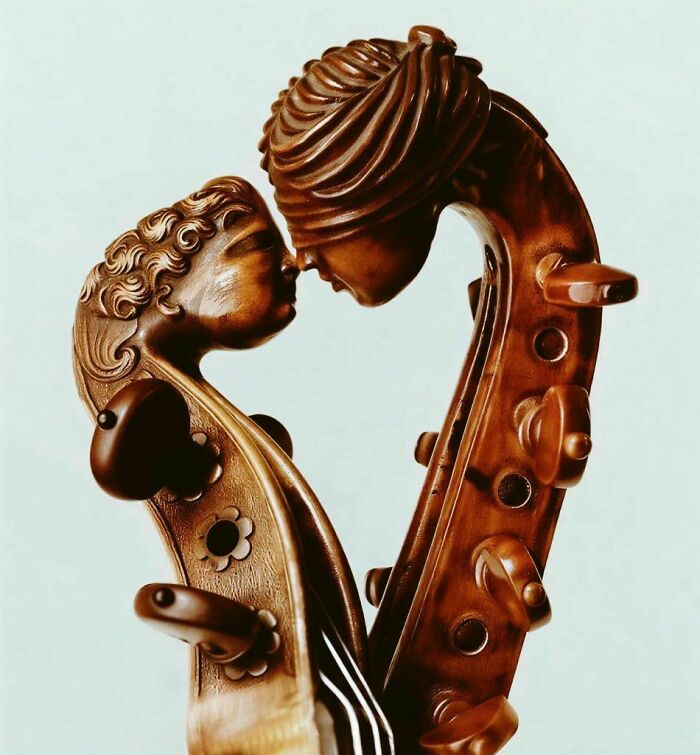
Image source: heraldofages
#9
Pictured is an ancient baptismal font adorned with mosaic decoration, originating from the Eastern Roman era. It is currently exhibited at the Sousse Archaeological Museum in Tunisia.
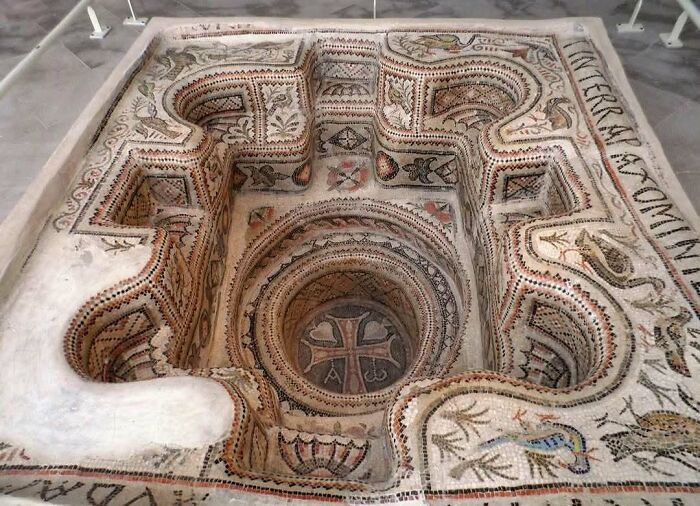
Image source: heraldofages
When most people think of ancient monuments, places like Stonehenge or the Egyptian pyramids usually come to mind. However, one site predates them all by thousands of years. Göbekli Tepe, located in southeastern Turkey, is often described as the world’s oldest known temple. Built more than 11,000 years ago by prehistoric hunter-gatherers, the massive stone sanctuary challenges long-held assumptions about early human societies.
For decades, historians believed large-scale religious structures only appeared after people settled into farming communities. Göbekli Tepe suggests the opposite may have been true. Its enormous carved pillars and sophisticated design indicate that organized spiritual gatherings may have helped bring people together long before agriculture became widespread. Remarkably, the site is roughly 6,000 years older than Stonehenge, making it one of the most significant archaeological discoveries ever made.
#10
2,000-Year-Old Mosaics unearthed by the waves in Turkey.
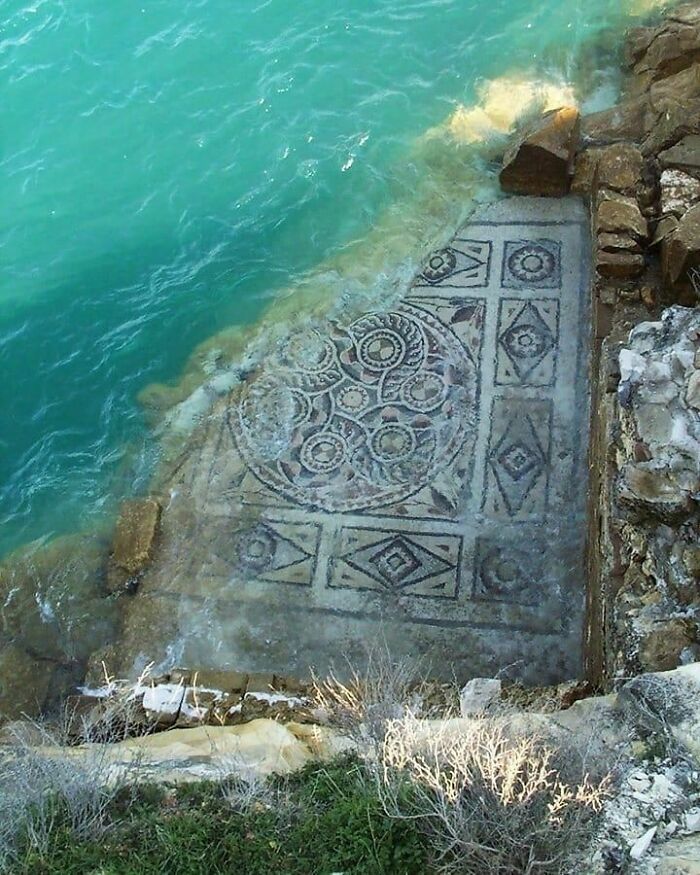
Image source: heraldofages
#11
2,500-year-old Scythian comb, Hermitage Museum, St. Petersburg, Russia.
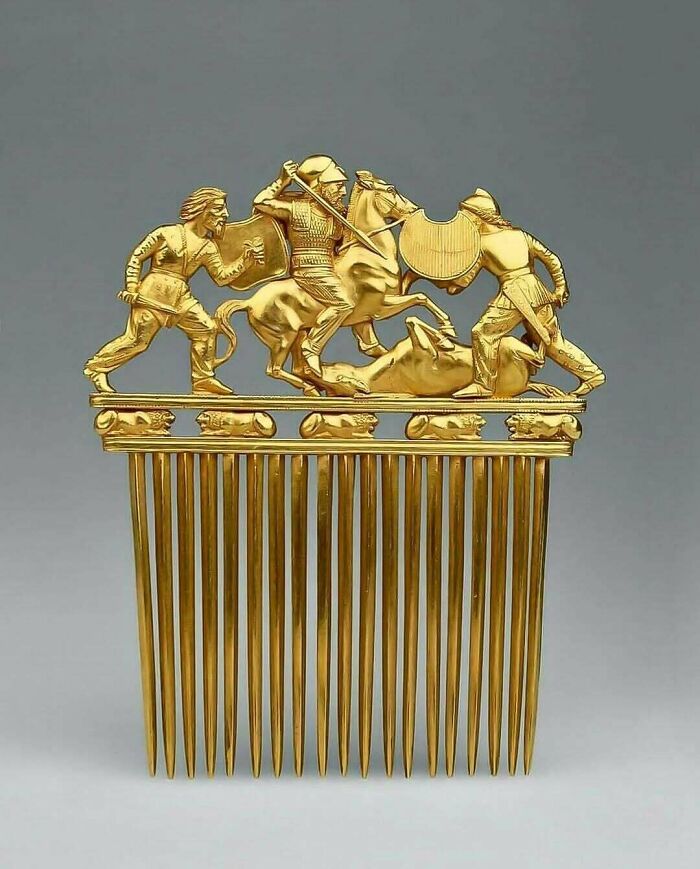
Image source: heraldofages
#12
1,500-year-old Ceramic Maya Figurine with Removable Helmet, from El Perú-Waka’, Petén, Guatemala.
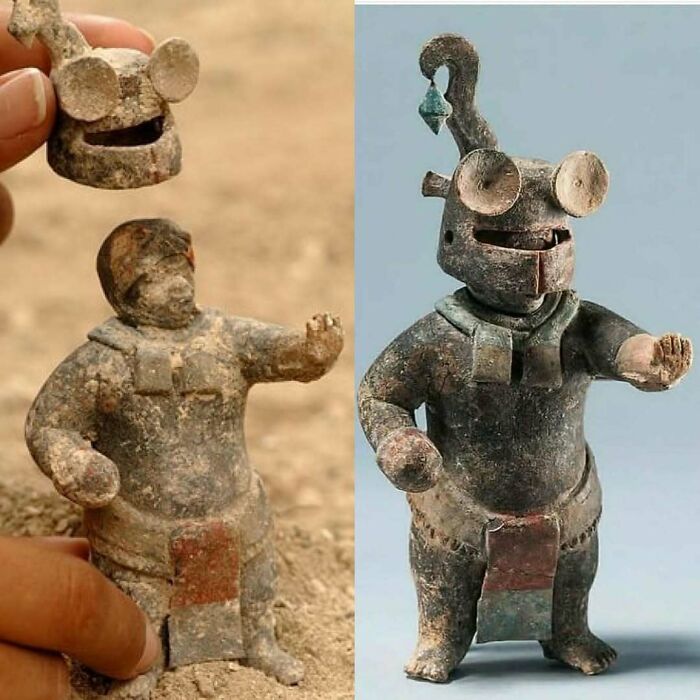
Image source: heraldofages
Human ingenuity has always found ways to overcome obstacles, and transportation is a perfect example. The oldest known boat ever discovered is the Pesse canoe, found in the Netherlands during highway construction in 1955. Dating back thousands of years, the vessel was created by hollowing out the inside of a tree trunk using simple tools.
Some researchers initially questioned whether the object was actually a canoe, suggesting it may have been an animal trough instead. To settle the debate, archaeologist Jaap Beuker built a replica and tested it on water. The experiment proved that the vessel could indeed float and function as a boat. This discovery provides fascinating evidence of how early humans adapted to their environments and developed practical solutions for travel and survival long before modern engineering existed.
#13
Ivory carving of a skull and coiled snake with carnelian eyes. Japan, Edo period, 1860.
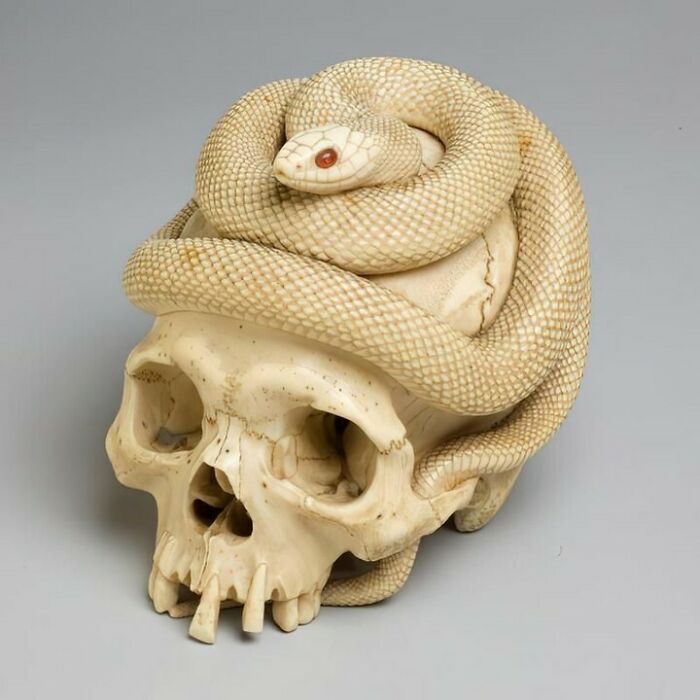
Image source: heraldofages
#14
A beautiful blue bowl with fish designs was found in Iran dating back to the late 13th to mid-14th century.
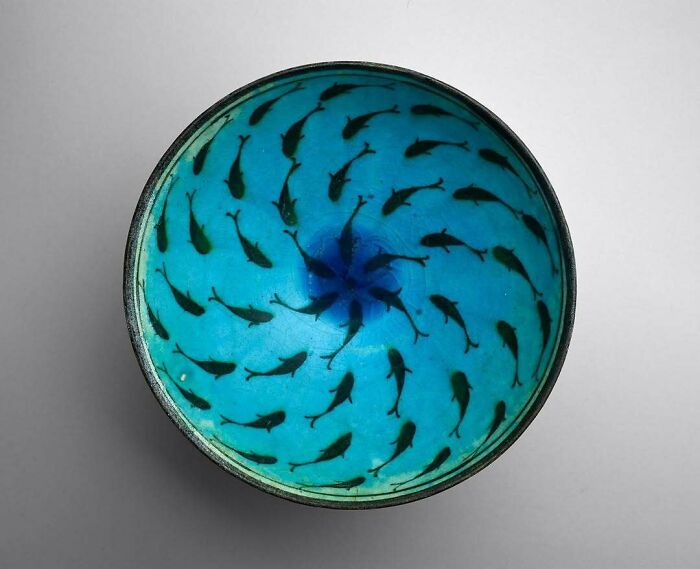
Image source: heraldofages
#15
The bedroom of Napoleon Bonaparte and Josephine de Beauharnais within the Château de Malmaison.
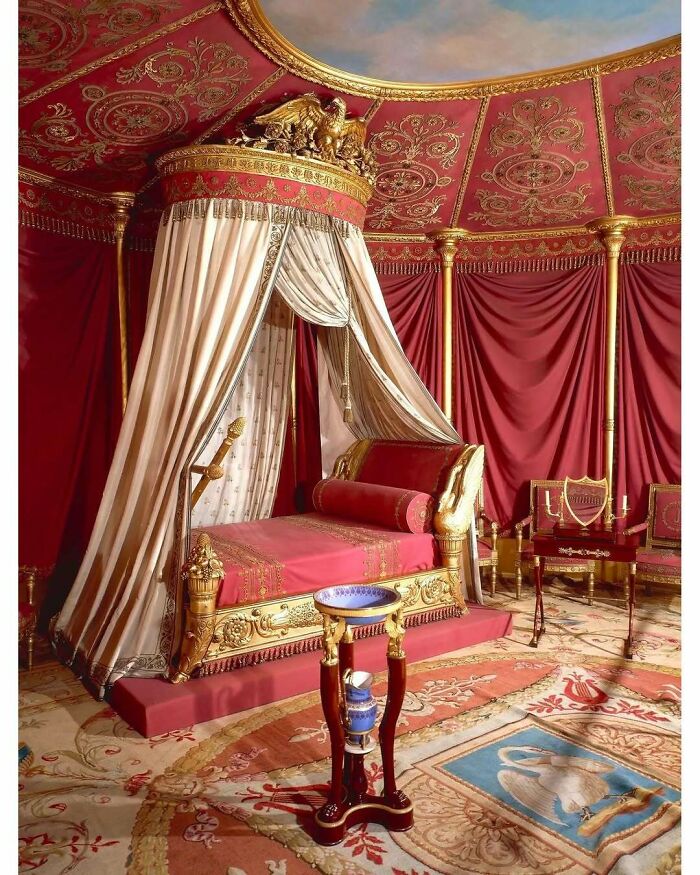
Image source: heraldofages
If you’ve ever left a negative review online or complained about poor service, you’re participating in a tradition that stretches back thousands of years. The earliest known written customer complaint comes from ancient Mesopotamia and is preserved on a clay tablet written in cuneiform script. The complaint was sent by a customer named Nanni to a merchant called Ea-Nasir. Nanni was far from pleased with the quality of the copper he received and made sure to express his frustration in writing. What’s remarkable is how familiar the complaint sounds even today. It reminds us that despite the vast differences between modern life and ancient civilizations, people have always expected fair treatment and quality products. Some things truly never change.
#16
Horse Handle Lapis Lazuli Dagger khanjar, Persian, 19th Century CE. The Al-Sabah Collection, Kuwait.
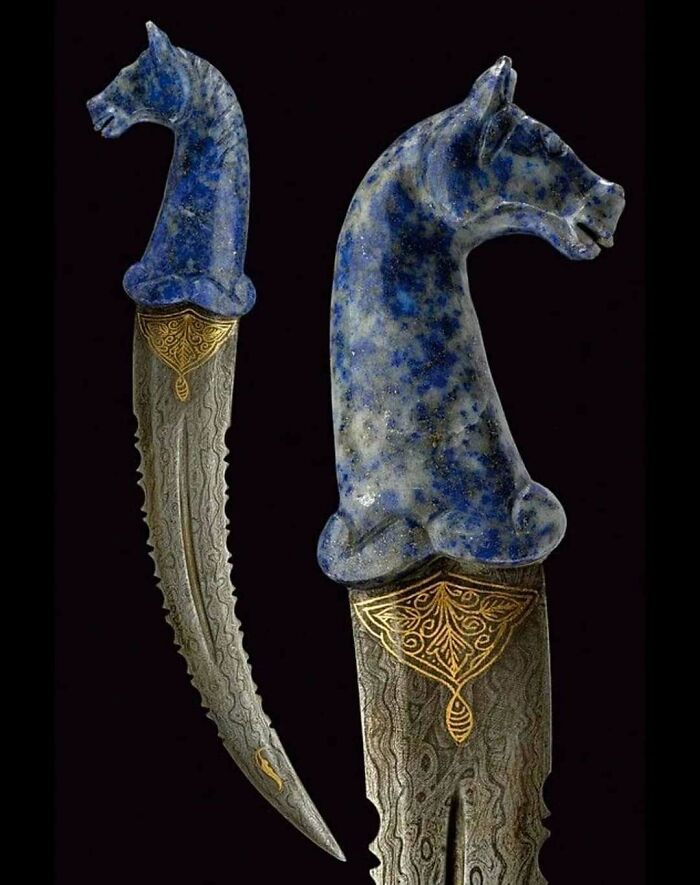
Image source: heraldofages
#17
Ancient Greek coins from Syracuse, dating to the 5th century BCE, featuring an octopus, which was an emblem of maritime strength and power.
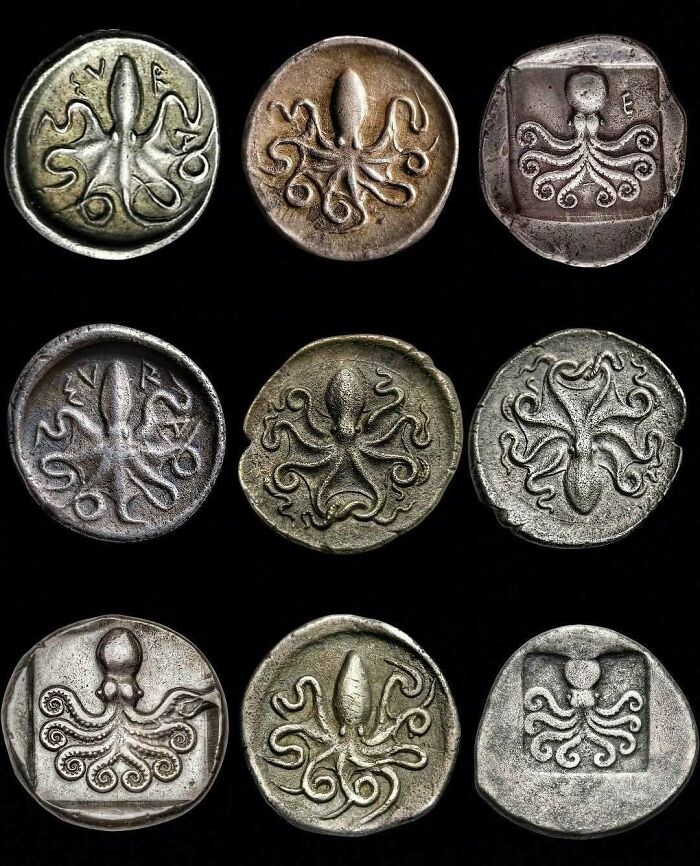
Image source: heraldofages
#18
The discovery of a statue depicting Nero being crowned by his mother, Agrippina, at the Sebasteion in Aphrodisias, Turkey, in 1979.
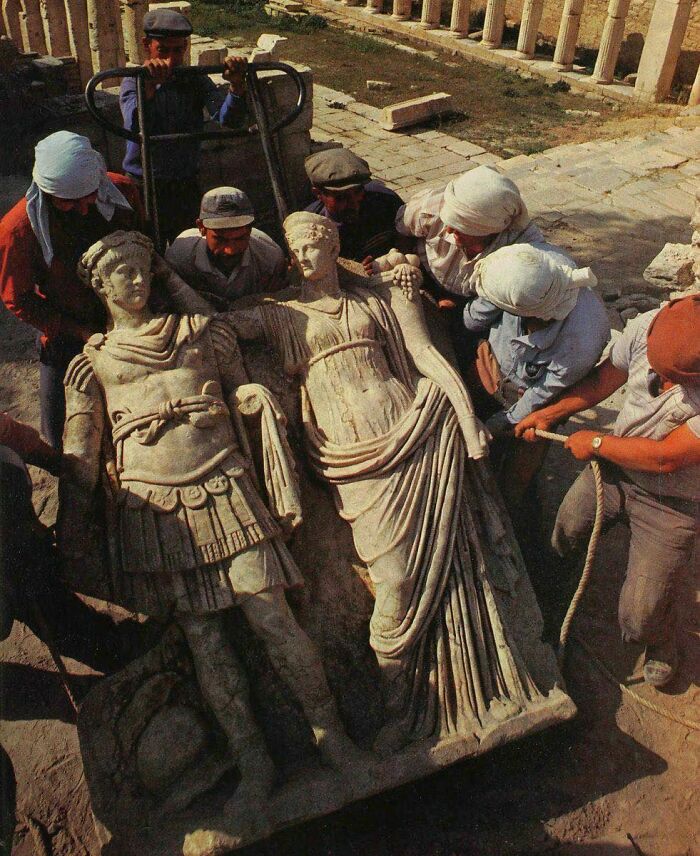
Image source: heraldofages
History isn’t always uncovered through grand monuments or royal treasures. Sometimes, it’s hidden in everyday objects. In 2012, melting glaciers in the Swiss Alps revealed a small circular wooden container that had been lost thousands of years earlier by a traveler crossing the mountains. Researchers from the Max Planck Institute for the Science of Human History analyzed traces inside the box to determine what it once contained. Surprisingly, they found evidence of cultivated cereal grains such as wheat and barley or rye. This was significant because many similar ancient containers previously showed signs of meat or dairy products instead. The discovery provided rare, direct evidence of how early people used domesticated crops in their daily diets. It also offered researchers valuable insights into some of humanity’s earliest culinary practices and agricultural traditions.
#19
A lira da braccio crafted by Giovanni d’Andrea in Verona, Italy, in 1511, featuring a carved male face on its reverse.
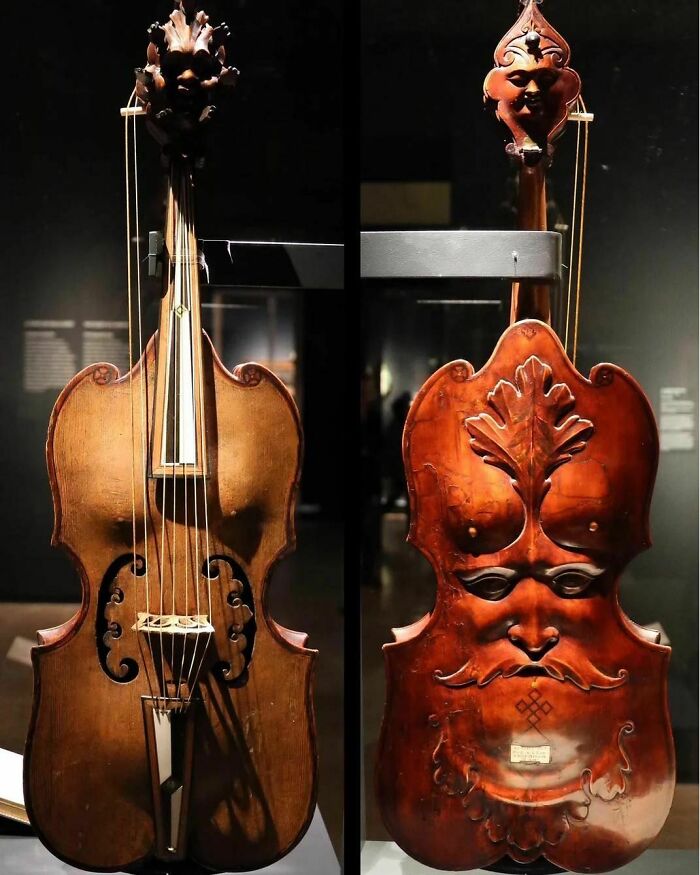
Image source: heraldofages
#20
A temple called Otagi Nenbutsu-ji, hidden in the hills in the far west of Arashiyama with a collection of 1,200 Rakan statues. It’s one of Kyoto, Japan’s most unique and bizarre temples.

Image source: heraldofages
#21
Abuna Yem’ata Guh in Ethiopia. Situated at a height of 8,460 ft, the hewn church has to be climbed on foot to reach. It is notable for its architecture, dome & wall paintings dating back to the 5th century.
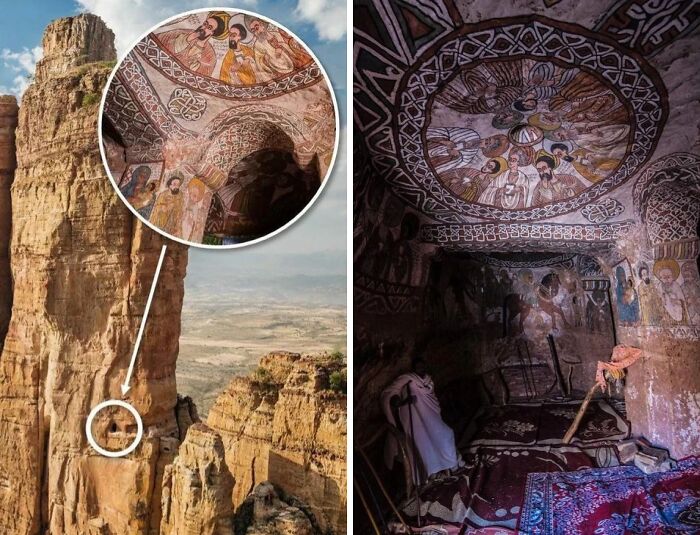
Image source: heraldofages
#22
A Roman bronze mask, coated in silver and dating to 100–75 CE. Hinged at the top, it was designed to cover the entire face but could be lifted for clearer vision or fresh air.
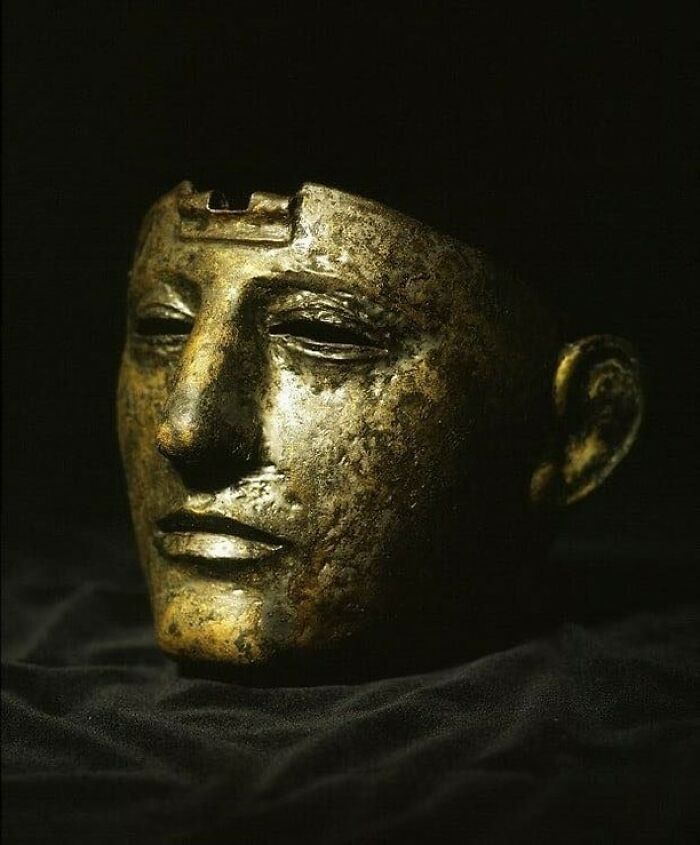
Image source: heraldofages
These incredible “firsts” remind us that human history is far more fascinating than many of us realized in school. From the earliest sculptures and temples to ancient boats, forgotten lunches, and even customer complaints, every discovery helps fill another piece of the puzzle of who we are and where we came from. History isn’t just a collection of dates and names; it’s a story of innovation, survival, creativity, and curiosity stretching back thousands of generations. The more we learn, the more we realize just how connected we are to the people who walked this planet long before us.
#23
A 3,000-year-old perfectly preserved sword.
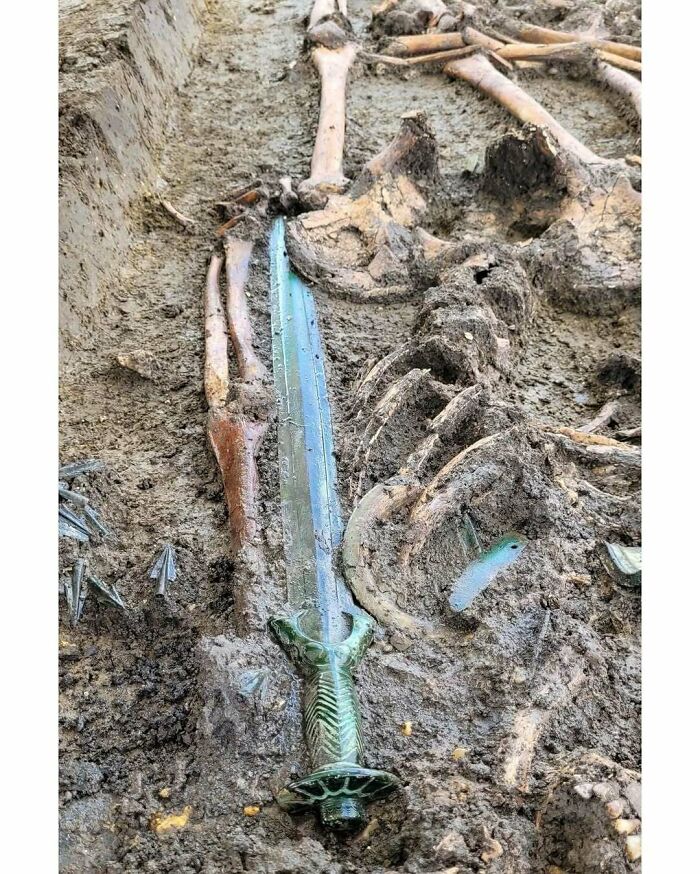
Image source: heraldofages
#24
The Parade Armour of Henry II of France, now in the Metropolitan Museum of Art, New York, is believed to date from 1553–55 and its decoration is attributed to the French goldsmith and engraver Étienne Delaune.
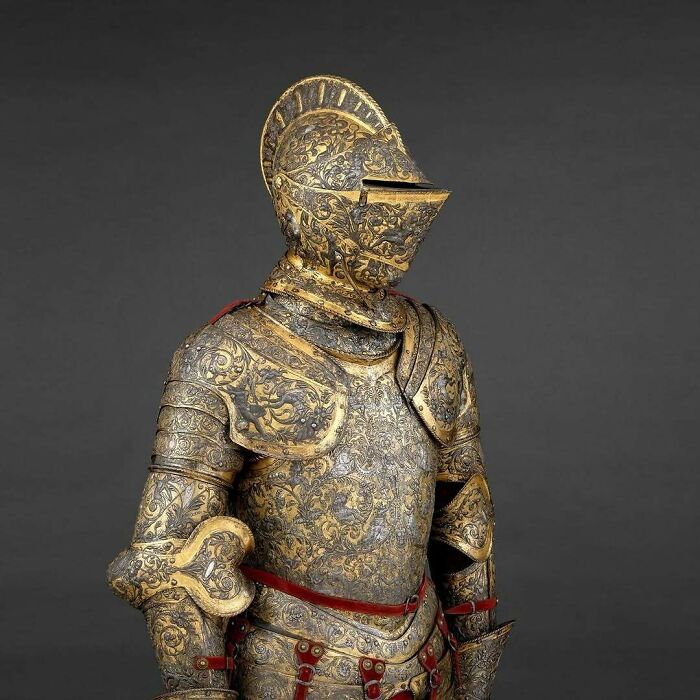
Image source: heraldofages
#25
Photographed is the gothic-style articulated gauntlets that once belonged to Holy Roman Emperor Maximilian I Augsburg, in South Germany, around 1490.
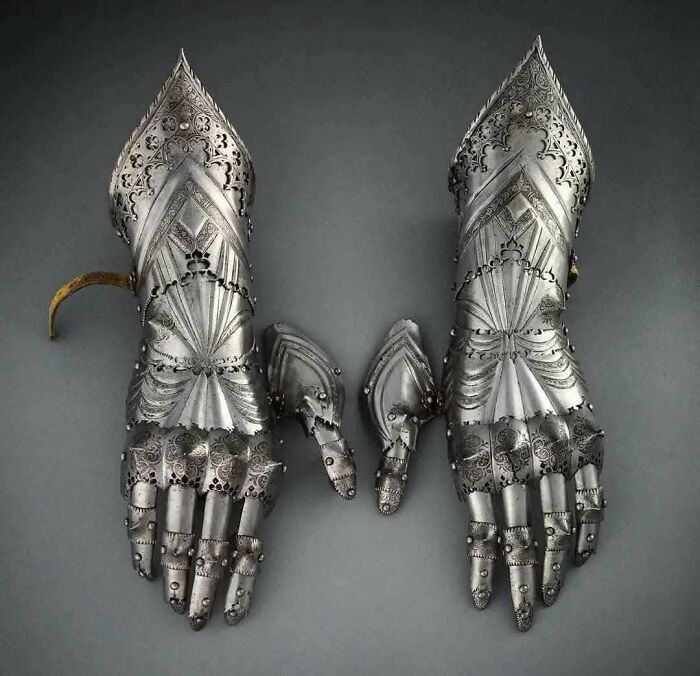
Image source: heraldofages
#26
In an ancient Assyrian relief, we see a child or young man, protected by a cage, releasing a lion from a larger cage. This piece is part of a series depicting the Royal Lion Hunt from the 7th Century BC. It was originally located in the North Palace of Nineveh, near present-day Mosul, Iraq.
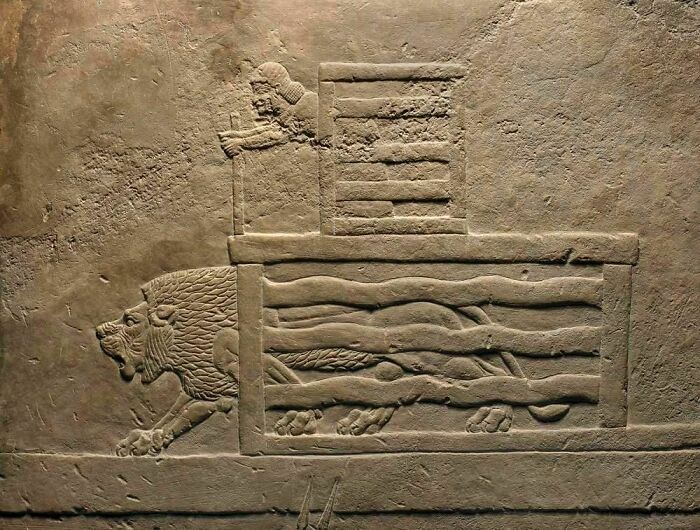
Image source: heraldofages
And while the photos featured in today’s post may not be record-breaking archaeological discoveries, they’re still fascinating glimpses into the past. Each image captures a small moment, object, or story that helps bring history to life in a way textbooks often can’t. Plus, they’re the kind of fun facts that come in handy during trivia nights, road trips, or random conversations with friends. So, Pandas, which of these historical finds intrigued you the most? And if you could travel back in time to witness one ancient moment, what would it be?
#27
A Roman temple-theater complex rediscovered by chance on February 2000 in Monte San Nicola, Italy. It is located on a tip of a mountain (about 450m above sea level). The complex dates back to the 4th century BCE.
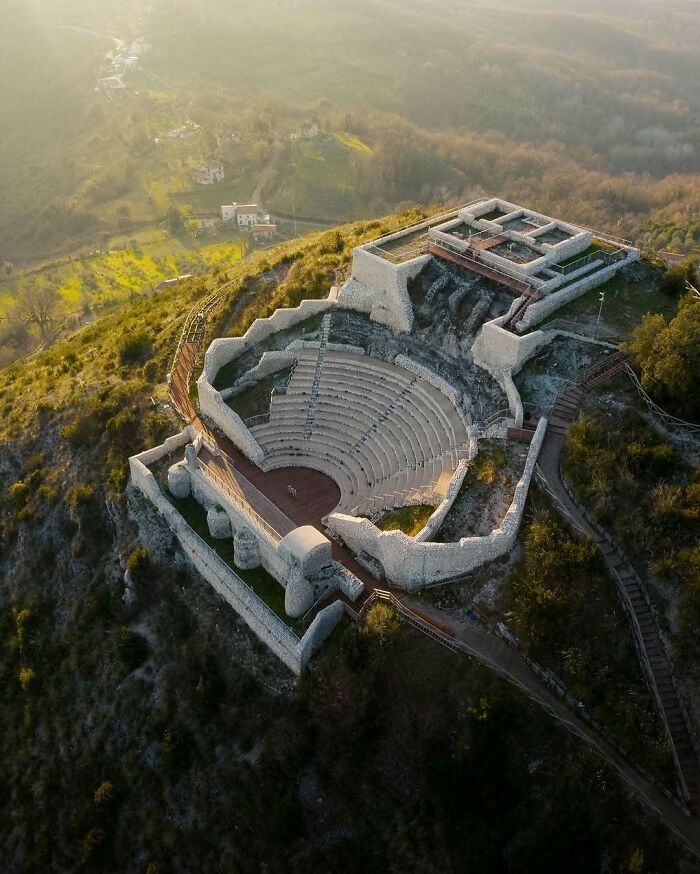
Image source: heraldofages
#28
Hieroglyphic inscriptions on the walls of the temple of Ramesses III (1186–1155 BC) at Medinet Habu, on the West Bank of Luxor, Egypt.
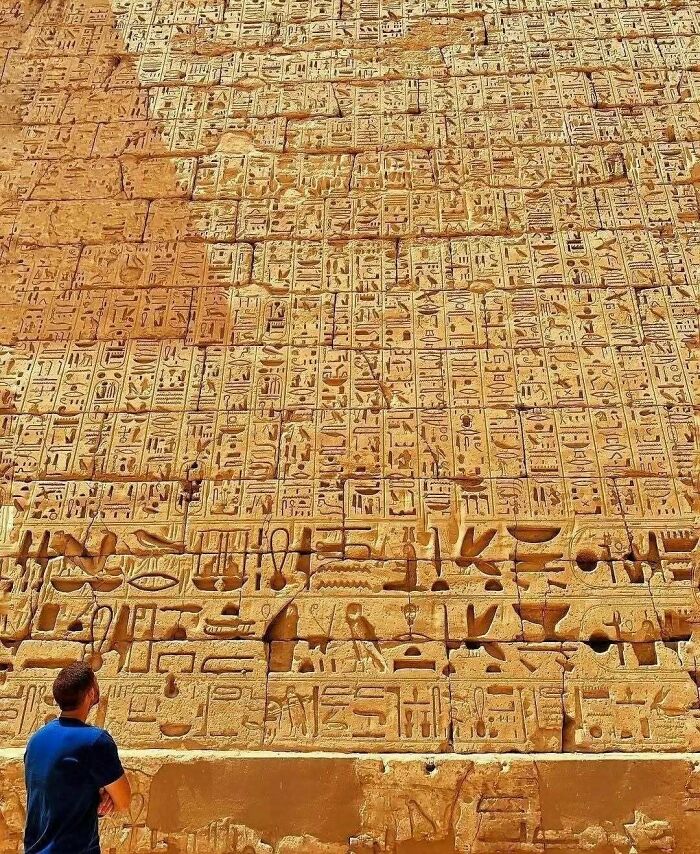
Image source: heraldofages
#29
A photograph taken during the discovery of Tutankhamun’s tomb in 1922.
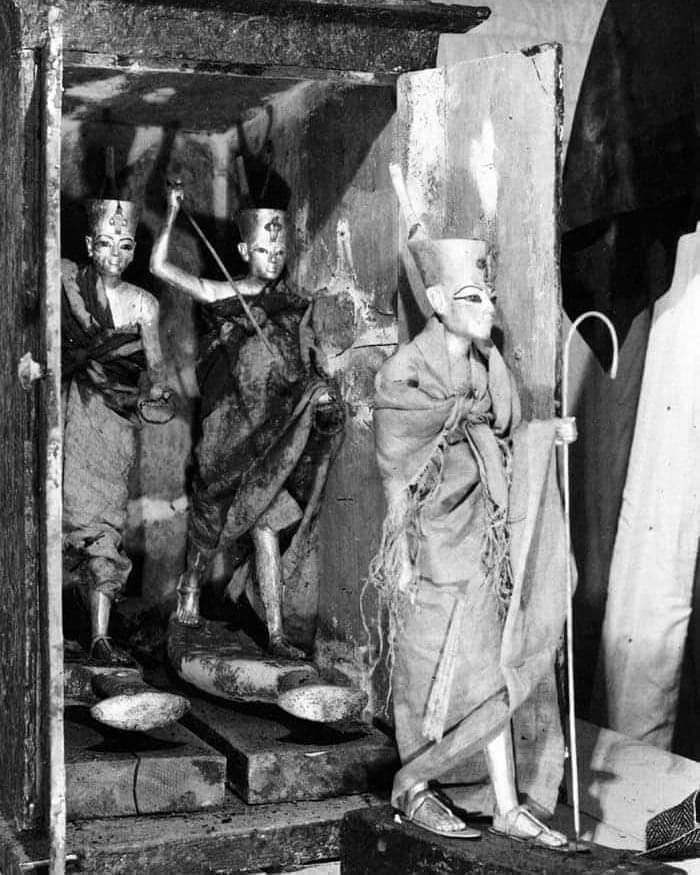
Image source: heraldofages
#30
The head of Dionysus, the god of wine, is uncovered in an archaeological dig in the ancient city of Aizanoi, Turkey.
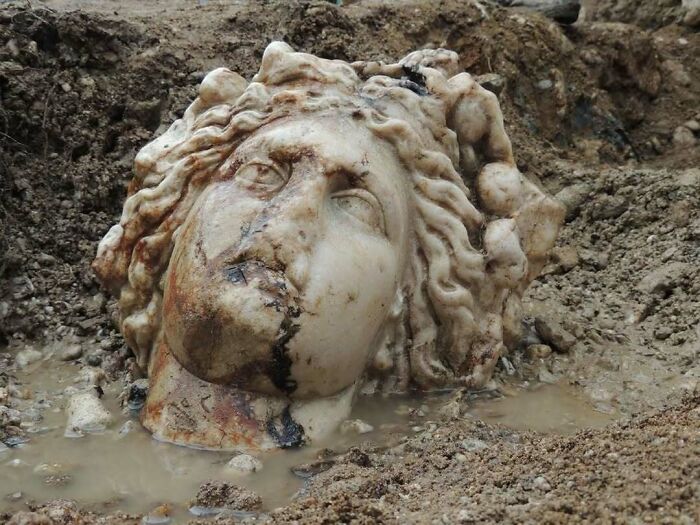
Image source: heraldofages
#31
A 17th century Ottoman three-mast tent made of silk and gilded leather. Now on display at the Turkish Chamber in the Dresden Armory.
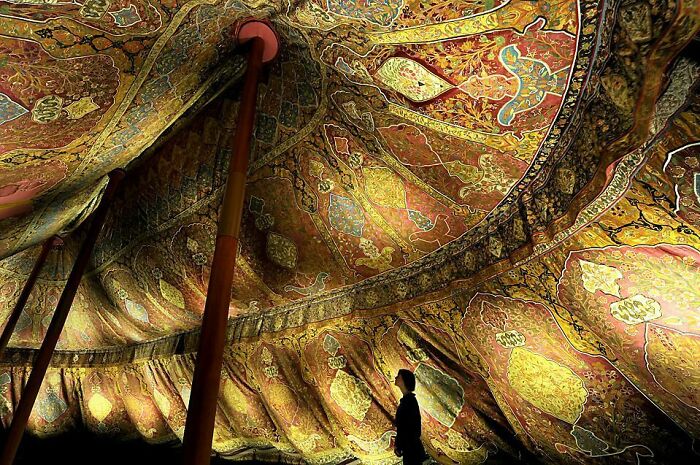
Image source: heraldofages
#32
Photographed is the Stele of Thonis-Heracleion being raised from the waters of Aboukir Bay near Alexandria, Egypt. It was ordered made by Pharaoh Nectanebo I (378-362 BC) and describes trade and taxation agreements.
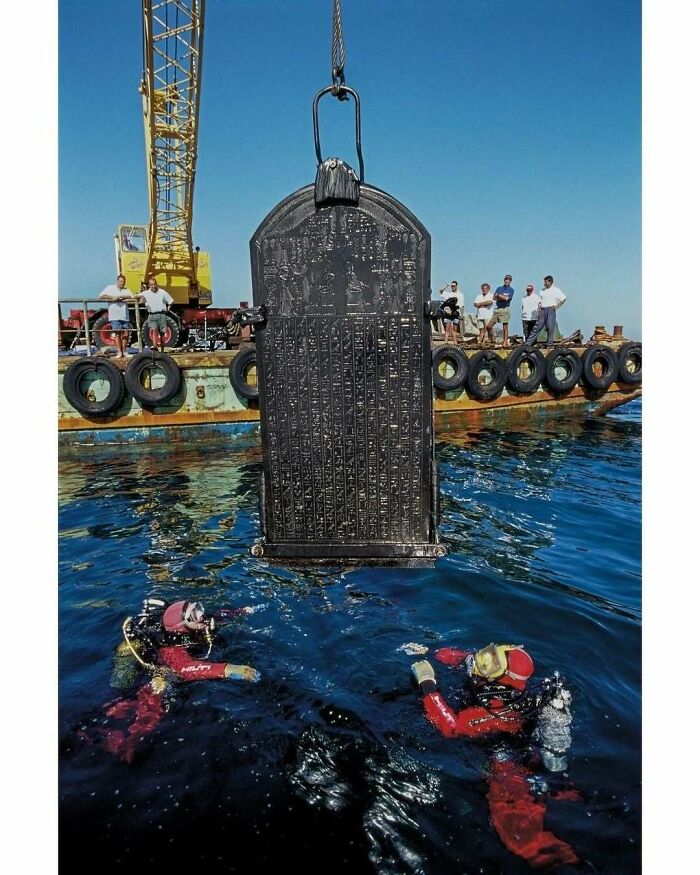
Image source: heraldofages
#33
The Guinigi Tower is a 45m tall fortified tower-house built in the 1300s, with holm oak trees growing in hanging gardens at it’s top. This is located in Lucca, Italy.
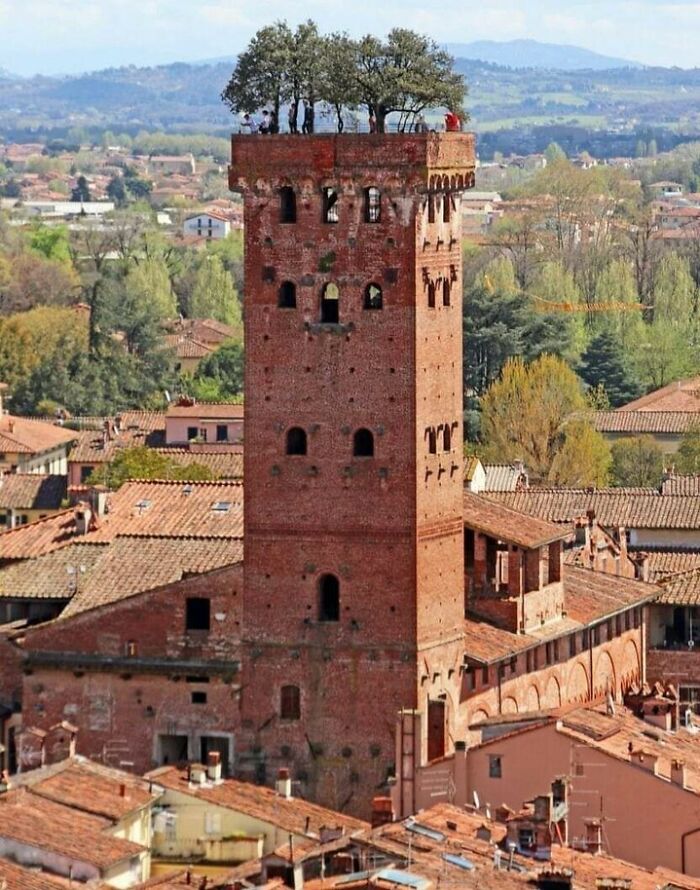
Image source: heraldofages
#34
The level of detail on the Column of Marcus Aurelius in Rome is absolutely mind blowing. A Doric column adorned with a detailed spiral relief, it was built in honor of Roman emperor Marcus Aurelius and modeled after Trajan’s Column. Dedicated to the emperor and his military campaigns during the Barbarian Wars, the monument stands as a testament to his reign from 161 to 180 AD. The column’s frieze, approximately 367 feet long, spirals upward 21 times, depicting the emperor’s campaigns against the Germanic and Sarmatian tribes. Its construction likely began after his death in 180 AD and was completed around 193 AD, under the reign of Septimius Severus.
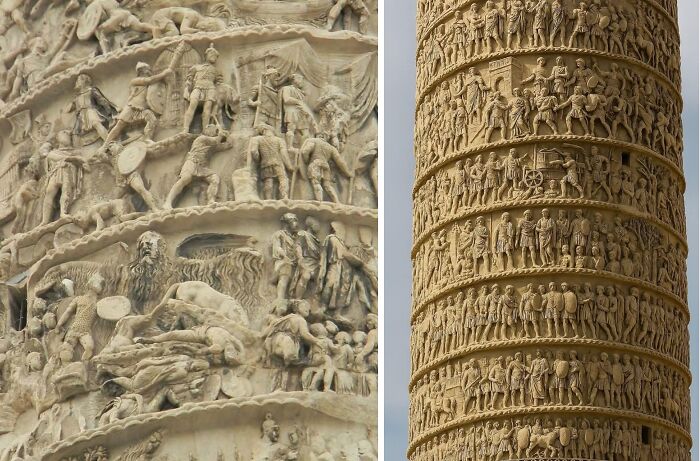
Image source: heraldofages
#35
Woman’s hat, known as the brelot, worn as part of the national costume of Bresse from Bourg-en-Bresse, Burgundy, 19th century.
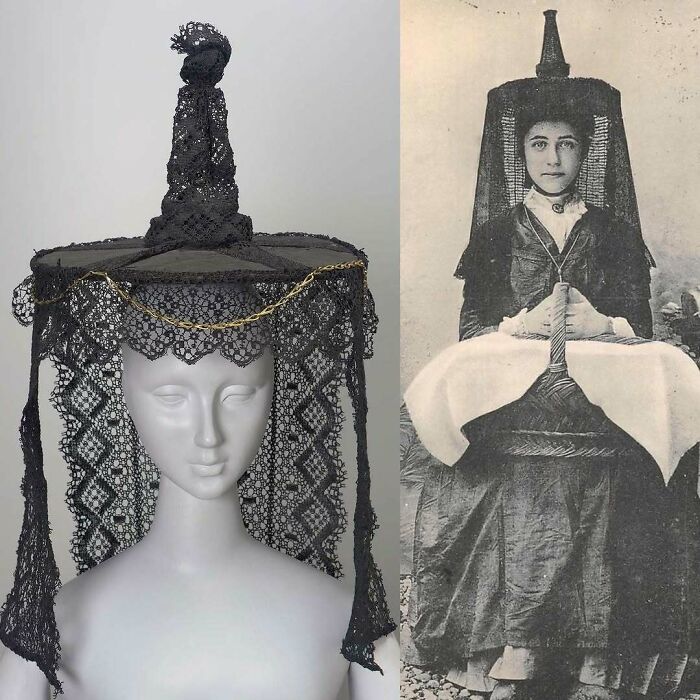
Image source: heraldofages
#36
Perseus with the Head of Medusa is a bronze sculpture made by Benvenuto Cellini in the period 1545–1554. The sculpture stands on a square base which has bronze relief panels depicting the story of Perseus and Andromeda, similar to a predella on an altarpiece. It is located in the Loggia dei Lanzi in the Piazza della Signoria in Florence, Italy.
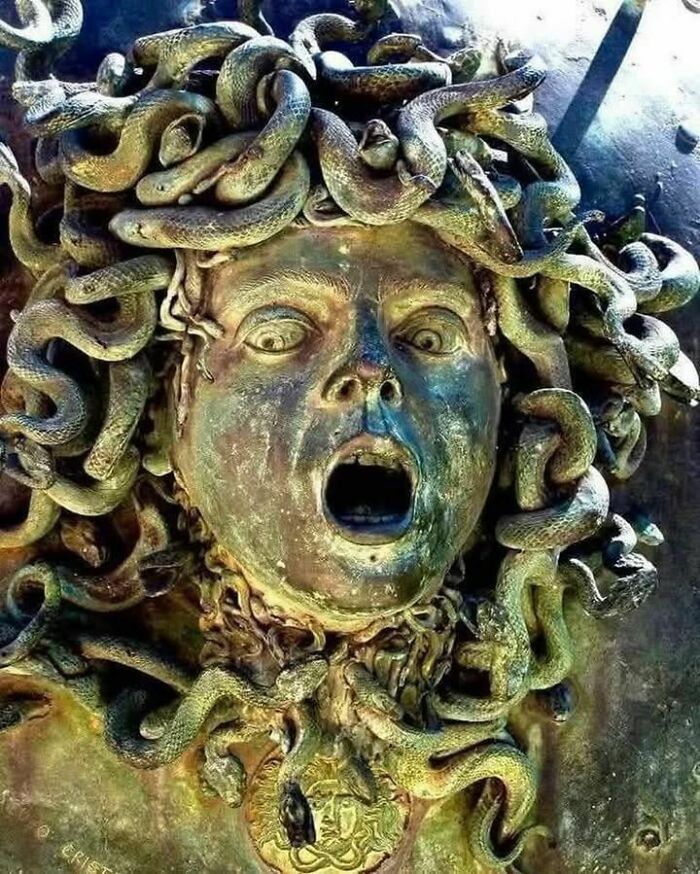
Image source: heraldofages
#37
A Roman marble sculpture depicting four puppies curled together in sleep, discovered among the ruins of the House of the Faun in Pompeii and dating to the 1st century BCE. The piece is now preserved in the collection of the National Archaeological Museum of Naples in Naples, Italy.
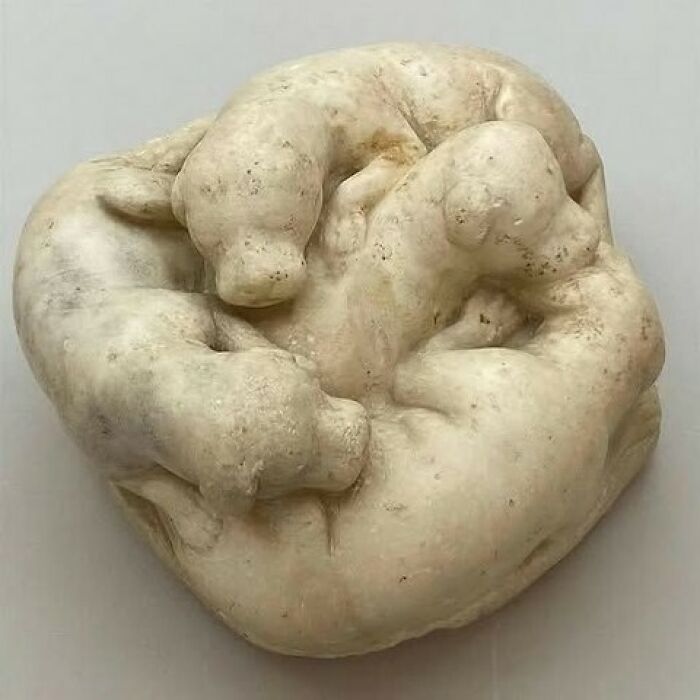
Image source: heraldofages
#38
This photograph shows the unbroken seal on Tutankhamun’s tomb. It had previously not been touched for 3,245 years. 1922.
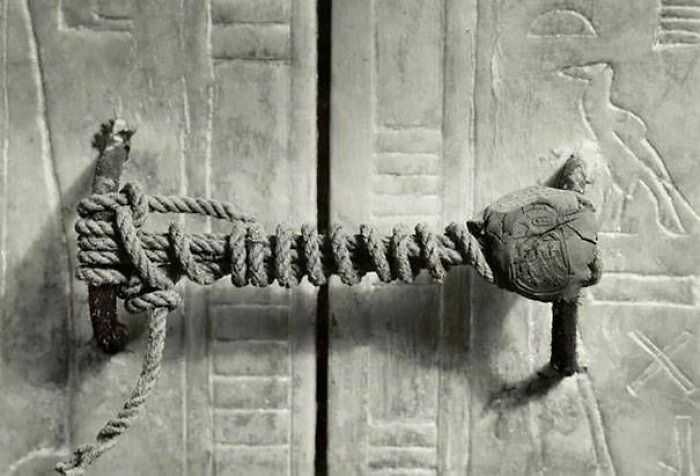
Image source: heraldofages
#39
Pictured here is a 12th-15th century tombstone located at the Ahlat Seljuk Cemetery in Turkey.
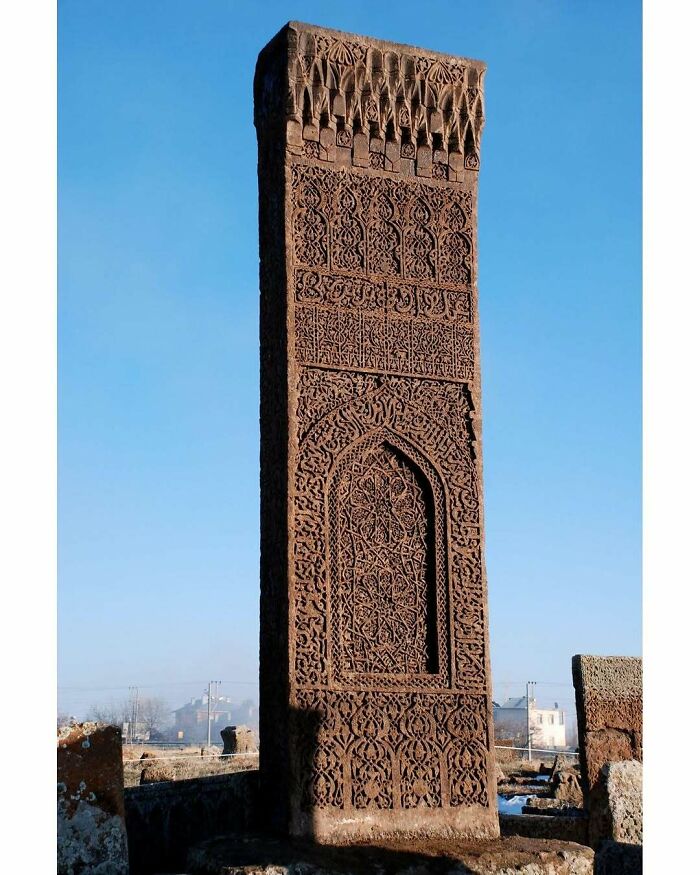
Image source: heraldofages
#40
The gilt bronze effigy of Edward, the Black Prince, dated to 1376 CE and housed at Canterbury Cathedral. Its remarkably detailed armor makes it one of the most important examples of English medieval funerary art, especially since so few surviving pieces of contemporary armor remain.
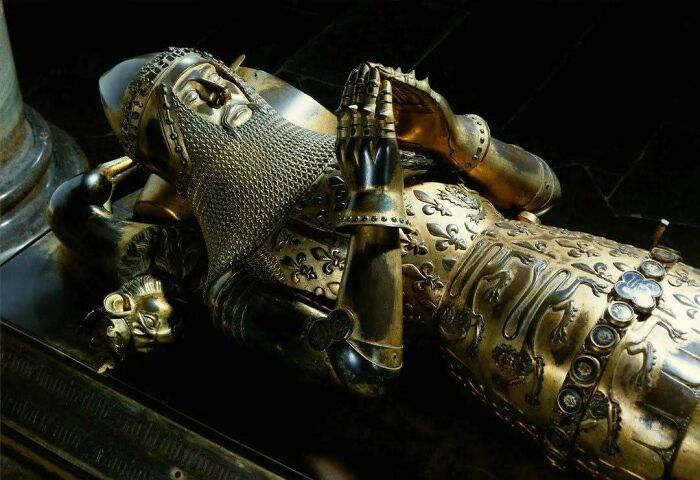
Image source: heraldofages
#41
A statue of Anubis in Tut Ankh Amun’s tomb, taken during the Carter expedition in 1922.
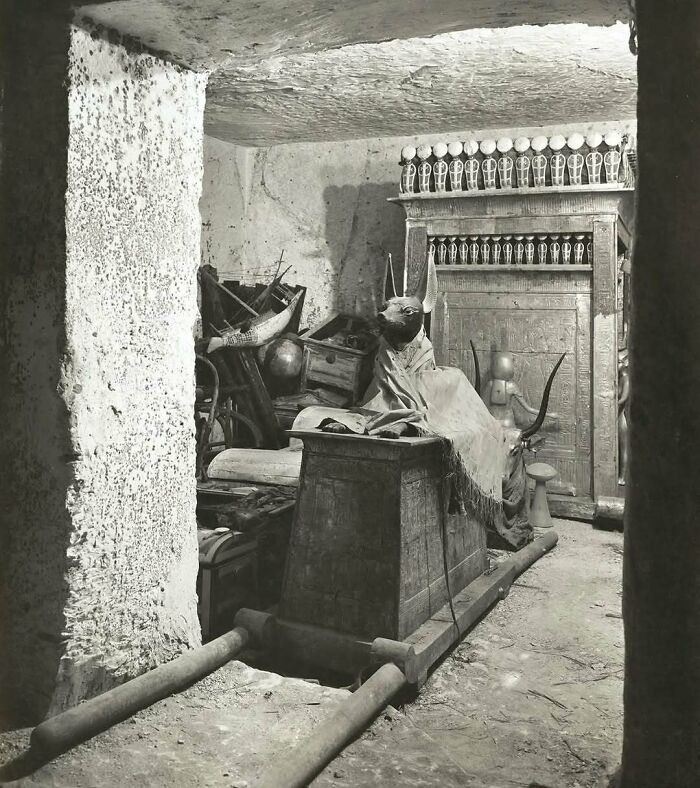
Image source: heraldofages
#42
Artwork From The Middle Ages
Name of Artwork: St. Wolfgang and The Devil
Artist: Michael Pacher
Year: 1471-1475
Technique: Tempera on Wood
This interesting painting portrays St. Wolfgang standing with the Devil, who is showing him an agreement that they contracted up. The deal was that the Devil was going to help St. Wolfgang build his church, on the condition that the Devil would be able to take the first soul that walked through the entrance. St. Wolfgang, knowing the devil’s condition, cleverly ensured that a pig entered the church first, fulfilling the deal without sacrificing a human soul.
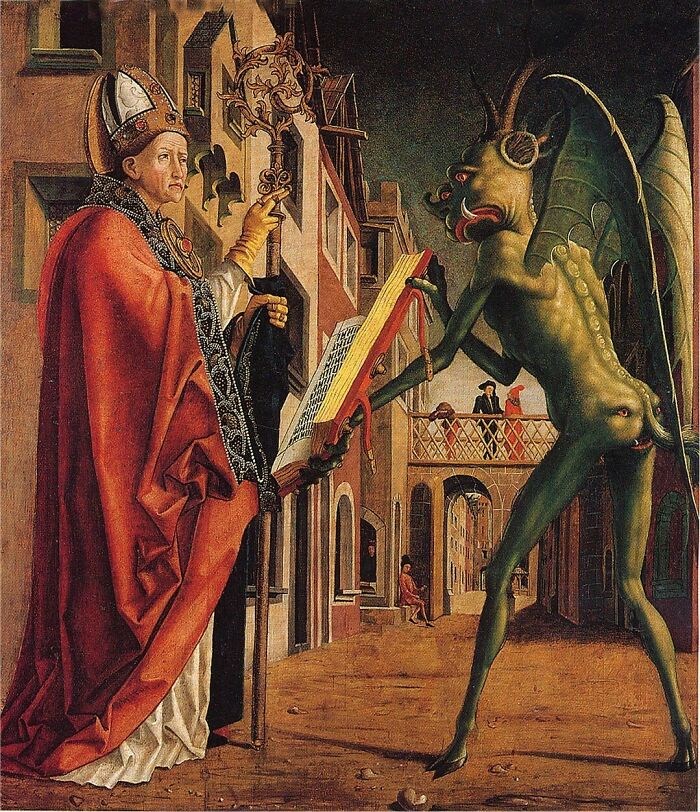
Image source: heraldofages
#43
Wooden statue of the priest and scribe Kaaper, discovered in his Mastaba in Egypt. The eyes are in rhinestones with copper edges. It is about 4500 years old. Egyptian Museum, Cairo.
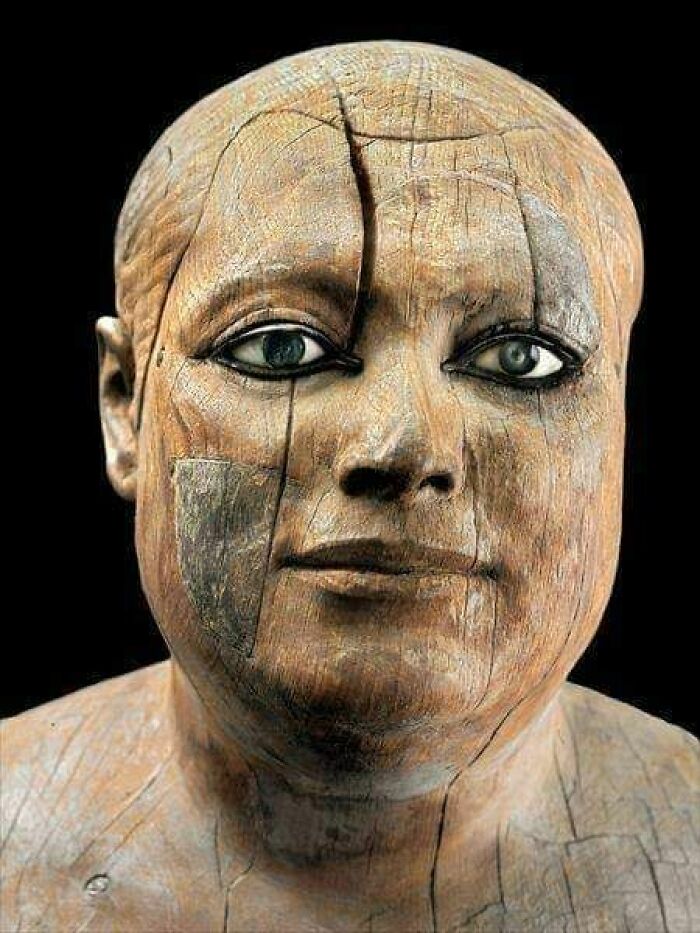
Image source: heraldofages
#44
A photo of a man standing on the lap of a statue of Ramesses in Egypt, 1856.
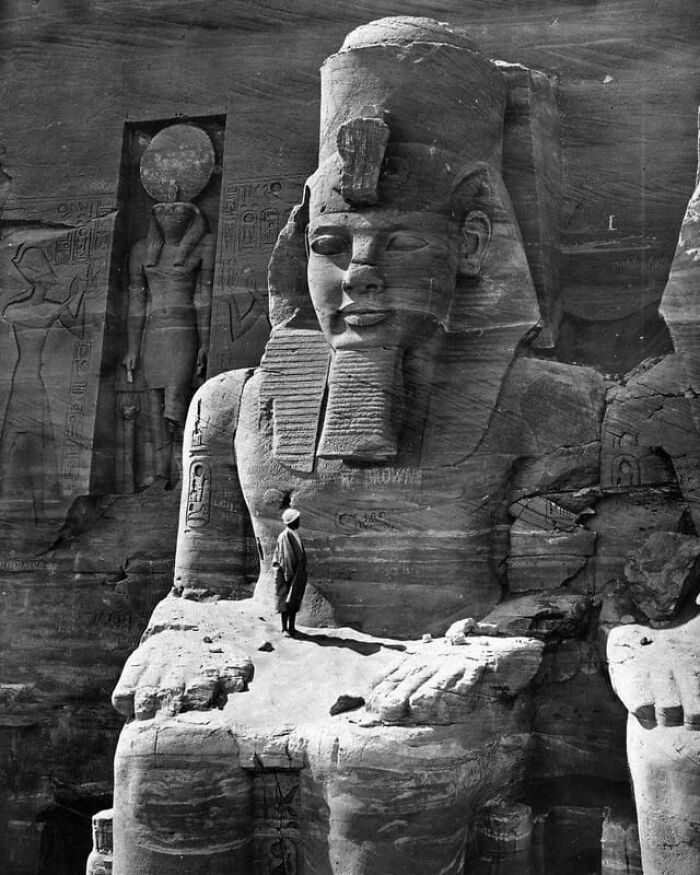
Image source: heraldofages
#45
Hidden in the remote and rugged landscapes of the Pir Panjal range, within the Jammu Division of Jammu and Kashmir, India, lies a fascinating mystery—the Mysterious Horsemen. These enigmatic stone figures, scattered across at least three secluded locations, have puzzled historians and archaeologists alike. One of the most striking sites is in Gool, located in the Ramban District, where over a hundred of these majestic horsemen stand tall. Some of these statues tower over 8 feet, crafted in lifelike proportions, creating an awe-inspiring spectacle. The sheer number and grandeur of these figures at this single site alone are enough to spark curiosity and wonder. The origins of these horsemen remain shrouded in mystery. Some theories suggest they were the work of the White Huns, also known as the Svet Hunas or Hephthalites—a Central Asian tribe that ruled this region between the 5th and 7th centuries. Mihirkula, one of their most notorious rulers, is often linked to this era. Yet, the true purpose behind their creation and the identity of their makers remain unanswered questions that continue to intrigue researchers.
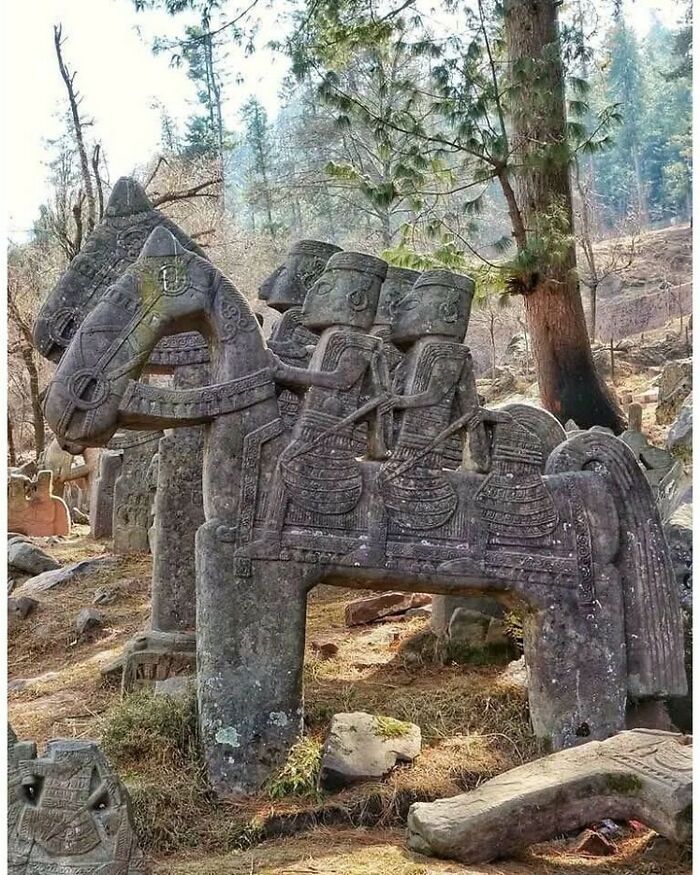
Image source: heraldofages
#46
The Strange Creatures of Medieval Manuscripts.
Illustration of a manticore; detail of a miniature from the Rochester Bestiary, BL Royal 12 F xiii, f. 24v.
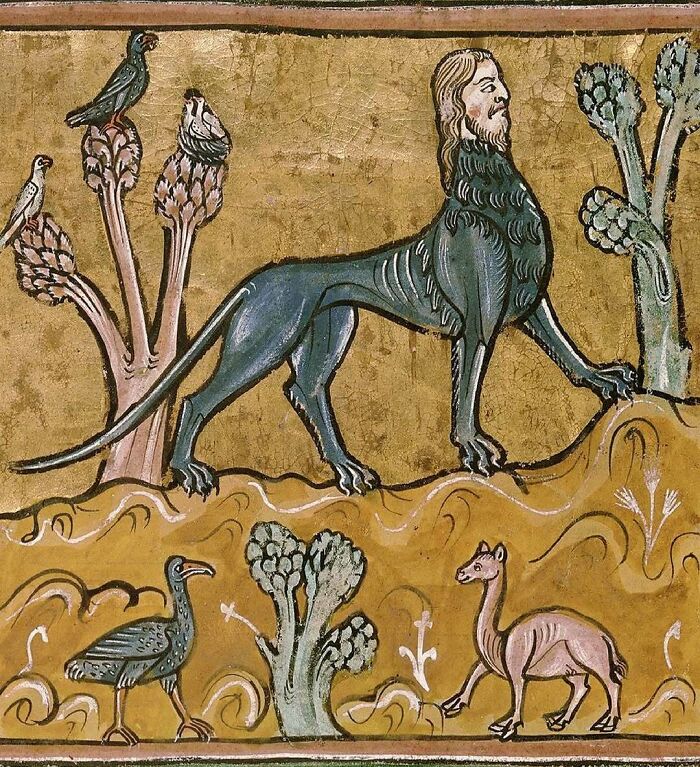
Image source: heraldofages
#47
Pictured here is the lower part of a leg and foot of the statue of Roman Emperor Marcus Aurelius (reign 161-180 A.D.) found at Sagalassos, Turkey in 2008.
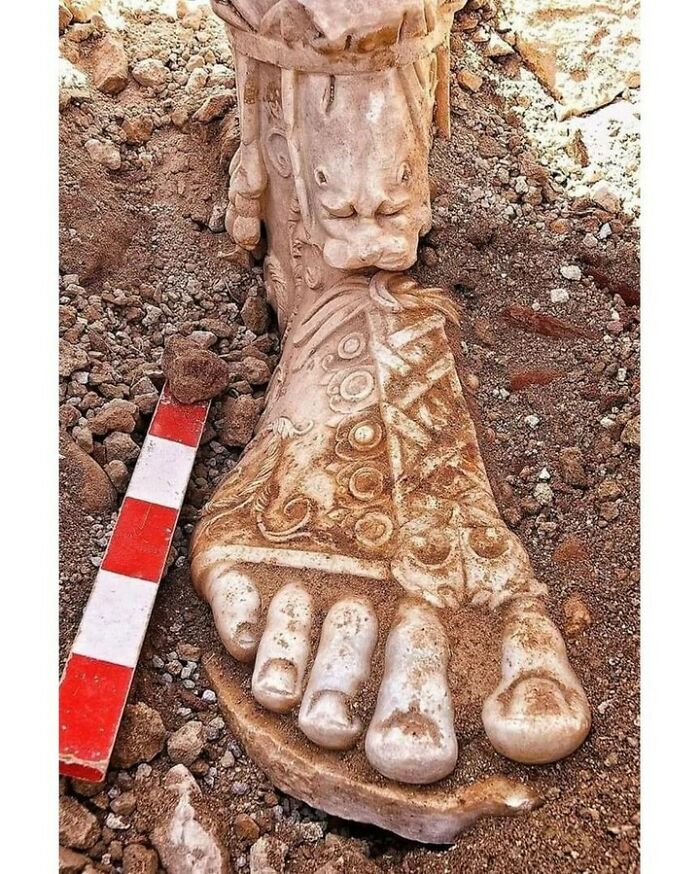
Image source: heraldofages
#48
A 9,000-square-foot mosaic was discovered in 2010 during the construction of a new hotel in Antakya, Turkey. Turkey. Archaeologists at the site believe the geometric work once decorated the floor of a public building in the previous city of Antioch, one of the most important cities in the Seleucid Empire. Although vast segments of the original mosaic are still intact, others have rippled and disappeared due to a series of earthquakes in 526 and 528 A.D.
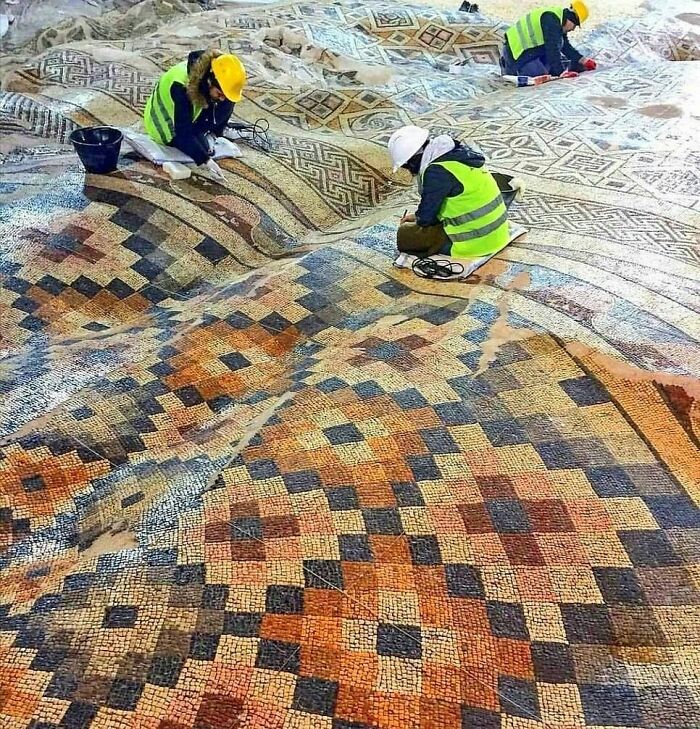
Image source: heraldofages
#49
The Strange Creatures of Medieval Manuscripts.
A demon carrying Jesus away. Detail from the missal, France ca. 1470-75. Collection: Beinecke Rare Book and Manuscript Library, MS 425, fol. 48r.
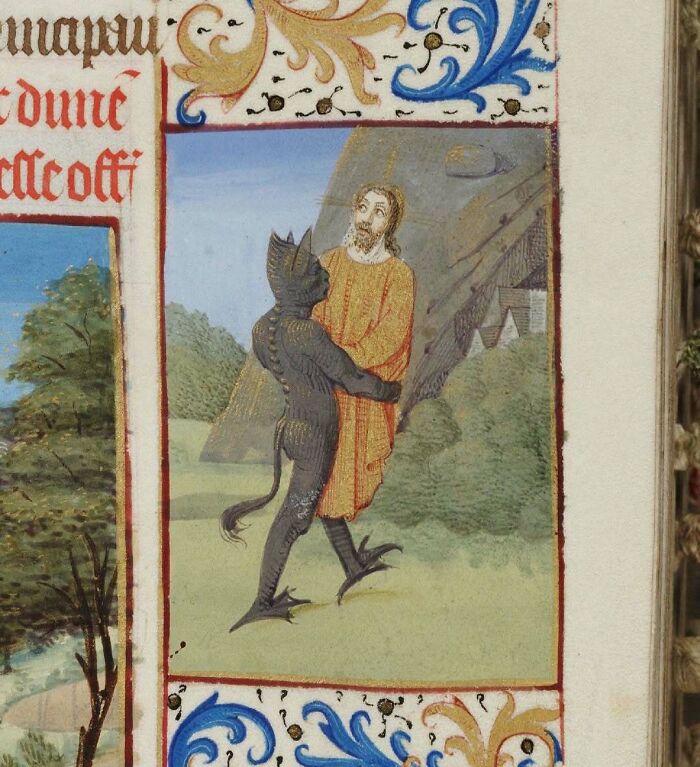
Image source: heraldofages
#50
In 2022, archaeologists in Scandinavia have discovered an arrow that has been lost in ice for around 1,500 years, suggesting it predates the Vikings. The discovery was made by researchers with Secrets Of The Ice, the name given to the glacier archaeology program of the Norwegian county of Innlandet. The arrow was discovered nestled between rocks. The research team believes it was encased in ice and was then transported downslope when the ice melted. Lars Holger Pilø, an archaeologist with Secrets Of The Ice, told Newsweek: “We have found more than 200 arrows that have melted out of the ice in recent years in Innlandet County, Norway in the last 15 years. The earliest are 6,000 years old.

Image source: heraldofages
#51
The Hortulus Animae, or “Little Garden of the Soul”, is a small prayer book popular in the early sixteenth century. The first known edition of Hortulus Animae, dated March 13, 1498, was printed at Strasbourg by Wilhelm Schaffener of Ribeauvillé, followed by German versions appearing in 1501. Later editions contained woodcuts by the well-known engravers Hans Springinklee and Erhard Schön, with beautiful miniatures in some existing manuscript examples, like the one at Vienna, which has been reproduced as facsimile by Friedrich Dornhöffer. In 1501/1502, Sebastian Brant from Strasbourg translated it into German.
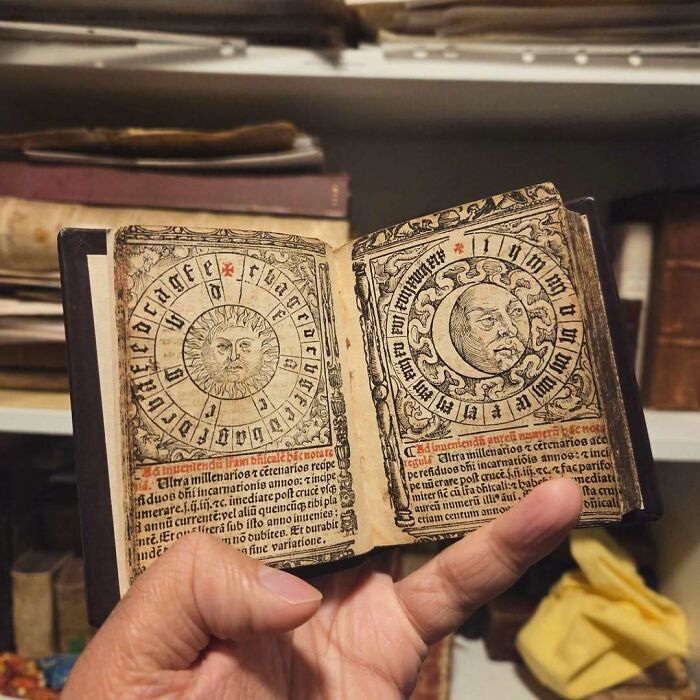
Image source: heraldofages
#52
A 1,550-year-old Byzantine mosaic found in Istanbul depicts a scene from rural life. It is on display at the Great Palace Mosaic Museum.
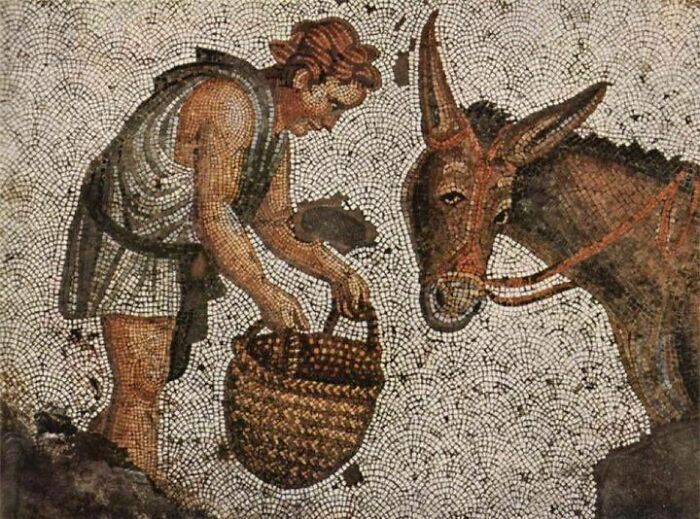
Image source: heraldofages
#53
A 13th-15th Century CE floor mosaic in the Cathedral of Santa Maria del Fiore in Firenzi, Italy.
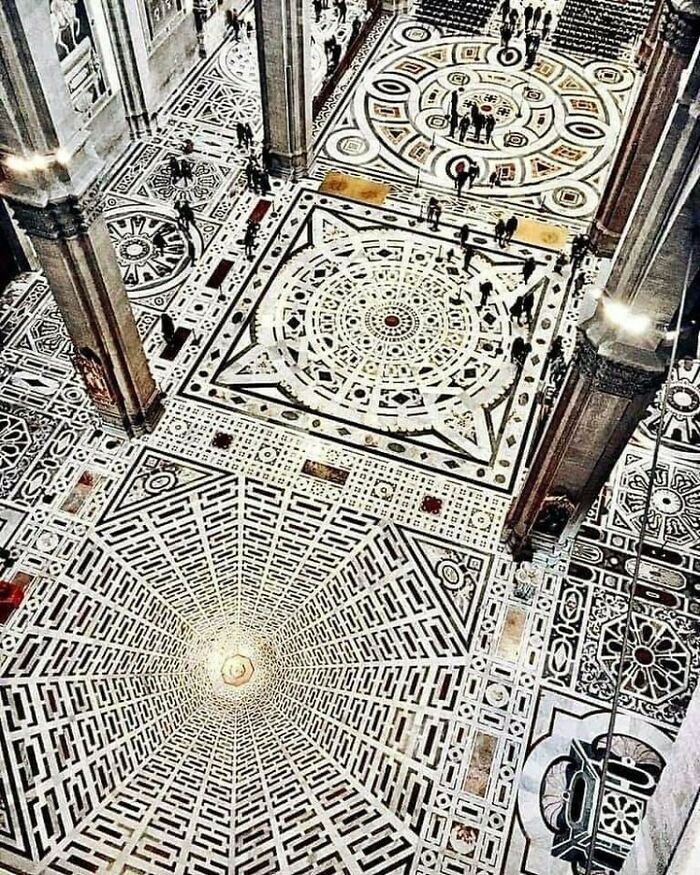
Image source: heraldofages
#54
Photographed here is the tea gown owned by the Countess Greffulhe, who often chose clothing of a brilliant green color because it complemented her auburn hair. France, 1897.
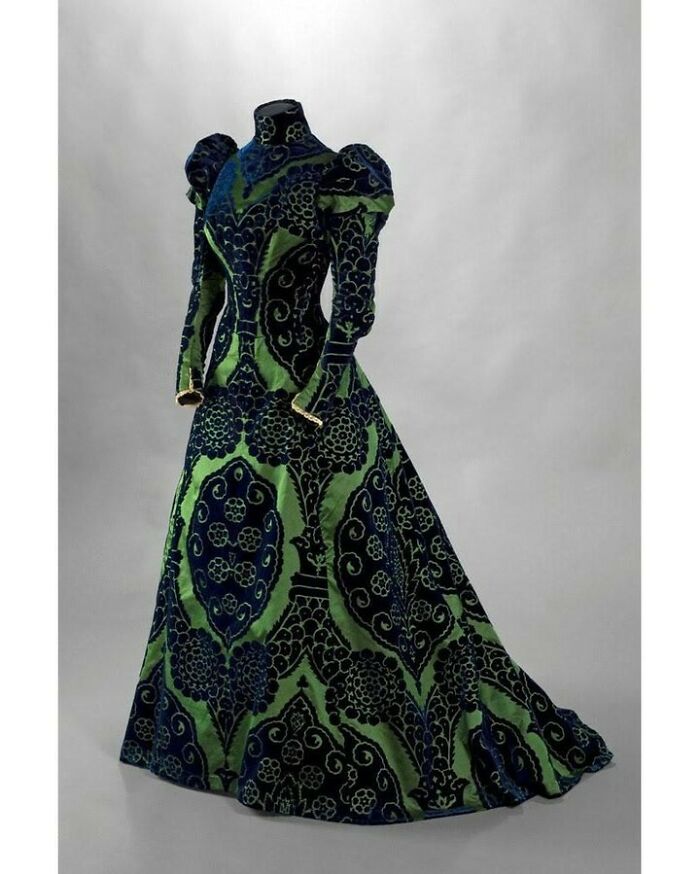
Image source: heraldofages
#55
Archaeologists from the Norwegian Institute for Cultural Heritage Research (NIKU) uncovered a rare die during one of several ongoing excavations in Bergen’s medieval Vågsbunnen district. While more than 30 medieval dice have been discovered in Bergen over the years—making such finds relatively common—this particular die stands out. Unlike a standard die, the Vågsbunnen example features two fives and two fours, with no one or two. This unusual design strongly suggests it may have been used for cheating in games.
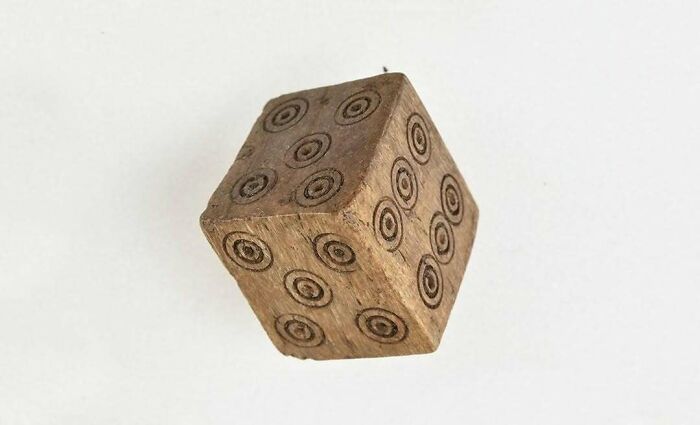
Image source: heraldofages
#56
The gilded copper head of a fox. Huaca de la Luna, Peru, Moche civilization, 1st-3rd century AD.
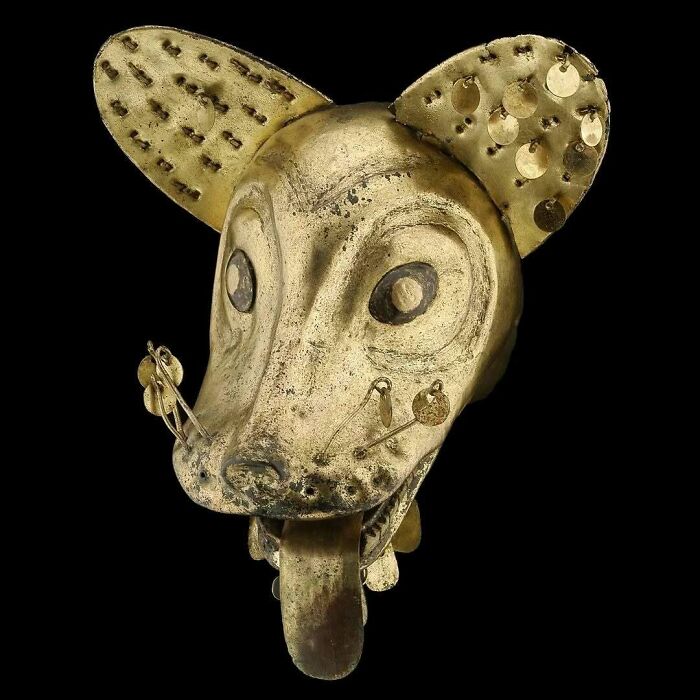
Image source: heraldofages
#57
This Japanese samurai helmet dates to the Azuchi–Momoyama period (1573–1603 CE), a time of intense warfare and political change in Japan. The helmet is covered with boar bristles and decorated with gilded stag antlers, symbols associated with strength and ferocity. Above the visor sits a heart-shaped ornament known as an inome, a stylized image of a boar’s eye. In Japanese art and architecture, this motif was commonly used as a protective symbol, believed to ward off evil and guard the wearer from harm.
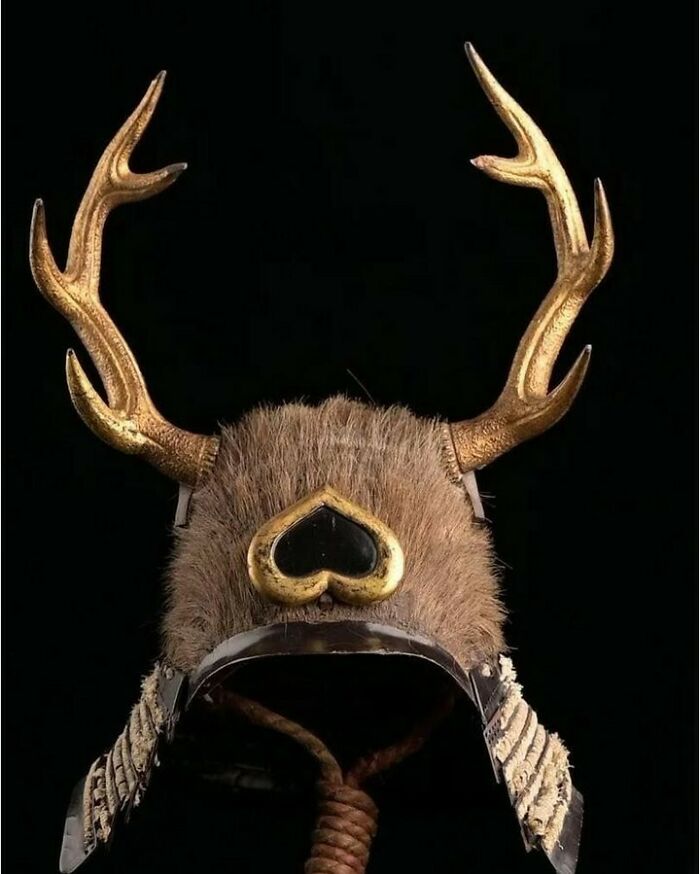
Image source: heraldofages
#58
This artifact is a Byzantine Ring which dates back to the 12th century. The sides of the octagonal bezel are inscribed in Greek with a quotation from Psalm 26: “Lord, my Light and my Savior, whom shall I fear?” In contrast to this Christian motto, the intaglio depicts the pagan god Pan. It is currently held in the Walters Art Museum.
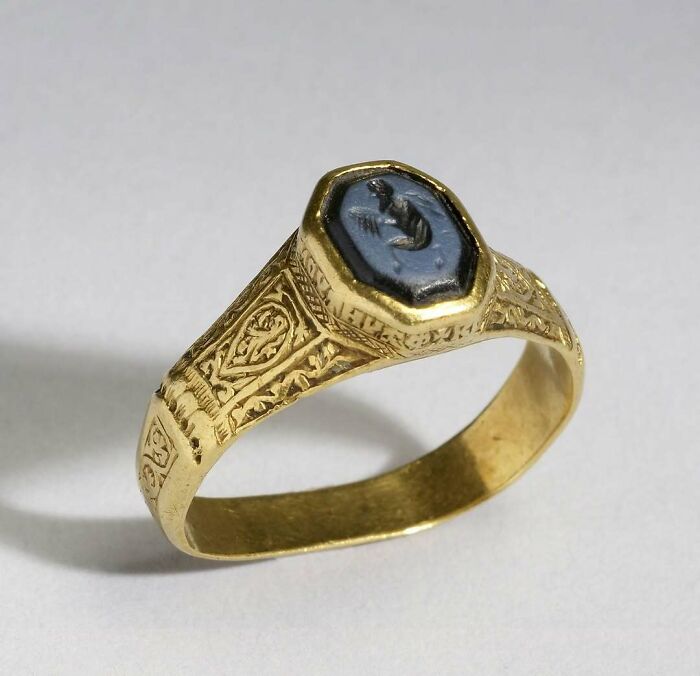
Image source: heraldofages
#59
Ancient remains in Morocco showing the animals that once inhabited the African region.
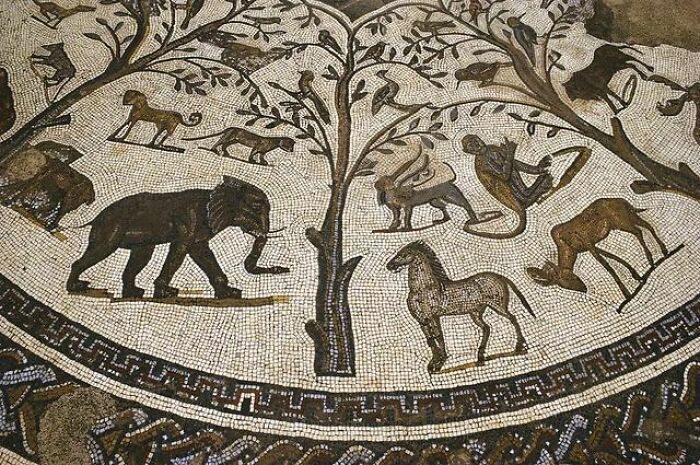
Image source: heraldofages
#60
Archaeologists in Aberdeenshire, Scotland, have discovered a medieval gaming board they believe may be a clue to the location of the long-lost Monastery of Deer, whose monks created the famed illuminated manuscript the Book of Deer, believed to be from the first half of the 10th century. The board, which was found near the village of Old Deer, would have been used to play the Norse strategy game Hnefatafl. “It is a very rare object and only a few have been found in Scotland, mainly on monastic or at least religious sites,” archaeologist Ali Cameron told The Scotsman. “These gaming boards are not something everyone would have had access to.” Layers under the gaming stone have been carbon dated to the 7th and 8th centuries, according to the BBC. Archaeologists have been on the hunt for the site of the Monastery of Deer for several years, and believe that the discovery of the gaming board means they are getting close. Photograph by Michael Sharpe and information from Artsy.
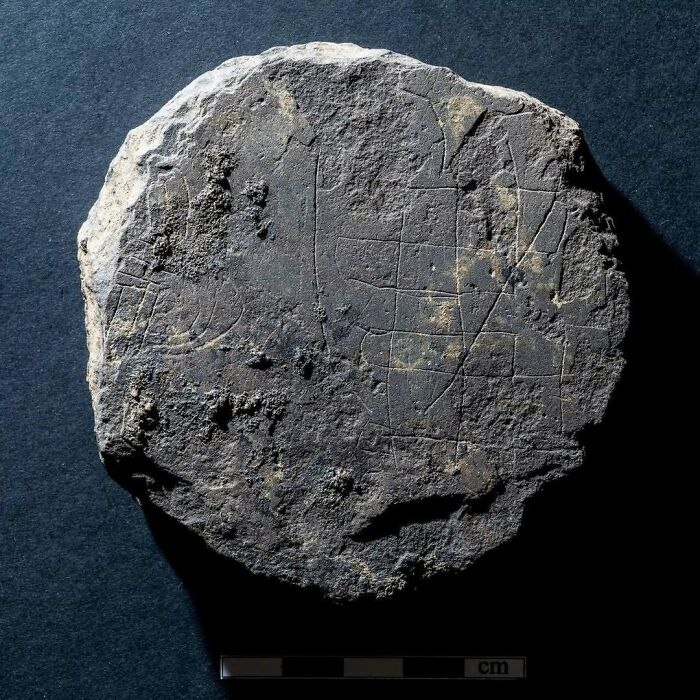
Image source: heraldofages
#61
Photographed is the incredibly lifelike 13th-century statue of Adelaide of Italy located at the Cathedral at Meissen. It was crafted by an anonymous Master of Naumburg.
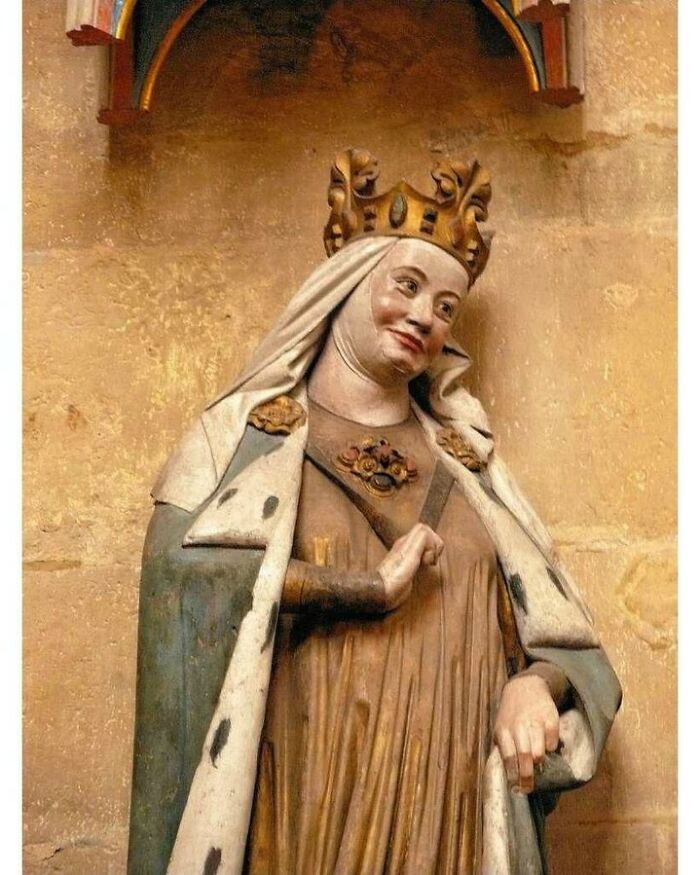
Image source: heraldofages
#62
Lioness Devouring a Man, Phoenician Ivory Panel, c. 9-th-8th century BCE. From the palace of Ashurnasirpal II, Nimrud, northern Mesopotamia, Iraq.
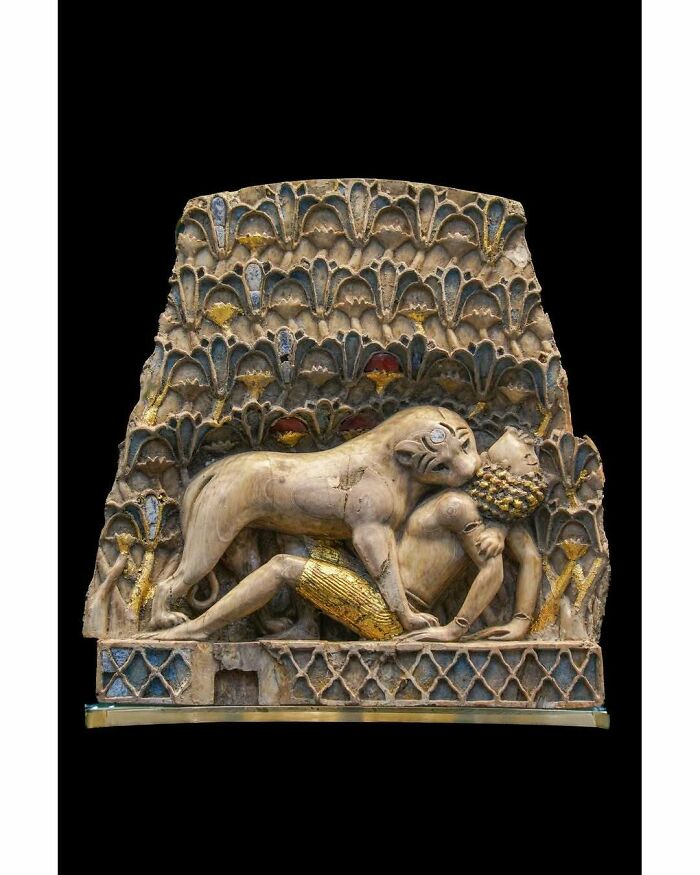
Image source: heraldofages
#63
A 2,200-year-old Roman bath in central Türkiye that has never stopped flowing at 45°C. Located in Sarıkaya, Yozgat, this monumental thermal complex dates back to the 2nd century BCE. Built in the Roman period, it continued to be used through the Byzantine, Seljuk, and Ottoman eras. What makes it extraordinary is the fact that the hot spring has provided a constant 45°C flow since antiquity.
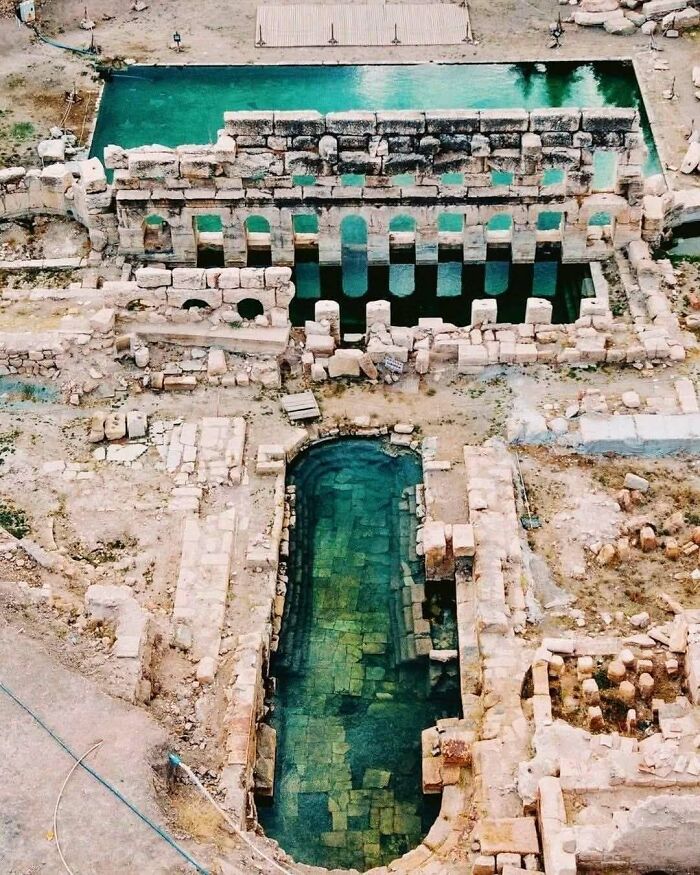
Image source: heraldofages
#64
Duke Karl’s Chamber at Gripsholm Castle is the castle’s only fully preserved room from the Vasa period, and is one of the oldest Renaissance interiors in Sweden. The décor has been virtually untouched since the chamber was created for Gustav Vasa’s youngest son in the 1570s.
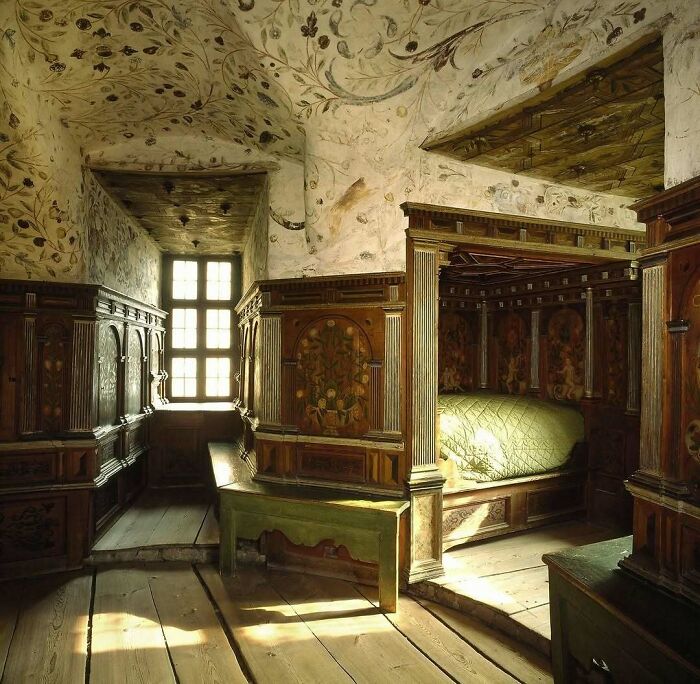
Image source: heraldofages
#65
This statuette was made to house a relic of St George that Archbishop Ernst of Cologne sent in 1586 to his brother Duke Wilhelm V of Bavaria. In the seventeenth century, the statuette was displayed on important feast days on the altar of the Ornate Chapel in the Munich Residence. The bearded face of the saint behind the movable visor is carved from boxwood and resembles that of the man who commissioned the statuette, Duke Wilhelm V.
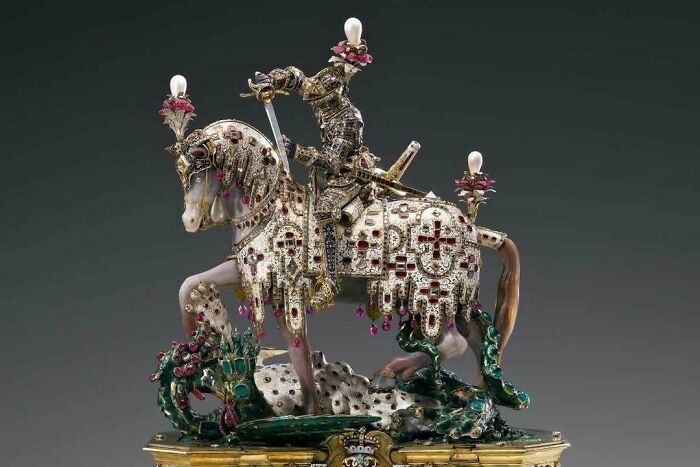
Image source: heraldofages
#66
Archaeologist Friedrich Krefter standing at the ancient gates of Persepolis (Iran), circa 1930s.
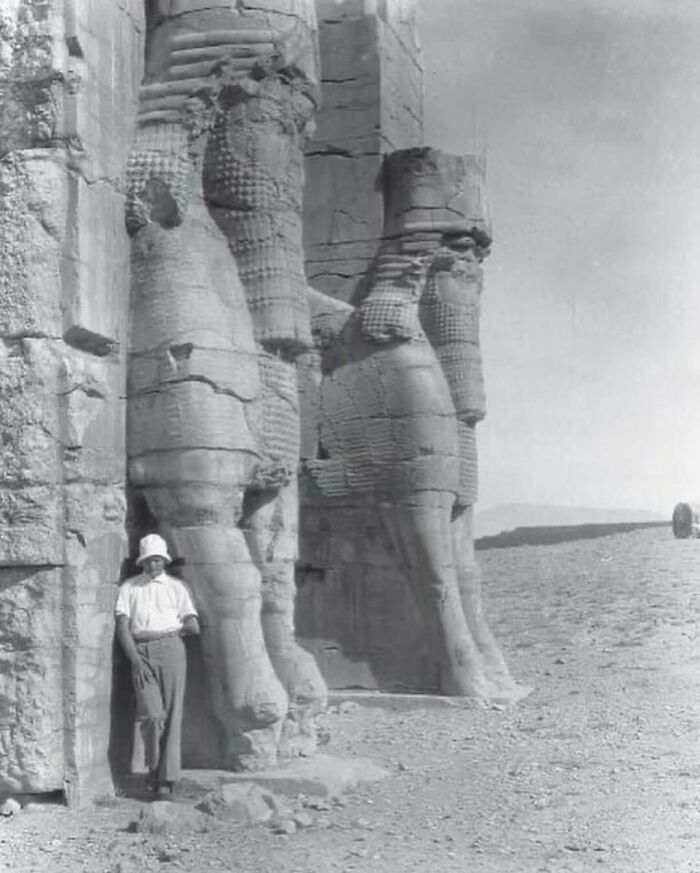
Image source: heraldofages
#67
This 1000-year-old manuscript was created by ~16 scribes in a Benedictine Abbey in Trier, Germany. They used gold ink to copy the text of the Gospels onto parchment that had been dyed with a plant-based purple pigment. It is currently housed at the Morgan Library and Museum in New York.
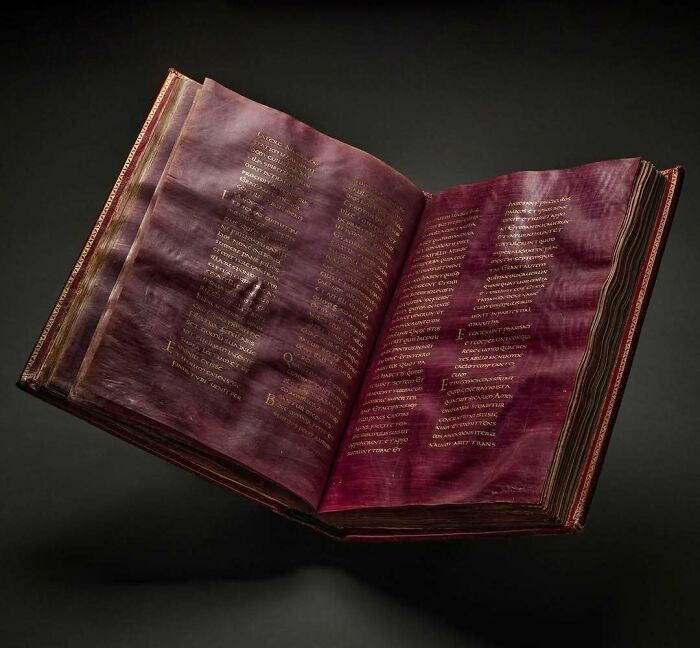
Image source: heraldofages
#68
Pictured is the Guards of Susa and Persia, reliefs of the eastern staircase of the Apadana, created in the 6th century BC.
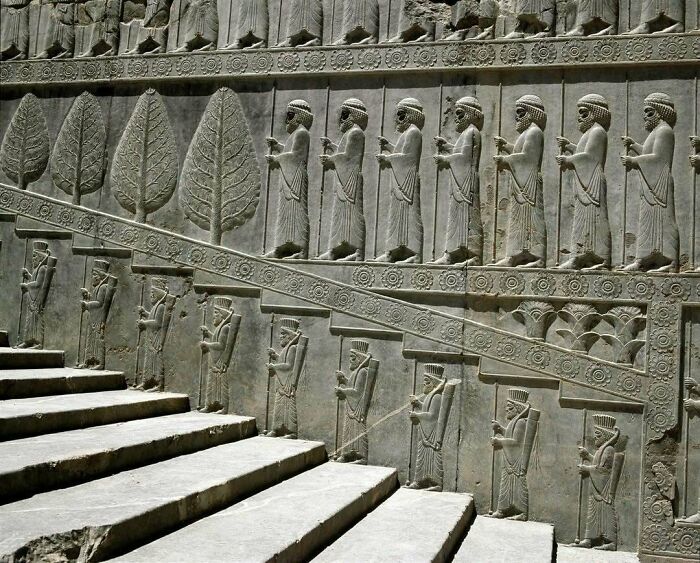
Image source: heraldofages
#69
Pictured here is the bronze head of an Akkadian ruler, discovered in Nineveh in Iraq, presumably depicting either Sargon (passed c. 2279 BCE), or Sargon’s grandson Naram-Sin (reign c. 2255-2218 BCE).
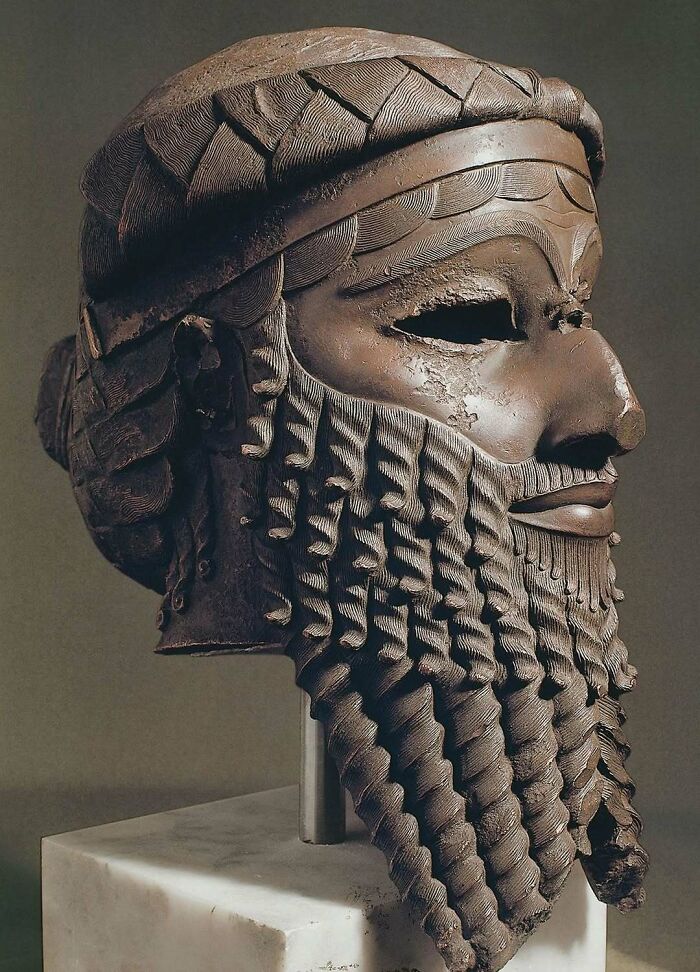
Image source: heraldofages
#70
Mount Nemrut is a 2,134-metre-high (7,001 ft) mountain in southeastern Turkey, notable for the summit where a number of large statues are erected around what is assumed to be a royal tomb from the 1st century BC. It is one of the highest peaks in the east of the Taurus Mountains. In 62 BC, King Antiochus I of Commagene built on the mountain top a tomb-sanctuary flanked by huge statues 8–9-metre high (26–30 ft) of himself, two lions, two eagles, and various composite Greek and Iranian gods, such as Heracles-Artagnes-Ares, Zeus-Oromasdes, and Apollo-Mithras-Helios-Hermes. When constructing this pantheon, Antiochus drew heavily from Parthian and Armenian traditions in order to reinvigorate the religion of his ancestral dynasty. The statues were once seated, with names of each god inscribed on them. At some point the heads of the statues were removed from their bodies, and they are now scattered throughout the site.
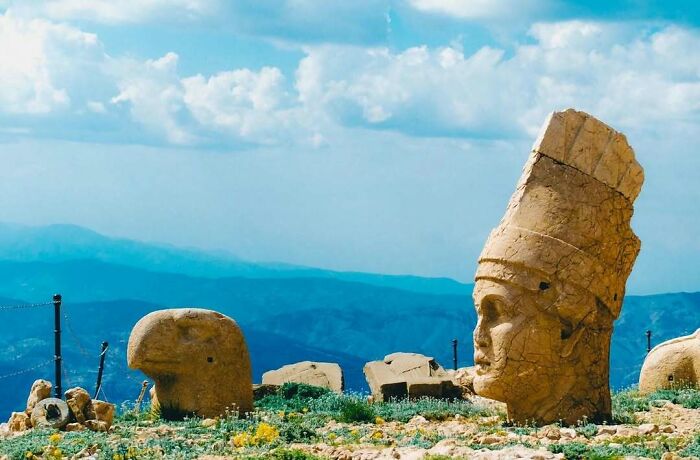
Image source: heraldofages
#71
Photographed is a ceramic figure representing a dancer with a removable crocodile helmet from the Colima culture. Created between 300 BC and 300 AD, the piece is now on display at the Museum of Fine Arts, Houston.
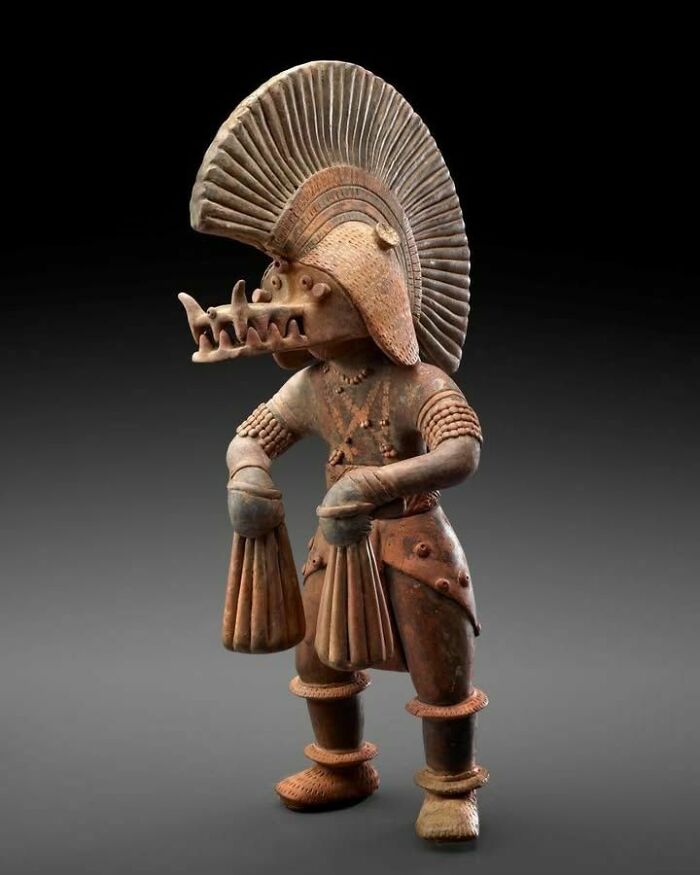
Image source: heraldofages
#72
Tamgaly, a UNESCO World Heritage Site since 2004, is a petroglyph site in the Zhetysu of Kazakhstan, about 170 km northwest of Almaty. There are approximately 5,000 petroglyphs at Tamgaly distributed among 48 sites. Five of the most important sites, designated I, II, III, IV, and V, contain approximately 3,000 of the glyphs. The name Tamgaly in Kazakh and other Turkic languages means “painted or marked place”.
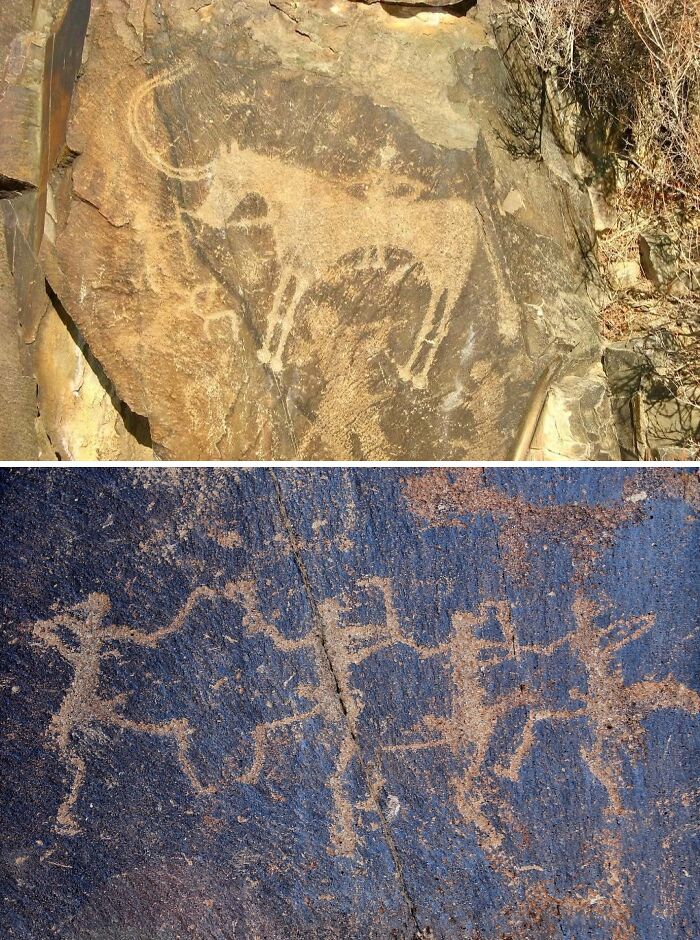
Image source: heraldofages
#73
A jade standing horned figure from China, Hongshan Culture, 4700-2500 BCE.
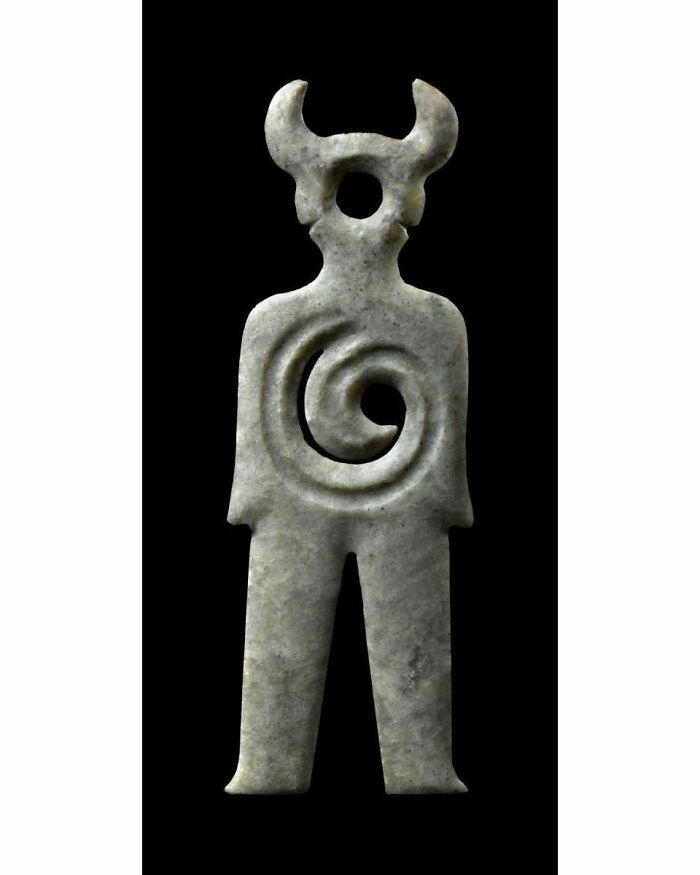
Image source: heraldofages
#74
Photographed is an ivory sculpture of a skeleton in a shroud seated on a tomb with an hourglass. This amazing work of art was created in France in 1547.
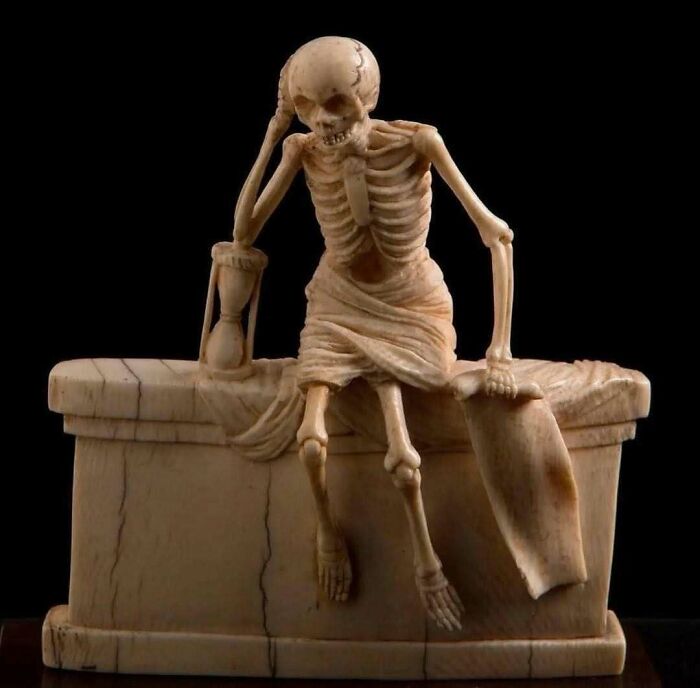
Image source: heraldofages
#75
This type of portable, boat-shaped arched harp was common during the New Kingdom and is shown in the hands of processional female musicians performing alone or in ensembles with singers, wind instruments, sistrums, and rattles. The end of the arched frame is decorated with the head of a Nubian captive who appears to be bound by the strings of the harp.
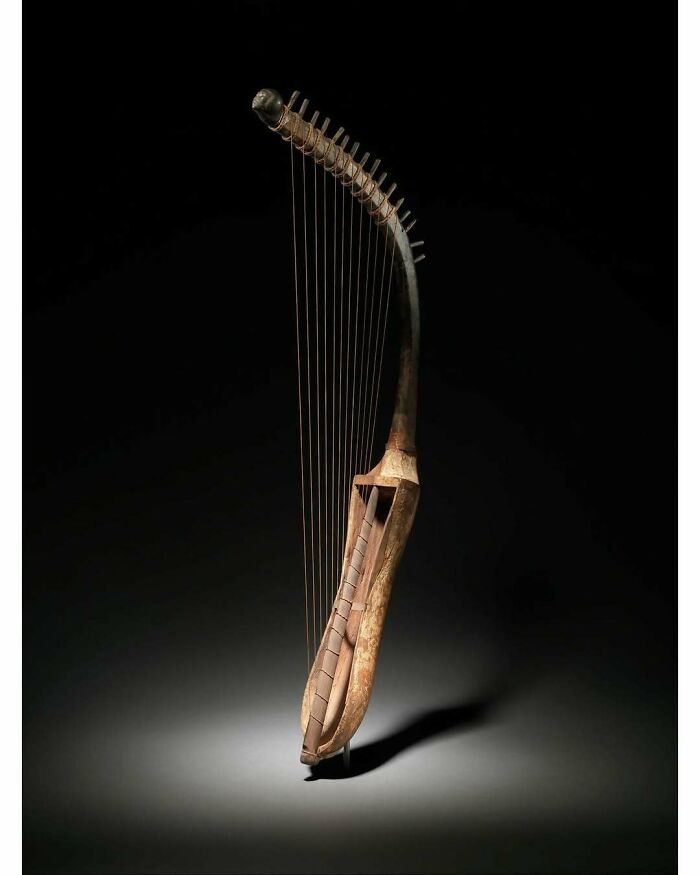
Image source: heraldofages
#76
Sculpture of Raijin, the god of thunder. Sanjūsangen-dō, Japan, Kamakura period, 13th Century.
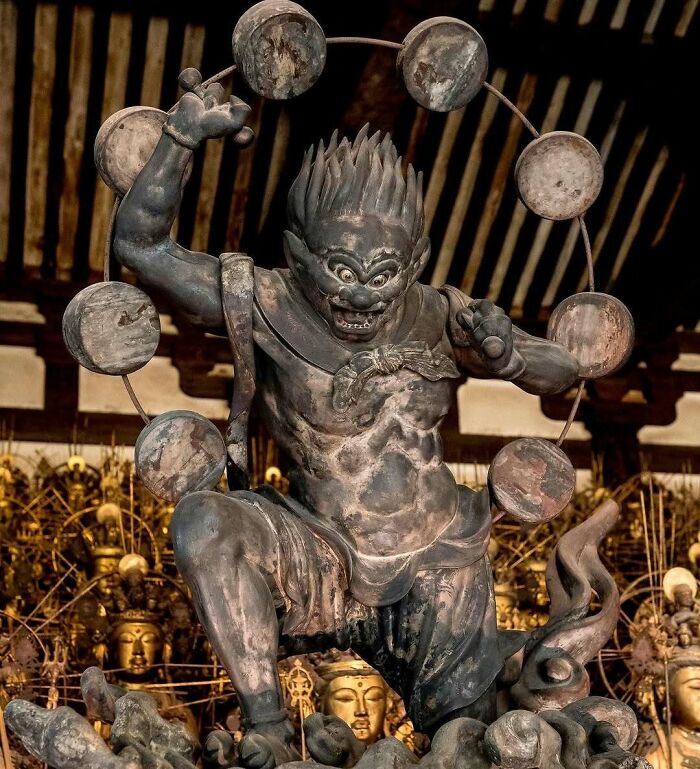
Image source: heraldofages
#77
This painting of a cave bear, at the Chauvet Cave in France, was drawn with 14 lines around 32,000 years ago. The artist used a technique known as ‘stump-drawing’ – the use of fingers or a piece of hide to paint the muzzle and to emphasize the outlines of the head and forequarters.
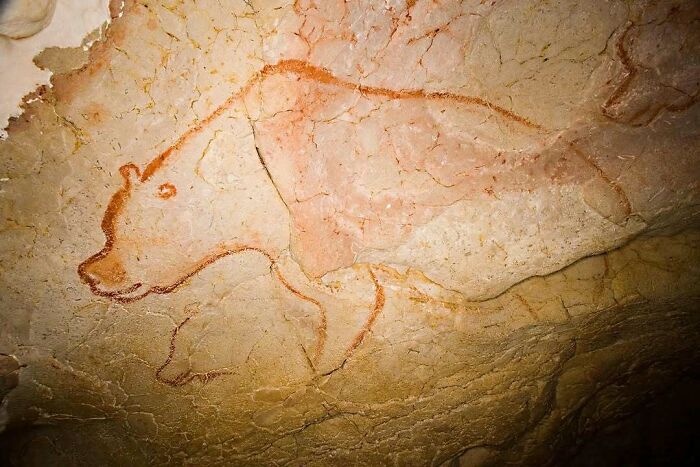
Image source: heraldofages
#78
Prehistoric rock carving of a whole bunch of deer. Bayankhongor, Mongolia.
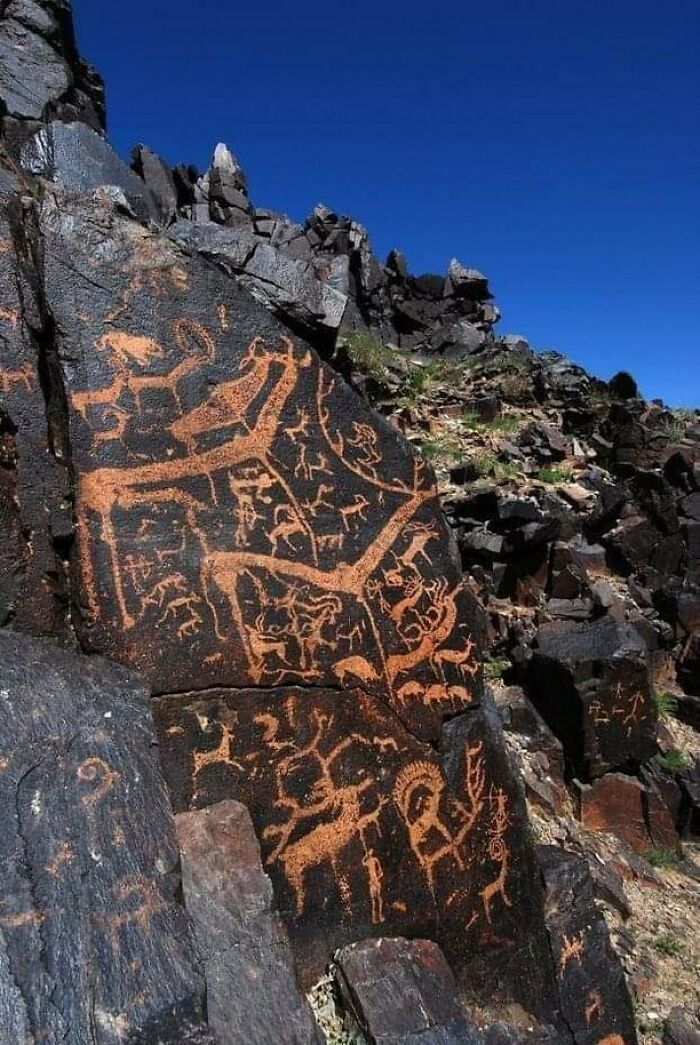
Image source: heraldofages
#79
The ceiling of the 2000 years old Hypostyle Hall of the temple of Hathor in Dendera, Egypt.
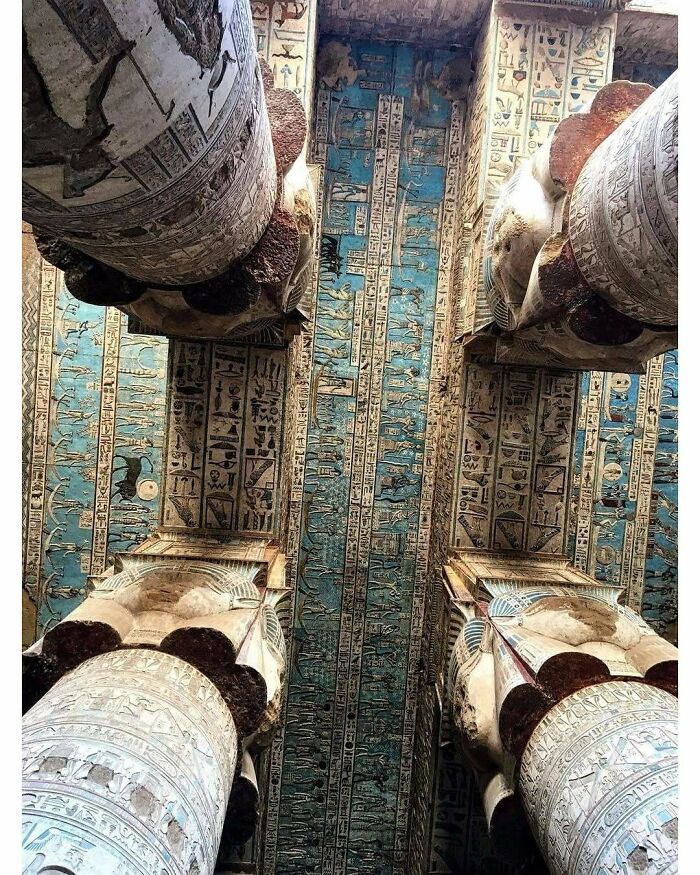
Image source: heraldofages
#80
The capstone of the Pyramid of Amenemhat III, 1860 BC-1814 BC.
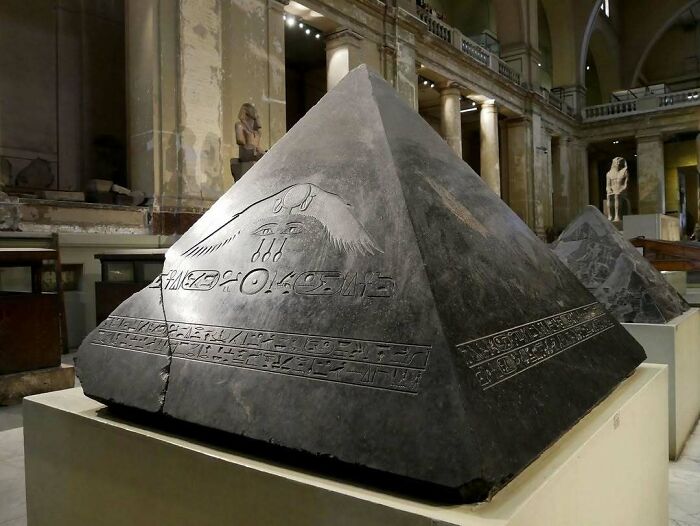
Image source: heraldofages
#81
Photographed is a guardian sculpture of a lion-man at the Banteay Srei temple in Siem Reap, Campbodia. It was constructed in the 10th century CE.
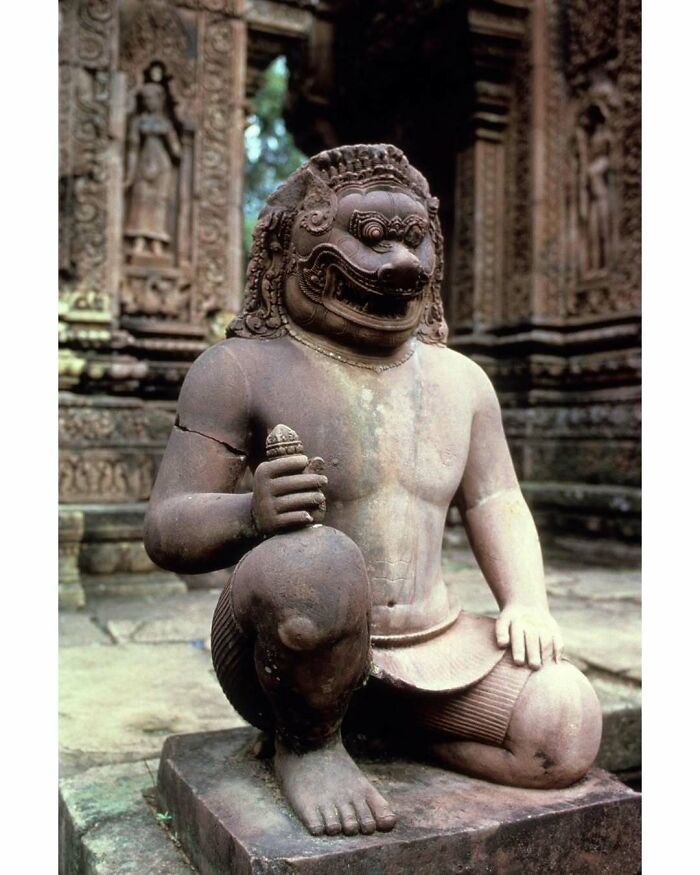
Image source: heraldofages
#82
The Strange Creatures of Medieval Manuscripts. Illustrations of a medieval seahorse.
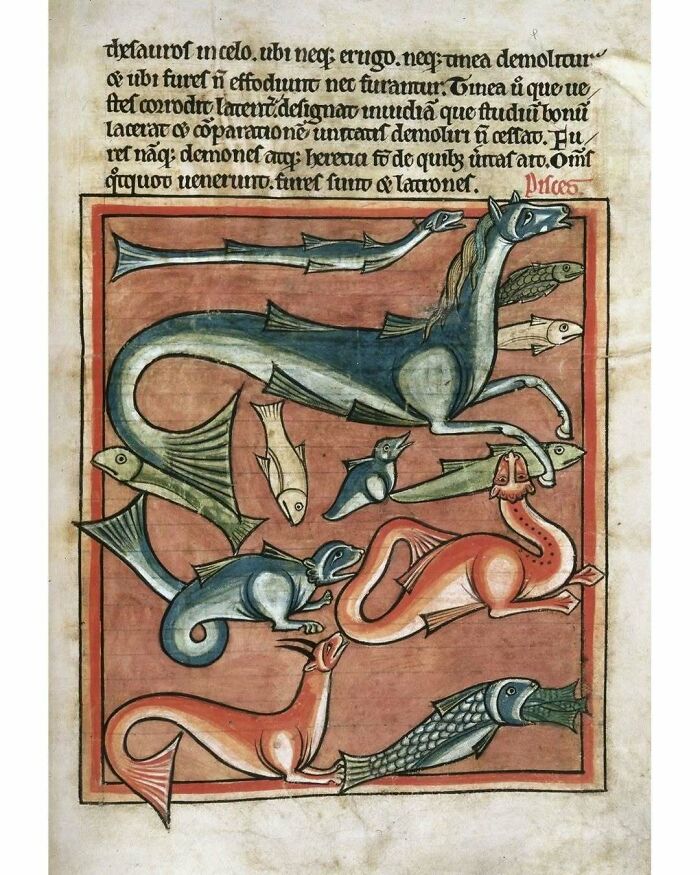
Image source: heraldofages
#83
A 2000 year old Roman gladiator helmet that survived the eruption of Mount Vesuvius in Pompeii. National Archaeological Museum, Naples.
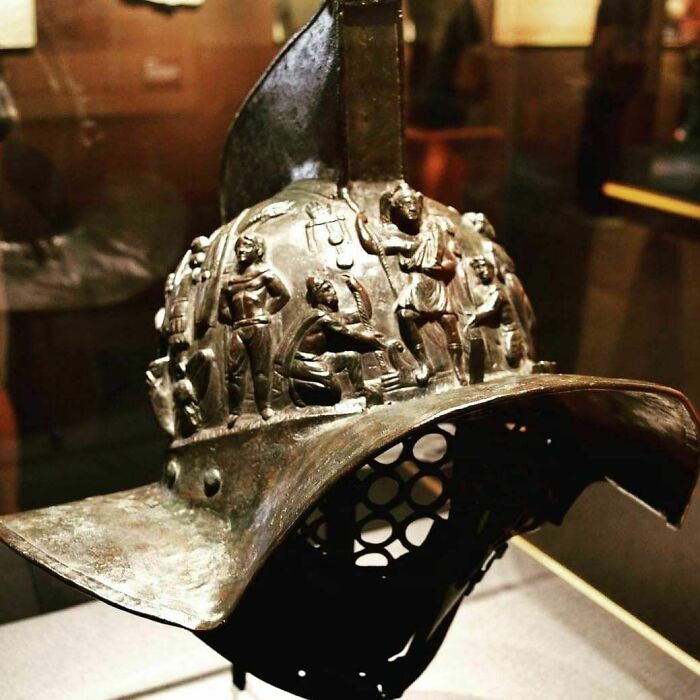
Image source: heraldofages
 Follow Us