Some people love throwing punches in conversations, right up until someone swings back. They’ll make snarky comments, poke at insecurities, or dish out brutally personal remarks, only to suddenly act shocked when the other person responds with the same energy.
That’s exactly what happened in this family drama, where a tense dinner conversation went out of control after one cousin decided to take a deeply personal jab at a teenager. But while he clearly expected everyone to laugh along or stay quiet, he wasn’t nearly as prepared for the comeback that followed.
More info: Reddit
Oddly enough, the people who say “learn to take a joke” are often the first ones to storm out when the joke lands on them instead

Image credits: freepik / Magnific (not the actual photo)

The author organized a family dinner where their 17-year-old son reunited with his older cousin, who has a 1-year-old son and pays child support

Image credits: stockking / Magnific (not the actual photo)
During dinner, the cousin complained that he never gets to buy nice things for himself anymore because he spends so much money supporting his child and the child’s mother

Image credits: user4455122 / Magnific (not the actual photo)
Their son responded that his son’s needs weren’t “demands”, and the nephew mocked the son’s medical condition by saying he doesn’t take parenting advice from “virgins”
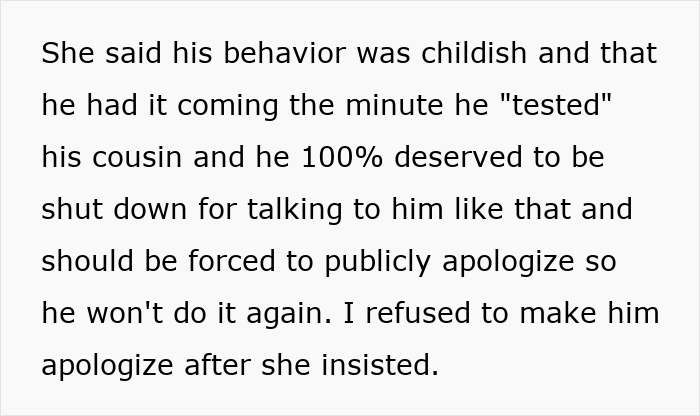
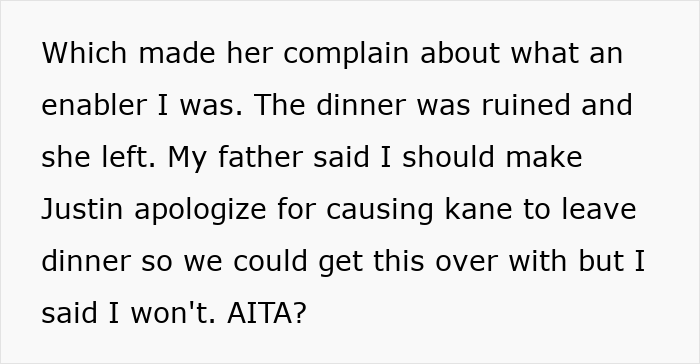
Image credits: Throwaway_37441
Their son fired back by saying at least he didn’t have to pay child support, causing the nephew to storm out while the family later argued over whether their son should apologize
The OP shared that they hadn’t seen much of their relatives due to work, and decided to organize a family dinner. Among the guests were their sister, nephew, the nephew’s one-year-old, and the OP’s parents. Now, the OP noted that their son and their nephew had always been like brothers, but grew apart as they got older. The OP’s son recently bought himself a brand-new iPhone using his own money, which the nephew noticed.
When the nephew found out the OP’s son bought it himself, he started venting about how he never gets to buy nice things for himself anymore because so much of his income goes toward child support and expenses for his child. The OP’s son pointed out that things like food, toys, and clothes for a child shouldn’t be viewed as “demand”, but rather as normal parental responsibilities.
However, the comment struck a nerve. The nephew fired at him, saying that he didn’t “take parenting advice from virgins”. Everyone reportedly went silent, especially because the OP’s son has medical reasons that have affected his ability to pursue relationships. The OP’s son fired back, saying that at least he didn’t have to pay child support, so he can enjoy spending his money however he wants.
The nephew became visibly furious and walked out of the house. The nephew’s mother accused the OP’s son of flaunting his expensive gadgets in front of someone struggling financially, and demanded that he should publicly apologize for embarrassing his cousin. However, the OP refused to force an apology, arguing that the nephew started it by targeting their son’s sensitive medical condition during dinner.

Image credits: freepik / Magnific (not the actual photo)
Family dinners and holiday gatherings often become emotionally charged because they bring together long-standing family dynamics in one shared space. Psychology Today explains that sensitive topics such as money, parenting styles, personal choices, or life circumstances frequently surface during these gatherings, increasing emotional pressure and making conflict more likely.
Thee impact becomes even more serious when humiliation targets intimate or medical issues. Specifically, Yvex emphasizes that such topics are closely tied to privacy, vulnerability, and self-worth, meaning that exposing them publicly can feel like a direct attack on a person’s identity and safety. Moreover, teenagers are especially vulnerable because they are still forming their emotional resilience and social confidence.
Besides, public humiliation tends to escalate conflict rather than resolve it because it places individuals in a psychologically “cornered” position. Psyche highlights that in this state, people often feel powerless and exposed, which triggers a strong fight-or-flight response that overrides rational thinking. Therefore, instead of de-escalating, the person is more likely to react defensively or retaliate in order to regain dignity.
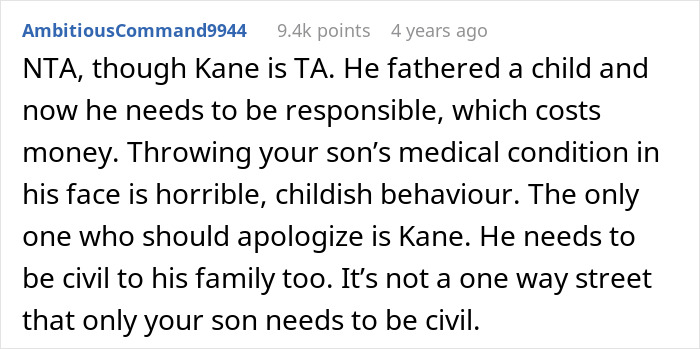
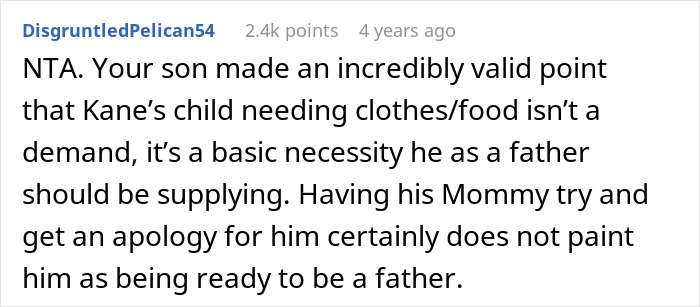
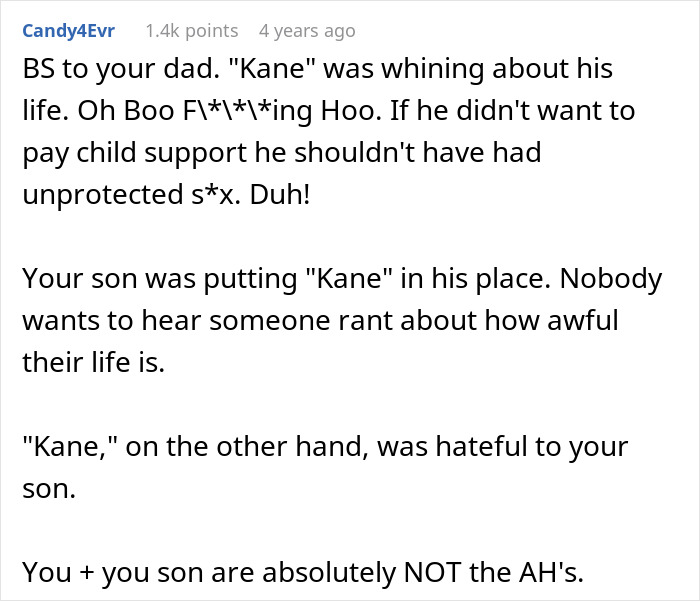
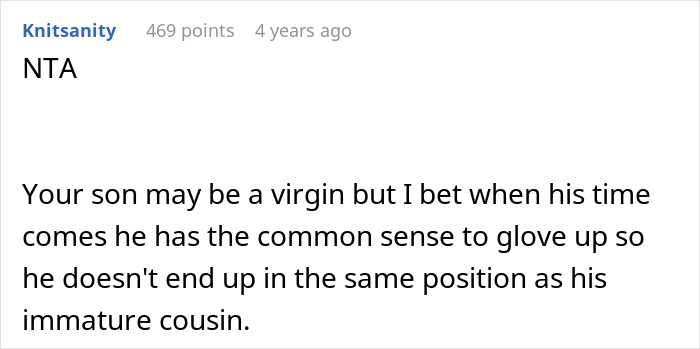
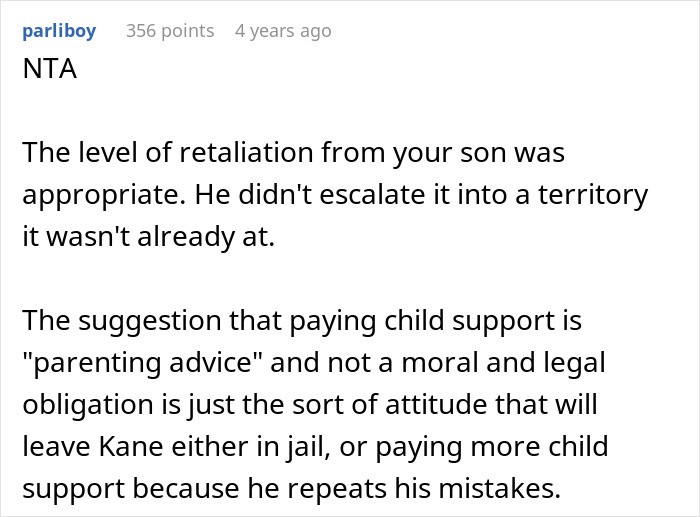
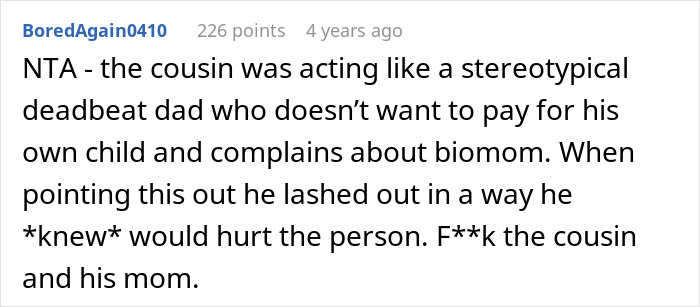
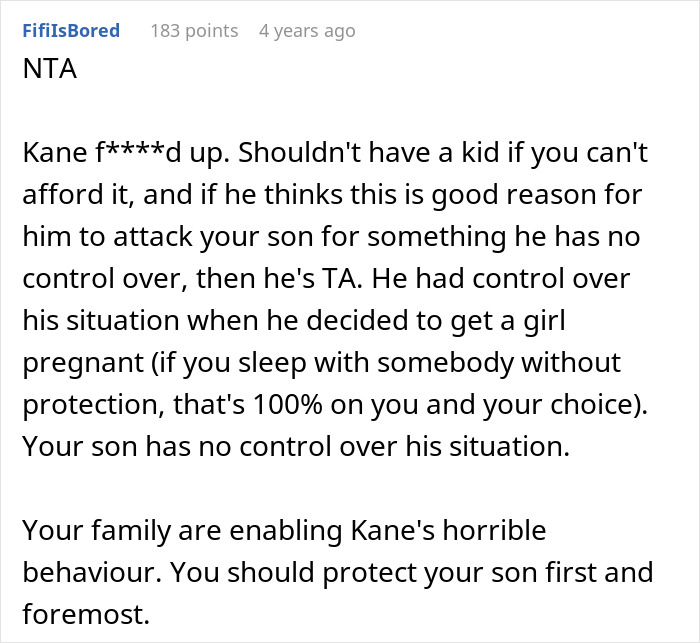
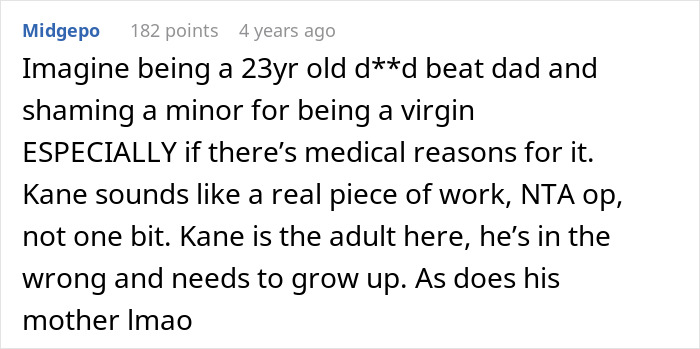
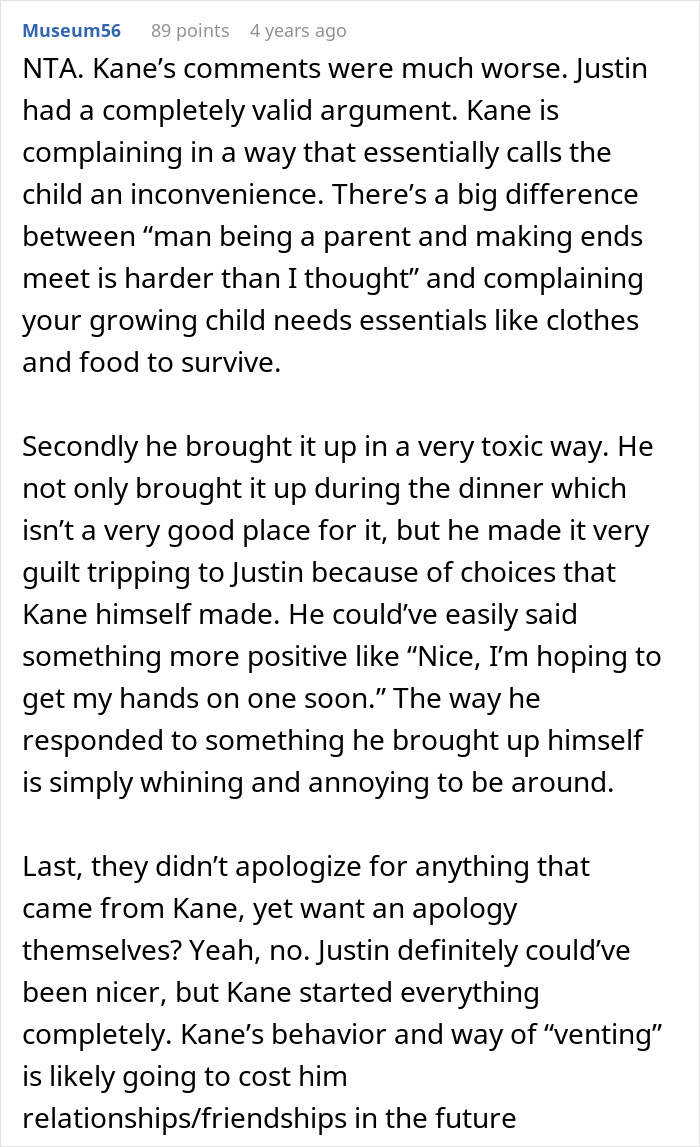
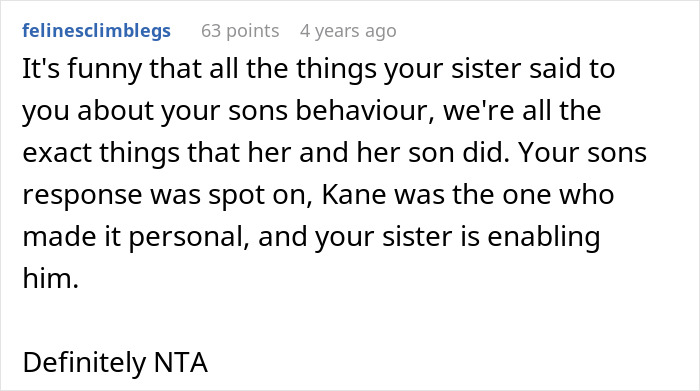
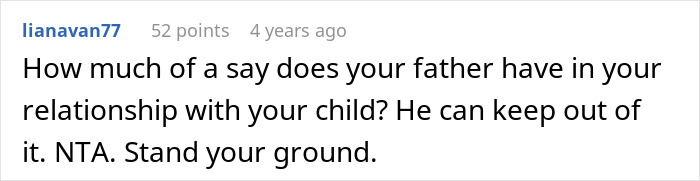
Netizens sided with the OP and their son, highlighting that the nephew was immature, especially given that he chose to insult a teenager over a disagreement. They also focused on the idea that the son’s response was a reasonable form of self-defense rather than unnecessary aggression. Was the son justified in firing back, or should he have stayed quiet despite the insult? We would love to know your thoughts!
Netizens believed that the nephew’s reaction was the real issue, and that the demand for an apology was unfair and misplaced

 Follow Us