Swedish photographer Johan Siggesson captures animals in a way that feels both intimate and timeless, using striking black-and-white imagery.
Driven by a love of nature and curiosity about the world, he developed a style that blends artistry with emotion. Stripping away color allows us to focus on the subtle details and expressions that give each animal its own personality.
Scroll down to explore Johan’s latest stunning black-and-white photographs and the stories that bring them to life. To see more of his earlier work and learn about the inspiration behind it, check out our previous post.
More info: Instagram | Facebook | johansiggesson.com
#1
Excuse me, Mr. Elephant… You have an egret behind your ear…
As the elephant walks around throughout the day, egrets will follow them around. The elephant stomps through the grass, kicking up a buffet of bugs with its giant feet. Our egret friend? Just swoops in behind, snagging a tasty snack whenever one flies free. Easy pickings!
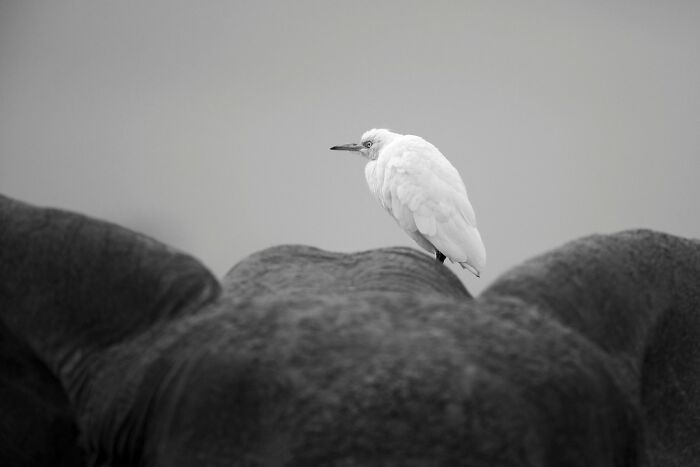
Image source: johan_siggesson_photo

#2
Meet Fatu, one of the last two remaining northern white rhinos in the world. Both are female. Extensive efforts are underway to save the species through IVF and surrogate mothers. Sperm from the last male of the species, called Sudan, and eggs from the remaining females have been collected, and embryos have been “created.” The first embryo will be placed in a surrogate female as early as next month. There is still hope!
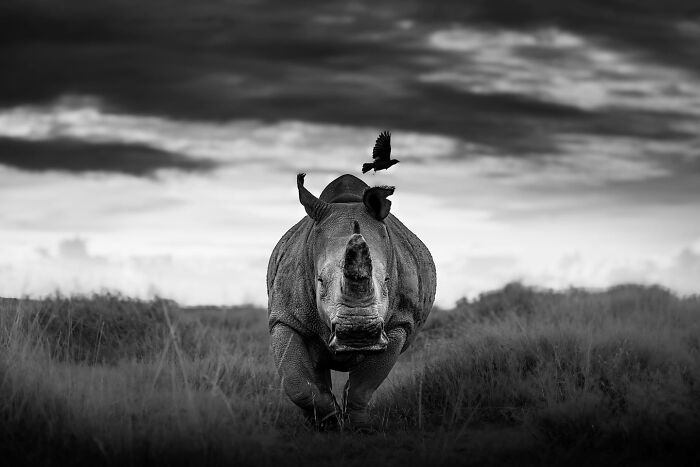
Image source: johan_siggesson_photo
#3
‘King in the Making’
There’s a quiet intensity in this young lion’s gaze. Captured here in the stark beauty of the Kenyan savanna, he’s a paradox—a king in the making, yet vulnerable. Under the watchful eye of the pride’s lionesses for now, a bittersweet future awaits. Soon, he’ll be forced to leave, a lone traveler in a world that can be unforgiving.
My heart aches for these magnificent creatures. Young male lions, or bachelors, are cast out around 3-4 years old to avoid conflict with the dominant male of the pride. Their journey is filled with danger. Imagine the courage it takes, the raw determination to survive against all odds.
Will he find a new pride? Will he face down rivals and claim his rightful place as king? Only time will tell. But one thing is certain—the spirit that burns in his eyes is undeniable.
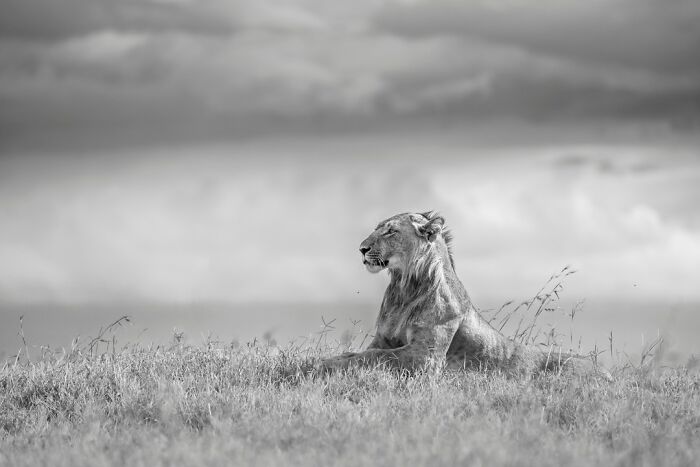
Image source: johan_siggesson_photo
#4
This isn’t just a lion…
He emerges from the thicket, a king, yes, but the weight of leadership etched on his face. The vast savanna stretches before him, a harsh beauty mirroring the burden he carries.
Being the pride protector, he’s responsible for their safety, yet driven by the primal urge to ensure his genes carry on, a constant dance between fierce defense and calculated risk.
Many people ask why I often shoot in black and white. For me, this is one of the reasons. The lack of color amplifies the raw power, the honed muscles. Spending time with these powerhouses, you can sometimes sense a slight vulnerability. Is it perhaps the fear of failing their pride? The knowledge that every decision could be their last?
This isn’t just a lion… He’s a reminder of the challenges of leadership, the weight of responsibility, the struggle between instinct and duty.
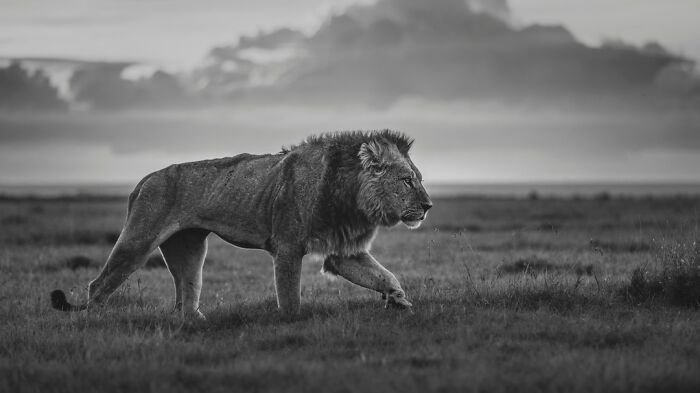
Image source: johan_siggesson_photo
#5
This black-and-white image captures two white rhinos on a grassy African plain. One rhino stands tall, its massive horn sharp against the sky. It looks like a guard, keeping watch over the other rhino, which lies resting on the ground. The wrinkled hide of the resting rhino shows a life full of experiences. Maybe it’s napping, or maybe it’s just enjoying the shade from the standing rhino?
The photo makes you wonder—is the standing rhino protecting its friend? Maybe it’s a parent, showing the younger one the way. There’s no clear answer, but it makes you think about the strong connection these two rhinos share.
It shows the toughness, friendship, and quiet strength of these amazing animals.
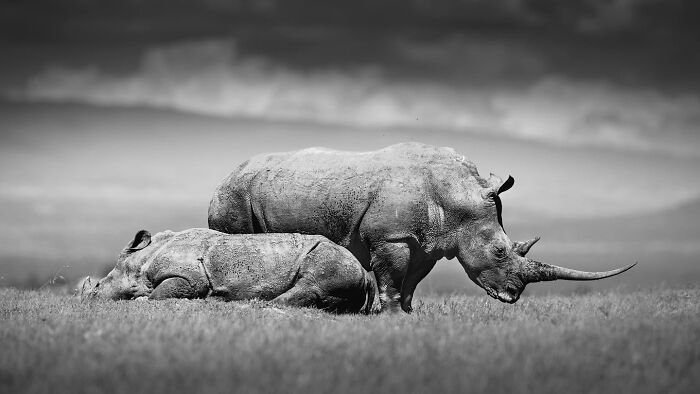
Image source: johan_siggesson_photo
#6
‘The Night’s Victory’
In the early light of dawn, a male lion enjoys a quiet meal from the remains of a buffalo, a reminder of the night before. The hunt was successful, and the pride, now full and content, has withdrawn to rest in the shade nearby. This male lion, strong and dignified, is coming back for seconds.
The scene is one of nature’s everyday realities—where life and death are part of the same cycle. The photograph’s monochrome tones focus attention on the textures and forms, highlighting the lion’s face, the buffalo’s rugged hide, and the characteristic shape of its horns. It’s a calm moment after the intensity of the hunt, reflecting the balance of survival in the wild.
This limited edition print offers a glimpse into the natural world, where each moment is both ordinary and profound, capturing the quiet strength of the lion as he nourishes himself after a night of hard-earned victory.
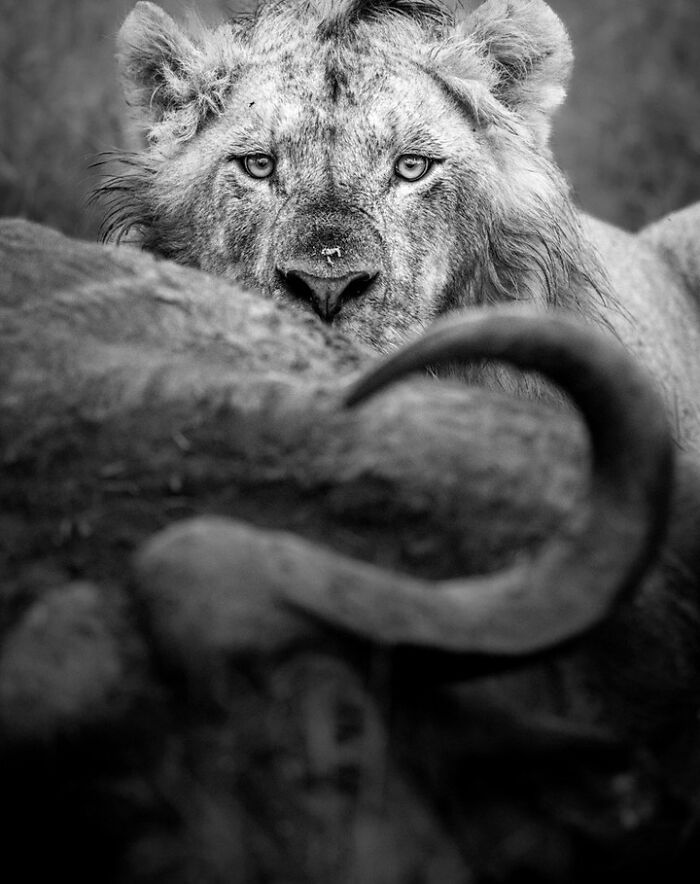
Image source: johan_siggesson_photo
#7
‘Vanishing Horizons’ (2012)
Somewhere on the endless plains of the Masai Mara, Malaika, the famed cheetah, stands tall on a small mound, her sleek, spotted coat shimmering against the vast savannah. Beside her, Bawa, one of her young cubs, mirrors her stance while learning the ways of the wild under her watchful gaze. Together, they survey the endless landscape, a moment of quiet connection between generations.
Yet, beneath this serene scene lies a harsh reality. Life for cheetahs, especially the vulnerable cubs, is filled with danger. The mortality rate for young cheetahs is heartbreakingly high, with many falling prey to the unforgiving challenges of the wild.
In this fleeting moment, captured so beautifully, there is both the strength of a mother’s love and the fragile thread upon which their survival hangs. Malaika’s vigilant watch is not just for today, but for the uncertain tomorrows, where every day is a fight to survive.
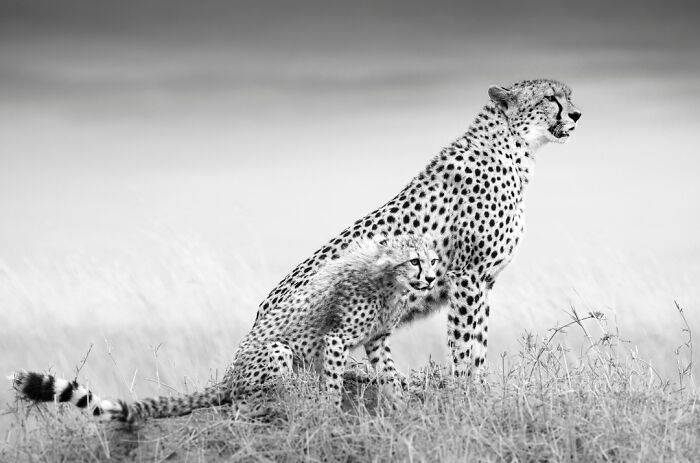
Image source: johan_siggesson_photo
#8
Something other than Africa today. This is an Atlantic puffin taken on Fair Isle many years ago.
Fair Isle is a remote and rugged island in the northernmost reaches of Scotland, is renowned for its vibrant Atlantic puffin population. Each summer, the island becomes a bustling hub of activity as these charming seabirds, with their distinctive black-and-white plumage and colorful beaks, return to their nesting grounds. Fair Isle’s dramatic cliffs and secluded bays provide the perfect habitat for puffins to breed and rear their young.
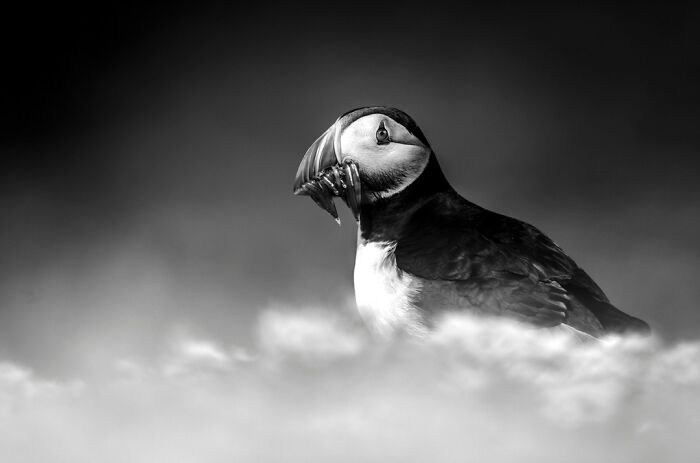
Image source: johan_siggesson_photo
#9
A Fading Roar…
Although I am getting increasingly excited about my upcoming lion safari, we should not forget the harsh reality facing one of the world’s most iconic animals.
Lions have been revered for centuries as symbols of strength, courage, and nobility. From royal coat of arms to flags, statues, and in literature, these majestic animals have captured the imagination of cultures worldwide—even in countries where lions never existed. They stand proudly as emblems of power in stories, monuments, and crests all over the world. Yet, despite their iconic status, wild lions are now facing a devastating decline.
Once roaming freely across Africa and Asia, wild lions are now, and have been for a long time, in a state of decline. A century ago, there were over 200,000 lions in the wild. Today, that number has plummeted to fewer than 20,000. That is a 90% decline in about 100 years.
How did we come to this point with a creature so deeply woven into the fabric of our cultures and stories? We’ve admired their strength and beauty for centuries, yet we’ve failed to protect them in the landscapes where they belong.
Habitat loss, human-wildlife conflict, and poaching have pushed lions to the brink. In Africa, they’ve already disappeared from 94% of their historic range. In Asia, the situation is even worse, with just a small population of lions left in a small area in India. The situation is so critical that lions are now classified as vulnerable on the IUCN Red List.
These majestic creatures play a vital role in their ecosystems, helping to balance populations and maintain the health of the landscapes they inhabit. Losing them means losing an essential part of our natural heritage—a loss we cannot afford.
But luckily, it’s not too late. Conservation efforts can and do make a difference. If we act now—by protecting habitats, reducing conflicts, and supporting sustainable tourism—we can help bring the roar back to Africa’s savannas.
Let’s not let the next generation know lions only through photos or stories. Together, we can ensure their survival.
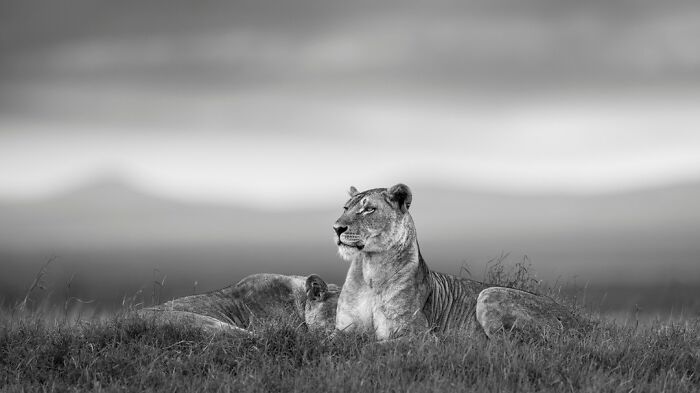
Image source: johan_siggesson_photo
#10
‘Power of Family’
This fine art photograph of elephants tells a story that goes further than just scratching the surface. Elephants, often admired for their grace and strength, are deeply connected by one of the strongest family structures in the animal kingdom. What we witness here is not just a herd, but a family—held together by loyalty, care and a silent understanding that ensures every member is supported.
In this image, you can really feel how close they are. They travel together, protect one another, and pass on knowledge and strength to the next generation. Their bonds remind us of the importance of staying connected, supporting one another, and passing on what matters the most.
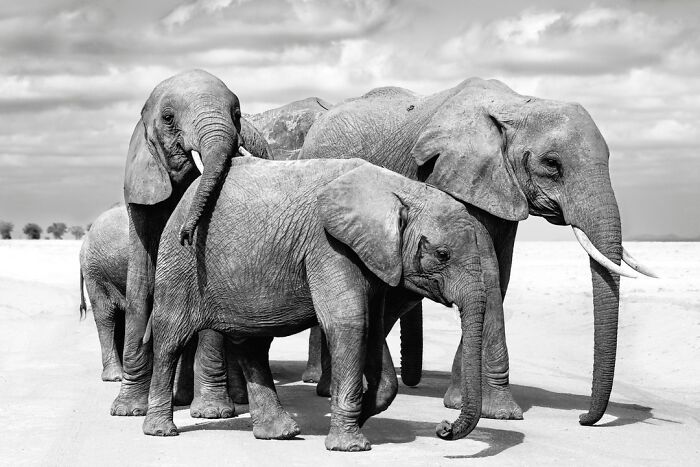
Image source: johan_siggesson_photo
#11
‘Young Royals’
How cute are these three lion cubs chilling on top of their kopje? It’s like their own little jungle gym, but out here on the African plains, life isn’t always this carefree.
Right now, they’re tiny and curious, learning about the world under mom’s watchful eye. But out here, danger is never far away—predators, rival lions, and just the sheer challenge of surviving in the wild.
One day, these fluffballs might grow into the kings and queens of the savannah, ruling their territory with confidence.
For now, though, they’re just little adventurers figuring it all out, one pawstep at a time. Let’s take a moment to appreciate them—adorable, vulnerable, and full of potential.
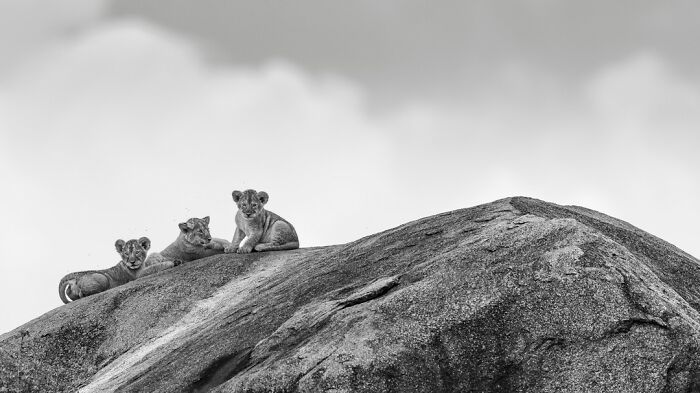
Image source: johan_siggesson_photo
#12
‘Moonrise, Namiri’
This black-and-white image of a lion resting under the moonlight was inspired by Ansel Adams’ “Moonrise, Hernandez.” Like Adams’ photo, it focuses on the balance between the glowing moon and the textured landscape. The calm, quiet presence of the lion adds to the peaceful vibe, using light and shadow to capture a simple, timeless moment in nature.
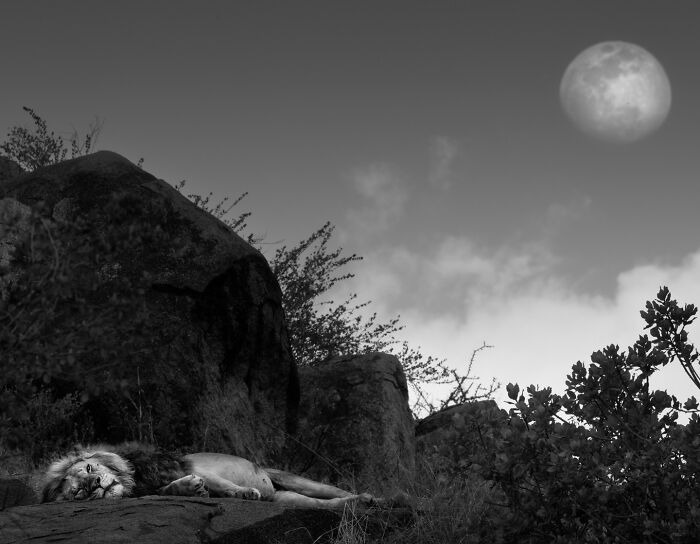
Image source: johan_siggesson_photo
#13
This powerful image of a lone rhino standing on the vast savannah invites us to reflect on the future of this majestic species. As it gazes out over the horizon, one can almost sense the weight of its thoughts. What does the future hold? In a world where conservation is increasingly urgent, this moment serves as a reminder of our responsibility to protect what remains and ensure that these incredible creatures have a place in tomorrow’s world. The rhino’s solitude in this endless landscape speaks volumes about the fragility of its existence. Will we act in time to secure a future for them?
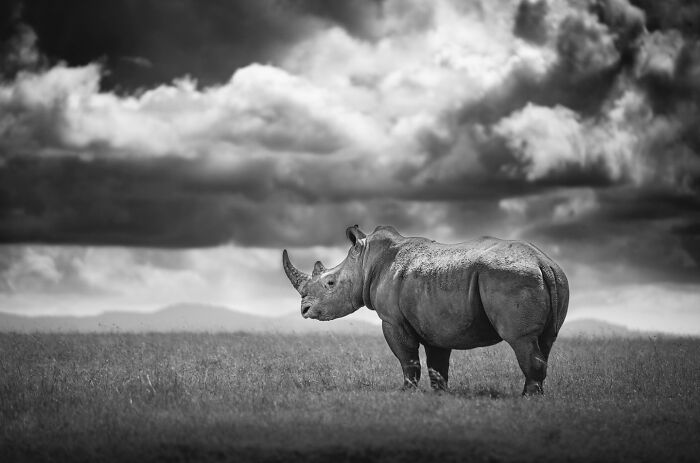
Image source: johan_siggesson_photo
#14
“Birds teach us that sometimes you have to take flight and trust that the wind will carry you.” — Unknown
This striking image captures a Steller’s sea eagle in flight, its powerful wings spread against a dramatic sky. This magnificent bird, native to Japan, is a sight to behold. In a few weeks, I’ll be returning to the Land of the Rising Sun, eager to witness these majestic creatures in their natural habitat and capture more breathtaking images like this one. I can’t wait to share the results of my journey with you all!
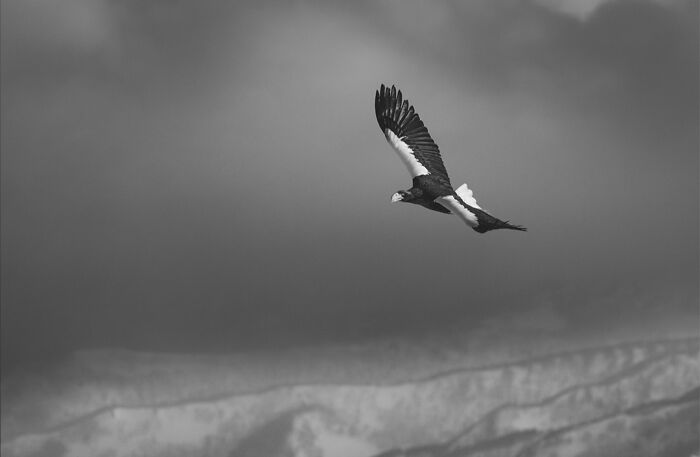
Image source: johan_siggesson_photo
#15
‘At The Foot of The Mountain’
After 8 days of waiting, everything aligned perfectly: elephants in single file through the grass, evenly spaced, a tusked lead flapping its ears, cloudy skies, and no disruptions. Captured in Kenya’s Amboseli National Park.
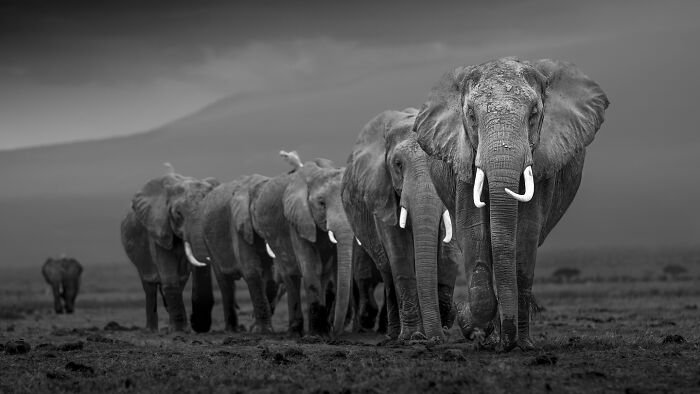
Image source: johan_siggesson_photo
#16
Who likes giraffes? Graceful giants against a majestic backdrop.
Watching these two giraffes in front of the iconic Mount Kilimanjaro is pure magic. Nature never fails to amaze!
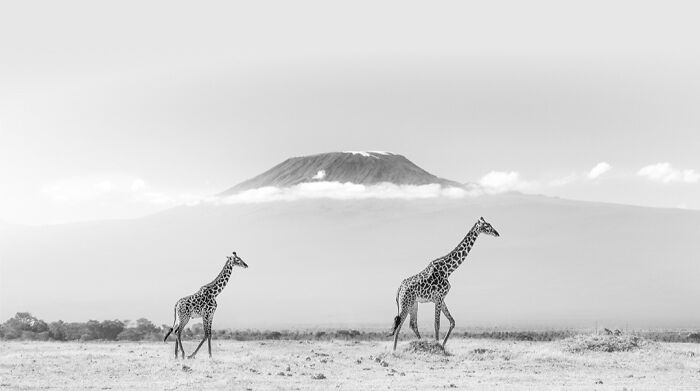
Image source: johan_siggesson_photo
#17
‘Silent Cry’
Pure speed, power, and grace all rolled into one. This black-and-white shot totally nails the raw, untamed vibe of the wild. Fierce and breathtaking. Nature at its absolute best.
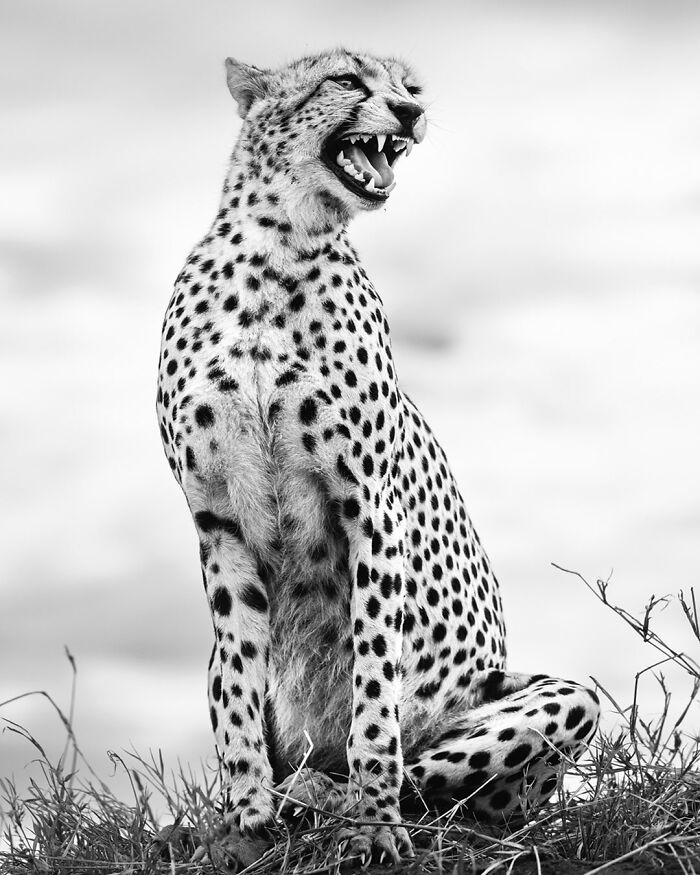
Image source: johan_siggesson_photo
#18
So, after the slight battery debacle yesterday, I was back in business with fully charged batteries. Lesson learned: You can never check your batteries and memory cards too often. If I had checked the evening before the day of shooting, I would have caught the problem and been able to solve it. Well, what’s done is done.
It was a beautiful day, and the monkeys were in full force on location. This was my third visit to Yudanaka, but with some imagination, you can always find new angles, new ideas, and eventually different images from what you had captured before.
Tomorrow we make our way to the airport again and fly to Hokkaido, where swans, owls, eagles, and cranes are waiting.
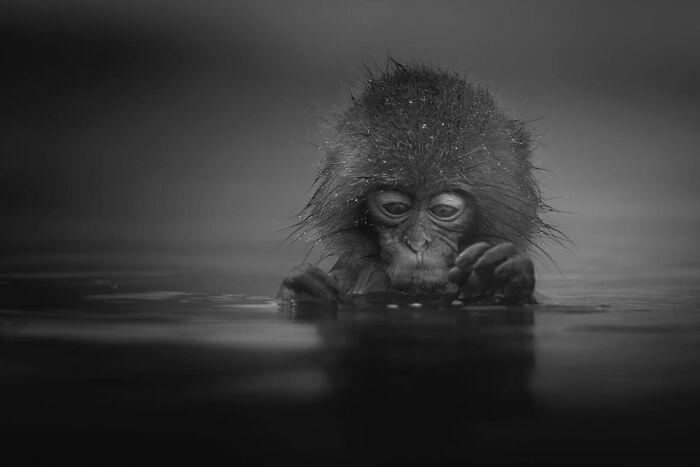
Image source: johan_siggesson_photo
#19
Just got back from an unforgettable trip to Japan, and I’m already missing the animals and amazing culture.
One of the highlights is always the famous Japanese macaques, also known as snow monkeys, in their natural habitat. Watching them soak in the hot springs, completely unbothered by the cold, is such a surreal experience.
Snow monkeys are native to Japan and are the northernmost-living non-human primates. They’ve adapted to the harsh winters by huddling together for warmth and relaxing in natural hot springs, making them one of the most unique and fascinating animals in the world.
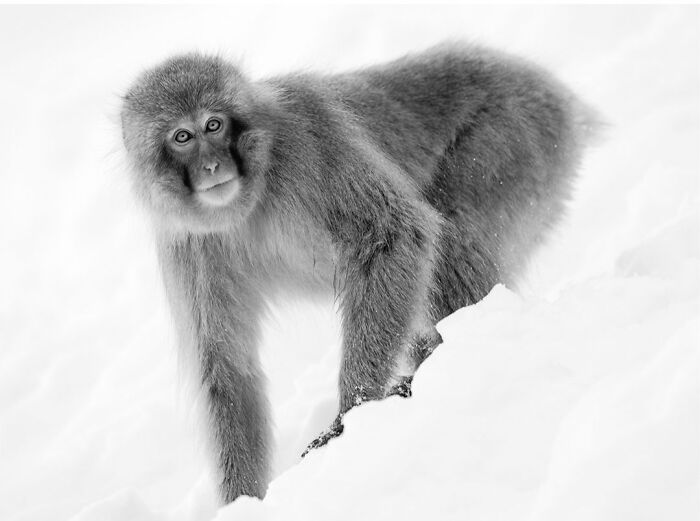
Image source: johan_siggesson_photo
#20
With wings spread wide and talons poised, the mighty white-tailed sea eagle takes flight over the icy expanse of the Sea of Okhotsk, Japan. A true apex predator of the sky, this magnificent raptor commands the frozen wilderness with its piercing gaze and unmatched precision.
These eagles are known for their incredible hunting skills, often soaring over coastal waters in search of fish, showcasing both power and grace. Their presence in this frigid yet breathtaking landscape is a reminder of nature’s resilience and raw beauty.
Witnessing such a majestic creature in its natural habitat is nothing short of awe-inspiring. Have you ever seen a sea eagle in the wild?
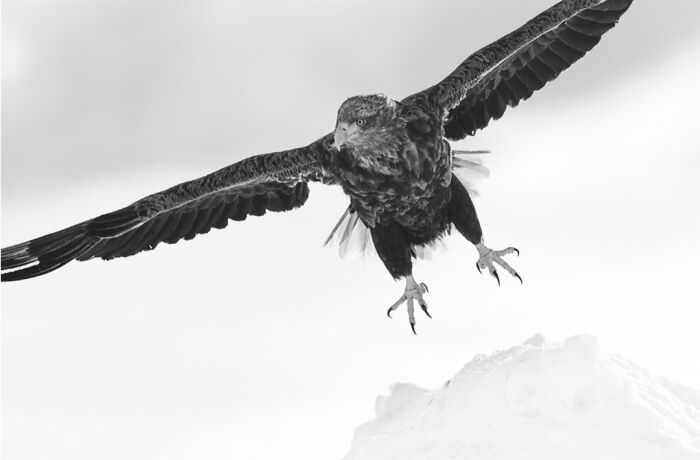
Image source: johan_siggesson_photo
#21
This giraffe strolling through Amboseli National Park couldn’t have asked for a better backdrop, Mount Kilimanjaro standing proud in the distance. There’s something magical about this place, where wildlife and epic landscapes come together in the most breathtaking way.
Amboseli is one of those spots that never gets old, with wide open spaces, iconic animals, and that unbeatable view of Africa’s tallest peak. Moments like this are a reminder of how wild and beautiful our planet truly is.
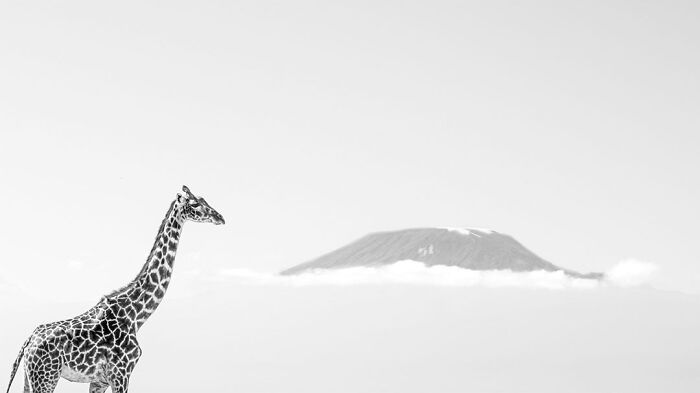
Image source: johan_siggesson_photo
#22
‘Unrivaled’ (2025)
The Steller’s sea eagle—one of the most powerful and breathtaking birds on Earth. With those massive wings and piercing eyes, it owns the icy winds and wild waters. But even something this strong isn’t untouchable.
This incredible species is vulnerable, facing threats from habitat loss, climate change, and declining fish stocks. Year by year, their world gets smaller. It’s heartbreaking to think that future generations might never get to witness their raw beauty in the wild.
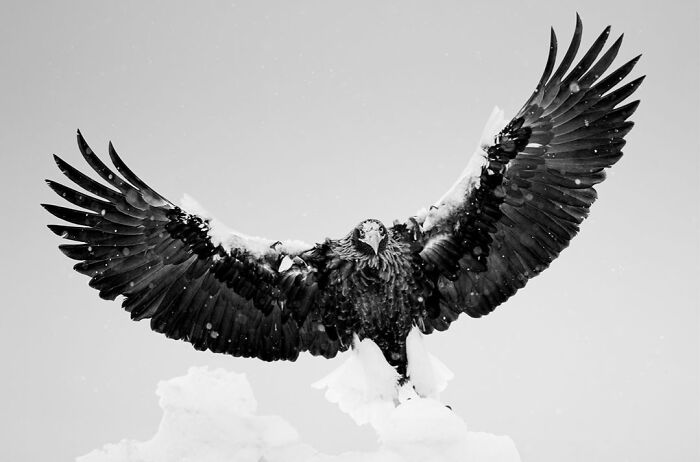
Image source: johan_siggesson_photo
#23
This young lion has its whole life ahead—no scars, no battles, just a future full of possibilities. There’s something incredible about seeing a moment like this, knowing the journey that lies ahead. Wild, free, and ready to take on the world.
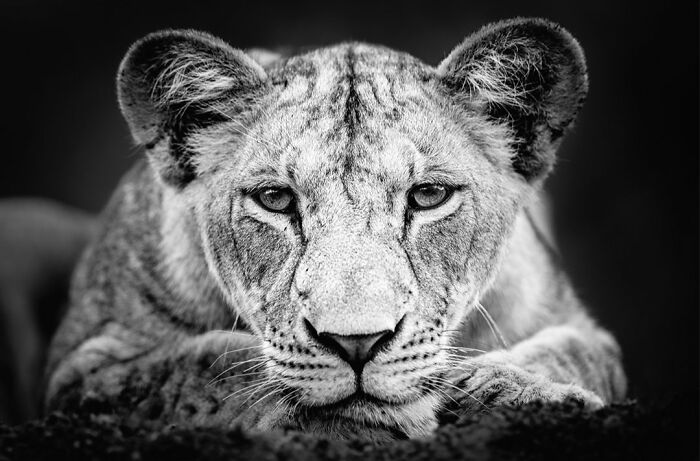
Image source: johan_siggesson_photo
#24
‘Generations’
There’s something powerful about the way they move—one leading with wisdom, one following close behind, and one just starting to figure it all out.
Family is like that. We learn from those who came before us, lean on the ones beside us, and guide those who’ll come after.
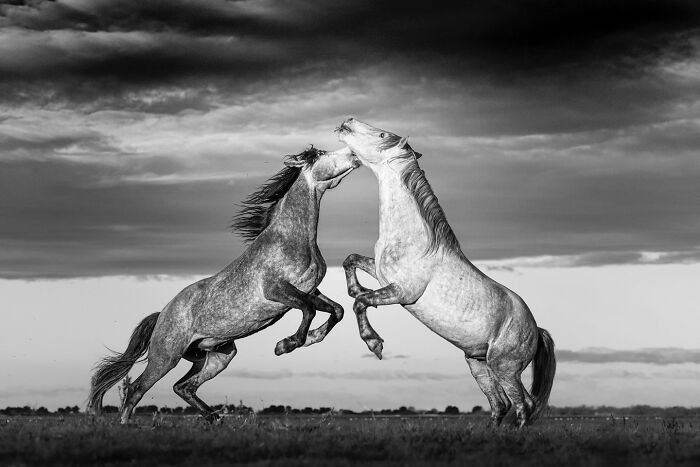
Image source: johan_siggesson_photo
#25
Camargue, Southern France
Another fantastic day with the horses here in Camargue. This morning brought an unexpected bonus. I had another session with two stallions, this time with different horses and a new location, which always brings fresh possibilities.
The weather had changed a bit from yesterday. This time, the sky was completely clear, with no clouds in sight. I usually love dramatic, moody skies in my work, but photography is all about adapting to the conditions and making the most of what you get. So today, I leaned into it and went for a high-key approach.
High-key photography is all about light tones and minimal shadows. It works really well when the sky is flat and lacking texture, turning what might seem like a limitation into something positive.
Later in the day, we headed to the beach to photograph the horses with the help of local guardians. These horsemen are the spirit of the Camargue, a bit like the American cowboy but with their own unique tradition and style.
We had some great moments with the horses running through shallow water and across the sand dunes, all with the setting sun behind them. A strong finish to a full and inspiring day.
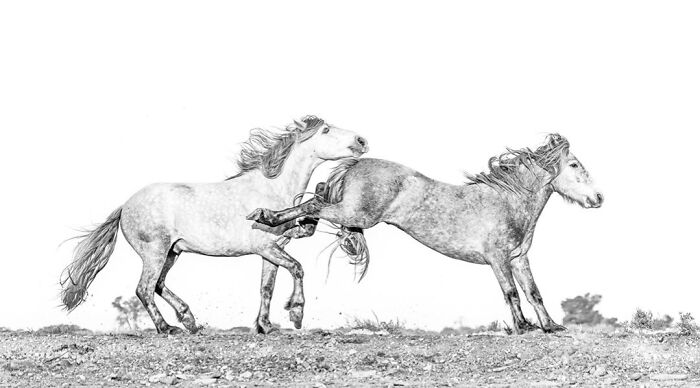
Image source: johan_siggesson_photo
#26
The cheetah bares its teeth, letting out a warning hiss. Even though it’s standing still, you can feel the power in those sharp fangs, ready to strike if needed. There’s this calm intensity about it, like a storm just waiting to roll in. It’s a perfect mix of wild energy held in check, with every muscle tensed and ready to go.
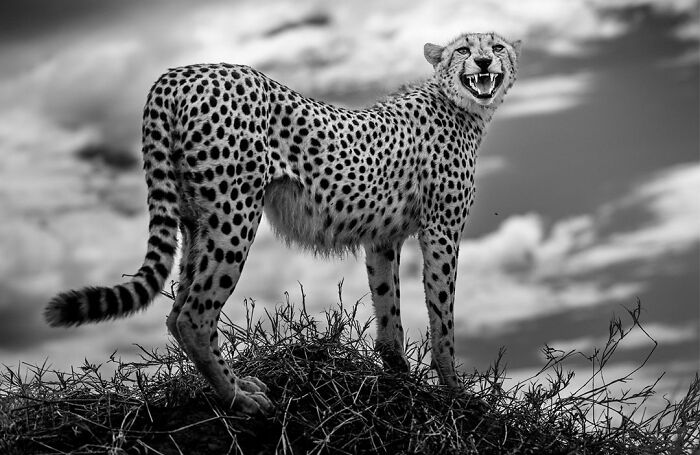
Image source: johan_siggesson_photo
#27
A simple portrait. No drama, no distractions. Just presence, power, and the story in his eyes.
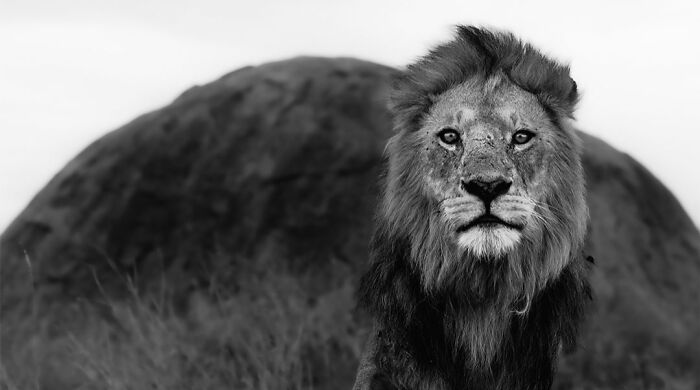
Image source: johan_siggesson_photo
#28
There is a quiet strength in this moment. A lone cheetah scanning the open plains, fully present yet somehow reaching beyond the horizon. It feels as if he or she is looking into the future—alert, aware, and ready for whatever may come.
This image was taken in the Namiri Plains in the Serengeti, a place once closed to tourism to support cheetah research and conservation. Today, it is one of the best places in Africa to witness these incredible cats in the wild—a true success story and a rare opportunity to see hope in motion.
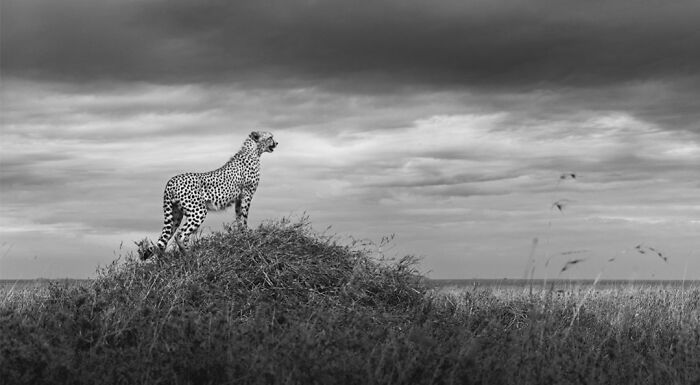
Image source: johan_siggesson_photo
#29
The Camargue horses of southern France are one of the most iconic and oldest horse breeds in the world. In this image, they move quietly across the windswept sands of their unique homeland, their pale coats catching the soft morning light. These horses live in semi-feral conditions, roaming large open areas in the Rhône delta under the care of local guardians known as “gardians.” Their natural movement and close bond with the land are what I try to capture in images like this.
There is a timeless feel to them. Their movement, the way they interact, their calm but powerful presence all speak of something rooted and authentic. In the Camargue, horses are more than animals. They are part of the region’s identity, a symbol of strength, tradition and harmony with nature.
This photo was taken in the late afternoon against the setting sun. A soft breeze pushed sand around their hooves whilst long shadows stretched in front of them.
I chose to present this image in black and white to highlight the clean lines of their forms and the elegance in their movement. Their pure white coats stand out against the soft tones of the sand and sky, creating a refined, almost sculptural feel. There’s a quiet sophistication in how they carry themselves, both graceful and assured, which becomes even more striking without the distraction of colour.
Scenes like this are reminders of a slower, quieter world. A glimpse into a way of life shaped by open space and close ties to the natural environment. These are the moments I look for and the ones I feel most connected to when I photograph animals like the Camargue horse.
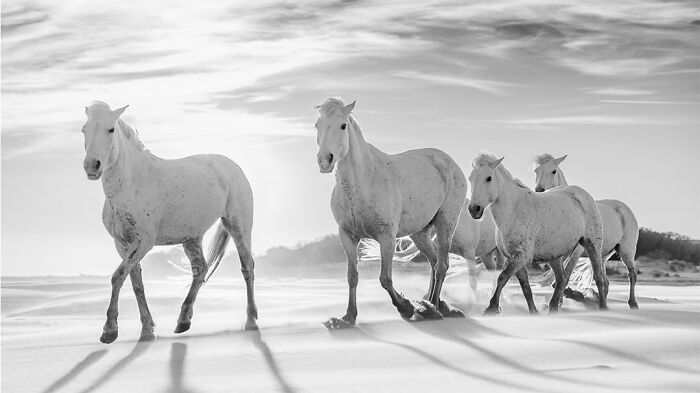
Image source: johan_siggesson_photo
#30
The cubs stay close, instinctively knowing that their safety depends on her. She watches calmly but with focus—always alert to what might come next. These quiet interactions between mother and young are just as powerful as any dramatic wildlife scene.
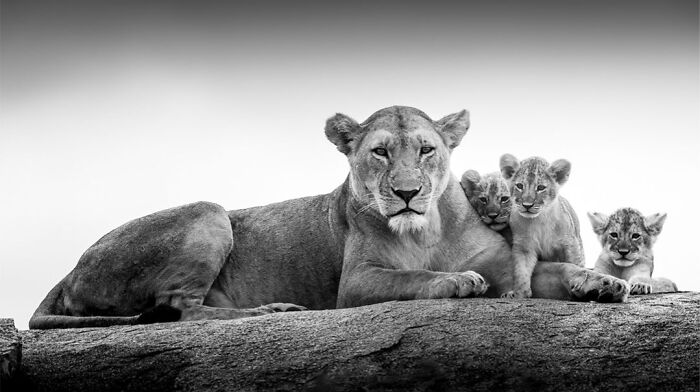
Image source: johan_siggesson_photo
#31
“Winds of Passion” is from my collection from the Serengeti in Tanzania.
This is a male lion on a mission. His mane blows in the wind as he follows the female ahead of him. She is in oestrus, and he will pursue and mate with her over the coming days.
The wind’s blowing hard, but he doesn’t care. His eyes are fixed on her and nothing’s getting in his way. You can feel the tension building with every step, driven by pure instinct and desire.
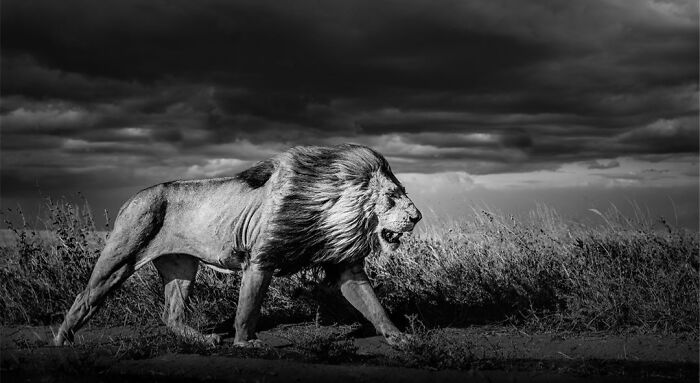
Image source: johan_siggesson_photo
#32
Kenya, 2012
This is Malaika (“Angel” in Swahili), probably the most famous cheetah of the Maasai Mara. The cub is Bawa (meaning “wing”). Like all youngsters, Bawa is curious but easily scared and needs his mother’s reassurance. He is the first one to climb the log for a better vantage point, but just as quickly, he gets insecure and looks back at Mum as if asking, “Are you still there? Are we safe?” Malaika seems to give him the reassurance he needs without a sound or movement. Her presence is all he needs.
Malaika died in 2018, probably while crossing the Olare Orok River. Maybe a crocodile attack, or perhaps she drowned. Her body was never found. Bawa would be 13 years old by now, and it is unlikely that he is still alive.
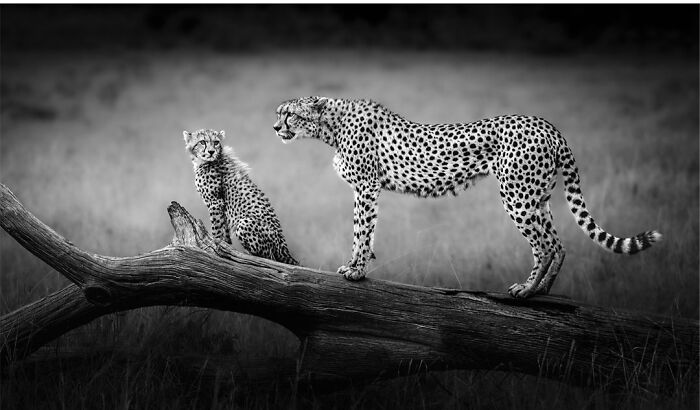
Image source: johan_siggesson_photo
#33
Just a giraffe, a tree, and a whole lot of quiet. There’s something special about early mornings on the plains. The light, the space, and the stillness.
A few things you might not know about giraffes:
They only need 30 minutes of sleep a day (yes, really).
Their hearts can weigh up to 11kg to pump blood all the way up that neck.
Despite the long neck, they have the same number of neck bones as we do—seven.
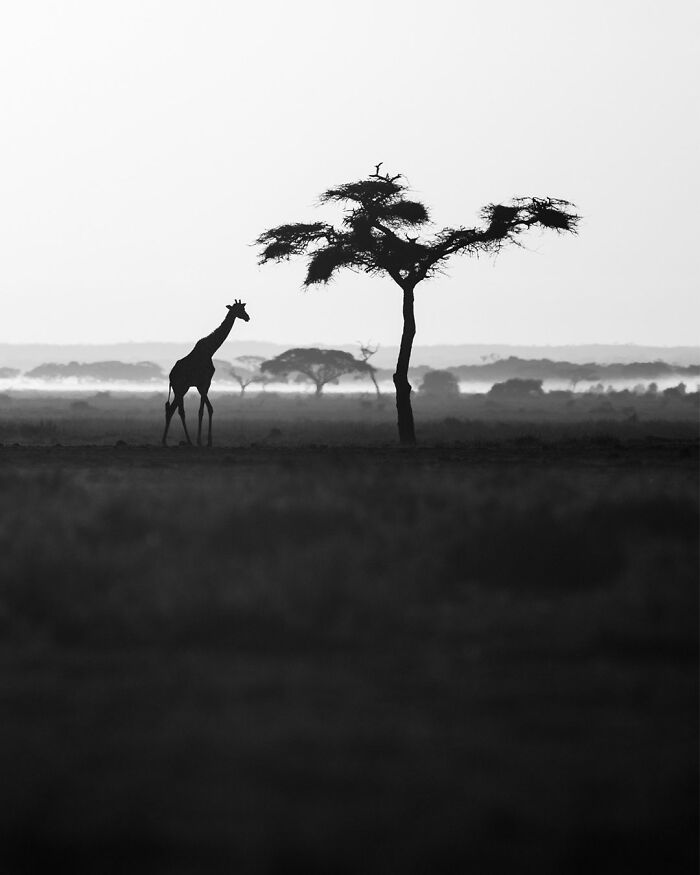
Image source: johan_siggesson_photo
#34
‘Equilibrium’ – Tanzania
A fleeting moment of perfect balance.
This young giraffe stood motionless, framed by soft morning light and a delicate line of dry trees in the background.
She was in no rush, made no noise, just being graceful. Everything in that moment felt right—grounded, centred, and symmetrical.
It lasted only a few seconds. Then the giraffe turned and walked away from the perfect spot, leaving just the memory and this frame.
Sometimes the wild offers more than movement and drama. Sometimes it gives you silence. And in that silence, something timeless.
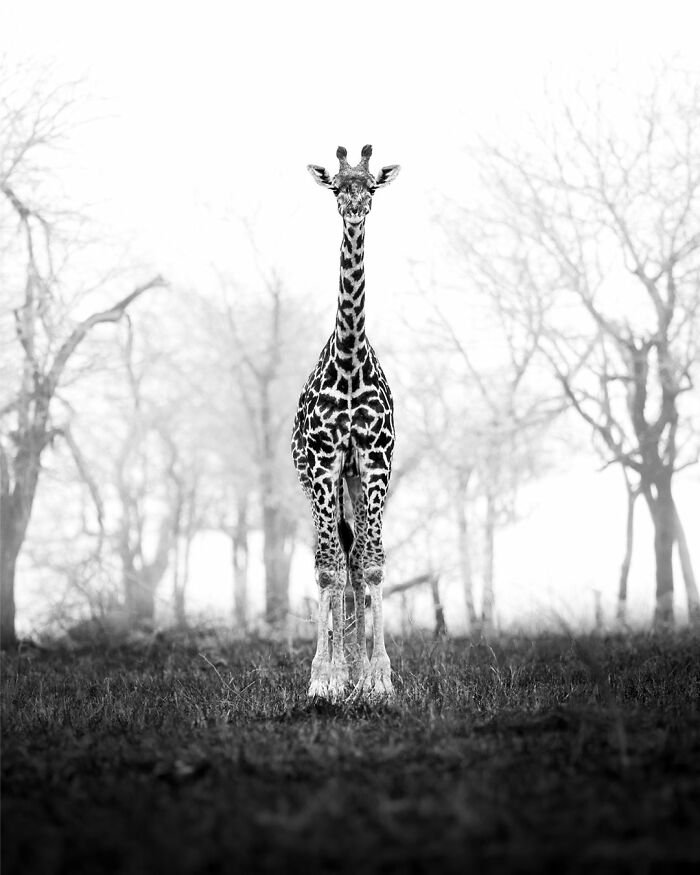
Image source: johan_siggesson_photo
#35
The Silent One, Kenya, 2022
A deep stillness surrounds this close portrait of a rhinoceros, emerging from the dark like a figure shaped by time. In black and white, the light traces every crease and scar, revealing the rough texture of a life lived in the wild. The eye, gently lit and full of quiet presence, draws you in. It feels like a glimpse into a soul that has seen and endured much.
Much of the frame is lost to shadow, adding a sense of isolation and calm. The rhino seems to stand alone, steady and present in a world that feels uncertain. Its horn cuts through the dark, a clear symbol of both power and fragility.
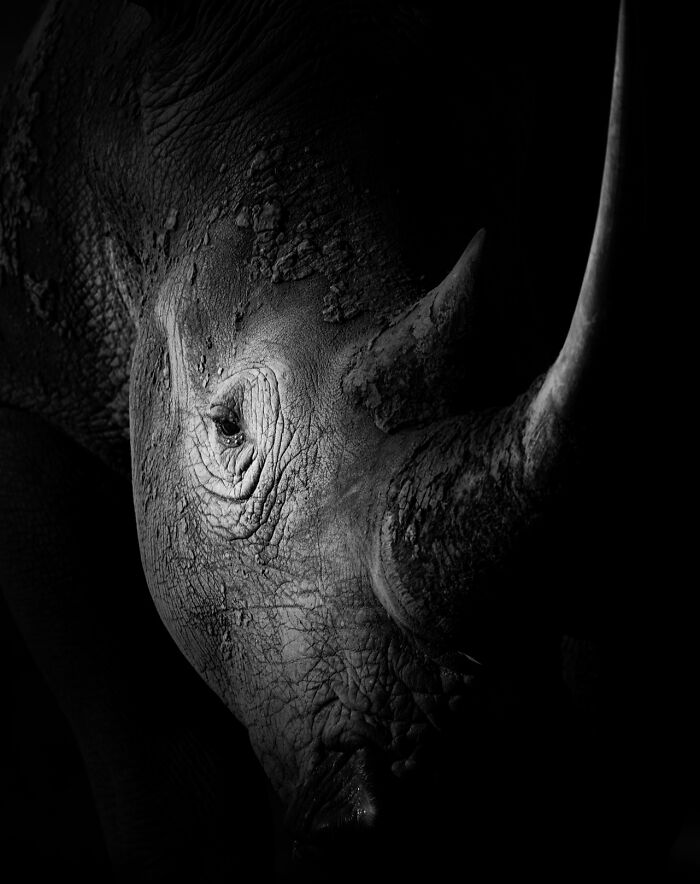
Image source: johan_siggesson_photo
#36
“As If They Were Angels” (2025)
This image was taken in the Camargue region of southern France earlier this year. The horses were running slowly through shallow water. The light was soft and even. There was no noise except the quiet splash of hooves. I’ve seen these horses behave with real force and dominance, but this moment felt different.
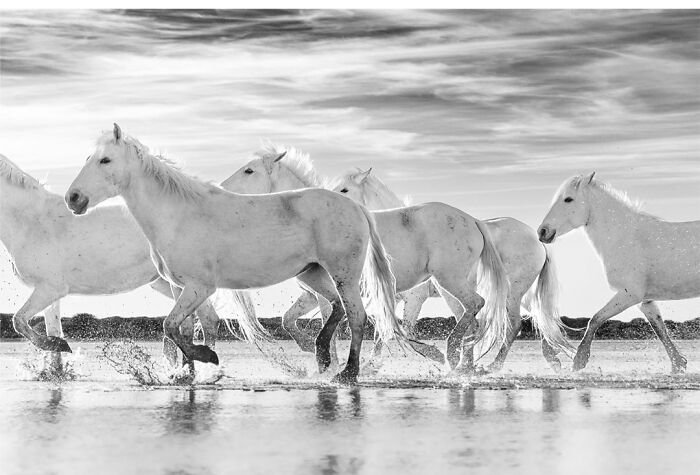
Image source: johan_siggesson_photo
#37
My first full day in Amboseli National Park was a hot, dry, and dusty one. I spent the morning with the famous big tusker Craig, one of Africa’s last remaining super tuskers. We found him late in the morning just outside the park. The sky was clear and the sun already high, not the easiest light to work with, but with an elephant like Craig, you take whatever conditions you get and make it work. He was calm and relaxed, just as he always seems to be.
In the afternoon, we focused on the large herds moving back from the swamp. Finding the right spot is never easy, and once a group passes, it is time to move and reposition ourselves and hopefully get a second or third chance with the same group. We continue like that until the herds have gone into the bush and we cannot follow due to park regulations. It is busy work but also a lot of fun, and having a good local guide makes all the difference.
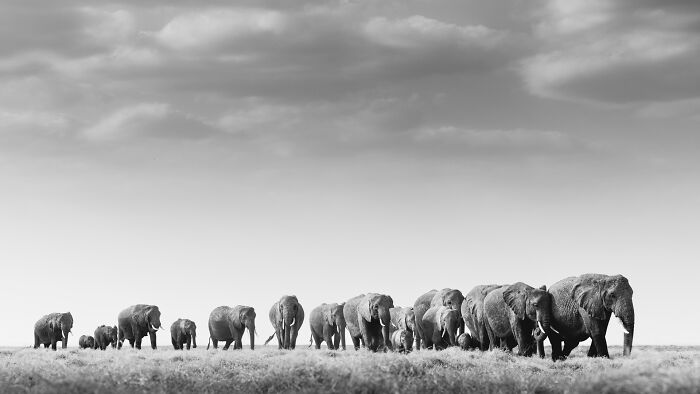
Image source: johan_siggesson_photo
#38
Wake-up call at 5:30 this morning. We head out at 6 sharp every day. When I stepped outside, Kilimanjaro stood clear with no clouds around the top. Not much snow on top at the moment, though. I set out with the hope of finding Craig again, aiming for that iconic image of two African giants together.
Every morning, David, who has tracked Craig for eight years straight, is already out by 5. We called him to check if he had managed to find Craig, but he hadn’t found the big boy yet. While waiting, we focused on giraffes. Within minutes, clouds rolled in and the chance for Kilimanjaro as a backdrop for Craig was gone. We dropped the plan and drove to the dried lake bed inside the park. It’s a wide open stretch where elephants often cross toward the swamps. Today, luck wasn’t with us. Just two young bulls, resting and not giving much. We took a few shots and moved on.
On the way back, things picked up. We came across Wikstrom, one of Amboseli’s most impressive tuskers. He was close to the road, but in musth. My guide warned that he can be unpredictable in that state. We kept it brief, took a few images, and left him in peace. Lunch back at camp followed.
In the afternoon, we searched near camp for another tusker, Tee-Jay, who had reportedly been seen earlier in the day. We scanned the area for some time, but nothing. Elephants cover ground fast, and when they vanish, you often end up chasing shadows. By the time we gave up, it was already 5, too late to head back into the park. The day closed with a slower pace, working the conservancy for giraffes and gerenuk.
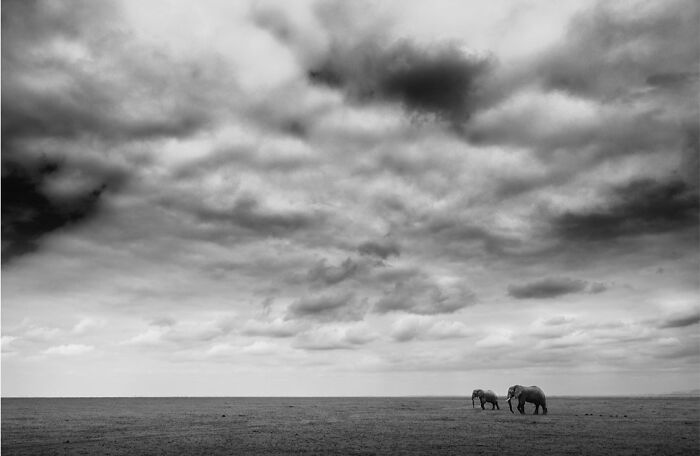
Image source: johan_siggesson_photo
#39
This is my third day in Amboseli, and I stayed inside the park from morning until late afternoon, taking only a short break for lunch back at camp. It was a hot and dusty day, and the haze never really lifted.
Before lunch, we came across two of the park’s well-known tuskers, Wikstrom and Michael. Both elephants have long, heavy tusks that almost touch the ground. Encounters like this are special to me and are the backbone of my portfolio of black-and-white elephant prints.
The main sighting of the day wasn’t an elephant though. It was a female cheetah with four young cubs. The cubs played in the grass around her until she spotted a male Thomson’s gazelle and moved into hunting mode. She launched into a chase, but the gazelle managed to get away. Even though she was unsuccessful, watching her hunt while the cubs waited nearby was a strong reminder of how much pressure rests on a mother in the wild.
The dust was everywhere today, sometimes limiting visibility and settling on everything. It was a tough day with all the dust, yet it added a raw quality to the whole experience and created special conditions that can be great for photography.
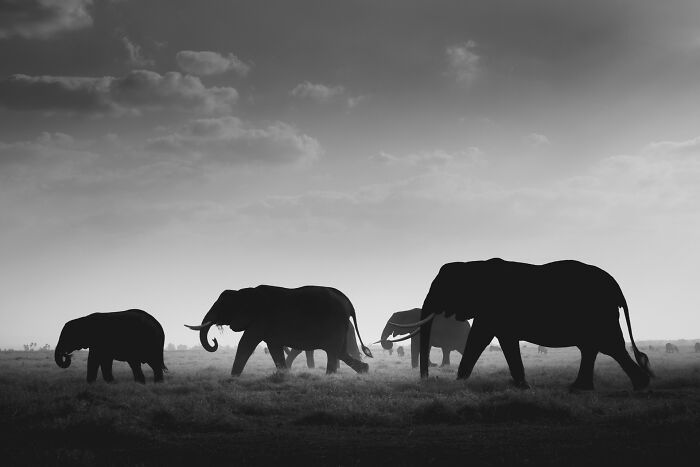
Image source: johan_siggesson_photo
#40
I’m writing this two days late because I just didn’t manage to fit it in. This was my last day in Amboseli before heading to Nairobi to meet the group from @wildnaturefotoresor. From there, we were bound for Laikipia and Giza Mrembo, the black leopard.
The morning felt like a “typical” one in the life of a wildlife photographer. I planned to leave the park around 11 so I’d reach my Nairobi hotel by about 4. As on a few other mornings during this trip, Kilimanjaro was crystal clear. I was after that iconic shot of Craig with the mountain behind him. The difference today was that no clouds seemed to be building, so I decided to give it one more try. I was hopeful this might finally be the day.
The spotters found him in decent time, which meant the light was still good. He was deep in the bush, so we pushed hard to reach him before the light turned harsh or the mountain vanished again. When we arrived, he was in a wide open area, which was perfect. The problem was that he had chosen the one big bush in the middle to hide in, happily chewing on acacia leaves. Typical.
I had no choice but to wait. The clouds and haze began to build, though the view still looked fine. The light grew harsher and I started to feel frustrated. After about an hour, Craig decided to move to another bush, just a few minutes before the mountain had disappeared behind a huge cloud. Again, typical.
Still, he stepped into the open and gave us some great opportunities. For about twenty minutes, he moved around in clear view. It was wonderful, but without the mountain. I captured a few strong shots, but nothing I didn’t already have. Eventually, he walked straight into the thicket, hard to follow, and, anyway, it was time to leave him in peace.
We stopped for breakfast in the shade of a tree nearby. The local guide spread a Masai blanket over the hood of the Land Cruiser and, of course, that was when the “curtains” lifted and Kilimanjaro came out in all its glory. Typical again. Frustrating, but very much part of a wildlife photographer’s life. You just accept it, smile, and try again another time.
Back at camp, I freshened up, packed my bags, and started the drive to Nairobi.
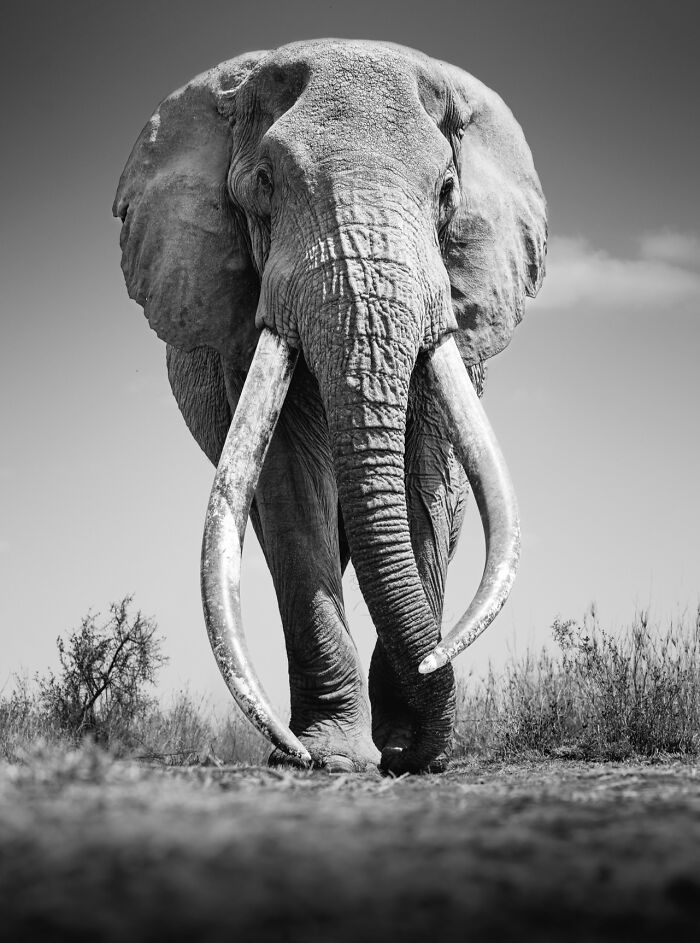
Image source: johan_siggesson_photo
#41
The second day started bright and early. We made a quick run to Giza’s territory to see if she was still around. Chances of finding her in the morning are slim, and, as expected, there was no luck. On tours like these, the routine may look the same, but every day brings something new.
Soon after leaving camp, we found a group of vulturine guineafowls in soft morning light. We stayed with them briefly before moving on. A little further, we saw a puff adder by the roadside with a freshly killed bird. The prey was large for the snake, and it circled several times before starting to swallow. Snakes must eat head first, and once it found the angle, it began. Halfway through, we left it and continued our search for leopards.
Not long after, we spotted what guides call the “white flower” in the grass, the tip of a leopard’s tail above the shrubs. A young male moved into cover, and we followed. Tracking leopards in thick bush is rarely easy. By the time he reached a clearing, we were behind, and once we got ahead, he had already turned away. He paused briefly on a rock, but we were out of position and missed the chance.
This is the reality of wildlife photography. You miss more than you succeed. After this, we returned to the lodge.
In the afternoon, we set out again, hoping for Giza. The day before, she had been in a rush, hunting almost as soon as she appeared. It was hard to keep up. We hoped she would be calmer this time.
At almost the same time as yesterday, and from almost the same spot, she appeared. At first, she walked slowly and paused here and there. But within minutes, she was back in hunting mode.
Giza has two cubs around nine or ten months old. They are starting to hunt but still depend on her. With two mouths to feed, she wastes no time. She caught a dik-dik and carried it up a tree to keep it from hyenas. A tree does not protect her from bigger leopards. We watched as she fed until a scuffle broke out. A large male leapt up and stole the kill. Luckily, she had eaten most of it.
The male looked confused, climbing as if hoping for more. By then Giza was gone. We left them in peace and returned to camp.
Another memorable day in Laikipia.
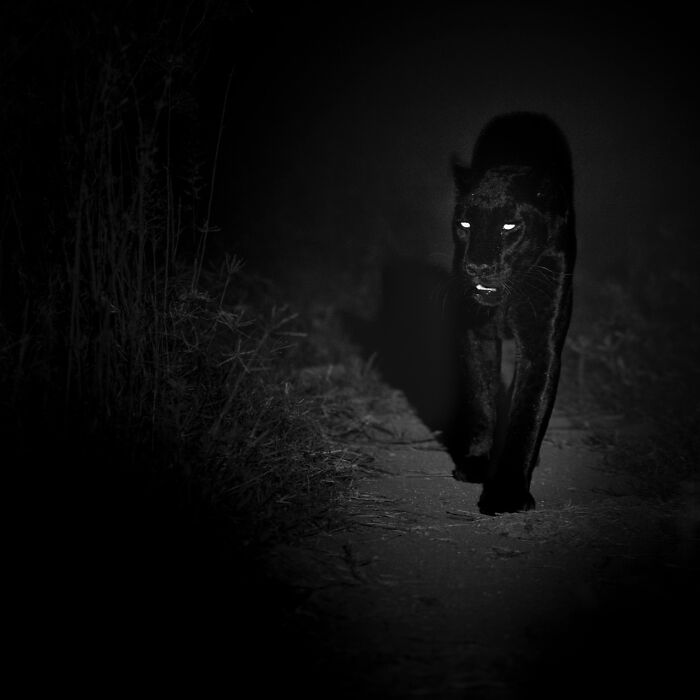
Image source: johan_siggesson_photo
#42
An African wild dog stands alert in the soft light of Laikipia, Kenya. These endangered predators move with a mix of grace and intensity, always in tune with their pack and the wilderness around them.
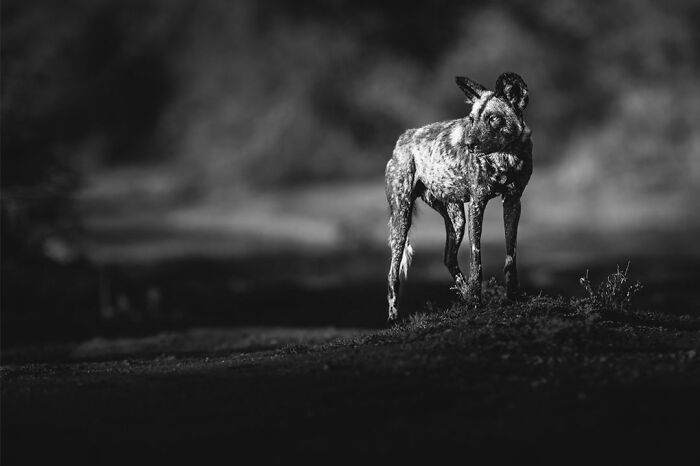
Image source: johan_siggesson_photo
#43
This is Kinyo, a young male leopard, just fourteen months old, learning how to survive on his own in the wild hills of Laikipia. It’s one of the most leopard-rich areas in Kenya, also home to the famous black leopard, Giza. For Kinyo, every day brings a new challenge. Some are small, others life-changing.
He still wanders through his mother’s territory and sometimes meets her along the way. Their encounters are brief but gentle, filled with quiet recognition. She allows him close for a moment before moving on. It’s her way of showing that his time to live independently is near.
At fourteen months, he’s still just a youngster, and it’s hard not to think of a helpless human baby at that age. Yet here he is, already hunting, climbing, and surviving in one of Africa’s wildest landscapes. Watching him drag his hard-earned meal up a tree, avoiding a hyena, is both humbling and inspiring. The strength, balance, and instinct it takes are remarkable for one so young.
For now, he’s finding his place in a dangerous world, step by step, branch by branch. Still his mother’s son, but already becoming the leopard he was meant to be.
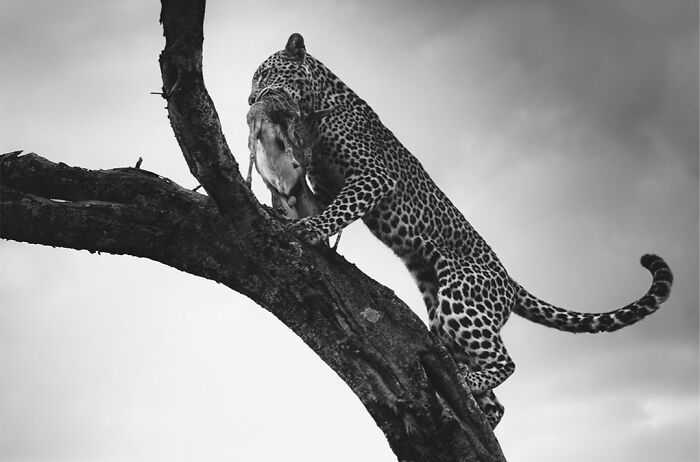
Image source: johan_siggesson_photo
#44
Three lions move with focus and purpose across the Serengeti, their steps perfectly in rhythm. The balance between power and grace is what drew me to this moment, a glimpse of unity, strength, and quiet determination.
Capturing them in black and white stripped the scene down to its purest form, revealing texture, light, and emotion.
From my fine art wildlife photography collection, this image reminds me why lions remain among the most captivating subjects in the wild.
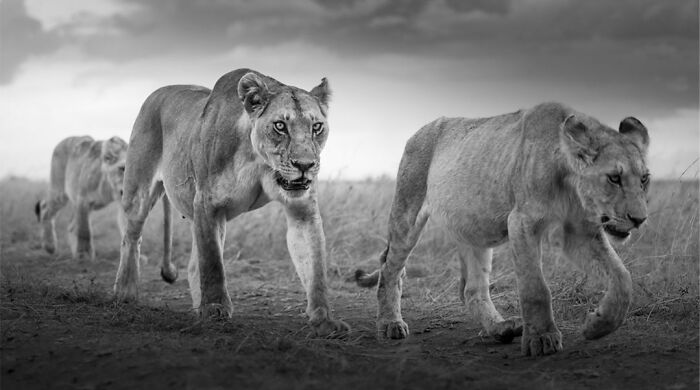
Image source: johan_siggesson_photo
#45
Kinyo was around 14 months old when I took this photograph. He still lives within his mother’s territory but already hunts for himself. I saw him moving with quiet confidence, learning the rhythm of the wild one day at a time.
For now, he enjoys the comfort of familiar ground and the safety of knowing she is never too far away. But soon, he will have to leave and find his own place in the world. Life for a young leopard is never simple. Every step away from his mother’s side brings new challenges and dangers, but also the chance to grow stronger and more independent.
Watching him at this stage feels both hopeful and a little sad. He stands between the world of youth and the wild that awaits him, still guided by her presence yet already proving he can survive on his own.
Stay wild, Kinyo. Your story has only just begun.
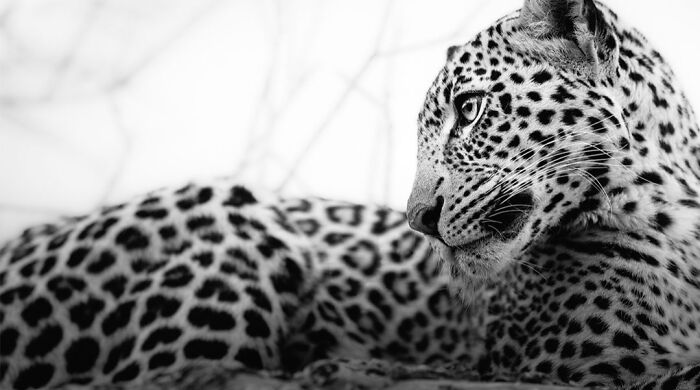
Image source: johan_siggesson_photo
#46
‘Moon Over Laikipia’
A solitary Grevy’s zebra stands beneath a rising moon in northern Kenya.
Stillness, balance, and quiet presence came together in this moment, and I chose to let the scene speak without interference.
‘Moon Over Laikipia’ is now available as a fine art zebra print, released as a limited edition wildlife print. Printed in black and white to honour the mood of the night, this piece is about atmosphere rather than action, and about giving the viewer space to pause.
Available now as wildlife wall art for collectors who value calm, considered imagery from the wild.
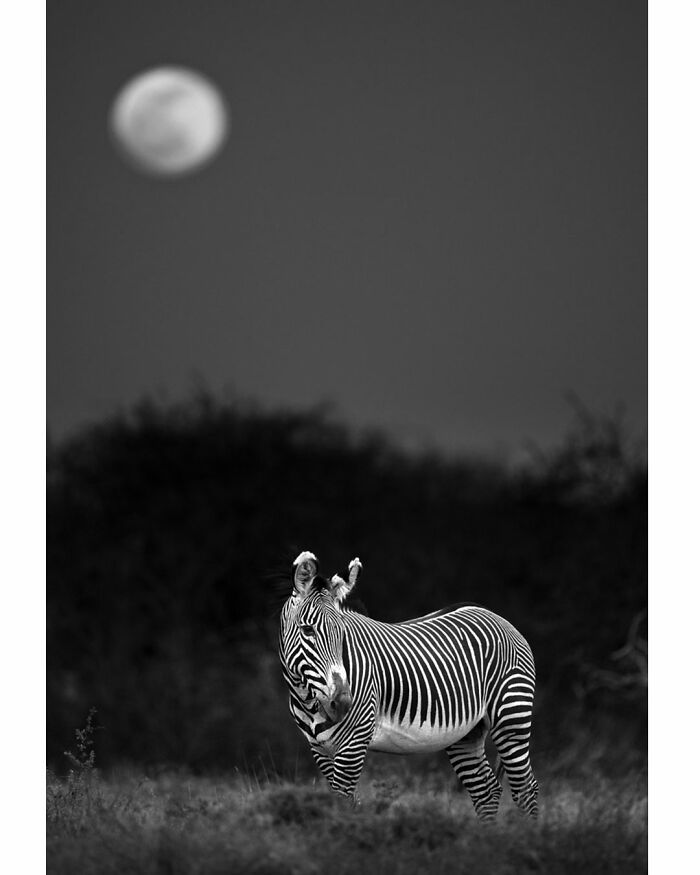
Image source: johan_siggesson_photo
#47
I’ve just returned from India after nine days in the field photographing the tigers of Bandhavgarh, and I’m stepping straight back into work with a new release.
My latest fine art wildlife print, ‘Born to Reign,’ features D1, one of the dominant male Bengal tigers in the area. Known for his size, calm confidence, and unmistakable presence, D1 is widely regarded as a king of Bandhavgarh. The image captures a rare moment of raw authority and tension, presented as a black-and-white tiger print created for collectors of wildlife wall art.
After more than a week immersed in the rhythm of the jungle, this release marks my transition from fieldwork to print. It reflects my ongoing commitment to translating real encounters with wild animals into fine art photography that carries both story and presence.
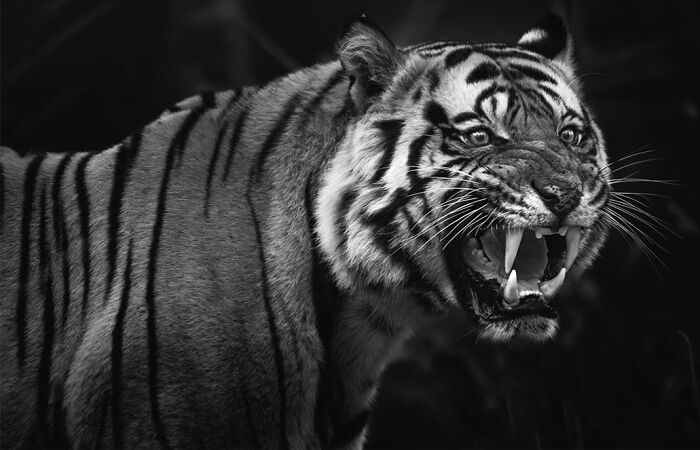
Image source: johan_siggesson_photo
#48
‘Bound Yet Apart’ is my newest release, photographed on Kenya’s Laikipia Plateau. It captures a quiet moment between a young leopard and his mother as he begins to find his own way.
It is a story about separation, courage, and quiet strength, moments that echo both the natural world and our own lives.
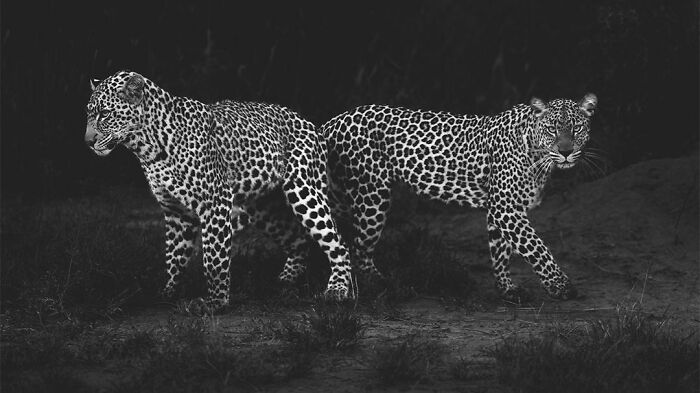
Image source: johan_siggesson_photo
#49
We had been tracking him for quite a while across the Serengeti. A large male like this does not always make himself easy to photograph. Sometimes you follow tracks, sometimes you catch brief glimpses through the grass, and often you simply wait and hope that patience will eventually be rewarded.
That morning was one of those slow stretches where the anticipation quietly builds. We knew he was nearby. The signs were there. But the lion himself remained hidden somewhere in the tall grass.
Then, finally, he appeared.
He settled down not far from the vehicle, partially hidden in the grass, completely at ease in his surroundings. What struck me immediately was how calm he was. A lion like this does not need to prove anything. His presence alone is enough.
We waited.
Wildlife photography often involves long periods where nothing happens. But those quiet minutes are part of the experience. You sit there watching, aware that you are sharing the same space with one of the most powerful predators on earth.
And then he lifted his head.
For a brief moment, he looked directly toward us. The grass moved slightly in front of him, his mouth slightly open, his mane catching the light. It was not an aggressive moment. It was simply a lion acknowledging something in his world.
Being that close to a wild male lion creates a very particular feeling. There is excitement, of course, but also a deep respect. You are fully aware that you are in the presence of an animal that belongs entirely to the wild.
That is what makes moments like this special. Not the drama, but the quiet encounter.
When I look at this photograph now, it always brings me back to that moment in the grass. The stillness of the Serengeti, the patience it took to find him, and the privilege of being so close to such an extraordinary animal.
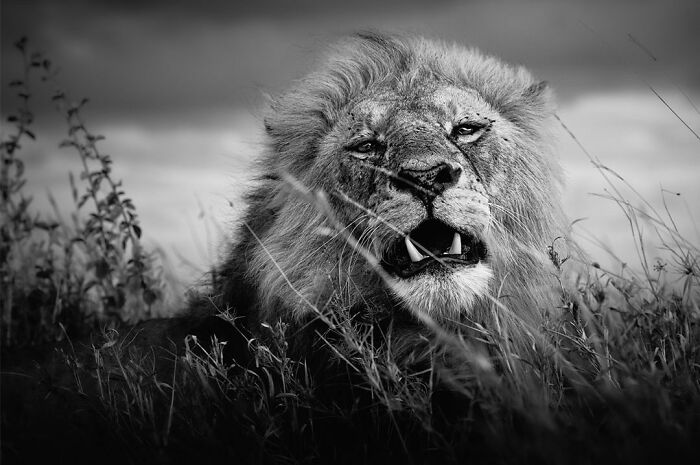
Image source: johan_siggesson_photo
#50
A moment of quiet curiosity in Bandhavgarh.
This young langur peeks out from behind its mother, eyes wide and searching. There is something timeless about the curiosity of young animals. It is honest. Unfiltered. Full of questions about a world that is still new.
In the forests of Bandhavgarh, that sense of wonder is always present. Every rustle in the leaves, every distant call, every shifting shadow becomes part of a young life learning how to survive and where it belongs.
I am always drawn to these early moments. They remind us that the wild is not only about power and drama, but also about innocence, learning, and the quiet courage it takes to step out and explore.
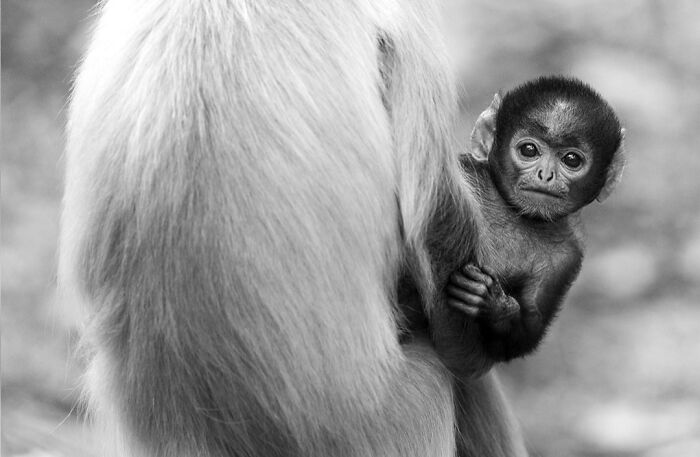
Image source: johan_siggesson_photo
 Follow Us