Nature is weird, if you haven’t noticed. Waxwing birds get drunk on fermented fruit, there are sharks that lay eggs which look like corkscrews, and Brazil has a tree so huge it looks like a lush, green forest. Nothing about wildlife may surprise us anymore, but there are still heaps we can learn.
Bored Panda is bringing you a listicle that’s meant to do exactly that. We came across the “Explaining The Wild” Instagram page that shares fascinating information about animals, plants, and geography alike – basically, all things nature. Their mission is for people to “learn about nature one post at a time.” So, Pandas, scroll down and see what a glasswing butterfly looks like and the miracle of a park in Austria that sinks underwater every spring.
More info: Instagram
#1
Dogs have a “play face” that mimics a smile, featuring a relaxed open mouth and upturned corners. This expression signals happiness and a desire to interact, usually accompanied by soft eyes and a neutral ear position.
To distinguish this from a nervous “submissive grin,” check the body language. A truly happy dog will have a loose, wiggly posture and a wagging tail, whereas a nervous dog will appear tense with teeth bared horizontally.
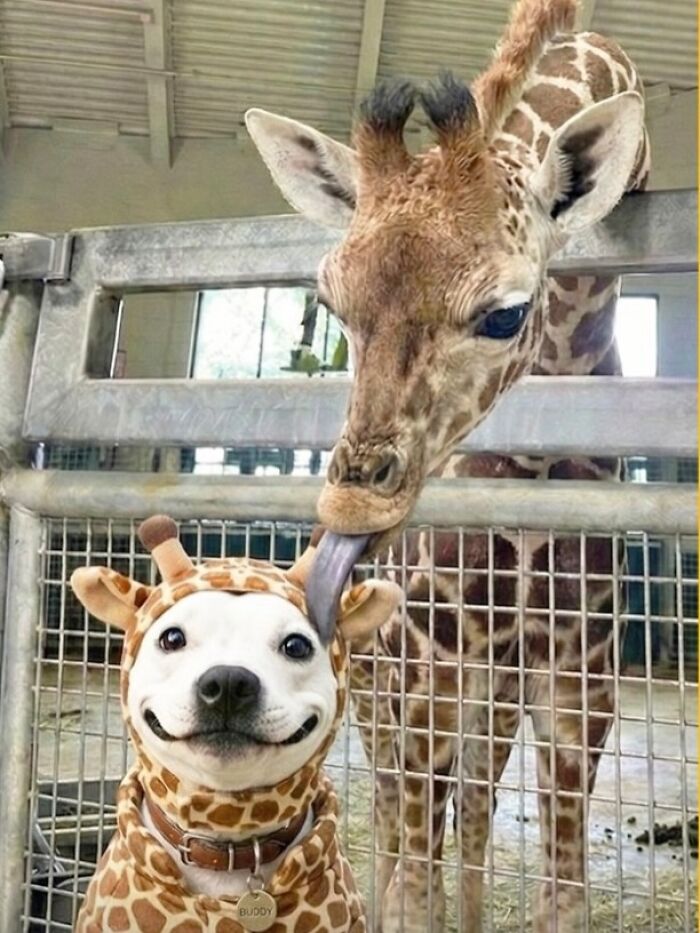
Image source: explainingthewild
#2
Nature has its own version of a wild weekend, and for the Bohemian Waxwing, it happens right on the sidewalk. These social birds have a specialized diet that relies heavily on berries, especially during the colder months. When the temperature fluctuates, the sugars in unpicked fruits like rowanberries begin to ferment, turning each berry into a tiny, potent dose of natural ethanol.
Because Waxwings are voracious eaters, they often consume these “boozy” berries in high quantities, leading to some very visible biological consequences. They lose their coordination and often end up lying on the ground, completely incapacitated until their livers can process the alcohol.
In many cities, kind residents have set up “sobering-up stations”—simple cardboard boxes in quiet areas—to protect the birds from predators and traffic while they sleep it off. It is a fascinating look at how diet and chemistry intersect in the wild, requiring a little bit of human tech and compassion to keep the population safe.
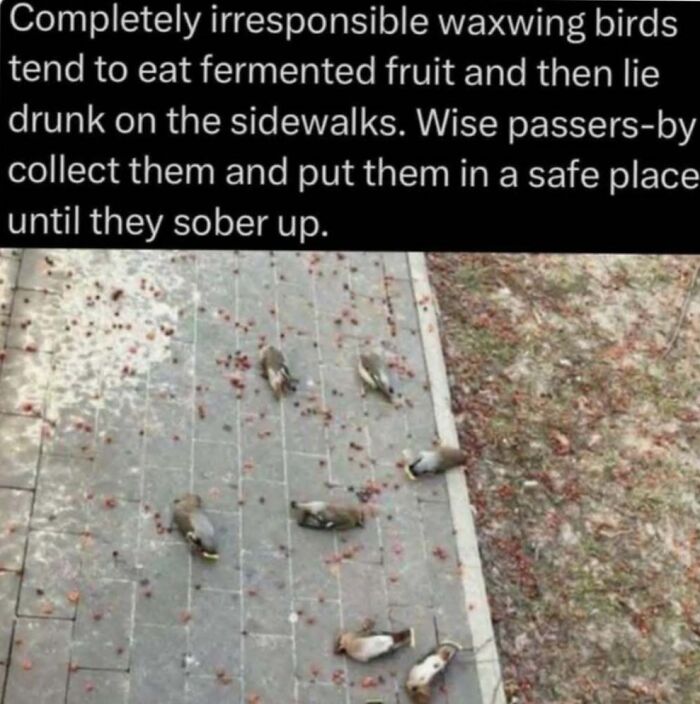
Image source: explainingthewild
#3
Hidden in the dense tropical forests of Southeast Asia, the Great Eared Nightjar looks like a creature pulled straight from the pages of a fantasy novel. With its long, feathered ear tufts that resemble horns and a broad, flat head, this elusive bird is often called a “baby dragon” or a real-life Pokémon. Its mottled brown and grey plumage provides the ultimate camouflage, allowing it to blend perfectly with the leaf litter on the forest floor where it rests and even lays its eggs without a formal nest.
These nocturnal predators are as skilled as they are strange, possessing an incredibly wide mouth that acts like a biological net to scoop up moths and beetles mid-flight. While they may look like miniature dragons, they are actually the largest species in the nightjar family, reaching up to 16 inches in length. Their haunting, three-note call—a sharp “tsiik” followed by a pause and a melodic “ba-haaww”—is a signature sound of the Asian night, adding to the mystical aura of this “avian dragon.”
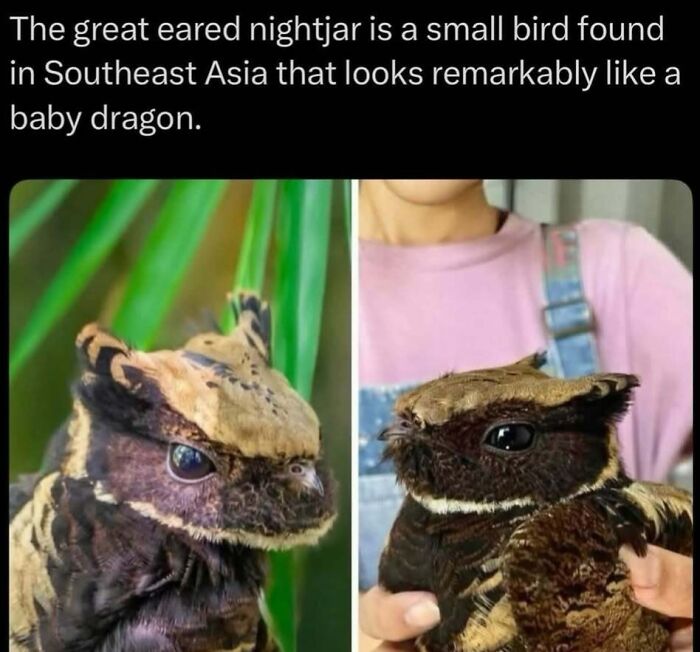
Image source: explainingthewild
#4
Zimbabwe’s landscapes burst with colour, and at their heart is the Flame Lily—a climbing perennial native to tropical Africa that has captivated cultures for centuries.
Officially adopted as the national emblem in 1980, its flame-like petals shift from yellow to vivid red as they bloom, twisting upward on tendrils that allow it to scale trees and shrubs up to 4 metres high. While breathtakingly beautiful, it’s also potent: every part of the plant contains colchicine, a toxic alkaloid used in traditional medicine for ailments like gout and even in modern cancer treatments. Found across savannas and woodlands, it thrives in the region’s seasonal rains, reminding us of nature’s dual gifts of wonder and caution.
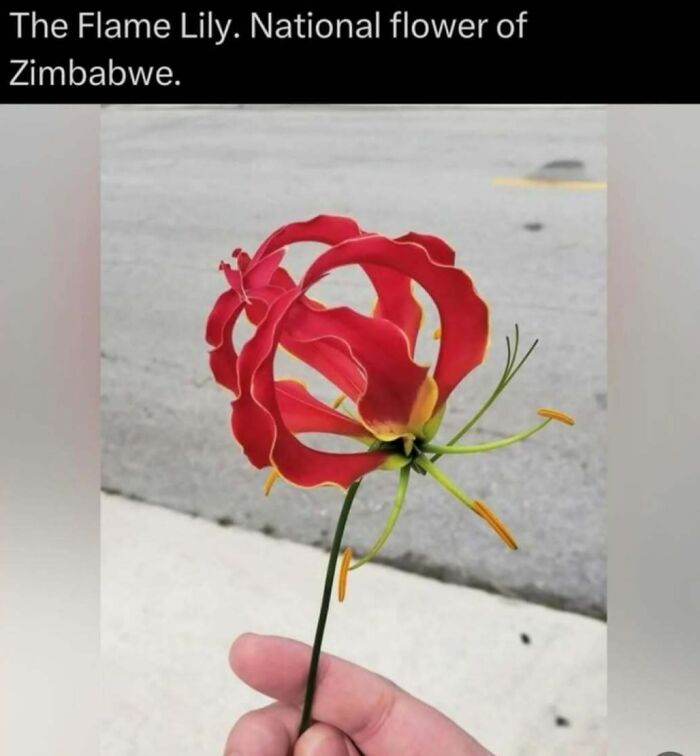
Image source: explainingthewild
#5
Most sharks are famous for rows of razor-sharp, triangular daggers designed for shearing through flesh, but the Port Jackson shark carries a much more specialized toolkit in its mouth. Named after the harbor in Sydney, Australia, where they are commonly found, these sharks have evolved a unique “dual-purpose” dental arrangement that looks nothing like a Great White’s.
In the front, they have small, pointed teeth used for grasping slippery prey like small fish or sea urchins. However, as you move toward the back of the jaw, the teeth transform into broad, flat, pavement-like plates. These “molars” are specifically engineered for crushing the hard shells of mollusks and crustaceans. This “heterodont” dentition—meaning having different types of teeth—allows the shark to grind through tough exoskeletons as easily as a nutcracker.
Because they feed on such abrasive prey, these grinding plates wear down over time, but the shark has a built-in replacement system. Much like a conveyor belt, new teeth are constantly forming at the back and moving forward to replace the old, worn-out ones. It is a brilliant piece of biological engineering that ensures these bottom-dwellers can keep their “crushing” reputation intact for their entire lives!
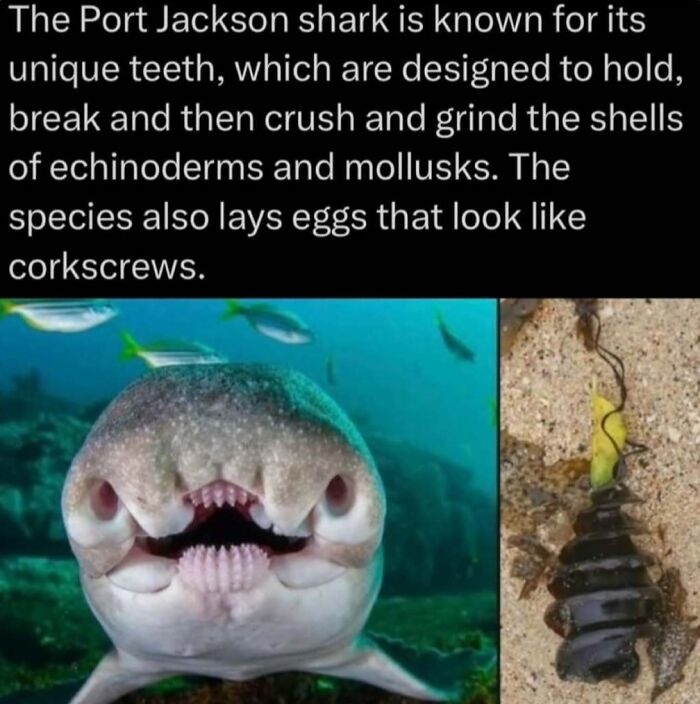
Image source: explainingthewild
#6
Orcas and wolves are among the most intelligent apex predators on the planet, yet they almost never attack humans in the wild. Ecologist Carlo Safina suggests this isn’t just luck, but a result of high-level social recognition. These animals live in complex family structures and possess a keen understanding of social bonds; they likely perceive humans as “fellow” social creatures who are equally capable of cooperation and, more importantly, vengeance. By recognizing us as a species that lives in tight-knit groups, they may instinctively realize that harming an individual would lead to retaliation from the rest of the pack or “pod.”
This theory of mutual respect is rooted in the idea of shared cognitive traits. Both orcas and wolves exhibit emotional depth and long-term memory, allowing them to pass down cultural knowledge to their offspring about which creatures are dangerous and which are best left alone. Instead of viewing us as prey, they may see us as an extension of their own social world—a predator that is too risky to cross. This fascinating intersection of animal behavior and psychology proves that in the wild, the strongest defense isn’t always physical power, but the reputation of the family you belong to.
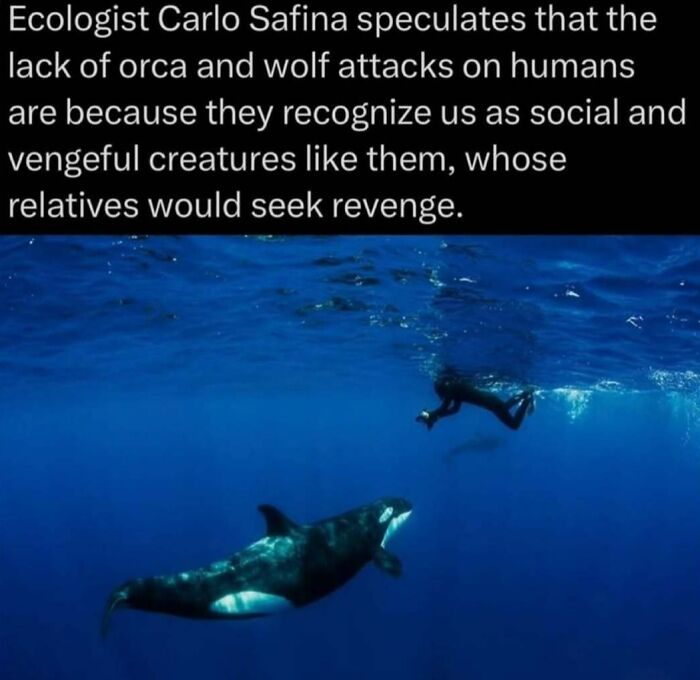
Image source: explainingthewild
#7
A tiger’s release back into the wild is often captured in slow motion, showcasing power and grace, but one particular rescue resulted in a surprisingly human expression. After spending time in captivity or rehabilitation, being faced with the sheer vastness of the jungle can trigger a sensory overload. This specific tiger, upon seeing the dense green canopy of its ancestral home for the first time, froze with a wide-eyed, open-mouthed expression that looked less like a predator and more like a shocked traveler.
This “face” is actually a combination of genuine surprise and the flehmen response, where a tiger pulls back its lips to pick up pheromones and scents through the roof of its mouth. In this moment, the tiger wasn’t just looking at the jungle; it was “tasting” the air to map out its new territory and identify the presence of prey or rivals. It is a rare, candid glimpse into the emotional and biological complexity of a big cat transitioning from a confined world back to the untamed wild.
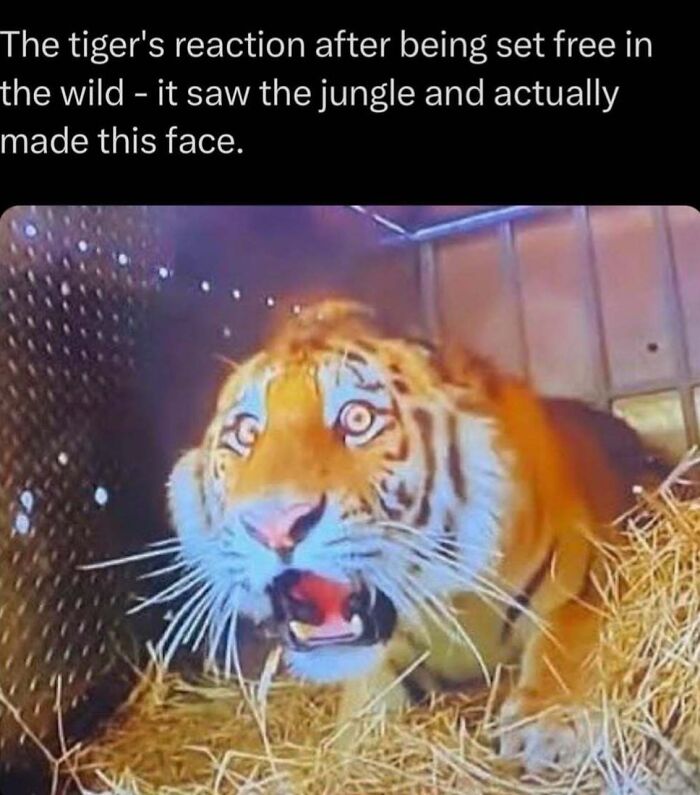
Image source: explainingthewild
#8
Since the dawn of domestication, the bond between humans and dogs has been one of the most powerful connections in the natural world. This vintage photograph from the 1920s captures a timeless moment of friendship, reminding us that while the world changes, the “kinship of spirit” between us and our canine companions remains constant.
This relationship is more than just sentimental; it is a biological partnership that has shaped both species over thousands of years. Dogs evolved from ancient wolves to understand human gestures and emotions, while humans developed unique social bonds that helped us thrive alongside our loyal protectors and friends. Whether as working partners or beloved “pals,” dogs continue to be an essential part of the human story.

Image source: explainingthewild
#9
Deep in the heart of Brazil, there exists a biological wonder that challenges everything we know about “forests.” The Jequitibá-rosa, often referred to as a “living monument,” can grow so massive that its canopy functions as an entire ecosystem for hundreds of other species. These giants can live for over 3,000 years, standing as silent witnesses to the rise and fall of civilizations while reaching heights equivalent to a 20-story building.
What makes these trees truly incredible is their architectural engineering. To support their immense weight in the soft, rain-soaked earth, they develop massive “buttress roots” that flare out from the base like the fins of a rocket. This natural tripod system prevents the tree from toppling during tropical storms, allowing it to remain the dominant “skyscraper” of the Atlantic Forest for millennia. It is a breathtaking example of how nature builds for maximum stability and longevity.
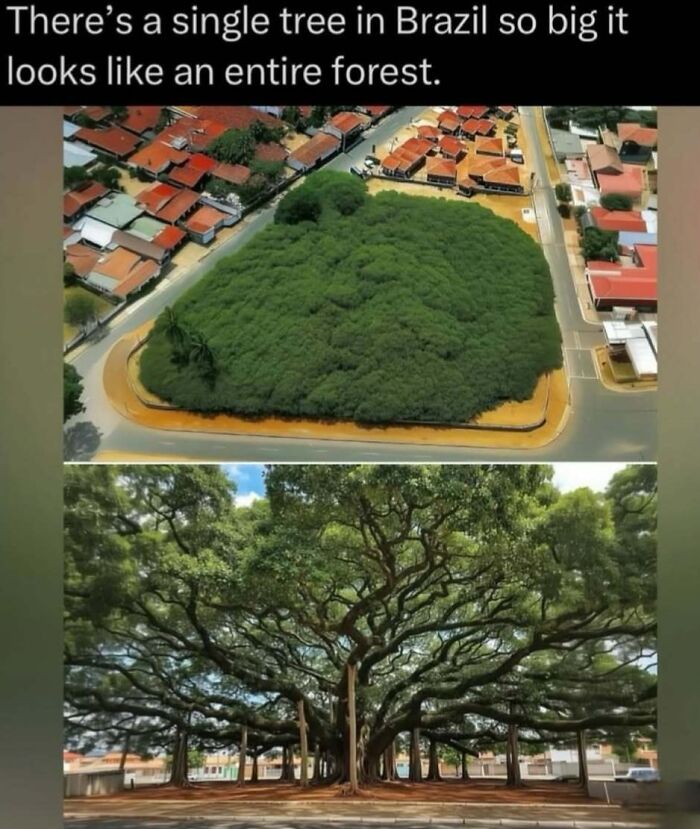
Image source: explainingthewild
#10
Imagine having wings that look like they are made of perfectly clear glass. The glasswing butterfly roams the dense rainforests of Central and South America doing exactly that.
Unlike other butterflies that use vibrant colors to warn off predators, the glasswing relies on ultimate stealth. The clear sections of their wings completely lack the microscopic colored scales that normally cover butterfly wings.
To make the illusion perfect, the surface of their wings is coated in tiny structures that eliminate all reflection. Instead of catching the sun and sparkling, the wings let light pass right through, making the butterfly practically invisible to birds while in flight. It is a stunning masterpiece of natural camouflage.
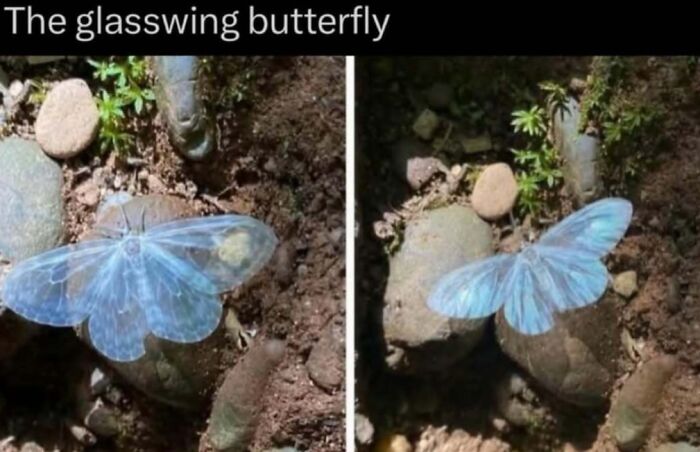
Image source: explainingthewild
#11
You might actually be thinking of the famous Grüner See (Green Lake) in Austria! For most of the year, it is a beautiful, scenic park with hiking trails, wooden benches, and lush green grass.
But when spring arrives, the magic happens. Warm weather melts the heavy snow from the surrounding mountains, completely flooding the basin. The park literally sinks beneath crystal-clear, emerald water, turning into a surreal underwater world.
Scuba divers can actually swim past submerged trees, bridges, and park benches. It is one of the most stunning seasonal transformations on Earth, proving how drastically nature can shape a landscape in just a few weeks.
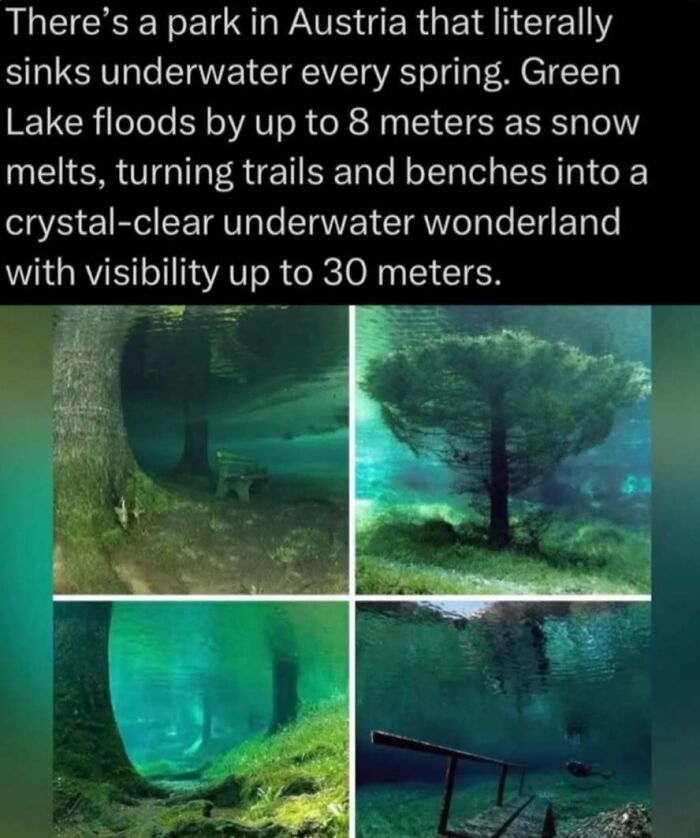
Image source: explainingthewild
#12
Every year in Italy, shepherds participate in an ancient migration tradition called transhumance, moving their massive flocks to higher mountainous grounds for fresh summer pasture. It is a grueling journey across rugged, beautiful landscapes.While the adult sheep can easily handle the steep trek, the newborn lambs are simply too little and weak to make the climb.
To ensure no baby is left behind, shepherds use a heartwarming solution. They tuck the exhausted tiny lambs into specially designed saddlebags worn by reliable donkeys. These gentle “lamb taxis” safely carry the newborns up the mountain, a beautiful reminder of the care and harmony between humans and their working animals.
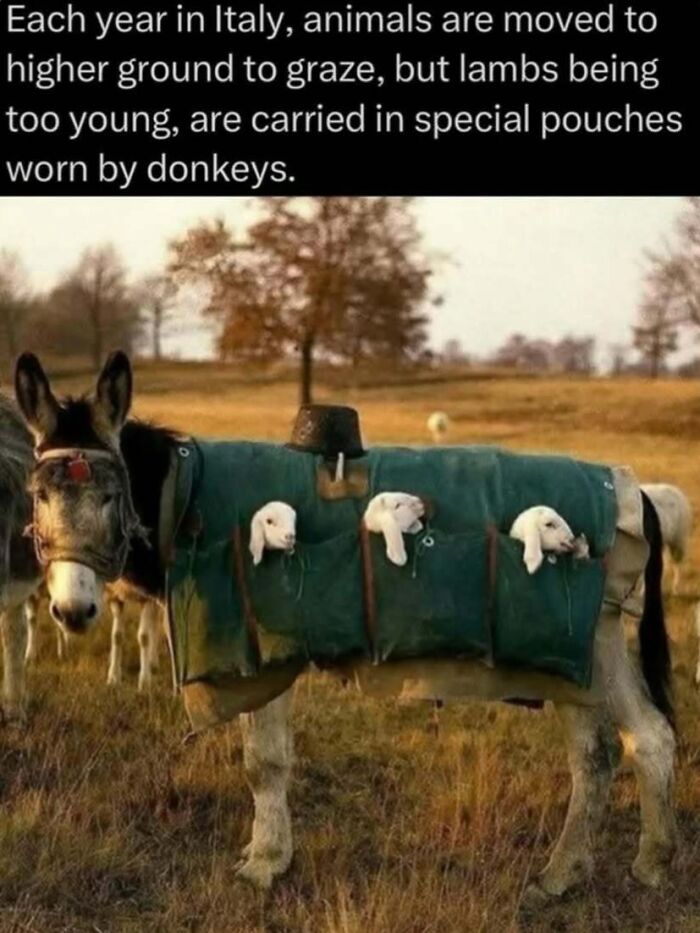
Image source: explainingthewild
#13
While we usually see them grazing in dusty fields, “fluffy cows” have become an internet sensation for looking more like giant teddy bears than farm animals. This incredible look isn’t a specific breed; it’s actually the result of intense professional grooming, often for livestock shows. These cows undergo a meticulous routine of being shampooed, conditioned, and then blow-dried with high-velocity dryers to make their coats stand out.
The process involves hours of “fluffing” the hair outward to give the animal a perfectly rounded, cloud-like silhouette. Beyond the aesthetic, this level of care highlights the surprisingly docile and patient nature of these gentle giants, as they stand calmly through hours of styling. It’s a fascinating crossover where the rugged world of agriculture meets the precision of high-end grooming, turning a standard bovine into a masterpiece of soft, voluminous fur.
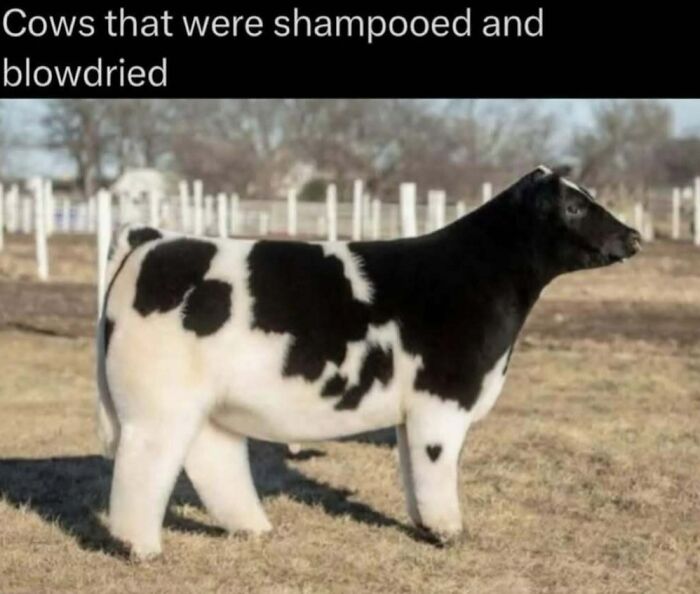
Image source: explainingthewild
#14
Hidden deep in the landscape of southern Portugal, the Odeleite River reveals a spectacular secret when viewed from above. Known globally as the “Blue Dragon River,” its winding path and jagged offshoots perfectly mimic the shape of a traditional Chinese dragon, complete with a long, twisting body and sharp, claw-like tributaries.
This breathtaking geographic formation is actually a reservoir created by the Odeleite Dam. While the view from the ground is that of a peaceful, expansive lake, the aerial perspective captures a surreal “mythical” silhouette that has made it one of the most photographed natural wonders in the region. It serves as a stunning reminder of how the Earth’s topography can create art on a scale that is only truly visible from the sky.
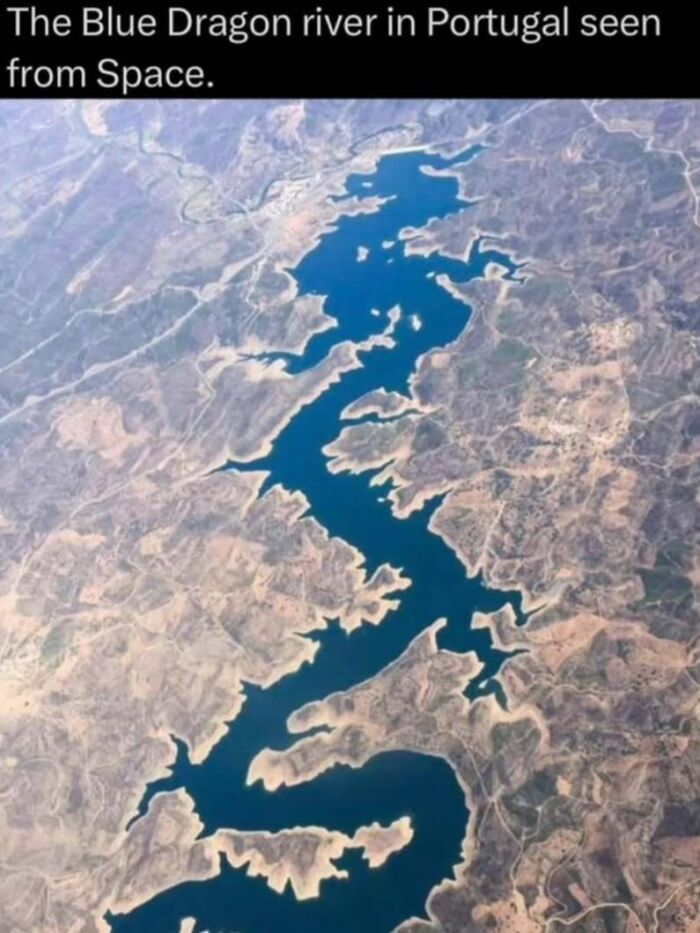
Image source: explainingthewild
#15
Deep in the limestone caves of Thailand and Myanmar lives a creature so small it’s often mistaken for a large insect. The Bumblebee bat, or Kitti’s Hog-nosed Bat, holds the title of the world’s smallest mammal, weighing a mere 2 grams—about the same as a single penny.
These tiny survivors measure only 29 to 33mm in length, but don’t let their size fool you. With a wingspan reaching up to 170mm, they are incredibly agile hunters, using echolocation to snag insects mid-air. Their unique, pig-like snout is where they get their name, an evolutionary trait that helps them navigate the dark, humid crevices they call home. Seeing one resting on a human fingertip really puts the incredible diversity of the mammal kingdom into perspective.
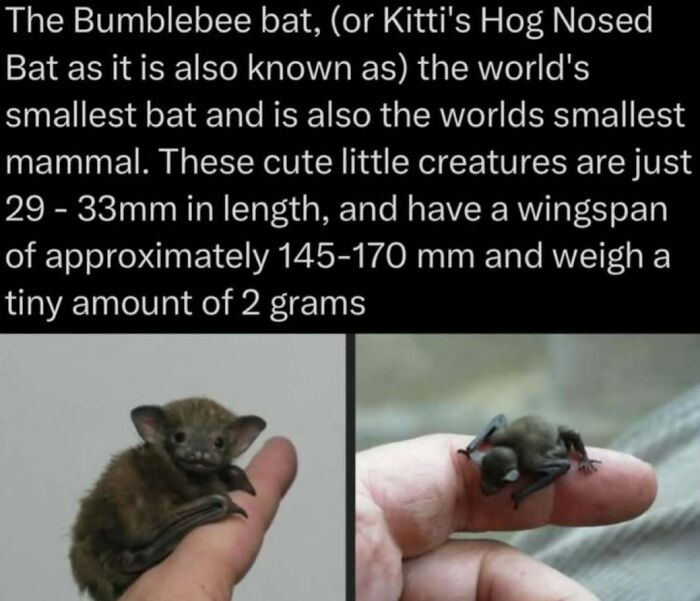
Image source: explainingthewild
#16
The highest point on Earth was once the bottom of the sea. Geologists have confirmed that the rock capping Mount Everest consists of marine limestone deposited in the ancient Tethys Ocean around 470 million years ago. Through the colossal forces of continental collision between the Indian and Eurasian plates, these seabed sediments were slowly thrust upward, eventually forming the towering Himalayas.
Today, climbers reaching the 8,848-metre summit stand on what was once an underwater world teeming with prehistoric marine life. It is one of nature’s most profound examples of how continents, oceans and mountains are constantly rewriting the story of our planet.

Image source: explainingthewild
#17
A charming discovery from behavioural research has confirmed what many birdwatchers have long suspected,male robins make exceptional husbands. Studies on the European robin (Erithacus rubecula) show that males can precisely anticipate their partner’s food preferences ,delivering the exact insects, worms or berries she desires ,even when they have had no opportunity to observe what she ate earlier. This impressive predictive ability, combined with their seasonal monogamy, helps strengthen the pair bond and ensures successful chick-rearing.
These familiar red-breasted songsters, found across Europe, western Asia and North Africa, are not only territorial defenders but also attentive providers who share parenting duties with remarkable dedication. Nature’s quiet lesson in partnership, right in our gardens and woodlands.
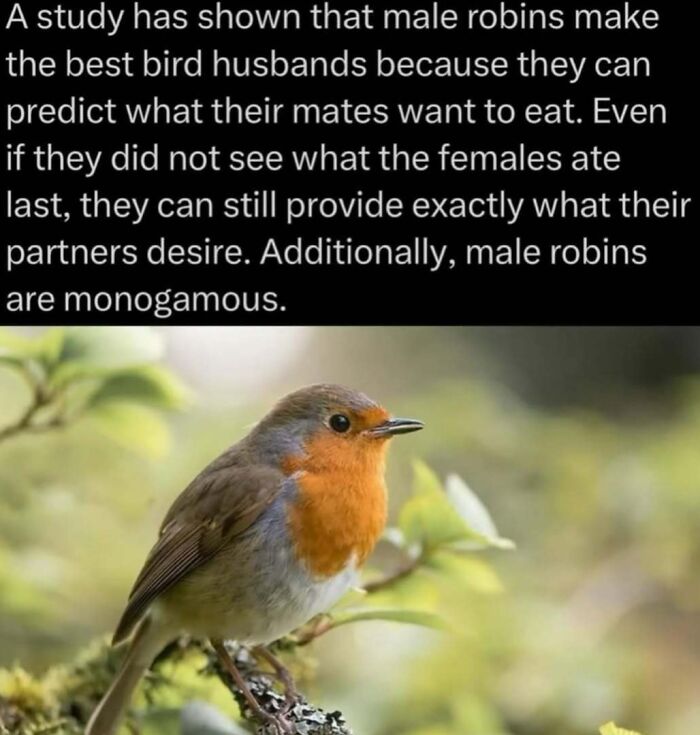
Image source: explainingthewild
#18
In the lush grounds of the Indian Botanic Garden in Kolkata stands a botanical marvel that defies the ordinary definition of a tree.
The Great Banyan, a majestic specimen of Ficus benghalensis, began as a single trunk over 250 years ago but has since expanded into a living canopy covering 4.67 acres—equivalent to about four football fields—through thousands of prop roots that descend from its branches to form new trunks. Rising to 80 feet, it supports a diverse ecosystem, sheltering birds, insects, and epiphytes while symbolising resilience and interconnectedness in Indian culture. Despite losing its original central trunk to a storm in 1925, it endures as one of the world’s largest trees by area, a testament to nature’s adaptive genius.
Have you witnessed a tree like this? Share your stories of nature’s giants in the comments.
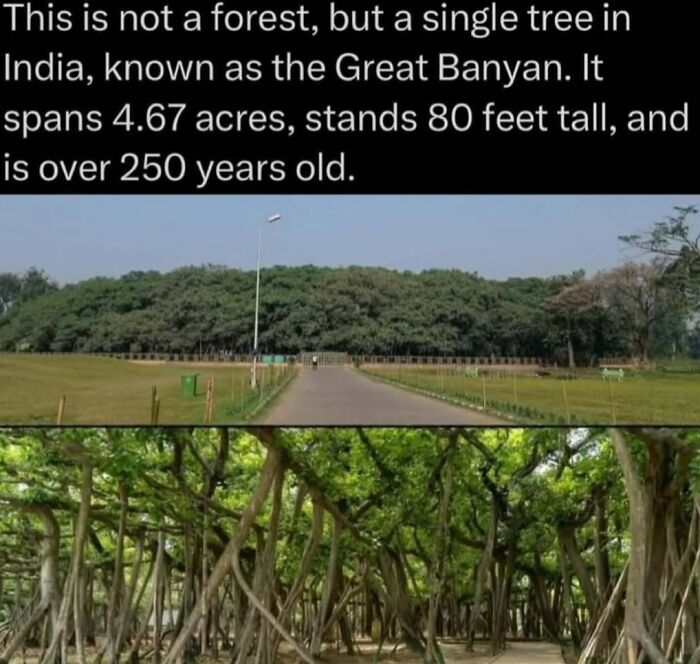
Image source: explainingthewild
#19
Who knew these clever little creatures had such a sense of humour?
Pioneering research by neuroscientist Jaak Panksepp in the 1990s revealed that young rats produce high-frequency 50 kHz chirps—essentially laughter—during playful tickling sessions. These ultrasonic sounds, beyond human hearing, signal happiness and even encourage more interaction, much like a child’s giggle. Far from the pests of urban lore, rats in the wild and as pets demonstrate remarkable intelligence, empathy, and social bonds, thriving in complex environments from city sewers to forest floors.
It’s a reminder that joy transcends species—next time you spot a rat, imagine the hidden symphony of delight. What’s the most surprising animal behaviour you’ve encountered?

Image source: explainingthewild
#20
A powerful and sobering remnant preserved from the events of September 11, 2001. Recovered from the rubble at Ground Zero, this fused mass of twisted steel beams, concrete slabs, wiring and other materials was formed when the upper floors of one of the towers pancaked downward, compressing roughly four to five storeys into a slab only a few feet thick under extreme pressure and heat. Weighing several tons and resembling a fallen boulder, it earned the informal nickname “The Meteor” among recovery workers.
Today it is displayed at the National September 11 Memorial & Museum, serving as a tangible illustration of the immense structural forces at work during the collapse and a lasting memorial to that day.

Image source: explainingthewild
#21
Standing over twelve feet tall on its hind legs, the Giant Short-Faced Bear (Arctodus simus) was one of the largest terrestrial mammalian carnivores to ever walk the Earth. Dominating the North American landscape during the Pleistocene epoch, this prehistoric titan was built differently than the bears we know today. Its name comes from its unusually deep, short muzzle, which combined with a massive skull, gave it a bite force capable of crushing bone. Unlike the lumbering gait of a grizzly, the Short-Faced Bear possessed long, slender limbs designed for high-speed pacing, allowing it to cover vast distances across the open steppes in search of carrion or prey.
What makes this predator truly fascinating is its specialized biology as a “kleptoparasite.” While it was certainly capable of hunting, its sheer size and speed suggest it often used its intimidating presence to bully other predators, like Dire Wolves or Sabertooth Cats, away from their kills. Its nasal passages were remarkably large, providing a highly developed sense of smell that could detect a carcass from miles away. This massive engineer of the Ice Age eventually vanished around 11,000 years ago as the megafauna it relied on went extinct, leaving behind only fossilized footprints and bones that continue to dwarf modern apex predators.
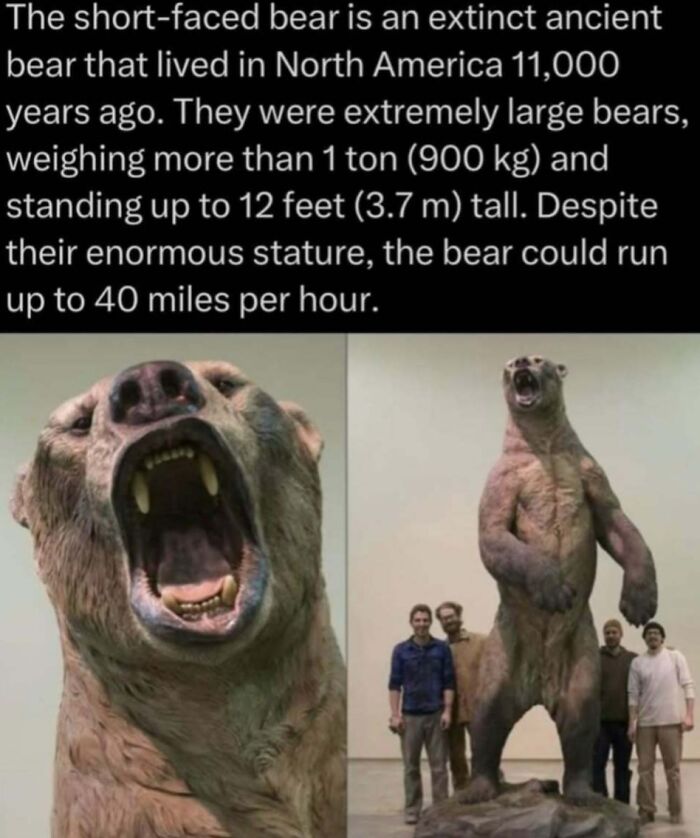
Image source: explainingthewild
#22
While they may look like prehistoric twins at a glance, the differences between an alligator and a crocodile come down to millions of years of distinct evolutionary engineering. The easiest way to tell them apart is by the shape of their snout; alligators possess a wide, U-shaped snout designed for crushing through the shells of turtles and snails, while crocodiles have a longer, pointed V-shaped snout built for a more generalist diet. Furthermore, when a crocodile closes its mouth, its large fourth lower tooth remains visible over the upper lip, giving it a toothy “grin” that alligators lack.
Their habitats also tell a story of biological adaptation to salt. Crocodiles have specialized lingual glands that allow them to excrete excess salt, making them perfectly suited for life in brackish or saltwater environments. Alligators lack these highly efficient glands, confining them mostly to freshwater lakes and swamps. This physiological difference means that while you might find a crocodile swimming in the ocean, an alligator is a homebody of the marsh, proving that even the most similar-looking apex predators are precisely tuned to the specific chemistry of their surroundings
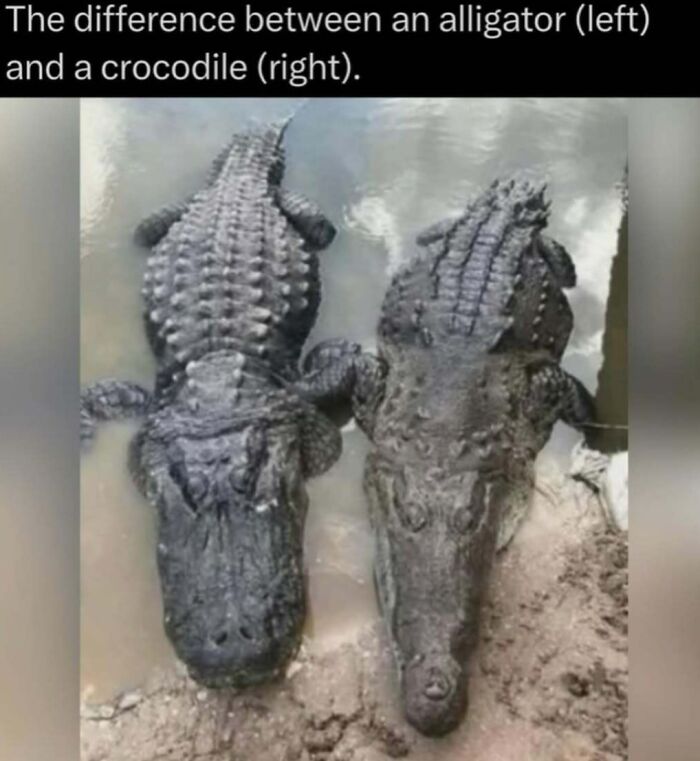
Image source: explainingthewild
#23
The tiger is widely recognised as one of the most powerful predators in the natural world.
A fully grown male tiger exhibits remarkable muscular development, particularly in the shoulders, neck and forelimbs. This impressive physique provides the strength needed to ambush and subdue large prey, and to drag heavy kills through dense habitats. Some individuals can weigh up to 300 kilograms, solidifying their position among the largest and strongest cats alive today.
A perfect example of nature’s mastery in creating formidable hunters.
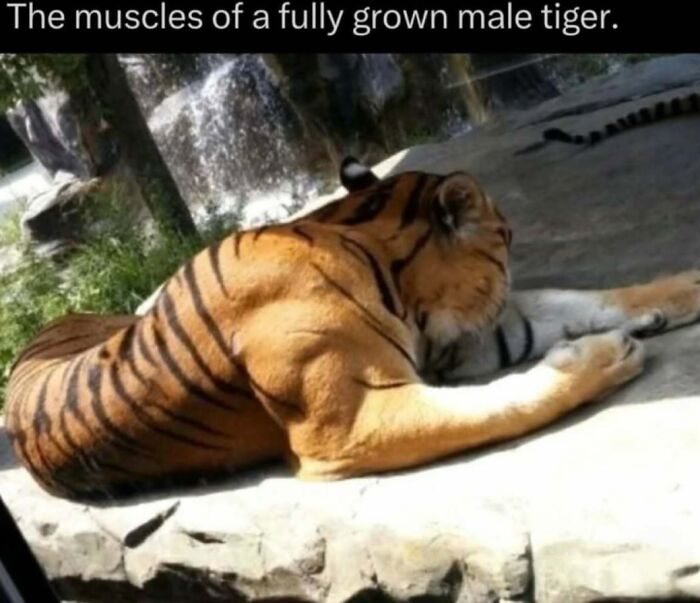
Image source: explainingthewild
#24
Antarctica is home to one of the most eerie sights on the planet: Blood Falls, a five-story waterfall that pours deep red liquid onto the white ice of the Taylor Glacier. For over a century, the cause of this crimson hue was a mystery, with early explorers assuming it was simply red algae. However, scientists have finally discovered that the color comes from a prehistoric, subglacial lake trapped under 1,300 feet of ice. This water is extremely rich in iron, and the moment it seeps through cracks in the glacier and touches the oxygen in the air, it “rusts” instantly, turning the water a vivid blood-red.
What’s even more mind-blowing is that this waterfall remains liquid at temperatures well below freezing. The secret lies in its chemistry; the water is three times saltier than the ocean, creating a natural brine that prevents it from turning to ice. As the water freezes internally, it actually releases heat, warming the surrounding subglacial lake and keeping the system flowing. This isolated, oxygen-free environment is even home to a unique community of “extremophile” bacteria that have survived for millions of years, proving that life can thrive in the most impossible conditions on Earth.
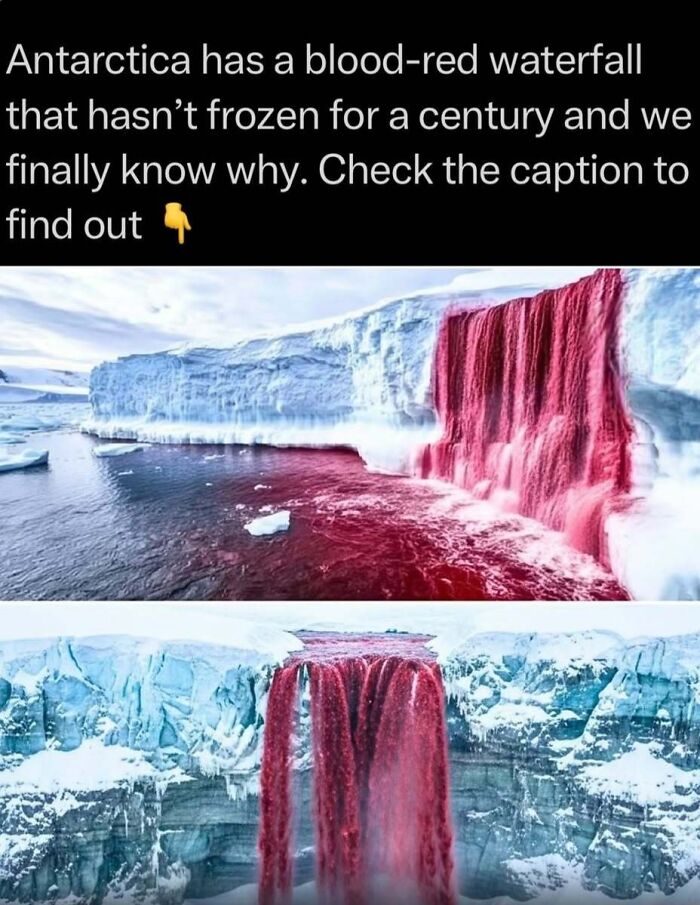
Image source: explainingthewild
#25
While many people associate fat storage in animals with camels or bears, sheep have their own unique evolutionary adaptation: the fat tail. Originally developed in wild sheep to store energy for survival in harsh, arid climates, these tails act as a concentrated reservoir of lipids that the animal can draw upon during food shortages. Today, fat-tailed breeds still make up about 25% of the world’s sheep population, primarily found in regions across Africa, the Middle East, and Asia where they remain a vital part of local agricultural economies.
Over centuries of domestication, humans selectively bred some of these sheep to have even larger, more exaggerated tails, sometimes reaching sizes so massive they became impractical for the animal to move. In some historical accounts, farmers even built small wooden carts to support the heavy tails and prevent them from dragging on the ground. Because of these practical challenges, many modern breeds underwent “tail docking” for hygiene and mobility, yet the fat-tailed sheep remains a powerful example of how both natural selection and human intervention can shape the physiology of a species to master extreme environments.
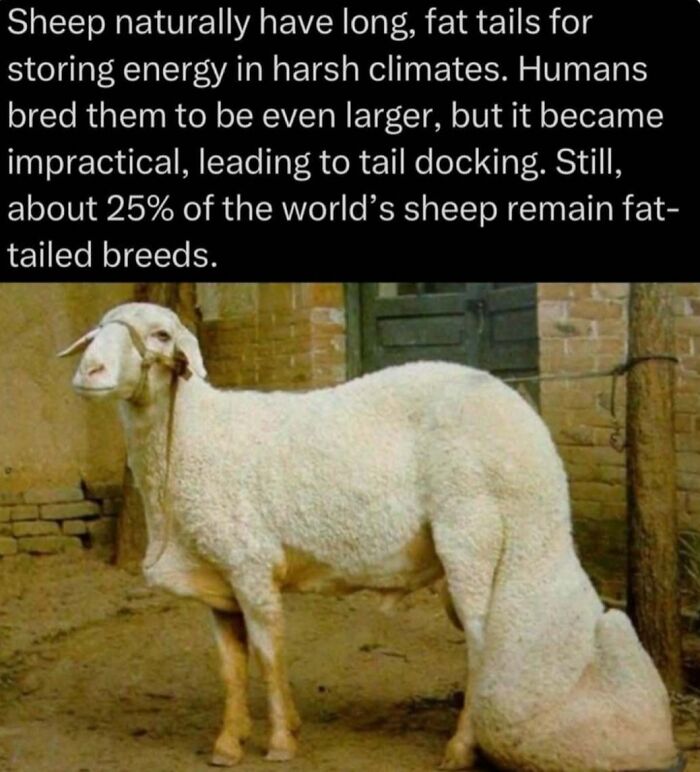
Image source: explainingthewild
#26
Nature often provides the most efficient solutions to human problems, and the use of tilapia fish skin as a biological bandage is a perfect example of medical biomimicry. Rich in type 1 collagen and high levels of moisture, processed tilapia skin acts as a protective barrier that speeds up the healing of second and third-degree burns. Unlike traditional synthetic bandages, it reduces the need for painful daily dressing changes, as it can stay on the wound for several days while transferring vital proteins that help regenerate human skin.
The practice gained global attention after being successfully used to treat the burnt paws of a mountain lion during California wildfires, and it is now widely utilized in Brazil as a cost-effective and accessible medical tool. The skin is sterilized and stripped of scales and odor before being applied, where it adheres to the wound and prevents infection better than many standard treatments. This intersection of marine biology and medicine proves that some of our most advanced healing technologies have been swimming in our oceans all along
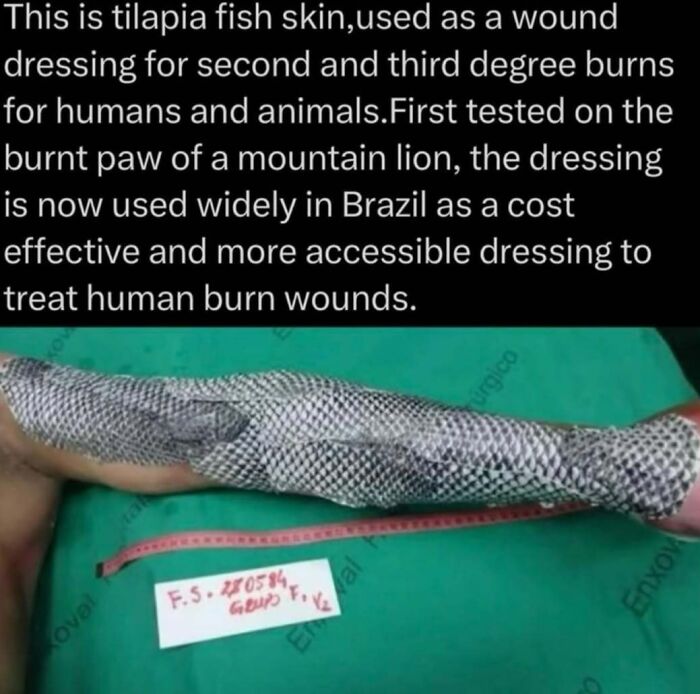
Image source: explainingthewild
#27
Seeing a turtle under an X-ray provides a rare, transparent look at the biological engineering required to carry life within a rigid shell. Unlike mammals, whose bodies can expand outward to accommodate growing offspring, a turtle’s skeletal structure is fixed. This means the internal organs must shift and compress to make room for the developing eggs, which appear as perfectly oval silhouettes nestled deep within the pelvic cavity.
This internal view highlights the incredible durability of the eggs themselves, which are protected by the mother’s armor-like carapace from external threats. Once the eggs are fully calcified and ready for the nest, the mother must navigate the land to find the perfect sandy spot for burial. It’s a delicate balance of physics and biology, ensuring that even within a literal fortress of bone, the next generation has exactly what it needs to develop before making their break for the ocean.
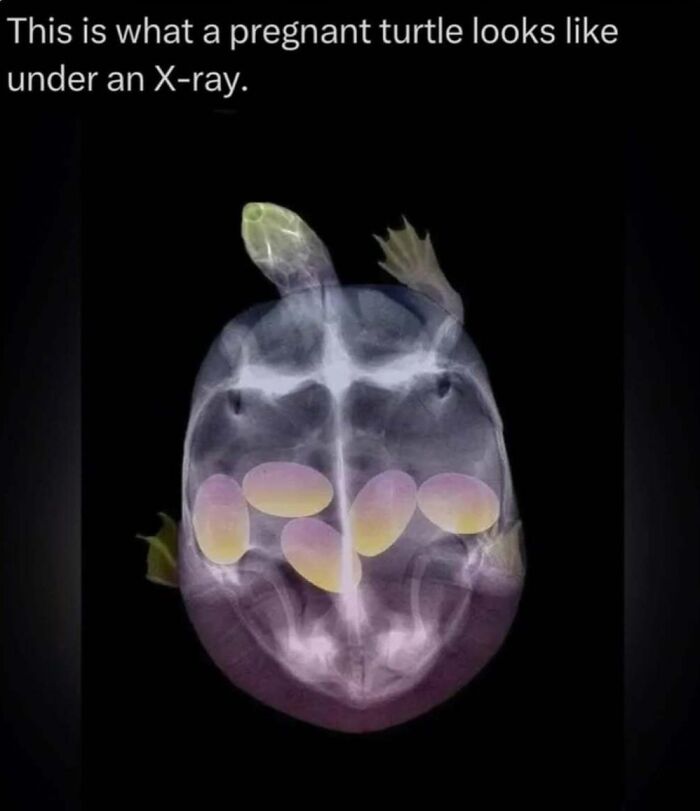
Image source: explainingthewild
#28
The Japanese Bee Fly is a perfect example of Batesian mimicry, where a harmless insect evolves to look like a dangerous one to stay safe. With its fuzzy, golden body and hovering flight pattern, it is easily mistaken for a bumblebee at a glance, tricking predators into thinking it has a painful sting. This “cute” exterior is actually a highly effective survival suit, allowing the fly to move peacefully between flowers to feed on nectar without being harassed by birds or other insects.
Beyond its adorable appearance, the Japanese Bee Fly is a biological marvel that inspired the Pokémon “Cutiefly.” It possesses a long, needle-like proboscis used for sipping nectar, which many mistake for a stinger, but it is completely harmless to humans. While they look like fluffy toys, they are incredibly agile fliers, capable of sudden bursts of speed and precise hovering that even the most advanced drones struggle to replicate. It is a stunning reminder that nature often combines beauty with brilliant tactical defense.
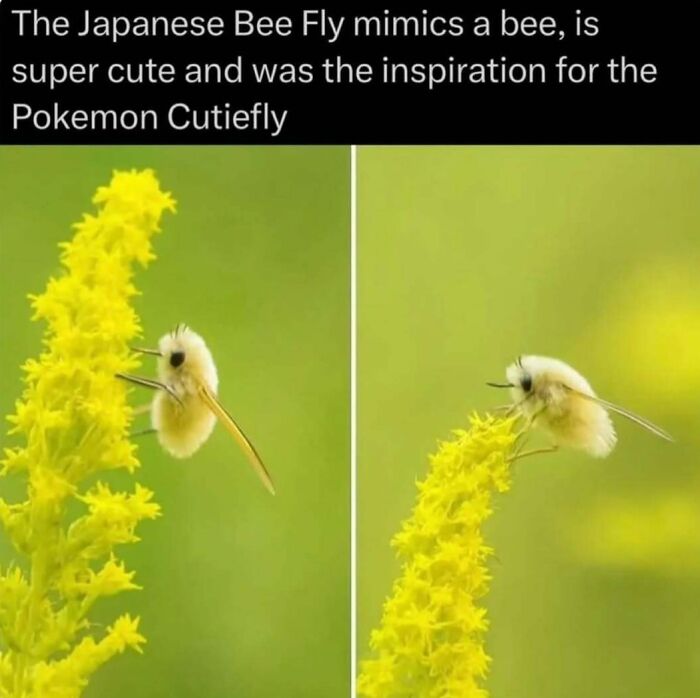
Image source: explainingthewild
#29
Ants are known for their incredible collective intelligence, but their understanding of botanical physics is truly next level. To ensure their food supply doesn’t literally grow out of their underground granaries, harvester ants systematically break stored seeds in half to prevent them from sprouting. However, scientists noticed a strange exception with coriander seeds: the ants always split them into exactly four pieces instead of two.
It turns out that coriander is uniquely resilient, and a seed split into just two halves can still successfully germinate and ruin the nest. The ants have somehow “learned” that a four-way split is the only way to completely neutralize the seed’s growth potential. This level of biological engineering shows that ants don’t just act on simple instinct; they possess a complex, passed-down knowledge of their environment that allows them to manage their resources with surgical precision.
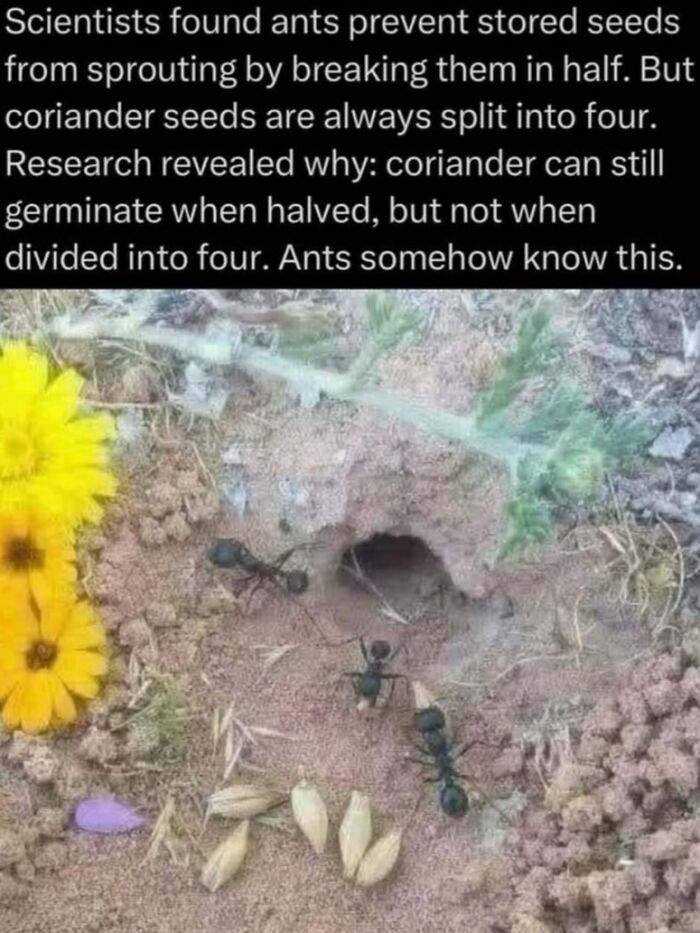
Image source: explainingthewild
#30
These brutal-looking spiked collars are a vital piece of ancient “wearable tech” for livestock guardian dogs, designed specifically to protect them from predator attacks. Wolves and other large predators instinctively target the throat to deliver a lethal strike, but these metal spikes create a literal “no-go zone” around the dog’s most vulnerable arteries. This simple but effective engineering turns a guardian dog into a walking fortress, allowing it to survive high-stakes confrontations while defending the flock from harm.
Shifting from modern protection to prehistoric wonders, scientists have created “Fleshy,” a scientifically accurate life model of Sue, the largest and most complete T. rex fossil ever found. This model depicts the apex predator as she may have actually looked alive, featuring dark eyes, brown skin, and visible scars that tell the story of a long, battle-worn life. Based on a fossil that is about 90% complete, this recreation moves past the bare skeletons we usually see, providing a grounded look at the sheer scale and biological reality of the most famous dinosaur in history
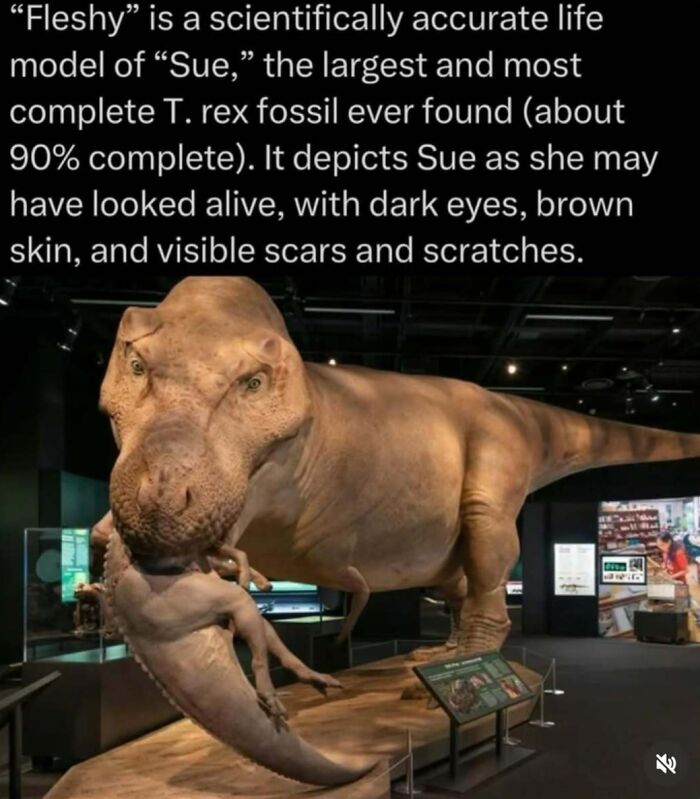
Image source: explainingthewild
#31
Beavers are often called “nature’s engineers,” but their impact goes far beyond just building dams. By creating complex networks of ponds and canals, these rodents fundamentally change the hydrology of the landscape, slowing down rushing water and forcing it to soak into the soil. This process creates massive, lush wetlands that stay hydrated even during intense droughts, acting as a biological sponge that keeps the surrounding vegetation green and vibrant.
The most incredible result of this engineering is their ability to stop the spread of massive forest fires. These beaver-created wetlands are three times more resistant to wildfires than areas without them, serving as natural firebreaks that protect entire ecosystems from being leveled. When the smoke clears, the “beaver patches” are often the only green spaces left standing, providing a vital sanctuary for other wildlife to survive and recover.
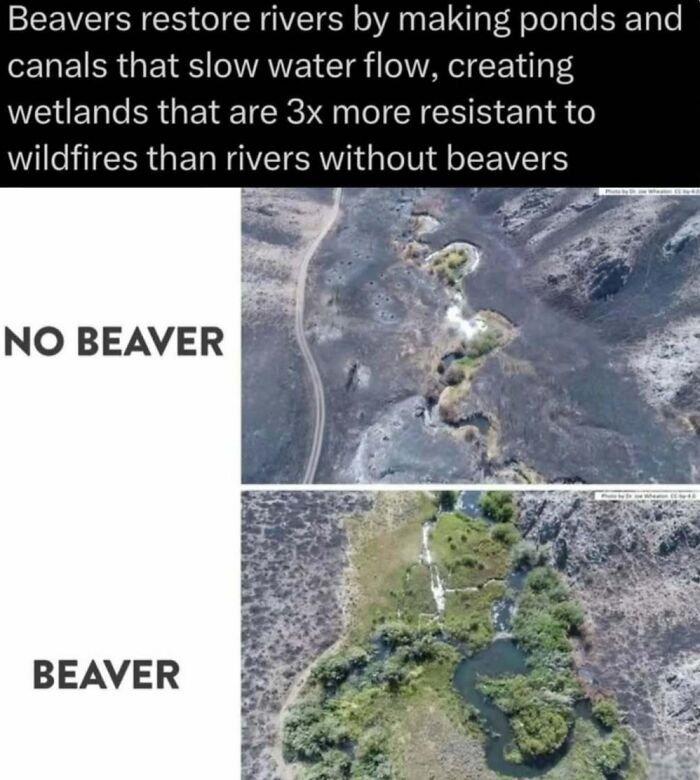
Image source: explainingthewild
#32
While many apex predators view unrelated young as rivals, wolves exhibit a surprisingly high degree of social altruism through the adoption of orphaned pups. In wolf society, the pack operates as a tight-knit family unit where the “alpha” pair leads, but all members share the responsibility of pup-rearing. When a pack loses its leaders or encounters an orphan from a neighboring group, the remaining adults often step in to provide food and protection, ensuring the pup’s survival rather than abandoning it.
This behavior is rooted in the evolutionary drive to maintain pack strength and genetic diversity. By integrating orphans, the pack increases its numbers, which is vital for successful large-game hunting and territorial defense. Unlike the competitive infanticide sometimes seen in lion prides during leadership turnovers, the wolf’s communal “babysitting” approach highlights a sophisticated emotional intelligence. It proves that for wolves, the survival of the collective group often outweighs the individual’s desire to prioritize only their own direct offspring.
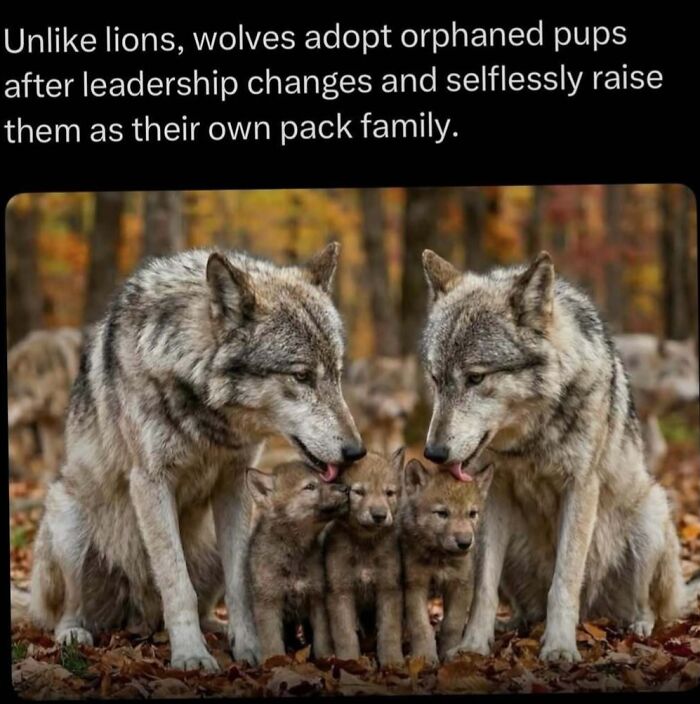
Image source: explainingthewild
#33
Deep in the rainforests of Central America lives Chrysina limbata, a beetle that looks more like a piece of polished jewelry than a living insect. This incredible creature possesses a solid silver, mirror-like exoskeleton that can reflect up to 97% of incoming light. While it looks flashy to us, this metallic shine is actually a brilliant survival strategy; in the humid wild, the beetle’s reflective surface mimics a glistening drop of water or a gap in the foliage, perfectly camouflaging it from hungry predators.
The science behind this “living mirror” is found in the microscopic layers of its shell. These layers are precisely structured to reflect light at different wavelengths, creating a metallic luster without using any actual metal. Because they are so rare and beautiful, these beetles have become highly sought after by collectors, making their preservation in the tropical cloud forests more important than ever. It is a stunning example of how nature uses complex physics to turn a simple insect into a master of optical illusion.
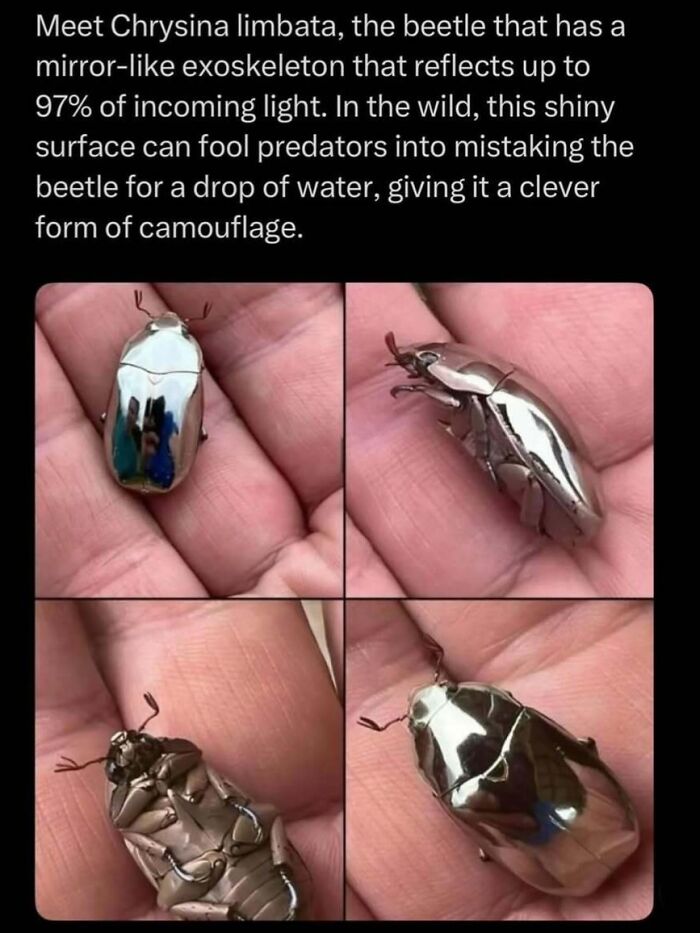
Image source: explainingthewild
#34
In 2016, an octopus named Inky pulled off one of the most audacious “prison breaks” in history at the National Aquarium of New Zealand. After a maintenance worker left a tiny gap in his tank lid, the inquisitive cephalopod squeezed his rugby-ball-sized body through the opening and dropped to the floor. Following a trail of water, aquarium staff discovered that Inky had crawled eight feet across the room to a 150mm-wide floor drain, which led directly to a 50-meter pipe emptying into the Pacific Ocean.
This incredible escape highlights the problem-solving skills and unique physiology that make octopuses the ultimate “Houdinis” of the sea. Because they have no bones, an octopus can fit through any opening as long as it is large enough for their hard, parrot-like beak to pass through. Inky’s journey back to the wild remains a legendary example of how high intelligence and a drive for exploration can overcome even the most secure human environments.
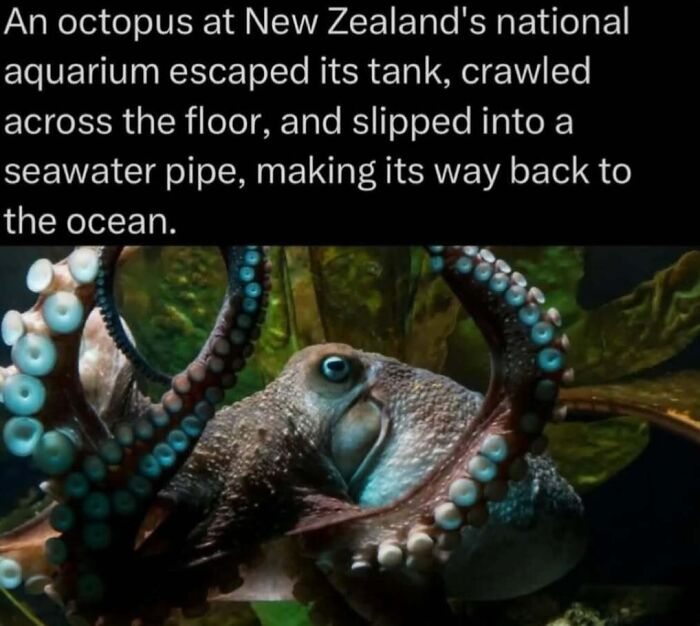
Image source: explainingthewild
#35
While snails don’t have ears to “hear” music the way we do, recent studies have shown they can actually thrive when exposed to specific sound vibrations. Researchers found that snails exposed to meditative music at a consistent frequency (around 260–280 Hz) showed a significant boost in their cognitive abilities and maze-solving speeds. Unlike humans who process melody, snails perceive these frequencies as cellular vibrations, which can calm their nervous systems and even improve their short-term memory.
Interestingly, not all music has a positive effect; while “calm” vibrations help them thrive, loud rock music with varying, aggressive frequencies can actually hinder their learning and cause stress. Some specialized snail farms in Italy have even started playing classical music by Mozart and Beethoven to keep their snails in a state of “tranquility and harmony,” which reportedly leads to healthier growth. It is a fascinating example of how even the simplest creatures on Earth are deeply influenced by the invisible physics of sound!

Image source: explainingthewild
#36
The Sailfish is widely considered the fastest sprinter in the ocean, reaching incredible speeds of over 110km/h. To put that into perspective, that is faster than most speed limits on our highways.
Their secret lies in their incredible streamlined body and a massive dorsal fin, or “sail,” which they can fold down to reduce drag while swimming at top speeds. When they hunt, they raise the sail to make sharp, precise turns, acting like a specialized rudder to outmaneuver their prey.
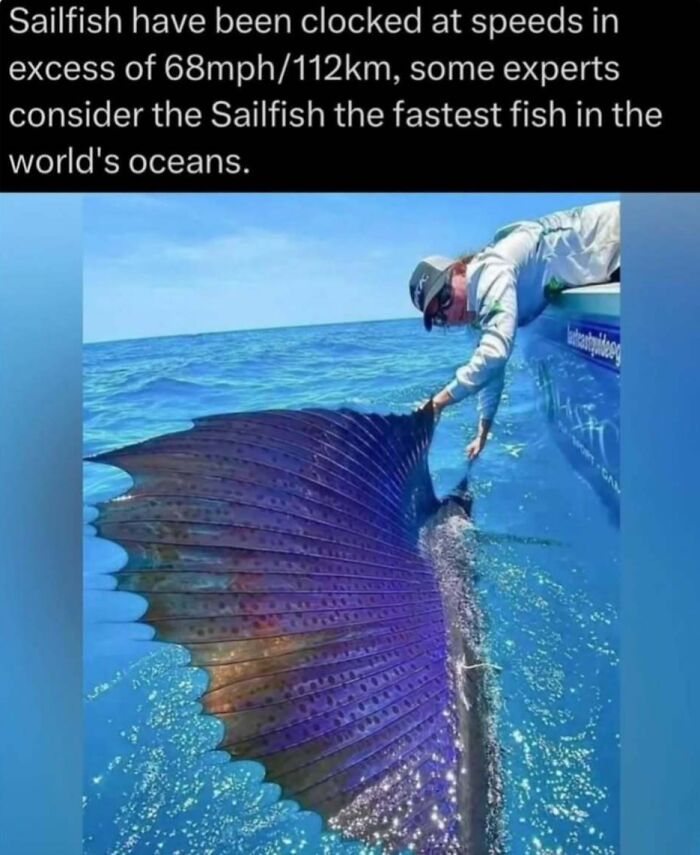
Image source: explainingthewild
#37
The Ocean Sunfish, or Mola mola, undergoes one of the most extreme growth spurts in the entire animal kingdom. When these giants hatch, they are no larger than a tiny grain of sand, measuring roughly two millimeters in length. To reach their adult size of over ten feet and five thousand pounds, they must increase their birth weight by an incredible sixty million times. If a human baby grew at this same relative rate, it would eventually weigh as much as six Titanic ships.
This rapid transformation is fueled by a specialized diet of jellyfish and small fish, allowing the Sunfish to become the heaviest bony fish on the planet. This staggering biological scaling defies almost everything we see in other vertebrates, as the tiny larvae must survive countless predators before reaching their massive, armored adult form. It is a brilliant example of nature’s ability to turn a microscopic speck into a literal ocean titan through sheer, persistent consumption.
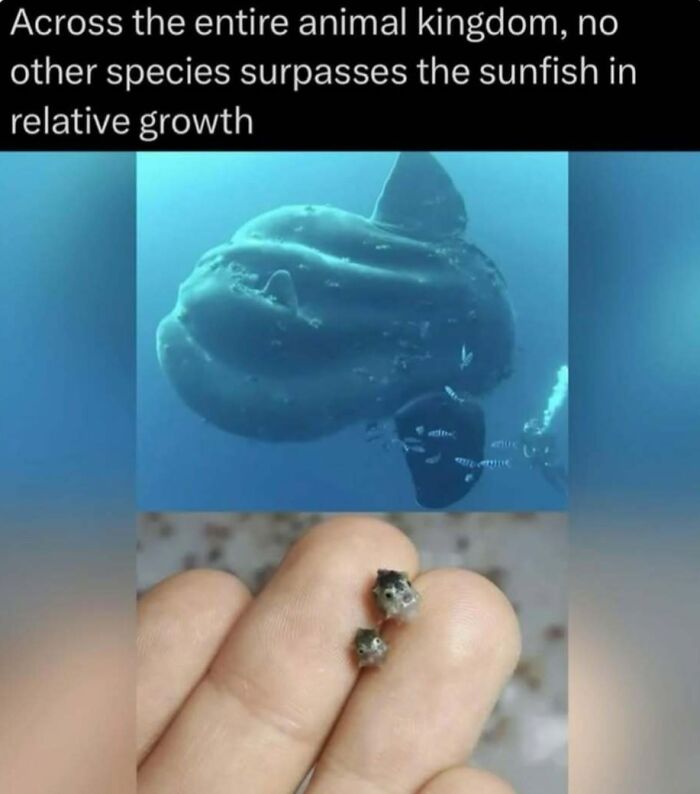
Image source: explainingthewild
#38
If you think this looks like a living stuffed animal, you aren’t alone. Meet the Valais Blacknose, a rare breed of sheep native to the freezing, rugged mountains of Switzerland.
They are universally dubbed the cutest sheep in the world. Their distinct jet-black faces, ears, and knees contrast beautifully with their ultra-fluffy white fleece.
But that adorable appearance hides incredible toughness. They were specifically bred centuries ago to survive harsh Alpine winters and easily graze on extremely steep, rocky slopes. Their thick, coarse wool provides the ultimate natural insulation against sub-zero temperatures.It is a beautiful example of how an animal can perfectly adapt to a brutal environment while maintaining a completely unique look.
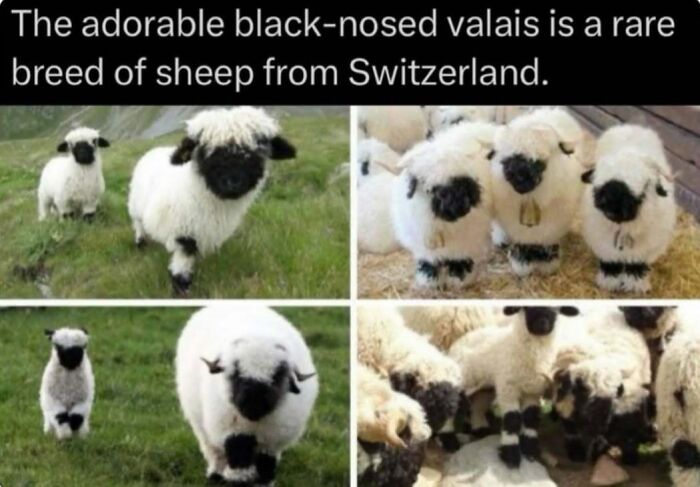
Image source: explainingthewild
#39
If you want to see pure equine power, look no further than the mighty Ardennes horse. Dating all the way back to ancient Rome, the Ardennes is one of the oldest breeds of draft horses in existence.
These magnificent giants were bred specifically for heavy, grueling labor. Thanks to their incredibly heavy bones and uniquely thick, muscular legs, they were the absolute perfect breed for demanding farm and transport work.
To put their sheer size into perspective, a fully grown Ardennes horse can easily weigh over 2,000 pounds. Despite looking like absolute tanks with their heavily feathered legs and muscular builds, they are famous for being incredibly docile and gentle. They are truly one of the most magnificent working animals in history!
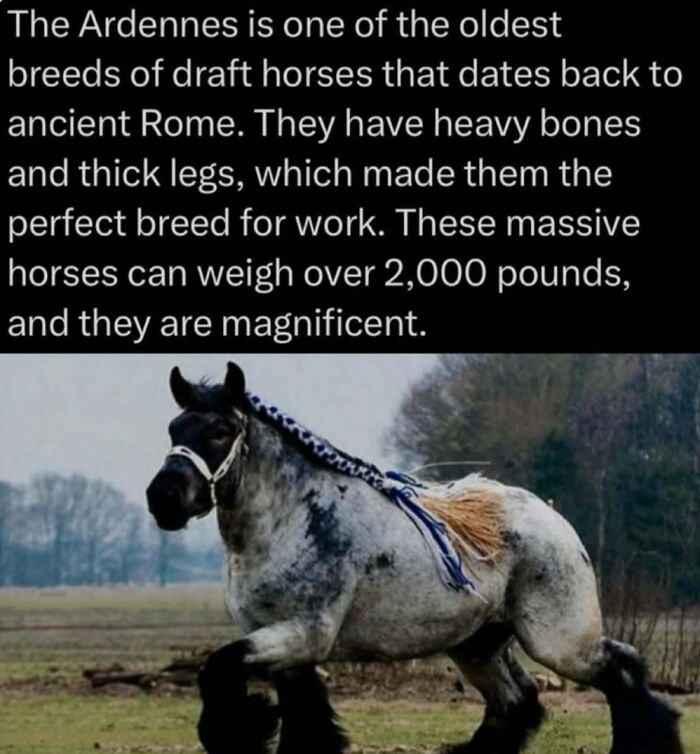
Image source: explainingthewild
#40
If you watch crows closely, you will eventually catch them sneaking up behind a dog, cat, or even a massive eagle to sharply yank its tail.
While it looks like pure mischief, this is actually a highly intelligent survival tactic. Crows pull tails primarily to distract predators and scavengers. By annoying a larger animal until it turns around, they create the perfect opening for another crow to swoop in and steal its food.
Biologists have also noticed them doing it when there is no food around at all. These remarkably smart birds seem to play pranks just for fun, testing the reactions of other animals out of sheer curiosity. It is a brilliant display of avian intellect.
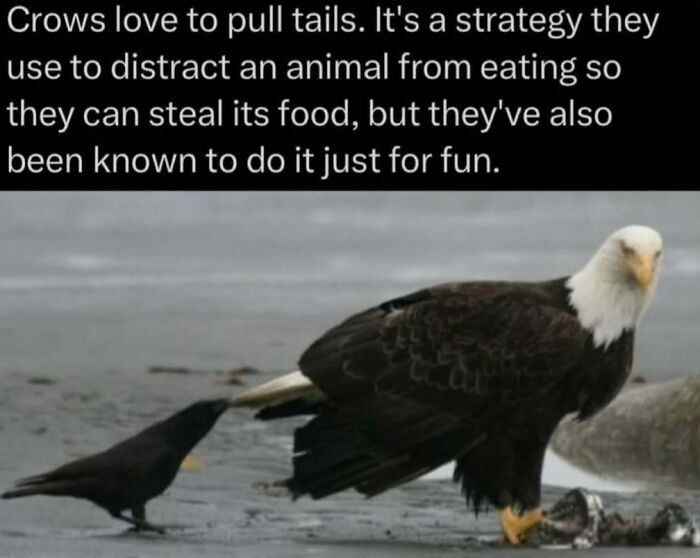
Image source: explainingthewild
#41
If you ever need proof of nature’s resilience, look no further than a famous humpback whale known as “Blade Runner.”In 2001, she suffered a horrific collision with a large ship’s propeller off the coast of Australia. The strike left her with a series of deep, parallel scars slicing down her back and dorsal fin, earning her the sci-fi nickname.
Despite injuries that plunged up to a foot deep into her blubber, Blade Runner miraculously survived the encounter. Even more incredible, she has been spotted multiple times over the decades since, often swimming alongside her newborn calves. Her distinct markings now serve as a powerful visual reminder to mariners to share the ocean safely.
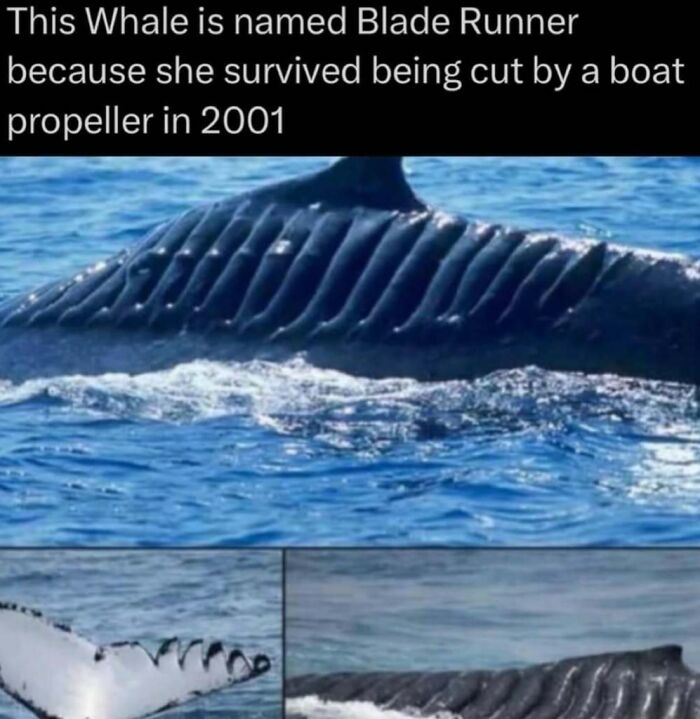
Image source: explainingthewild
#42
Perched high on the windswept moors of Burnley, England, the Singing Ringing Tree is a sculpture that turns the fierce Lancashire gales into haunting music. Standing 3 meters tall, this eerie construction is made of galvanized steel pipes arranged in the shape of a tree bent by the wind.
What makes it truly magical is that it is a giant wind instrument. As the breeze rushes through the pipes of different lengths, it produces a low, discordant choral sound that spans several octaves. It doesn’t play a melody but rather “sings” with the landscape, creating a constantly changing, mournful hum that varies with the weather. It is a perfect fusion of art and nature, standing as a lonely, metallic sentinel that gives a voice to the invisible power of the wind

Image source: explainingthewild
#43
Before they were the fluffy, sugary treats we roast over campfires, marshmallows were actually a medicinal plant growing in the wild. The Althaea officinalis, or “marsh mallow,” is a real herb found in damp wetlands, and its roots contain a thick, gooey sap that was used for centuries to soothe sore throats and coughs.
Ancient Egyptians were the first to turn this plant into a confection, mixing the sap with honey and nuts to create a delicacy reserved strictly for royalty and the gods. It wasn’t until modern candy makers replaced the rare plant sap with gelatin that the marshmallow became the mass-produced snack we know today. While the ingredients have changed, the name remains a permanent nod to the humble riverside flower that started it all.
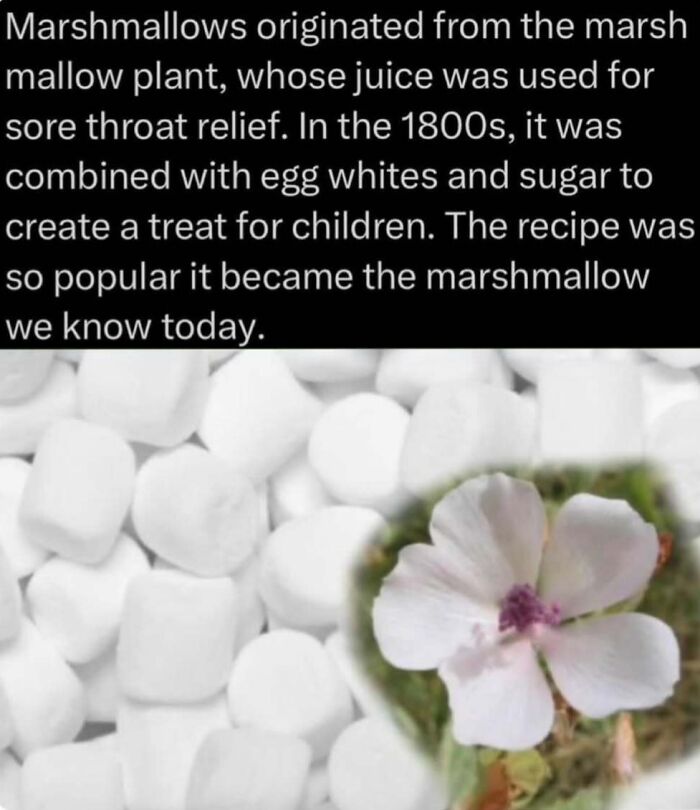
Image source: explainingthewild
#44
While dragon fruits are common in grocery stores, many people are surprised to learn that they don’t grow on traditional trees with woody trunks. These vibrant fruits actually come from a type of climbing cactus known as Hylocereus. In the wild, these cacti use aerial roots to cling to trees or rocks, but in cultivation, they are grown on sturdy T-shaped pillars that allow their long, succulent branches to spill over like a fountain.
Because they are members of the cactus family, these plants are incredibly resilient and thrive in tropical and subtropical environments. The plant produces large, fragrant flowers that bloom only at night—often called “moonflowers”—which must be pollinated by bats or moths to produce the fruit. Once the flowers fade, the scaly, neon-pink fruits begin to develop, creating a landscape that looks like it belongs in a sci-fi movie. Seeing a commercial farm in full bloom is a striking reminder of just how diverse and unusual the plant kingdom can be.
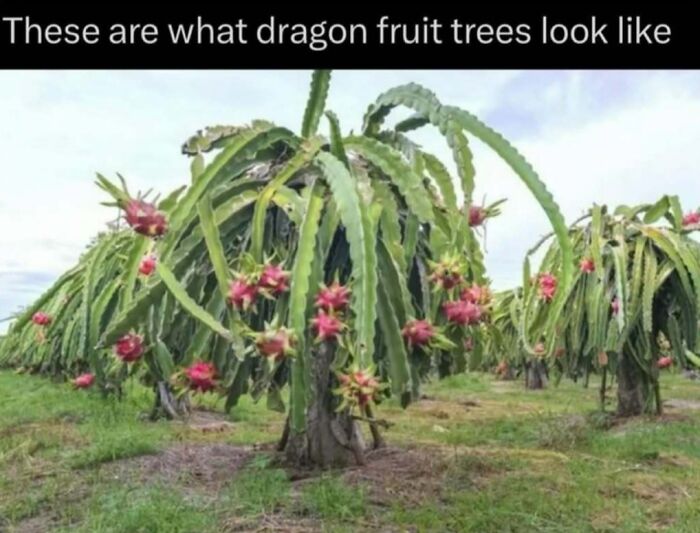
Image source: explainingthewild
#45
In 1965, a Ukrainian farmer in the village of Mezhyrich was digging a new cellar when he stumbled upon a prehistoric architectural marvel: a hut built entirely from mammoth bones. Dating back approximately 15,000 years, this structure was one of four found in the area, meticulously crafted using the mandibles, tusks, and skulls of nearly 100 mammoths. These Paleolithic dwellings represent some of the oldest examples of complex shelters, proving that early humans were capable of sophisticated structural engineering even in a landscape devoid of timber or stone.
The sheer organization of the Mezhyrich hut is what fascinates archaeologists; the bones weren’t just piled up, but were arranged in intentional, geometric patterns to provide maximum stability and insulation against the harsh Ice Age climate. Large mammoth skulls formed the foundation, while a framework of tusks supported a roof likely covered in animal hides. This discovery fundamentally changed our understanding of hunter-gatherer societies, showing that they were far more stationary and community-oriented than previously thought, building permanent “bone palaces” to master the freezing Eurasian steppes.
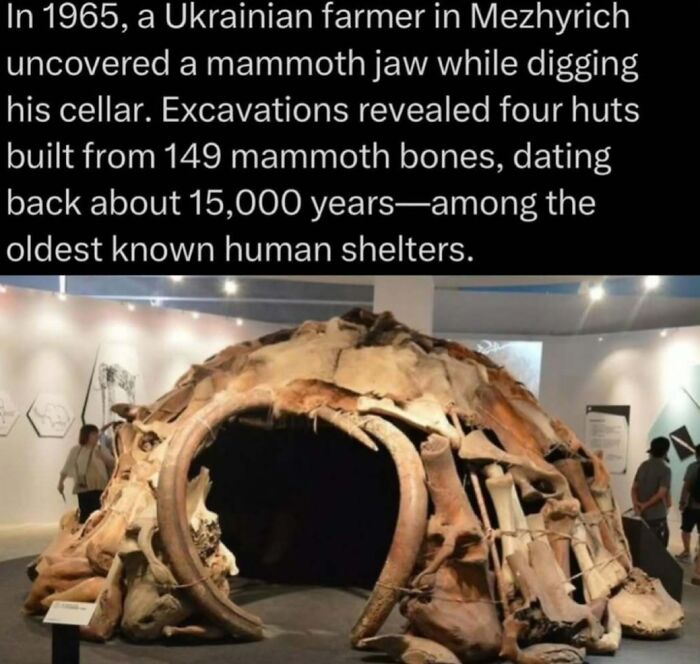
Image source: explainingthewild
#46
This isn’t just camouflage,it’s incredible architecture! The bagworm moth caterpillar (from the Psychidae family) spends its larval stage building a protective “bag” or case by weaving silk and attaching bits of twigs, leaves, or other plant debris in precise patterns.
It drags this portable home along as it feeds, expanding it as it grows, and eventually pupates inside for metamorphosis. Males emerge as winged moths to find mates, while females often stay wingless and remain in the bag.
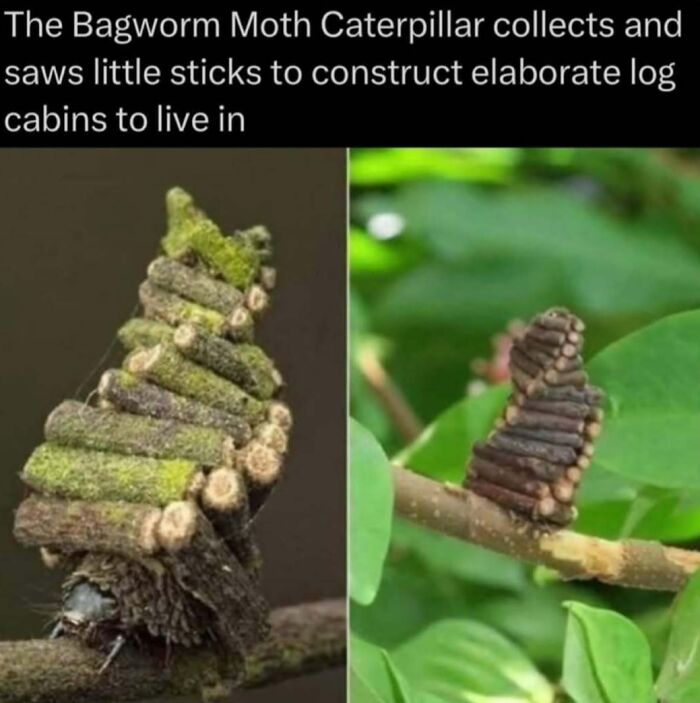
Image source: explainingthewild
#47
While many predators hunt purely for survival, tigers possess a sophisticated memory and emotional intelligence that allows them to hold grudges. They are widely considered one of the most vengeful animals on Earth, capable of tracking a specific human or animal for miles if they feel threatened or wronged. Unlike most wildlife that flees after a conflict, a tiger may wait days or even weeks to strike back at a specific individual who injured them or intruded upon their territory.
The most famous instance of this occurred in 1997, when a poacher wounded a Siberian tiger and stole a portion of its kill. The tiger didn’t just move on; it systematically tracked the man’s scent back to his remote cabin, waited for his return, and eventually ambushed him. This level of calculated retaliation proves that tigers don’t just act on instinct—they possess a complex cognitive map and a sense of “justice” that makes them one of the most formidable and respected apex predators in the natural world.
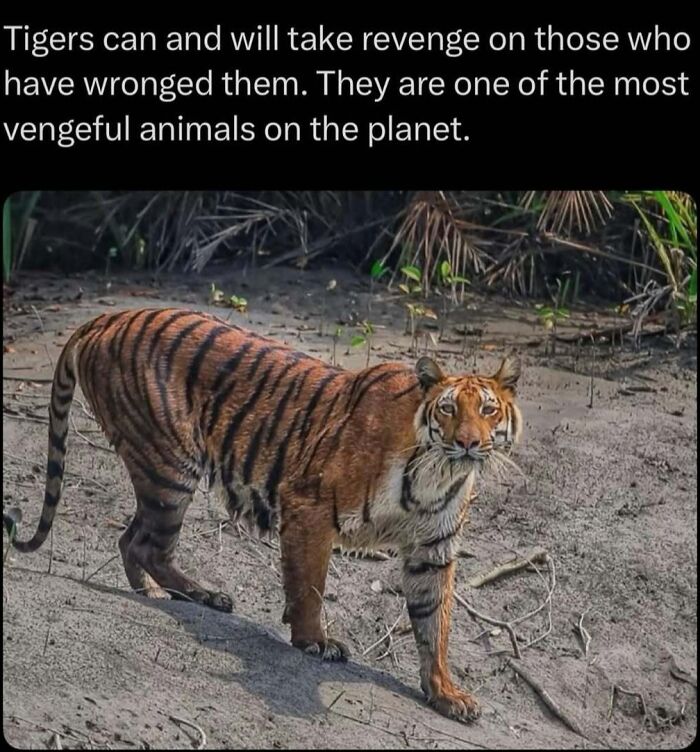
Image source: explainingthewild
#48
Conservation often feels like a task for giant organizations, but Tim Wong, a biologist in San Francisco, proved that a single backyard can change the fate of a species. For years, the California Pipevine Swallowtail butterfly had all but disappeared from the city due to urban development destroying its only food source: the rare California Pipevine plant. Wong decided to take action by building a specialized screen enclosure in his backyard, filling it with the rare flora he painstakingly cultivated from clippings.
Starting with just 20 caterpillars sourced from outside the city, Wong meticulously cared for the population as they transformed into stunning iridescent blue butterflies. Since 2012, his DIY sanctuary has been so successful that he has been able to transport thousands of caterpillars back to the San Francisco Botanical Garden to repopulate their ancestral home. It is a breathtaking reminder that stewardship starts at home and that one person’s dedication can weave a lost piece of nature back into the urban fabric.
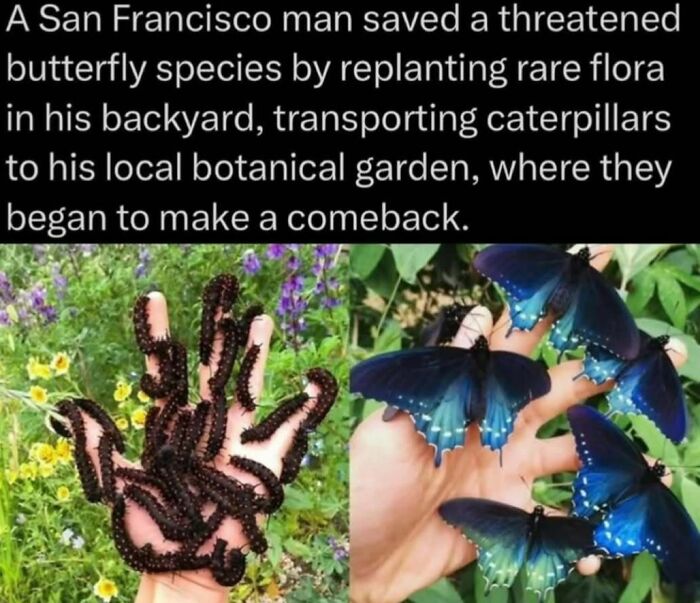
Image source: explainingthewild
#49
Nikola Tesla is celebrated as one of history’s greatest inventors, but his most profound personal connection wasn’t with a human, but with a white pigeon. Though he never married, Tesla claimed to have fallen deeply in love with a specific bird that visited him daily at his hotel window. He famously told friends that he loved that pigeon as a man loves a woman, stating that as long as he had her, there was a true purpose to his life.
The bond was so intense that Tesla believed the pigeon could communicate with him through light. When the bird eventually died, Tesla was devastated, confessing to his closest associates that he felt his life’s work was finally over. This unusual relationship offers a rare, poignant glimpse into the mind of a genius who found his greatest comfort and inspiration in the simple presence of a creature from the natural world
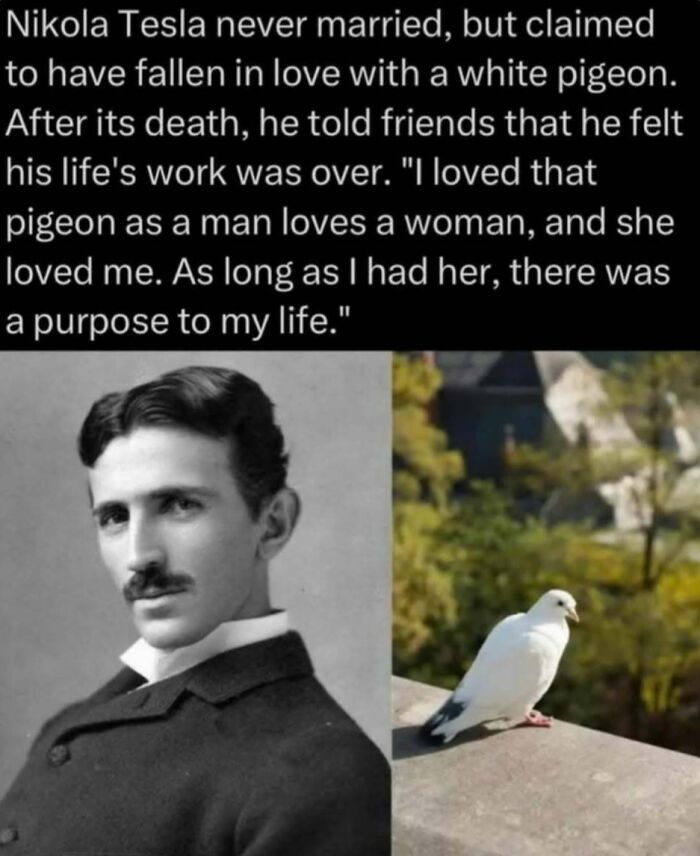
Image source: explainingthewild
#50
In 2018, the world watched in heartbreak as a Southern Resident killer whale named Tahlequah (known to researchers as J35) began a “tour of grief” that lasted 17 days. After her newborn calf survived for only half an hour, she refused to let it sink, carrying the body on her rostrum for over 1,000 miles across the Salish Sea. This extraordinary display of mourning highlighted the deep emotional intelligence and strong social bonds within orca pods, capturing the attention of millions and sparking urgent conversations about the survival of her endangered community.
Despite this tragic loss, nature found a way to move forward. Drone footage taken in 2020 revealed that Tahlequah had become pregnant again, a hopeful sign for a population struggling with food scarcity and environmental pressure. She eventually gave birth to a healthy male calf, Phoenix, signaling a resilient new chapter for one of the ocean’s most famous mothers. It is a powerful reminder that even in the face of profound loss, the drive for life and the continuation of the species remains an unstoppable force of nature.
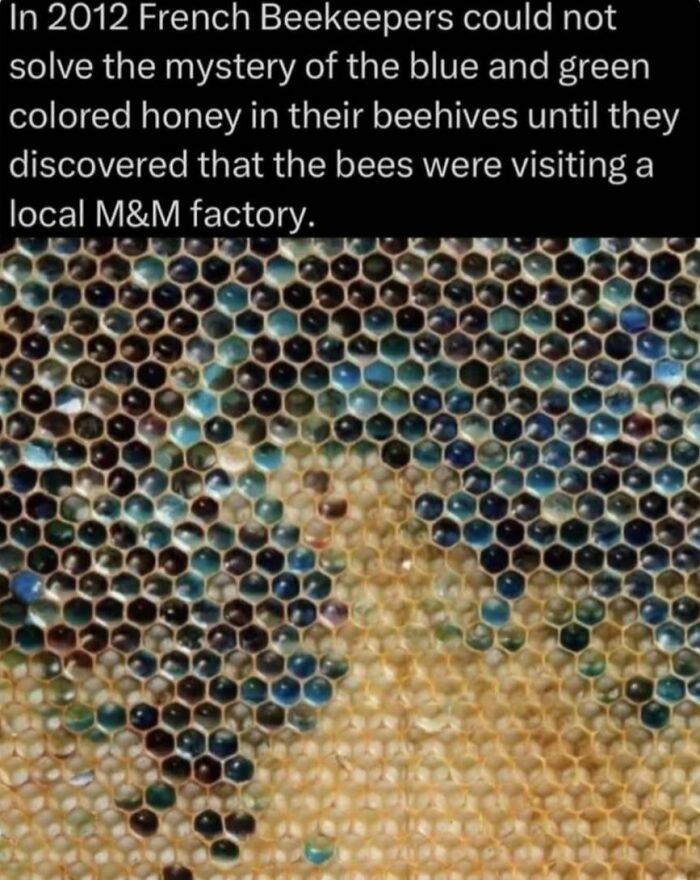
Image source: explainingthewild
#51
Our understanding of ancient life changed forever when scientists discovered a 99-million-year-old dinosaur tail perfectly preserved in amber. Unlike the scaly depictions we often see in old movies, this incredible find confirms that many dinosaurs were actually covered in delicate, bird-like feathers. The preservation is so detailed that researchers can even see the individual barbs and colors of the plumage, proving that feathers evolved for display or temperature regulation long before they were ever used for flight.
This feathered tail belonged to a small coelurosaur, a relative of the T-rex, and was found in a market in Myanmar. By peering through the golden resin, we can see bones, soft tissue, and even dried blood, offering a rare “3D” look at a creature that has been extinct for millions of years. It is a breathtaking biological time capsule that bridges the gap between the giants of the past and the birds we see in our backyards today!
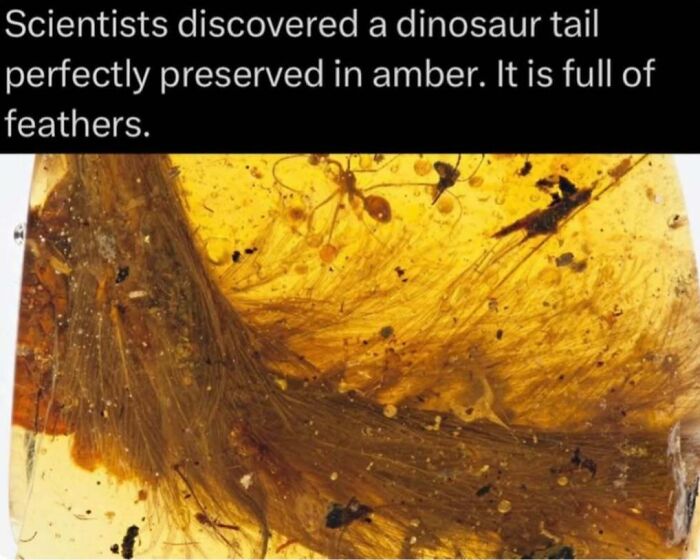
Image source: explainingthewild
#52
While most marine animals avoid the toxic pufferfish at all costs, dolphins have discovered a surprisingly rebellious way to interact with them. These highly intelligent mammals have been observed intentionally nipping at pufferfish to trigger a natural defense mechanism. When the pufferfish “puffs up” in distress, it releases a potent toxin called tetrodotoxin, which scientists believe the dolphins use in small doses for a playful, trance-like experience.
Rather than eating the fish, the dolphins carefully pass the inflated pufferfish around to their pod members, almost like a coordinated social game. This behavior suggests that dolphins engage in complex, recreational activities that go far beyond basic survival and hunting. It is a fascinating look at the intricate social lives and the high-level cognitive abilities of these aquatic masterminds!
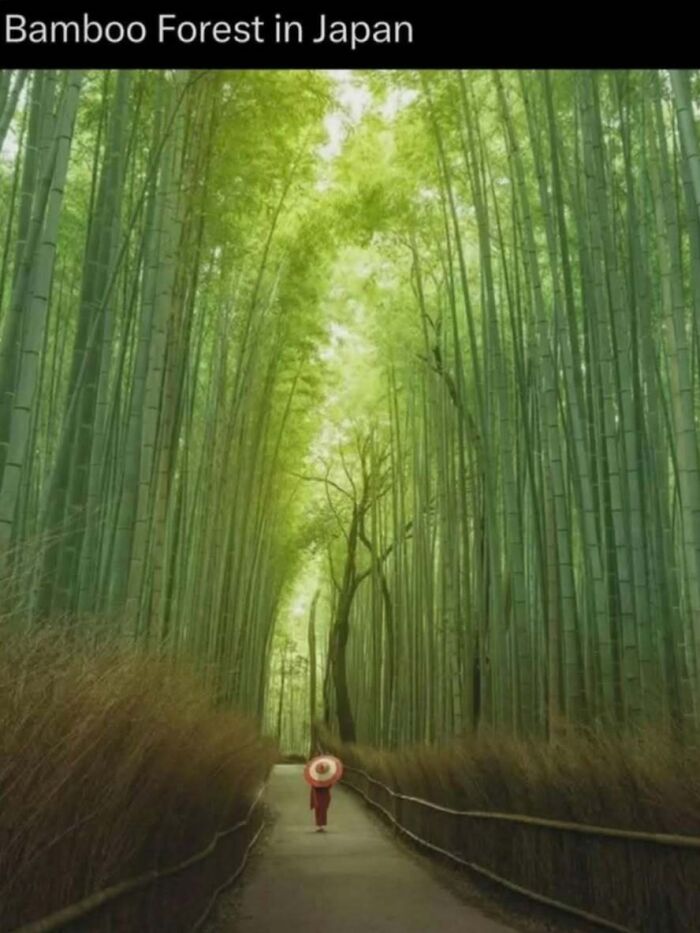
Image source: explainingthewild
#53
Believe it or not, rainbow swamps are a real, naturally occurring phenomenon! This ethereal display isn’t caused by pollution, but by the decomposition of cypress leaves and other organic matter on the forest floor. As these plants break down, they release natural oils that rise to the surface of the stagnant swamp water.
When sunlight hits this thin oil film at just the right angle, it creates an iridescent, rainbow-like effect across the water’s surface. The calmer and more undisturbed the water is, the more vibrant and solid the rainbow colors appear. It is a stunning example of how even the most stagnant environments can produce moments of incredible, fleeting beauty.
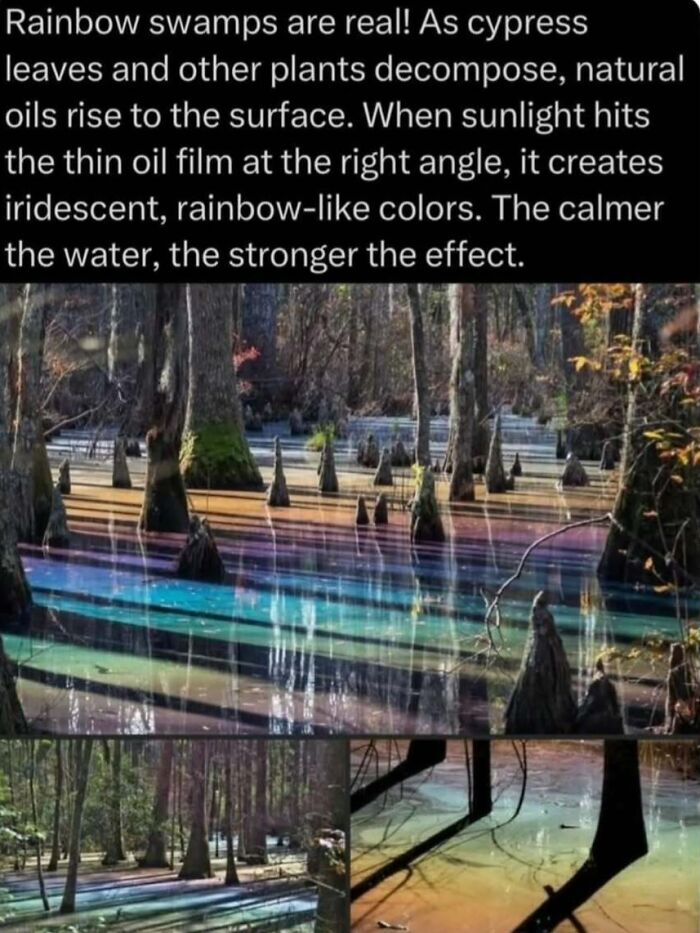
Image source: explainingthewild
#54
Modern concrete often begins to crumble within decades, yet structures like the Roman Pantheon have remained standing for over two thousand years. For centuries, the secret behind this incredible durability was a mystery, but scientists have finally discovered that ancient Roman concrete possesses a unique “self-healing” property.
The secret lies in small, white mineral chunks called “lime clasts” found throughout the mixture. When a crack forms and water seeps into the concrete, it reacts with these lime clasts to create a calcium-rich solution. This solution recrystallizes as calcium carbonate, effectively “plugging” the crack and repairing the structure before it can spread. It is a brilliant example of ancient chemical engineering that allowed Roman docks and temples to survive centuries of exposure to the elements!

Image source: explainingthewild
#55
Most people associate sharks with aggressive, apex predator behavior, but the Pyjama Shark has a much more “feline” approach to self-defense. When this small, striped shark feels threatened or uneasy, it has the unusual habit of curling its body into a tight ball, much like a domestic cat. By wrapping its tail over its head, the shark protects its most vulnerable areas from potential predators in the rocky reefs of South Africa.
This behavior is a fascinating example of how smaller marine species evolve unique survival tactics to navigate dangerous environments. Known also as the striped catshark, its namesake “pyjama” stripes act as perfect camouflage among the shadows of kelp forests, but when that fails, it relies on this compact ball shape to appear less like a meal and more like an unappealing, armored object. Nature never ceases to find creative ways for the underdogs of the ocean to stay safe!
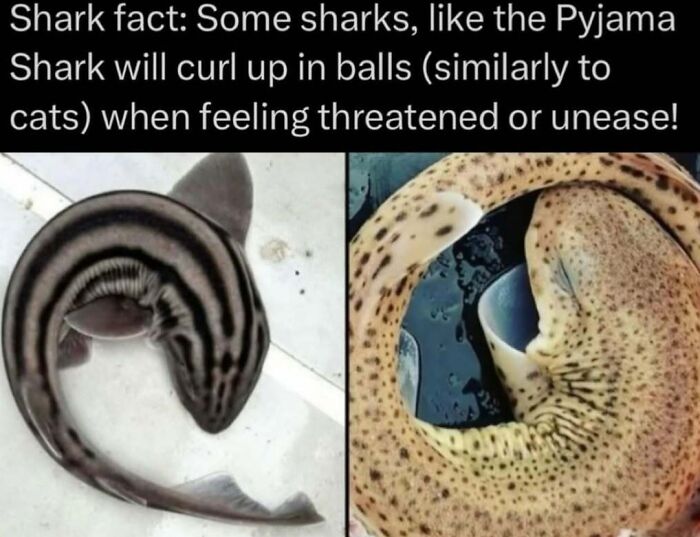
Image source: explainingthewild
#56
Most people have an instant “flight or fight” response when they see a cockroach, but the sky-blue Neotropical cockroach (a stunning variant of the Panchlora genus) is here to change your mind. While the common household pests we love to hate are usually oily brown and hide in dark corners, these vibrant insects live high in the forest canopies of Central and South America. They are famous among entomologists for their incredible “cyan” or sky-blue coloration, which is actually a rare biological twist—their bodies are naturally green to blend in with leaves, but a lack of yellow pigment can turn them this brilliant, ethereal blue.
Unlike their city-dwelling cousins, these “green banana roaches” are not pests at all. They are strictly outdoor creatures that spend their lives feeding on plant matter and fermenting fruit, playing a vital role as recyclers in the rainforest ecosystem. They are even attracted to light and are often kept as pets by insect enthusiasts because of their docile nature and beautiful, jewel-like appearance. It is a powerful reminder that out of the 4,500+ species of cockroaches on Earth, less than 1% are actually pests—the rest are just colorful, essential members of the natural world!
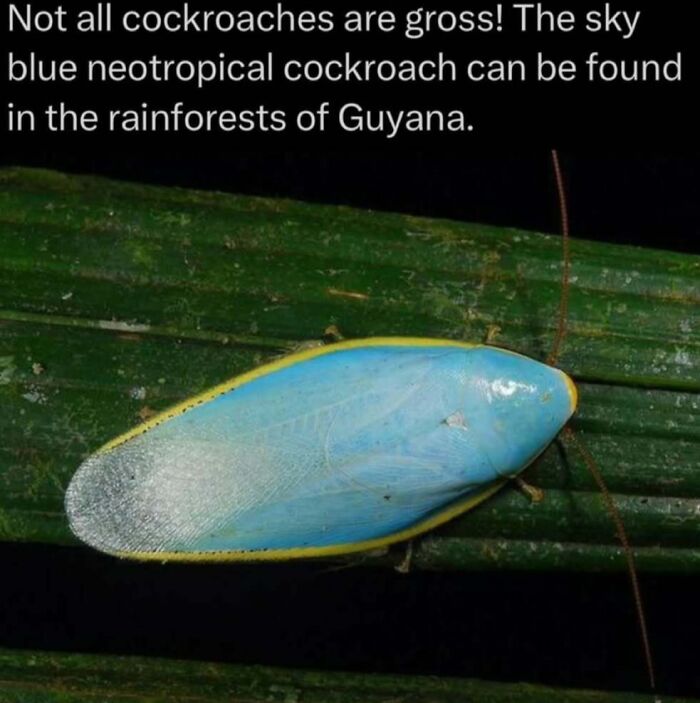
Image source: explainingthewild
#57
The 17th-century Mughal Empire created the most formidable “tanks” of the ancient world by outfitting war elephants in massive suits of mail and plate armor. This staggering engineering marvel, with the only near-complete surviving example now housed in the Royal Armouries, was brought from India in 1801. The suit is composed of 5,840 individual steel plates held together by thousands of chainmail links, weighing approximately 118kg today—though it likely topped 150kg when every panel was fully intact.
This armor wasn’t just for show; it was a high-tech defense system designed to protect the elephant’s vital organs while maintaining its mobility on the battlefield. The suit even included a “shaffron” to shield the trunk and head, often paired with massive, crescent-shaped tusk swords that turned the animal into a living siege engine. By combining biological power with advanced metallurgy, these armored giants became a psychological and physical force capable of breaking through infantry lines that traditional cavalry could never touch.
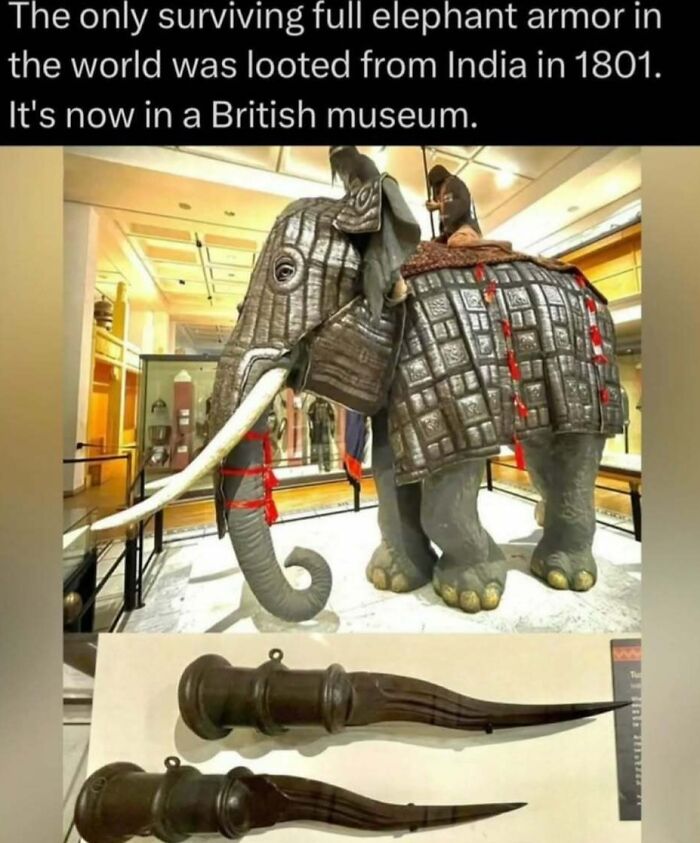
Image source: explainingthewild
#58
For years, we believed the mantis shrimp lived in a psychedelic world of unimaginable color. While humans have three types of color receptors, these incredible crustaceans have up to sixteen.Naturally, scientists assumed they saw a rainbow we could not even comprehend. But recent studies revealed a shocking plot twist. Their color vision is actually worse than ours! They struggle to tell similar shades apart.
So why all the extra receptors? It comes down to speed.Instead of sending signals to a complex brain to blend colors together like we do, their eyes act like a barcode scanner. Each receptor just fires for one specific wavelength. This skips brain processing entirely, letting them react and strike prey instantly.
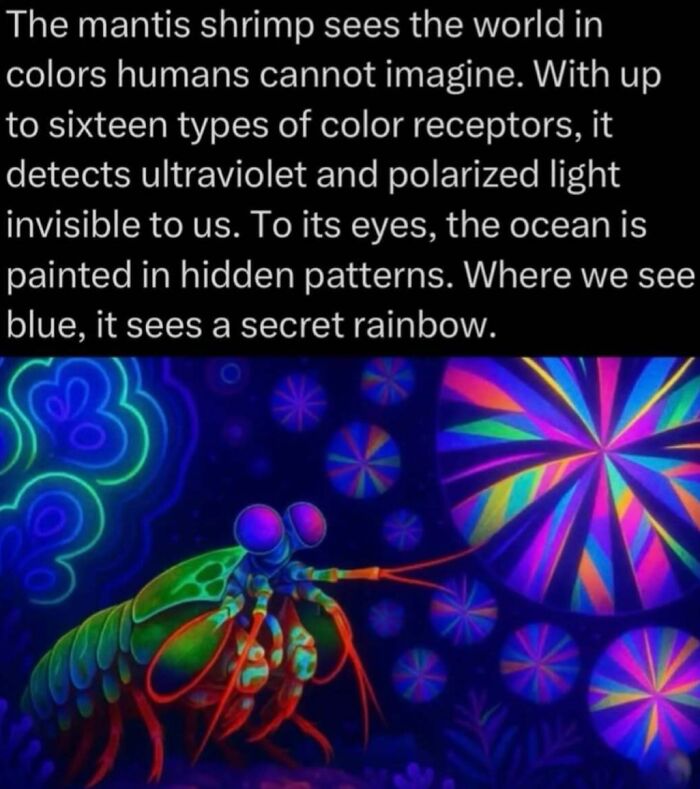
Image source: explainingthewild
#59
For decades, the official count was exactly seven thousand one hundred and seven, until advanced technology revealed we were missing quite a few.
Using high-resolution mapping radar that penetrates dense clouds, researchers recently discovered over five hundred previously unknown landmasses. This incredible scan of the earth brought the official count up to seven thousand six hundred and forty-one islands.
It is a beautiful reminder that our planet is constantly shifting, and even massive archipelagos still hold geographical secrets waiting to be uncovered by modern science.

Image source: explainingthewild
 Follow Us