Drama with the in-laws has been played out on screen so often that it can feel like a tired movie trope or an exaggerated internet statistic. But for many people, those classic stereotypes are a very real, very painful daily reality.
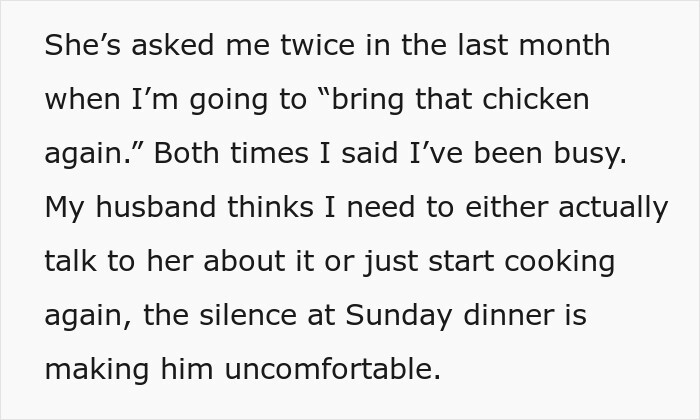
Like this one woman who spent three years bringing homemade meals to her mother-in-law’s weekly Sunday dinners. That ended on a Monday morning when a brutal text message — meant for someone else — landed in her inbox. Since then, she has swapped her roast chicken for a single bottle of wine.
Read the full story shared online to find out what the text said and how it turned Sunday dinners awkward for the whole family.
For three years, a woman regularly cooked and brought homemade dishes to her mother-in-law’s Sunday dinners

Michael T / Unsplash (not the actual photo)

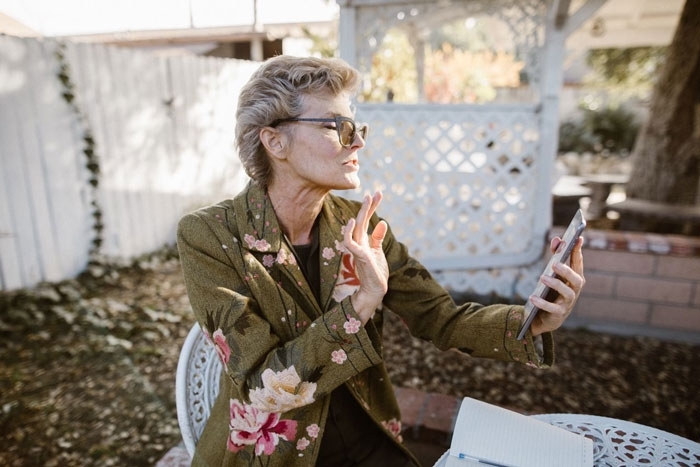
However, one accidental text from her mother-in-law changed everything


Ivan S / Pexels (not the actual photo)


RDNE Stock project / Pexels (not the actual photo)

Despite all the clear benefits of sticking together, in-law relationships are notoriously tricky to navigate
A 2022 US study published in the journal Evolutionary Psychological Science examined how in-laws get along. The researchers found that both men and women report having more conflict with their mothers-in-law (44%) than with their own mothers (39%). On top of that, mothers report far more friction with their daughters-in-law than with their own daughters.
Researchers suggest it happens because of an unconscious clash over genetics and resources. Usually, people naturally prioritize their biological family.
“The conflict often arises from an assumption that each is criticizing or undermining the other woman. But this mutual unease may have less to do with actual attitudes and far more to do with persistent female stereotypes that few of us manage to shake off completely,” says Dr. Terri Apter, a psychologist from Cambridge University.
She noted that the heart of the issue often comes down to an unspoken power struggle over who holds the center of the household: “Both the mother and the wife are struggling to achieve the same position in the family — primary woman. Each tries to establish or protect their status. Each feels threatened by the other.”
Dr. Apter’s research revealed that 60% of women admitted their relationship with their female in-laws caused them long-term stress and unhappiness. Additionally, two-thirds of daughters-in-law felt their husband’s mother showed a jealous, overly protective maternal love toward her son.
Men suffer far less from this specific problem. While 75% of couples reported general in-law troubles, only 15% described mother-in-law and son-in-law relationships as tense.
Forced closeness makes everything harder. When families spend long stretches of time together, they run into a phenomenon known as “hypercopresence.” This intense, claustrophobic pressure often shows up during holiday visits and weekly family dinners.
Melanie Booth-Butterfield, a professor of communication studies at West Virginia University, warns that the fallout from these moments can linger. “Hypercopresence can result in conflicts with relatives, angry words that cannot be taken back, and cold, rude nonverbal behaviors which leave lasting impressions.”
Why the husband’s action (or inaction) can make or break the situation
While society loves to blame overbearing mothers or sensitive wives, the spouse’s reaction usually decides how these fights unfold. A study published in the International Journal of Health Sciences confirmed that the adult child acts as the ultimate gatekeeper.
Conflict almost always worsens when a partner ignores the issue or refuses to stand up for their spouse. But when he steps in as a calm mediator and sets clear boundaries, the family stress drops significantly.
The good news is that modern lifestyle choices are making these dynamics easier to manage. Today, more couples live further away from extended family and build their own independent routines. “If couples can be independent and flexible, not beholden to in-laws and extended families, they can pick and choose when they ask for help, [then] the window of opportunity for conflict is smaller,” says Gretchen Perry, a professor at the University of Canterbury in New Zealand.
At the end of the day, bad blood is not guaranteed. Millions of people have built warm, caring relationships with their in-laws over time. A 2021 survey of American women found that 51% of daughters-in-law feel satisfied or very satisfied with their mother-in-law, while three-quarters of mothers-in-law say the same about their daughter-in-law.
Building these ties takes intentional effort. Families that thrive usually do so because of clear boundaries, honest conversations, and, most importantly, a partner willing to speak up.
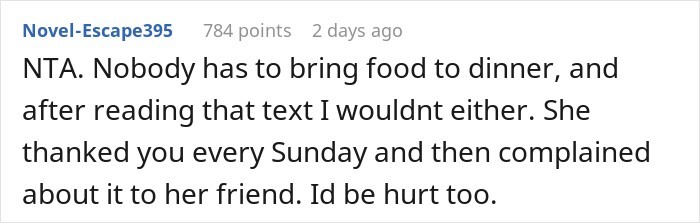
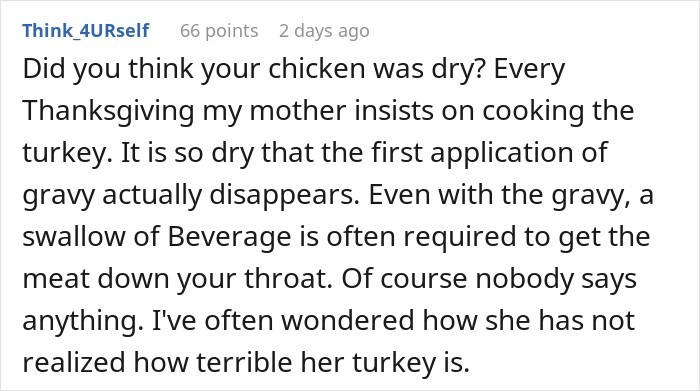
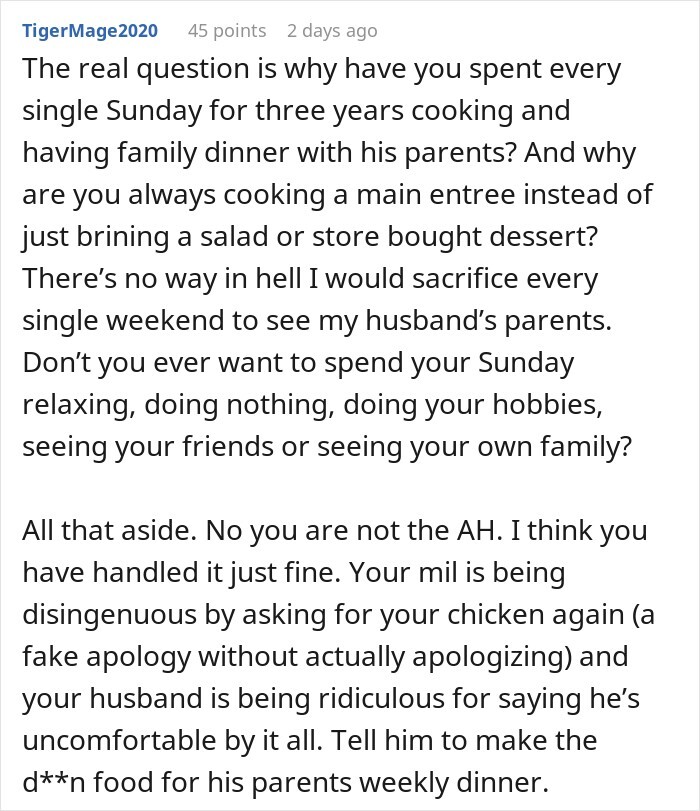
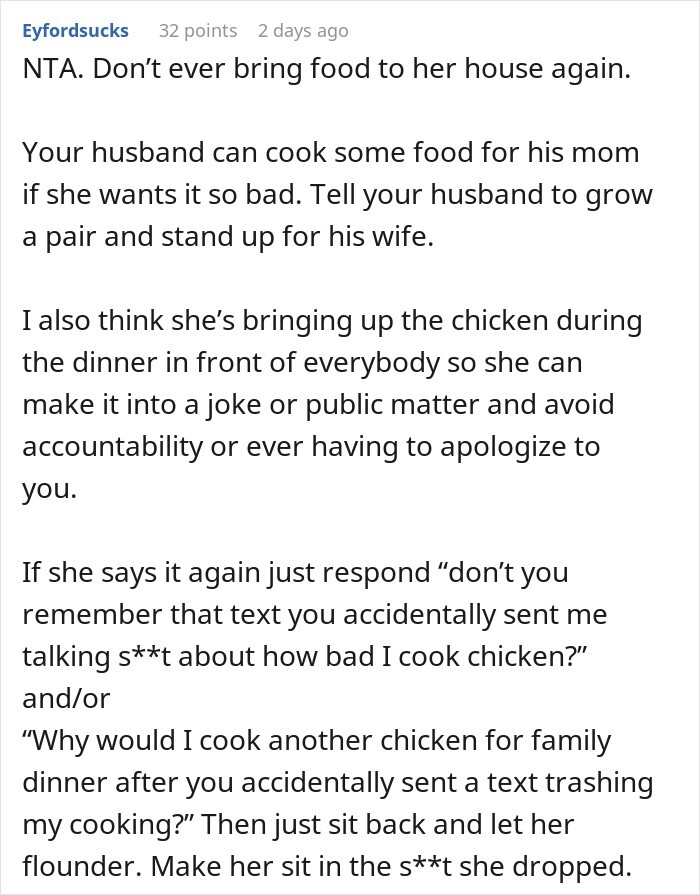
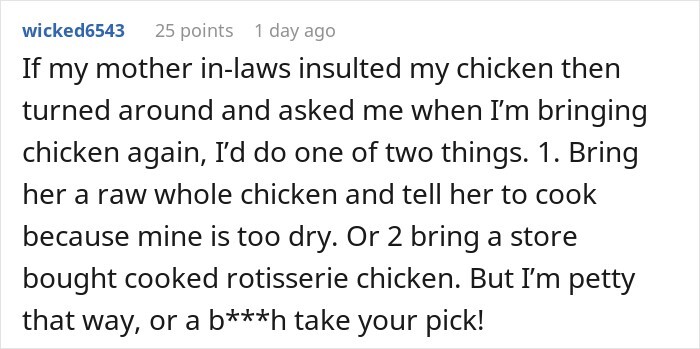
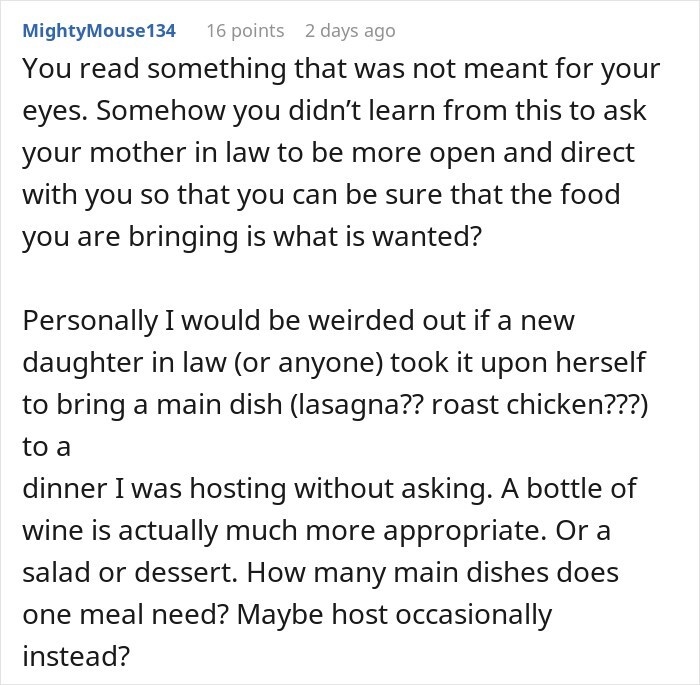
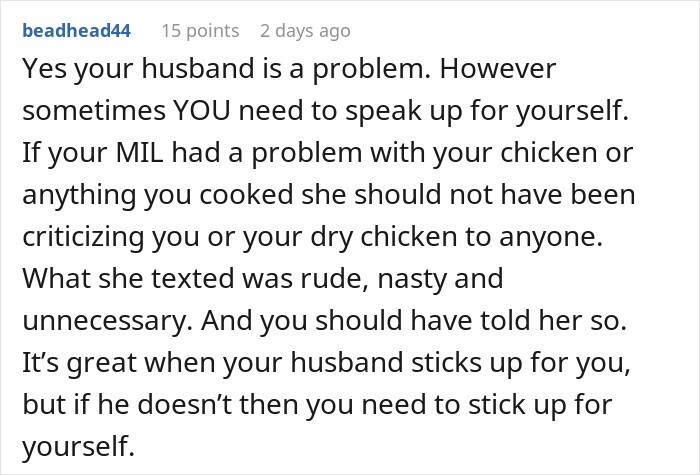
The internet had a lot to say — not only about the MIL, but also about the husband



















 Follow Us