Over the years, I’ve seen money change how people remember favors, measure fairness, and decide who deserves help. More specifically, financial disagreements often expose tensions that may have been quietly building for years. It gets even more complicated when family is involved, and these family members have been keeping score.
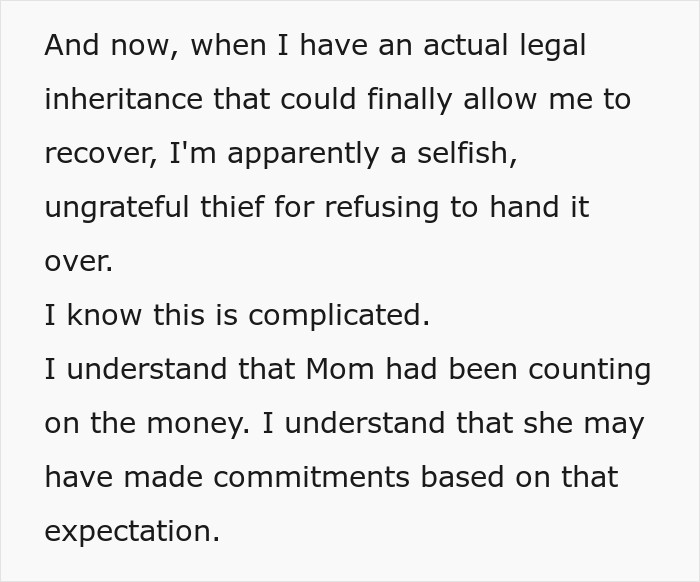
For one 34-year-old attorney, the issue was not simply whether she wanted to share her inheritance. She was trying to recover from a devastating financial crisis and saw the $85,000 her grandparents left her as a chance to finally get back on her feet. Her mother and siblings, however, believed the money should have gone to Mom. Now the tension rose to a head.
When everyone is getting along in the family, it’s easy to believe that loyalty will always come first, but introduce an inheritance, and entitlement can come to the surface

magnific (not the actual photo)

The woman, a 34-year-old attorney, learned that her grandparents had left their apartment to her and her siblings, giving her an $85,000 share










Getty Images (not the actual photo)




pvproductions (not the actual photo)
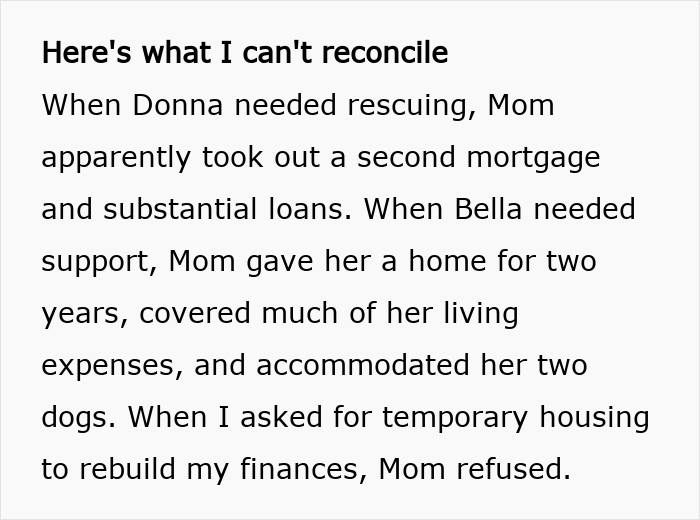
While she was struggling with unemployment, she asked her mother if she could temporarily move into her house, but both her mother and sister refused to accommodate her










Timur Weber (not the actual photo)
After helping arrange the apartment sale for 1.5 years, she discovered that her mother had taken out loans and a second mortgage to financially support their aunt






Los Muertos Crew (not the actual photo)


Andrea Piacquadio (not the actual photo)
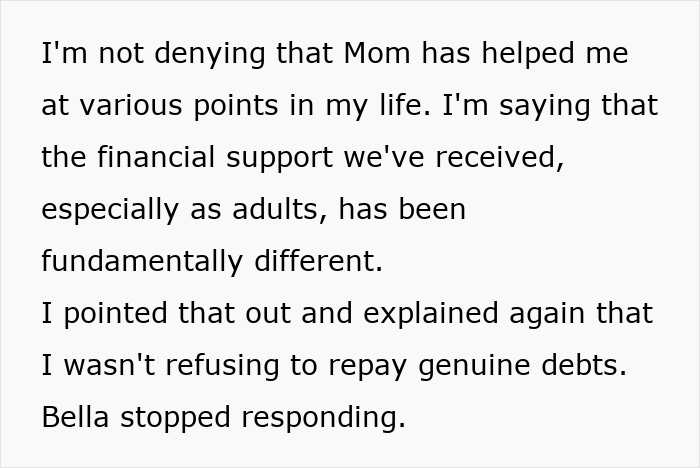
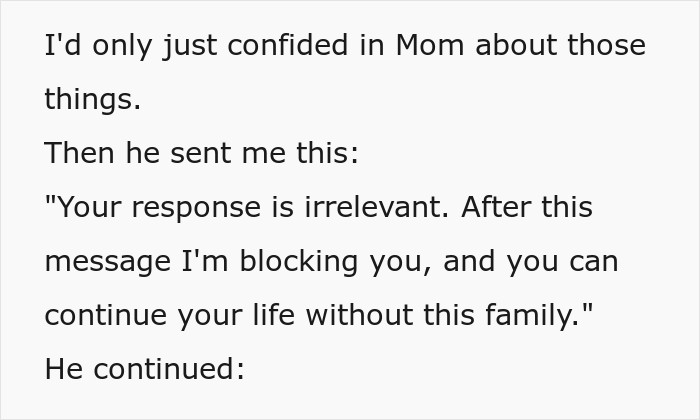
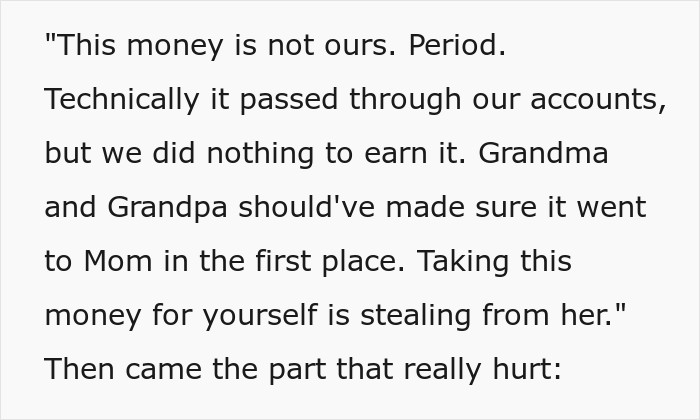
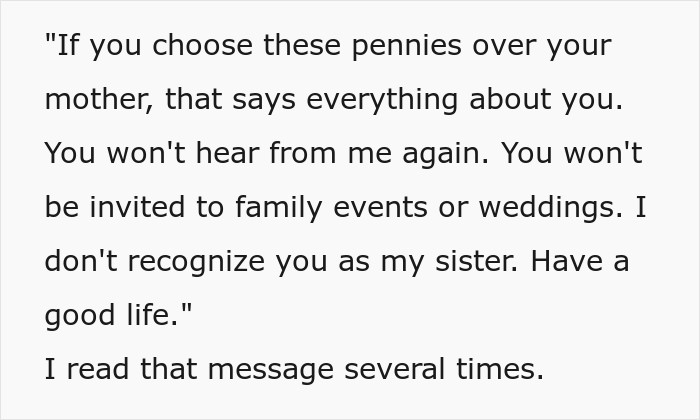
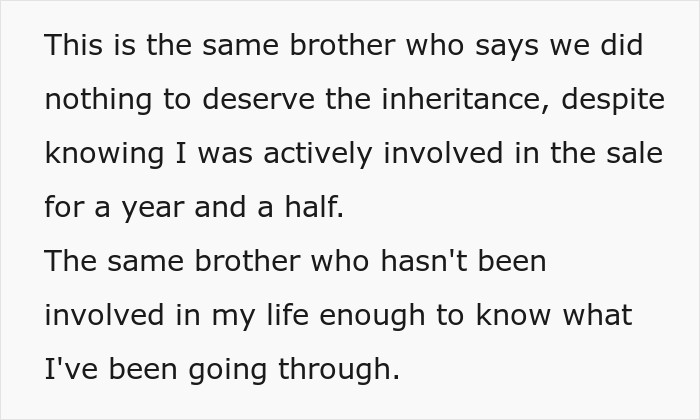
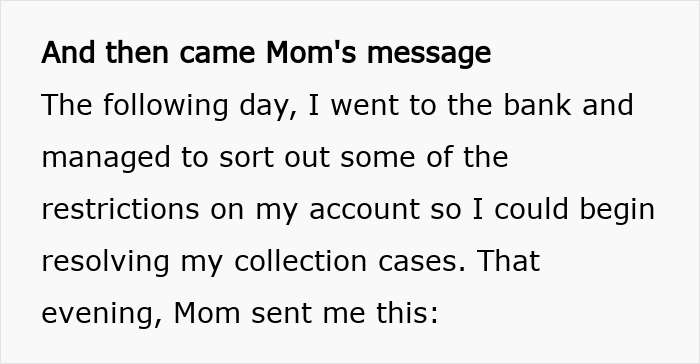
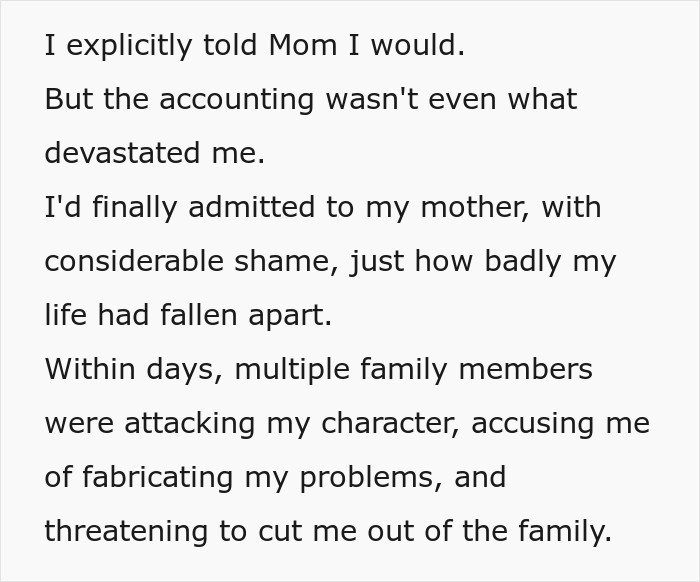
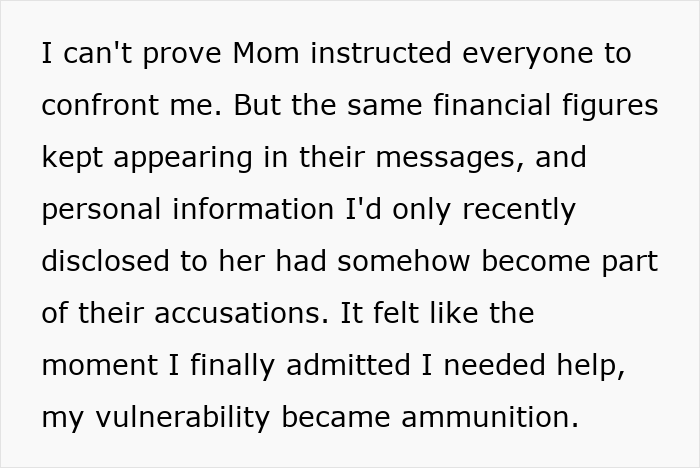
When the woman explained that she needed her inheritance to repay her debts, her mother and siblings accused her of going back on a family understanding and stealing from their mother




cottonbro studio (not the actual photo)



https://kaboompics.com/ (not the actual photo)
Her aunt and brother joined in the criticism, while her twin sister demanded that she hand over the inheritance and repay at least $24,000



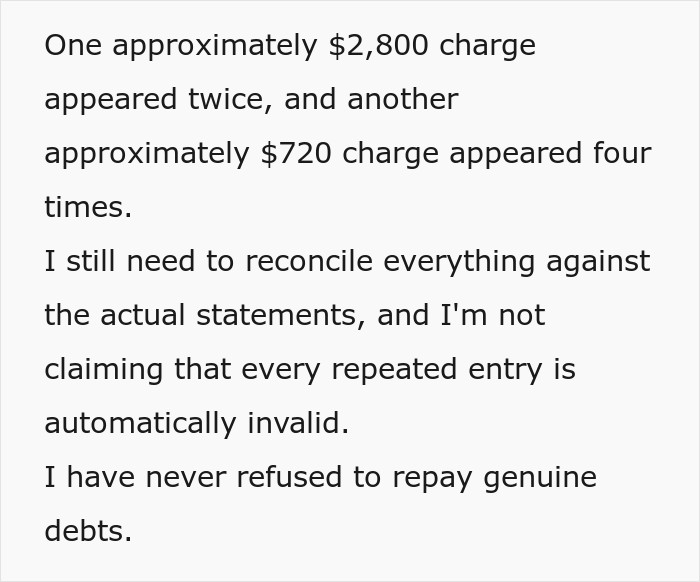
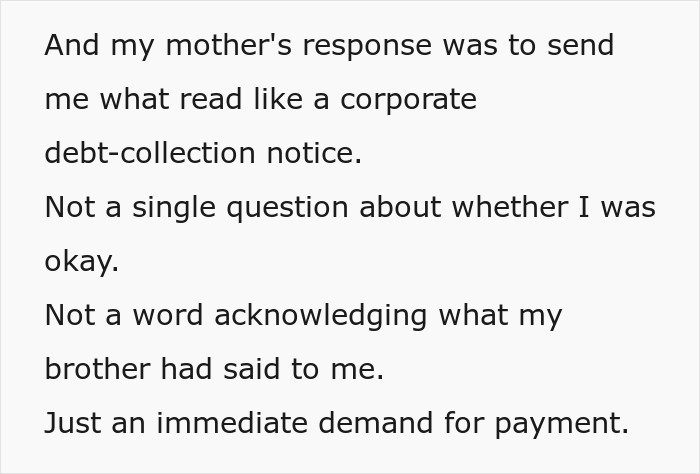
Her mother then sent her a document listing more than $22,000 in alleged debts, but the woman noticed possible duplicate charges and offered to only repay any money she genuinely owed
Inheritance disputes often become about much more than the money itself. A house, savings account, or piece of property can represent years of family history, old grievances, and expectations about who deserves what. According to Chambers, disagreements over inherited property can cause serious rifts between siblings, sometimes leaving them estranged for years.
For example, siblings who disagree over what to do with a loved one’s inherited property might stop sharing important moments in one another’s lives. This is partly why inheritance disagreements can become so personal, because relatives aren’t always arguing over the value of an asset, but over what they believe it represents.
In cases like this, sibling relationships can also be shaped by how fairly people believe their parents treated them growing up. Psychology Today explains that perceived parental favoritism is a common source of resentment between brothers and sisters. It doesn’t necessarily mean parents consciously favor one child, but differences in attention, privileges, affection, and financial assistance can leave lasting impressions.
Sometimes, the sibling who receives more support doesn’t even recognize the imbalance, while the one receiving less continues to feel overlooked. These feelings can follow people into adulthood, particularly when family members disagree about who deserves help. However, it is especially sad because parents do not always realize when they reinforce particular roles and cause resentment between their kids.

cottonbro studio (not the actual photo)
The problem with family financial support is that generosity can gradually turn into an unspoken obligation. According to the Consumer Financial Protection Bureau (CFPB), as many as one in five American adults receive financial assistance from relatives or friends, while up to one in three provide it. These arrangements can be extremely helpful, but the agency warns that unclear expectations and misunderstandings can strain relationships.
Its advice is to establish whether money is a gift or a loan, how much is involved, and whether repayment is expected. The same principle applies to family members who regularly help one another without discussing what they expect in return. A parent might consider past assistance a reason an adult child should give back, while the child might see those earlier gestures as voluntary acts of generosity.
For this reason, setting boundaries is also important when it comes to finances. And no, setting financial boundaries with relatives doesn’t automatically mean you are selfish or ungrateful, as Greenpath affirms. They offer guidance on discussing money with loved ones, emphasizing the importance of being honest about what you can afford and communicating when you cannot provide financial help.
They also advise that people should first consider how sharing their resources could affect their own financial situation before agreeing to help. This is particularly important when someone is already dealing with debt or unstable income. Being able to help a relative once doesn’t mean someone will always be in a position to do so.
The woman’s siblings may have felt comfortable giving their mother part of their inheritance, but that doesn’t mean she could make the same decision without jeopardizing her own recovery. What do you think about this situation? Do you think the woman was wrong to keep the $85,000, or was she right to put her own financial recovery first? We would love to hear from you in the comments!
Netizens largely felt that the woman had every reason to distance herself from her family, pointing out how unfairly they had treated her when she was the one going through a difficult time


























 Follow Us