For many of us, hanging out with friends is the ultimate stress reliever. After a long week of work, classes, deadlines, or just surviving adulthood in general, there’s something comforting about sitting around a table, sharing food, laughing over random stories, and temporarily forgetting life’s chaos. But let’s be honest for a second: even the closest friend groups can run into awkward dramas.
Which is exactly what happened in this story. A group of working students went out for dinner together, expecting a fun and affordable night out. While most of them ordered reasonably priced meals, one friend went all out with a much more luxurious dish. Keep reading to see how one expensive order turned an ordinary dinner into a full-on friendship conflict.
Some people can act incredibly entitled, and sometimes, even our own friends are guilty of it

prostooleh/Magnific (not the actual photo)

A man shared how his friend expected the entire group to chip in for his expensive lobster order
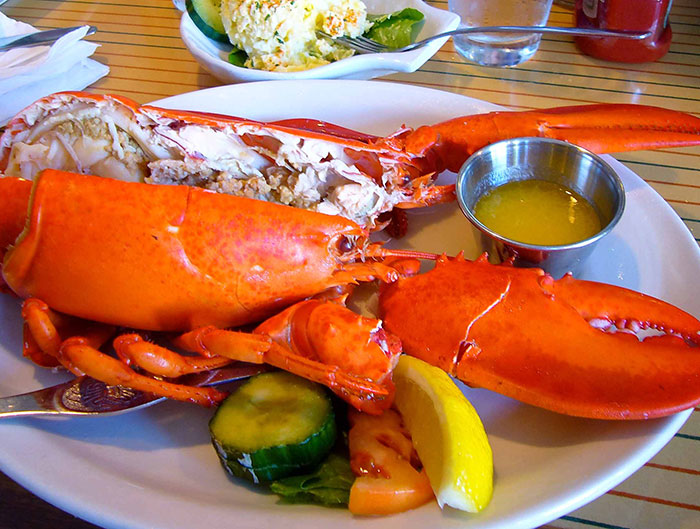
Paul Joseph/Flickr (not the actual photo)
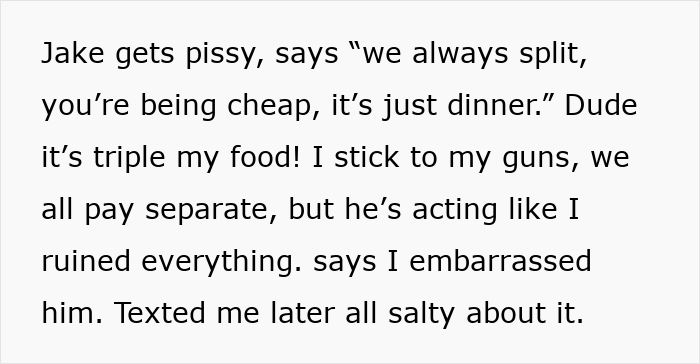
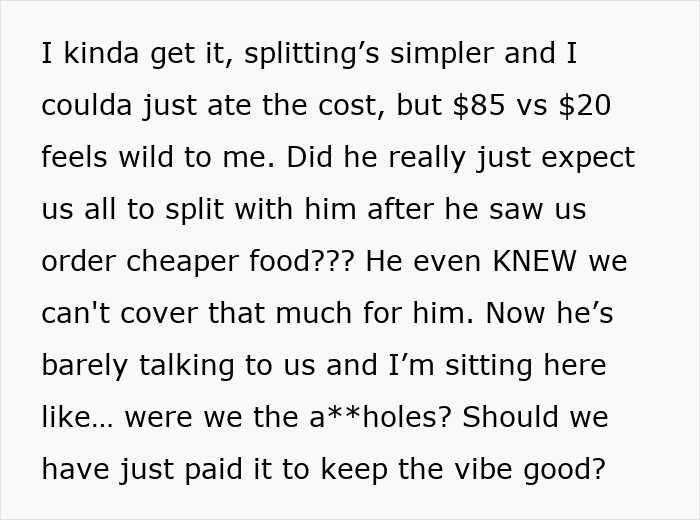
Some people are willing to end friendships over money disputes, even if it’s a close friend
Money and friendships can be a tricky combination, right, pandas? One minute you’re having fun with friends, and the next someone’s suggesting an expensive dinner or splitting the bill equally, as if everyone’s bank account can handle it! And while making plans together is great, not everyone has the same budget or financial responsibilities. The awkward part? Sometimes people would rather quietly overspend than admit they can’t afford something.
And apparently, this discomfort is incredibly common. A survey of 2,000 people across the UK found that more than one in five adults (22%) feel uncomfortable when friends suggest plans that cost more than they can comfortably afford. Meanwhile, 20% admitted these situations actually make them anxious. Which honestly makes sense. Nobody wants to be the person saying, “Sorry, that’s too expensive for me,” especially when everyone else seems excited.
The same poll also revealed why so many people avoid talking honestly about money with friends in the first place. Around 24% said they worry about triggering someone who may already be struggling financially, while 16% fear being judged. Another 11% admitted they don’t want to come across as “cheap.” And honestly, that word alone carries so much unnecessary guilt. Sometimes people aren’t being stingy; they’re just trying to be responsible.
Money can quietly become one of the biggest stress points in friendships, even if nobody openly talks about it. In fact, Bank of America commissioned a survey of 1,000 nationally representative respondents, and money ranked as the fourth biggest cause of stress in friendships — coming right after jealousy, gossip, and disagreements.
And surprisingly, it doesn’t take huge amounts of money to damage friendships either. According to the same survey, 53% of people said they had seen a friendship end over money-related issues. Even more shocking? Nearly three-quarters of respondents said they would end a friendship over a dispute involving $500, while 40% said even a disagreement over just $100 could permanently damage the relationship. Which honestly shows that most money fights are rarely just about the amount itself. They’re usually about fairness, respect, feeling taken advantage of, or realizing someone values your generosity a little too casually.
It’s important to be honest about your budget before going out with friends to avoid awkward misunderstandings later
That’s why setting boundaries around spending is honestly one of the healthiest things friend groups can do. Whether it’s planning a monthly social budget, deciding beforehand how bills will be split, or simply choosing affordable plans, these small conversations can prevent huge misunderstandings later. Friendships shouldn’t require financial stress as an entry fee. That is why experts recommend budget-friendly alternatives, so friends can focus on making memories instead of stressing over the bill.
Forbes, for example, highlights the importance of choosing lower-cost activities when spending time with friends. That could mean cooking together instead of eating out, choosing matinee movie tickets, hosting game nights, or planning affordable local outings instead of expensive trips. The point isn’t to stop having fun; it’s about making sure everyone in the group feels comfortable enough to participate without quietly worrying about money the entire time.
And perhaps the most important thing? Honesty. Being upfront about your budget might feel awkward, but it’s much better than overspending and regretting it later. In her book Broke Millennial: Stop Scraping By and Get Your Financial Life Together, Erin Lowry explores how to navigate these uncomfortable money conversations without feeling embarrassed. Instead of agreeing to an expensive dinner you can’t afford, why not suggest a potluck or a more budget-friendly restaurant? And when planning group dinners or trips, discussing spending limits beforehand can save everyone from awkward surprises later.
After all, friendships should feel supportive, not financially exhausting. Everyone has different incomes, responsibilities, and priorities, and nobody should feel pressured to spend beyond their means just to fit in. Sometimes, a little honesty and understanding are all it takes to avoid unnecessary drama.
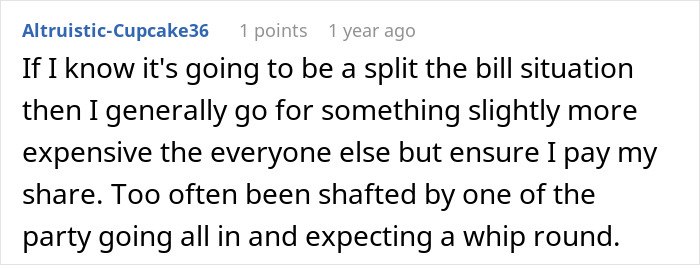
Coming back to today’s story, it’s understandable why the group was frustrated. After all, why should everyone have to pay extra because one friend decided to order the most expensive dish? What do you think, pandas? Is splitting the bill equally fair, or should everyone pay for what they ordered? Have you ever faced a similar situation with friends? Let us know in the comments!
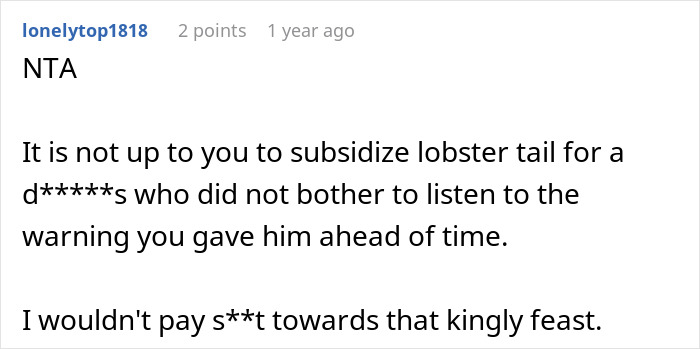
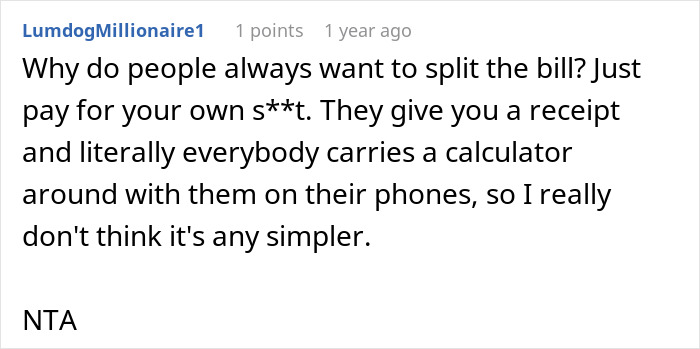
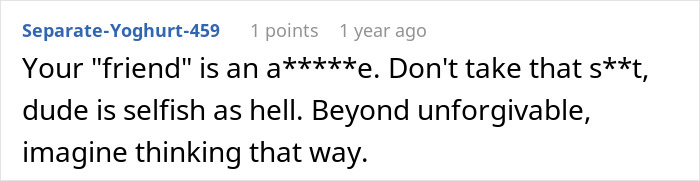
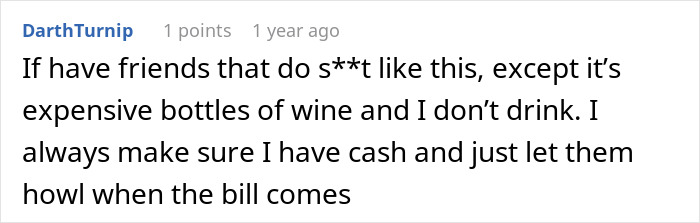
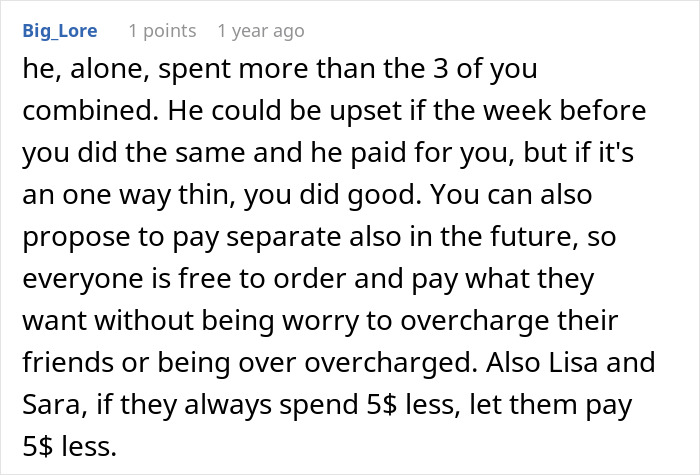
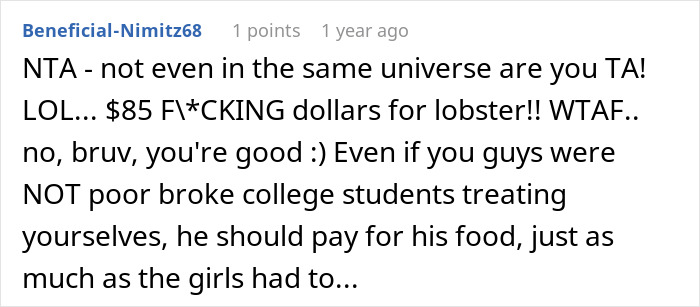
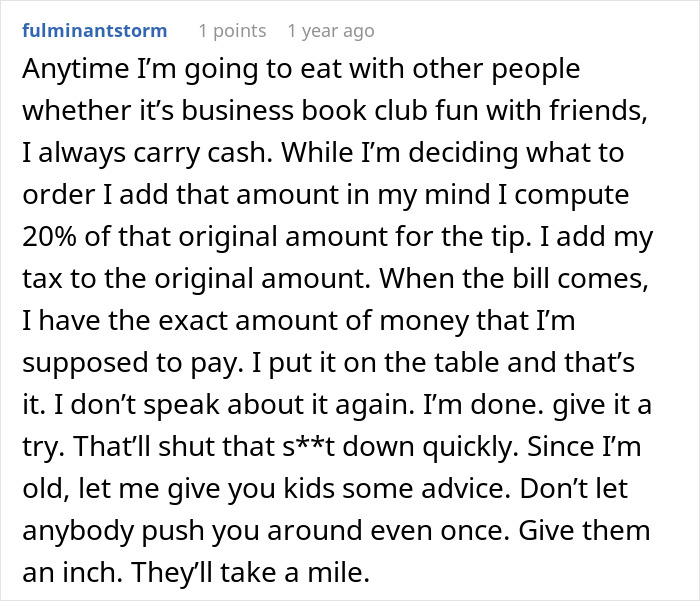
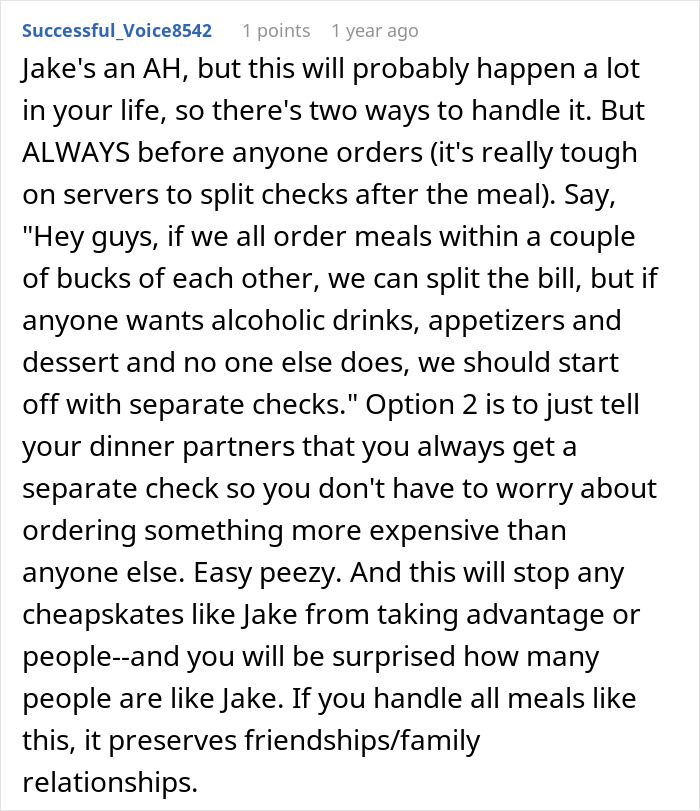
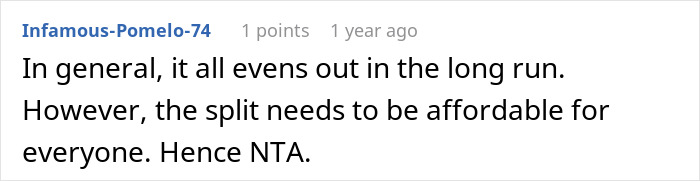
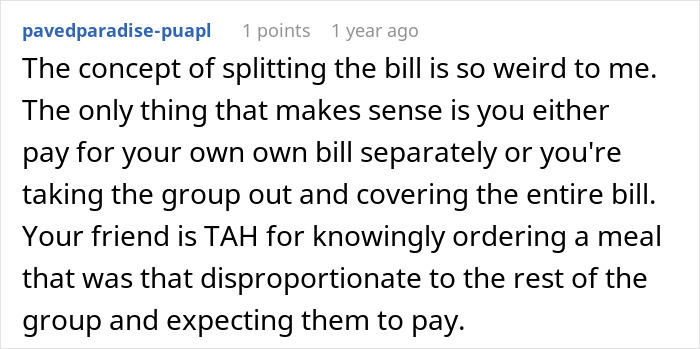
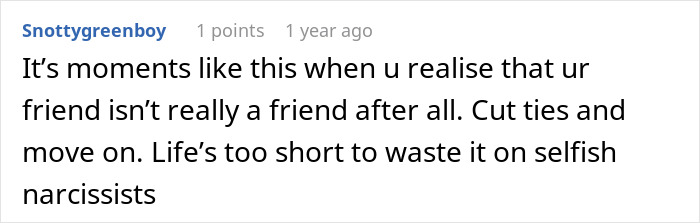
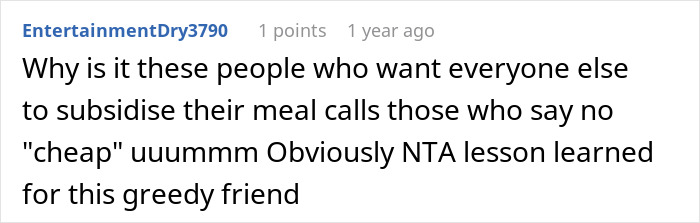
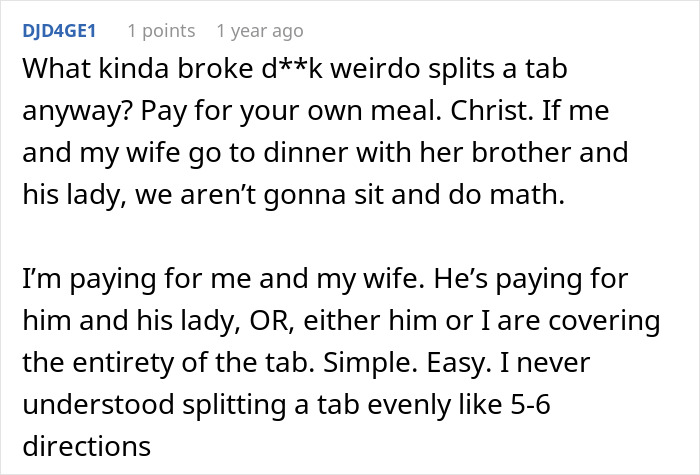
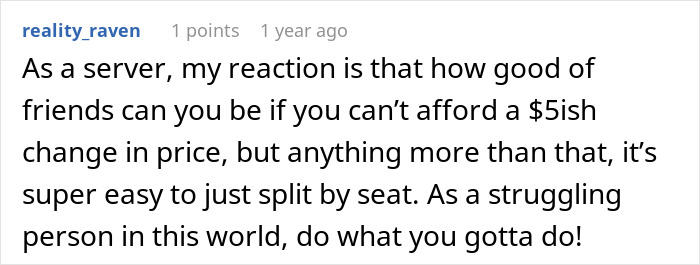
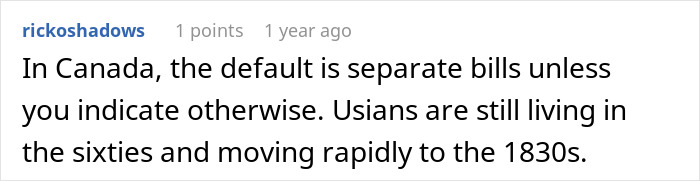
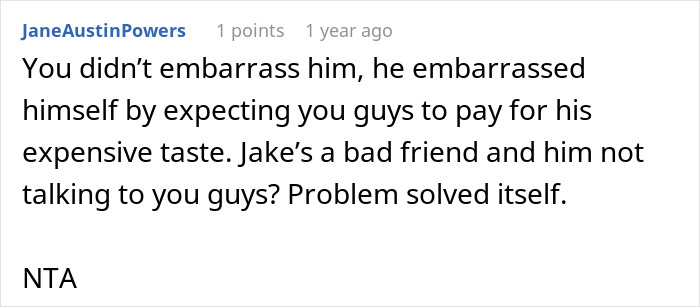
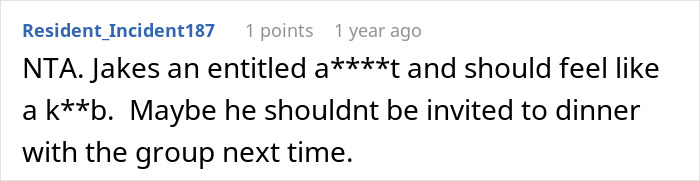
People were quick to point out that the author’s friend was being selfish and inconsiderate














 Follow Us