Getting married is one of those exciting life moments that comes with a lot more decisions than people often realise. Beyond the dress, venue, and wedding celebrations, couples also have to talk about the bigger things—where they will live, how they will handle money, what their future looks like, and even something as personal as whether one person will take the other’s last name.
Speaking of which, a woman recently shared that she did not want to change her last name after marriage because it was already connected to her career and professional identity as a journalist. However, what seemed like a simple conversation about a name quickly turned into a much bigger disagreement. Her fiancé said he could not imagine having a wife with a different last name, while she felt he was overlooking the impact the change could have on her work and identity. Keep reading to find out how this disagreement unfolded.
Women often have many expectations placed on them when they get married, including decisions about their names, careers, and family roles

lucigerma/Envato (not the actual photo)

One woman shared that she wanted to keep her last name after getting married, but her husband strongly objected to the idea

jm_video/Envato (not the actual photo)
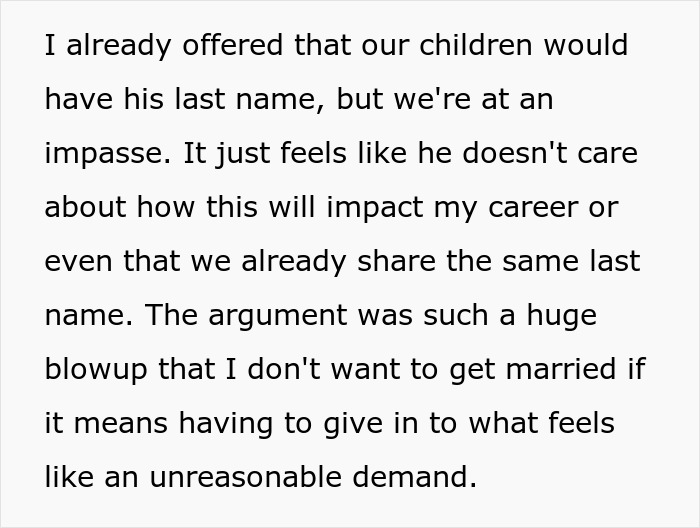
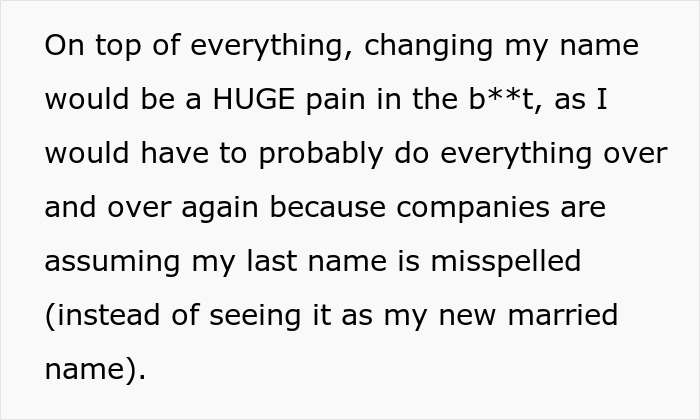
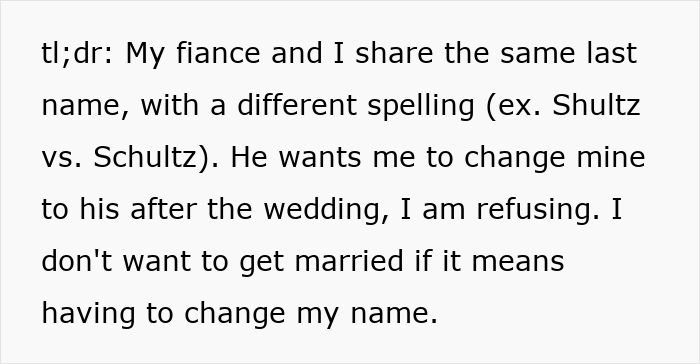
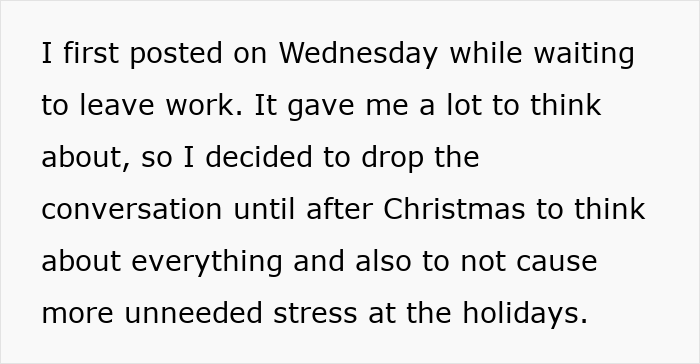
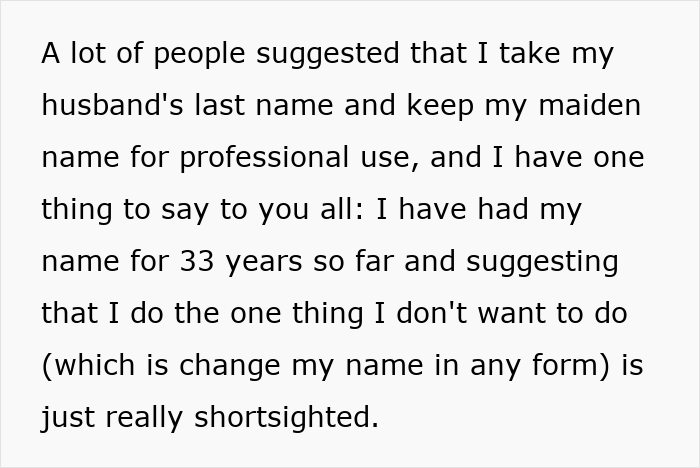
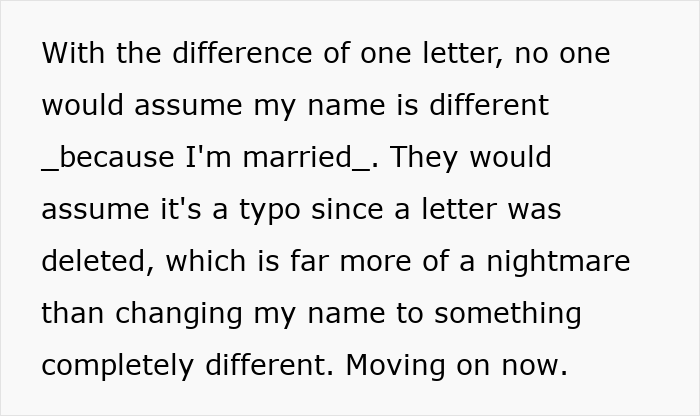
The woman later shared more details about her situation
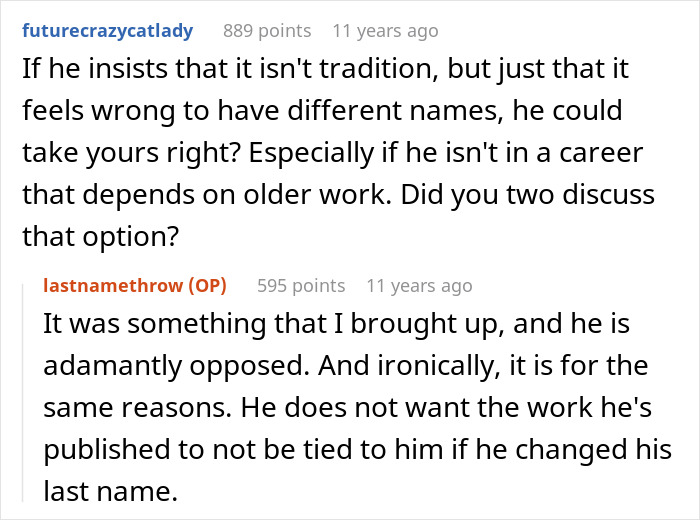

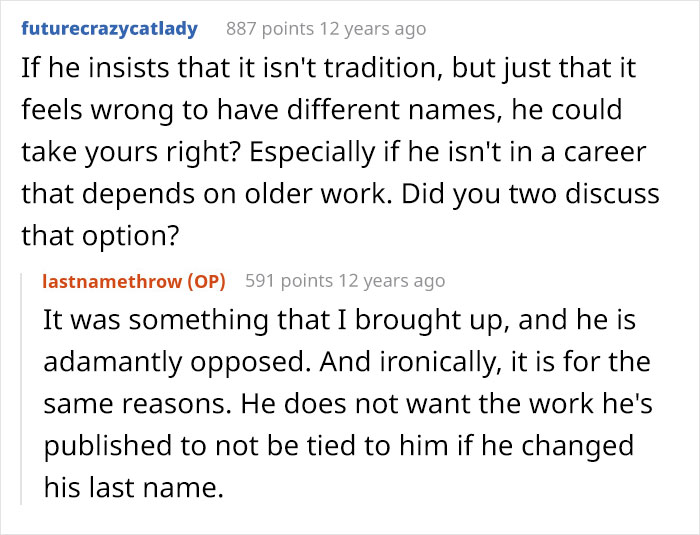
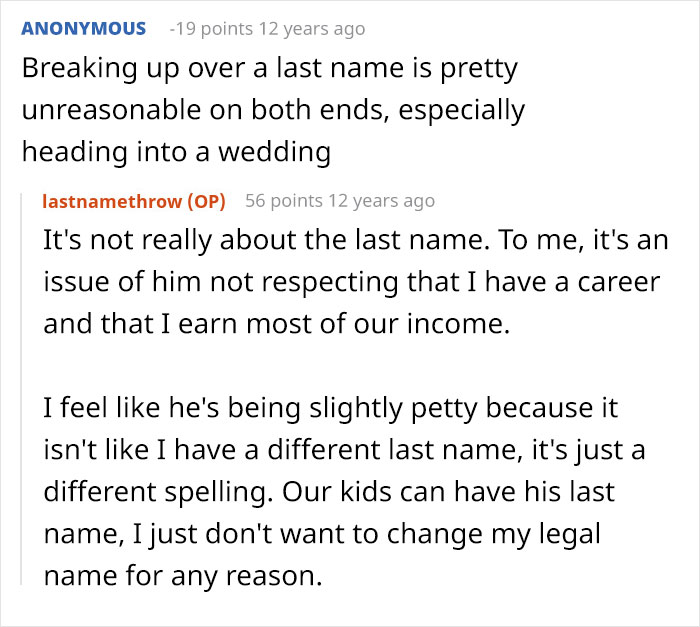
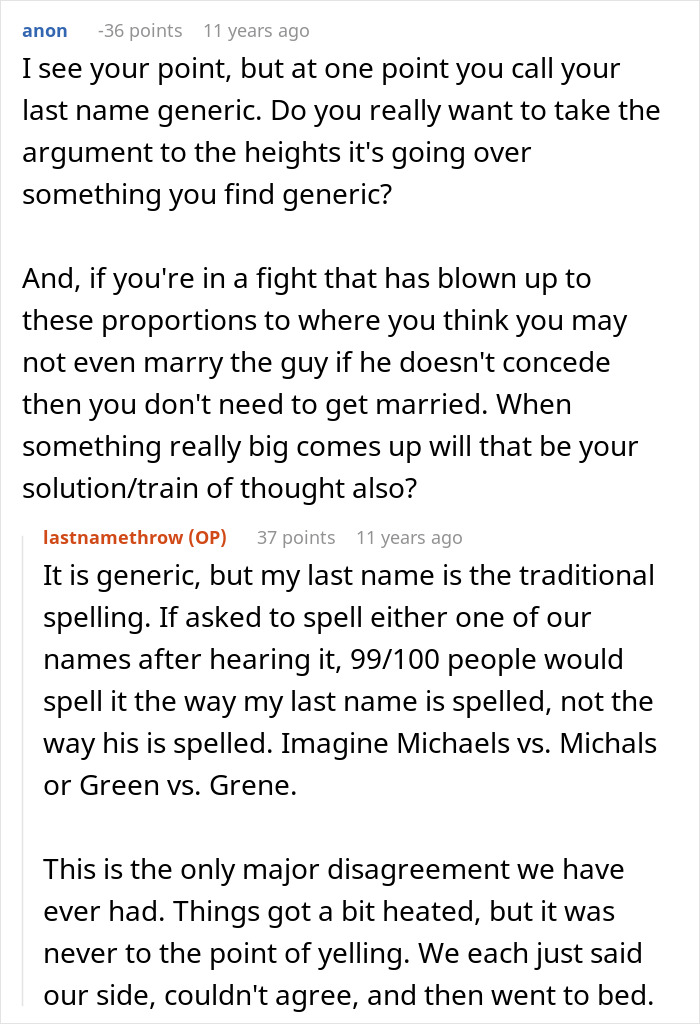
Historically, women often took their husband’s last name because marriage laws and social traditions treated them as part of their husband’s family
Over the years, the way people approach marriage has changed significantly. Weddings are no longer limited to one traditional formula: brides are choosing colorful dresses instead of white gowns, couples are writing their own vows, and many are rethinking long-standing customs to make their celebrations feel more personal. Some couples even walk down the aisle together or divide wedding responsibilities in ways that might have seemed unusual a generation ago. Books like What a Wedding!: New Wedding Planning, Ideas, and Inspiration by Gestalten reflect this shift away from the traditional banquet-hall template, showcasing ultra-contemporary and free-spirited celebrations ranging from intimate, low-impact mountaintop micro-weddings to artistic backyard barbecues and bohemian desert gatherings.
But while many wedding traditions have evolved, surnames remain one area where old customs still hold strong. In many opposite-gender marriages, it is still far more common for women to take their husband’s last name than for men to take their wife’s. The tradition of women taking their husband’s surname has a long and complicated history. It can be traced back several centuries, when married women in England were often legally and socially viewed as being under their husband’s authority. As surnames became more widely used across Europe, a wife taking her husband’s name came to represent the transfer of her identity into his family. By the 1700s, the practice had become embedded in English common law and later spread to North America through British colonization. According to Time Magazine, some local laws and policies once made it difficult for married women who kept their birth names to access important documents or services, including passports, driver’s licenses, and financial records. It was not until the 1970s that many US states began changing their laws to make it easier for women to retain their surnames after marriage.
Even today, many women continue to take their spouse’s last name. A Pew Research Center survey found that 79% of women in opposite-gender marriages said they adopted their spouse’s surname after getting married. Another 14% kept their own last name, while 5% combined both names through hyphenation. The pattern was very different among men: 92% said they kept their own surname, while only 5% took their spouse’s name and fewer than 1% hyphenated both surnames. These numbers show that, although attitudes toward marriage and gender roles have changed in many ways, surname traditions remain surprisingly persistent.
Much of Western Europe follows a similar pattern, though notable exceptions exist. In Spain and Iceland, women generally keep their birth names after marriage, while Greece has legally required wives to retain their surnames for life since 1983. Even in Norway, which is regularly ranked among the world’s most gender-equal countries and has a less openly patriarchal history than many others, many married women still take their husband’s surname. However, some women keep their birth surname as a middle name, allowing them to maintain a connection to both their original identity and their married family. These differences show that there is no single way societies approach names, marriage, or family identity.
So why do many women still choose to take their husband’s surname? Some women also change their names because it matters to their partner or because they enjoy the idea of sharing a surname after marriage. For some, it is a meaningful tradition that marks the beginning of a new chapter and reflects their commitment to building a life together. Others may simply feel that their married name represents a new part of their identity. Personal preference, cultural traditions, or how someone has always imagined marriage can also influence the decision. For these women, changing their surname may feel like a natural and positive choice rather than a sacrifice or obligation.
In other cases, family expectations may play a role. Older relatives may view taking a husband’s surname as an important part of marriage and struggle to understand why someone would choose otherwise. Rather than repeatedly answering questions or defending their decision, some women may feel that changing their name is the easier option. There can also be subtle pressure from relatives, friends, or even colleagues who assume that a woman will automatically take her spouse’s name. Of course, this does not mean every woman who changes her surname feels pressured. For many, it is a personal and meaningful choice. But for others, the decision may involve balancing their own preferences with tradition, family expectations, and the desire to avoid unnecessary conflict.
Some women choose to take their husband’s last name after having children to keep family names consistent and avoid potential confusion or administrative difficulties
Researcher Simon Duncan, a professor of family life at the University of Bradford in the UK, has also explored the role surnames can play in family identity. One concern raised by some parents is that children may feel confused or unhappy if their parents have different last names. However, families come in many forms, and sharing a surname is not the only thing that creates a sense of belonging. Children can understand that family relationships are built through love, care, trust, and shared experiences—not simply through matching names.
Preeti Jiwrajka, a marketing professional in Mumbai, shared with Bored Panda that she kept her birth surname for many years because it was closely connected to her professional identity. However, after becoming a mother, she added her husband’s surname to her passport and other official documents so that all three members of the family would share the same last name. She hoped the change would help avoid administrative difficulties, particularly when traveling abroad with her daughter. Her experience shows that surname decisions are not always permanent or straightforward. Some people keep their names throughout their careers, while others make changes later as their family circumstances and priorities evolve.
Ultimately, there is no universally “correct” choice when it comes to changing a surname after marriage. Some people feel deeply connected to sharing one family name, while others see their birth surname as an important part of who they are. Some hyphenate, use one name professionally and another socially, or keep their original surname as a middle name. What matters most is that couples talk openly about the issue and respect what it means to each person. A name may seem like a small detail from the outside, but for the person carrying it, it can represent identity, family history, career, culture, and years of personal achievement.
In this case, it seems understandable that the woman wanted to keep her surname, especially because it was already closely tied to her professional identity as a journalist. Her concerns were not simply about resisting tradition; changing her name could affect how her work was recognized and create additional administrative challenges. At the same time, her fiancé’s feelings about sharing a surname may have been shaped by his own understanding of marriage and family. Thankfully, the woman’s father-in-law spoke with his son and helped him see the situation from another perspective. Pandas, we are curious to hear your thoughts: Did you take your spouse’s surname, keep your own, hyphenate both, or choose another option? Let us know in the comments below.
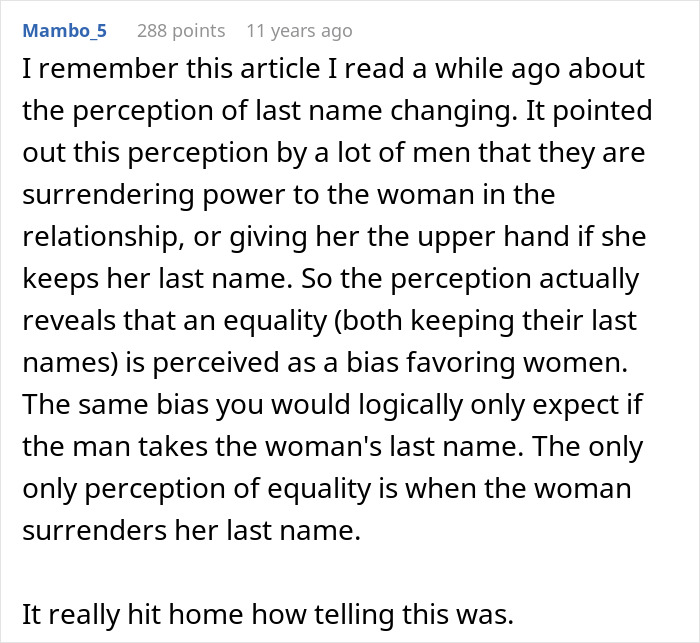
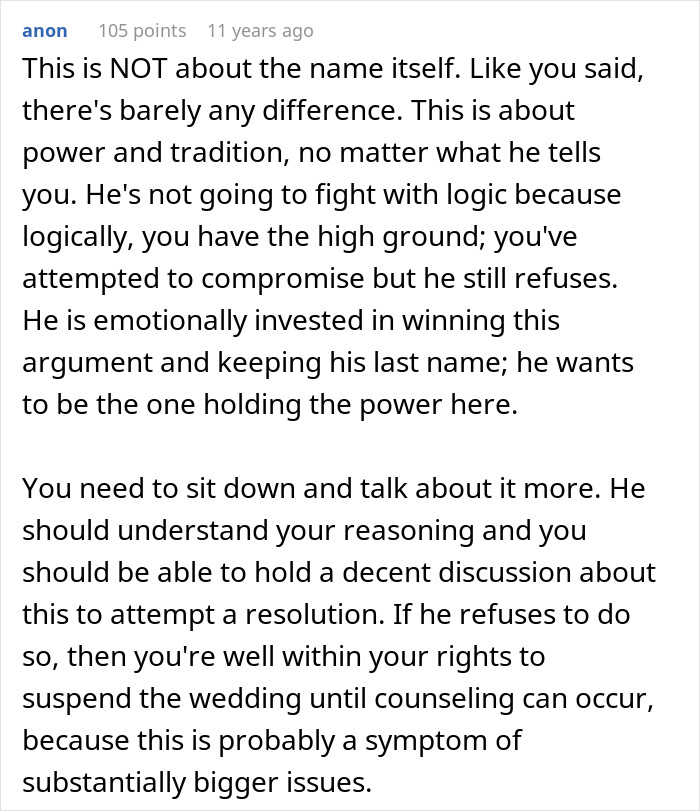
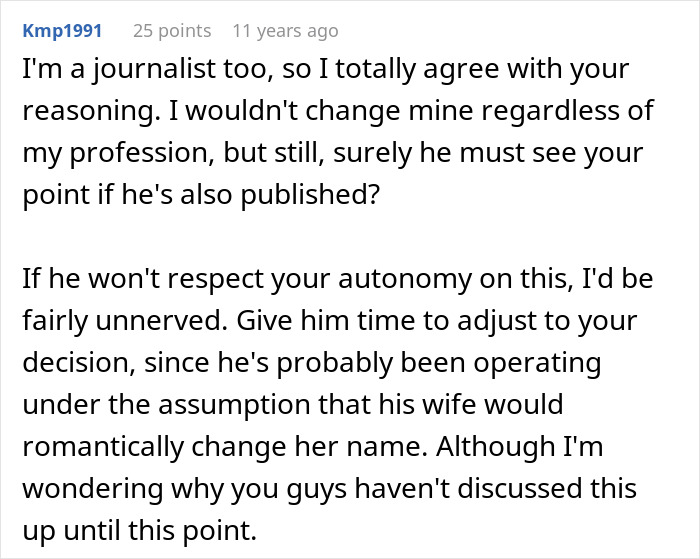
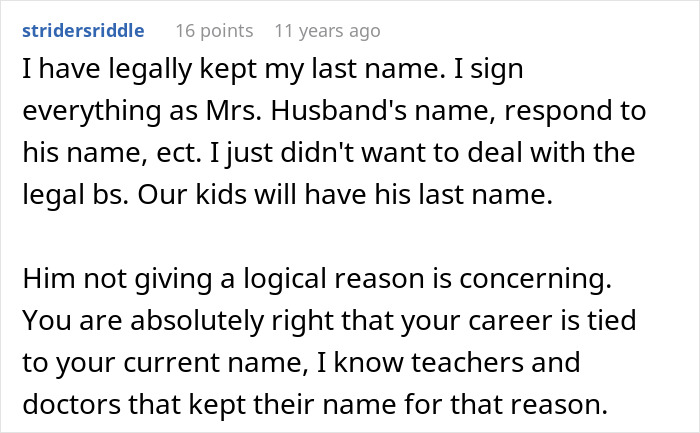
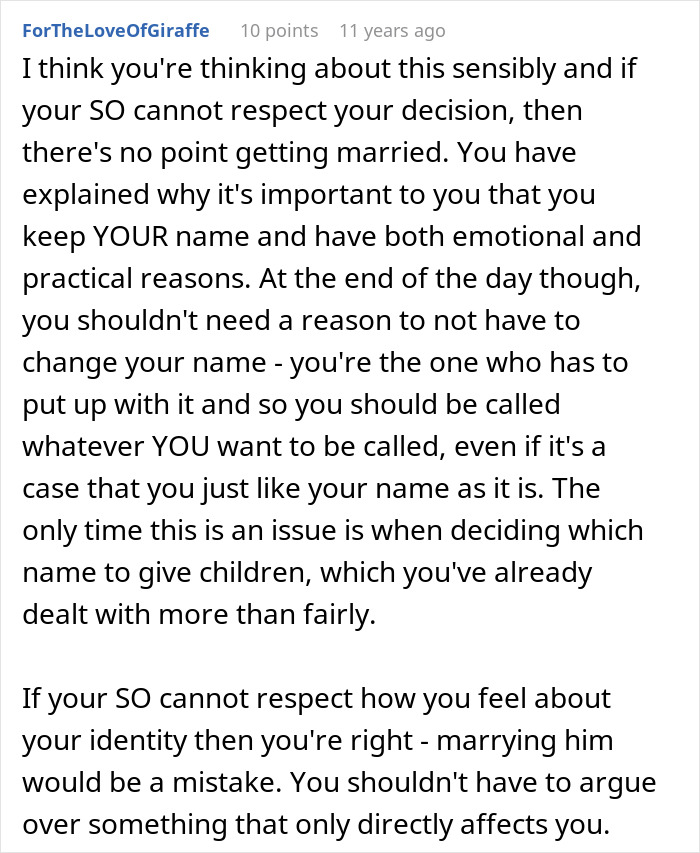
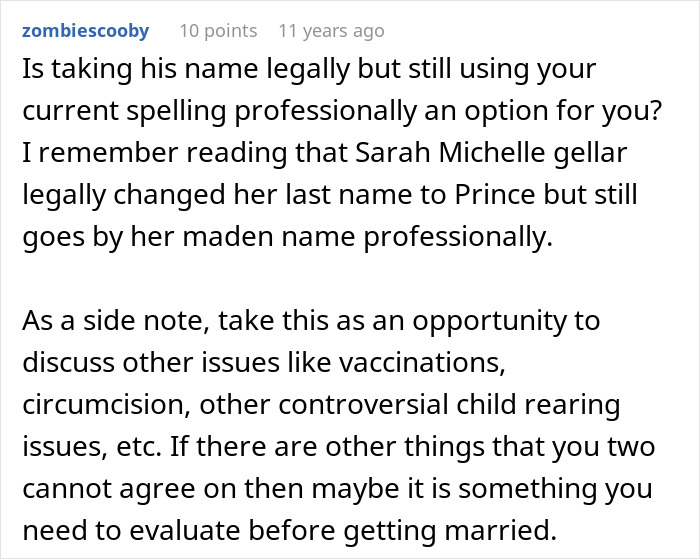
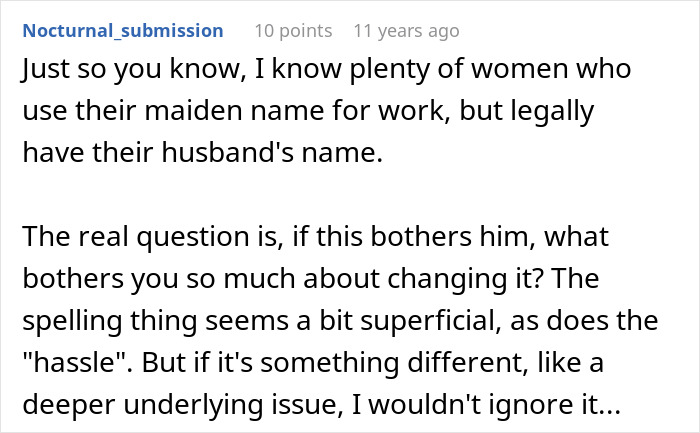
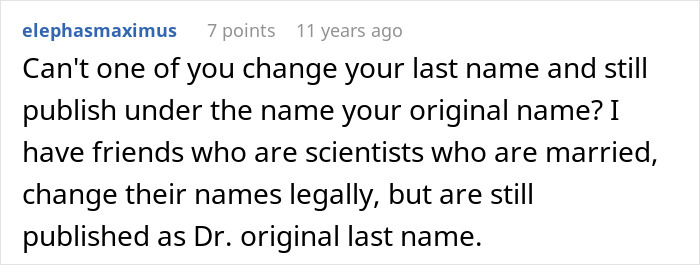
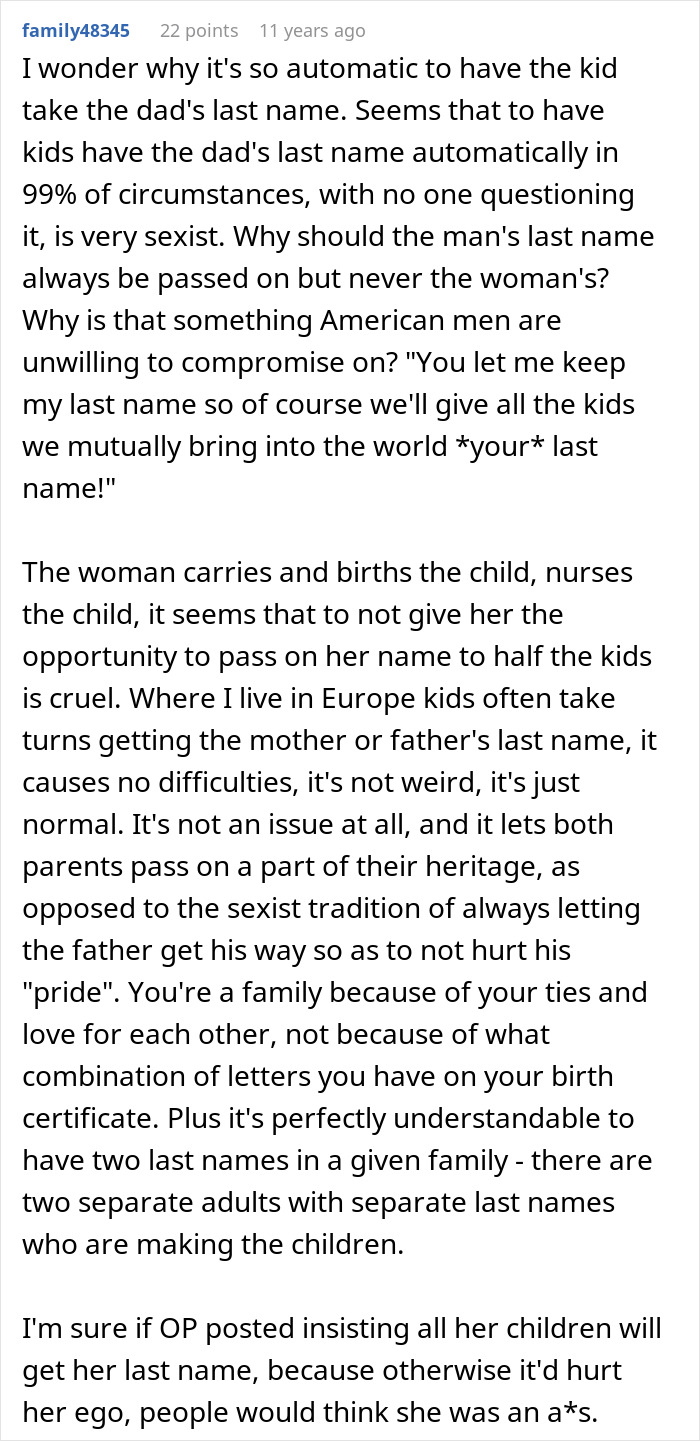
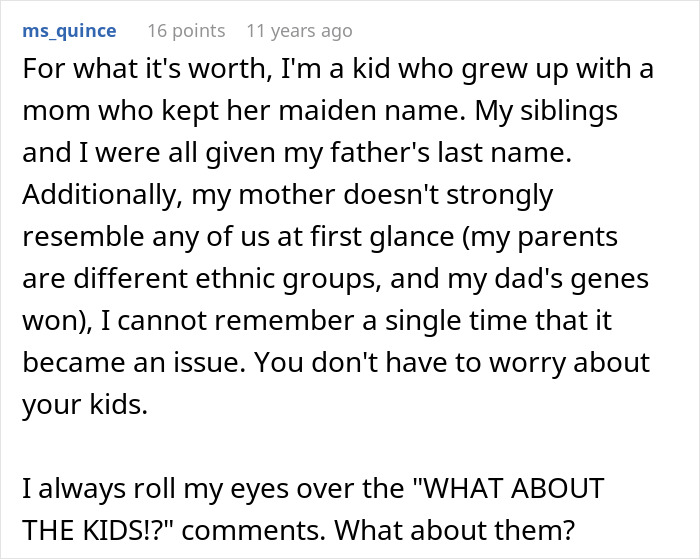
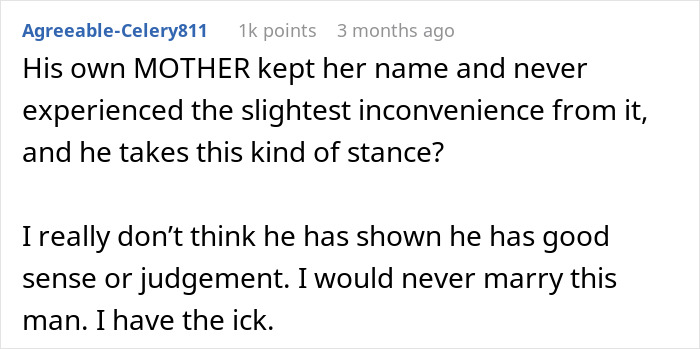
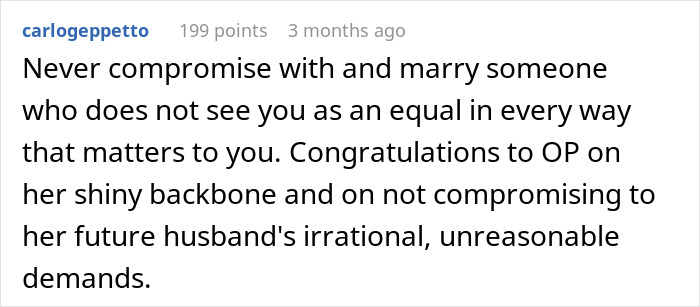
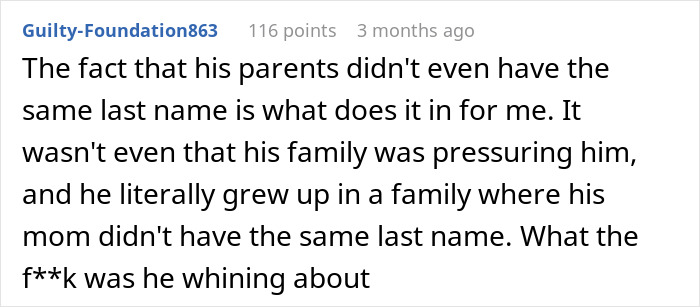
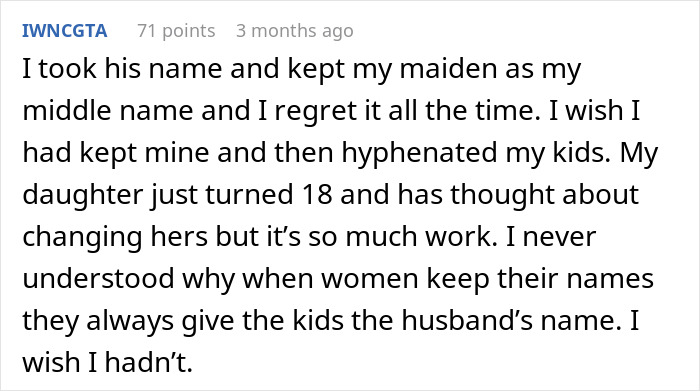
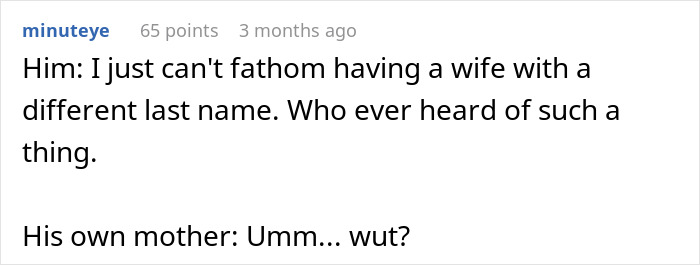
Many people were unhappy with the husband’s stubbornness and felt that he was making too big a deal out of his wife’s decision about her last name
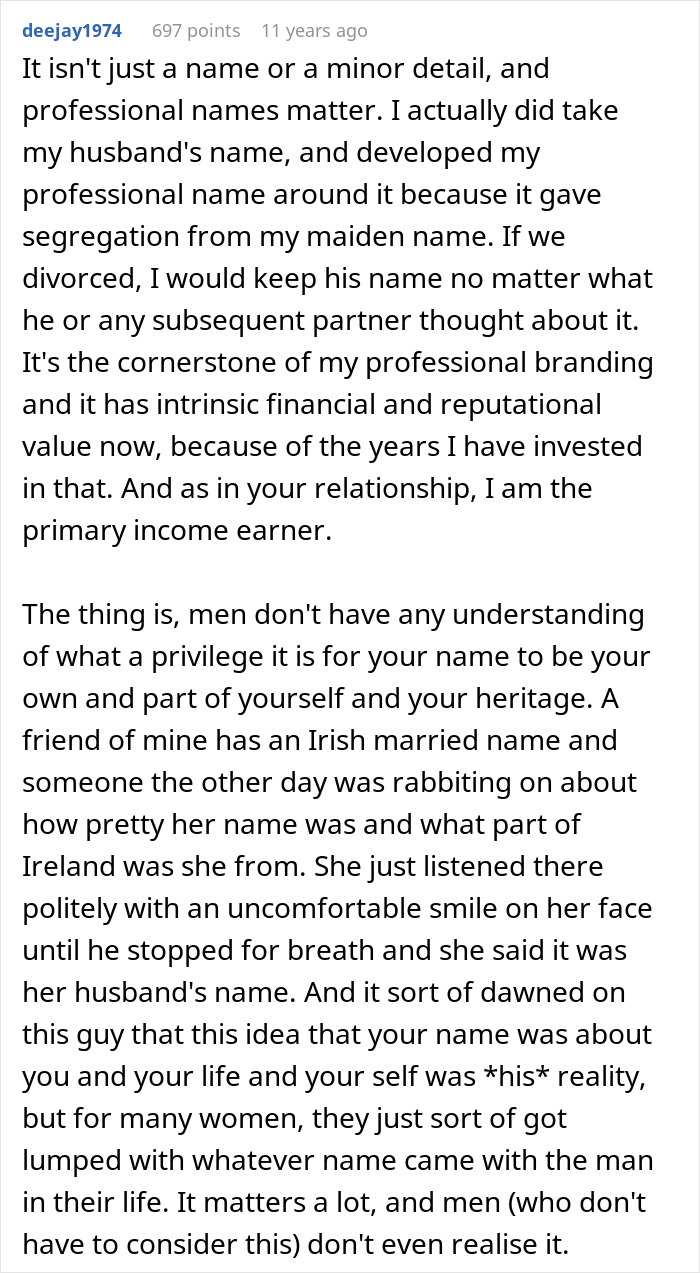















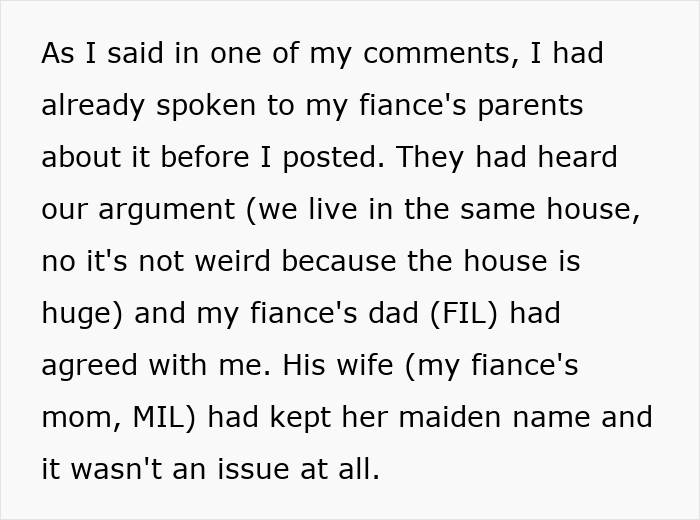
The author later explained how the couple eventually reached a conclusion and resolved the situation


GaudiLab/Envato (not the actual photo)



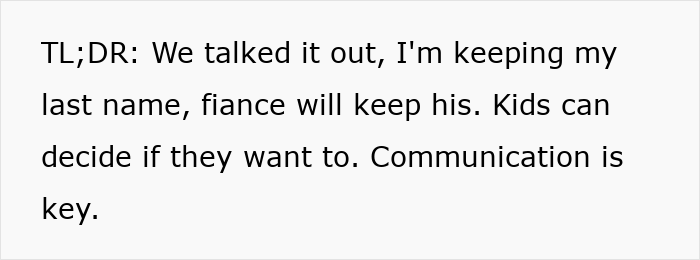
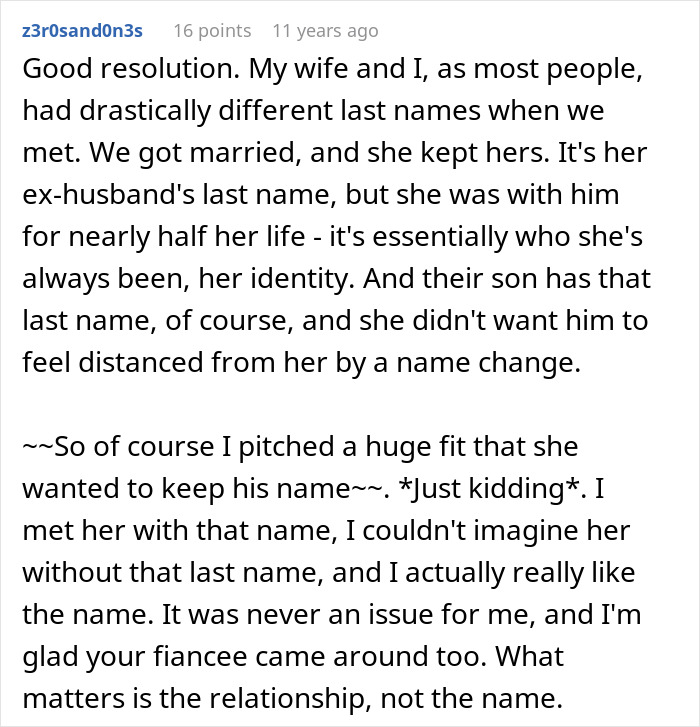
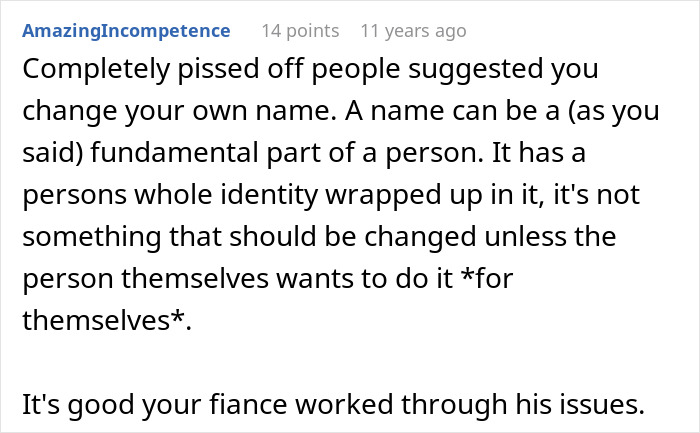
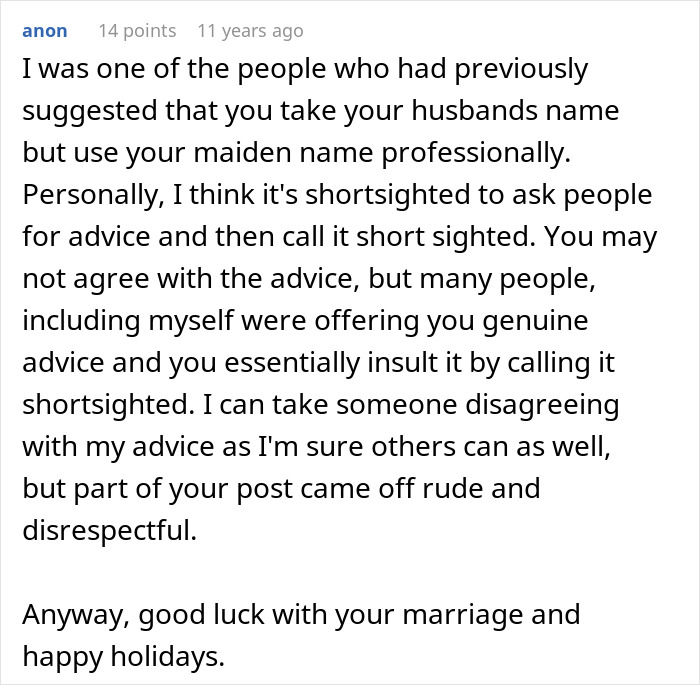
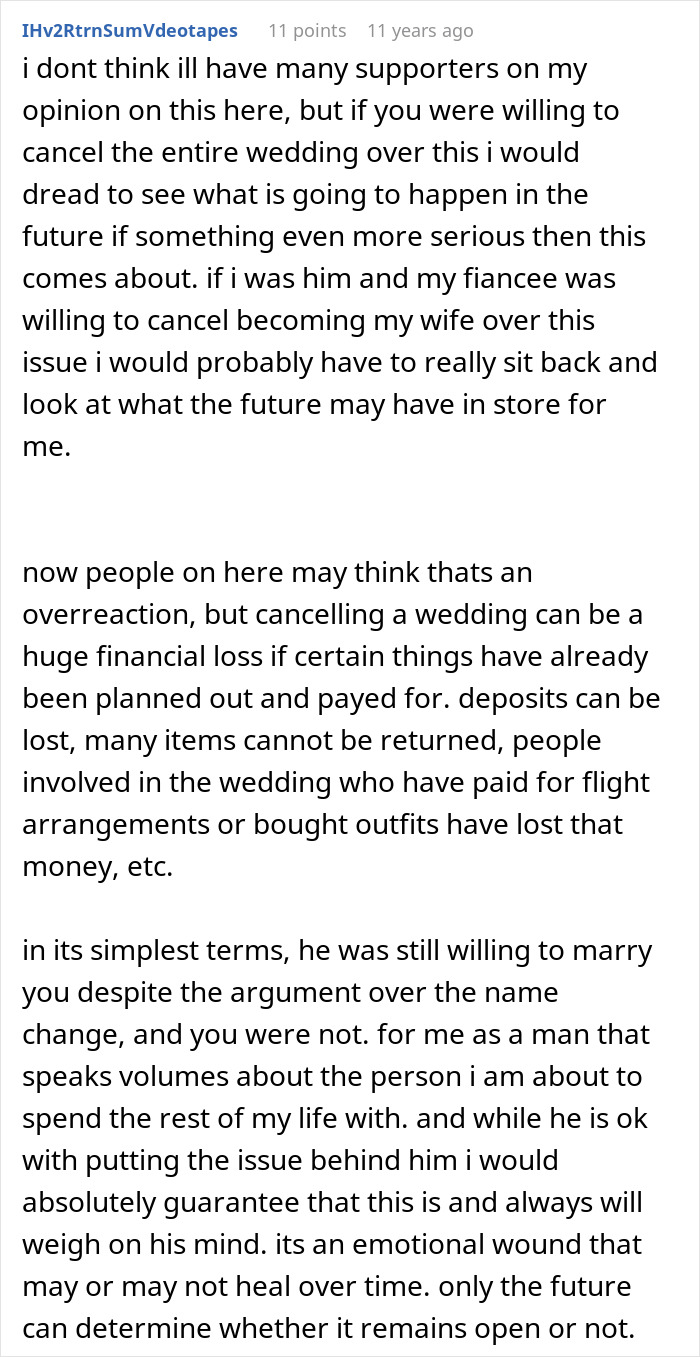
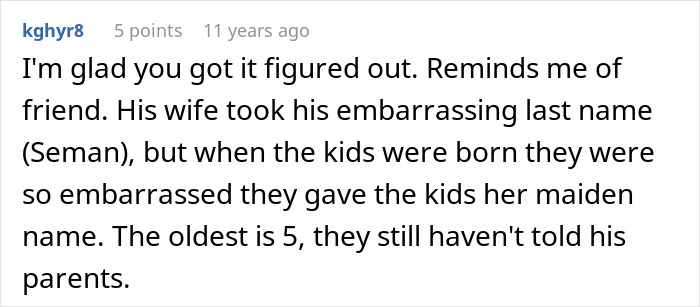
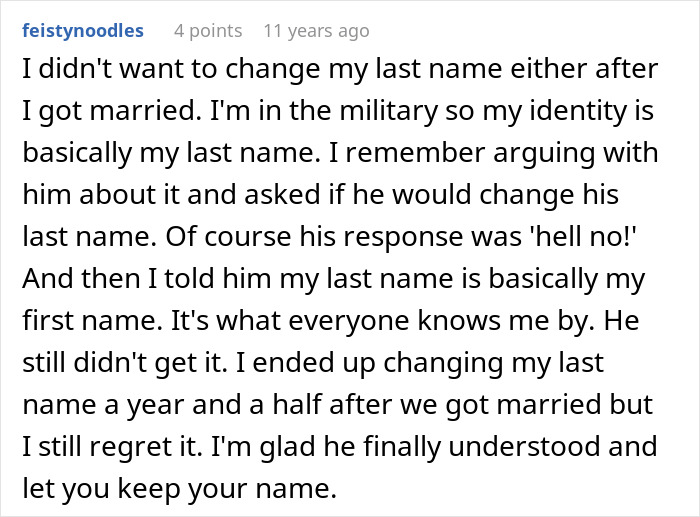
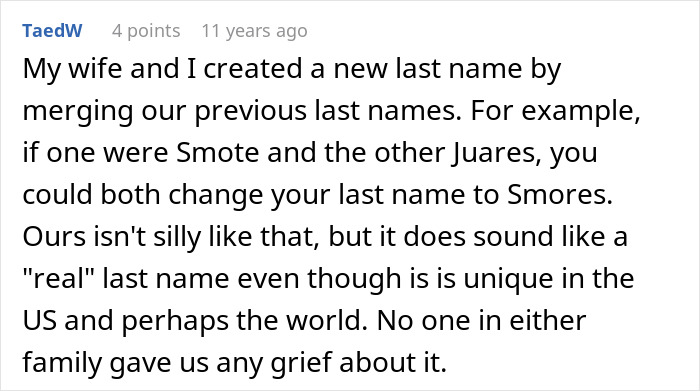
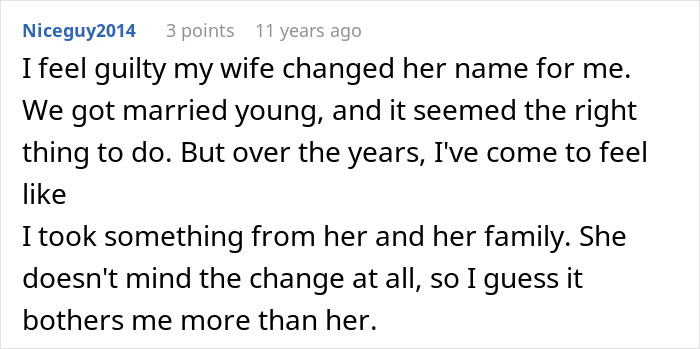
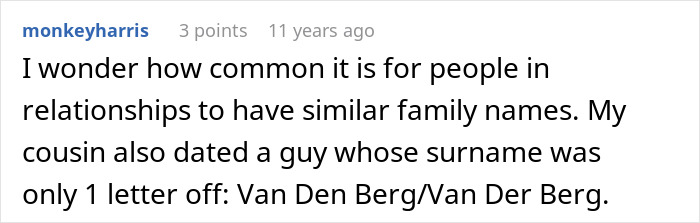
People were happy to hear that the couple had found a resolution they could both agree on


















 Follow Us