By the time Second Lieutenant María Camila Mora Mahecha arrived in Bogotá on November 26, the afternoon drizzle in Colombia’s capital had given way to an overcast evening. Despite the drab weather and long journey, the 27-year-old had something to look forward to: she was going to the Beéle concert at the city’s Movistar Arena that night with friends.
Mora had driven 120 miles (195 km) from Duitama, where she was taking a specialization course, to a military complex in northern Bogotá known as Cantón Norte to pick up a friend. At around 8:30 p.m., Mora called to say she had arrived.
Watching from her apartment window, the friend reportedly saw Mora’s car parked near the Officers’ Club. Then they saw Mora begin to get out of the vehicle, before being intercepted by someone who urged her back inside and got into the passenger seat.
Minutes later, Mora called in a panic. She screamed in fear of her life and called for help. Then shots rang out. By the time her friend reached the vehicle, Mora was gone. Slumped across her lap was the body of Captain Pablo Andrés Másmela Zapata.
María Camila Mora
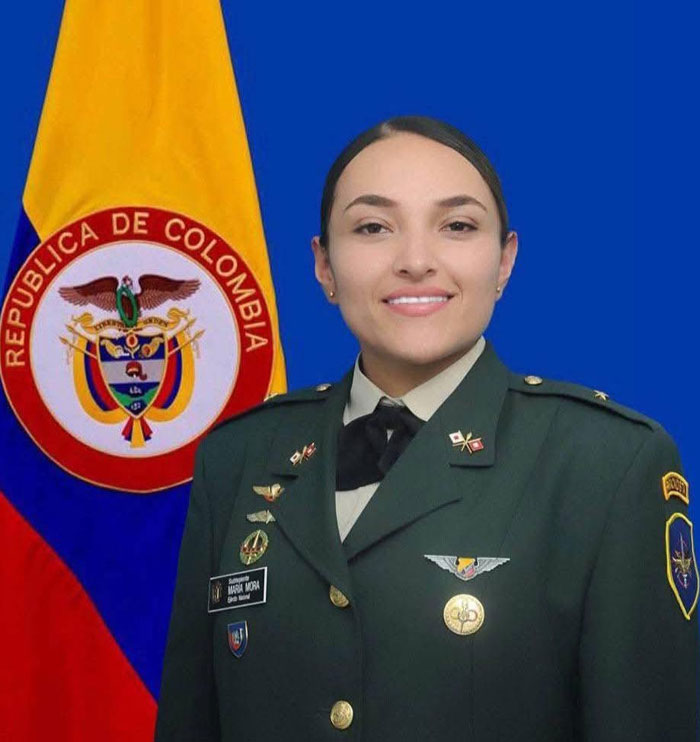
Some reports have suggested Mora was shot as many as five times, but military investigators are yet to provide specific details about her death. Másmela, meanwhile, appears to have died from a self-inflicted gunshot wound.
The two had previously been in a relationship that lasted more than two years, but had separated roughly three months earlier.
A Common Narrative Unfolds
The Colombian Army was quick to frame Mora’s killing and Másmela’s suicide as a personal matter. In an initial statement issued the same night of their deaths, the Military Education Center said a “lamentable” incident had taken place inside Cantón Norte and that events appeared to be linked to “situations of a personal nature.”
Within hours, much of Colombia’s media had settled into a familiar framing: a crime of passion, a lovers’ dispute, a tragic end to a relationship—a narrative reinforced when General Luis Emilio Cardozo, in his final days as commander of the Army, publicly stated that the two had been in a romantic relationship.
The translated tweet in full:
#OfficialStatement | With deep sorrow, we report that — in events that are still under investigation and on a preliminary basis — a few minutes ago, an incident occurred at the Cantón Norte facilities in #Bogotá that brings grief to our institution and resulted in the deaths of two of our officers, apparently in the midst of an incident of a personal nature.
Within the framework of harmonious cooperation with the various institutions, we reaffirm our willingness to provide all necessary support to help clarify the circumstances in which this event occurred.
Initially, some local media suggested a third person may have been in the car. But that was later disputed, as the details and framing of the early reporting began to unravel.
According to Luis Eduardo Leiva, the lawyer representing Mora’s brother, “there was no appointment, no meeting” arranged between the two and there was no ongoing contact between them, as was widely suggested by local media.
“This was not a crime of passion,” Leiva told Bored Panda. “It was meticulously prepared. He had been studying her for months, tracking when she could be caught.”
Leiva said that Mora had ended the relationship after becoming increasingly alarmed by Másmela’s conduct, including jealous and controlling behavior. Following the breakup, Másmela apparently sought to keep tabs on Mora via mutual contacts.
Mora was murdered in her own car

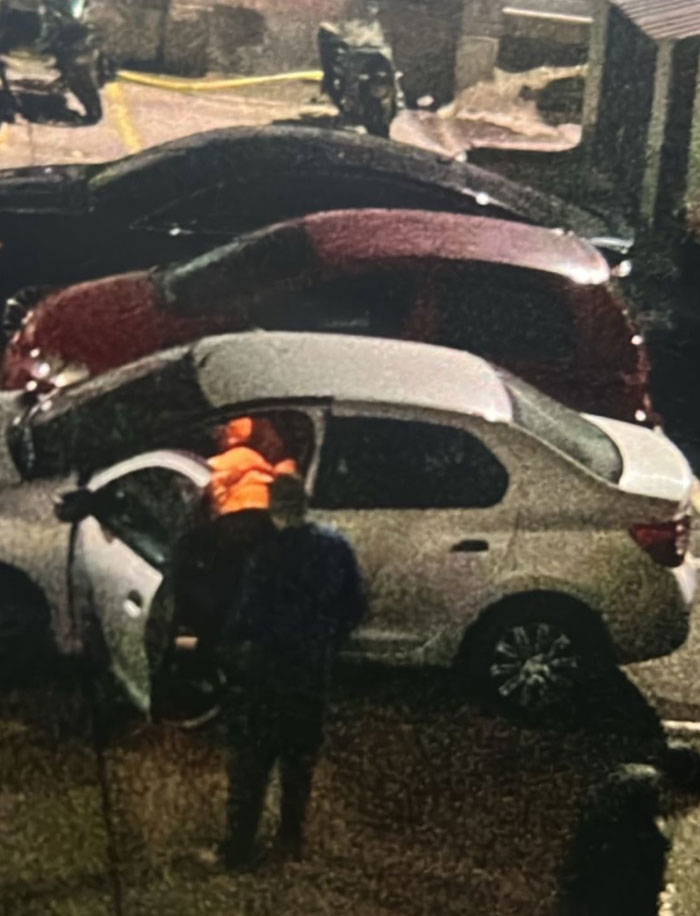
According to Leiva, Másmela had verified that she would visit by insisting on sending arepas de chócolo—a popular snack he knew Mora liked— as a purported goodwill gesture via the friend she was picking up. When the friend indicated to him that Mora probably would be coming that day, Leiva says Másmela set his plan in motion.
The friend has not been identified or spoken publicly about the events in question, and reporting on her testimony is largely based on comments made by Leiva.
A Military Trailblazer
Part of what made Mora’s killing resonate so widely in Colombia was her status as a standout figure with an impressive career trajectory and a reputation for discipline and ambition. That included becoming the first woman in the Colombian Army to pilot unmanned aerial vehicles, better known as drones.
In an institutional promotional video about Mora, she describes her route within the military: studies at the military academy, training in aeronautical phraseology, meteorology and aerodynamics, and work in military aviation. She also acknowledges the challenges faced by women in a male-dominated environment like the military.
“I always keep in mind, or I have it clear, that because I am a woman, I have to give a little more,” she says in the video.
María Camila Mora during military exercises
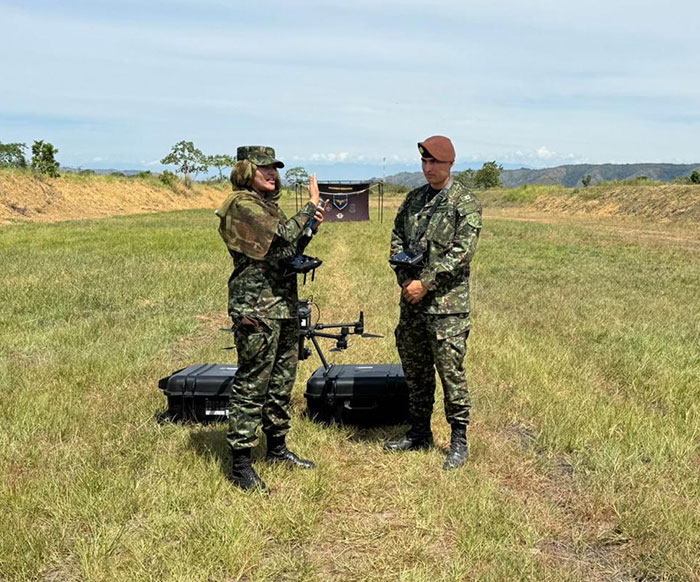
Image credits: Supplied
She also speaks about her mother, who was killed when Mora was just 15 years old – an event that Leiva says left her and her brother without parental support. Mora describes her mother as the inspiration that drove her to pursue a career in the military.
“Her strength and her motivation have always been a constant in my career and my life,” Mora says in the video.
In comments made to local media, Paul Ochoa, a former soldier who served under Mora, described her as “professional, strict, dedicated; a true officer” and called for more transparency in the investigation, including the release of the friend’s testimony. After seeing initial reports of her femicide, Ochoa had earlier taken to social media to insist that Mora’s killing “cannot be reduced to a mere ´relationship issue.´”
Leiva expressed similar sentiments, saying that one of the family’s chief concerns is that Mora not be remembered only for the way she died—especially given what she had overcome to distinguish herself in the Colombian military.
That is why he is leading efforts to establish an annual national prize for the most outstanding female military officer in Colombia, to be named after Mora.
“She was a pioneer,” he said. “It’s not just about naming an award after her because of the tragedy, but about recognizing that she was an outstanding person.”
Weapons and Antecedents
Mora’s killing raises many questions—including about the weapon used against her. General Cardozo publicly acknowledged that the firearm used in the killing was not official military issue. Two additional weapons were also later found in Másmela’s quarters on the same base, both reportedly without legal permits.
According to Leiva, the weapons found in the possession of Másmela point to a potentially larger problem across the organization. “How many more [irregular weapons] are inside those walls?” he asked, in reference to Cantón Norte.
Luís Eduardo Leiva at his office in Bogotá
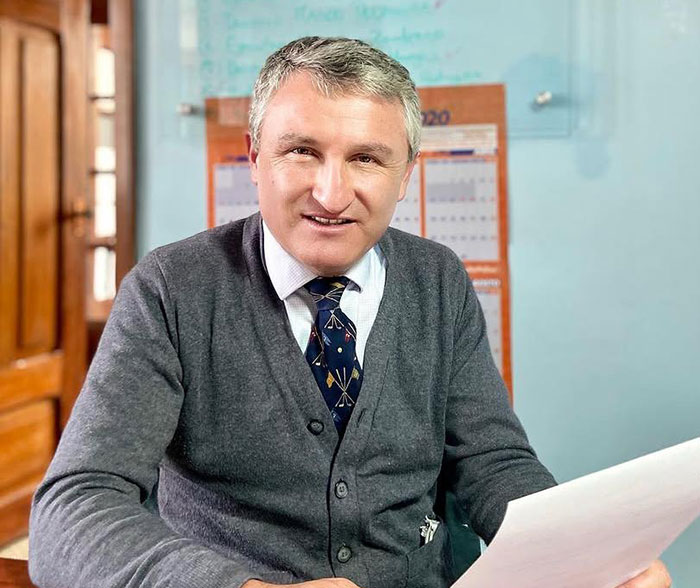
Image credits: Supplied
Another key question is what the army may have known about Másmela before November 26 and whether it put adequate safeguards in place. According to Leiva, a previous partner had made a formal complaint against him, including alleging that he threatened her life with the phrase “si no es por mi, no es por nadie”—the Spanish equivalent of “if I can’t have you, nobody can.”
If that complaint was on record, he argues, it should have triggered more serious scrutiny. Instead, Másmela was able to keep unregistered—probably illegal—weapons and continue rising through the ranks. When he killed Mora, he was reportedly staying at Cantón Norte ahead of his own promotion ceremony, having recently completed a course to rise to the rank of major.
That, in turn, raises another uncomfortable question: whether the Army’s psychological screening and internal review processes are capable of identifying officers who pose a risk to people around them.
“I believe that, for example, when it comes to promotions and the review of medical and psychological records, there should be an independent body,” Leiva said.
When Institutions Fail to Protect
For Alejandra Garzón Cortés, a lawyer with women’s rights organization Sisma Mujer, the prior complaint against Másmela points to a pattern of what she describes as institutional violence—when state institutions fail to act with appropriate urgency on threats against women.
According to Garzón, threats like the one Másmela allegedly made are often minimized by authorities, particularly when they come from members of the security services. There is a tendency to dismiss verbal threats as less serious than physical violence, she explained, and an assumption that someone in uniform represents integrity rather than danger.
Alejandra Garzón Cortés is a lawyer at NGO Sisma Mujer
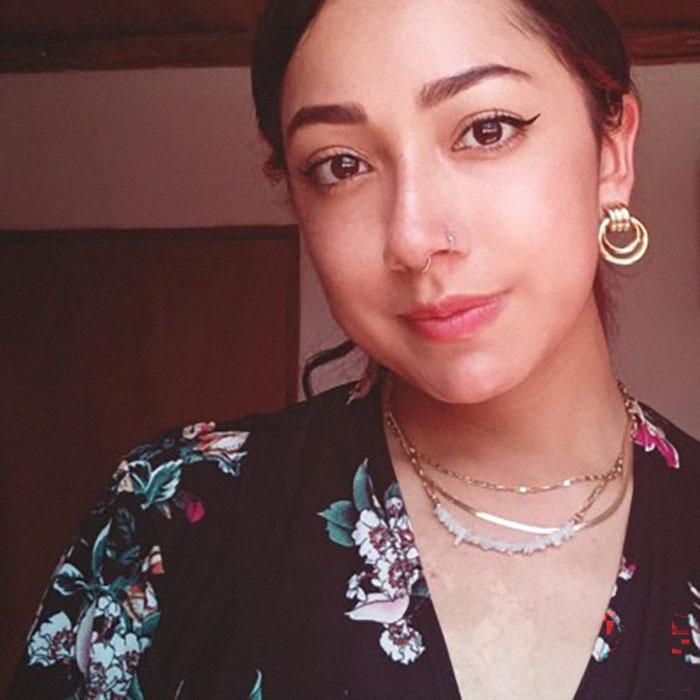
“Also important is why these things happen in settings that should be monitored,” Garzón said. “And it has to do with what I’m mentioning: these are people who believe they have a kind of protective shield, and that nothing will happen to them because of the consequences.”
Garzón said that military training itself can foster what she called an “excessive and abusive control over women’s lives and safety,” and that perpetrators often believe their position grants them impunity.
The military, for its part, has expressed condolences and said it is cooperating with the relevant authorities. Leiva says senior officers have behaved respectfully in dealing with the case. But in writing, the institution has remained guarded and declined to address key questions about prior complaints, weapons and internal processes.
In written responses to questions submitted by Bored Panda, the Colombian National Army cited an ongoing investigation and said they could not disclose specific information that might interfere with proceedings. Requests for comment sent to the offices of the Inspector General and Attorney General went unanswered.
The Ultimate Act of Control
For Carol Rojas Garzón, coordinator of the Colombian Femicide Observatory, the most revealing thing about Mora’s case is not simply that it happened on a military base. It is that Mora had exercised autonomy. She had ended the relationship and had decided that a man she had once spent time with would no longer have access to her life.
That decision, Rojas said, is precisely the kind of moment that can trigger lethal violence in a deeply unequal society. “Femicide is the ultimate act of control,” she said. “It is not a homicide like any other. There is an additional element: the woman is killed because she is a woman.”
For Rojas, the language used when reporting on such cases can soften the violence and obscure its logic. Women are not killed by partners or ex-partners because they are caught in tragic love stories, she argues. They are killed because a man decides he is entitled to control the outcome of a woman’s life. As the case of Mora highlights, not even a highly trained woman who has excelled in a male-dominated environment is safe.
Másmela and Mora in an undated photograph
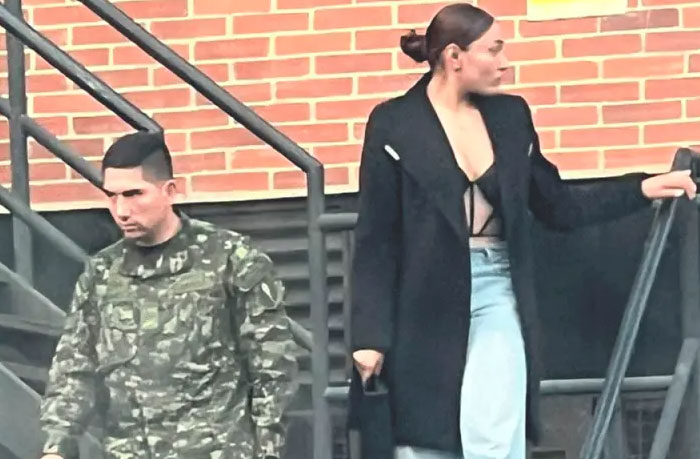
“Even in a context of security, militarization, and state agents, women are in danger,” Rojas said.
The setting, then, is not incidental. Cantón Norte is one of the most tightly controlled military installations in Colombia, a place associated with order, discipline, and force.
If a young female officer could be killed there by a fellow officer after ending a relationship, Rojas said, it should force a wider reckoning with the limits of the protection women are told institutions can provide.
Colombia’s Femicide Epidemic
Mora’s killing would likely have drawn prolonged national attention in many parts of the world, but it landed in a country where femicide is neither rare nor receding. Colombia has one of the region’s more developed legal frameworks on the issue, yet women continue to be killed at an alarming rate, often by current or former partners and regularly after warning signs were dismissed or ignored.
Official and civil society figures vary depending on methodology, but all point in the same direction. A “Gender Snapshot” report, published in December by Colombia’s official statistics and planning agencies in collaboration with the United Nations, stated that 1,017 women were killed in 2024. Meanwhile, the Ombudsman’s Office registered 745 femicides in the first 10 months of that year, based on its own criteria.
Carol Rojas Garzón is Coordinator at the Colombian Femicide Observatory
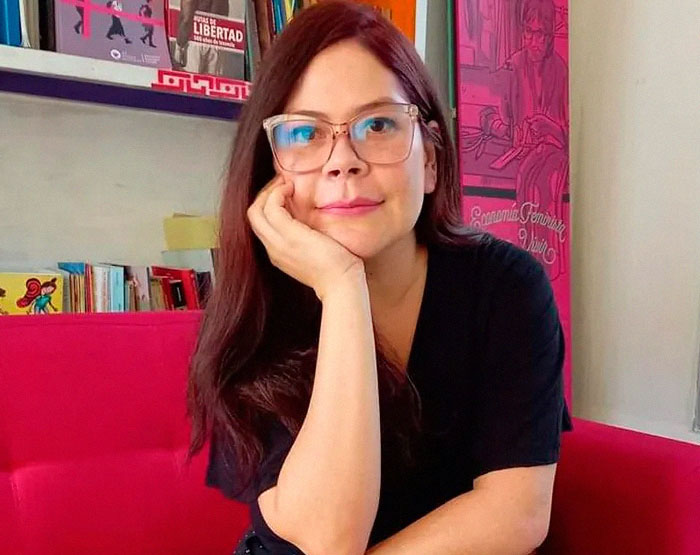
Colombian Femicide Observatory
According to the Colombian Femicide Observatory, 2024 was a record year for recorded femicides, with the organization observing 886 in total—an average of 17 women murdered every week and a 69% increase on the 525 femicides reported the previous year.
The country’s legal framework is, on paper, relatively strong. The Rosa Elvira Cely Law of 2015—named after a woman brutally raped and murdered by a university classmate in Bogotá’s National Park in 2012—established femicide as a distinct crime rather than treating it simply as homicide.
But Rojas says the gap between the letter of the law and its implementation remains vast. “We have legislation that is absolutely at the vanguard globally,” she said. “But that does not mean the law governs reality.”
Part of the problem, she argues, is that violence against women has been so normalized “that it is seen as a minor matter.” In that environment, jealousy, control, threats and intimidation are often treated as private drama rather than clear warning signs. By the time institutions recognize danger, it may already be too late.
Another difficulty is visibility. For years, the Colombian Femicide Observatory has been one of the key independent bodies tracking killings of women and building datasets used by journalists, lawyers and campaigners. But Rojas said that since September the organization has been unable to continue monitoring cases because funding dried up, in part because “international cooperation has changed.”
So as Colombia faces a continuing crisis related to gender-based violence, the civil society infrastructure tasked with monitoring the situation confronts an uncertain future due to reductions and shifts in foreign aid.
Searching for Answers
While Colombia has groundbreaking femicide laws, the legal framework around perpetrators who commit suicide is still murky. Because Másmela died at the scene, any criminal proceedings against him have effectively ended.
That has led Leiva to pursue other legal routes, including a civil claim against his estate. According to Garzón, the lawyer at Sisma Mujer, Colombian law allows what is known as an incidente de reparación—a reparations process that can include seeking compensation from a perpetrator’s estate for both material losses and moral damages.
However, Garzón noted that while this legal mechanism exists, achieving success in femicide-suicide cases has proven difficult. When the perpetrator is deceased and there is no conviction, families typically must pursue claims through the perpetrator’s heirs, who inherit the estate.
María Camila Mora with her brother
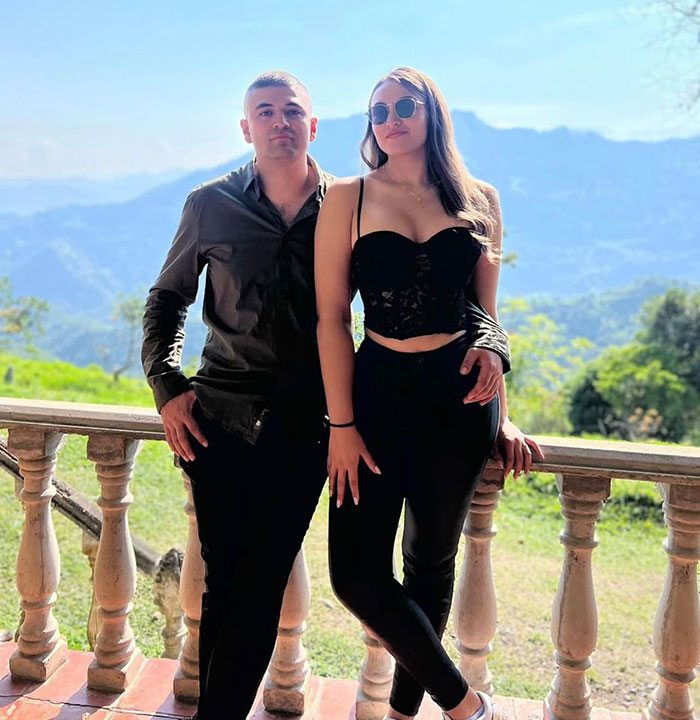
Image credits: Supplied
“Whether they have had success is complex,” Garzón said, referring to previous attempts by families to secure reparations in similar cases. “But the opportunity exists within the legal frameworks.”
If Mora’s family succeeds, Garzón believes it could set an important precedent. Given the high-profile nature of the case, a favorable ruling could open pathways for other families of femicide victims whose perpetrators evaded justice through suicide.
“It seems like men commit this type of action—then commit suicide as a form of evasion,” she said. “And the victims, the indirect family, are left empty-handed in terms of any kind of exercise of justice.”
Beyond the estate claim, Leiva is also pursuing a case against the Army over alleged failures of security and institutional duty.
That leaves Mora’s family fighting for both answers and accountability. Meanwhile, the implication of her killing is as stark as it is unsettling: if even Cantón Norte could not protect a woman from lethal violence, where in Colombia can women feel safe?
 Follow Us