Not every strange rash or new mole is a sign of a major health crisis. But ask any survivor of a serious illness what actually saved them, and the answer is almost always the same: they saw a doctor before it was too late.
That’s exactly why, a while back, the internet asked healthcare workers to share the warning signs people tend to ignore. Among the red flags they pointed to repeatedly were unexplained weight loss, blood in the stool, and sudden flashes of light. All small signs that are easy to dismiss but often mean something bigger.
We’ve gathered the most critical of those insights below, because they just might be the push you needed to call your own doctor finally.
#1
Doc here! Unintentional weight loss is a red flag, followed closely by any blood in the stool or black stool, aka old oxidized blood. On the flip side, grey stools are also bad news bears.

Image source: lightbluebeluga, Cyrielle Fuchs

#2
Cancer surgeon here. A bleeding ulcer on the face that “started out as a pimple” but won’t heal or go away in a normal timeline like a pimple should? That should be evaluated. Had a lady who let a “pimple” on her cheek grow and grow and grow… until she started wearing masks to hide this crater eating away at her cheek.
By the time she saw me, it ate through her eye and skullbase, and was in her brain. It was squamous cell carcinoma of the skin. When it gets to your brain, it’s too late.

Image source: runningonrun, Pablo Merchán Montes
As wild as these warnings from doctors and nurses sound, medical delay is far more common than most people care to admit.
A 2025 survey found that six in 10 Americans ignore symptoms that don’t feel “serious.”
Nearly half of men (46%) brush off early health warnings under the tough-it-out belief that they can power through the discomfort — compared to 38% of women.
Women, on the other hand, face a totally different form of hesitation: 44% delay seeking medical care simply because they fear being seen as dramatic or overreacting to a minor issue.
#3
Nurse here. I’d say unexplained weight loss, blood where it shouldn’t be (stool, urine, coughing it up), a persistent cough, chest pain, worsening shortness of breath, new lumps, and extreme fatigue that doesn’t improve with rest. Too many people chalk these up to stress or getting older. Sometimes it’s nothing but sometimes catching it early changes everything.

Image source: sammyg723, Miikka Luotio
#4
I’m always shocked about the number of people who have rectal bleeding/bloody stool for months and don’t see anyone about that. Yes it could just be haemorrhoids but it could also be cancer, even in young people.
Edit : kind of disturbed by the number of colleagues who are not looking into bloody stool/rectal bleeding. Since several people asked, if it were me I would :
1. Reiterate why you want it to be looked into (other than the obvious “bleeding from your b**t ain’t normal, doc”). You’re bleeding, you’re worried about inflammatory bowel disease or cancer, especially if you have a family history.
2. Ideally you wouldn’t have to be the one to ask for specific exams but if you are : I’d ask for at least a recto-sigmoidoscopy initially to rule out haemorrhoids, if that’s normal then a colonoscopy. If they refuse/are really a******s about it then ask them to document in your file that they are refusing the exam and why. Then get a second opinion if possible.
Rectal bleeding is not always cancer or IBD, sometimes it’s benign causes, but new bleeding or bleeding that doesn’t have an established diagnosis is never “normal”.
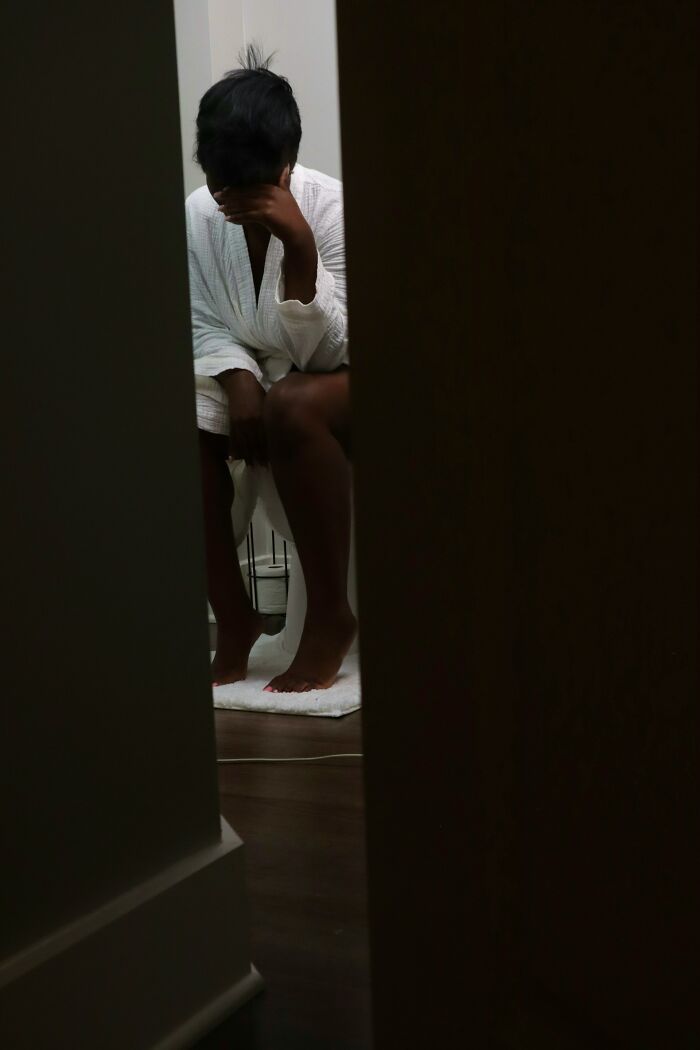
Image source: Longjumping-Word8336, ManuelTheLensman
#5
Sudden onset flashing lights in the vision, a rush of new floaters or progressive loss of visual field/black curtain in vision are all warning signs for potential retinal tear or detachment which should be promptly evaluated.

Image source: binxaphinx, Mariela Ferbo
The problem is that brushing off “minor” changes gives underlying conditions the head start they need to become catastrophic.
A Cancer Research UK study of nearly 7,000 adults found that nearly one in three people waited over six months to call their doctor after spotting a potential cancer red flag.
Many held off because booking an appointment felt like too much of a hassle, or they simply tried to deal with the symptoms on their own.
This means warning signs like unexplained weight loss, new bumps, changing moles, or coughing up blood are routinely swept under the rug for half a year or longer.
#6
Toothache. Could lead to systemic issues like cellulitis or sepsis.

Image source: lilredridinu, Getty Images
#7
Post menopausal bleeding
Blood in stool
Blood in urine
– Internal medicine MD.

Image source: adrsaurusrex, Getty Images
#8
General caveat to the answers in this thread: these are all always more worrisome in older patients. Please encourage your older friends and loved ones who mention such things to you to seek care and to keep up with their recommended screenings (colonoscopies, mammograms, lipid testing). I see too many active, stubborn 60 somethings who only came in because their spouse/child/neighbor insisted, to find a new serious diagnosis that would have been even worse had they waited longer.

Image source: secondarysurvey, Getty Images
So why do we rationalize away symptoms even when we know something is wrong?
It’s because of cognitive avoidance, which experts believe is our natural defence mechanism.
“People will cognitively avoid things they don’t want to be real; it’s a natural defence mechanism… Patients will lead the discussion in a certain way, so that the doctor will be more likely to reassure them,” says Dr. Kim Lavoie of Montreal Behavioural Medicine Centre.
She notes that ignoring symptoms of a disease with a high mortality rate is a surprisingly common phenomenon.
#9
The ‘I’m just tired’ excuse, until you’re actually just dying.

Image source: Wrong_Customer_9728, Annie Spratt
#10
Not a doc but:
I’ve got a mole on my abdomen right now that’s probably just getting irritated from the waistband of my underclothing rubbing on it. But I’m gonna get it checked out because ignoring it is how you end up with skin cancer that turns deadly.
Had a coworker that ignored some skin problems for a long time and ended up with cancer she couldn’t get ahead of. She passed a couple years ago.
Check your skin peeps. If something’s different, get it checked. Better it be nothing than…something.
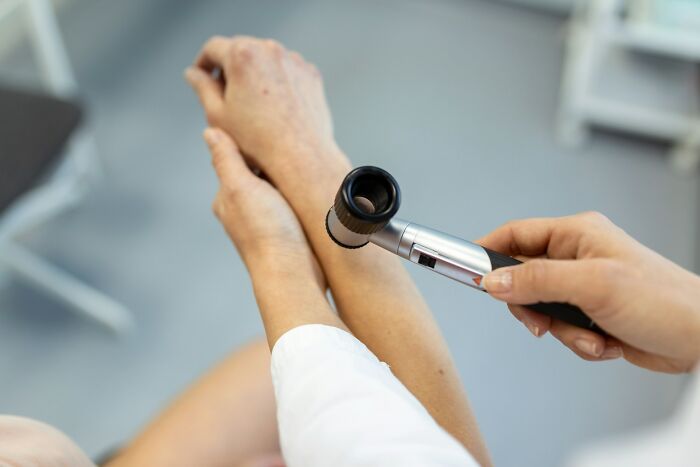
Image source: wanderingstorm, Getty Images
#11
I am a doctor! Realistically any persistent symptom going on for months should be checked out at least once. Any persistent symptom that has been checked out multiple times with no cause found is probably fine.
That being said, my fun answer is hiccups. Cancer every time.

Image source: Smirking_Greek_God, National Cancer Institute
There is a brand-new player feeding into medical delay now: Artificial Intelligence (AI).
Many people are turning to AI chatbots for quick health answers. A recent study done in the UK revealed that one in seven people now use AI tools for medical guidance. A quarter of them do this to avoid long waiting lists.
In the same survey, one in five users said the technology did not encourage them to seek a professional opinion. The same number of people said they decided to cancel or skip seeing a doctor based on what a chatbot told them.
#12
If you’re suddenly constipated and cannot go for extended periods well outside your normal, go to the doctor. I have seen too many bowel obstructions from new masses that people have just… not pooped for 2 weeks or more before saying something to anybody or seeing a doctor/the emergency room. Pooping (or it’s lack) can be an emergency!

Image source: dubaichild, Getty Images
#13
Not a doctor, but I had breast cancer that needed to be removed. They found mine when it was really small, because I had a mammography done. The other woman in my room, she told me that she had had a lump under her arm for months, “like a little egg”, and she could move it, too. Her doctor said, it was “nothing”. … Until it wasn’t nothing.
All we other women had to have a special test done. They inserted a needle into our breast to see if the cancer had spread. (No, don’t ask me how THAT works. I don’ know. Somehow with radioactivity. I only know that it didn’t hurt much, so that was okay.)
Anyway. They didn’t need to give HER that test, because her cancer HAD spread. (Which also meant that she needed full chemotherapy after the surgery. I did not.).

Image source: P44, Getty Images
#14
When I was rotating through ER in my medical student years my preceptor told me three presentations that scare them the most.
1. New onset headache in an adult
2. Epigastric pain
3. Hemoptysis (coughing up blood).

Image source: Previous_Nose6356, Getty Images
Relying on AI for medical help is a dangerous gamble. Previous research shows that AI overviews can easily spit out false, missing, or misleading health advice.
“AI can provide quick answers, but it cannot examine a patient, fully understand their medical history, pick up on subtle signs, or make safe clinical judgments based on evidence. The information it provides can also be inaccurate, misleading or missing important context,” says Prof Victoria Tzortziou Brown, the president of the Royal College of General Practitioners.
#15
Pulmonologist here. Shortness of breath. A normal healthy person walking on flat ground should never feel short of breath. You shouldn’t have to stop walking on flat ground until you fall asleep or your feet hurt too much. If you need to stop to rest while walking at a normal pace, something is wrong.

Image source: digitalmunsters, Getty Images
#16
Nurse working in neuro rehab + had a friend (young) recently have an aneurysm.
Sudden onset of migraines when you don’t usually get migraines. Or sudden onset of extreme headache, like the worst headache you’ve ever possibly had. ER immediately. Can be stroke or aneurysm. And don’t let them tell you it’s “just a headache”. Advocate for yourself and your concerns.

Image source: habitual_citizen, Getty Images
#17
Yeah unexplained weight loss or blood in stool should get checked fast not ignored for months.

Image source: No_Leather8744, Curated Lifestyle
The instinct to deny a problem isn’t the only thing keeping people out of the clinic. Often, the price tag does the job for them.
Fear of what a doctor might find is scary, but for millions of families, the bill that follows is even scarier.
Nearly all Americans carry health insurance today, but having coverage no longer guarantees you can actually afford to get sick. Healthcare debt has ballooned into a national crisis, with Americans collectively owing an estimated $220 billion in medical bills, according to recent data.
#18
Not a doc – but don’t assume mental changes in your elderly parents is just dementia. UTI’s present with mental changes even without urinary symptoms. Dementia has a slower progression.

Image source: bluemooncommenter, CDC
#19
Hi there. Not a doctor. But you see all the ones talking about weight loss and blood where it shouldn’t be? Yeah take that seriously. I thought I was just burning out. I was not.
It was Crohn’s disease paired with grade 3 anemia (7.3 hgb last I checked, probably way higher now thanks to medical intervention). I’m 90% sure thanks to comments by medical professionals that I was like a few pounds away from having a literal IV pump nutrients into me because the inflammation was SO BAD nothing was getting properly absorbed and my body was eating itself alive.
But hey, at least it’s not cancer! Haha. Ha.
I’m still recovering.

Image source: destroythefangirls, Sasun Bughdaryan
A 2025 survey by JG Wentworth revealed that 92% of US adults have delayed or skipped healthcare due to cost concerns.
About 95% of those surveyed admitted that an unexpected hospital trip would push them straight into serious debt — even with an active insurance plan.
To make matters worse, financial barriers are paired with a system stretched past its limit. Even when patients actively seek help, finding an available doctor covered by their insurance can take weeks. It can push critical diagnostic appointments out by months.
#20
MD, internal medicine.
Unintentional weight loss, a painless swollen lymph node or mass, shortness of breath, bleeding from any orifice, significant increase of abdominal circumference in a short time.

Image source: Yallneedjesuschrist, Getty Images
#21
Swollen ankles for no reason. Friend showed me his horrible ankles on the commute to work. Next week he was gone. Kidney failure.
Image source: Orumpled
There is another insidious driver of medical delay: patients stopping themselves from seeking help because past experiences taught them that they won’t be taken seriously.
This phenomenon, called medical gaslighting, happens when healthcare providers minimize, invalidate, or brush off a patient’s real physical symptoms.
Things get even worse when this mixes with gender, race, or age bias.
“Doctors end up asking about symptoms rather than the story. And [people] then get conditioned to talk about their symptoms instead of their stories. But studies have shown that over 80 per cent of diagnoses can be made just by listening. By that, they mean listening to the story, the open-ended story of what happened, rather than asking a list of yes-no questions,” says Dr. Leana Wen, author of ‘When Doctors Don’t Listen: How to Avoid Misdiagnoses and Unnecessary Tests.’
#22
Patient here: We don’t ignore it for months, we get an appointment at a doctor our insurance covers, and the next appointment is months away.
The USA healthcare system is broken and inferior to every other country the USA compares itself against.
It costs TWICE as much, and we have the shortest lifespans.
Image source: Fickle_Ad_8653
#23
Spontaneous unexplained blindness. I lost vision temporarily out of the blue. It was “inflammation of the optic nerve” and steroids treated it. Five years later I was diagnosed with a systemic inflammatory disease called Ankylosising Spondylitis. It affects so much more than just the spine.
Image source: ResidentLazyCat
An MD Live by Evernorth study conducted by Talker Research found that boomer women are the most likely group to dismiss their own daily aches and pains (68%).
Decades of subtle dismissals lead many older women to write off potential warning signs as “just a normal part of getting older.”
“Women’s health concerns have often been minimized or misinterpreted, leading many to second-guess their own symptoms,” explains Dr. Maggie Williams, medical director for Primary Care at MD Live by Evernorth.
“However, conditions don’t always present the same way in women, and when these differences go unrecognized, critical warning signs can be missed.”
Studies also show that people of color, especially Black and Hispanic patients, regularly face deep racial bias in healthcare. Their pain is frequently undertreated, and they are far less likely to be sent for advanced scans or tests.
#24
A change in bowel habit, especially if you have a first degree family member with a history of bowel cancer.
Image source: Ritaredditonce
#25
Even though dropping from 210 to 140 pounds without trying left me looking quite ill, my doctors completely missed the red flags and just praised the weight loss. It’s wild how medical professionals can be so focused on the scale that they congratulate you on looking visibly sick.
Image source: SignalHair322–
Doctors and nurses are there to treat the symptoms, but you are the one who has to spot them.
At the end of the day, it is you who knows your body better than anyone else, and trusting your gut could quite literally save your life.
So share these warning signs with your friends, check in on your parents, and push your partner to make that overdue appointment today.
#26
ER nurse here, lots of good ones so far. I’ll toss in stroke symptoms. They often get ignored for days instead of months but you really only have hours for useful interventions. If your speech, balance, vision or one side gets messed up all the sudden, go to the hospital!
Google what the look for so you can see it in your family members. They will often try to convince you to wait to take them. GO TO THE HOSPITAL.
Image source: Stinkymansausage
#27
My sister is a nurse and she always told me to watch(?right word?) my pee. If it smells funny/different and is darker than usual for a longer period of time you should go to the doctor or get tested.
Often a sign of STIs or other infections, diabetes, etc.
Image source: Agile_Lab_3668
#28
If it lasts for months, anything.
Image source: themobiledeceased2
#29
Not sure if this counts but for a couple of months I had what I believed to be just lower back pain. An xray and CT scan showed kidney stones. Wish I visited my doctor sooner.
Image source: H_M_C
#30
There isn’t an easy answer to this question. You should always investigate. Without medical knowledge you have no idea what is or isn’t a serious problem. The problem though is that 99% of the time it turns out to be something minor. 1 out of 100 people will actually have something serious going on.
In general though, if the symptom js severe, progressively worsening or persistent for weeks or months, you need to get checked.
Image source: ErroneousEncounter
#31
Weight loss. You don’t just accidentally lose 20 pounds. Even with effort, unless you’re really really being strict and radically change your lifestyle, dropping many pounds especially if you are all tired a lot more should be a red flag. Cancer until proven otherwise imho.
Image source: sebelius29
#32
After losing 55 pounds in a single year, my doctor just blamed my depression and increased my SSRIs instead of actually investigating the issue. Even though I’ve managed to gain some weight back, I’m still not where I want to be and definitely feel like it’s time to find a new doctor who will take me seriously.
Image source: Financial_Corner_658
#33
These are all really great examples, but I wish health care in general made it easier for folks to feel more comfortable getting these things checked out. Especially as a woman and a POC.
Image source: justalittleparanoia
#34
My husband had severe full body itching (even palms of hands and soles of feet). He was going for a physical soon so going to bring it up then but one morning I looked at his eyes and they were yellow. We got into our doctor that day and she sent him to the ER. Stage 4 pancreatic cancer. He passed 10 months later.
Image source: SkyEntire1749
#35
I lost 70 pounds in just six months without even trying, but instead of being concerned that I looked sickly, my doctors just kept congratulating me. It was incredibly frustrating to have such rapid, unexplained weight loss dismissed as a success instead of being taken seriously as a medical issue.
Image source: Fabulous_Slide_3739
#36
Exertional chest pain and/or exertional shortness of breath that is different than usual. This can often be a sign of coronary artery disease and should not be ignored. If it’s consistently exertional and due to blocked arteries, then it’s already in the severe range and needs intervention before a heart attack occurs.
Not all chest pain is from coronary artery disease, but all consistently exertional chest pain is coronary artery disease until proven otherwise. Also, don’t ignore sustained chest pain at rest that lasts longer than 15 minutes. Go to the ER. I’ve seen way too many people d*e that didn’t take their chest pain seriously and waited far too long to seek care.
Image source: Ayriam23
#37
Speaking anecdotally: Long term inflammation
That joint pain or abdominal bloating that doesn’t go away. That persistent cough long after an infection clears up. Brain fog and fatigue that don’t get better with rest.
So many of my cancer patients would notice these months and years before cancer was diagnosed. Sadly, standard medicine can’t do much unless it’s quite severe.
This is the time to clean up your diet, reverse insulin resistance and fatty liver disease, drop that extra weight, manage stress and build muscle mass. If you’re a woman in perimenopause, it’s time to start hormone replacement therapy. It’s a warning, a sign your body is not coping with multiple kinds of stress.
Once that inflammation reaches a tipping point, you are at much greater risk for diabetes, cardiovascular disease, arthritis, alzheimer’s and multiple types of cancers.
I was an oncology nurse for 13 years.
Image source: Talking_on_the_radio
#38
Night fever, usually mild 37,5º-38ºC could indicate leukemya specially in childs without any other symptoms.
Image source: SirFodingo
#39
For my part I had recurring migraines over several months that I attributed to normal stress and staring at a computer screen all day. As it turned out it was out of control blood pressure. Always get recurring symptoms looked at.
Image source: zerbey
#40
Abdominal pain.
Image source: BeeDNF
#41
Not a doctor, but my mom started having blurry vision around two years ago. The eye doctor gave her an eye patch so that she could work on strengthening her weak/blurry eye. Eventually some doctor looked at her and suggested she get an mri. Turns out she had a huge tumor on the end of her brain stem that was pushing on her optical nerve, causing the blurry vision. A few months later she was diagnosed with stage 4 cancer.
Image source: noiness420
#42
Unexpected weight loss.
Go see your doctor like yesterday.
Image source: refrainiac
 Follow Us