Love can inspire extraordinary sacrifices, pushing people to put someone else’s needs ahead of their own without a second thought. Sometimes, these selfless acts can leave behind heartbreaking consequences, especially when it changes the course of one’s life in ways no one could have predicted.
This woman believed donating a kidney to her sick mother was the right thing to do, even if it meant putting her own health on the line. Years later, she’s left grieving far more than the organ she gave away, after the life she carefully built for herself started unraveling in ways she never imagined.
More info: Reddit
Loving someone often comes with making great sacrifices, and these selfless acts can lead to a devastating personal cost

Image credits: tirachardz / Magnific (not the actual photo)

When her mother’s kidney failed, the narrator agreed to donate one of her own without hesitation
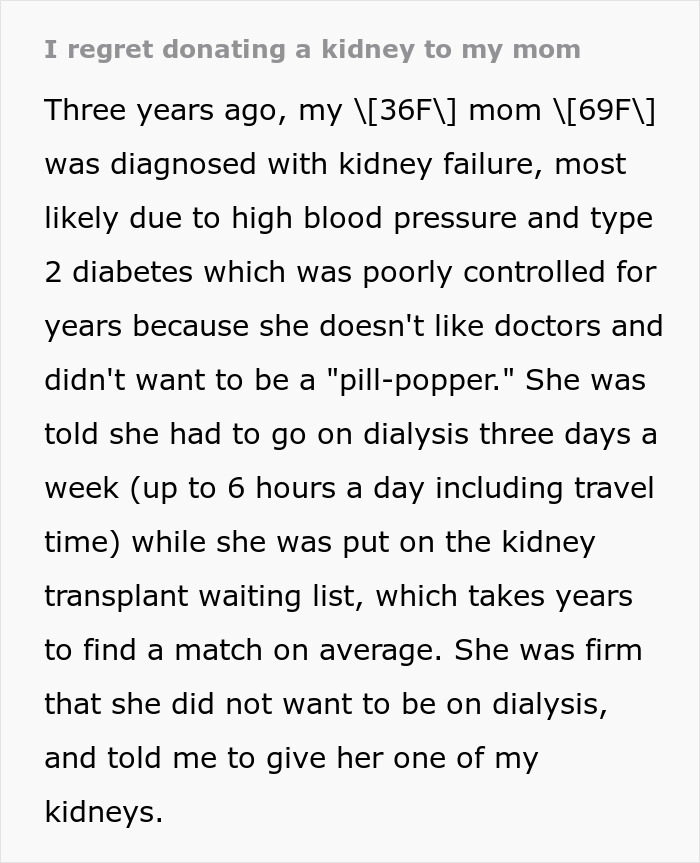
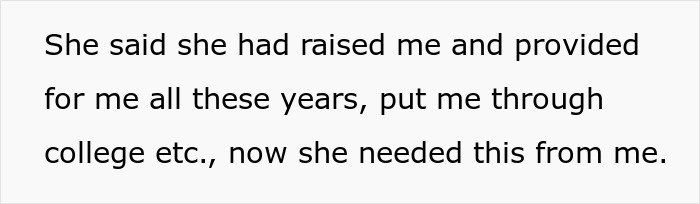

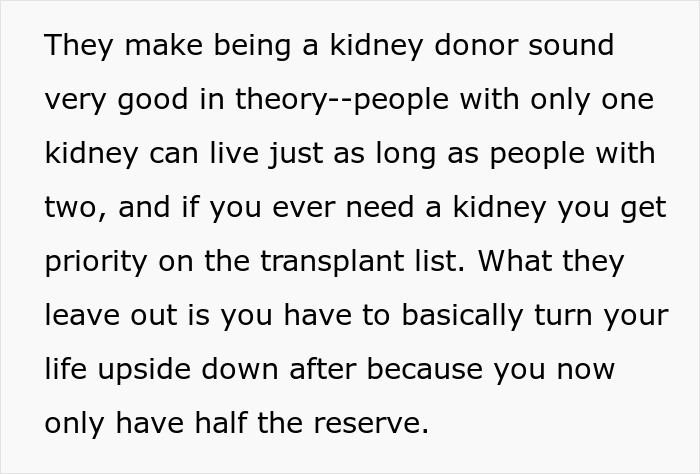
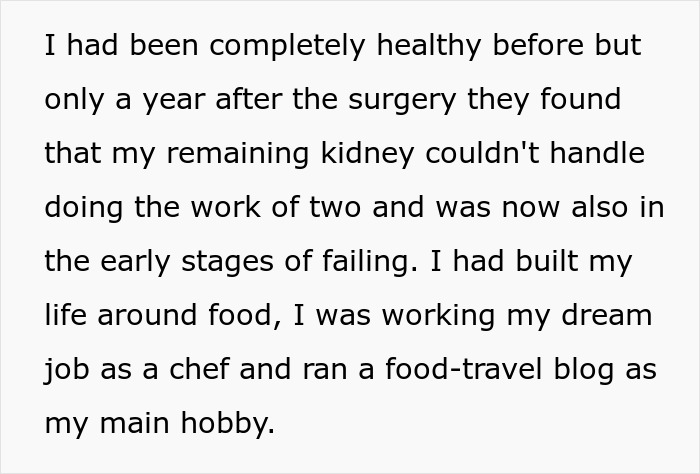

Image credits: primagefactory / Magnific (not the actual photo)
Since she was healthy, the poster believed life with one kidney would be manageable till her own health started unraveling
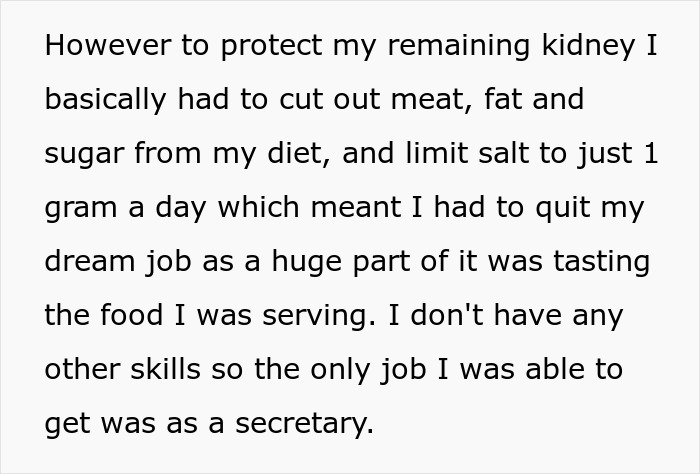

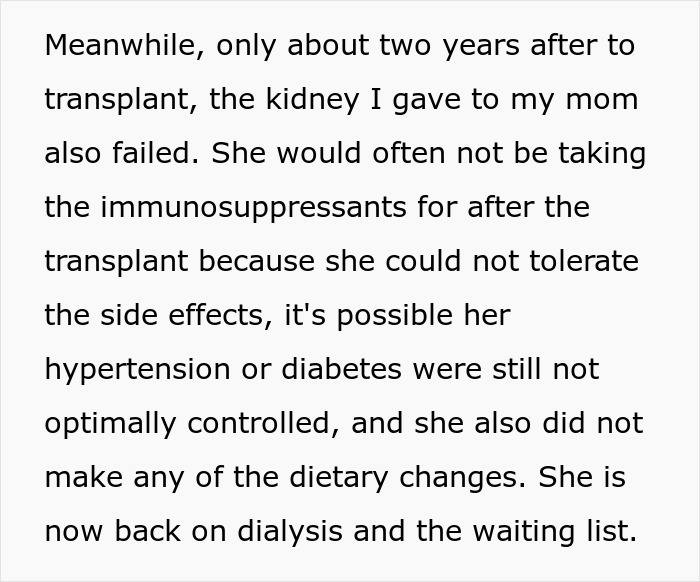
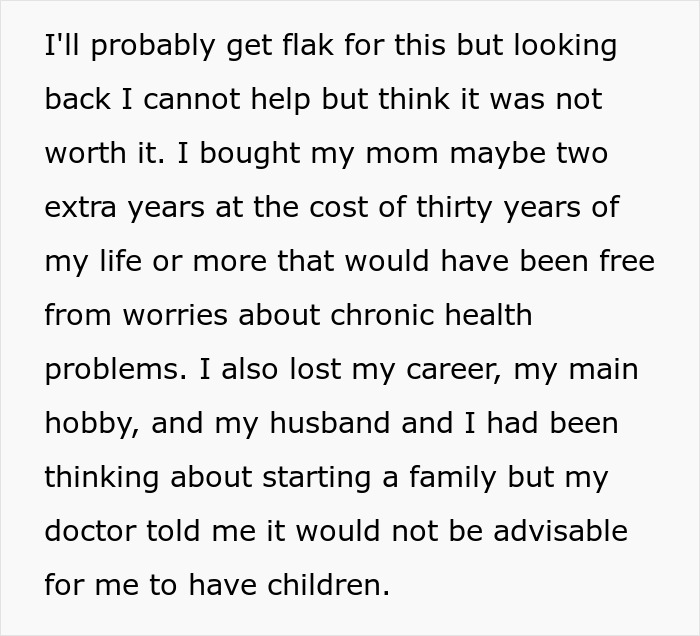
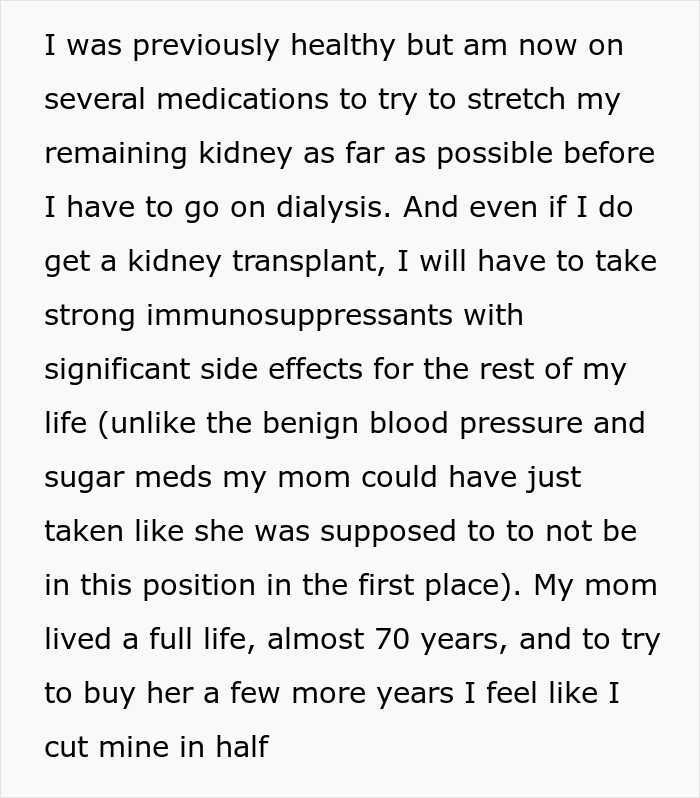

Image credits: 88studio / Magnific (not the actual photo)
The kidney she gave her mom also failed after she struggled to follow doctor’s recommendations, leaving both women with kidney disease

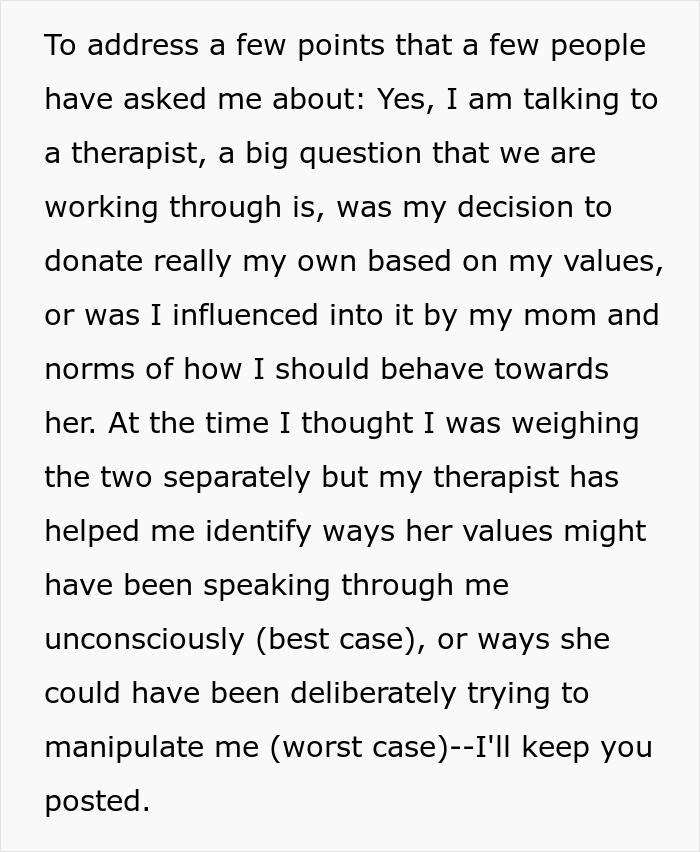
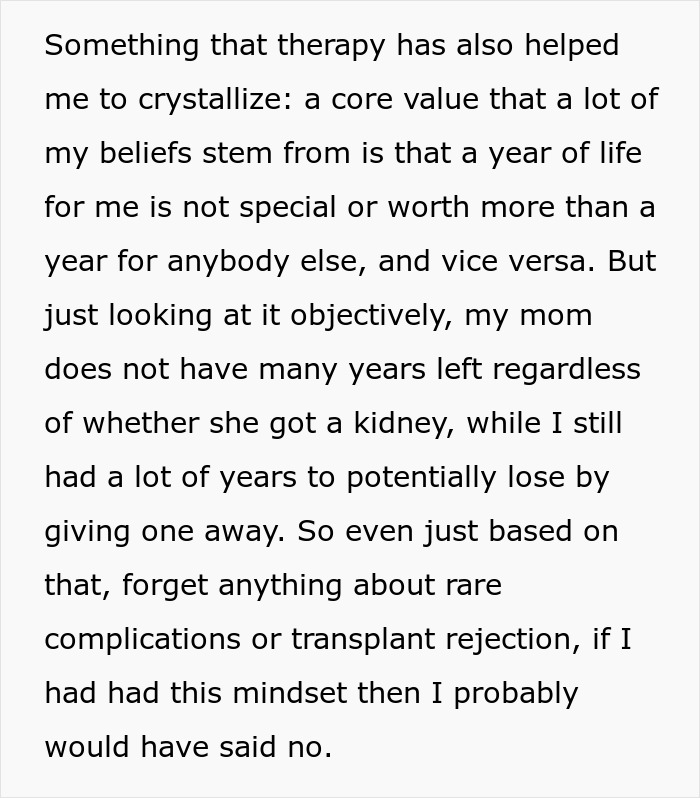
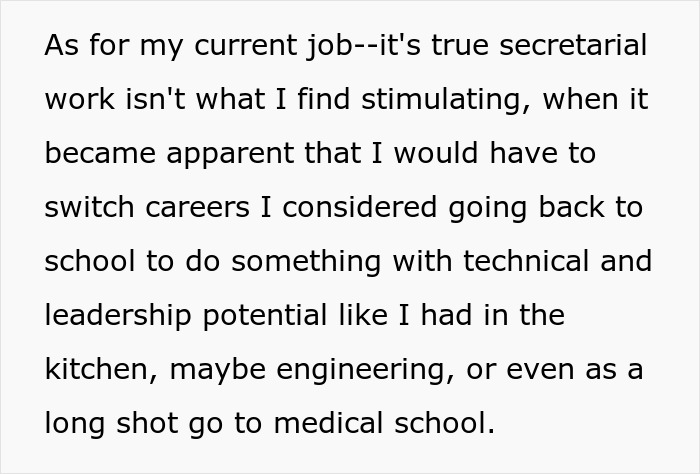
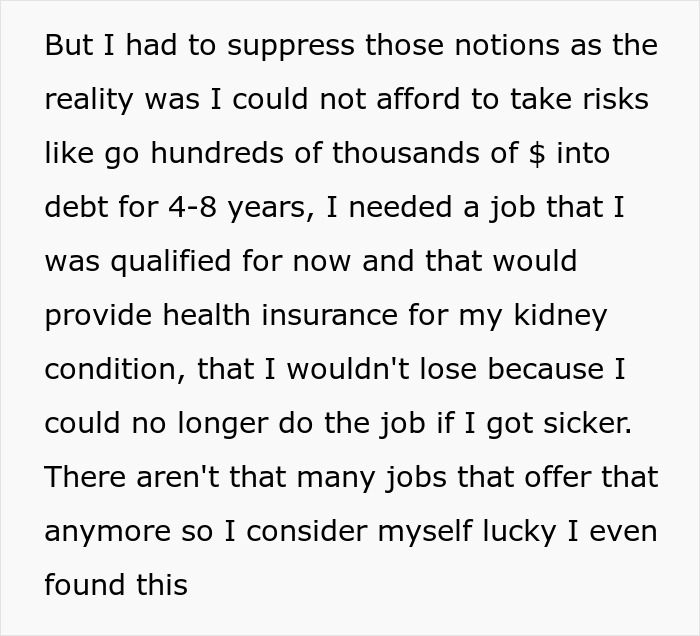
Image credits: ThrowRA-46242
The narrator regretted giving up her life, career, and dream of having children one day to save her mom
The Original poster’s (OP) mom’s kidneys failed after years of untreated blood pressure and diabetes. The only alternatives were dialysis or waiting years on the donor list for a transplant. Unwilling to accept either, the sick woman turned to her daughter and asked for one of her kidneys, reminding her of everything she’s done and sacrificed to raise her.
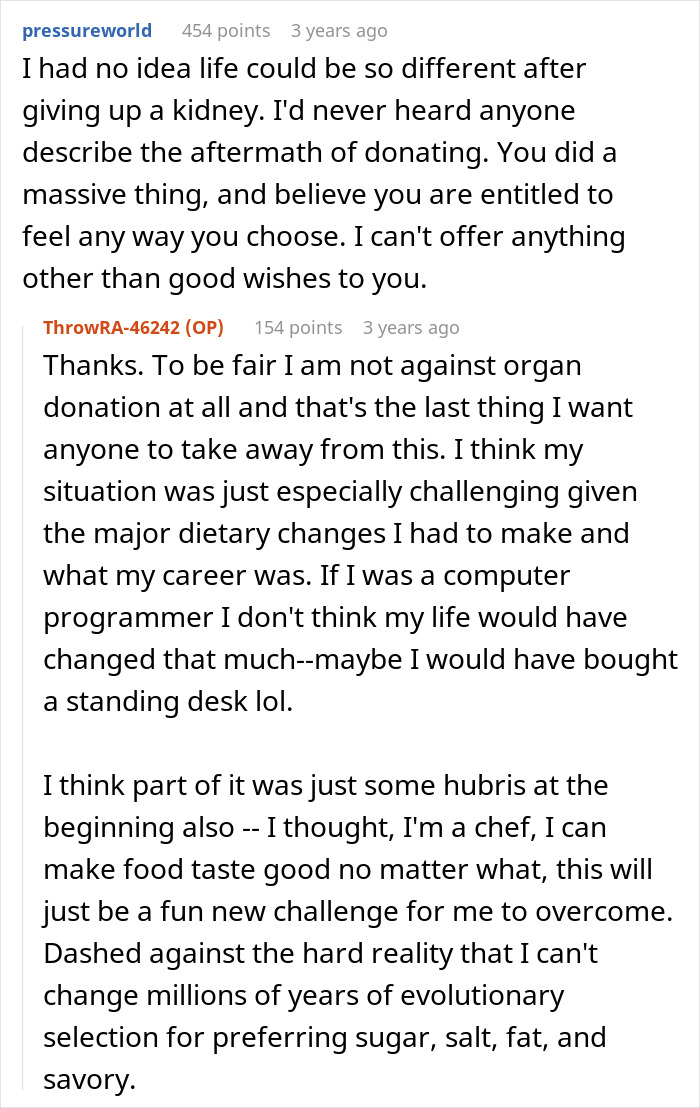
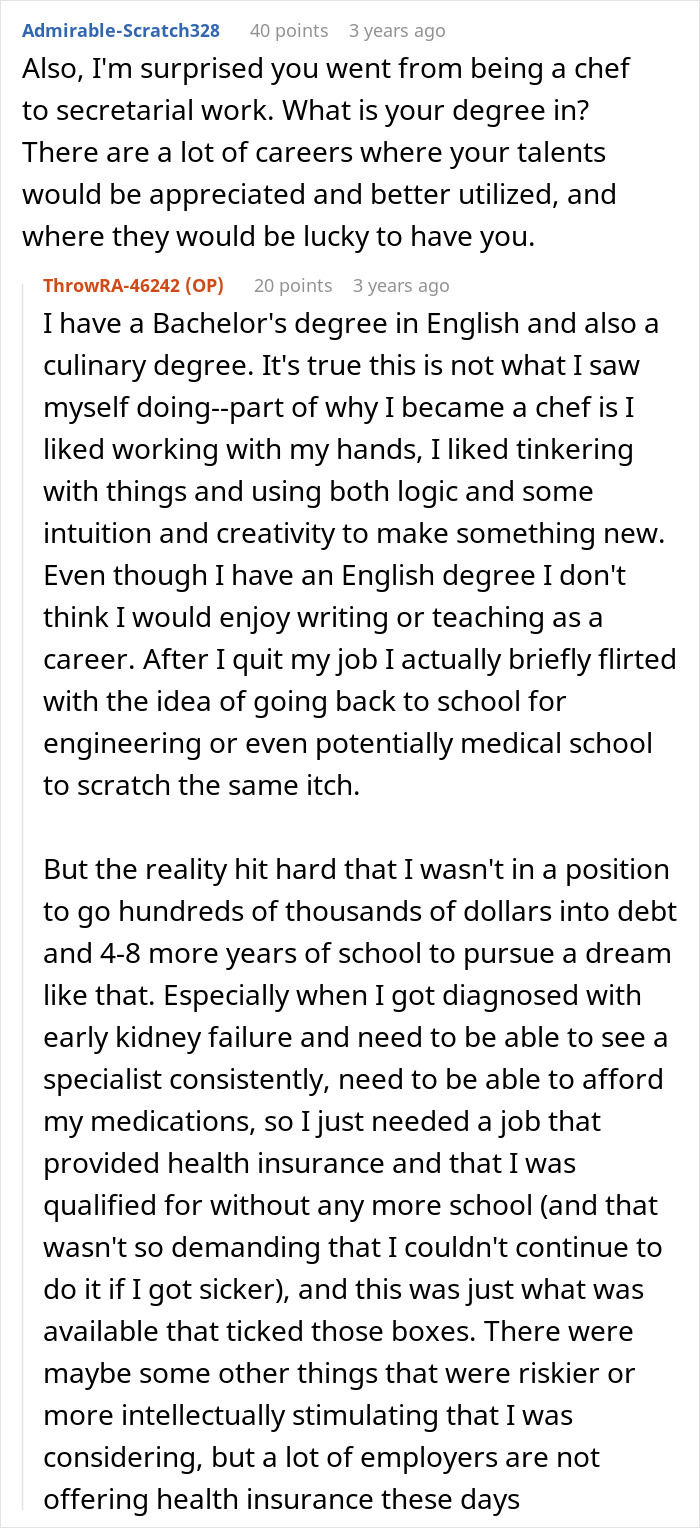
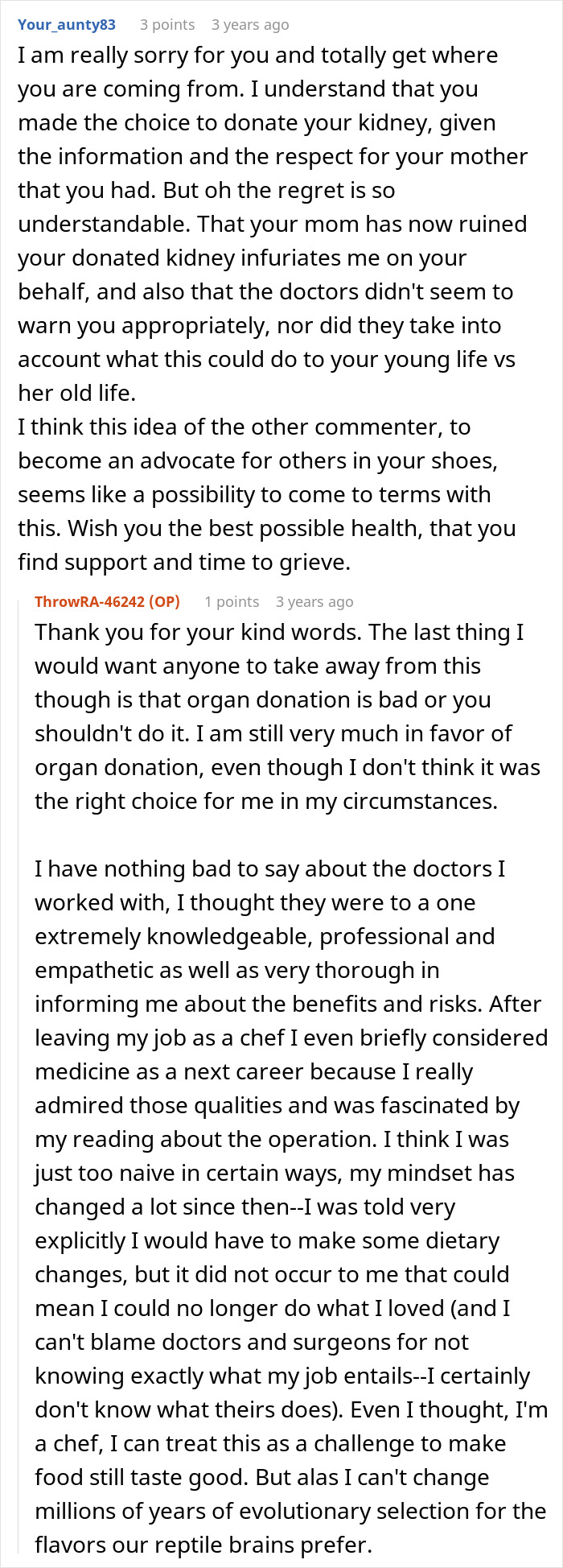
The narrator was torn between love, family expectations, and her own values, but she said yes. At first, she believed she made the right choice. Doctors reassured her that people could live long, healthy lives with just one kidney. After the transplant, she returned to the life she’s worked so hard to build as a chef and a passionate food blogger. Unfortunately, that optimism didn’t last.
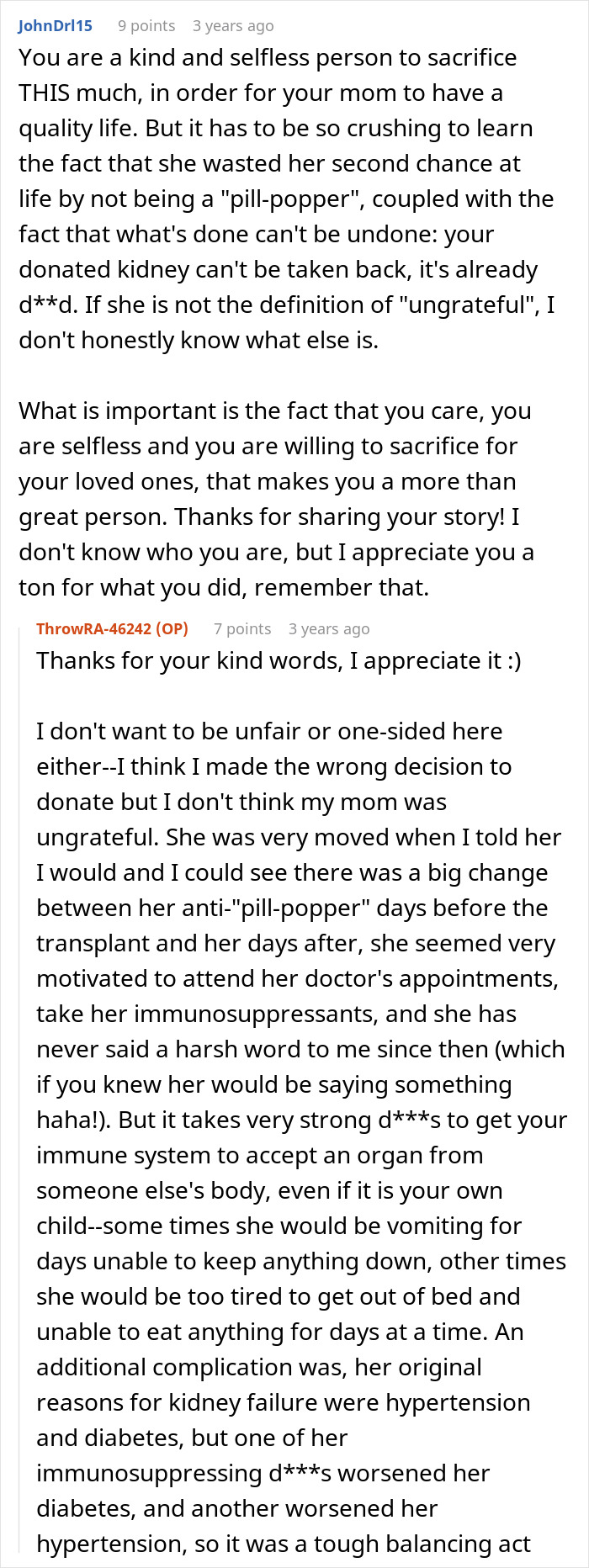
Within a year, her remaining kidney began struggling, forcing her to abandon her dream career and trade it for a desk job to pay her bills. The heartbreak didn’t stop there; just two years after the transplant, the kidney she’d sacrificed failed too. Her mom often skipped the anti-rejection medications, didn’t stick to the recommended diet, and ended up right back on dialysis.
The woman was devastated that her enormous sacrifice had bought her mom so little time. Now, she finds herself living with chronic kidney disease and taking medication every day. She is also sad over the loss of her dream career and grieving the family she may never have, since she may not be able to have kids ever, thanks to her failing kidney.
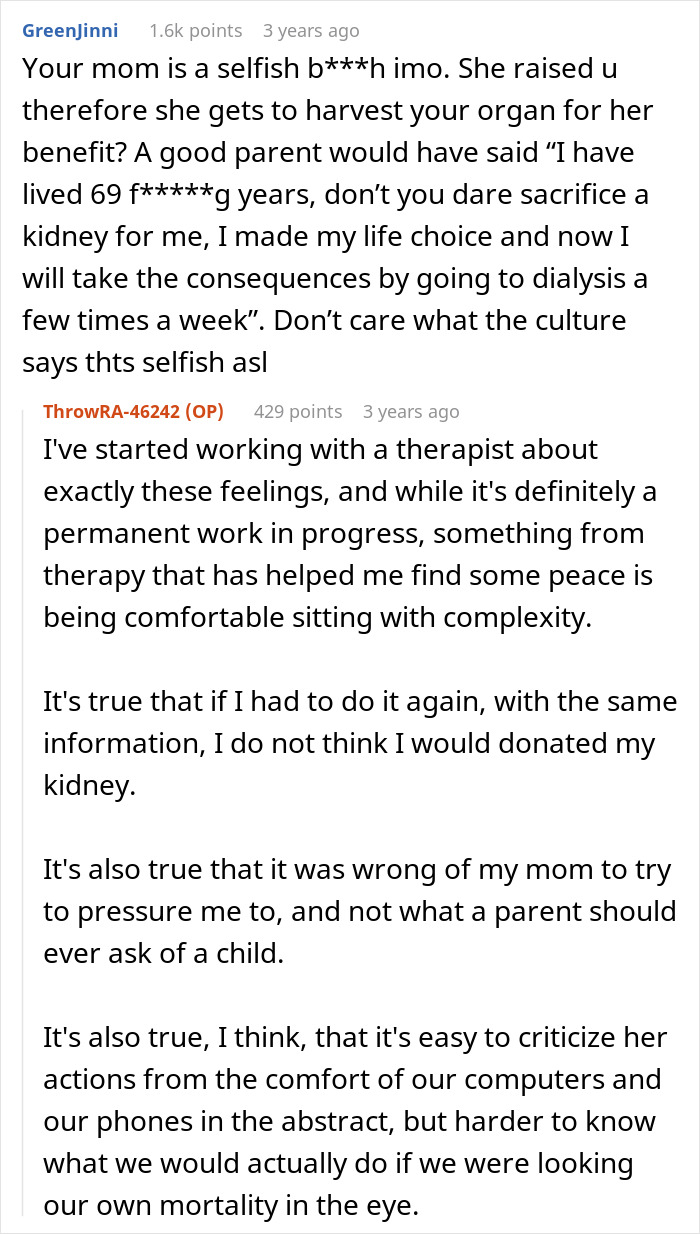
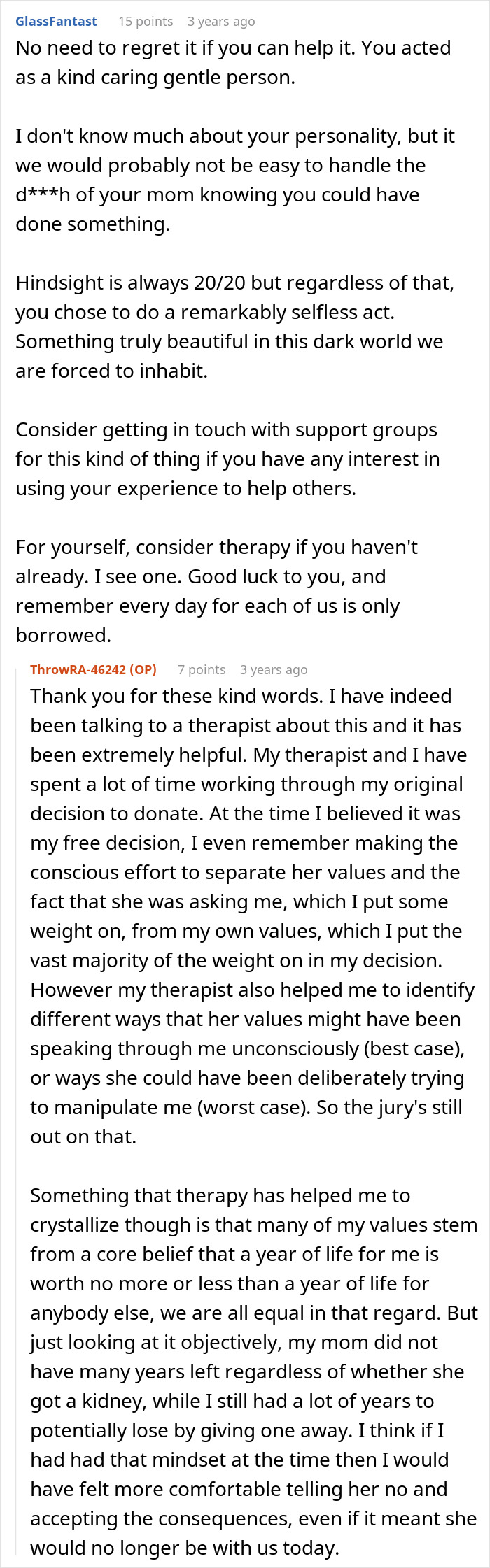
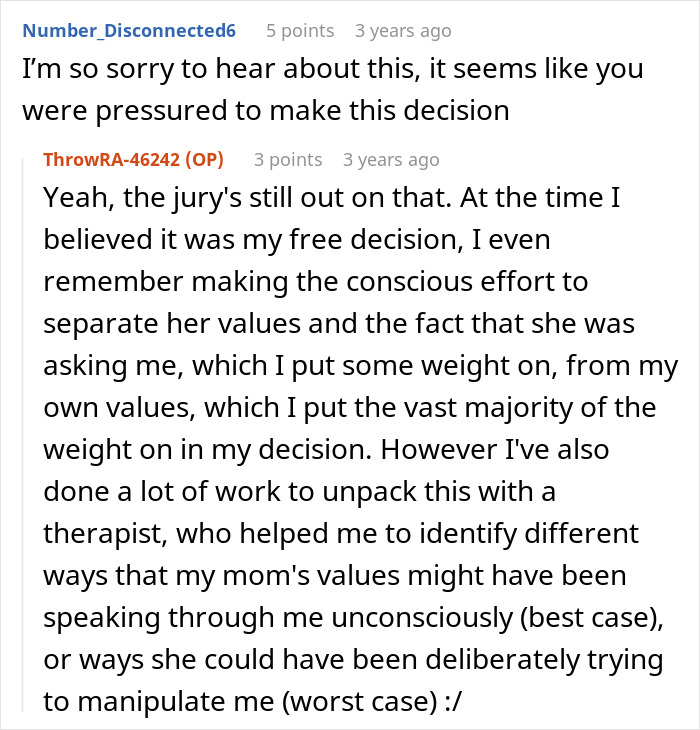
The narrator revealed that therapy has helped her untangle the love she thought she felt from the cultural pressure she grew up with. This is because the OP is a Chinese American and there’s much of fileal piety in their cultural tradition. In the midst of all this, she battled with the thought that she gave away a piece of herself to save her mom, only to lose so much of the life she’d dreamed of.

Image credits: DC Studio / Magnific (not the actual photo)
Living kidney donation is widely considered safe, and most donors go on to lead healthy, active lives. Even so, it’s still major surgery, and every donor undergoes extensive medical and psychological screening because no procedure is completely risk-free. In rare cases, donors can develop health complications that affect their quality of life, much like the woman in this story.
Experts also stress that living donations should always be voluntary and free from pressure. According to the American Journal of Transplantation, the doctors not only evaluate the donor’s physical health but also whether they are deciding without coercion, guilt, or family obligation. In this situation, the poster questioned whether cultural expectations influenced her choice more than she realized.
After a kidney transplant, recipients must carefully follow their treatment plan, including taking immunosuppressant medications as prescribed. According to Mayo Clinic, skipping these medications can significantly increase the risk of organ rejection and transplant failure, which might explain why the mom’s transplant failed just after two years.
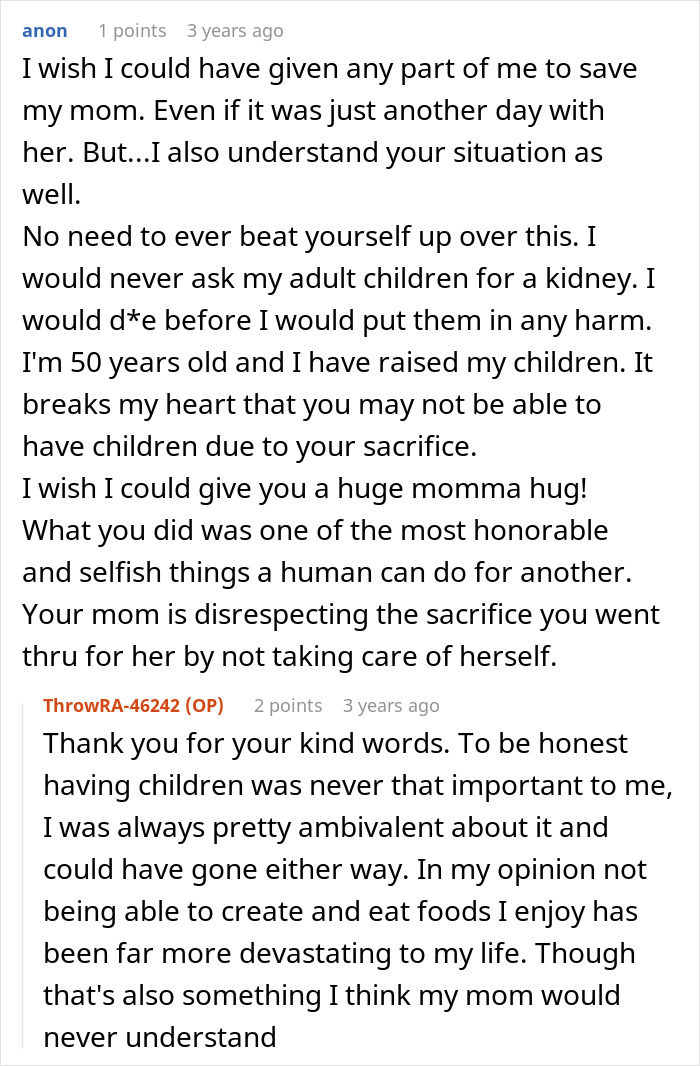
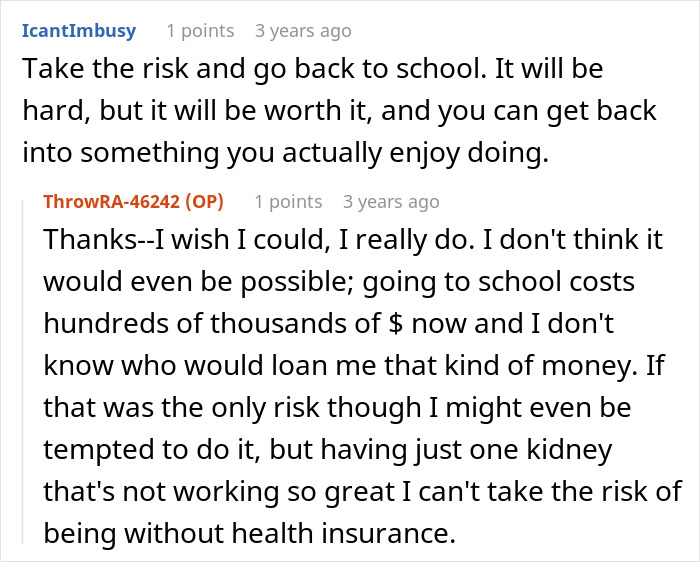
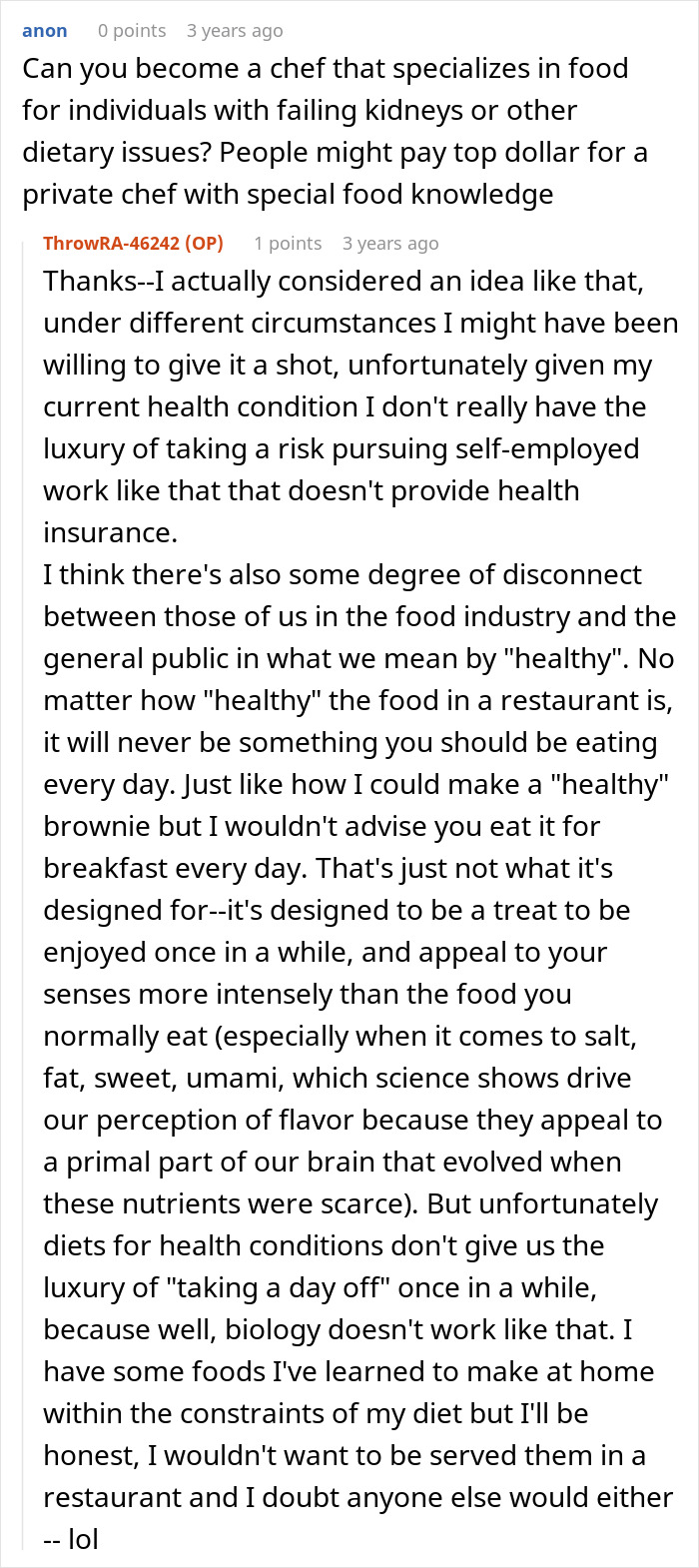
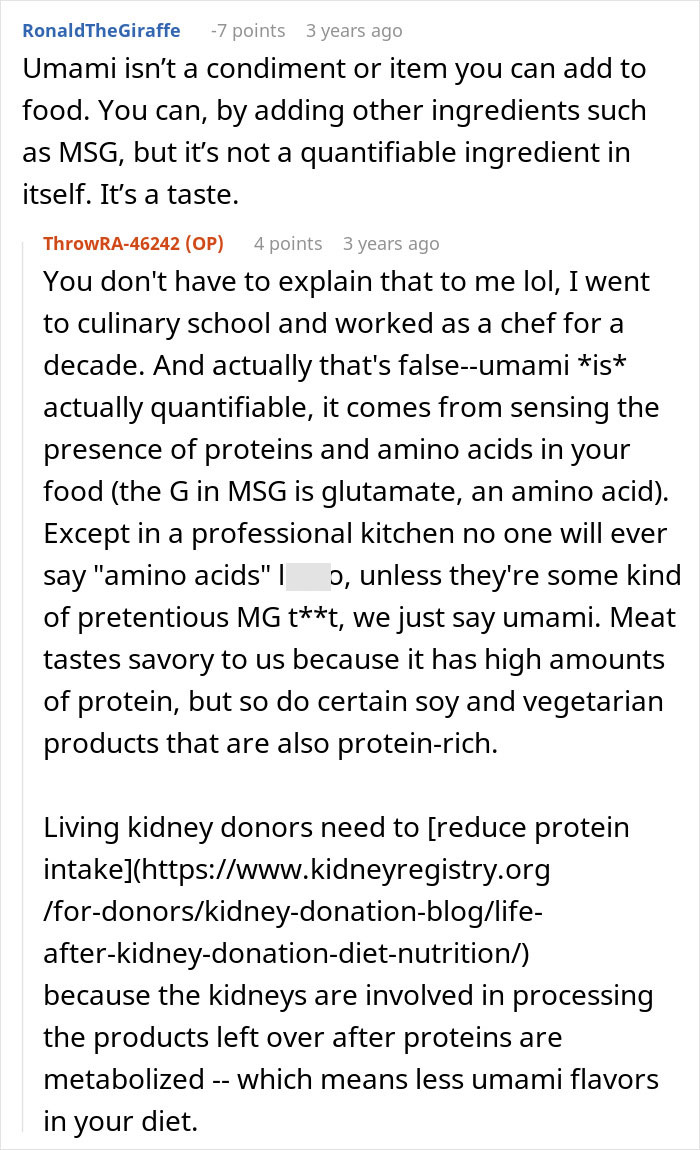
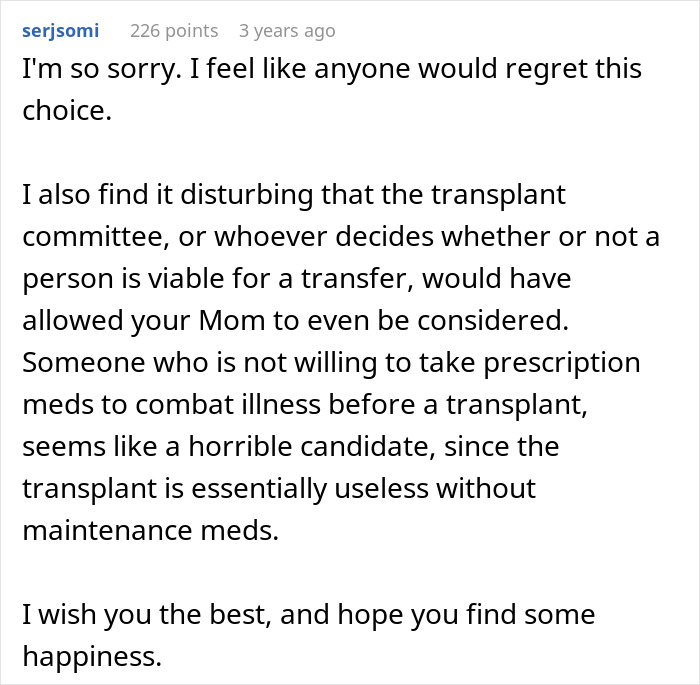
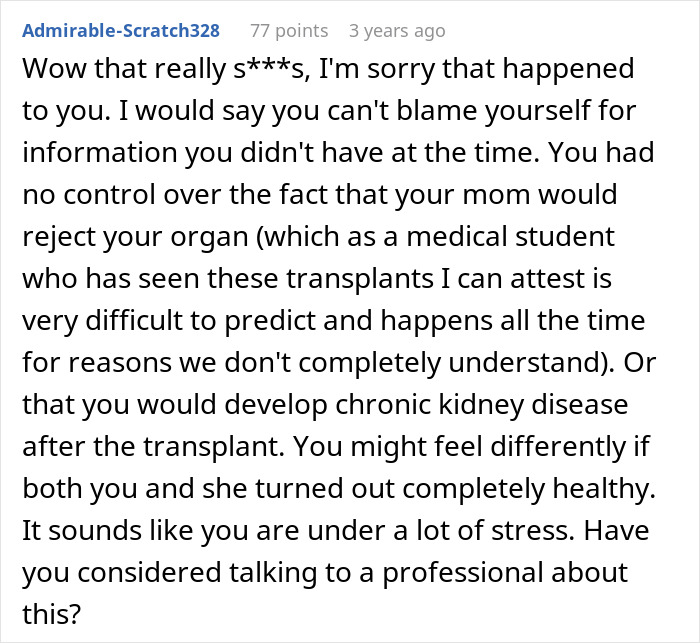
Readers were heartbroken by the woman’s story, saying that she might have been pressured into making an enormous sacrifice that turned her life upside down. What do you think? Is there truly a selfless act that is too great to make for our loved ones, despite the cost?
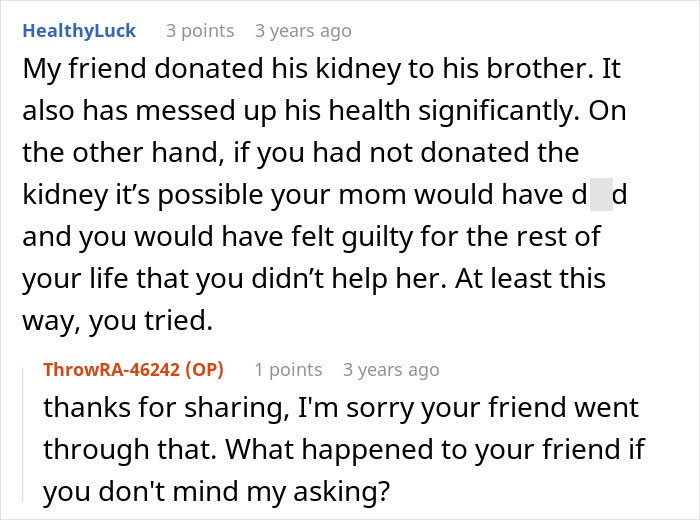
Readers praised her extraordinary sacrifice while also heartbroken over everything she lost because of it




 Follow Us