What’s on a child’s lunch tray might not seem like a big deal. But for one American mom now living in France, it revealed a much bigger cultural divide.
When Marissa Fortson’s 5-year-old daughter came home from school with stories about her school lunch having fresh salads, salmon pasta, and chocolate mousse, it felt like a far cry from the pizza slices and chicken nuggets Fortson grew up eating in the U.S.
The stark contrast has since sparked a viral debate, with experts weighing in on what these differences really mean for children’s health and habits.
An American mom living in France says her daughter’s school lunches feel “next-level” compared to what she grew up eating in the U.S.

Marissa Fortson from California recently spoke about trading her life in Los Angeles for a brand new world in Nice, the capital of the French Riviera in southeastern France.
After living in LA for 17 years, the 40-year-old Chinese-American mom said she was looking for a more balanced way of life when she moved to Nice last year with her husband, Andy, and their 5-year-old daughter.
“We wanted a slower pace, a healthier lifestyle, and the chance for our daughter to grow up bilingual in a different culture,” Fortson told Newsweek.


Among the many differences she noticed, Fortson found a stark contrast between the school lunches on either side of the Atlantic.
“Growing up in the U.S., I remember eating chicken nuggets, pizza, mashed potatoes, and mac and cheese,” she said.
But since moving to the French coastline, she said her daughter has been coming home, excitedly recounting the school menu each day.
The mom said her daughter’s lunches included three courses, with items like salmon pasta and chocolate mousse on the menu


“We’d certainly heard that French school menus were better before we moved,” the mother told the outlet.
“But once our school started sending the weekly menu, it really hit home,” she added. “Now it’s a fun weekly ritual with my daughter, hearing what she tried and what she liked.”

In one TikTok video with over 1.2 million views, Fortson spoke about the “next-level” food options her daughter was being served. “Lunches include three courses: typically a salad, a main course, and then a dessert,” she said.
“A typical week at our daughter’s school might include green salad, crudités, tabbouleh, spinach ravioli, chicken curry with rice, salmon pasta, fruit, yogurt, and chocolate mousse,” she continued. “And, of course, there’s always fresh bread.”
“Growing up, I don’t remember a single teacher paying attention to what we ate on our trays,” Fortson said


While growing up in the U.S., Fortson said she never remembered any of her teachers paying attention to the food on their trays.
But in France, it seemed like lunchtime went beyond just filling up her daughter’s stomach.
“Kids get real flavors and real ingredients. They’re encouraged to try everything, and they’re taught to eat with actual silverware and dishes,” the mother said.
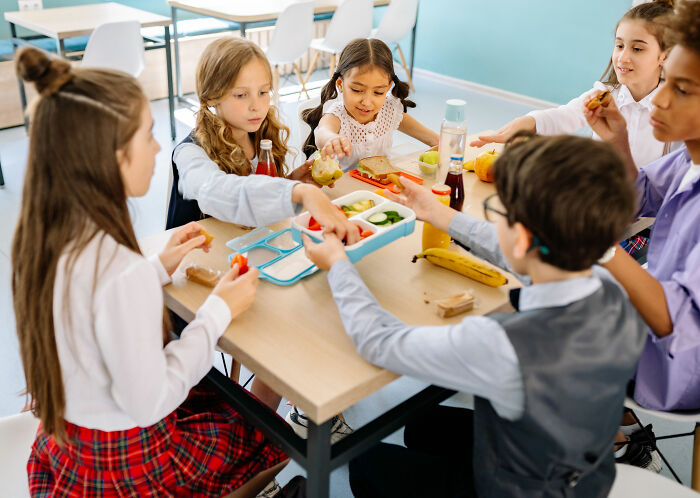
Yan Krukau/Pexels (not the actual photo)
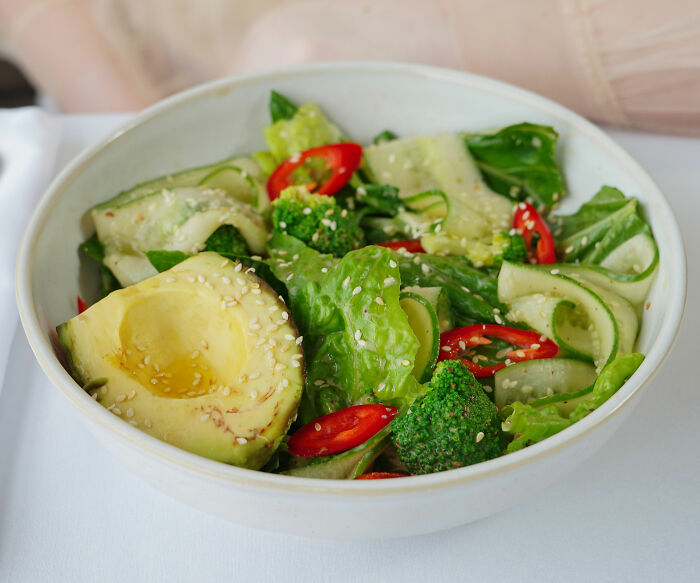
Fortson also noted that the ingredients used for her daughter’s school lunches are held to a high nutritional standard.
“Not only is there more variety in flavors and cuisines, but there’s also a concerted effort to focus on fresh ingredients, sustainability, and organic foods,” she added.
Longer lunch periods in France give kids time to socialize and build healthier eating habits
Experts said France’s approach highlights the role that food culture and education can play in shaping children’s relationship with eating.
“In France, lunch is viewed as an important part of the school day rather than simply a break to refuel,” maternal and child nutrition expert Dr. Janet Colson told Bored Panda.
Nadin Sh/Pexels (not the actual photo)

Lunchtime itself is also treated differently, because, as Fortson put it, the “lunch hour is sacred in France.”
Many French schools provide students with a longer meal period, often between 60 and 90 minutes, allowing children time to eat, socialize, and enjoy their meals.
“Students generally have a longer lunch period (60 to 90 minutes), eat at a more leisurely pace, and often spend time outdoors or playing before returning to the classroom,” Colson said. “That time allows children to socialize, practice table manners, and develop a healthier relationship with food.”
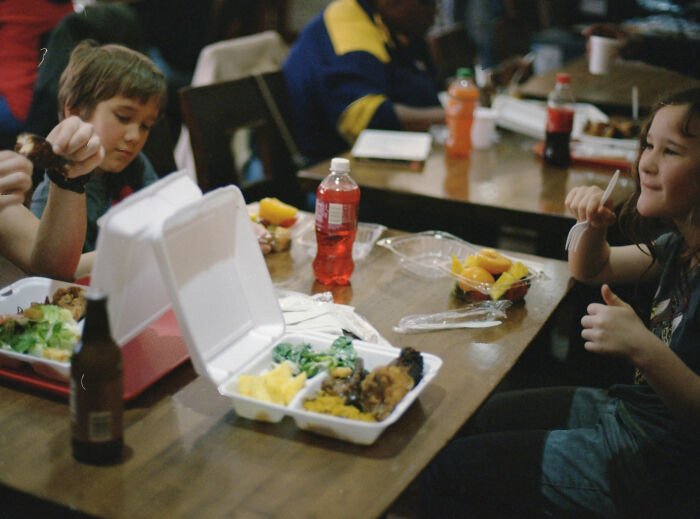
Annie Spratt/Unsplash (not the actual photo)
In contrast, students in the U.S. normally only have time to finish lunch and then return to academic work, she said.
“From my perspective, we often overlook the social and educational value of a well-balanced lunch,” added the Middle Tennessee State University professor.
Experts say healthy eating lessons don’t stick unless they show up on the plate
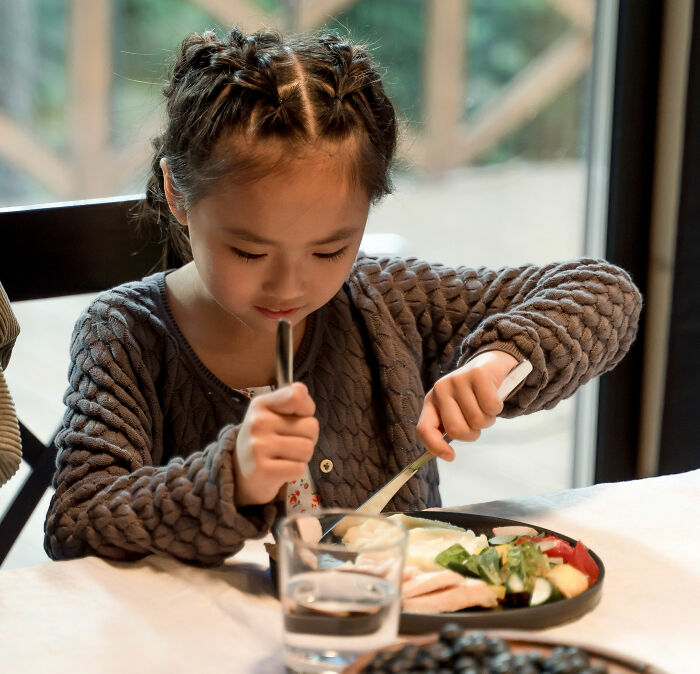
Ron Lach/Pexels (not the actual photo)

While American school lunches are often criticized online, experts believe the reality is more complicated.
The U.S. National School Lunch Program, established in 1946 under President Harry S. Truman, was originally designed not only to feed children but also to teach them what a balanced meal looked like.
“The idea was that children would learn what a balanced meal looked like—a serving of meat or another protein food, vegetables, bread or grains, and milk—and would carry those habits home to their families,” Colson said.
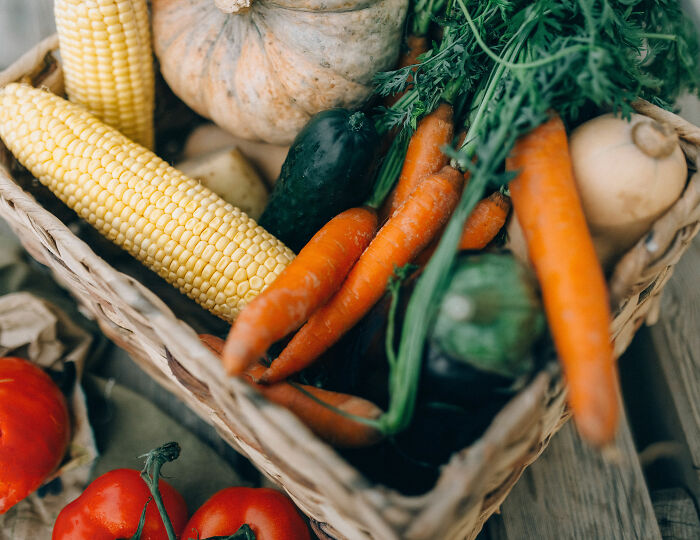
Nataliya Vaitkevich/Pexels (not the actual photo)

Early American school cafeterias often prepared meals from scratch, with staff arriving early to cook fresh vegetables, bake yeast rolls, and prepare complete meals on-site.
Over time, however, many schools shifted toward commercially prepared foods due to financial pressures, labor shortages, and limited kitchen resources.

Norma Mortenson/Pexels (not the actual photo)
Even though federal nutrition standards still specify the components of a reimbursable meal, Colson said many school districts rely heavily on processed, heat-and-serve products rather than meals prepared from basic ingredients.
“As a result, the quality of the food experience—and the nutrition education that naturally occurred through seeing real foods prepared and served—has changed,” she said. “Students today are more likely to see pre-portioned, processed foods than scratch-cooked meals made from whole ingredients.”
Tight budgets, labor shortages, and infrastructure challenges shape what U.S. schools can serve

RDNE Stock project/Pexels (not the actual photo)
School meals were viewed as an opportunity to teach children what a balanced diet looked like. However, nutrition education has become increasingly separated from the cafeteria experience, making it harder for children to connect lessons about healthy eating with the food in front of them.
“Nutrition education is necessary but not sufficient in teaching children how to make healthier choices,” Dr. Marlene Schwartz, Director of the Rudd Center for Food Policy and Health and Professor of Human Development and Family Studies, told Bored Panda.

Yan Krukau/Pexels (not the actual photo)
“The most important nutrition education happens on your plate,” she added. “I would like to see more focus on connecting nutrition lessons in the classroom to what is being served in the cafeteria.”
Schwartz, who specializes in school wellness and nutrition programs and food insecurity, believes American school lunches are unfairly criticized because most adults just think of food from when they were in school and “don’t realize how much work has gone into improving school meals over the last decade.”
The cafeteria itself may be the most powerful classroom for teaching children how to eat
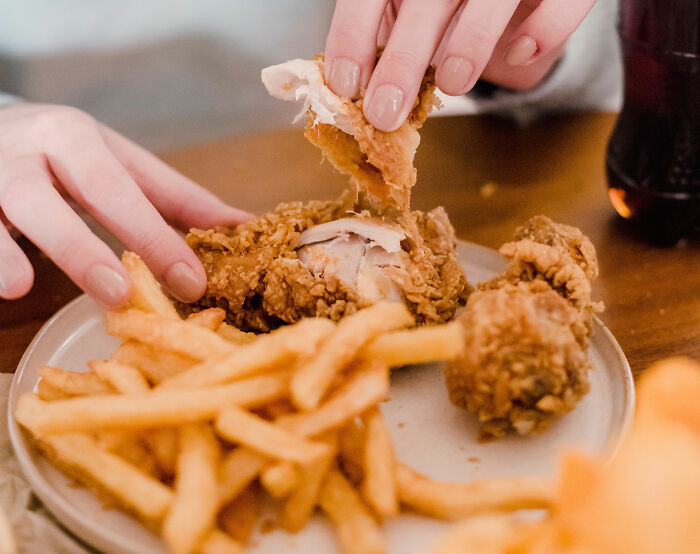
Tim Samuel/Pexels (not the actual photo)
Schools are required to offer protein, dairy, fruits, vegetables, and whole grains with an emphasis on limiting added sugar, saturated fat, and sodium. There has also been additional funding available to purchase local foods.
But “with all of that said, the amount of money available from the federal government to pay for school meals is very small – it ranges from $4.76 to $5.02 per meal. That has to pay for food and labor,” the expert noted.
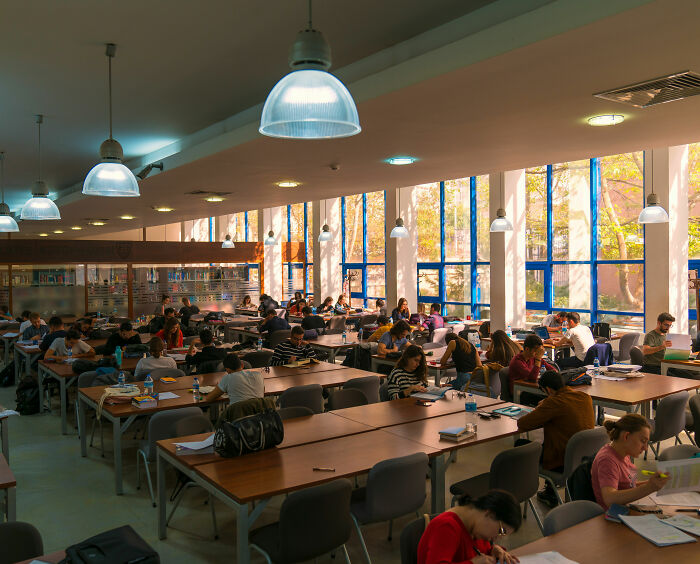
Ankara University/Unsplash (not the actual photo)
“There are genuine systemic problems with the current model – namely that food service directors don’t have the funds they need to purchase the foods they want or the skilled labor and equipment they need to prepare those foods from scratch,” she added.
Despite efforts to improve school nutrition in the U.S., the experts said schools continue to face significant challenges when it comes to providing meals that are both healthy and appealing to students.
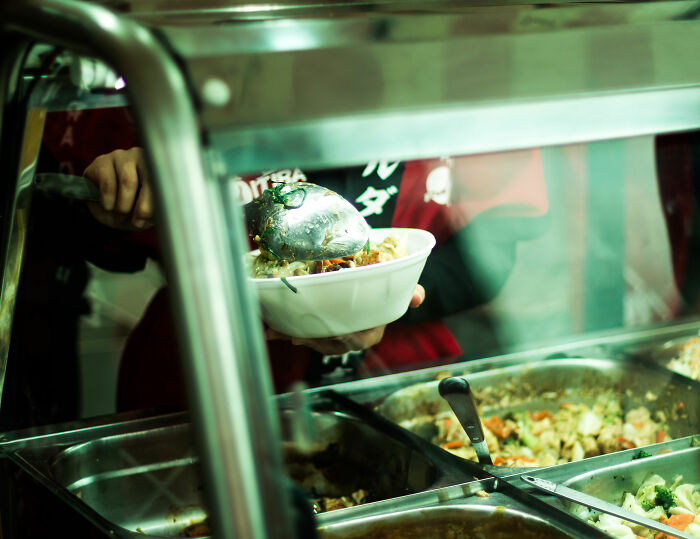
Elizabeth Ferreira/Pexels (not the actual photo)
Many schools technically meet the federal nutrition standards required for reimbursement, but what students actually choose to eat is often very different from what the standards were designed to achieve.
“For example, a federally reimbursable lunch must include five components—a protein, grains, fruits, vegetables, and milk,” Colson said. “Yet many schools also offer à la carte options such as pizza, hamburgers, French fries, cookies, chips, and sugary frozen drinks.”
Schools must stretch just a few dollars per meal to cover both ingredients and labor

Antor Paul/Unsplash (not the actual photo)
“Students frequently bypass the healthier reimbursable meal in favor of these less nutritious options,” she continued.
This would mean that schools may be meeting federal requirements on paper, but the overall environment in a school cafeteria may undermine the goal of improving students’ diets.
“The challenge is not only what schools are required to serve, but also what students are encouraged—and allowed—to purchase and eat,” Colson said.
“Many years ago, when I was little, US schools received generous Federal funding. But that was stopped about 30 years ago. Now schools rely on the income from the a la carte items to be financially stable,” she added.
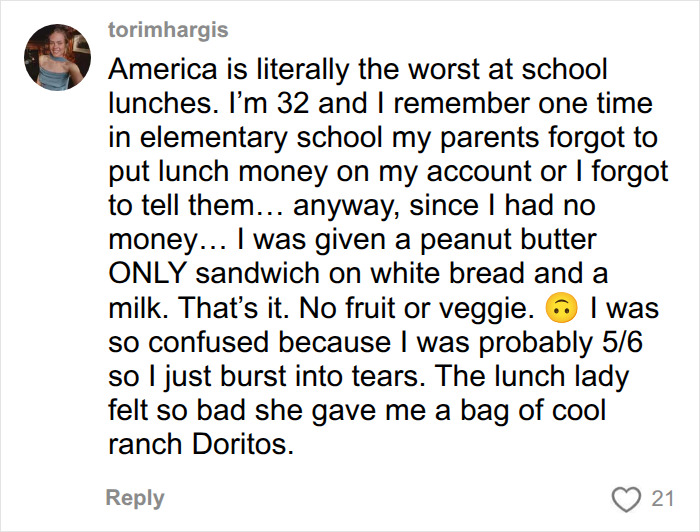
“American kids get prison food,” one commented online








 Follow Us