Winning the lottery is supposed to be the moment that changes everything. The moment you quit your job, pay off your debts, tell your landlord exactly what you think of them, and ride off into a sunset made entirely of disposable income. For most people, it remains a fantasy.
For Daniel Millar, a grandfather from Motherwell, it briefly became a reality, and then, faster than the money came into his bank, it became something considerably worse than where he started. In September, he won big on the National Lottery. By November, he was £7 overdrawn.
Winning the lotto is a dream come true for most, but it’s easy to forget the bureaucratic headaches that come with it

Image credits: Daniel Millar / Daily Record

Daniel Millar won over $100,000 in the lottery, but he spent it all in a few weeks
Daniel won a grand sum of £80,000 (around $107,000), and in fairness to the man, he did not blow it all on himself. He gave chunks of it to his two sons and his daughter, and he paid for two family holidays. He then did up his house, and he bought clothes for himself and his wife. A good samaritan by all accounts, but also catastrophically naive about one very important detail.
Daniel did not tell the Department for Work and Pensions that he had won. He maintains that he simply did not know he had to. “I didn’t know I had to tell the Department for Work and Pensions,” he told the Daily Record. The DWP, as it turns out, found out anyway; the tax office noticed the £80,000 sitting in his bank account and reported it.

Image credits: Daniel Millar / Daily Record
But soon after his winnings were squandered, he got word that he would not be receiving benefits from the government anymore
By the time the letter arrived, the money was already gone. The DWP stopped Daniel’s income support, his housing benefit and his council tax reduction, on the basis that he had what they technically termed “deprived himself of capital.” Which is bureaucratic language for “you had eighty thousand pounds and you spent it, and that is not our problem.”
Roughly eight weeks after winning, Daniel was £7 overdrawn. The man went from £80,000 to minus £7 in the time it takes most people to finish a Netflix series. His only remaining income was a personal independence payment of £350 a month and a state pension of £1.08 a week. His wife, who serves as his carer, receives £62 a week.

Image credits: Daniel Millar / Daily Record
The government claimed that he purposefully spent all the money in order to still qualify for the benefits handouts
Out of that, the couple now have to cover full rent and full council tax, having previously had both covered by benefits. Daniel’s response to all of this was to contact the DWP and ask, politely but urgently, if he could please go back on benefits. The DWP said no.
The £80,000 he no longer had counted against him. Welcome to the system. The Daily Mail reports that a DWP spokeswoman said: ‘It’s very important that people tell us of any changes to their circumstances so they can receive the right support.’
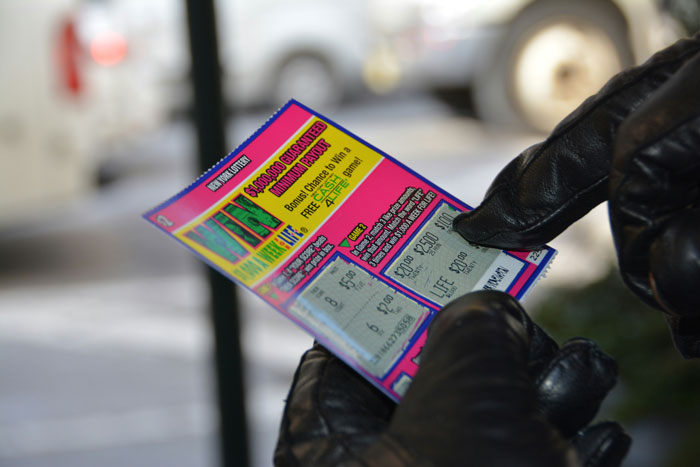
Image credits: Adil Edin / Unsplash (not the actual photo)
He claims to have given some of the money to his children, renovated his kitchen, and that they went on a couple of family holidays
The rules are borderline Kafka-esque. Under UK benefit rules, having more than £16,000 in savings or capital makes you entirely ineligible for means-tested support. The moment £80,000 landed in Daniel’s account, his eligibility evaporated. But the part that really stings is the concept of “deprivation of capital.” Big brother is watching…
This rule essentially says if the DWP believes you have squandered your winnings to still qualify for benefits, they will assess you as if you still have that money. Even if you don’t. Even if it is completely gone. In Daniel’s case, the DWP determined that spending his lottery winnings on his family and holidays constituted deliberate deprivation.
If he had reported his winnings, the DWP would have helped him allocate the money towards paying off depts or purchasing a home. These kinds of sensible spending are generally allowed and would not affect his benefits in the long run. As always, honesty is the best policy!

Image credits: Alex Shuper / Unsplash (not the actual photo)
Daniel Millar’s Benidorm holidays don’t come close to some other irresponsible lotto stories. Jane Park was 17 years old when she won £1 million on the EuroMillions in 2013. She bought a customised Range Rover, upgraded her bra size, went to Ibiza and later returned to working in a chip shop because she ‘preferred’ the routine. “My life would be so much easier if I hadn’t won.”
Then there is Gareth Bull, who won £40.6 million with his wife Catherine in 2012. By 2017, Catherine had been spotted without her wedding ring. It later emerged that Gareth had spent nine months in a relationship with a woman he met on a lads’ holiday in Tenerife, while still married. The lottery giveth and the lottery taketh away.
And then there is Callie Rogers, Britain’s youngest ever lottery winner, who scooped £1.8 million in 2003 at just 16 years old, earning £3.60 an hour at a Co-op checkout at the time. She spent it on three chest enhancement surgeries, substance-fuelled parties and £300,000 worth of designer clothes.
Her children were later taken away from her, and she attempted to take her own life. “It was too much money for someone so young,” she said in 2013. “It nearly broke me.” Daniel Millar spent his £80,000 on family holidays and is now £7 overdrawn. In the lottery disaster hall of fame, he is practically getting a participation trophy.
What would you do with your lotto winnings? Share your irresponsible choices with us in the comments!
People in the comments were quick to remind you that winning the lotto is never as life-changing as it seems, and that it comes with plenty of strings attached
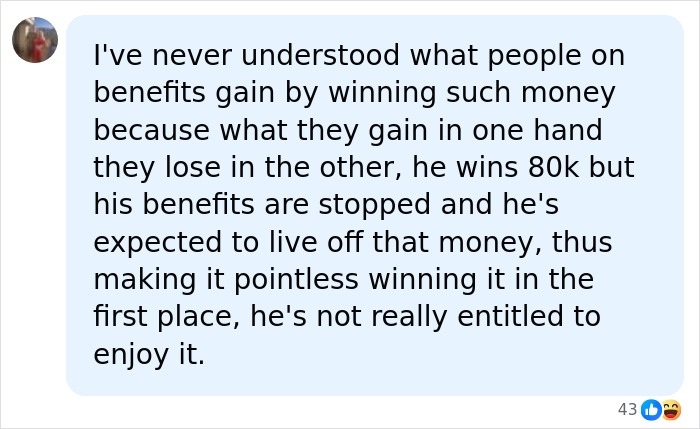
Image credits: www.facebook.com
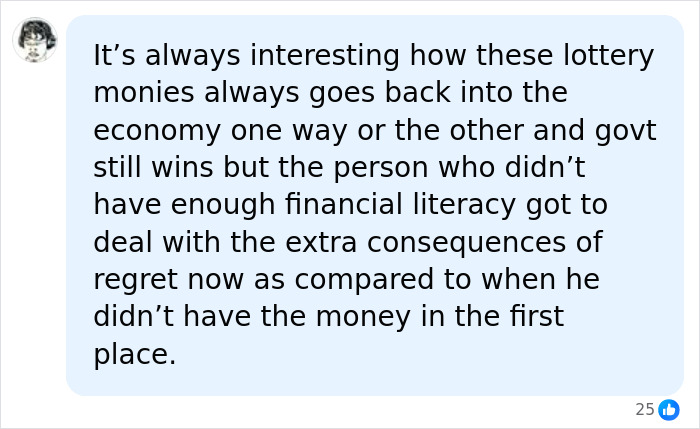
Image credits: www.facebook.com
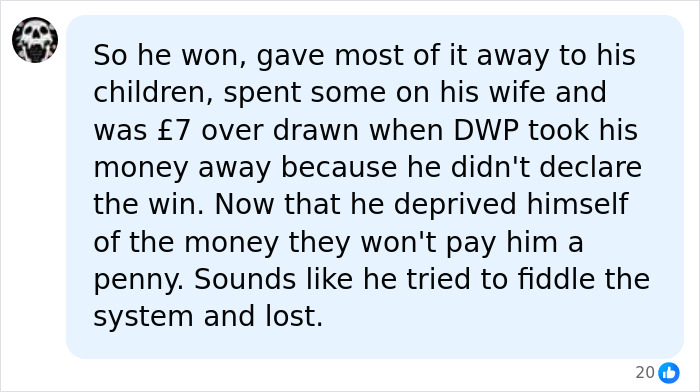
Image credits: www.facebook.com
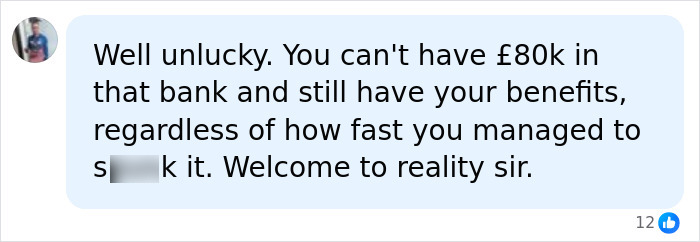
Image credits: www.facebook.com
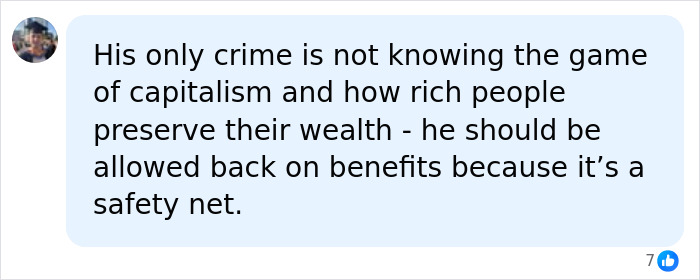
Image credits: www.facebook.com
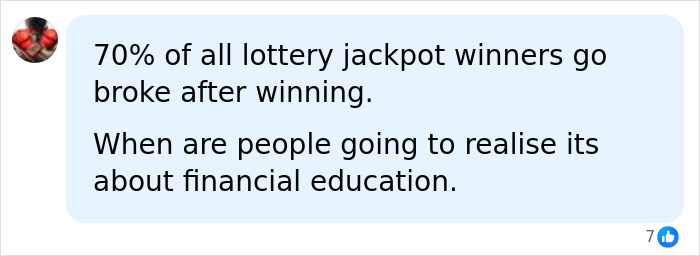
Image credits: www.facebook.com

Image credits: www.facebook.com
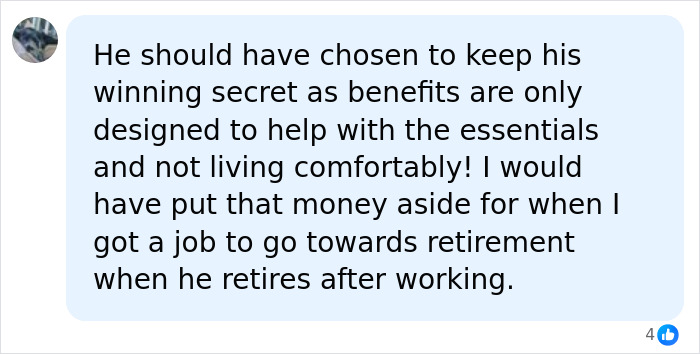
Image credits: www.facebook.com

Image credits: www.facebook.com

Image credits: www.facebook.com
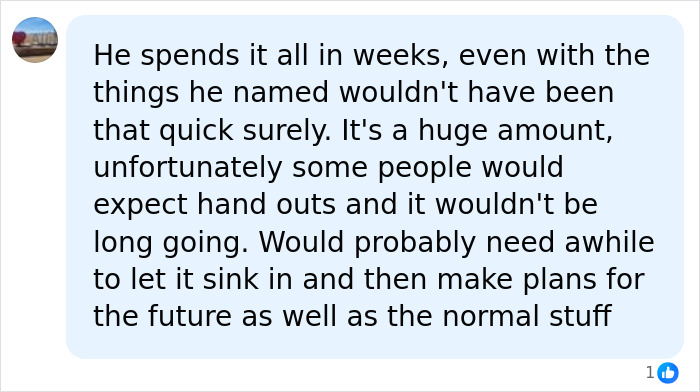
Image credits: www.facebook.com

Image credits: www.facebook.com

Image credits: www.facebook.com
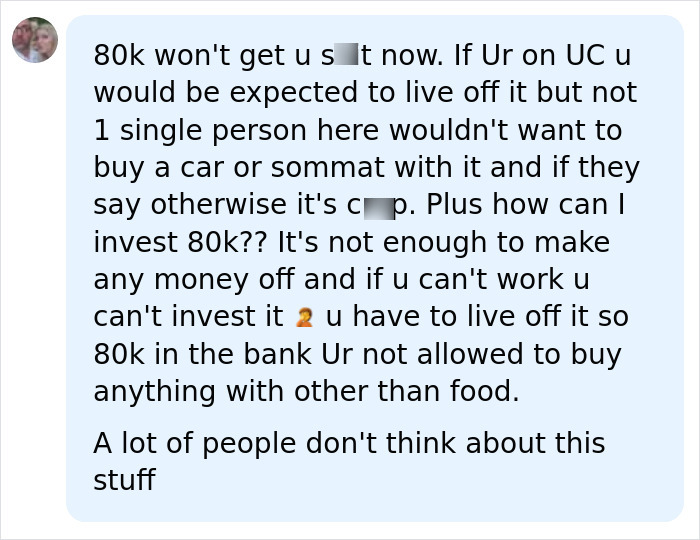
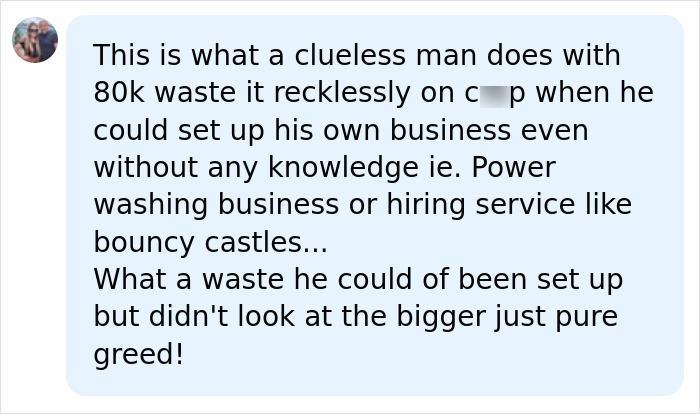
Image credits: www.facebook.com
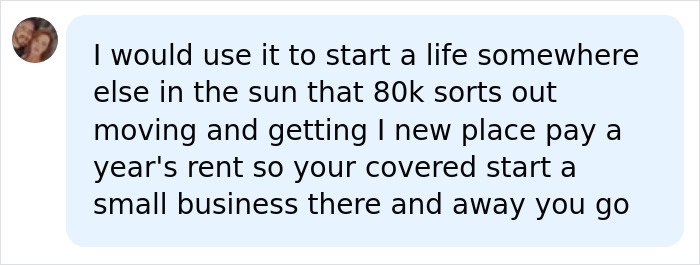
Image credits: www.facebook.com
 Follow Us