Organ donation is one of the most profound acts of generosity a person can offer. It is also, by definition, irreversible, which is precisely why the medical system surrounds it with layers of screening, counseling, and informed consent. You cannot un-donate a kidney. The decision has to be made freely, with full information, by someone who understands exactly what they are agreeing to.
One man said yes immediately when his brother-in-law needed a kidney. He did not hesitate. Then a transplant coordinator asked him one unusual question during the screening process, and the conversation he had with his wife that night changed everything.
More info: Reddit
Organ donation is one of the most profound acts of generosity a person can offer, and informed consent is the biggest layer of security for both parties

Image credits: Drazen Zigic / Magnific (not the actual photo)

This narrator said yes to donating a kidney before anyone had to ask twice, but the transplant coordinator asked a simple question about the brother-in-law he did not see coming
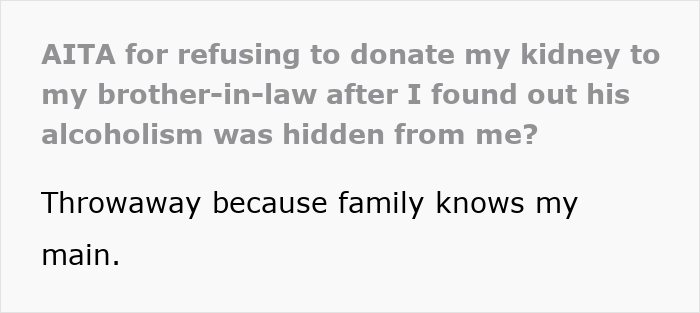
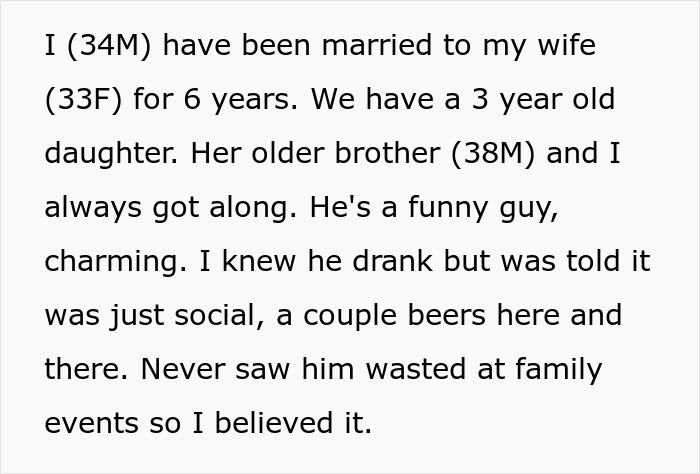
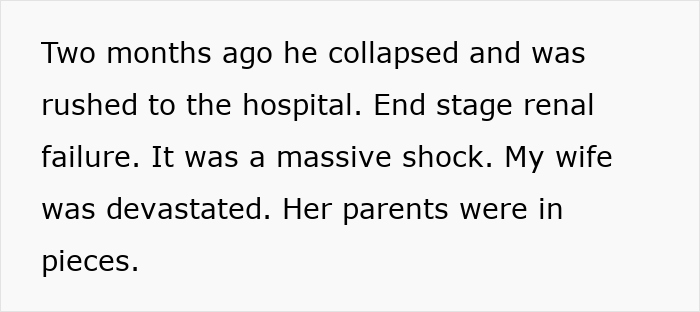
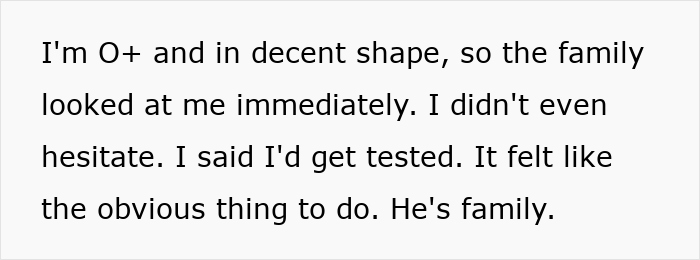
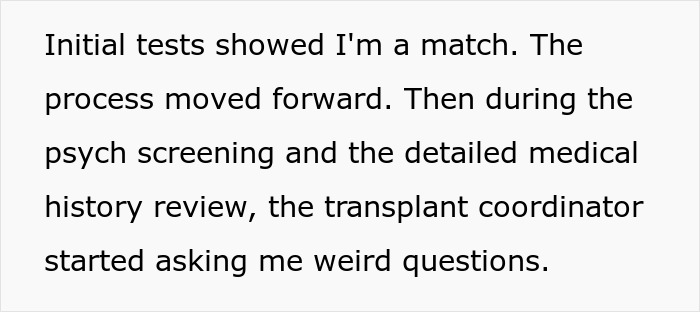
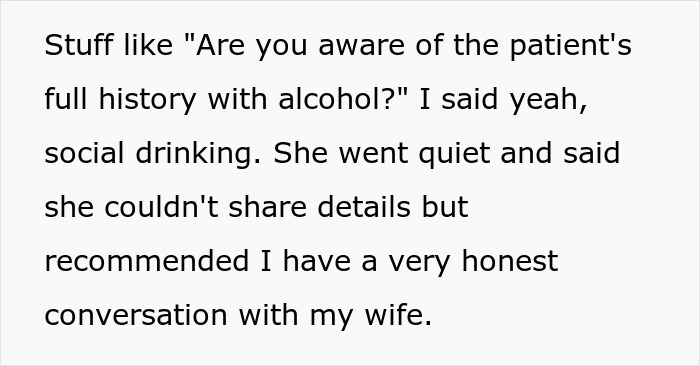

Image credits: DC Studio / Magnific (not the actual photo)
The donor found out his brother-in-law had two DUIs and had endured years of rehab for his severe alcohol misuse
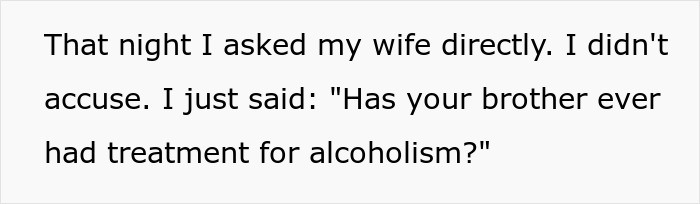
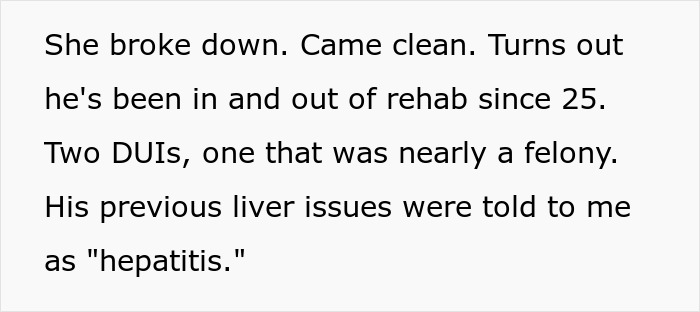

Image credits: karlyukav / Magnific (not the actual photo)
He retracted his donation and was most disappointed in his wife, who hid all these details from him, making him feel manipulated
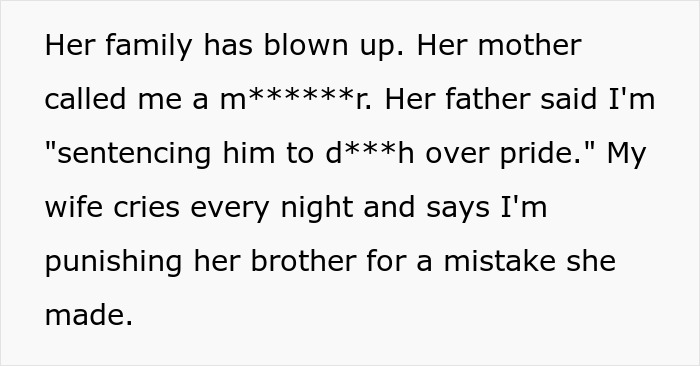
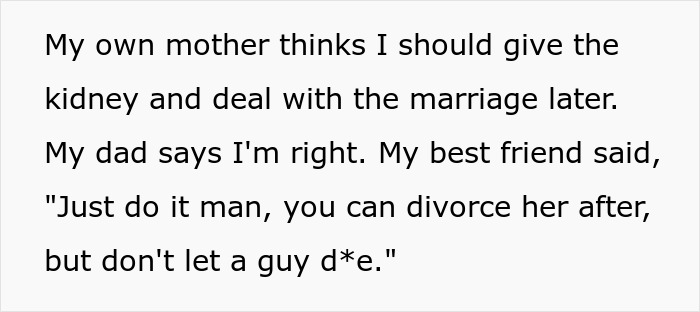
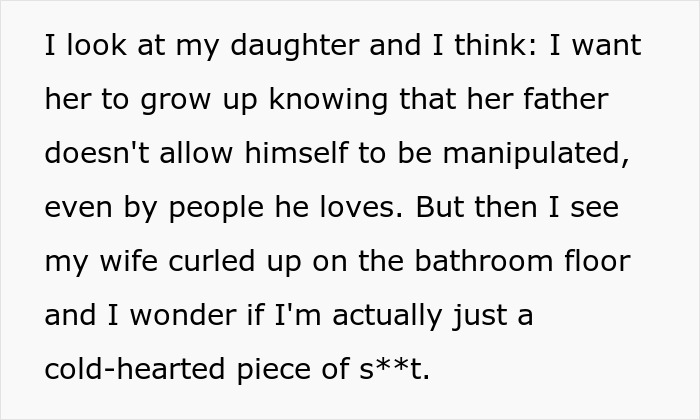

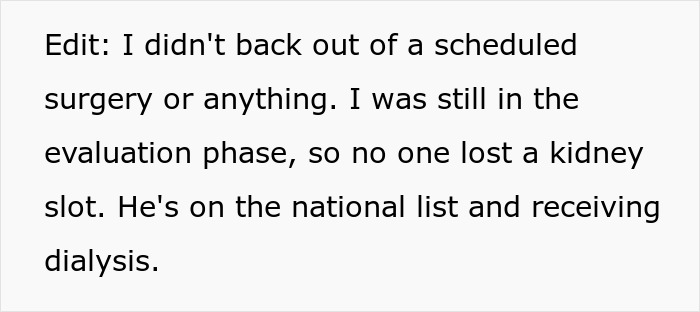
Image credits: Fluffy-Trouble2497
The whole family turned against him, saying he would knowingly see his brother-in-law’s life come to an end, but he stood his ground
When the narrator’s brother-in-law collapsed and was rushed to the hospital with end-stage renal failure, he did not need time to think. He was O+, in decent shape, and the family looked at him immediately, and he said yes before anyone had to ask twice. He got tested, came back as a match, and the process moved forward, thinking he knew what he was signing up for.
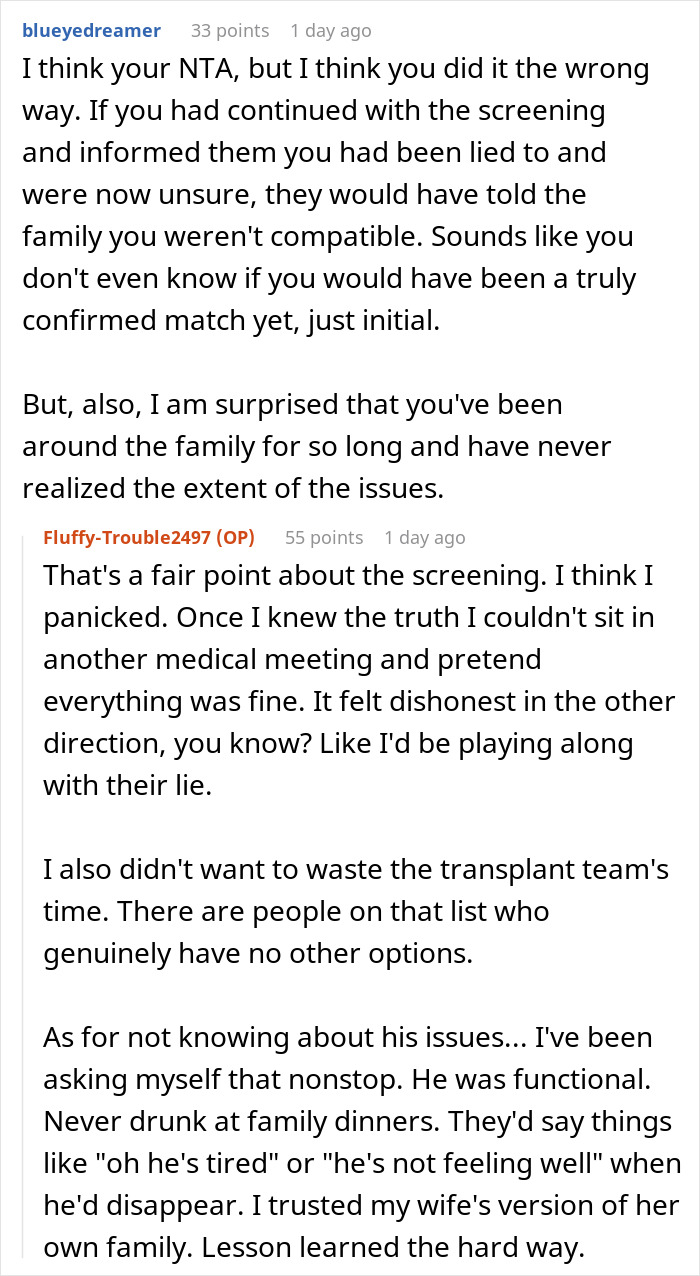
During the psych screening, a transplant coordinator started asking questions that did not quite fit the picture he had been given. She asked if he was aware of the patient’s full history with alcohol. He said yes, social drinking, a couple of beers. She went quiet, said she could not share details, and told him to have a very honest conversation with his wife.
That night he asked her directly whether her brother had ever been treated for alcoholism. She broke down and told him everything. The brother had been in and out of rehab since he was 25. Two DUIs, one of which was nearly a felony. Previous liver issues that had been described to him as hepatitis.
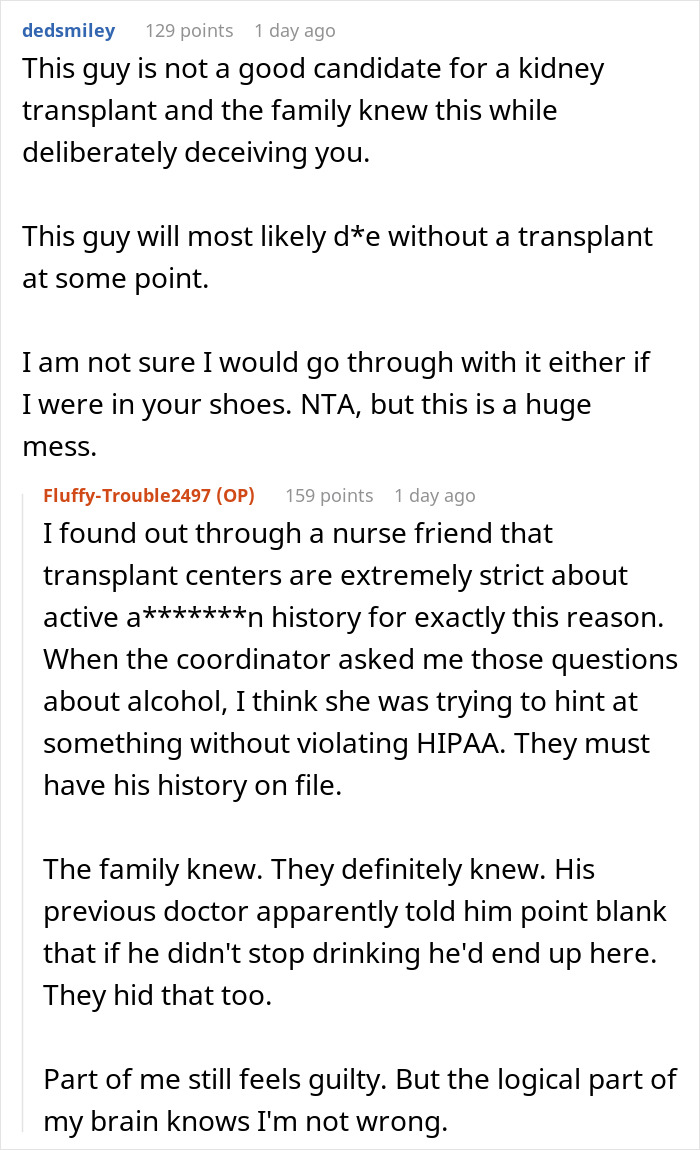
The kidney failure was a direct result of years of heavy drinking that had continued despite repeated medical warnings. The family had made a collective decision to hide all of this from him because they were afraid he would say no. He sat with it for two weeks and then told them he would not be donating. Not because he lacked empathy for alcohol dependence, but because he had been set up.
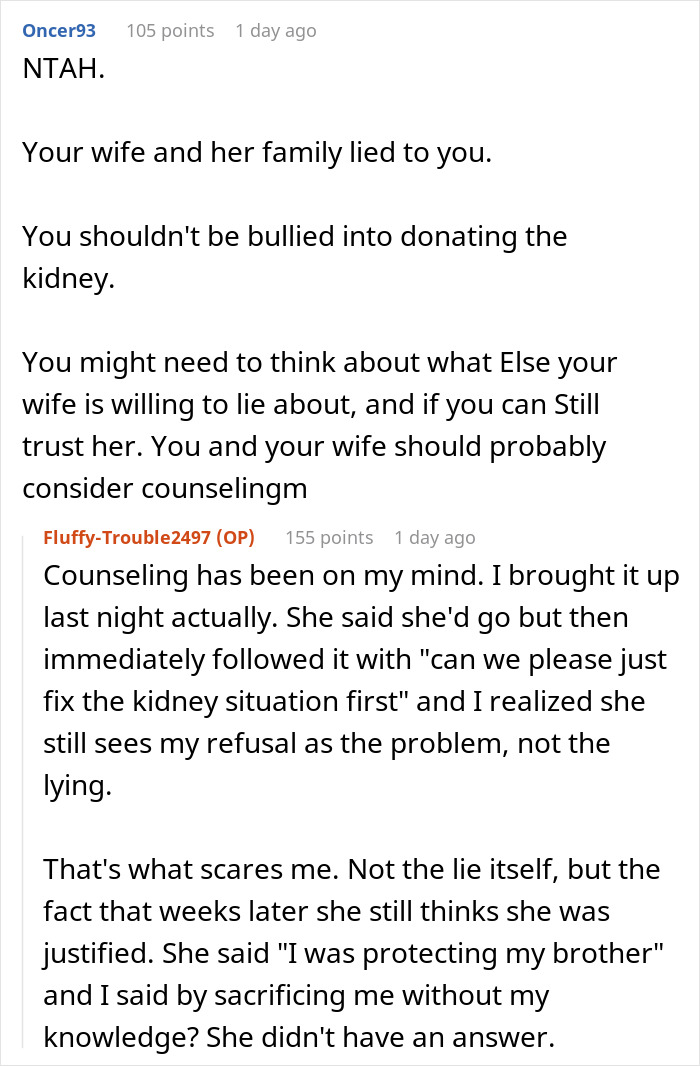
His wife had sat through every medical meeting, looked him in the eye, and lied. He told her that if he had known everything from the beginning, he might still have said yes, but she had taken that choice away from him. He is holding the line, looking at his three-year-old daughter, and wondering whether he is making the right call or whether he is just a cold-hearted person.

Image credits: miss_ty / Magnific (not the actual photo)
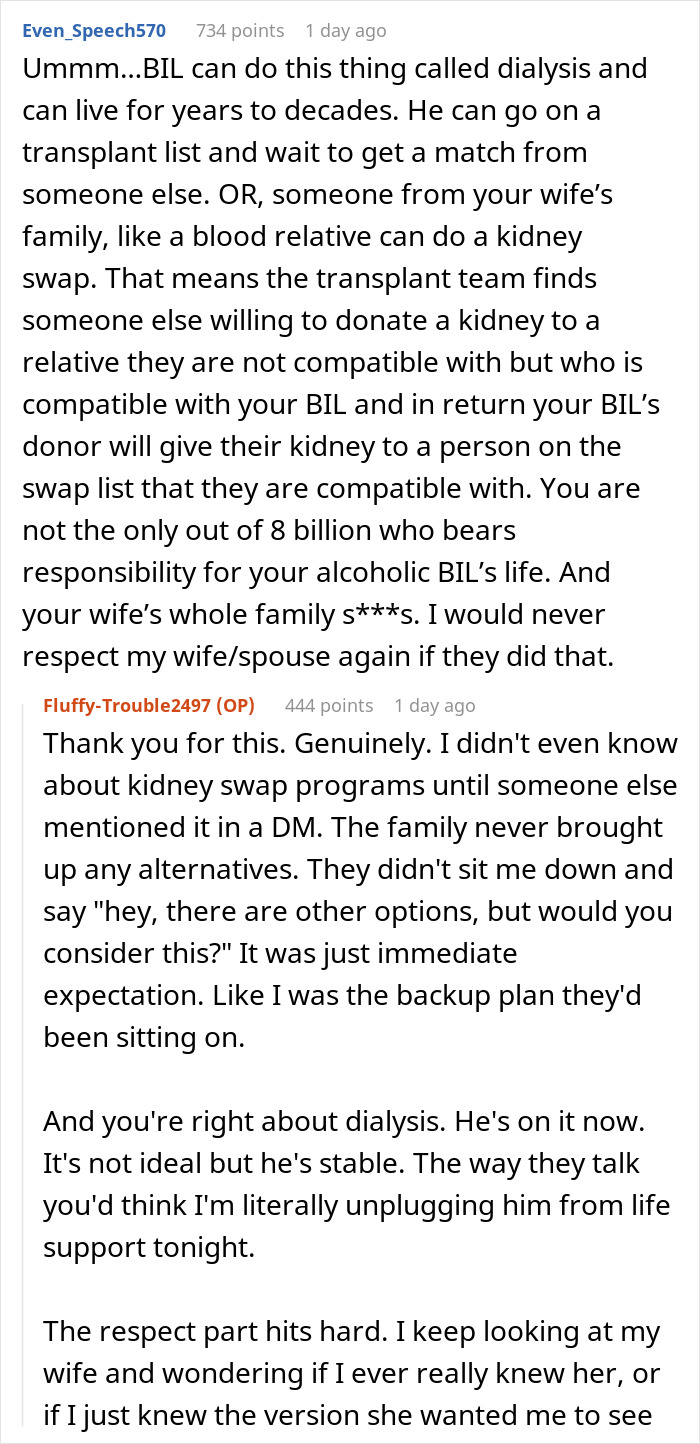
The brother-in-law is not without options. There are currently more than 90,000 people on the kidney transplant waiting list in the United States. The average wait time for a deceased donor kidney is three to five years depending on blood type and region, which is a long time but not an end-of-life sentence, particularly for someone receiving dialysis in the interim.
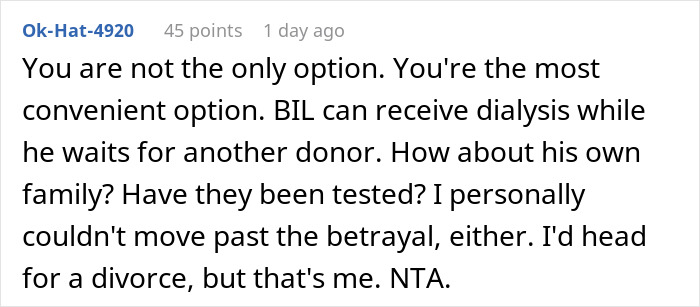
Several commenters also raised the possibility of a paired kidney exchange, sometimes called a kidney swap. This is a system where a living donor who is incompatible with their intended recipient is matched with another recipient on the transplant list, while that recipient’s donor matches the original patient.
Multiple incompatible pairs essentially swap organs so everyone receives a compatible kidney. If another family member is willing to be tested, this option could potentially help the brother-in-law without requiring anything from the man whose trust was violated.
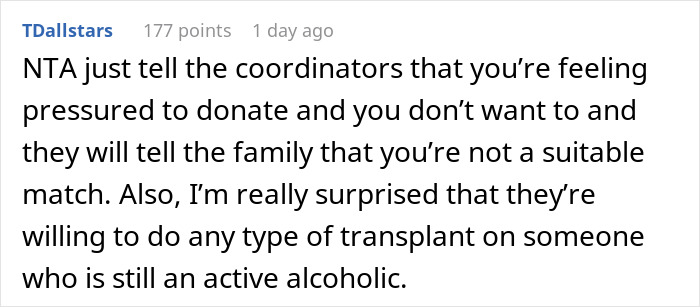
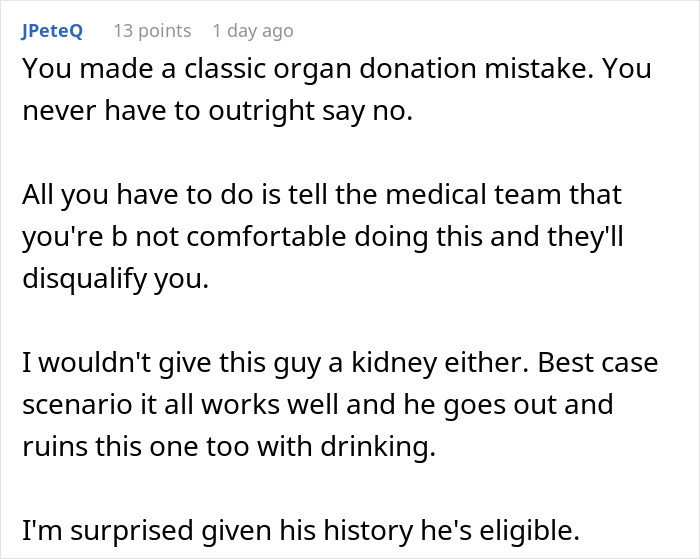
There is also something the National Kidney Foundation wants potential donors to know. If you are facing family pressure to donate and do not want to go through with it, you can speak privately with the medical team, and they will protect your privacy completely. They can quietly inform the family that you are not a medical match, removing you from the situation, conflict-free.
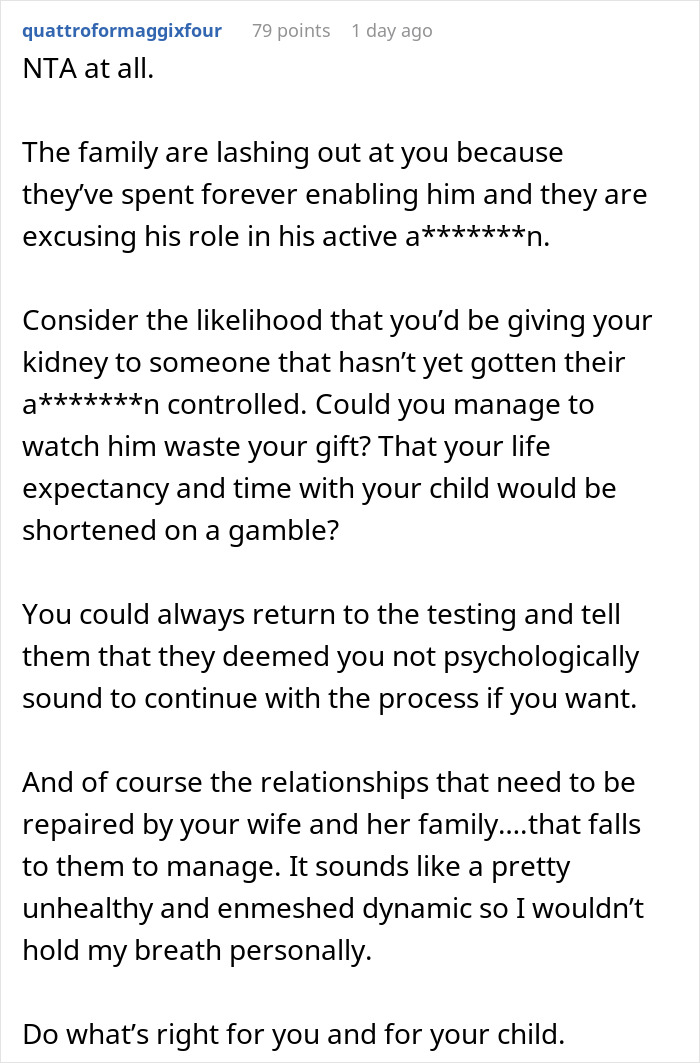
The informed consent issue at the heart of this story is real and serious. You cannot ethically obtain an organ from someone who was not given the full picture. The family understood that, which is why they hid the information in the first place. That calculation says everything about how they viewed his autonomy in this decision.
Do you think he is overreacting, or is he right for standing his ground? Share your thoughts in the comments!
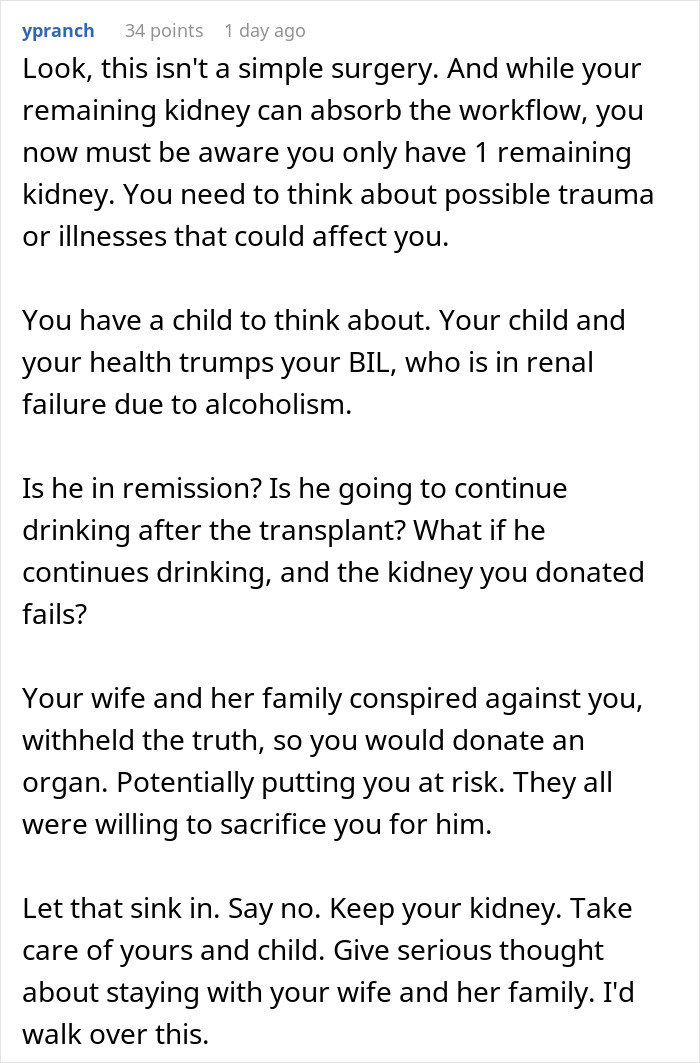
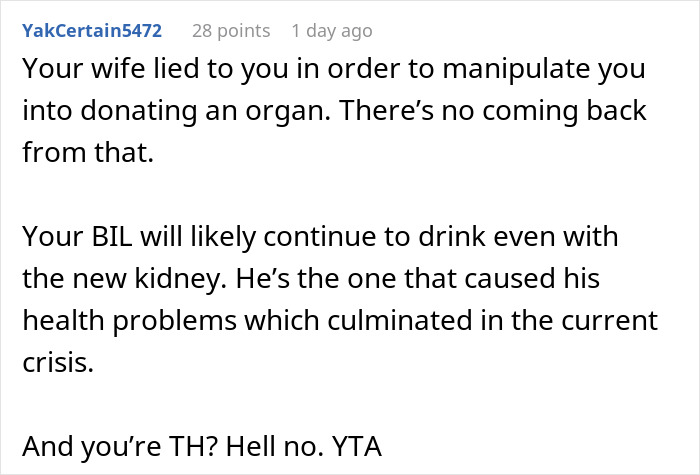
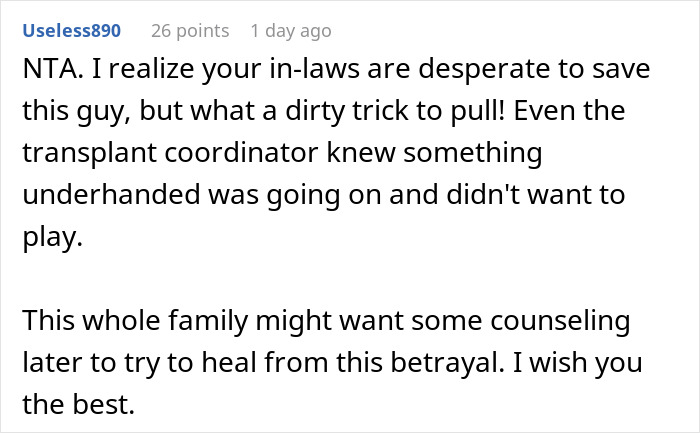
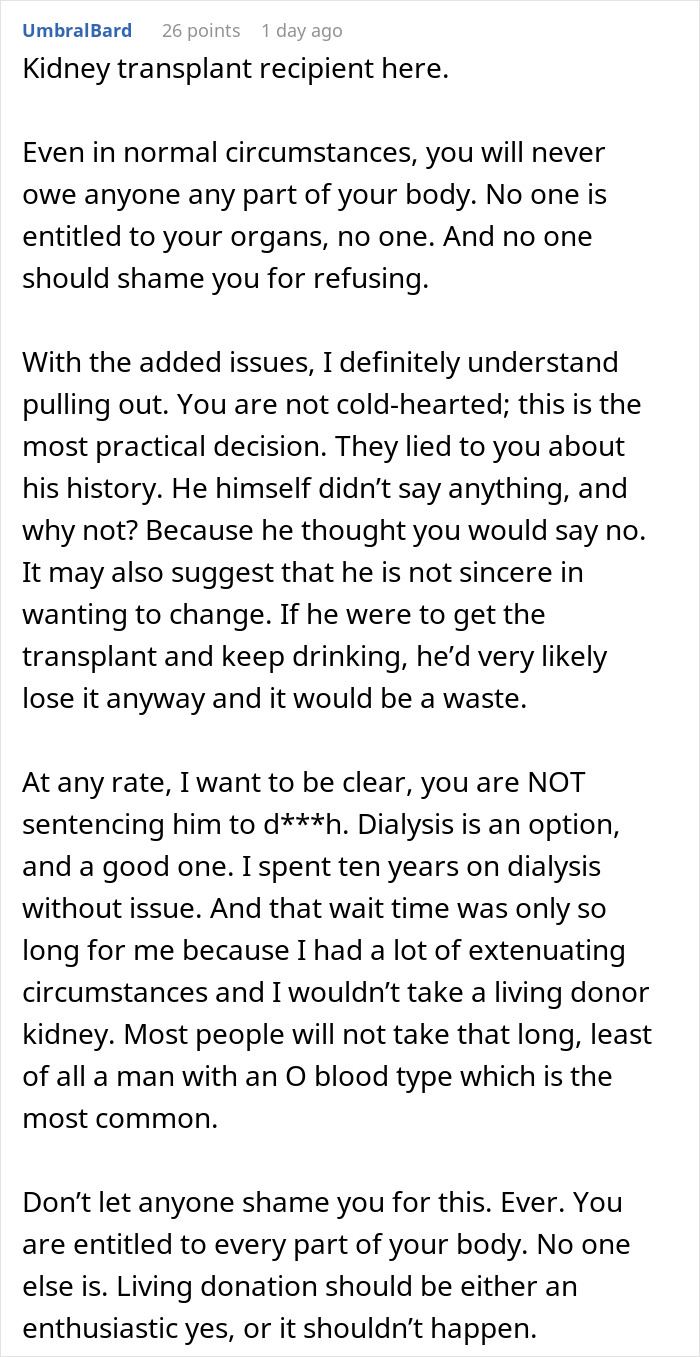
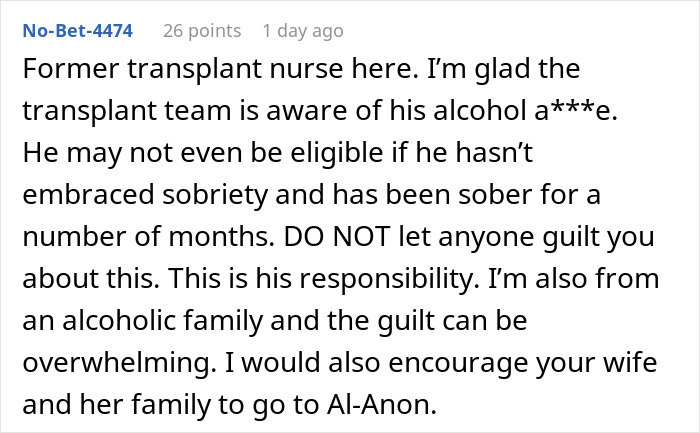
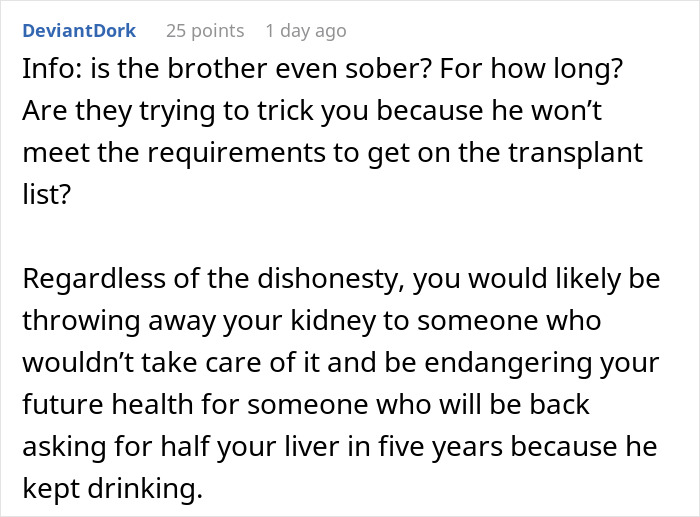
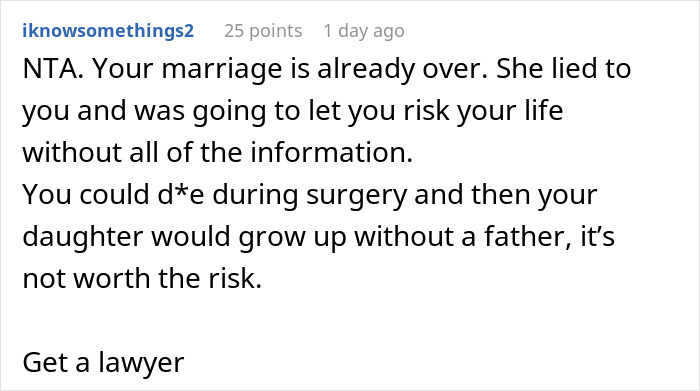
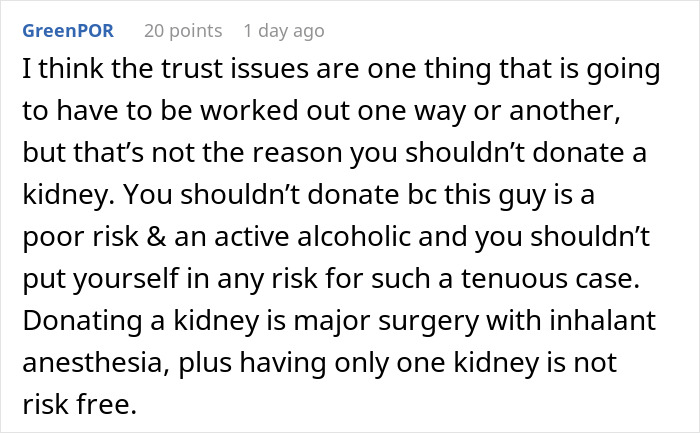
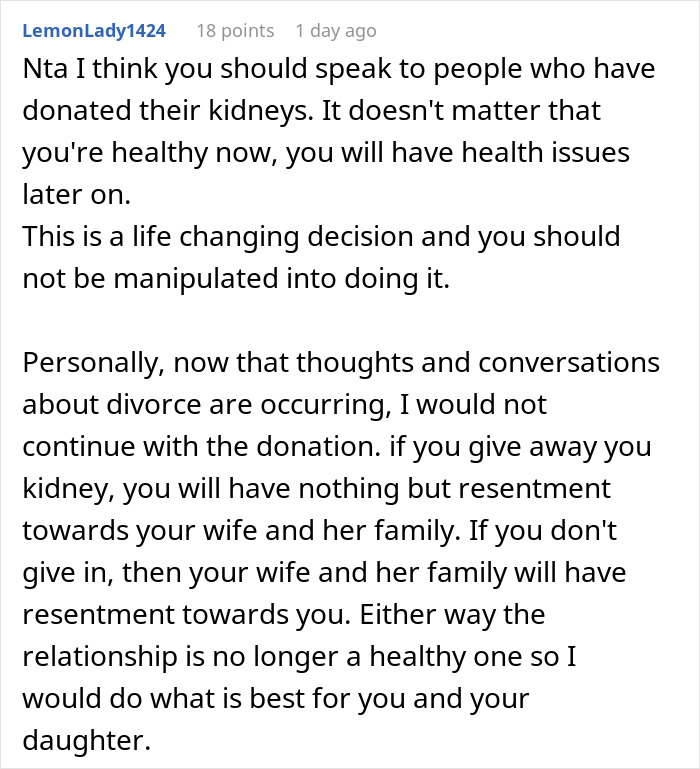
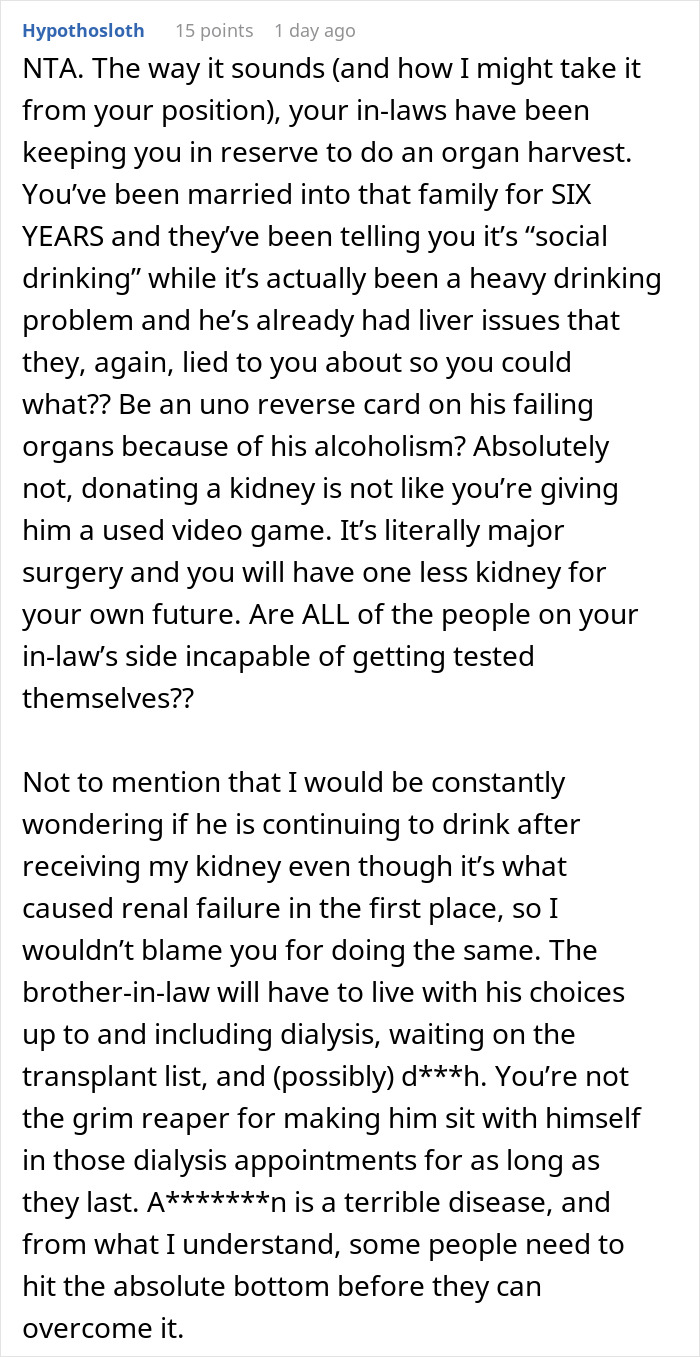
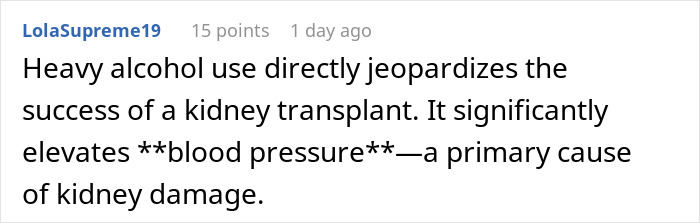
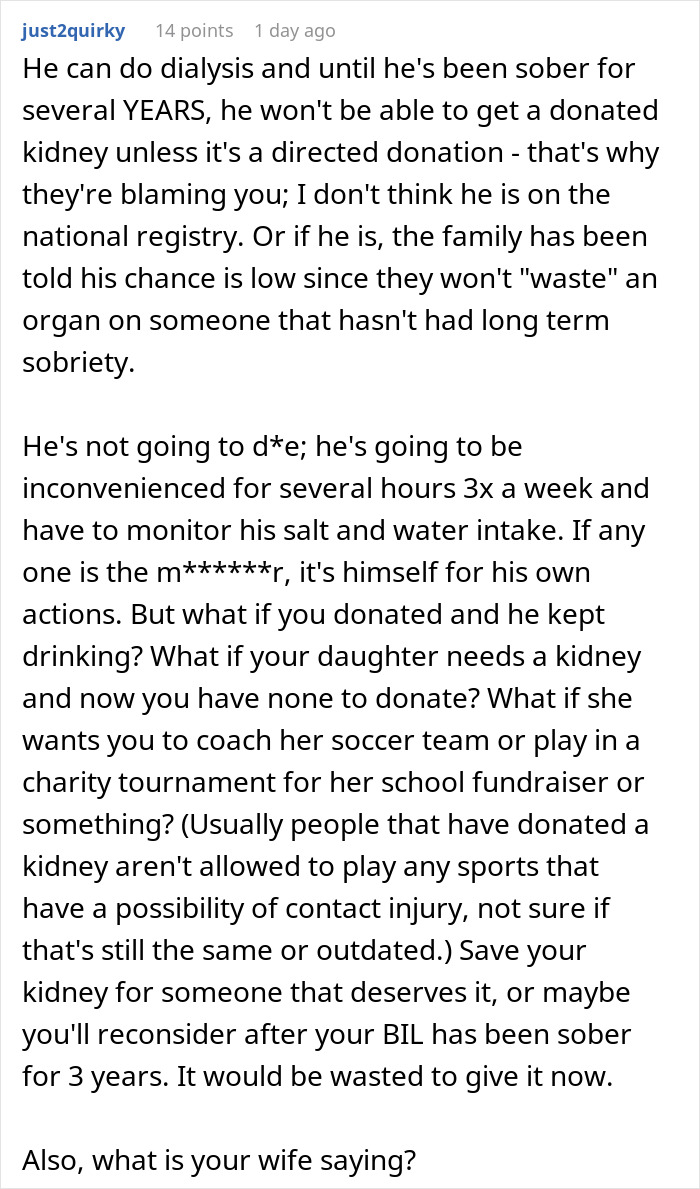
People in the comments backed him up, saying there are other options for treatment and the brother-in-law was a huge risk for a relapse





 Follow Us