You may not see anything wrong with your face while brushing your teeth or applying your makeup. But ask a twenty-year-old on TikTok, and they’ll immediately be able to spot your flaws.
Your eyebrows are too low. Your nose is too crooked. And one of your eyelids is droopier than the other, so you’d better get that fixed. “Facial harmonization” is all the rage amongst young people who want to look their best.
But critics worry that this seemingly harmless trend may be a repackaged version of the same problematic pseudoscience that has previously been used to justify slavery, colonialism, and eugenics.
The “perfect face” has become an ideal worth chasing, even though perfection has never been universal
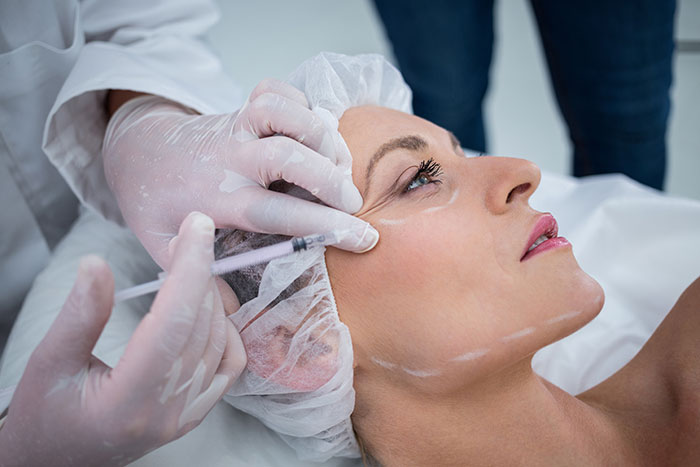
Image credits: wavebreakmedia_micro / Magnific (not the actual photo)
Beauty is subjective, but beauty standards certainly aren’t. And striving to achieve the “golden ratio,” or rule of thirds, with your face might require conforming to Western beauty standards that conflict with your personal values.
According to research from The American Board of Plastic Surgery, over 2.295 million cosmetic surgeries were performed in the United States in 2020, which was a 33% increase from 2000.
Meanwhile, the International Society of Aesthetic Plastic Surgery reports that in 2022, plastic surgeons around the globe injected Botox over 9 million times. And hyaluronic acid procedures, or filler injections, were performed 4.3 million times.

Facial harmonization may feel like a modern trend, but the idea of the “ideal face” has been around for much longer
These procedures have become so commonplace that in many communities, they’re discussed as casually as getting a haircut. Doctors promise to provide patients with facial harmony, symmetry, and balanced features that will make them more attractive. Plus, it seems like every influencer has had some work done, so how bad can it really be?
Well, these treatments don’t exist in a vacuum. So, before signing up to alter your appearance, it would be wise to examine exactly why you feel the need to do so.
Aesthetic-driven cosmetic surgery is a relatively recent invention, but people have been debating which features are the most attractive for centuries. In fact, in the 1700s, Dutch physician Petrus Camper developed the “facial angle” theory to debunk the idea that European features are superior to those from other parts of the world.
Camper sought to explain that differences in a person’s skull shape or skin color stemmed from environmental conditions, rather than from their morals or worth. Therefore, aesthetic preferences are silly, as everyone’s features are equally natural and deserving of respect.
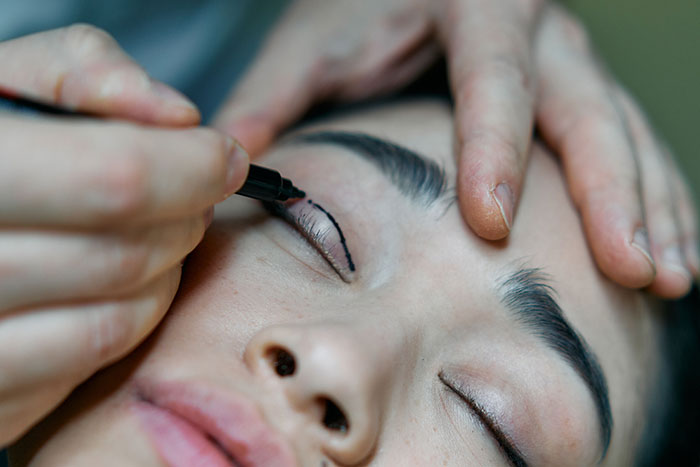
Image credits: cottonbro studio / Pexels (not the actual photo)
Long before TikTok popularized the trend, people were already trying to turn beauty into something that could be measured
Unfortunately, his research was misinterpreted by many future readers. In his depictions showing human skulls compared to an orangutan skull, he happened to draw the African face closest to the orangutan. This image was then co-opted by racist individuals to justify slavery and eugenics, claiming that it proved Africans were closer to animals than humans.
Today, it’s rare to hear such a blatant justification for Western beauty standards. But the idea of the “golden ratio” is just another sneaky way of telling people that there is one acceptable face to have.
Farhad B. Naini explains that this supposedly perfect ratio is simply a geometrical proportion. “The golden ratio [is achieved when] a line AB is divided at a point C in such a way that AB/AC = AC/CB. This gives AC/AB the value 0.618,” she writes.
This ratio can be applied to several different areas of the face. For example, the “ideal” lower lip is 1.618 times fuller than the upper lip. And the distance from the top of the nose to the center of the lips should be 1.618 times the distance from the center of the lips to the chin.
What Naini has found through her research, however, is that there is no scientific basis for the claim that this ratio yields perfect proportions. In fact, there’s no evidence that perfect proportions for a face exist at all. Unfortunately, that hasn’t stopped plastic surgeons and TikTok users from spreading the idea of the golden ratio as truth, implying that there’s something wrong with faces that don’t fit this standard.
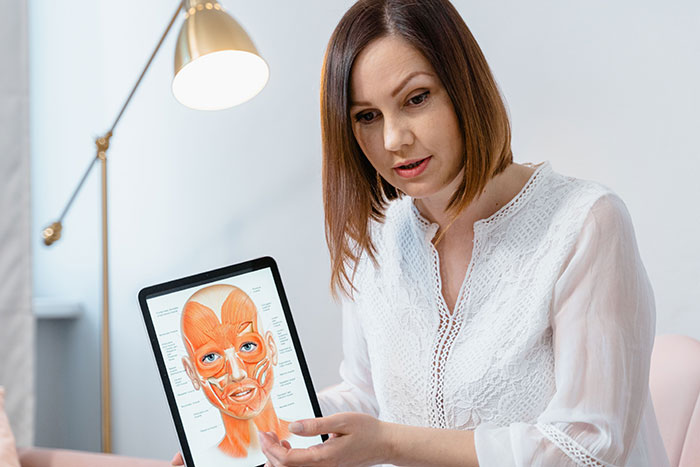
Image credits: MART PRODUCTION / Pexels (not the actual photo)
Eventually, one mathematical formula became the internet’s favorite way to judge faces, despite very little evidence behind it
Because cosmetic surgery can be a sensitive topic, many people avoid engaging with it critically. They simply argue that everyone has the right to do what they like with their body. And while that is true, the topic is much more nuanced.
Thanks to colonialism, Eurocentric beauty standards have permeated the globe for centuries. Because of this, whether consciously or not, plastic surgeons have historically given their patients more European-looking features, such as small noses, sharp jawlines, and brow lifts.
Yale sociologist Alka Menon even refers to cosmetic surgeons as “race brokers” or racial gatekeepers in her book Refashioning Race. To learn more about this, Menon interviewed a variety of plastic surgeons about this role.
“In the U.S., surgeons were cognizant of a history of people wanting to look white or whiter in response to the racism they encountered here, which made the surgeons a bit careful concerning requests from different people of color that they perceived as attempts to look whiter,” she told Yale News. “They questioned those kinds of requests and had varying degrees of comfort with granting them.”
In some countries, however, surgeons don’t hesitate to perform procedures that make a patient appear whiter. Menon noted that double eyelid surgery is very popular in several Asian countries, along with rhinoplasty and facial contouring. Meanwhile, African women sometimes seek out dangerous skin-lightening treatments to adhere to Western beauty standards.
Anthropologist Carmen Alvaro Jarrín notes in an article in the PMFA Journal that rhinoplasty is also extremely common in Brazil, where racialized noses are often deemed unattractive. Apparently, even parents admit that they want their children to change their features to escape racial discrimination. And many surgeons make it clear that they prefer thinner and pointier noses.
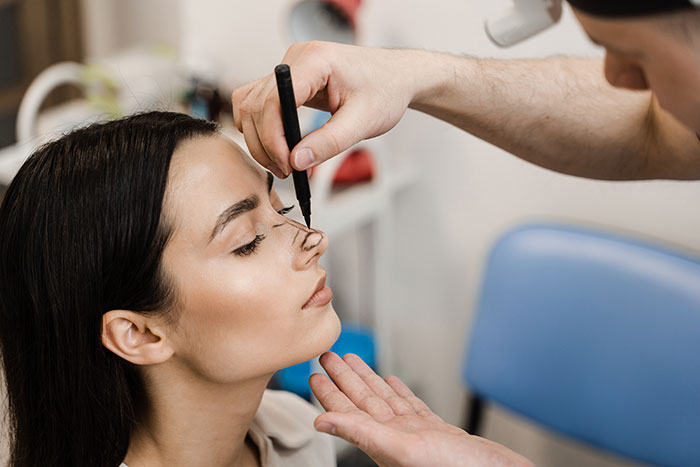
Image credits: user7003113 / Magnific (not the actual photo)
But beauty standards don’t emerge out of thin air, and history helps explain why certain features became more desirable than others
The idea that people, regardless of their ethnicity and cultural background, should conform to Eurocentric beauty standards sounds eerily similar to the ideas behind eugenics developed in the 1880s. We know today that Francis Galton’s claims were rooted in pseudoscience and bigotry, but they continue to color some people’s perception of beauty.
Through his research, Jarrín concluded that the prevalence of cosmetic procedures in Brazil can actually be traced back to Brazilian eugenicists in the 1920s. And the Brazilian government has even supported integration of cosmetic surgery into the public healthcare system, with the goal of “uplifting the poor” through giving them the gift of beauty.
While it’s certainly not true that cosmetic surgeons and medical estheticians as a whole promote eugenics, there are still some who aim to create “ideal faces” by erasing Black features.
Thankfully, not everyone has fallen prey to these harmful beliefs. Studies have shown that the golden ratio is not a valid way to judge a person’s attractiveness across different ethnicities. And Menon found through her research that many plastic surgeons aim to accentuate unique features, rather than eliminate them.
Meanwhile, in a 2024 interview, Dr. Neelam Vashi, associate professor of dermatology at Boston University’s medical school, stated that the ideal lip ratio has shifted from 1:1.618 to 1:1 in recent years. She’s noticed a considerable uptick in patients asking for perfectly even lips, proving that the ideal look is subjective and malleable.
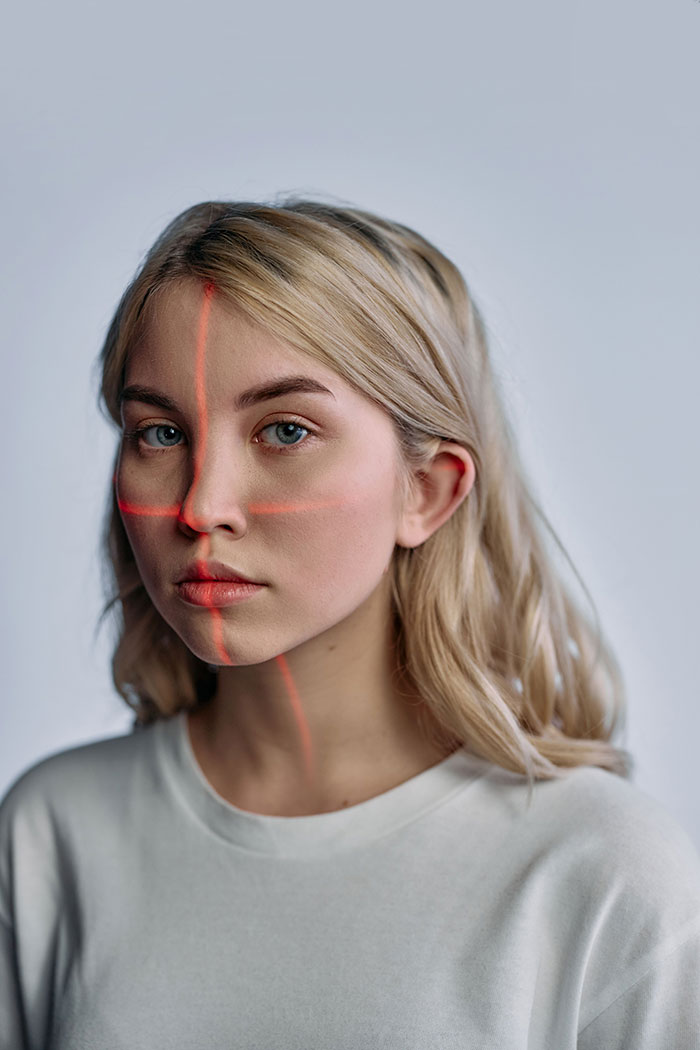
Image credits: cottonbro studio / Pexels (not the actual photo)
As the definition of beauty continues to shift, women are still expected to keep reinventing themselves to match it
It’s also important to note that the pressure to achieve facial harmonization disproportionately targets women. Of the 2.295 million cosmetic procedures performed in the U.S. in 2020, over 2 million were performed on women. And anyone who has spent time on social media knows that women’s bodies are scrutinized much more harshly than men’s.
Research has also found that social media usage plays a significant role in a person’s desire to pursue cosmetic surgery. But body trends come and go.
Wealthy women, such as the Kardashian-Jenner clan, have the freedom to easily alter their bodies through surgery. But those who naturally have features that come in and out of style are stuck with them permanently, unless they want to spend thousands trying to conform. It’s exhausting to be a woman when the goalposts are constantly shifting.
Perhaps one day the pendulum will swing, and asymmetry will be the hottest trend. But for now, we cannot place the blame on women who simply follow trends to avoid judgment. Unfortunately, they’ll be criticized regardless of what they choose. Either they’re desperate for trying to look younger or aging like milk for deciding not to have procedures.
Beauty standards have likely existed throughout all of human history, and they aren’t going anywhere anytime soon. But that doesn’t mean we can’t question surgeons who profit from turning people’s faces into homogenized versions of the ideals determined by Western society.
If we want to break the cycle, we have to wonder what we actually gain from trends like facial harmonization. And consider whether we want our daughters, nieces, and granddaughters growing up in a world where their value depends on how symmetrical they are.
 Follow Us