Having your significant other cheat on you with your best friend is a different level of betrayal. Those who’ve gone through it will attest to it, maybe even tell you that it’s something they wouldn’t wish on their worst enemy.
A woman had to endure such a harrowing experience when she found out that her husband had an affair with her close friend at work. She found out about the ugly truth after following the trail of breadcrumbs he foolishly left, as if he wanted to get caught.
Now, her spouse is begging for a second chance, which she is understandably hesitant to give.
A woman went through one of the most painful episodes of her life

Image credits: Arina Krasnikova/Pexels (not the actual photo)

She sacrificed her career to support her husband’s profession
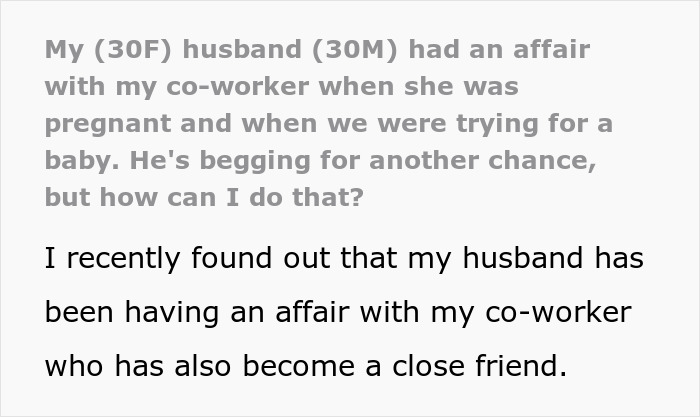
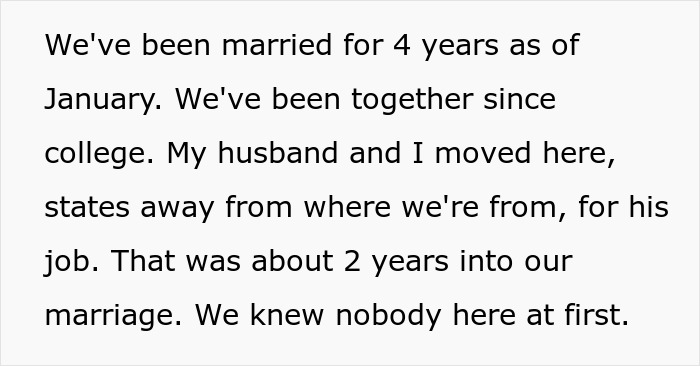

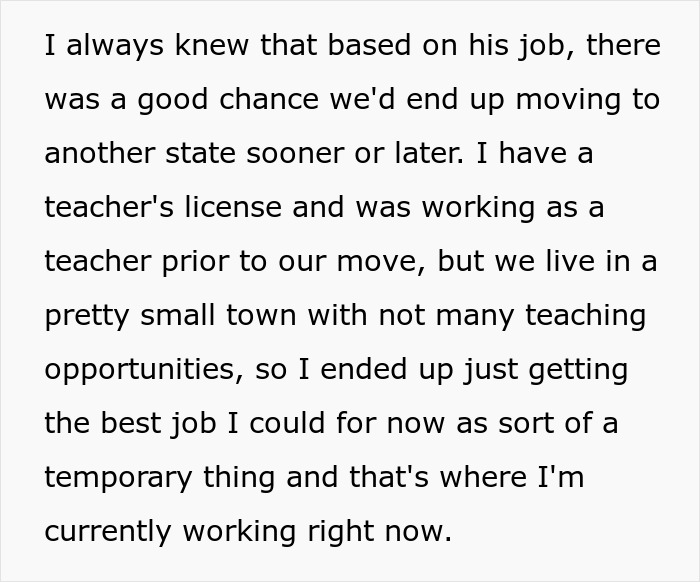


Image credits: Book Hut/Pexels (not the actual photo)
She also went through a miscarriage that deeply affected her mental health
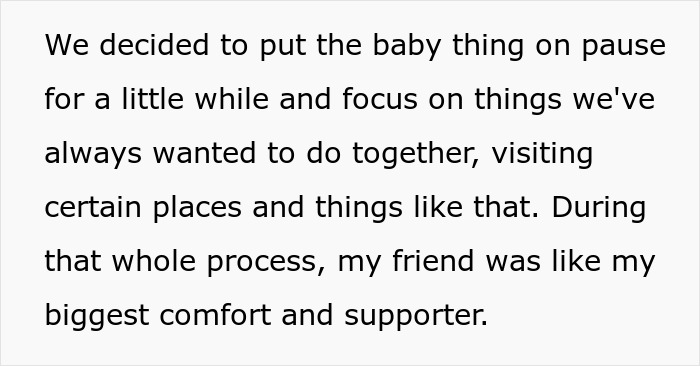
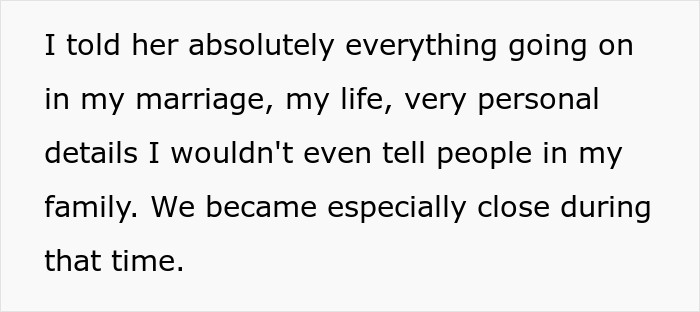


Image credits: Jörn Rockstroh/Pexels (not the actual photo)
To make matters worse, her husband began acting questionably with a close friend of hers from work
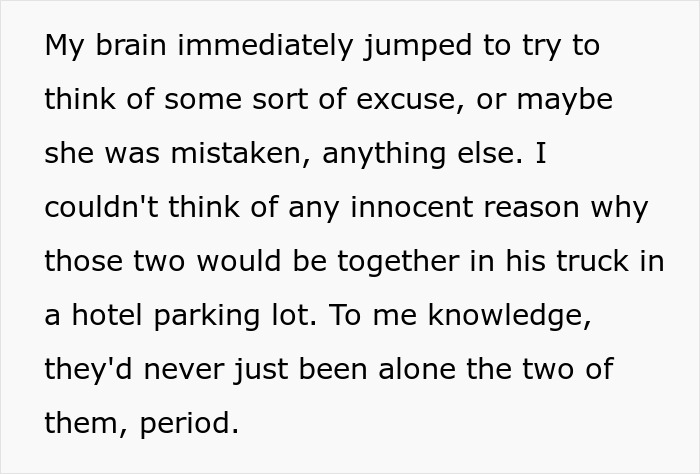
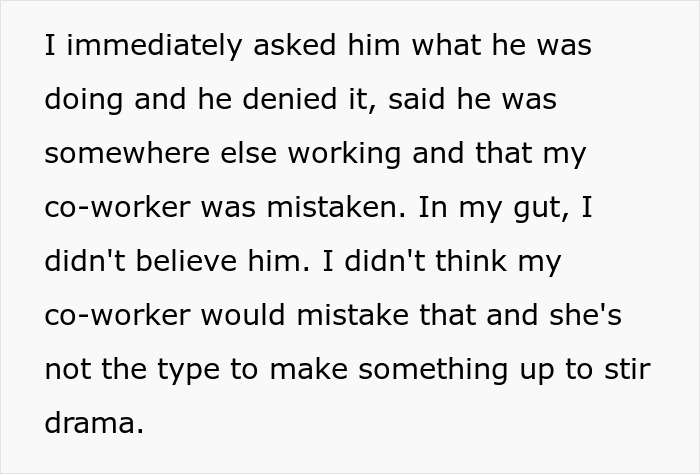

Image credits: cottonbro studio/Pexels (not the actual photo)
After connecting the dots, she confirmed that her spouse was, indeed, having an affair
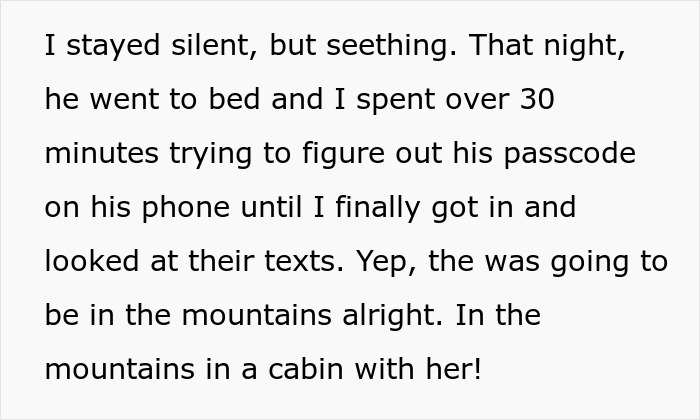


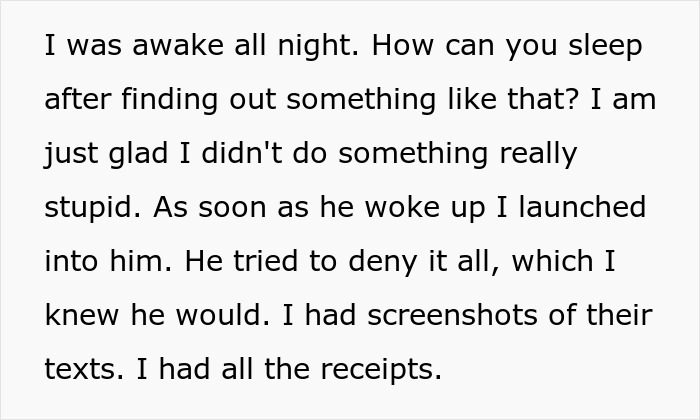
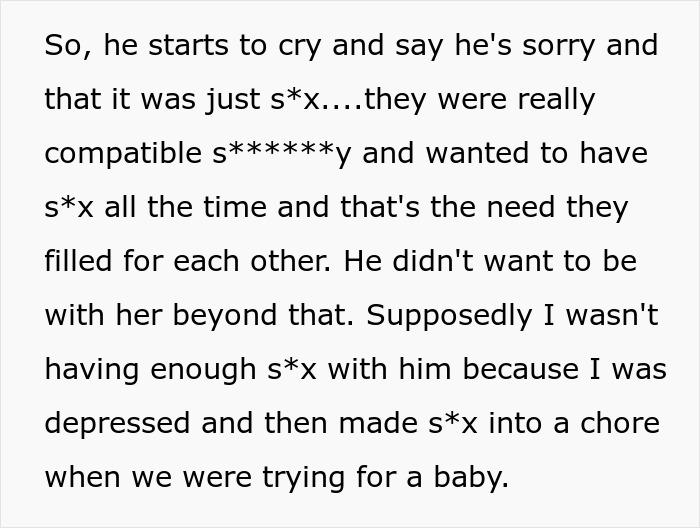
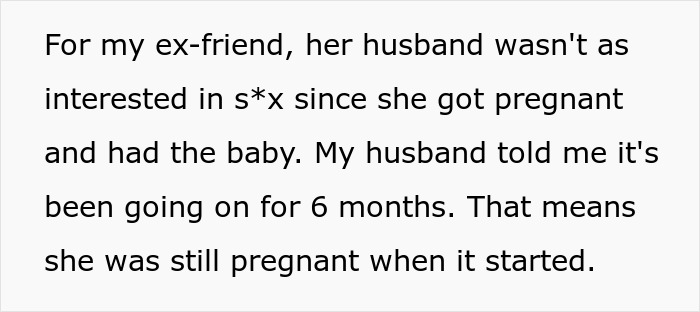
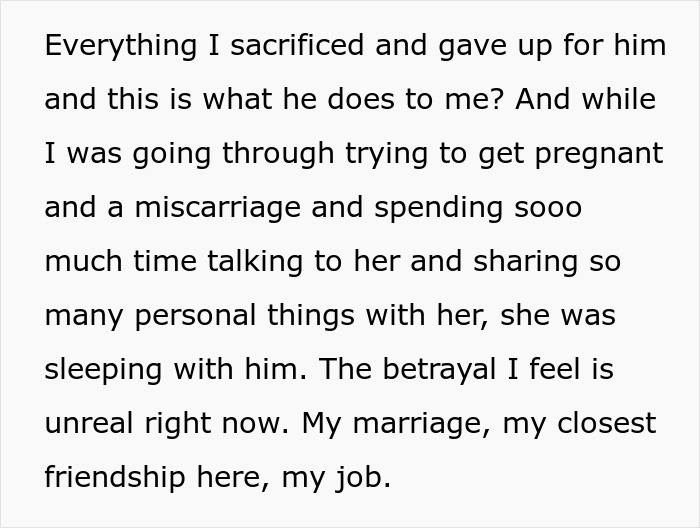
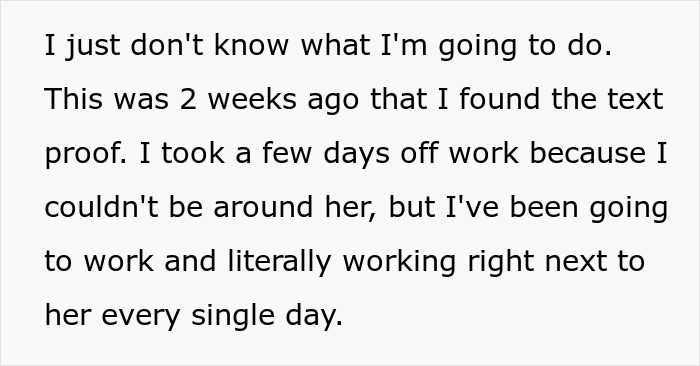
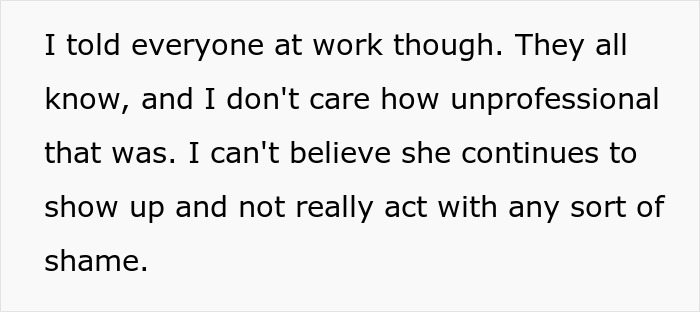

Image credits: ThrowRA_Sail
The dissolution of two important pillars of safety is what hurts most in a double betrayal
Double betrayal causes instant deep-seated trauma for the person experiencing it. Not only do they develop severe trust issues, but they may also struggle to recover from the loss of two important pillars of safety.
According to Lucent Recovery clinical director Matt Bolden, these two pillars are social identity and personal safety.
“When one of these pillars gets broken down, it is challenging to get back on your feet, but when both are broken down at the same time, it can create intense emotional trauma,” he told Bored Panda.
Bolden adds that double betrayal can trigger cognitive dissonance, in which the betrayed individual is forced to re-evaluate their entire history with the two people who caused them pain.
As a result, they may become hypervigilant and draw inaccurate conclusions as they reel from shock.
In such cases, Bolden advises not making any permanent life decisions during this hyper-emotional state. The next step, he says, involves reaching out to loved ones or professionals for support.
“People who have experienced infidelity often turn the blame towards themselves. They often question why they could not see the signs, or what they did wrong,” Bolden said.
“But often in situations where you trusted and loved both parties involved, it can be more difficult to see what is actually going on.”
Regarding trusting again, Bolden’s biggest piece of advice is to not pressure yourself. He emphasized the importance of starting small, like giving small tasks to friends or asking a family member to run a quick errand/
“The point is to teach yourself that the entire world is not out to deceive you, and that there are still predictable and respectful people out there.”
The author may need to seek counseling to begin her healing process. Therapy may also help her decide whether or not she should remain in her marriage, but walking away from it and starting fresh appears to be a much more favorable solution.
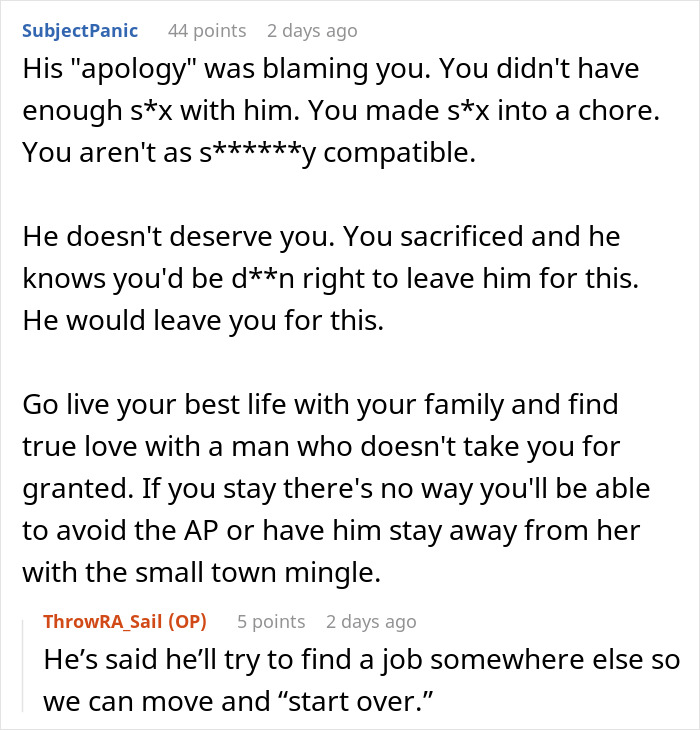
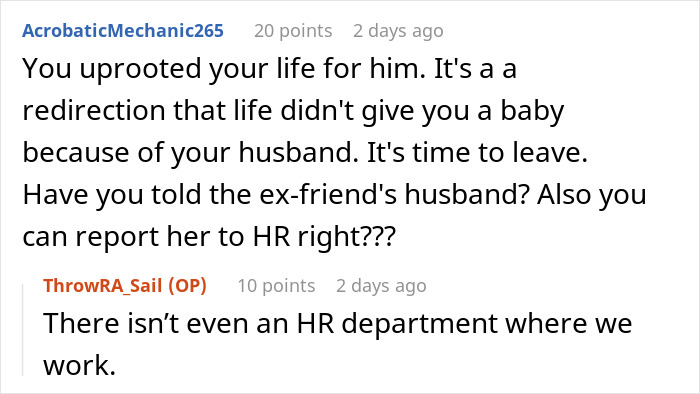
The author answered some questions in the comments to provide more insight into her story

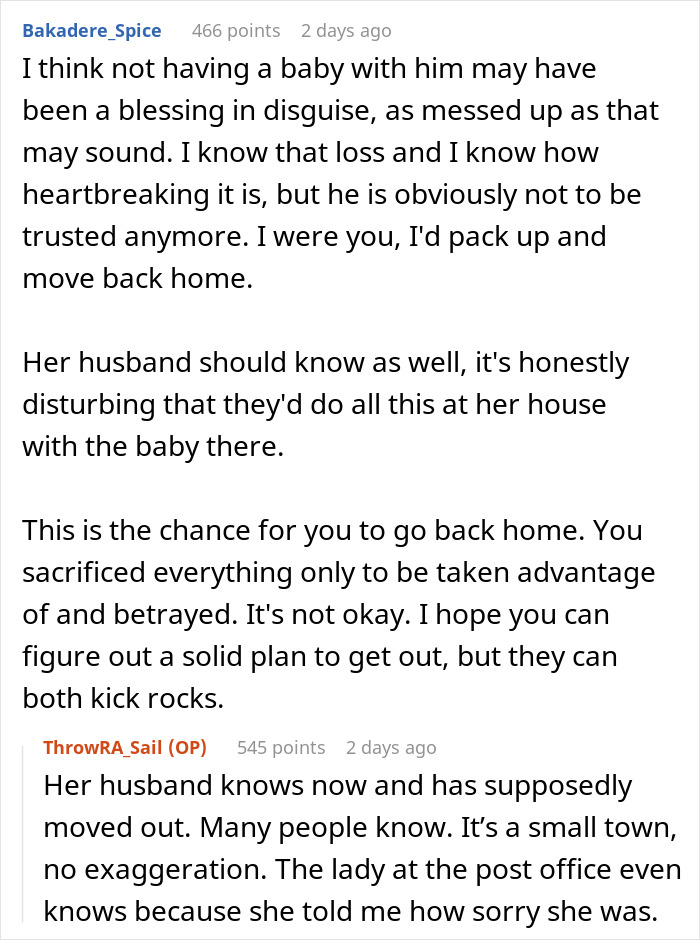
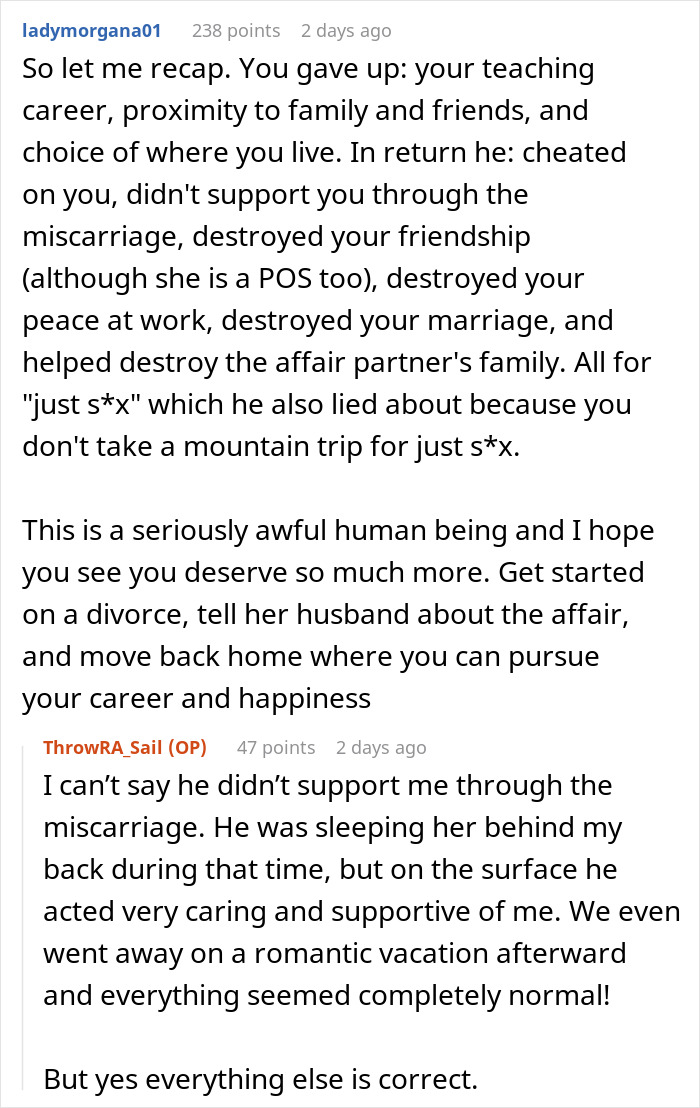
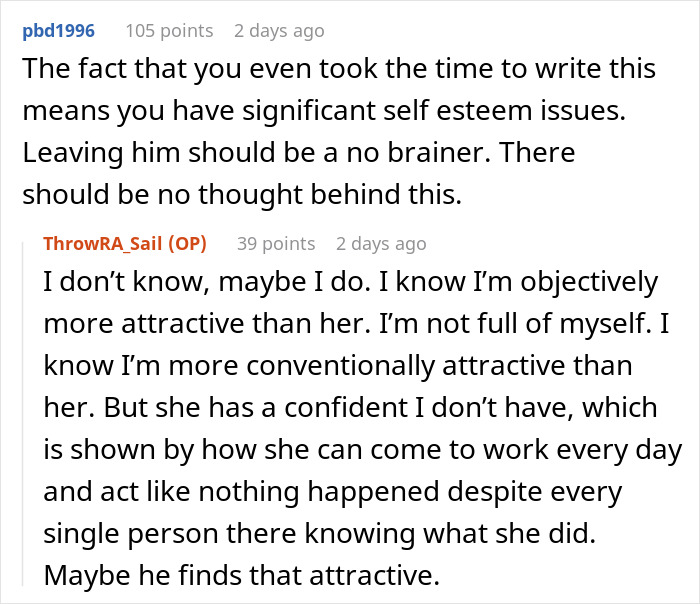
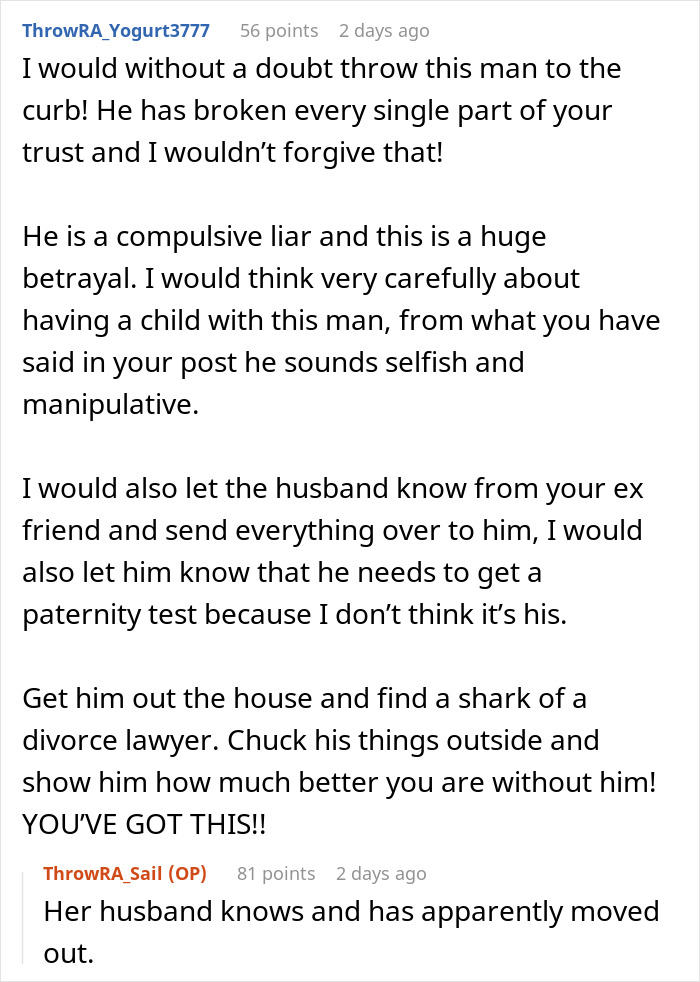
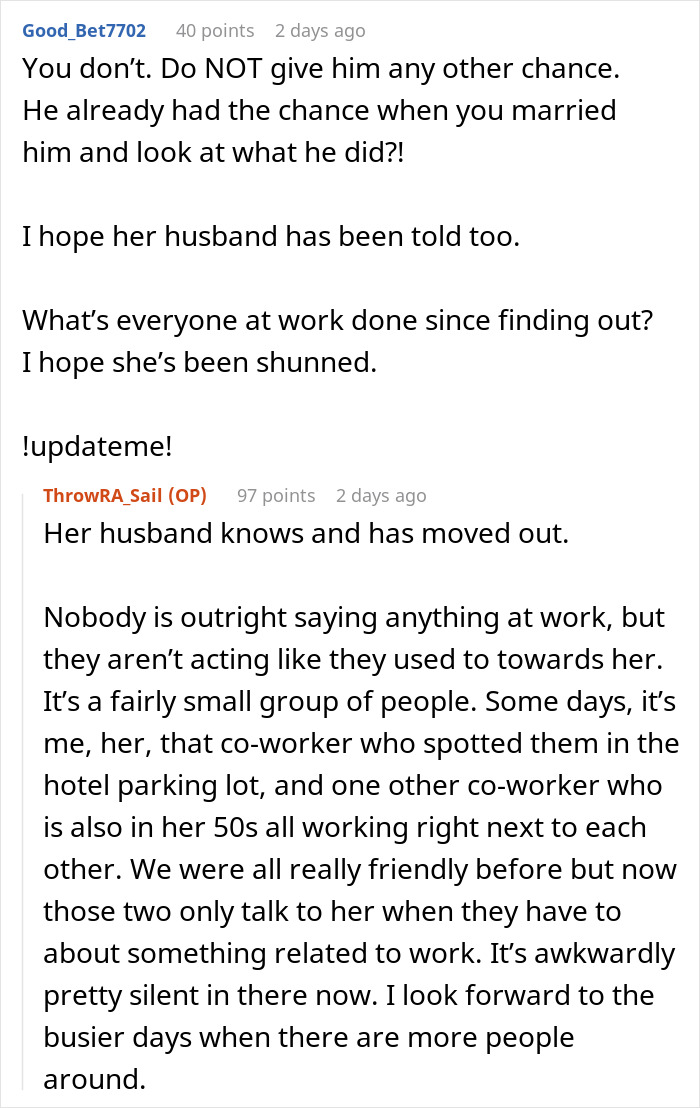
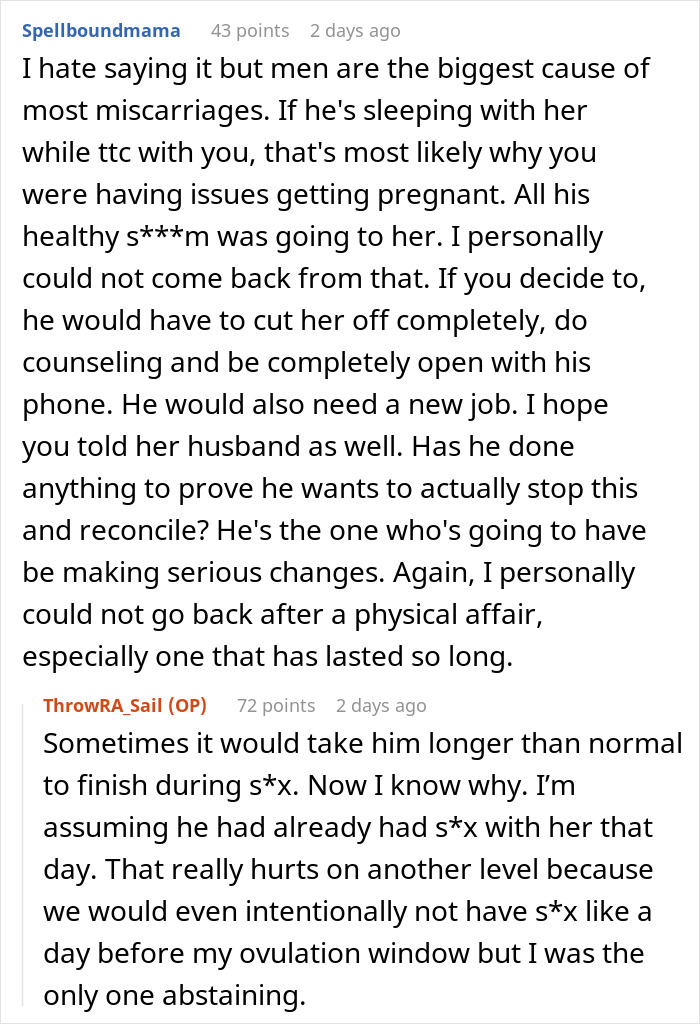
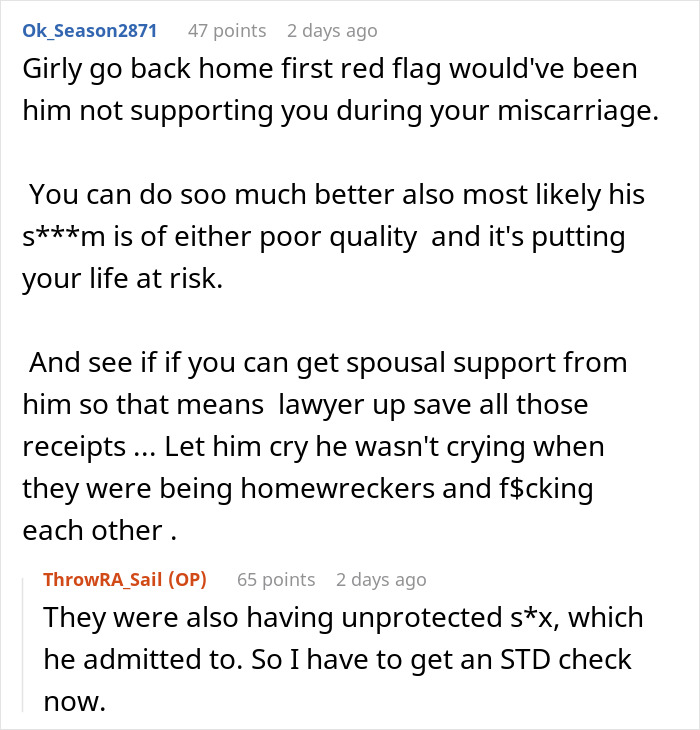
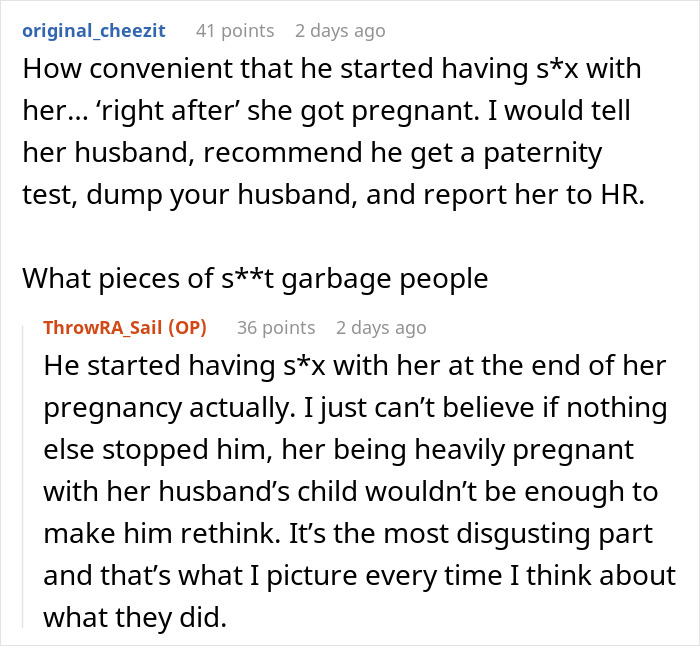
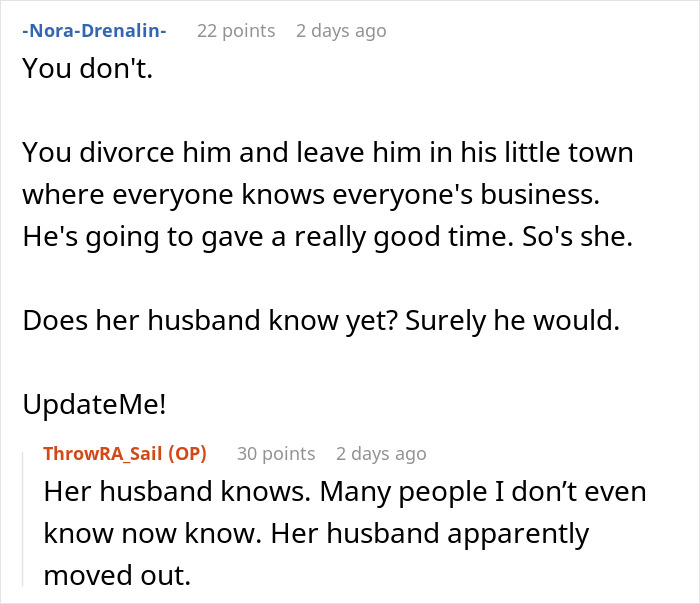

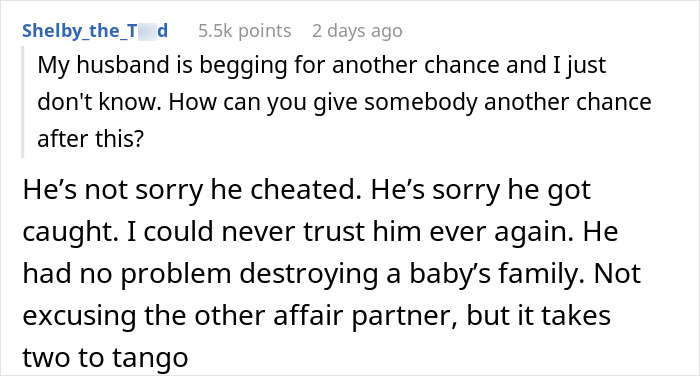
Most readers, however, had strong reactions



 Follow Us