A US airport sniffer dog has gone viral for intercepting 100 pork and chicken sandwiches a traveler had hidden in their luggage.
The CBP Office of Field Operations posted a photo of the adorable field agent, a beagle named Merla, on its official Facebook page.
The picture showed Merla next to two massive bags of the packaged sandwiches she detected.
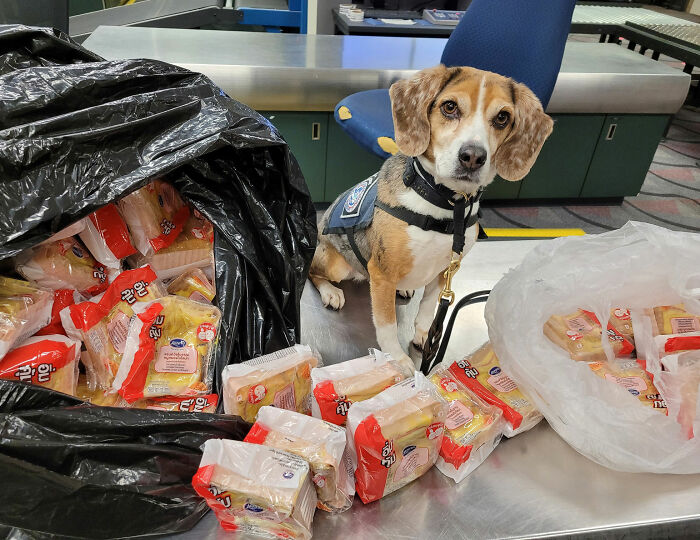
Image credits: CBP Office of Field Operations
“Though it might be stale at this point, lettuce remind you that you must declare agriculture items (including meats!) when entering the US,” they captioned the post on April 16.
“CBP K9 Merla discovered 100 pork and chicken sandwiches in luggage. All were destroyed.”
The confiscated sandwiches appear to be from a Thai bakery called Le Pan, which are sold in convenience stores like 7-Eleven. They are extremely inexpensive, with average prices listed at around 25 baht ($0.77 USD), according to Dexerto.

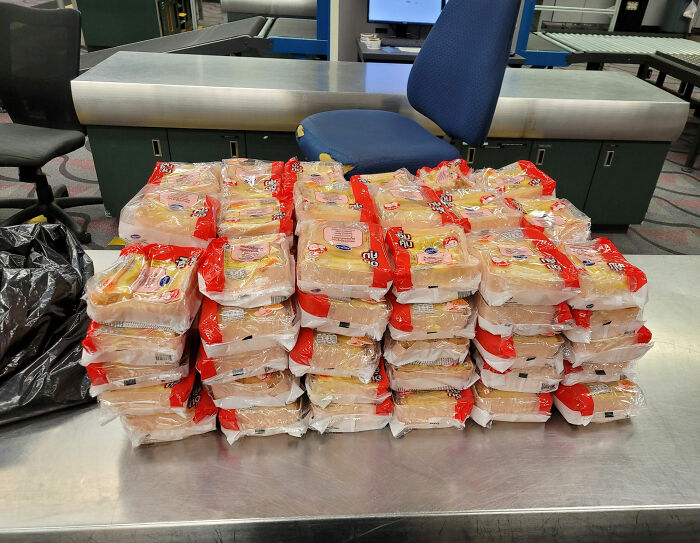
Image credits: CBP Office of Field Operations

Image credits: BuffaloBearGuy

Image credits: distantboots
Little Merla’s bust operation did not go unnoticed online, with an amused social media user writing, “Merla said, ‘Not on my watch!’”
“That dog is like, ‘Hey, don’t I get one as a reward?’” another joked.
“This was that dog’s best day at work ever. Until they took away the sandwiches,” someone else noted.
Though the idea of “destroying” food may sound wasteful and cruel, US Customs and Border Protection states on its website that many food items are restricted from being brought into the country.
Image credits: freepik (not an actual photo)

According to the CBP, “prohibited agricultural items can harbor plant pests and foreign animal diseases that could seriously damage America’s crops, livestock, and the environment.”
All travelers entering the US are required to declare meats, fruits, vegetables, plants, seeds, soil, animals, and animal products.
This applies to items carried in checked baggage, carry-on luggage, or in a vehicle.
“Upon examination of plants, animal products, and associated items, U.S. Customs and Border Protection (CBP) agriculture specialists at the ports of entry will determine if these items meet the entry requirements of the United States,” the website states.
Image credits: wavebreakmedia_micro/freepik (not an actual photo)

Image credits: WestttC_
Those who fail to declare prohibited agricultural products may face fines of up to $1,000 for a first-time offense involving non-commercial quantities.
If the items were brought into the country for commercial use, flyers can face more severe penalties, the government warns, noting, “The same fines apply to prohibited agricultural products sent through international mail.”
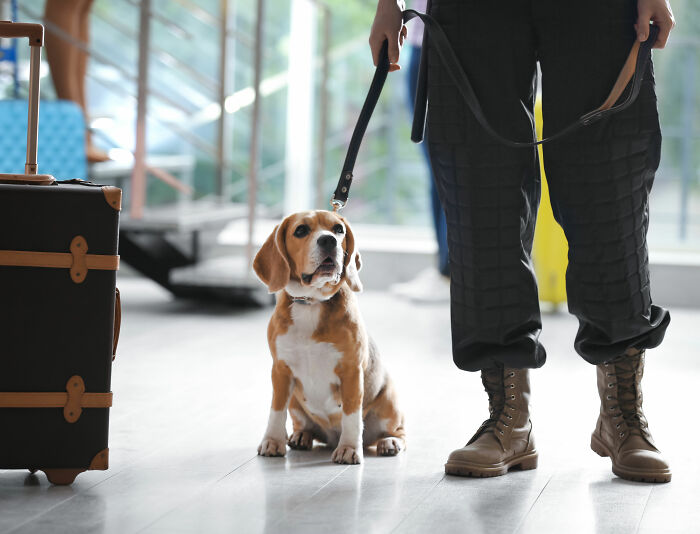
Image credits: New Africa/freepik (not an actual photo)
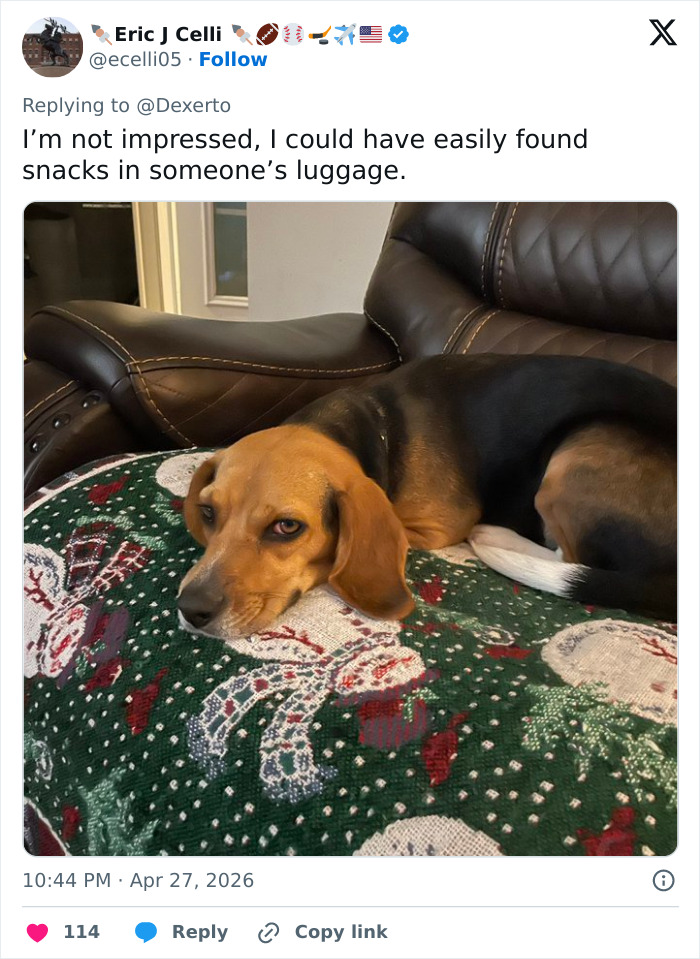
Image credits: ecelli05
Merla’s viral story comes two months after another beagle named Kokoe sniffed out food items in the luggage of Thai passengers entering Nebraska.
The seized undeclared food included mangoes, loquats, planting seeds, and chicken bouillon. Most items were destroyed.
“But love wasn’t lost—after a careful inspection, one piece of fried chicken and 1 kg of betel nuts were released, letting travelers carry a little taste of home and a sprinkle of Valentine’s cheer,” the CBP wrote on Facebook alongside a picture of Kokoe.
Image credits: wavebreakmedia_micro/freepik (not an actual photo)

Image credits: Okonmahemeka1
Detector dogs have long been used to prevent harmful plant pests and foreign animal diseases from entering a country. This is because they possess a keen sense of smell that allows them to identify very specific odors, such as that of an orange or even a live snail.
A trained K-9 can scan a piece of luggage for smuggled or forgotten items in seconds. Meanwhile, an officer takes considerably longer to open and visually inspect the same bag.
Image credits: Artem Labunsky/unsplash (not an actual photo)

Image credits: predaconspittor
In 1984, the US Department of Agriculture (USDA) established its detector dog program, the Beagle Brigade, at the Los Angeles International Airport with only one beagle. Today, the canine program has reportedly grown to over 180 teams.
“All the detector dogs at the USDA National Detector Dog Training Center are adopted from rescue shelters in the US or come to the program from private donations,” the border protection agency states.
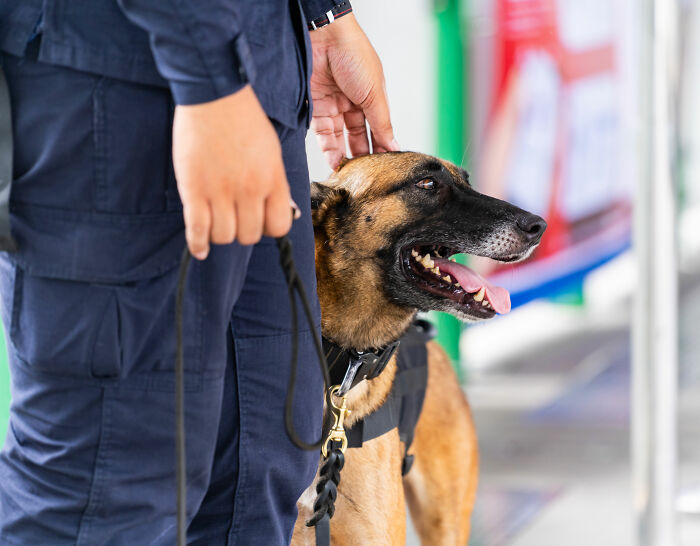
Image credits: naypong/freepik (not an actual photo)
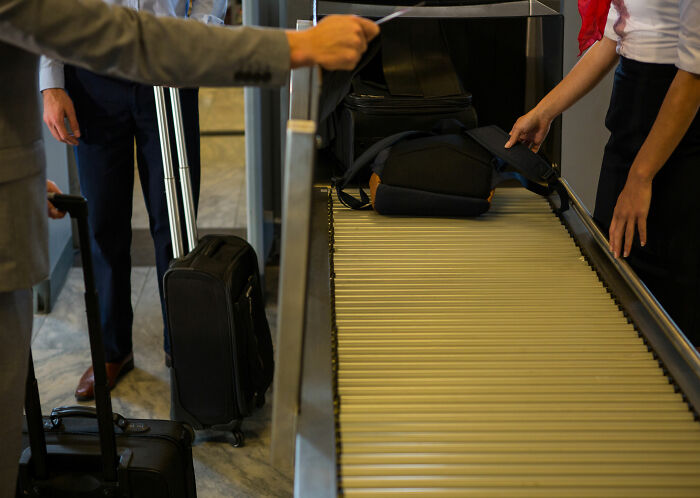
Image credits: wavebreakmedia_micro/freepik (not an actual photo)
“The dogs are trained to give either a passive/sitting response or an active response by pawing to indicate the presence of an agricultural product.”
Beagles and beagle mixes make excellent detector dogs at the airport thanks to their highly developed sense of smell, non-threatening size, high food drive, and calm, friendly nature with the public.

Image credits: TheZenomHayab

Image credits: WordsCocoon

Image credits: popindoge

Image credits: Dnpassion

Image credits: sarahroseshhh

Image credits: subzndubz

Image credits: bubbagump64

Image credits: ItsSubmersible

Image credits: floyd_wiggy

Image credits: Dtgreat13
 Follow Us