Kids learn pretty quickly that they can actually get away with not doing a task if they simply claim to not know how to do it. Unfortunately, this useful (or insidious) hack means that some folks take this mindset well into adulthood.
So we’ve gathered the worst examples of weaponized incompetence women have shared in a post that went viral on Threads (remember threads?) Get comfortable as you prepare to read about netizen’s discomfort, upvote the most egregious examples and be sure to share your own stories in the comments section down below.
#1
I was diagnosed with Celiac disease two years ago.
It’s not a fad diet. If I eat gluten, my body attacks itself. I get violent migraines, joint pain, and severe stomach issues for days.
My husband has always been skeptical. He rolls his eyes when I ask waiters about ingredients. He calls me “high maintenance” and jokes that I just miss bread.
Last night, he offered to cook dinner. “I made your favorite” he said. “Gluten-free pasta with vodka sauce. Totally safe.” I was touched. Usually, I have to cook everything myself to be sure.
I ate two bowls. It tasted amazing — almost too good to be true. The texture was perfect. “See?” he smiled, watching me eat. “You’re enjoying it.”
Thirty minutes later, the pain started. It felt like I had swallowed broken glass. My stomach cramped so hard I doubled over on the rug. I crawled to the bathroom and spent the next hour violently ill.
My husband stood in the doorway, arms crossed. He didn’t look worried. He looked… triumphant. “You’re fine,” he said calmly. “Stop being so dramatic. It’s all in your head.”
I looked up at him, sweating and shaking. “Did you check the sauce label? Did you use the right pasta?” “Of course I did,” he insisted. “You just want to be sick.”
This morning, after a sleepless night of pain, I went to take out the recycling. Right on top of the bin was an empty blue box of regular wheat pasta. Not the gluten-free box I keep in the pantry. The cheap, regular kind.
My heart stopped. It wasn’t a mistake. He didn’t “grab the wrong box” by accident. We don’t even buy that brand. He bought it specifically for last night.
I walked into the living room and threw the box on his lap. “You poisoned me,” I said.
He didn’t apologize. He shrugged. “I wanted to see if you were faking it,” he admitted without shame. “I thought if you didn’t know, you wouldn’t get sick. It proves it’s psychosomatic.”
He treated my autoimmune disease as a lie he had to expose. He treated my body like a science experiment without my consent.
This isn’t just a lack of support. This is assault. Deliberately feeding someone an allergen to “prove a point” is dangerous and psychotic.
I packed a bag while he tried to tell me I was “overreacting” again. I am staying at my sister’s house – a house where the food is safe and the people don’t poison me for entertainment.
Trust is like a mirror. Once it’s shattered, you can’t put it back together.

Image source: yourvoicerising, Getty Images

#2
I was in labor for 22 hours. I chose to do it unmedicated (my choice). It was the most intense physical experience of my life. I needed my husband to be my anchor. We had practiced breathing techniques. We had a plan.
But from the moment we got to the hospital, he wasn’t a partner. He was an audience member… and a critic.
While I was breathing through a contraction that felt like it was breaking my back, he was FaceTiming his brother. “Dude, it’s crazy in here,” he laughed, panning the camera around the room.
“Put the phone away!” I screamed.
He rolled his eyes. “Relax, babe. I’m just updating the fam. Don’t be a buzzkill.”
Around hour 14, I was exhausted. I hadn’t eaten. He pulled out the snacks I had packed for labor energy. He ate my granola bars. He drank my Gatorade.
“Man, this chair is killing my back,” he complained, stretching. “I am SO tired. You’re lucky you get to lay in the bed.”
I looked at him from the bed where I was strapped to monitors, in agony. “I would gladly switch places,” I hissed.
“No need to get snappy,” he said, opening a bag of chips. The crunching sound during my contractions was torture.
When our son was finally born, the doctor placed him on my chest for skin-to-skin. It was the golden hour.
Two minutes later, my husband reached over. “Okay, my turn. I need a picture for Instagram.” He took the baby. He posed. He smiled like the proud hero.
He didn’t ask how I was. He didn’t kiss my forehead. He didn’t say “good job.”
The nurse looked at me sympathetically as he uploaded the photo with the caption: “So proud of us. We did it!”
We didn’t do it. I did it. He just watched.
I realized then: I will be raising two children. And the oldest one is the most exhausting.
The divorce papers won’t be posted on Instagram, but they will be real.

Image source: yourvoicerising, Jimmy Conover
#3
We saved for five years. We ate rice and beans. We skipped vacations. Yesterday was supposed to be the happiest day of our lives.
We were sitting in the loan officer’s office, ready to get pre-approved for our first house. I was holding my husband’s hand, beaming. “We have the 20% down payment ready,” I told the officer proudly.
The officer typed on his keyboard. Then he stopped. He frowned. He looked at my husband, then at me. The air in the room got heavy.
“Ma’am, your credit is excellent,” he said. “But we can’t approve the joint loan. Your husband’s debt-to-income ratio is… extremely high.”
I laughed nervously. “That’s a mistake. We have zero debt. We paid off our student loans two years ago.”
My husband let go of my hand. He was staring at the floor. He looked pale.
The officer turned the screen towards me. Credit cards. Three of them. All maxed out. Totaling $45,000. Opened in the last three years.
I felt the room spin. “What is this?” I whispered.
“I… I was trying to day trade,” my husband mumbled. “I thought I could make it back before you noticed. I didn’t want to worry you.”
He wasn’t “investing.” He was gambling with our future. While I was clipping coupons and denying myself new shoes to save for our dream, he was secretly digging a hole under our foundation.
The officer looked uncomfortable. “I’ll give you folks a moment.” He left us alone in the glass office.
“We can fix this,” my husband said, reaching for me. “It’s just money.”
“It’s not money,” I said, pulling away. “It’s five years of my life. It’s the lie.”
We walked out of the bank in silence. We didn’t get the house. I drove him home. Then I packed my things.
You can recover from bankruptcy. You cannot recover from realizing your partner is a financial stranger who watched you sacrifice for a dream he had already destroyed.

Image source: yourvoicerising, Getty Images
#4
I am five days postpartum. I had an emergency C-section. Walking feels like my organs are going to fall out. I am leaking milk, bleeding, and haven’t slept more than 40 minutes at a time.
My husband announced that his parents are coming to stay for a week “to help with the baby.” I begged him to say no. “I’m not decent,” I cried. “I’m in adult diapers. I just want to heal.”
“They are family,” he insisted. “They want to bond. Don’t be selfish.”
They arrived yesterday. Here is what “helping” looks like:
His mom sits on the couch holding the sleeping baby (the only break I usually get). His dad sits in the recliner watching Fox News at volume 50. My husband sits with them, “entertaining.”
And me? I am in the kitchen, shuffling around in my robe, making coffee and sandwiches for three able-bodied adults. When the baby cries or needs a diaper change, his mom hands her back to me. “She’s hungry,” she says, then goes back to her tea.
This afternoon, I finally sat down. My incision was burning. My mother-in-law looked at the dust on the TV stand. “It’s a bit messy in here,” she noted. “I know you’re busy with the baby, but a clean house is important for mental health.”
My husband nodded. “Yeah, babe, we’ve let it go a bit.”
The rage that filled my body was stronger than the anesthesia. I stood up. I took the baby from her arms. “Get out,” I said.
“Excuse me?” she gasped.
“The ‘help’ is over,” I said. “If you aren’t holding a vacuum or a casserole, you are a guest. And I am not running a bed and breakfast.”
My husband tried to shush me. “You’re hormonal,” he said.
“Yes, I am,” I yelled. “And I am evicting you too.”
I locked myself in the bedroom with the baby. They left an hour ago, “offended.”
Good. Recovery is hard enough without having to host the people who are supposed to be your village.

Image source: yourvoicerising, Getty Images
#5
I was driving home in the rain yesterday when a truck merged into my lane without looking. I swerved, spun out, and hit the guardrail. The airbags deployed. The smell of smoke and chemicals filled the car. My hands were shaking so hard I couldn’t unbuckle my seatbelt.
My first thought wasn’t pain. It was: “He is going to be so mad.”
I managed to find my phone and call my husband. “I crashed,” I sobbed. “I’m on I-95. The car is wrecked.”
There was a pause. No “Are you okay?” No “I’m coming.” Just a heavy sigh.
“Great,” he said. “Just great. Do you know how much our insurance is going to go up? Please tell me it wasn’t your fault.”
I sat there, smoke rising from the hood, checking my limbs for broken bones. “I… I think I’m okay,” I whispered, hoping he would hear the fear in my voice. “My chest hurts from the seatbelt.”
“Is the axle broken?” he interrupted. “Can you drive it home? I really don’t want to pay for a tow truck right now.”
He was calculating the deductible while I was checking for internal bleeding. He was worried about the metal box. I was worried about my life.
I hung up.
The paramedic tapped on the window. “Ma’am? Is there someone we can call to pick you up from the hospital?”
“No,” I said. “My husband is busy worrying about the axle.”
I called my brother. He didn’t ask about the car. He asked which hospital.
When I got home later, stiff and bruised, my husband was in the garage, looking at photos of the car I sent him. “It looks totaled,” he said angrily, not even looking at me. “What a waste.”
“The car is replaceable,” I said. “I am not.”
I packed a bag with one arm. He finally looked up, confused. “Where are you going? Over a car?”
“No,” I said. “Over the phone call.”
If your partner cares more about the paint job than your pulse, you are single. You just don’t know it yet.

Image source: yourvoicerising, Sinitta Leunen
#6
My husband has started reading psychology articles online. Now, suddenly, everything is about his “boundaries.”
If I ask him to help with the dishes? “You are disrespecting my boundary of rest.” If I cry because he said something hurtful? “You are being emotionally manipulative. Stop gaslighting me with your tears.”
He has learned the vocabulary of therapy, but he uses it as a weapon to shut me up.
Last night, I tried to talk to him about our budget. I was calm. I had a spreadsheet. “We are spending too much on takeout,” I said. “We need to cut back.”
He held up a hand. “I am not in the headspace for this negativity right now. You are crossing a boundary. I am protecting my peace.”
He put on his noise-canceling headphones.
“Protecting his peace” meant ignoring our reality. “Setting boundaries” meant avoiding responsibility.
He isn’t becoming emotionally intelligent. He is becoming untouchable. He labels any demand I make as “toxic” so he doesn’t have to deal with it.
I stood there, feeling like I was the crazy one. Maybe I was being too pushy? Then I realized: That is the actual definition of gaslighting. He is twisting reality to make his laziness look like mental health care.
I walked over and tapped on his shoulder. He pulled off one headphone, annoyed.
“You are projecting,” he sneered.
“No,” I said. “I am leaving.”
I put the unpaid bills on his chest. “Since you love boundaries so much, here is one: I do not pay for, clean up after, or sleep with men who treat me like an enemy.”
“That’s abusive!” he shouted as I walked out.
“No,” I said. “That’s a consequence.”
Therapy speak without empathy is just sophisticated bullying. And I am done being bullied by a man who thinks “accountability” is a dirty word.

Image source: yourvoicerising, Vitaly Gariev
#7
I have been struggling to lose the “baby weight” for a year. I’m tired, hormonal, and trying my best.
My husband has been… less than supportive. He makes comments about what I eat. He sighs when I get dressed.
Yesterday, I walked into the kitchen to get water. There was a photo taped to the refrigerator door at eye level. It was a picture of me from our honeymoon, five years ago. I was 20 pounds lighter and in a bikini.
I stared at it. “Why is this here?” I asked.
He walked in, biting into an apple, looking pleased with himself. “It’s motivation,” he said. “Every time you reach for a snack, look at that. That’s the woman I married. Let’s try to get her back, okay?”
He didn’t see the cruelty. He framed it as “helping” me. But it wasn’t help. It was a message: You are not enough as you are right now. He was weaponizing my past self to shame my present self.
“I’m breastfeeding,” I said, my voice shaking. “I need calories. I am keeping a human alive.”
“You’re making excuses,” he scoffed. “I just want you to be healthy. And honestly? The spark is dying because you’ve let yourself go. I’m just being honest.”
There it was. The truth. He treats his love as a conditional reward. I only unlock “affection” if I hit a certain number on the scale.
I felt a wave of cold rage. I didn’t take the photo down. I went to the drawer and got a Sharpie. I walked over to the photo of 25-year-old me. I drew a speech bubble coming out of her mouth. I wrote: “Run away. He is shallow and cruel.”
Then I turned to him. “You want the girl in the photo?” I asked. “She was single. And now, so am I.”
I packed a bag for me and the baby. I am not starving myself to earn his love. My body made life. His body just takes up space.

Image source: yourvoicerising, Daiga Ellaby
#8
My husband is very active on social media. He posts stories daily from the gym, his office, our vacations. He loves the validation. But if you scrolled through his feed for the last three years, you would think he is a single father who miraculously manages a household alone. I am nowhere to be found. Not in the profile picture. Not in the captions. Not in the tags.
I confronted him about it yesterday after he posted a photo of our family dinner table. He had carefully framed the shot to show the food and the kids, but cropped out my hand holding the wine glass.
“Why do you actively hide me?” I asked. “It takes more effort to crop me out than to leave me in.”
He gave me his standard rehearsed answer: “Babe, I value our privacy. I don’t want strangers looking at my beautiful wife. I’m protecting you.”
It sounds romantic, right? Except he doesn’t protect the kids’ privacy. He posts their faces constantly. He doesn’t protect his location privacy.
So I did some digging. I looked at who “likes” his photos. It’s a graveyard of ex-girlfriends, female coworkers, and random women from the gym. In the DMs, the tone is flirty. “Looks like a fun night! You’re such a good dad.”
He isn’t protecting my privacy. He is protecting his “market value.” He is curating an image of an Available Dad. By erasing me, he keeps the door open for validation from other women. To them, I don’t exist. I am just the ghost who cooks the dinner he photographs.
I didn’t ask him to post me again. Instead, I commented on his latest “Single Dad vibe” photo. “Great picture, honey! So glad I spent 4 hours cooking that meal for us. Love you!”
He deleted the comment within 30 seconds. That was all the confirmation I needed. He wants the life of a married man with the online persona of a bachelor.
I packed a bag. Now his feed can finally be authentic. He really is single.

Image source: yourvoicerising, Zulfugar Karimov
#9
I asked my husband three times about the dress code for his company’s holiday gala. “It’s super low-key this year,” he insisted. “Jeans and a nice top. Don’t overdress like you always do.”
I trusted him. I put away my cocktail dress. I wore dark denim, heels, and a silk blouse. I felt confident and ready to meet his boss.
We walked into the hotel ballroom and my stomach dropped. It was a sea of floor-length gowns, sequins, and tuxedos. I was the only person in the entire room wearing denim. I looked like the hired help.
I felt every pair of eyes burning into me. I wanted to dissolve into the floor.
I turned to him, horrified. “You said it was casual!”
He wasn’t embarrassed. He was smirking. He put a heavy arm around my shoulder so I couldn’t pull away.
“Relax, babe. Now everyone knows you’re the ‘cool’ wife. You look distinctive. Stop being so stiff.”
He didn’t want me to look good. He wanted me to look out of place.
Later, after I spent an hour hiding by the bar, I heard him talking to a male colleague near the buffet.
“Yeah, I told her to dress down. Last year she wore that red dress and guys were staring too much. Better to keep her humble, right?”
He humiliated me professionally to soothe his own insecurity. He sabotaged my image to control other men’s gaze.
I didn’t wait for the speeches. I called an Uber and left him there.
When he came home drunk and angry that I “abandoned” him, I was already packing a suitcase.
“It was a compliment!” he slurred. “I wanted you all to myself.”
I am not a prop for his ego. And I am definitely not staying with a man who dims my light just so he can feel brighter.

Image source: yourvoicerising, Nikola Jovanovic
#10
My husband loves to be the “Fun Dad.”
On the weekends, while I’m grocery shopping or cleaning, he is in charge. When I come home, the house is a party. The kids are eating ice cream for lunch. They have been on iPads for four hours. Bedtime rules don’t exist.
“Look how much they love me!” he beams. “We’re having a blast!”
But there is a price for that party. And he never pays it. I do.
By Sunday night, the kids are crashing hard. They are overstimulated, sleep-deprived, and full of sugar. When I try to enforce a bedtime or make them eat a vegetable, they scream. “Daddy lets us stay up! Daddy is nice! You are mean!”
I become the villain in my own home because I care about their health.
Last night was the breaking point. Our 5-year-old had a meltdown because I wouldn’t let him have soda with dinner. He threw his plate.
My husband sat there, looking calm and superior. “Jeez, babe,” he said. “Why are they always so difficult with you? They never act like this with me. Maybe you need to chill out more.”
He genuinely believes he is the “better” parent. He doesn’t realize that being a parent isn’t about being their friend. It’s about regulation.
He gets the glory of the sugar rush. I get the misery of the sugar crash. He feeds them the candy; I hold the bucket while they throw up. It’s easy to be the hero when you have zero responsibility for the aftermath.
“You’re right,” I said, putting down the plate. “Maybe I am too strict.”
I grabbed my car keys. “I’m going to stay at a hotel tonight. You handle the meltdown. You handle the school run in the morning with tired, cranky kids. Show me how the ‘Fun Dad’ does it.”
He called me at 7:00 AM this morning. He sounded desperate. “They won’t wake up. They are crying. Where are the shoes?”
I sipped my coffee in the hotel bed. “Just be fun!” I said cheerfully. “Maybe give them some more ice cream?”
I hung up.
Let’s see how fun he is when he actually has to parent.

Image source: yourvoicerising, Getty Images
#11
Our 6-month-old is going through a sleep regression. I was up at 1 AM, 3 AM, and 5 AM. I got maybe two hours of broken sleep total. My eyes feel like they have sand in them.
My husband slept from 11 PM to 7 AM. He woke up once when the baby cried, rolled over, put a pillow over his head, and went back to snoring.
I was in the kitchen at 8 AM, trying to pour coffee with shaking hands. He walked in, yawning theatrically, stretching his arms.
“Man,” he groaned. “I am beat. The baby was so loud last night. I barely slept a wink.”
I gripped the mug so hard I thought it would crack. “You slept eight hours,” I said, my voice flat. “I slept two.”
He waved me off. “Yeah, but it wasn’t quality sleep. I kept waking up. It’s actually worse than not sleeping at all. You wouldn’t understand, you’re running on adrenaline.”
Then came the knockout punch. “I’m gonna go lay back down for a couple of hours to catch up,” he announced, heading back to the bedroom. “Try to keep the baby quiet, okay? I have a big week coming up.”
He didn’t ask. He informed. He assumed his rest was essential, and mine was optional. He assumed that because I am “home” I don’t need to function.
I looked at the sink full of dishes. I looked at the pile of laundry. I looked at the baby who needed changing.
“Sleep when the baby sleeps,” everyone says. But who cleans when the baby sleeps? Who showers? Who eats?
He was prioritizing his comfort over my sanity. He was treating me like a robot that doesn’t need to recharge.
I didn’t argue. I waited until I heard his door close. Then I put the baby in the carrier, grabbed my keys, and walked out the front door.
I texted him: “Baby is awake. I’m going for a drive. I’ll be back in three hours. Use your ‘big week’ energy to be a dad.”
I am currently sitting in a parking lot, drinking hot coffee in silence. Let him realize that my “shift” isn’t automatic. If he wants to sleep, he can hire a nanny.

Image source: yourvoicerising, Getty Images
#12
We were at a neighborhood BBQ. I was telling a funny story about a project I managed at work. People were laughing, engaged. I felt good.
Suddenly, my husband’s hand landed heavily on my shoulder. “Actually,” he interrupted, his voice booming. “You’re telling it wrong. It wasn’t Tuesday, it was Wednesday. And it wasn’t the CEO, it was the VP.”
The rhythm of the conversation died instantly. “It doesn’t matter,” I smiled tightly. “Anyway, the point is…”
He cut me off again. “No, but details matter, babe. If you’re going to tell it, tell it right. Here, let me explain.”
He proceeded to hijack my story about my career, retelling it with zero charisma but 100% “accuracy.” I stood there, silenced in my own anecdote.
He does this constantly. If I talk about politics, he “corrects” my stats. If I talk about a movie, he talks over me to explain the plot “better.”
He treats me like an unreliable narrator in my own life. He isn’t trying to be helpful. He is asserting dominance. He cannot stand to see me hold the room’s attention. If eyes are on me, he feels invisible. So he has to puncture my balloon to get the air back into his ego.
When he finished “fixing” my story, the neighbors looked awkward. “Wow, thanks for the Wikipedia edit,” I said loudly. “Does anyone else want a drink?”
I walked away and left him standing there. I am done being his rough draft. Next time, he can go to the party alone and correct the silence.

Image source: yourvoicerising, Getty Images
#13
I have been begging my husband to help with laundry for years. His excuse is always: “I don’t know how to sort the colors like you do. I’m afraid I’ll mess it up.”
Last weekend, I had the flu. I physically couldn’t get out of bed. I asked him to please just wash one load of my work clothes so I would have something to wear on Monday.
“Are you sure?” he asked. “I’m not good at this.”
“Just cold water, gentle cycle,” I whispered. “Please.”
He did the laundry. When he brought the basket back, my heart sank. My favorite white silk blouse was bubblegum pink. My tailored wool blazer — the one I saved up for — had shrunk three sizes. It looked like it belonged to a doll.
He had washed everything on “Heavy Duty” with a new red towel and then dried it on High Heat.
“Oh no!” he said, holding up the tiny blazer. He didn’t look sad. He looked… relieved. “See? I told you I’m terrible at this. This is why you should do it. I just ruin everything.”
He shrugged, creating a narrative where his incompetence was a quirky trait, not a destructive choice. I almost believed him. I almost said, “It’s okay, I’ll do it from now on.”
But then I walked into the laundry room to throw away the ruined clothes. I saw a separate basket in the corner. It was his golf shirts and his expensive performance pants. They were hung up to dry. Perfectly.
He hadn’t thrown his clothes in with the red towel. He hadn’t shrunk his synthetic fabrics.
The incompetence was targeted. He knew exactly how to wash clothes. He knew about sorting. He knew about heat settings. He treated his belongings with care and respect. He treated mine as collateral damage in a war to get out of chores.
He destroyed $400 worth of my clothing just to prove a point: “Don’t ask me to help.”
I didn’t yell. I simply took his credit card and ordered replacements for everything he ruined. Then I ordered a label maker.
I am labeling the washing machine with instructions for a 5-year-old. “You aren’t incompetent,” I told him. “You are lazy. And from now on, if you shrink it, you buy it.”
The act is over.
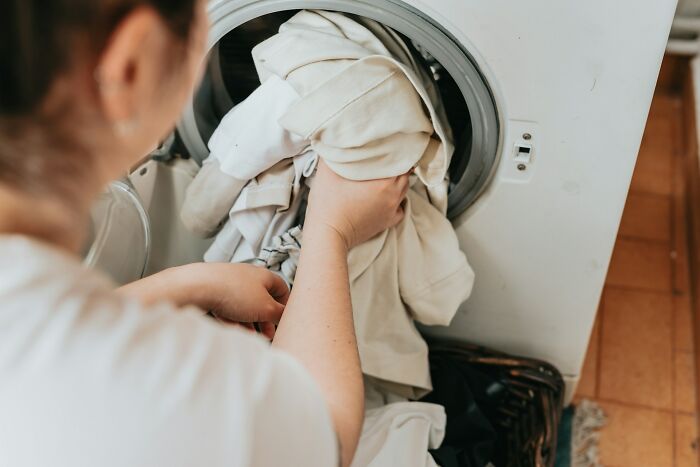
Image source: yourvoicerising, A. C.
#14
My husband insists on being the only one with access to our savings. He gives me a weekly “allowance” for groceries and household items. He calls it “being fiscally responsible.”
Every Sunday, I have to present him with the receipts. He sits at the table with a highlighter, going line by line. I feel like a teenager in trouble, not a 35-year-old partner.
Yesterday, he circled an item in red. “Raspberries?” he asked, looking over his glasses. “Six dollars for berries? Do you think we are royalty?”
I felt my face get hot. “They are for the kids’ lunches. They love them.”
“Bananas are fifty cents,” he lectured. “You are reckless with money. This is why we can’t save.”
He made me Venmo him the $6 back from my personal money.
I swallowed my pride and went to clean out his car later that afternoon. Under the passenger seat, I found a crumpled bag from the liquor store. I looked inside.
A receipt from yesterday. A bottle of premium bourbon. $85. A pack of cigars. $20.
I stood in the driveway holding the two receipts. My $6 raspberries for our children were “reckless.” His $105 treat for himself was… what? “Necessary”?
There is a separate set of rules for him. I am expected to pinch pennies and deny myself basic joys so that he can live like a king on our joint income.
It’s not about the budget. It never was. It is about keeping me in a state of scarcity. If I am worried about the price of fruit, I don’t have the mental energy to look at the bigger picture.
He shames me for spending to keep my confidence low. He spends freely to keep his ego high.
I didn’t confront him. I stopped cleaning his car. I went inside and logged into his laptop while he was in the shower. I downloaded all the bank statements for the lawyer.
Then I went to the store and bought the biggest, most expensive container of berries they had. I ate them all in the car. They tasted like freedom.
The audit is over.

Image source: yourvoicerising, Alexander Mils
#15
I have the biggest interview of my career tomorrow morning. A promotion that would double my salary. I have been prepping for weeks. I told my husband I needed to be in bed by 10 PM to be fresh.
At 9:55 PM, he walked into the bedroom. He wasn’t coming to wish me luck. He was holding a credit card bill from three months ago.
“We need to talk about this charge,” he said. “Right now.”
I looked at the bill. It was a $40 grocery charge. “Can we discuss this tomorrow?” I begged. “I need to sleep.”
“Oh, so your career is more important than our financial stability?” he snapped.
And just like that, the trap was sprung. If I engaged, I lost sleep. If I refused to engage, I was “dismissive” and “selfish.”
He didn’t care about the $40. He cared that I was about to outgrow him.
The argument lasted until 3:30 AM. He followed me from room to room. He turned on the lights I turned off. He brought up mistakes I made five years ago. He attacked my character, my parenting, my voice. He systematically dismantled my confidence just hours before I needed it most.
He wanted me walking into that interview with puffy eyes and a shaky voice.
I woke up at 6 AM feeling like a zombie. My head was pounding. He was sleeping soundly, peaceful as a baby.
When I walked into the kitchen, putting on my blazer, he smirked. “You look tired,” he said. “Are you sure you’re up for this? Maybe you should reschedule. You don’t look like management material today.”
That comment was the clarity I needed. He wasn’t fighting for financial stability. He was fighting for superiority. He knew that if I got this job, I wouldn’t need him financially anymore.
He sabotaged my sleep to sabotage my independence. He would rather have a tired, dependent wife than a successful, happy one.
I drank three espressos and went to the interview. I channeled all my rage into focus. I crushed it.
When I got the offer call an hour ago, I didn’t text him. I texted a realtor. Because with this new salary, I can finally afford an apartment that doesn’t have a 3 AM saboteur in it.

Image source: yourvoicerising, Valeriia Miller
#16
I started taking a pottery class on Tuesday nights. It was the only two hours in my week that belonged just to me. No kids, no work, just clay and silence.
For the first month, I came home glowing. I felt like myself again.
But then the pattern started. My class starts at 7:00 PM. And like clockwork, every Tuesday at 6:50 PM, my husband picks a fight.
It’s never about big things. It’s about the dishwasher not being unloaded. It’s about a tone of voice I allegedly used earlier. It’s about a shirt he can’t find.
He waits until I have my keys in my hand, ready to walk out the door, and then he drops a grenade. He screams. He accuses. He creates absolute emotional chaos right as I need to leave.
For weeks, I fell for it. I would stay to argue. I would cry. I would arrive at my class twenty minutes late, eyes puffy, hands shaking. I couldn’t focus on the wheel because my mind was still back in the kitchen, replaying his insults.
I spent my “happy place” time feeling guilty and anxious, checking my phone for his angry texts.
Last night, I brought home a bowl I finally finished. I was proud of it. It wasn’t perfect, but I made it. I showed it to him, hoping for a shred of support.
He looked at it and laughed. “We paid $250 for that? It’s crooked. You could buy a better bowl at the dollar store.”
That comment clarified everything. He isn’t fighting with me at 6:50 PM because he’s actually mad about the dishwasher. He is fighting with me because he hates seeing me happy without him.
He views my hobby as a threat. Any joy I derive from a source he doesn’t control is a betrayal in his eyes. He sabotages my night so that even when I’m away, I’m thinking about him.
I put the bowl on the shelf. It is crooked, and I love it.
Next Tuesday, when he starts the 6:50 PM fight, I am not engaging. I am not defending myself. I am going to walk out the door in the middle of his sentence.
He can be miserable alone. I am done letting him tax my happiness.

Image source: yourvoicerising, Getty Images
#17
We have one rule regarding our 4-year-old daughter: No haircuts without asking us first. We are growing her curls out. Everyone knows this.
Yesterday, I left her at my mother-in-law’s house for three hours while I went to the dentist. When I came back to pick her up, my daughter was crying in the kitchen.
Her long, golden curls were gone.
My mother-in-law stood there with scissors, smiling. “It was getting in her eyes,” she said. “I gave her a cute little bob. It looks much tidier now.”
I felt the blood boil in my veins. It wasn’t about the hair. It was about the dominance. It was a deliberate violation of a boundary I had set multiple times.
I turned to my husband, waiting for him to step up. Waiting for him to say: “Mom, you had no right to do that.”
Instead, he looked at his mother, then at me, and shrank. “Babe, don’t make a scene,” he whispered. “It’s just hair. It will grow back.”
In the car ride home, he scolded me for being “cold” to his mother. “She was just trying to help,” he said. “Why do you always have to be so dramatic? You ruined the mood.”
I looked at our daughter in the rearview mirror, still sobbing and touching her uneven hair. He wasn’t protecting his child. He was protecting his mother’s feelings at the expense of his wife’s sanity.
This is the trap of the “Peacekeeper” husband. He claims he hates conflict, but that is a lie. He is perfectly fine with conflict, as long as the conflict is with you. He knows you will forgive him. He knows his mother won’t. So he throws you under the bus to keep her happy.
He isn’t keeping the peace. He is using you as a meat shield to avoid dealing with his own inability to set boundaries.
We got home, and I didn’t yell. I realized that arguing with a man who is still afraid of his mommy is useless.
I opened the calendar app on my phone and deleted all the upcoming visits to his parents’ house. Thanksgiving. Christmas. Sunday dinners. Gone.
“What are you doing?” he asked, panicking.
“I am keeping the peace,” I said calmly. “Since you can’t protect our daughter from your mother’s lack of boundaries, I will. She is not allowed unsupervised visits anymore. And we are taking a break from seeing her until her hair grows back.”
He started to argue, but I stopped him.
“You can go see her whenever you want,” I said. “But you are going alone. If you want to be a dutiful son, go ahead. But you don’t get to be a passive husband anymore.”

Image source: yourvoicerising, Janko Ferlič
#18
My phone rang at 5:15 PM during a conference call. It was an unknown number, so I sent it to voicemail. It rang again immediately. Then a third time.
Panic set in. I stepped out of the meeting to answer.
It was the school secretary. Her voice was tight. “Mrs. Miller? We have Leo here in the front office. Everyone else has been picked up. Is someone coming for him?”
I froze. School ends at 3:30 PM. My husband was supposed to pick him up today. It was his only task.
“I’m on my way,” I said, my hands shaking so hard I dropped my pen. “I am so sorry. I’ll be there in twenty minutes.”
I called my husband. No answer. I called again. Straight to voicemail.
I checked “Find My Friends.” He wasn’t in a ditch somewhere. He wasn’t at the hospital. His dot was sitting perfectly still at our house.
My son had been sitting on a plastic chair in an empty school office for nearly two hours, wondering if his parents had forgotten him.
I drove like a maniac, crying the whole way.
When I burst into the school office, Leo looked so small. He wasn’t even crying anymore; he just looked resigned. Like he expected this.
I hugged him so tight it probably hurt. The secretary looked at me with pure judgment. “Please make sure this doesn’t happen again,” she said coldly. “We are not a daycare service.”
She was right. It was humiliating. But mostly, it was terrifying.
I drove home with Leo in the backseat eating a granola bar I found in my purse. He was silent.
When we walked in the front door, the house was quiet.
I walked into the living room. My husband was on the couch, wearing his noise-canceling headset. He was shouting commands at his teammates in Call of Duty.
He was so immersed in a virtual war that he forgot his actual son existed in the real world.
I walked up to him and pulled the power cord of the PlayStation out of the wall. The screen went black.
He ripped the headphones off, furious. “What the hell? I was in a ranked match!”
“Leo was at school,” I said. My voice was dangerously quiet. “School ended two hours ago.”
The color drained from his face. He looked at the clock. Then he looked at Leo standing behind me with his backpack still on.
“I… I lost track of time,” he stammered. “The game matches are long, and I just…”
“You prioritized a game over your child’s safety,” I interrupted.
I didn’t yell. I didn’t scream.
I just took the power cord with me to the kitchen and cut it in half with the poultry shears.
“Game over,” I said.
If he acts like a teenager, he gets treated like one. No more toys until he learns to be a parent.

Image source: yourvoicerising, Jordan González
#19
I have been walking around with a cracked molar for three months. Every time I drink cold water, it feels like a lightning bolt hits my jaw.
My husband manages our finances, and for the last year, his mantra has been: “We are in the red. We need to tighten our belts.”
I believed him. I cancelled my gym membership. I stopped buying makeup. I cooked budget meals with rice and beans. I felt like a good partner, sacrificing my comfort to keep our family afloat during hard times.
Yesterday, I needed to print a return label from his iPad because my phone was dead. While I was looking for the file, a notification popped up from his email: “Thank you for your purchase: $450 – Golf Galaxy.”
I froze. I thought maybe our credit card had been stolen. We are supposed to be broke. We can’t afford the dentist, so we definitely can’t afford golf clubs.
I opened the email app to investigate. It wasn’t fraud. It was a receipt with his name on it.
I typed “Order Confirmed” into the search bar. The screen filled up with results. Hundreds of them.
While I was icing my jaw to save on a $100 dental co-pay, he was living a completely different life. There were $25 DoorDash lunches every single day at work. There were Steam video game purchases. There were crypto investments. There were hidden subscriptions to streaming services I didn’t even know we had.
I pulled out a calculator and started adding up the last 90 days. The total came to $3,200.
I sat there staring at the number, feeling physically ill. He didn’t just spend money; he spent my pain. He spent my sacrifice. Every time he told me “We can’t afford it,” he was actually saying: “I have already spent that money on myself.”
He prioritized his luxury over my basic healthcare. This is a specific form of abuse called Financial Infidelity. It relies on one partner trusting the other blindly.
He watched me struggle. He watched me deny myself basic needs. And he didn’t feel guilty; he felt entitled. He viewed the family budget as his personal fund, and me as the obstacle to his spending.
The “budget” wasn’t real. It was a control mechanism to keep me cheap so he could be expensive, secretly.
I didn’t wait for him to come home. I booked the emergency dentist appointment for tomorrow morning. I put it on the joint credit card.
Then I went to the bank and opened a separate checking account in my name only. I transferred half of our savings into it immediately.
When he gets the notification, he will panic. He will scream that I ruined the budget.
But I finally realized the truth: We aren’t broke. He is just a thief.
Image source: yourvoicerising
#20
I had minor surgery last week. Nothing life-threatening, but I had stitches and strict orders: “Bed rest for 48 hours. No lifting.”
I prepared everything. Meals in the freezer. Childcare arranged. I just needed him to bring me water and keep the house quiet.
Two hours after we got home from the hospital, he groaned. He grabbed his lower back. He started limping. “I think I threw my back out helping you into the car,” he winced.
Suddenly, the dynamic shifted. The focus wasn’t on my recovery anymore. It was on his “agony.”
He lay on the couch, groaning louder than I was. He asked me — the person with fresh stitches — to get him the heating pad. He asked me to get him a glass of water because he “couldn’t move.”
I did it. I shuffled around the kitchen, in pain, taking care of the man who was supposed to be taking care of me. I felt guilty. I thought: “What terrible timing. Poor guy.”
I ignored my own pain medication schedule to manage his.
By the second day, I was exhausted. I was bleeding more than I should have been because I was up and down catering to his needs.
I went upstairs to take a nap, leaving him “immobile” on the couch.
I woke up an hour later to the sound of the garage door. I looked out the window. He was in the driveway. He was bending over, picking up a heavy Amazon package.
Then he saw the neighbor and waved. He walked over — without a limp — and stood chatting and laughing for 15 minutes. He leaned against the car. He stretched his arms.
The pain wasn’t real. Or at least, it wasn’t debilitating.
It was a subconscious defense mechanism. He couldn’t handle the role of “Caregiver.” It made him uncomfortable. So he unconsciously manufactured a crisis to reclaim the role of “Patient.”
He didn’t want to help me heal. He wanted to be the one being healed.
I didn’t scream. I just locked the bedroom door.
When he came up later, “limping” again and asking what was for dinner, I spoke through the wood. “I saw you in the driveway. The clinic is closed. You’re on your own.”
I realized then: You don’t truly know your partner until you are the one in need. And some partners are only present when they are the main character.
Image source: yourvoicerising
#21
I was in a high-stakes client meeting when my phone buzzed. Three missed calls from my husband. Then a text: “PICK UP NOW.” Panic set in. I stepped out, heart pounding, thinking someone was dead.
“What’s wrong?” I whispered.
“I’m at the pediatrician for Leo’s checkup,” he said, sounding annoyed. “The nurse is asking for his insurance card and his date of birth. I don’t know where the card is. And… is his birthday the 14th or the 15th?”
I stared at the phone in silence. Our son is four years old. He has lived in our house for 1,460 days. My husband couldn’t remember the day his own child entered the world because he has never had to be the “keeper” of that information.
I recited the birthdate and told him exactly which slot in the wallet the card was in. I went back to my meeting, but my focus was gone. I realized that to the medical system, and the school system, my husband is essentially a well-meaning uncle, not a parent.
Later that night, I asked him how the appointment went.
“Fine,” he said, watching TV. “Oh, the doctor asked about his allergies. I told him I didn’t think he had any.”
My blood ran cold. “Leo is allergic to Amoxicillin,” I said slowly. “If he gets an infection and they give him that, he could go into anaphylactic shock.”
He looked up, genuinely surprised. “Since when? You never told me that.”
I walked to the fridge. I pointed to the bright red magnet I put there two years ago: LEO – ALLERGY: AMOXICILLIN. It was right at his eye level. He opens that fridge ten times a day. He has looked at it, but never seen it.
This isn’t just “forgetfulness.” This is a luxury called “The Default Parent Privilege.” He creates the space in his brain for football stats and work projects because he knows I am the safety net catching everything else.
If I died tomorrow, my children would suffer. Not just from grief, but from administrative chaos. He wouldn’t know the dentist’s name, the shoe size, the vaccination schedule, or the playdate friends. He lives in the house, but he is a tourist in the details of their lives. And today, that tourism almost became dangerous.
Ignorance isn’t cute. In parenting, ignorance is negligence.
I pulled out a notebook and a pen. I slammed them on the coffee table. “Turn off the TV,” I said. “Write down his birthday. Write down his allergy. Write down the pediatrician’s name.”
He rolled his eyes. “You’re being dramatic.”
“No,” I said. “I am resigning from being the only brain in this operation. Study it. There will be a quiz tomorrow.”
I am done carrying the mental load for two adults.
Image source: yourvoicerising
#22
“He told his friends that I finally chilled out.”
For ten years, she fought for their marriage. She begged for dates. She asked for help with the kids. She cried when he forgot anniversaries.
Then, one Tuesday, she just stopped.
The house is quiet now. He thinks he won the battle. He has no idea he already lost the war, and the wife.
He missed dinner again last night. Last year, this would have been a screaming match. Tonight, she just put his plate in the fridge and went to read a book.
He smiled at her when he got home, thinking everything was perfect. He mistakes her silence for contentment.
But she isn’t happy. She is just done, completely.
Here is the truth about female rage.
When a woman is yelling, she is still fighting for the relationship. She still believes you can hear her. She still has hope.
Silence is dangerous.
Silence means she has accepted that you will never change. She is mourning the death of the marriage while making his morning coffee and packing his lunch.
While he plays video games, thinking his life is finally stress-free, she is browsing apartments on her phone. She is separating her finances in her head. She is emotionally moving out, brick by brick.
He is enjoying the “peace and quiet” without realizing it is actually the calm before the storm, the divorce.
The day she hands him the papers, he will be shocked. He will tell everyone: “I was blindsided. We were finally getting along! She didn’t even complain.”
But the women reading this know the truth.
She didn’t leave suddenly. She left slowly, quietly, and painfully over the last two years.
And he just wasn’t watching at all.
Image source: yourvoicerising
#23
We were at his sister’s wedding last weekend. I watched my husband across the room. He was holding a crying baby so his cousin could eat. He was fetching drinks for elderly aunts. He was laughing, dancing, being the absolute life of the party.
People kept coming up to me all night: “You are so lucky. He’s such a catch. He’s so helpful.”
I smiled and nodded every time. “Yes, he is.”
But inside, I felt like screaming. Because I haven’t seen that man in three years.
The second we got into the Uber to go home, the light went out. It was like someone flipped a switch. His smile vanished. His shoulders slumped. He pulled out his phone and started scrolling.
“Did you have fun?” I asked softly.
“It was fine. Exhausting,” he grumbled, not looking up.
At home, he left his suit on the floor. He walked past the dishwasher I was loading without a word. The “helpful, charming guy” stayed at the wedding. I was left with the roommate.
It is a specific, suffocating kind of loneliness. Watching your partner give their best energy, their sharpest wit, and their kindest patience to strangers… and then bring you their leftovers.
I get the tired sighs. I get the “not now, I had a long day.” I get the silence. His boss gets the best of him. His friends get the best of him. Even the waiter gets a smile. I get the version of him that is “done” for the day. The empty shell.
For a long time, I tricked myself. I thought: This is intimacy. He is comfortable with me. He doesn’t have to perform here. He can just be himself.
But I realized tonight that is a lie. Being “comfortable” shouldn’t mean being careless. It shouldn’t mean saving all your kindness for people who don’t matter, and giving your apathy to the person who sleeps next to you.
If you can be charming to a stranger, but you can’t ask your wife how her day was, that’s not “comfort.” That’s a choice.
This morning, he was rushing to a meeting. He stood in front of the mirror and put on his “public face” — big smile, bright eyes, full of life. He looked like the man I fell in love with.
He kissed me on the cheek, but his eyes were already on the door. “See ya,” he said flatly.
I looked at him and realized I didn’t miss him. I missed the guy from the wedding. And I think I’m done accepting only the leftovers.
Because I deserve the main course too.
Image source: yourvoicerising
#24
It started over something stupid. I think I asked him to put his phone away during dinner.
He didn’t yell. He didn’t argue. He just looked at me, cold and blank, and then looked back at his screen.
For the next three days, he didn’t speak a single word to me. He walked past me in the hallway like I was a ghost. He ate the dinner I cooked without looking up. He slept next to me with his back turned, radiating ice.
In the beginning of our marriage, this silence used to make me panic. I would follow him around, begging: “Please talk to me.” “I’m sorry if I annoyed you.” “Can we just resolve this?” I would apologize for things I didn’t do, just to make the air in the house breathable again. Just to get him to look at me.
But this time, I didn’t apologize. I sat in the silence and really tasted it.
It wasn’t “cooling off.” It wasn’t “needing space.” It was punishment.
He was teaching me a lesson: If you criticize me, I will remove my love until you beg for it back. It is a control tactic designed to make you feel small, anxious, and crazy.
Psychologists call this Stonewalling. Dr. John Gottman lists it as one of the “Four Horsemen” of the apocalypse regarding relationships. It is the number one predictor of divorce.
It is emotional abuse disguised as “quiet.” It sends a brutal message to your partner: “You are not worth a response. Your feelings do not exist.”
By day four, the silence broke. Not because he apologized, but because he needed to know where his blue tie was. He asked me casually, as if the last 96 hours hadn’t happened. He expected me to jump up, relieved, and find it for him. He expected the cycle to reset.
But I stayed seated on the sofa drinking my coffee.
“I don’t know,” I said calmly.
And I went back to reading my book.
He looked shocked. He waited for the usual begging. The usual relief. It didn’t come.
The silence didn’t scare me anymore.
Because in those four days of quiet, I realized something important: I wasn’t lonely because he wasn’t talking to me. I was lonely because I was the only one in this relationship.
And that is a silence you can’t fix.
Image source: yourvoicerising
#25
We had a shared calendar. He called it our “mission control.” A way to stay in sync. Purple for my events, blue for his.
I thought it was a symbol of our partnership. Dinners, appointments, friends’ birthdays, vacation plans… I added everything.
It wasn’t until last night, scrolling back through the last six months, that I saw it. A sea of purple. And only one blue entry: “Dave’s Bachelor Party.”
I brought it up calmly. “I noticed I’m the only one who really uses the calendar.”
He looked up from his phone. “Babe, you’re just better at that stuff. You’re the organized one.”
He said it like a compliment. But it felt like a job description.
“Just tell me what to add, and I’ll add it,” he offered.
I didn’t want to be his manager. I wanted a co-pilot.
I did the math. Not in dollars, but in energy. Every doctor’s appointment I scheduled. Every dinner reservation I made. Every “don’t forget your mom’s birthday” reminder. Every mental Post-it note of “we’re out of milk.”
He wasn’t a bad guy. He just showed up to a life I was tirelessly producing for us. I realized I wasn’t his partner. I was his unpaid executive assistant with romantic benefits.
I didn’t have a big fight. I just opened the calendar settings, found his name, and clicked one button: “Stop Sharing.”
The blue entry vanished. The sea of purple was mine again.
Then I did something I hadn’t done in years. I created a new event, just for me.
“6 PM. Coffee with Myself.”
Because you can’t add “care for me” to someone’s calendar.
This morning, he texted. “Hey, what time is my dentist appointment tomorrow? I can’t see the calendar.”
He wasn’t looking for a partner. He was looking for a notification.
He didn’t lose his partner. He lost his planner.
And my calendar is finally my own.
Image source: yourvoicerising
#26
Have you ever asked your partner for one simple thing, and watched them fail so spectacularly you start to wonder if it was on purpose?
I was sick last week. Fever, chills, the works. All I wanted was a specific brand of pre-made mashed potatoes from the grocery store. The one I always buy. I sent him a photo of it. “Can you please just get this for me?”
He came back an hour later. He handed me a can of cold, sliced potatoes. “They were out of the other kind,” he said with a shrug.
I was too tired to argue.
But later, I opened the store’s app on my phone. The mashed potatoes I wanted were in stock. They were always in stock.
And suddenly, it wasn’t about the potatoes anymore.
It was about the dishwasher he loads so badly the dishes come out dirtier. The important mail he “never saw.” The one time he did laundry and “accidentally” dyed all my white clothes pink.
It was about the thousand tiny failures that always, somehow, created more work for me.
This pattern is so common, psychologists gave it a name: Weaponized Incompetence. It’s the art of doing a task so poorly, so consistently, that the other person, out of sheer exhaustion, finally gives up and says the most dangerous words in a relationship: “It’s just easier if I do it myself.”
That phrase is not a solution. It’s a surrender. It’s the moment a partnership starts its slow death, and a parent-child dynamic is born. The moment you become the manager of their life, not the partner in yours.
The resentment that follows is a quiet, slow-acting poison.
So last night, he asked me what was for dinner.
I smiled, and handed him my phone with the grocery store app open. The mashed potatoes were right there on the screen.
“I don’t know,” I said. “But I’m sure you’ll figure it out.”
My new job is to stop managing his incompetence, and start managing my own recovery.
Image source: yourvoicerising
#27
He said we should get a PlayStation. For us, he said. For cozy nights in. For games we could play together. For our relationship.
I put a large part of my savings into it. I believed in the “us” he was selling me.
The giant box arrived. He spent a whole day setting it up. And then he disappeared.
Not from the apartment. Just from our life.
He was there, on the couch, every night. But he was gone. Headset on. Eyes glazed over. Lost in worlds I wasn’t invited to.
The “us” never happened.
One night, I reached for the controller to switch to Netflix and watch a movie. The look he gave me was pure ice.
“Don’t touch my stuff,” he snapped.
My stuff… It was never for us. I just helped pay for the ticket to his private escape hatch from our relationship.
That night, I didn’t say a word. I just watched the flashing lights from his screen dance across the ceiling of our dark living room.
And I realized: The loudest silence in the world is the one next to a man who is in a room you can’t enter, even when he’s sitting right beside you.
The next day, I bought a television. A small, cheap one, just for the bedroom.
He saw the box and laughed. “Why’d you waste money on that? We have a great TV.”
I looked at him, and for the first time, I didn’t feel sad. Just clear.
“No,” I said. “You have a great TV.”
Turns out, the most expensive part of that console wasn’t the price tag. It was the cost of realizing you were never on the same team.
Image source: yourvoicerising
#28
We had a small fight. He said he needed “a little space.”
So I gave it to him.
I spent the next 24 hours waiting for the “I miss you” text. The call to say he was coming over.
The call never came from him.
But my phone did light up.
A text from his mother.
Her message was so polite. So kind. “Hi honey. Mark is going through a lot right now. He asked me to ask you… if you could drop his things off at my place this weekend.”
I read it three times.
He didn’t just break up with me. He had his mom do it.
And in that moment of cold, clean humiliation, I understood everything. All the times he avoided difficult conversations. All the times he made me make the tough phone calls. All the times he was “too tired” to argue for us.
It wasn’t him being “easy-going.” It was a fundamental lack of a spine.
I didn’t reply to him. I didn’t call him.
I replied to his mother.
“Of course,” I wrote. “I’ll drop off the box. Could you do me a favor and remind him that he also left his courage and his decency here? I’ll just throw those out.”
I hit send without shaking.
He didn’t just lack the courage to leave me. He lacked the respect to see me as a person who deserved a real conversation.
I used to think the opposite of love was hate. It’s not. It’s cowardice.
And I no longer have space in my life for men who send their mothers to fight their battles.
Image source: yourvoicerising
#29
He called himself a minimalist. “We don’t need more things,” he’d say. “Experiences are what matter.”
I believed him. I sold the furniture I loved. We stopped going out for dinner. We never traveled. It felt pure. Noble.
Until I found a bill in his glove box. For a “SafeSpace” storage unit across town.
I found the key on his spare ring. My heart was pounding as I drove there.
I unlocked the cold, metal door, half-expecting to find evidence of another woman.
What I found was worse.
It was his real life. The one I was funding with my sacrifices. A professional DJ setup. A collection of vintage synthesizers. Limited edition sneakers, still in their boxes, lining the walls like trophies.
A shrine to materialism, paid for by the money we “saved” on living a simple life.
He wasn’t a minimalist. He was just cheap with me.
That night, I didn’t say a word. I listened to him talk about the “trap of consumerism.” I nodded when he said our life was so much richer because it was simple.
He looked at me with such sincerity. He had no idea I had just spent my afternoon in his temple of hypocrisy.
The next morning, while he was in the shower, I packed a single box. All his things from my apartment. His toothbrush. His two shirts. His one book. His entire “minimalist” existence.
I drove to his storage unit and left the box outside the door.
He texted me later, panicked. “Where are all my things? Where are you??”
I just replied with a photo. A photo of his small box of things sitting in front of his treasure-filled storage unit.
With a single line of text: “I helped you with your minimalism. You’re welcome.”
Image source: yourvoicerising
#30
He gave me his Amazon Prime password. “So you can watch your shows,” he said. A small act of kindness. A gesture of trust. I felt so cared for.
It wasn’t until I accidentally clicked on “Archived Orders” that I found the other life he was living. A history he forgot to delete.
A necklace I never received. A silk robe I never wore. A book of poetry I never read. All shipped to an address I didn’t recognize.
Each with a gift note. Each signed, “For my everything, Chloe.”
My name is not Chloe.
But that wasn’t the dagger in my heart. The dagger was the payment method he used for all of Chloe’s gifts. My credit card. The one he’d saved to the account months ago “for convenience,” he said.
He wasn’t just cheating on me. He was making me pay for it.
I didn’t confront him. I didn’t cry. I just watched him that night, as he complained about being broke, as I paid for our takeout.
And I realized something profound. I wasn’t his partner. I was his line of credit with a heartbeat.
The next day, I used his account one last time. I ordered him a small package with same-day delivery.
He opened it. Inside was a simple calculator.
With a note: “So you can start calculating the true cost of your choices.”
I already had. And my freedom was priceless.
Image source: yourvoicerising
#31
It was his mother’s birthday. I bought the card. I bought the gift. I wrapped the gift. I booked the restaurant for four.
He looked at me over his phone as I was getting ready and asked: “Did you remember to write the card from both of us?”
And just like that, I saw it.
I wasn’t a partner. I was staff.
I asked him later that night, quietly. “Why do I have to be the one who remembers everything?”
He looked genuinely confused. “Because you’re just better at it, babe.”
He said it like a compliment. Said I was making a big deal out of nothing.
But it wasn’t nothing. It was everything. My mind was a shared Google Calendar he never logged into.
I started noticing it everywhere. The dentist appointments I made for him. The reminders to take his own medication. The mental map of where everything was in our own house. The emotional energy spent pre-empting his bad moods.
I wasn’t sharing a life with him. I was managing his. For free.
The next week, his car registration was due. The reminder email came. I saw it. I archived it.
And I said nothing.
I didn’t yell. I didn’t fight. I just… stopped. I dropped one of the dozens of balls I was juggling for him, just to see if he’d notice.
He didn’t. For three weeks.
He got pulled over for expired tags. He called me, furious. “You let me forget! I can’t believe you!”
And the calmest voice came out of my mouth. “No. I just stopped reminding you to be an adult.”
He was looking for a manager.
But the position is no longer available.
Image source: yourvoicerising
#32
$800 a month. That’s how much he said rent cost. We split it. $400 each. Autopay from both our accounts.
It wasn’t until I saw the lease — months later, by accident — that I found out: It was $550 total. Not $800. Not split. Just a quiet little lie. Every single month.
He called it “no big deal.” Said the extra cash helped him “stay afloat.” That I was “overreacting.” That I should be glad he took care of things.
I asked why he didn’t tell me. He shrugged. “Some things don’t need a discussion.”
I did the math. $250 extra per month. For 14 months. That’s $3,500.
He was stealing from me with a smile and shared groceries. With movie nights and fake promises. It wasn’t just rent. It was my trust on a direct deposit schedule.
I left without slamming the door. I just canceled autopay, packed my books, took my mug — the one he never used — and walked out with less money but more clarity.
Because if they lie about the small things, they’ll lie about everything.
He texted the next day: “I thought we were building a life together.”
No. He was building a cushion. I was funding it.
And I’m not an investor in anyone’s lies.
Image source: yourvoicerising
#33
He said we didn’t need passwords. “We trust each other, right?”
I nodded.
Meanwhile, he had his texts on silent, Snapchat set to auto-delete, and Instagram logins I’d never seen. Trust? He meant: don’t ask questions.
He left his iPad open one night. Not unlocked — open. DMs still up.
Messages from a girl with his location pinned. Caption: “Let me know when she’s asleep.”
I stared at it for ten minutes. Didn’t cry. Didn’t scream. I took a screenshot and sent it to myself.
The next morning, he kissed my forehead. Made me coffee. Told me I was “the only woman who ever really got him.”
I smiled. Told him I booked us a weekend away. Somewhere with no Wi-Fi.
He loved the idea. He had no idea he was about to lose everything.
At the hotel, I waited until he was in the shower. Then I posted the screenshots. Tagged him. Unfollowed everyone we knew.
Left the room key on his phone.
And left.
Not back home — but to a friend’s place he never knew about.
He called twelve times. Left voicemails saying I was “vindictive.” That I “ruined his life over one stupid message.”
One? I counted fifteen girls. Three cities. Two phones.
He played the wrong game with the wrong girl.
People say I was petty. But petty would’ve been bleaching his clothes. I gave him exposure. And the dignity of watching his own mask fall off in front of an audience he built.
Closure? No. That was a performance.
This was an exit.
Image source: yourvoicerising
#34
got from me.
The first lie wasn’t big. It was his phone lighting up at 2:17 a.m. Name saved as “Alex.” Pink heart next to it.
He said it was his cousin. Cute. I didn’t know cousins sent mirror selfies in lingerie.
I didn’t say anything that night. I just watched. Noticed the new cologne. The extra showers. The way he started taking his phone to the bathroom like it might run away.
He thought I was naïve. I was just collecting evidence.
He left his laptop open once. Instagram DMs. Notes app. A backup folder named “Receipts.”
How ironic.
Inside: screenshots, saved videos, voice notes. Like he was proud of what he was hiding. Like he wanted to archive the destruction.
I didn’t cry. I made a copy of the folder. Uploaded it to a private drive. Renamed it “Insurance.”
I made breakfast that morning. Asked him how he slept. Kissed his forehead. He had no idea I was staging my exit like a professional.
The day I left, I didn’t slam the door. I emailed him one file: a ZIP with every receipt he thought I’d never find.
Subject line: “Since you like collections.”
Then I blocked him on everything except Venmo.
A week later, he sent $75 with a note: “You didn’t have to be so cold.”
I refunded him 50 cents.
Captioned it: “For the water I wasted boiling your lies.”
And that was the last thing he ever got from me.
Image source: yourvoicerising
#35
I paid for the movers. I paid for the lease deposit. I even paid for the couch he picked out.
But somehow, he still told people he saved us.
I only realized how deep the lie went when his mom thanked him “for taking care of everything.”
I worked two jobs. 9 to 5 — admin at a law firm. 6 to midnight — bar shifts on weekends.
He was “between passions,” trying to “build something from nothing.” He always needed time. And my Uber account. And a fridge that never went empty.
Once, I asked him to pay the electric bill. He sighed like I was being cruel. Like asking your partner for help was somehow ungrateful.
Said I didn’t “see his vision.” That “women who believe get rewarded.”
I believed. And stayed cold in February.
He wore Off-White sneakers I hadn’t seen in our shared budget. A Supreme hoodie that “a friend gifted him.”
But I knew what Klarna was. And I saw the email confirmation.
It was always “business expenses,” even when it smelled like cologne and ego.
The last straw? He bought himself a PS5. Not for my birthday. Not for our anniversary. Not for us. Just because his “inner child needed healing.”
Mine needed to get the hell out.
I packed while he was on a “networking trip.” Left him the couch. Left the dishes.
Left a sticky note on the fridge: “You got everything you wanted. Now you can pay for it too.”
— The actual breadwinner.
Image source: yourvoicerising
#36
He said he was saving to propose. I believed him. I stopped getting takeout. Canceled my gym membership. Even skipped my annual trip with the girls. Every month, I handed him $300. He kept it “safe,” he said, in a shared folder on his bank app.
After 11 months, I asked how much we’d saved. He said, “Don’t worry about it.” Laughed it off like I was being impatient. Then one night, I saw his phone light up. Bank alert. Withdrawal. $1,200. Location: Vegas. I wasn’t in Vegas.
The next morning, I waited. He came home hungover. I asked. He blinked like I was the crazy one. “I deserved a break.” “I needed time to think.” “You always said you wanted me to be happy.” He didn’t say a word about the money.
I checked the bank folder. Empty. Nothing in savings. Nothing in checking. He spent it. All of it. Not even on someone else. On himself. Bottles. Blackjack. A VIP table for one.
I packed while he was asleep. Left a note: “Enjoy your happiness. I’ll find mine elsewhere.” Blocked his number. Called my bank. Opened a new account with my name only. This time, I’m saving for something real: Peace.
The worst part? It wasn’t even about the money. It was the look in his eyes when I confronted him. No guilt. No shame. Just inconvenience. That’s when I knew: He never planned to build a future. He just needed funding.
Image source: yourvoicerising
#37
The joke wasn’t funny. He made it at dinner with his friends around. About how I “never shut up” when I tell stories. How I “need constant validation.” How “thank God she’s pretty” or I’d be “so much work.”
They laughed. And I smiled. Because that’s what women do when we’re embarrassed in public. We play along.
Later, I said, “That hurt my feelings.” He said, “Don’t be so sensitive.” Said I “always make things about me.” Said “it was just a joke.”
But it wasn’t the first one. Or the fifth. He’d been sharpening his punchlines on my ribs for months.
He joked about how I dress. How I “ask too many questions.” How I’m “so dramatic sometimes.” How “no one else would deal with me.” He called it humor. I called it erosion.
Because every laugh chipped away at something I was trying to hold together. The worst part wasn’t what he said. It was how easily I accepted it. How many times I swallowed the sting. How I stayed quiet to keep the peace in a relationship that never offered me safety.
One night, at another dinner, he said something again. Something small. But this time, I didn’t smile.
I put down my fork, stood up, and said, “Imagine loving someone and thinking it’s cute to humiliate her for laughs.”
Then I left. No scene. No shaking hands. Just done.
He texted later: “Wow. You really took that personally.”
Yes. I did. Because it was personal every time he made me the punchline in a room that only knew me through his sarcasm.
I wasn’t the joke. He was just too careless to see the damage his laughter left behind.
Image source: yourvoicerising
#38
He lost his job. I said we’d figure it out together. Cut down on takeout. Paused my skincare subscription. Started bringing lunch to work so he wouldn’t feel bad.
Meanwhile, he slept till noon and played Call of Duty like it was his career.
I made excuses for him. “He just needs time.” “It’s hard out there.” “He’ll bounce back.”
But months passed. No applications. No interviews. Just new excuses and new ways to make me feel guilty for wanting him to try.
I still cooked. Still cleaned. Still split the bills. Still showed up like I wasn’t drowning in quiet resentment.
He once said, “You’re lucky I’m not one of those guys who cheats.”
And I remember thinking — so now fidelity is the reward for carrying everything alone?
One night I asked, “What’s your plan?”
He shrugged. Said, “Why are you being so negative lately?”
I laughed. Not because it was funny — but because I realized I’d become invisible to the man who used to adore me.
The next morning, he asked what was for breakfast. Didn’t say good morning. Didn’t ask how I slept. Just assumed I’d stay in gear.
I looked at him, and all I saw was the version of me that stopped needing anything because asking only led to disappointment.
So I packed quietly. Left a note on the fridge: “This isn’t about money. It’s about effort.”
He texted a week later: “Wish you told me you were unhappy.”
But I did. In every tired smile. Every quiet dinner. Every skipped purchase so he wouldn’t feel small.
Turns out — I shrank, just so he could feel whole.
Image source: yourvoicerising
#39
The day I signed my first client, he didn’t congratulate me. Just looked up from his phone and said, “Don’t let this get to your head.” It was a $4,000 deal. I wanted to cry. Not from pride — but from the fact that the person I loved looked more threatened than proud.
It kept happening. Every win I had — he had a reason to downplay it. “You’re lucky.” “Probably a fluke.” “Must be nice having free time to focus on that.” Meanwhile, I was working 12-hour days. Networking. Figuring it out alone. Carving a path from scratch. He was watching Netflix and calling it “research.”
One night, he said I was “emasculating” him. Because I paid for dinner. Because I was busy building. Because I didn’t need him financially. I looked at him and realized he didn’t love me. He loved the version of me that stayed behind him.
I tried softening. Tried shrinking. Tried pretending his jealousy was insecurity and not a warning. But it grew louder. He started joking about me at parties. Mocking my job. Calling me “the boss” in that voice that turns admiration into poison.
The last straw was the night he said, “You’re not better than me, you know.”
And I answered, “I never said I was.”
But in that moment, I saw it in his eyes — he wanted me to lose. Not because he hated me, but because he didn’t know how to love someone who outgrew the version of life he settled for.
I left two weeks later. Quietly. No drama. No Instagram post. Just one suitcase, and the version of me he couldn’t stop trying to dim.
And for once, I didn’t apologize for being too much. Because maybe I wasn’t too much. Maybe he was just never enough.
Image source: yourvoicerising
#40
$37.50. That was all I had left after paying rent. Groceries? Credit card. Gas? Credit card. Hope? Running on empty. I didn’t tell anyone — not my friends, not my parents. I just kept showing up to work, smiling through it, pretending I was “fine.” Because saying “I’m drowning” felt more humiliating than drowning itself.
The scariest part was how normal it became. Microwaving cheap meals. Avoiding group dinners. Choosing between toothpaste and tampons at Walgreens. I stopped answering texts. Stopped planning anything. Stopped believing this would ever feel different. Being broke isn’t just numbers. It’s shame. It’s isolation. It’s silence.
Then one day, the bank called. Overdraft fees. Automatic payments bouncing. I sat on the kitchen floor, the phone still buzzing in my hand, and laughed. Not because it was funny — but because I was too exhausted to cry again. That was the day I realized: no one was coming to save me. And maybe that meant I had to save myself.
I sold the clothes I never wore. Canceled every subscription. Applied to 14 jobs in one night — even the ones that terrified me. Pride? Deadweight. Comfort zone? Not an option. It wasn’t pretty. It wasn’t inspirational. It was survival.
And slowly, like thawing ice, things began to move. Not all at once. But enough. Enough to hope again.
Six months later, I opened a new bank account. Not for bills. Not for emergencies. For dreams. I named it “Second Chances.” First deposit: $20. Second: $50. Third: tears. Not because I was rich, but because for the first time in a long time, I believed I could build something no one could take from me.
If you’re in the part where it feels impossible — where $20 feels like air and $5 feels like failure — please hear me: It’s not your ending. It’s your first brick. Keep building. Even if your hands shake. Especially when your hands shake.
Because one day, you’ll look back and realize: the version of you who kept going — she was never weak. She was legendary.
Image source: yourvoicerising
#41
The shared calendar still had her birthday marked. No plan. No note. Just a quiet blue dot that came and went like a Tuesday. She didn’t mention it. Didn’t want to watch him scramble for an excuse or a dinner reservation that would feel more like an apology than a celebration.
The last gift she got was an Amazon package delivered to his name, with a charger she never asked for and a card that said, “Thought this might be useful.” Useful. That was the word. Somehow it landed heavier than nothing at all.
Dinner was spent in silence. Not cold — just numb. She asked how his day was. He said “fine” without looking up from his phone. She stirred her soup and imagined what it would feel like to be missed before she was gone.
She used to write him notes on Post-its. Now they sat untouched in a drawer, next to receipts and tangled earbuds. The last one she wrote was months ago. It said, “You’ve got this.” But he never noticed it on the mirror. Or that she’d stopped writing them at all.
Leaving wasn’t dramatic. No suitcase. No screaming. Just a key on the counter and the door quietly closing.
“You don’t need a reason loud enough for them to understand. You only need one honest enough for you to leave.”
Image source: yourvoicerising
#42
The towels stayed damp in the washer for two days. No one moved them. She wanted to see if he’d notice. He didn’t. So she rewrote the to-do list in her head: “Buy groceries. Pay bills. Remember everything. Be invisible.”
She paid the electric bill early so he wouldn’t complain when the AC ran all night. When she asked him to Venmo half, he said, “Didn’t you already cover it?” with a smirk that made her feel like generosity was a trick he’d learned to expect.
Dinner came with silence. Not the peaceful kind — the kind where your presence feels like background noise. He scrolled through his phone while she tried to swallow pasta and the lump in her throat at the same time.
The receipt for a new watch showed up in the mail. She hadn’t seen it on his wrist. She hadn’t heard him mention it. She hadn’t been considered. And suddenly, “we’re a team” sounded more like a phrase he used to keep things convenient.
When she packed, he said, “You didn’t even give me a chance.” But what he never realized was that every quiet disappointment had already packed itself — one forgotten load at a time.
“You don’t always leave in anger. Sometimes you just finally leave in honesty.”
Image source: yourvoicerising
#43
He borrowed my car and returned it with the gas tank near empty. Didn’t say a word. Just tossed the keys on the counter and grabbed a beer. I stared at the mileage, did the math in my head, and said nothing — because silence was easier than sounding “too sensitive” again.
I started buying groceries in smaller amounts. Only what I needed. Because every time I filled the fridge, his friends showed up, and the food disappeared without a thank you or a thought. He said I was “being weird about money.” But it was never about money. It was about respect.
When I asked him to split the internet bill, he laughed. Said, “You’re already working from home — I thought it was yours.” I blinked. Because somehow my independence had become his excuse not to contribute.
I noticed I’d stopped lighting candles. Stopped playing music. Stopped doing anything that felt like softness. Because it’s hard to create comfort in a space where you’re always bracing for the next comment that makes you question your sanity.
The night I left, he didn’t ask where I was going. Just shrugged. As if I was a mood he assumed would pass.
But I didn’t leave in anger. I left in clarity.
“Some goodbyes don’t come with closure — just the quiet conviction that you’re done.”
Image source: yourvoicerising
#44
He left his phone face down. Always. Not because of notifications, but because he didn’t want me to see how often I wasn’t the one texting. I didn’t ask. I just started watching how quickly he smiled when it buzzed — and how slowly he looked at me.
He used to say “goodnight” like it meant something. Lately, it was just a formality. A habit, like brushing his teeth or checking locks. Nothing in his voice held warmth anymore. Just rhythm. Routine. Resentment he never named.
I tried to bring it up. He said, “You always look for problems when things are fine.” But they weren’t fine. They were quiet. And heavy. And I had stopped laughing because I didn’t feel safe being loud anymore.
I started going to bed first. Stopped waiting for his footsteps. Made tea for one. Took up more space in the bed. Not to punish him — but to remember what it felt like to take up space at all.
When I finally ended it, he said, “I didn’t know you were that unhappy.” And that’s what hurt the most — that I had shrunk so well he hadn’t even noticed I was disappearing.
“Some breakups happen long before you leave. The final step is just turning the doorknob.”
Image source: yourvoicerising
#45
He borrowed my car to visit his mom. Came back with the seat adjusted, a perfume I don’t wear in the air, and crumbs from a meal I didn’t eat. I didn’t ask. He didn’t explain. But my stomach knew things before my voice ever caught up.
A week later, he handed me flowers. The kind I always say I’m allergic to. He laughed and said, “Really? You sure?” It wasn’t cruelty. It was disinterest. Like he’d memorized just enough to perform — but never enough to care.
I found her name on a hotel receipt buried under laundry. When I asked, he said it was a mistake. Work trip. That he loved me. That I always “read into things too much.”
But this time, I didn’t flinch. I just stood there. Still.
It wasn’t that I didn’t love him. It was that I loved myself in a way I hadn’t before. In quiet ways. Through cancelled dinner plans to stay home and build something of my own. Through silence I stopped explaining.
He noticed the distance. Tried to come closer. But I wasn’t angry anymore. And that scared him more than shouting ever could. Because once a woman stops reaching — she’s already gone.
He asked what changed. I said: “I stopped investing in someone who couldn’t even notice I was fading.”
Then I walked away.
“You don’t owe anyone an explosion. You owe yourself a quiet return to who you were.”
Image source: yourvoicerising
#46
She wore the dress. The one he once said made her look “too much.” Red. Fitted. Loud. She wore it to the event they used to attend together. Walked in alone. No apologies. No explanations.
And the moment she stepped into the room, three women turned to look. Not with judgment — with recognition. They remembered her. Not just the dress, but who she was before she shrank. Before the years of “Are you really wearing that?” and “Maybe tone it down a little.”
Before she learned to make herself smaller so he could feel bigger.
She used to change outfits last minute. Used to check his face for approval. Used to wonder if confidence was something she had to earn by first surviving criticism.
Now she understood — he never hated the dress. He hated how she felt in it.
He texted that night. Saw a photo. Said, “Wow. That’s bold.”
She replied: “So was staying with someone who made me doubt myself every time I got dressed.” Then blocked the number.
She didn’t wear the dress for closure. She wore it for the girl who buried it at the back of the closet and called it maturity.
Some women heal in therapy. Others heal in red dresses.
Because sometimes, power isn’t loud. It’s just finally wearing what you were once told to hide.
Image source: yourvoicerising
#47
She found out her best friend was getting married— from Instagram. No text. No invite. Just a photo of a ring, a caption that said “He finally asked,” and a comments section full of hearts.
They had spoken three days earlier. Talked about everything… except that. They’d been inseparable for seven years. Shared apartments, secrets, seasons of life. She helped her through three breakups, two job changes, and the night she thought he’d never propose. She always said, “You’ll be my maid of honor.”
Now she was just a viewer.
She didn’t comment. Didn’t like the post. Didn’t send a message. She sat with it. Let it sting. And tried not to scroll too deep into photos of parties she was never told about. The silence was louder than any announcement.
A week later, she got a text. “Hope you’re not mad. It’s just been a whirlwind. Let’s catch up soon.”
She stared at it. Typed “I’m happy for you.” Deleted it. Typed “No worries.” Deleted that too. Then closed the thread and let it stay unread.
She didn’t need revenge. Didn’t need a confrontation. She just needed to accept that not all friendships end in fire. Some just fade quietly while one person isn’t looking.
Some grief doesn’t come from lovers. It comes from the people you thought would never forget you.
She didn’t lose a friend that day. She just stopped being someone else’s placeholder for loyalty they’d outgrown.
Image source: yourvoicerising
#48
The necklace wasn’t hers. She found it tangled in their bedsheets after he left for work. Gold. Thin. Delicate in a way she wasn’t. She held it up to the light like it might explain itself. But jewelry doesn’t lie. People do.
He said it was his sister’s. That she stayed over after a breakup. That she must’ve dropped it by accident. But he didn’t have a sister. She knew that. And he knew she knew — but said it anyway.
That was the moment it cracked.
It wasn’t just the necklace. It was the receipts with no matching memories. The new playlist. The sudden “Do Not Disturb” at night. She wasn’t looking for proof. She was watching a man build a lie too small to live in.
She didn’t accuse. She didn’t beg. She bought a velvet box, placed the necklace inside, and left it on his pillow with a note: “She forgot this. I remembered everything else.”
He called six times. Left voicemails. Said it “wasn’t what it looked like.”
But she had already packed. Already booked the Airbnb. Already ordered her own necklace — not gold, not delicate. Steel. Unbreakable.
Some women don’t wait for confessions. They leave when the story stops making sense.
Because once you start rehearsing lies, she’s already rewritten her ending.
Image source: yourvoicerising
#49
He didn’t block her. He just muted her stories. Unfollowed. Stopped watching. She noticed. Not because she was checking — but because he used to be first to react. First to reply. First to say, “This reminded me of you.”
Now he watched from the shadows, if at all. No fight. No closure. No explanation. Just slow detachment dressed up as “I’m just busy.”
She kept posting. Kept living. But every view she didn’t see felt like an echo of a love that used to be loud.
People talk about breakups like events. But this wasn’t an explosion. It was erosion. Every unanswered meme. Every silent birthday. Every month he didn’t ask how she was doing. The kind of heartbreak that doesn’t make a sound until it’s already permanent.
He texted once — a meme with no context. She replied with a polite laugh. He didn’t follow up. And that was the conversation.
That’s when she realized: he wasn’t avoiding her. He just didn’t see her as worth the effort anymore.
So she archived their chats. Unlinked the playlists. Stopped hoping his name would pop up under “likes.”
And she posted one last story with no caption, no music — just a view from her favorite place.
He didn’t watch it.
Some endings don’t happen in words. They happen in absence. In digital footprints that quietly fade while you’re still refreshing the page.
And when a man stops seeing your life, he was never planning to be in your future.
Image source: yourvoicerising
#50
Her wedding was in 3 weeks when the venue called to confirm a change. She hadn’t made any changes. Turns out— he switched the catering. Removed two of her bridesmaids from the guest list. Added three coworkers she’d never met. And left a note: “I just streamlined a few things. Don’t overthink it.”
It wasn’t the first time. He’d already chosen the playlist without her. Told her the napkin colors were “too feminine.” Laughed when she cried about the centerpieces and called her “too emotional over a party.”
But this— this was the first time she realized she was planning a wedding for a man who never saw her as an equal partner.
She didn’t call off the wedding that day. She tried, like always, to keep the peace. Told herself: “Maybe it’s just stress.” “Maybe I’m being dramatic.” “Maybe it’s not a big deal.”
Until she looked at their RSVP list and saw her own cousin was missing.
That night, she asked him calmly, “Why did you make those changes without telling me?”
He replied: “I thought it’d be easier this way. You get overwhelmed.”
And in that moment, she saw the future— not of a marriage, but of a lifetime of being managed.
She didn’t yell. Didn’t argue. Didn’t give a speech. She just emailed the venue, canceled everything, and booked a solo trip on the same day she was supposed to say “I do.”
Some weddings don’t get ruined by storms. They get ruined by control disguised as care. By grooms who treat opinions as problems, and independence as resistance.
She didn’t lose a husband. She dodged a slow disappearance of herself.
Image source: yourvoicerising
#51
She got fired for a mistake her boss made. He forwarded the wrong file. She presented it. He stayed silent. The next morning, HR said she “lacked attention to detail” and “put the company at risk.” She left with no severance, no apology, and a Google Drive full of things she created that now had his name on them.
She trained him. Built the templates. Wrote the deck that closed the biggest deal of the quarter. He once said, “I couldn’t do this without you.” Turns out — he could. Right after he let her take the fall for an error he made while she was fixing his slide deck at 1 a.m.
The worst part? He messaged her two weeks later. Said, “I hope there’s no hard feelings.” And, “I’d still love to get coffee and talk.”
Talk about what? How it feels to be disposable? To realize loyalty doesn’t guarantee integrity?
She didn’t respond. Instead, she started applying to jobs with a portfolio built entirely on the work he took credit for. Except this time, her name was on everything. Even the mistakes — because at least now, they’d be hers.
Three months later, she got hired by the client they once pitched together. And when they asked why she left her last job, she simply said: “Some environments reward silence. I don’t work well in those.”
Not every betrayal is romantic. Sometimes, it’s a handshake from someone who watched you fall and held the door open for your replacement.
But she didn’t break. She rebranded.
Image source: yourvoicerising
#52
She found the receipt in our trash. $2,470. From a jewelry store across town. Dated four days before their anniversary. She thought it was a ring. She called me crying, whispering, “I think he’s going to propose.”
But I already knew— the necklace was for someone else.
I didn’t want to be the one to tell her. I wanted to be wrong. Wanted it to be a mix-up, a surprise party, anything but what it looked like. But then his coworker posted a photo: same necklace, same guy, same lie.
She didn’t scream. Didn’t confront. Didn’t even cry when she showed me the screenshot. She just stared at it like it was a puzzle piece she’d been missing for months. The late meetings. The locked phone. The new cologne. All of it finally clicked.
She baked banana bread that night. Cleaned the bathroom. Washed his favorite hoodie. Then she packed a small bag and left a note on the kitchen counter: “Give her the ring, too. She’s already wearing the rest of you.”
Some women don’t burn bridges. They walk across them with a steady hand and a truth you never saw coming.
He didn’t just lose a girlfriend. He lost a woman who knew how to leave without even raising her voice.
Image source: yourvoicerising
#53
I got the promotion. The one I’d worked 60-hour weeks for. The one he said I’d “probably never get.”
I came home with champagne. He opened it, poured one glass, and said: “Well, I guess I’ll never see you now.”
It wasn’t a joke. It was an invoice.
I told him I needed his support, not a guilt trip. He said he was “just being realistic.” That this new role would “change me.” That he was worried about “us.”
He wasn’t worried about us. He was worried about him. He wasn’t my partner. He was my competition hiding in my bed.
I started doing the math. Not in dollars. In achievements. The networking event I skipped because he was “feeling lonely.” The project I passed on because it required travel. The number of times I’d said “we accomplished” when it was just me.
He didn’t just want my time. He wanted my potential on a leash.
The next day, I didn’t argue. I went out and bought the most expensive briefcase I could afford. I updated my LinkedIn profile with a new headshot. I posted about my promotion and thanked every person who ever helped me.
Except him.
Because you don’t thank the anchor for trying to keep the ship from sailing.
He saw the post. His text landed like a stone: “I feel like you’re choosing your job over me.”
I wrote back: “No. I’m choosing the version of myself your ego tried to edit.”
And I’ve never been more profitable.
Image source: yourvoicerising
#54
He used to borrow my car. Said his was “in the shop.” But one night I needed it back to visit my mom at the hospital. He hesitated. Then handed me the keys like it was charity.
The next morning, I found a parking ticket under the wiper. Issued in front of another woman’s apartment. At first I thought: no, it could be his sister. A friend. Anyone. So I looked up the address. It was a condo — rented in his name. He never told me he was renting a second place. Never mentioned it once. And he had the audacity to say he was broke when I asked him to split groceries.
That’s when I went looking deeper. Turns out the “dead phone” nights? He was active on Instagram. The “late work meetings”? He wasn’t even employed. And the rent I thought I was helping with? He hadn’t paid a cent in three months. I was covering it all.
So I played dumb. Let him sleep in my bed. Use my water. My Wi-Fi. My love. All while I quietly took screenshots, copied documents, and prepared everything. He didn’t know I was building an escape. He thought I was still in love.
Then one day I said: “Your stuff’s in the car. Your passwords are changed. And I already warned the landlord.” He stuttered. Said I was “being dramatic.” That we could “talk about this.” But there was nothing left to say.
Now I pay rent alone. Sleep better. Work harder. And weirdly enough? My money finally lasts the whole month. Turns out, when you remove a leech, you stop bleeding.
Image source: yourvoicerising
#55
He used my shampoo. Not because he liked it, but because he ran out of his and didn’t think to replace it. I noticed the empty bottle the same morning he asked why I was always irritated. Sometimes it’s not the big things. It’s being expected to replenish everything — quietly.
I covered the rent the month he “forgot” about a bill. He said he’d Venmo me later. It never came. And I never asked. Because asking made me feel small. Like my stability was a favor, and gratitude only worked one way.
He bought a new watch. I was rationing groceries. I mentioned we were over budget. He said, “Don’t stress — it’s all handled.” But “handled” meant me skipping meals so he could look good at meetings where he never mentioned how we survived.
One night, I asked him what he thought I needed. He said, “You have everything.” And I realized — he thought survival looked like sufficiency. He didn’t see the trade-offs. Didn’t notice the weight I’d been carrying just to keep us appearing whole.
So I stopped covering the gaps. Stopped cooking. Stopped buffering the hard edges. And when it all started to fall apart, he said, “You changed.”
I did. Because I had to.
“You’re not ungrateful for noticing what’s missing. You’re just finally done pretending it’s enough.”
Image source: yourvoicerising
#56
He asked if I wanted anything from the store. I said oat milk. He came back with regular. Not because he forgot. Because he doesn’t drink oat milk — so it didn’t matter to him. It was always like that. Small things, quietly replaced.
I stopped bringing up what I liked. Stopped asking him to watch the shows I loved. Stopped mentioning songs I wanted him to hear. Not out of resentment — but because the silence after I shared hurt more than his disinterest ever could.
He bought himself new shoes while I was counting coins for tampons. He said I’m bad with money. That I spend on “nonessentials.” But when I showed him the bill for the takeout he orders every other night, he told me I was ruining the mood.
I used to think love looked like sacrifice. That being the one who bends meant being the one who’s chosen. But every time I bent, he stood taller. And I got harder to find.
The day I left, he said, “I don’t get it. Nothing was that bad.” And he was right. Nothing was dramatic. Nothing exploded. But I was tired of being slowly erased.
“Some endings don’t need fire — just a woman who finally saw the smoke.”
Image source: yourvoicerising
#57
She found the message request while scrolling at 2 a.m. It was from his wife. Not ex-wife. Not separated. Not complicated. Wife. With a photo of them together, captioned: “Is this your boyfriend too?”
Her stomach dropped before she even clicked reply. They’d been dating for 9 months. He spent weekends at her place. Introduced her to his “roommate” on FaceTime once. Said he was divorced — but “it was messy.” She believed him. Because liars don’t always look guilty. Sometimes they look invested. Attentive. Safe.
The wife didn’t yell. She didn’t threaten. She just asked questions she already knew the answers to. Date overlaps. Matching stories. Receipts that painted betrayal in sharp, quiet color. They weren’t strangers. They were survivors of the same man.
He tried to flip it. Said they were “on a break.” That she was “overreacting.” That it “wasn’t serious.” But you don’t FaceTime someone’s mother if it isn’t serious. You don’t plan trips, buy gifts, say “I love you” with a ring in your pocket.
She didn’t confront him again. Didn’t post about it. Didn’t warn the next girl. She just blocked the number. And made a promise — that next time she felt confusion she’d treat it like danger.
Some heartbreaks don’t come from a breakup. They come from realizing you weren’t the only one being loved — just the only one being lied to. She didn’t lose a man. She escaped one.
Image source: yourvoicerising
#58
She opened his Notes app looking for the grocery list. Instead, she found a draft of his vows. Not for her. They weren’t even engaged. It was dated two months back. Titled with someone else’s initials.
And it started with the line: “I knew it was you the moment I saw her.”
At first, she thought it was fiction. A poem. A journal. A creative warm-up. But the details were too real. The name of the restaurant. The dress color. The way he described a freckle she didn’t have.
The punchline hit like a whisper: “He found her while still holding me.”
She didn’t confront him right away. She read the whole thing. Three times. Not out of pain — out of curiosity. How do you write a love letter to a future while sleeping next to someone you claim is your present?
He came home with takeout. Same smile. Same routine. She asked, “Are you writing anything lately?”
He froze. Then said, “Not really.”
That’s when she knew: the most dangerous kind of liar is the one who tells the truth by omission.
She left the next morning. Left the fridge full. The bed made.
And a sticky note on the laptop that said: “I read the vows. She sounds lovely. Don’t keep her waiting.”
Some heartbreaks don’t come from actions. They come from drafts never meant to be read. From plans that never included you, even while you were helping build them.
She didn’t lose him to another woman. She lost him to the version of himself he was saving for her.
Image source: yourvoicerising
#59
Her suitcase was still at baggage claim when his location stopped updating. She landed early from a work trip. Surprise. He didn’t know.
But his phone pinged once — at a rooftop bar across the city. One she had never been to. The caption on his friend’s story said: “Double date vibes.”
He wasn’t answering her calls. She didn’t go home. She went to the bar.
Didn’t say a word when she saw him — arm around another girl, laughing like he forgot who was flying back into his life that night. Their eyes met. His froze.
And just like that, she knew the truth: he wasn’t caught off guard. He was caught in pattern.
She didn’t make a scene. Didn’t cry or scream. She just walked past their table, ordered a drink, and left her luggage right beside his chair. Wheeled. Tagged. Still warm from the plane.
He texted her the next day: “You blindsided me.”
She replied: “So did you.”
And that was the last time she ever explained herself to someone who rehearsed being innocent more than being honest.
Some betrayals don’t happen in bedrooms. They happen in the silence between “see you soon” and “why are you here?”
And some women don’t wait to be lied to. They land early — and let the truth meet them at the gate.
Image source: yourvoicerising
#60
She found out through a refund. $129.99 — returned to his account. From a couples massage she never went to. She stared at the bank statement, re-reading the merchant name, the timestamp, the confirmation number.
He told her he was “working late” that night.
She didn’t scream. She screenshotted. Zoomed in on the name of the spa, Googled the location, read every Yelp review — until one line stopped her breath: “Best experience for anniversaries or romantic getaways.”
He took someone else to do something she’d been asking for since month three.
When she asked, he said it was a mistake. That he “forgot to cancel.” That it “wasn’t what she thinks.” But liars always underestimate the intelligence of the woman who already knew.
She didn’t need proof. She had patterns. She remembered how he used to twist things. How he called her “paranoid” when she noticed unfamiliar earrings in his car. How he joked she was “always looking for problems” whenever she asked for clarity.
But this time, the problem had a transaction ID.
She left that night. Packed fast. Didn’t take the robe she bought for their spa day. Left it folded on the bed with a note that read: “I hope she likes lavender. It’s what you said you hated.”
Some women don’t need closure. They just need a receipt. And once you give it to them, you don’t get another chance — because you can lie to her heart, but not her bank account.
Image source: yourvoicerising
 Follow Us