It can be gut‑wrenching to look back at what felt like the perfect relationship and realize it was all built on lies.
While infidelity is not unheard of in marriages, there is also another side to it — the unsuspecting partner outside the relationship.
Every date, every thoughtful gesture, every late-night call feels real… until the truth comes out.
A woman’s world came crashing down when she discovered that the guy she had been dating for over a year had been secretly married the whole time. Sharing her story online, she said so many more lies were revealed when the man’s wife reached out.
A woman was shocked to discover her boyfriend had been married for 15 years
Image credits: user25451090 (not the actual image)

She had been dating him for over a year and had no idea at all
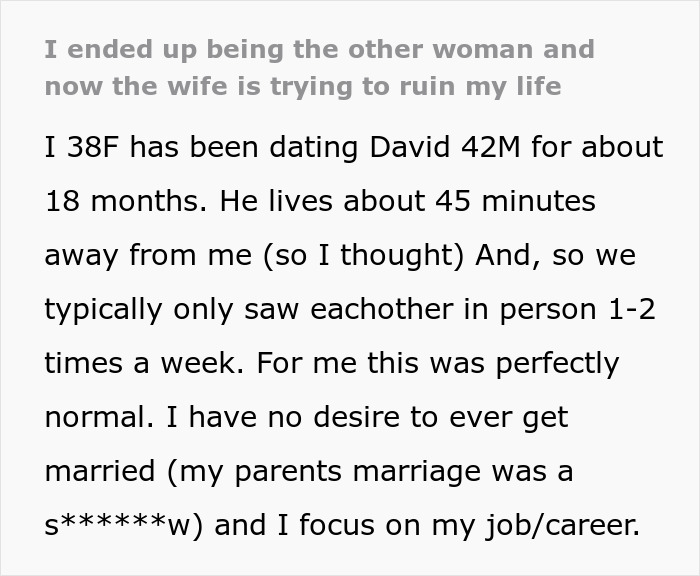
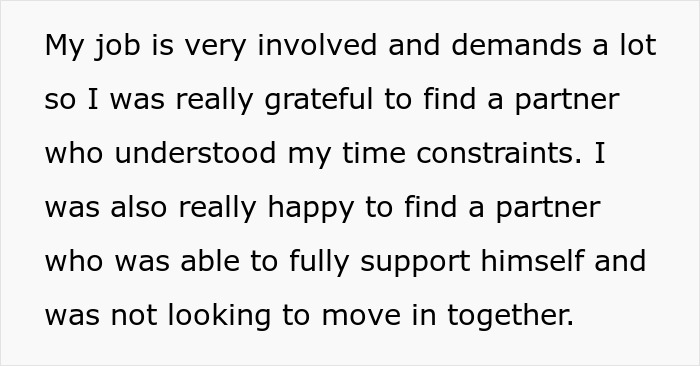

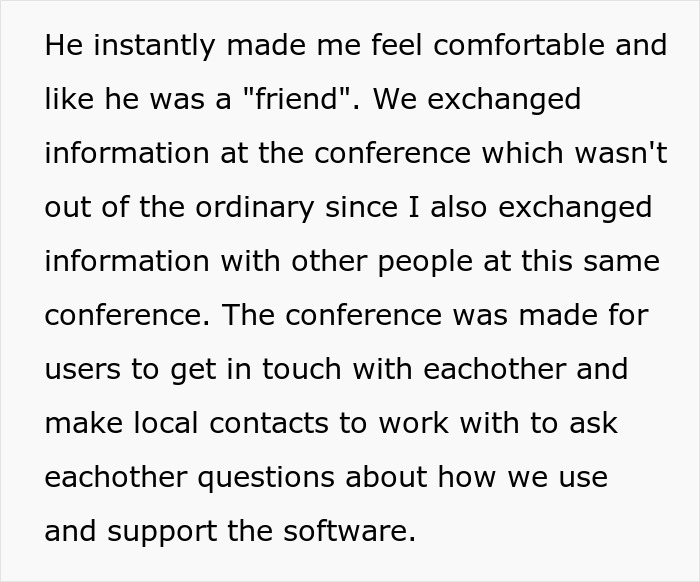
Image credits: freepik (not the actual image)
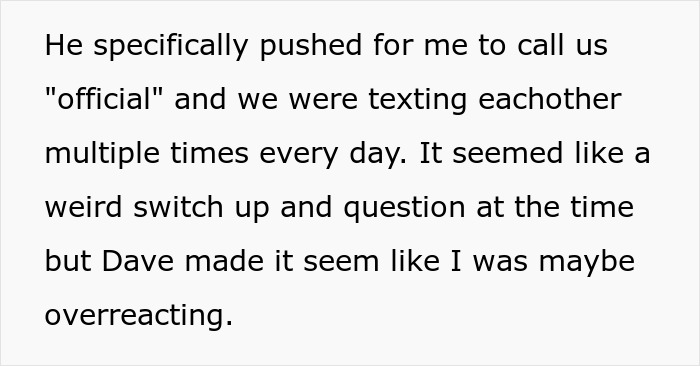
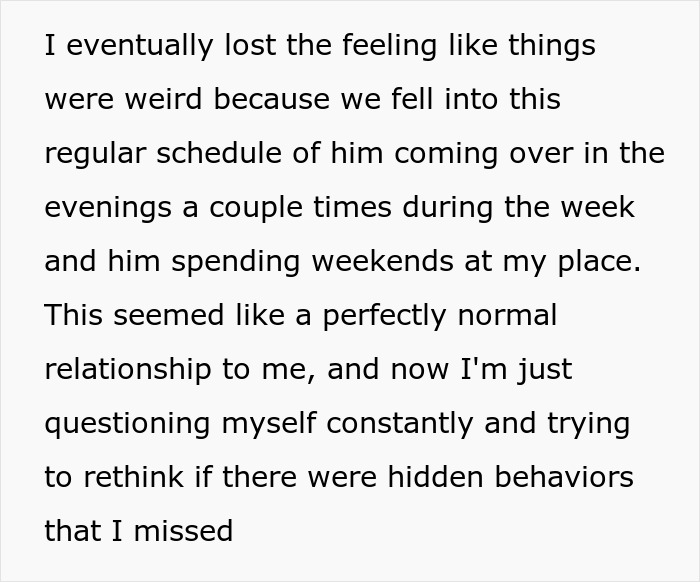
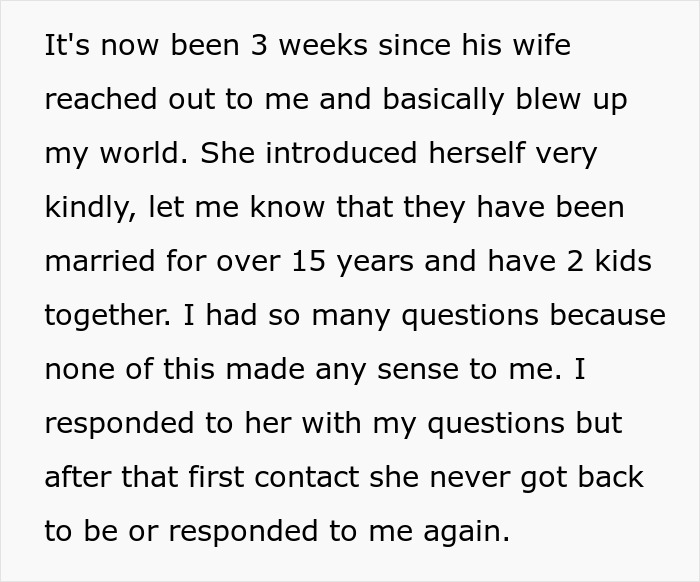

Image credits: wavebreakmedia_micro (not the actual image)
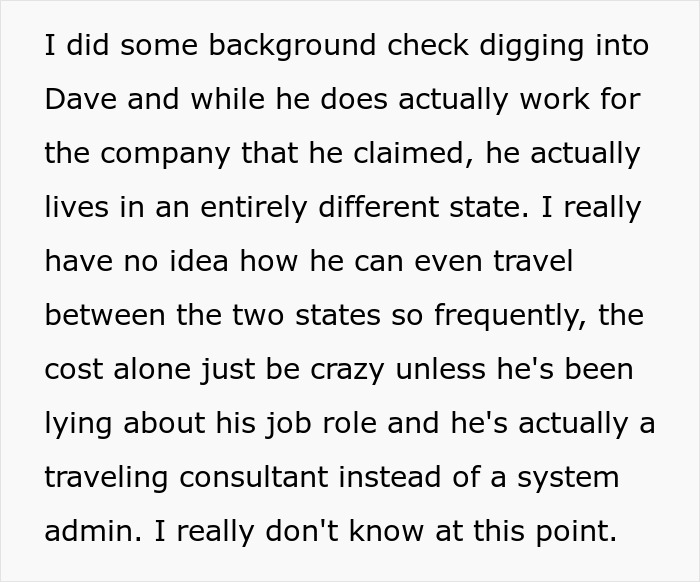
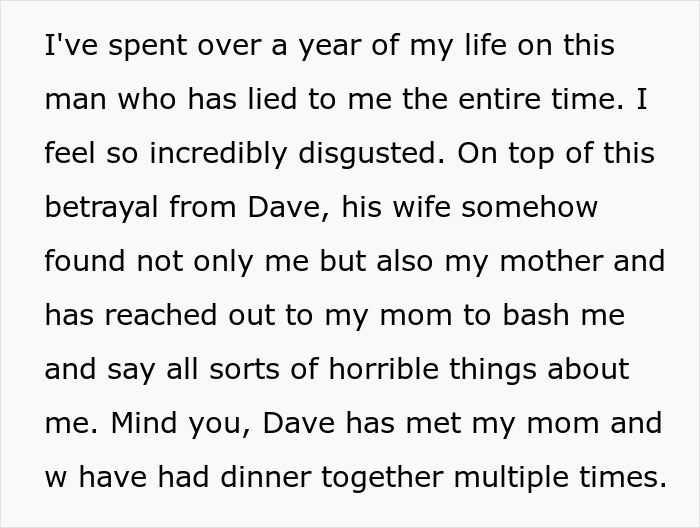
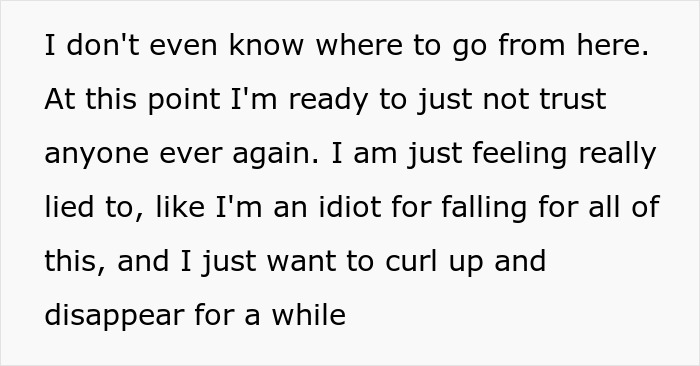
Image credits: Alpaca_Stampede
The motivations behind cheating are often complex and vary from person to person
While there can be several reasons for infidelity, experts say that one common cause is disconnection.
It’s when you feel that you and you partner have drifted. Sometimes, people can sabotage what they have consciously or unconsciously as a way of avoiding commitment and rejecting feelings of responsibility.
Experts believe that people also cheat when they have low self-esteem issues, or when they no longer feel cherished and accepted in their original relationship.
Cheating is not always borne out of a physical need either, and a person can be in a marriage they love and still cheat.
Some common reasons include struggles with intimacy, the feeling that the marriage or parenthood has diminished personal freedom or identity, acting out of anger or revenge, or being in unhealthy relationships.
Some people may be seeking excitement, variety, or attention they feel they’re not getting from their partner.
Infidelity is quite a common problem faced by couples across the world.
In a survey about which countries cheat the most, the US comes in first place, with 71% of people who were surveyed admitting to cheating. Germany at 68%, and the UK at 66% came in close behind.
One study found that nearly 88% of divorced couples said infidelity played a major role in the end of their relationship.
Whatever the reasons may be, being cheated on can leave lasting scars
There are several complex emotional and psychological effects of feeling betrayed. Some people may find it challenging to trust any subsequent future partners, while others will question their worth and attractiveness, making them less confident.
A study found that almost 45% of adults who experienced a partner’s infidelity showed symptoms similar to those of post-traumatic stress disorder (PTSD).
People reported having symptoms such as flashbacks, hypervigilance, avoidance, panic, and intrusive thoughts.
And the worst part about cheating is that it hits everyone involved.
Kids in a family where a parent cheats often feel it too, even if they don’t fully understand what’s going on.
For the “other partner,” the emotional toll can be huge.
A study found that people in this role often go through anxiety, attachment stress, and even trauma-like reactions because everything they believed about the relationship was a lie. And most of the time, they have no one to turn to for support.
Sure, some people might claim they’re happy being the other person, but that doesn’t make it any less messy. The first thing to go? Trust. The second? Often your sense of self.
Being the other woman (or man) can make people blame themselves or spiral into self-destructive thoughts.
“From the outside looking in, society predominantly places the blame on the other woman for her involvement in the affair. Her reputation may be tarnished after DDay, where she is seen as a homewrecker, the scarlet woman who lured him away from his happy marriage and pursued him until he could no longer resist her advances,” writes counselor Tricia Ibe.
She says the emotional rollercoaster of being the other person can be exhausting. “The weight of the situation and the guilt can pull them into a very dark place.”
Unlike a typical relationship where friends and family can provide support, the very nature of this type of relationship limits the support from a social network.
That’s where talking to a professional can actually make a difference.
A counselor can help sort through the confusion and figure out what’s really wanted long term. They can also help set clear boundaries and rebuild a sense of control.
The woman gave some more info in response to the comments
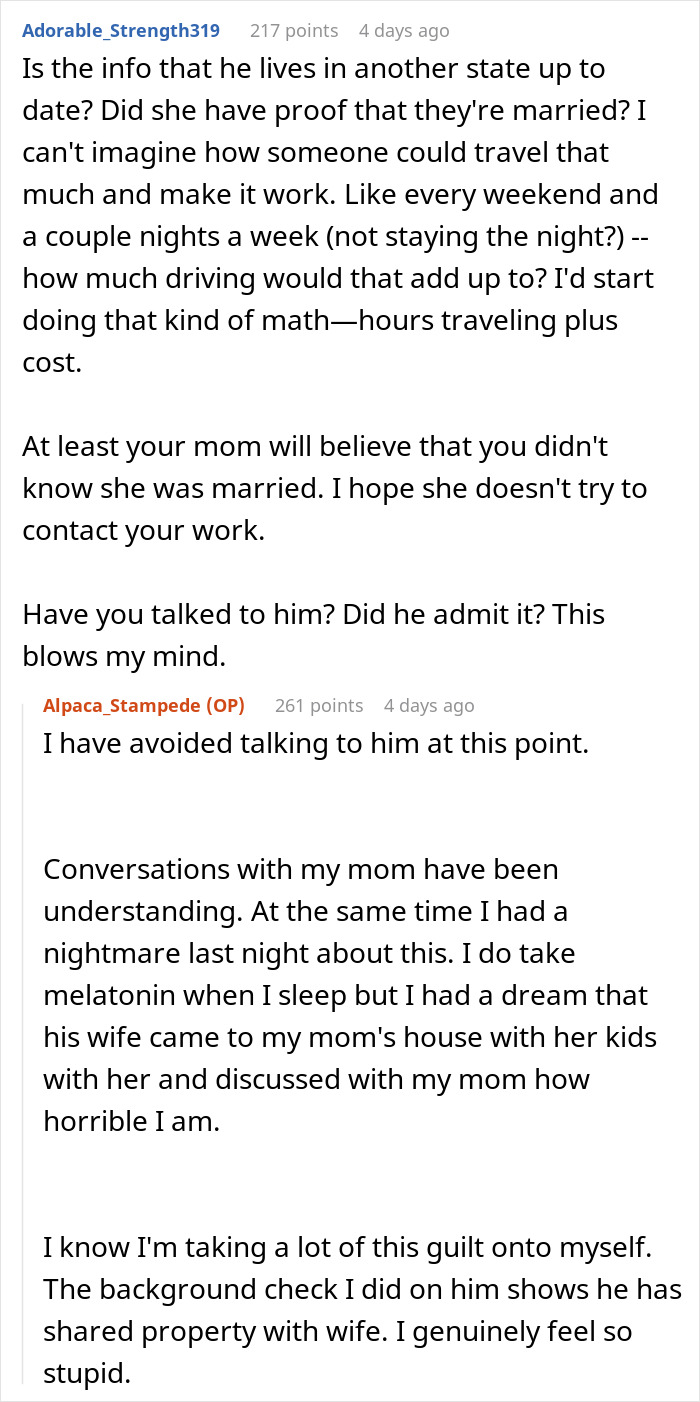
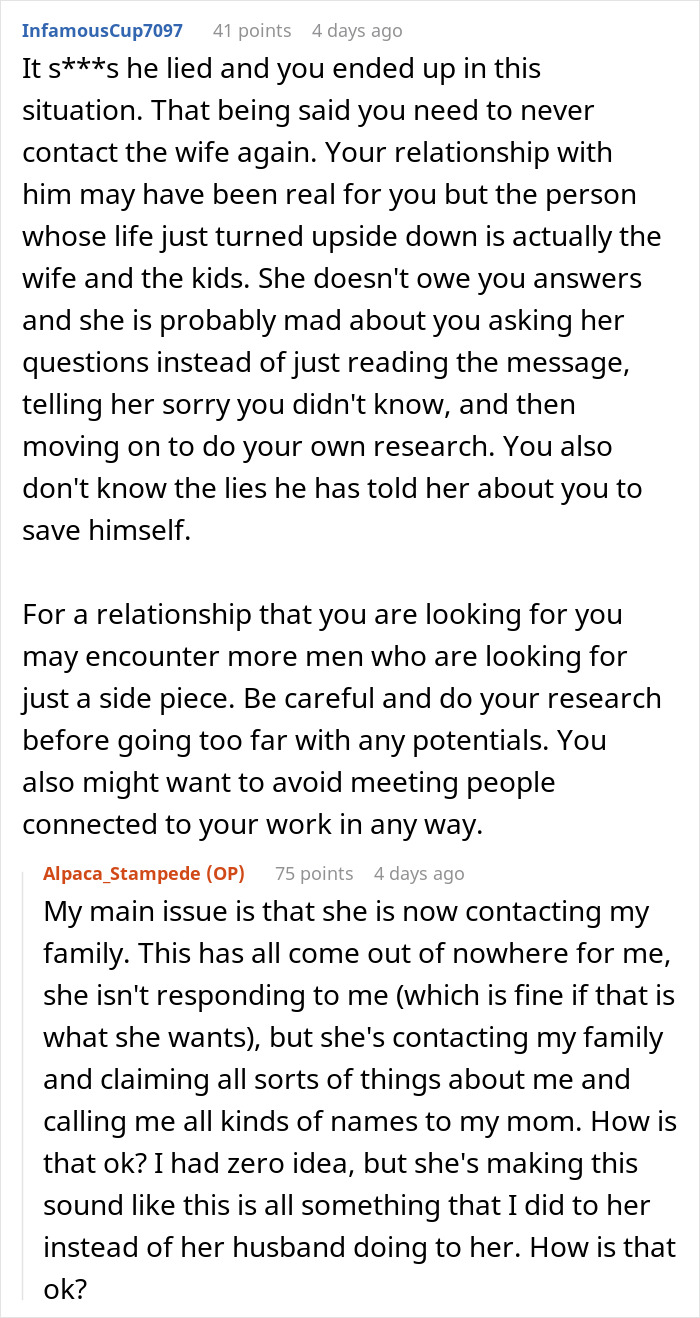
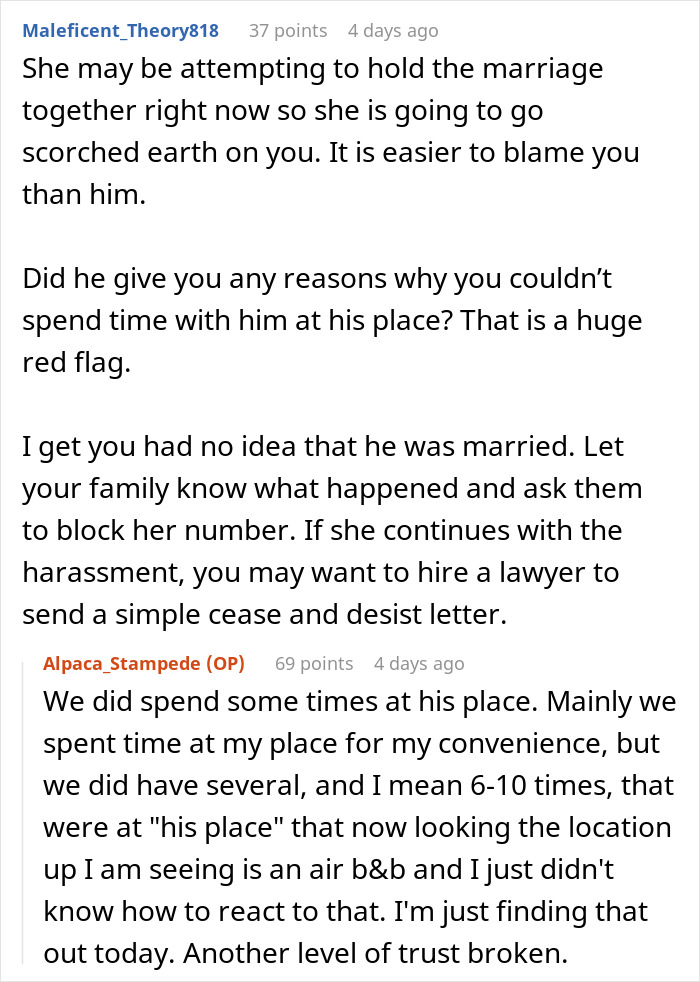
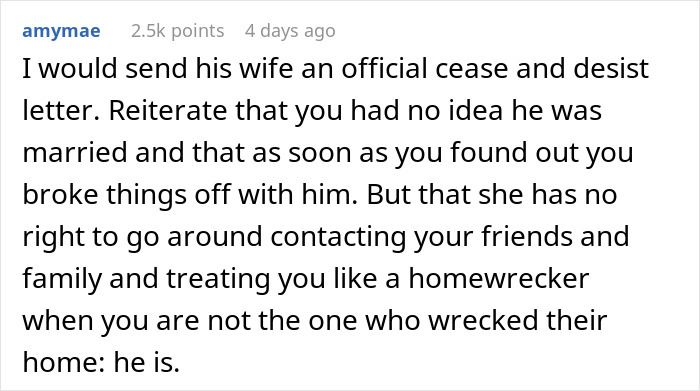
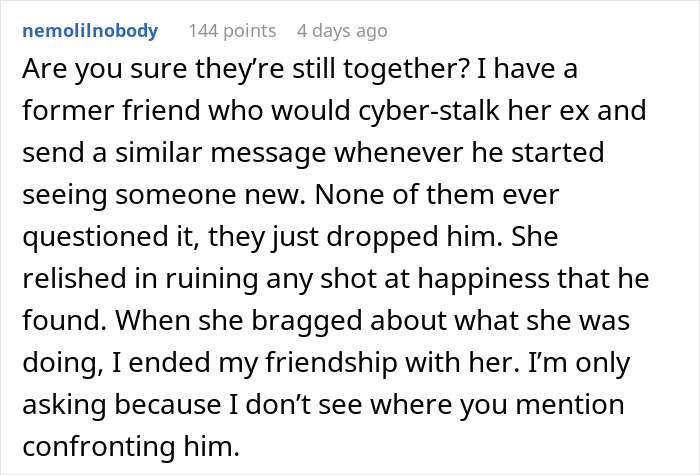
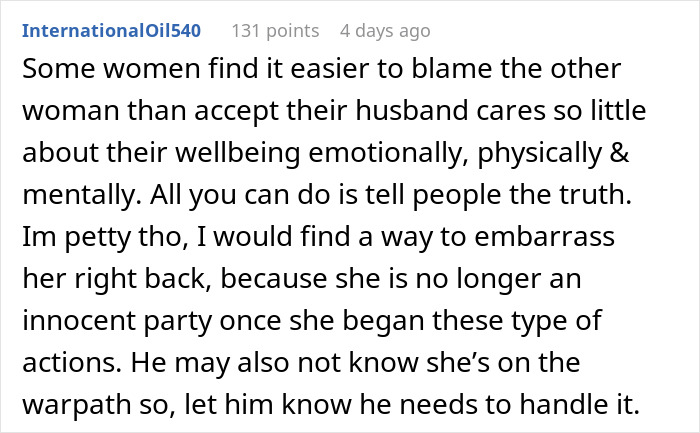
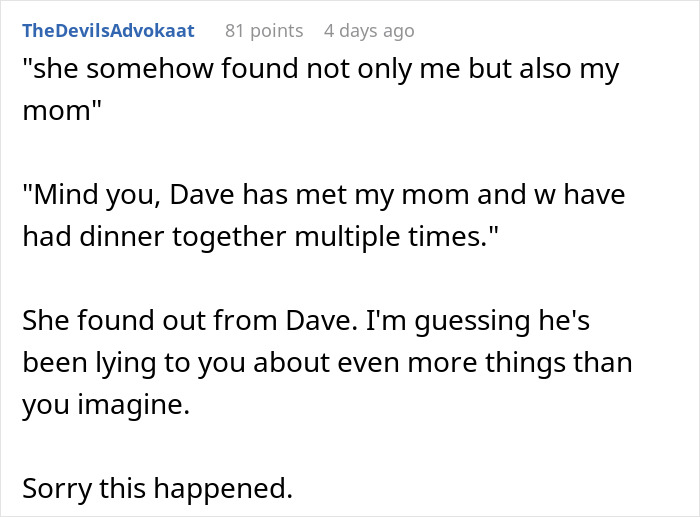
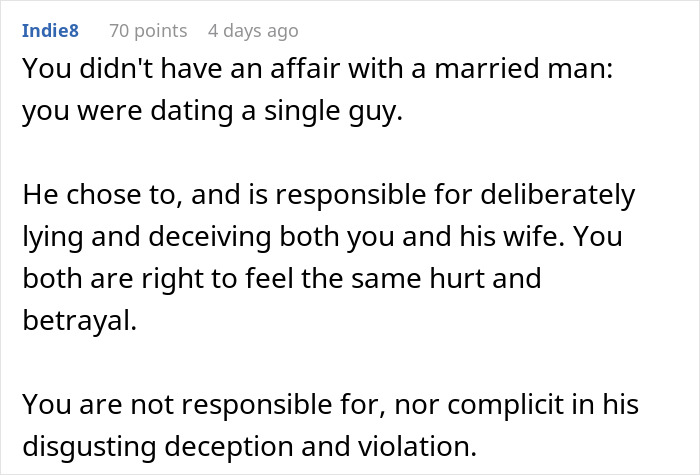
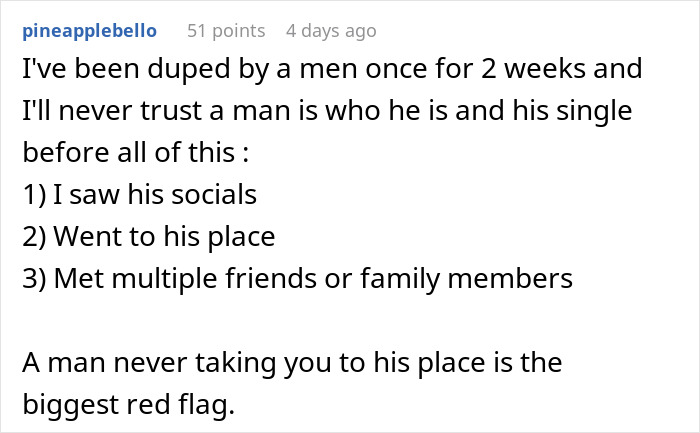
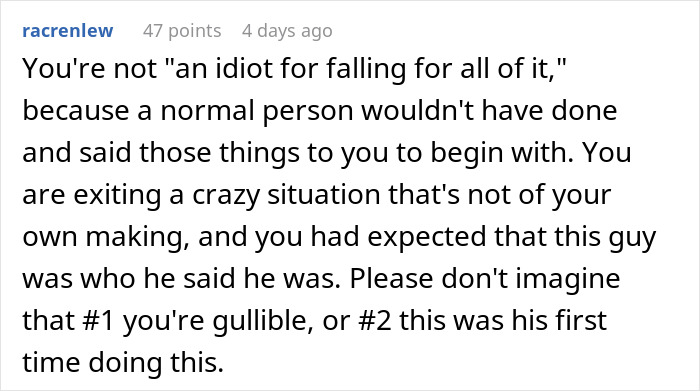
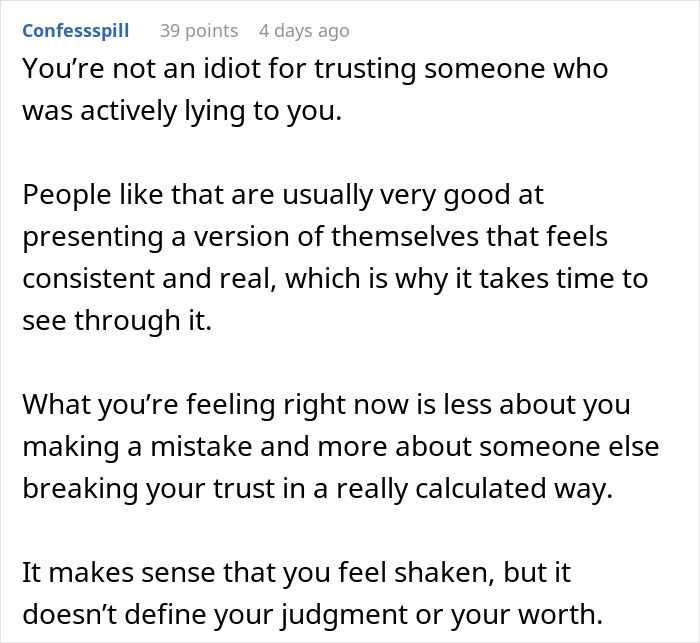
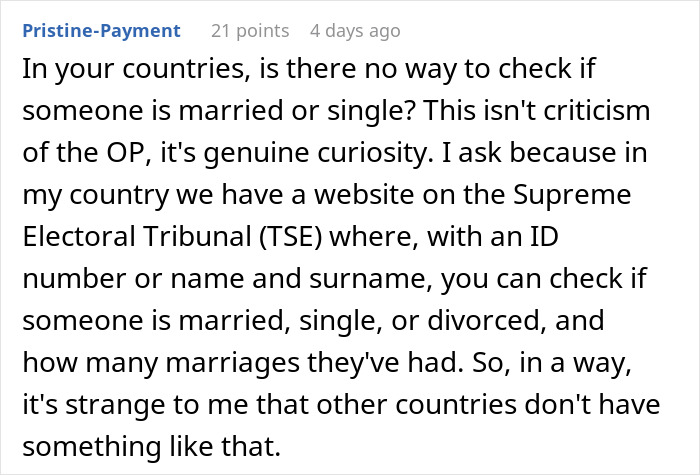
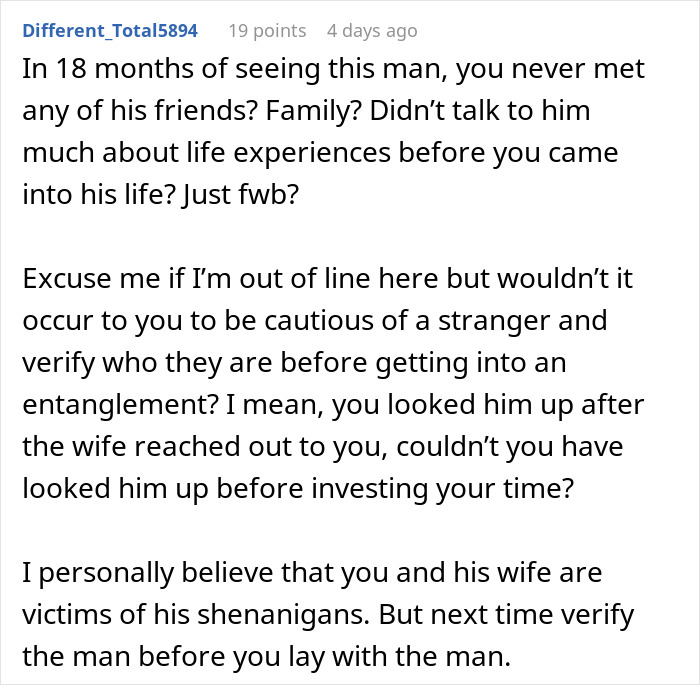
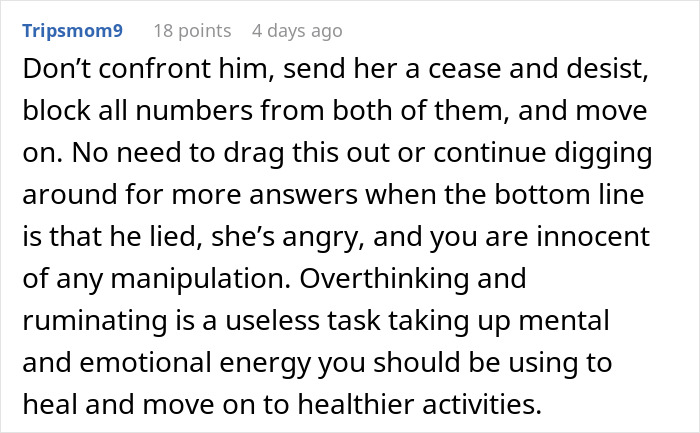
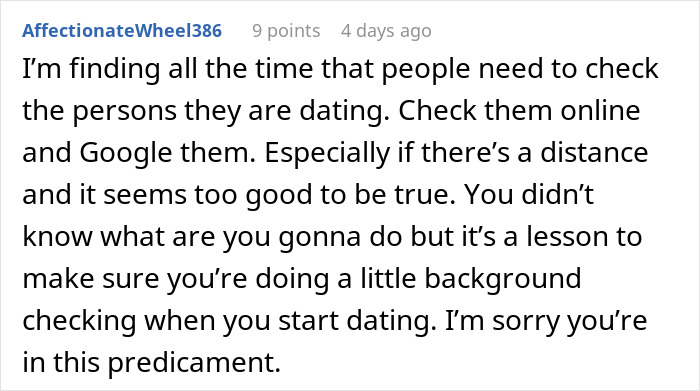
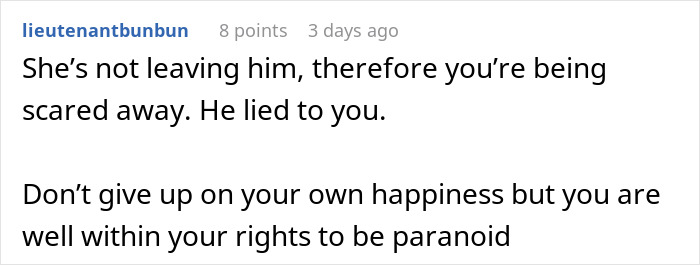
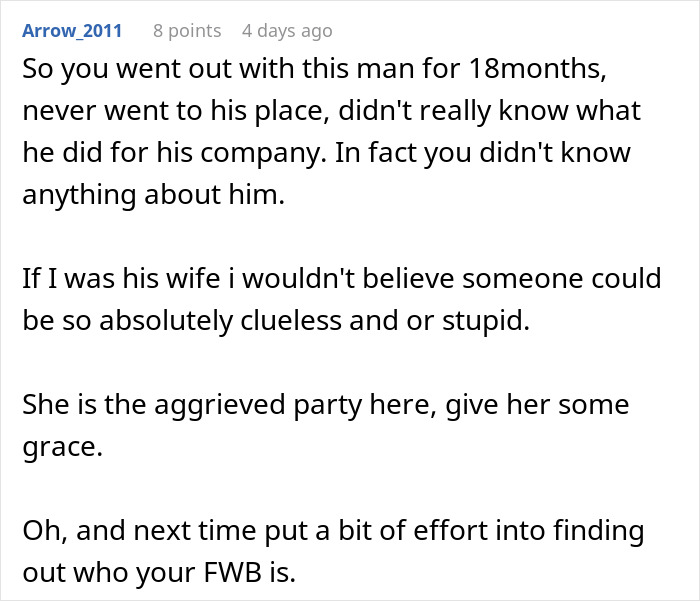
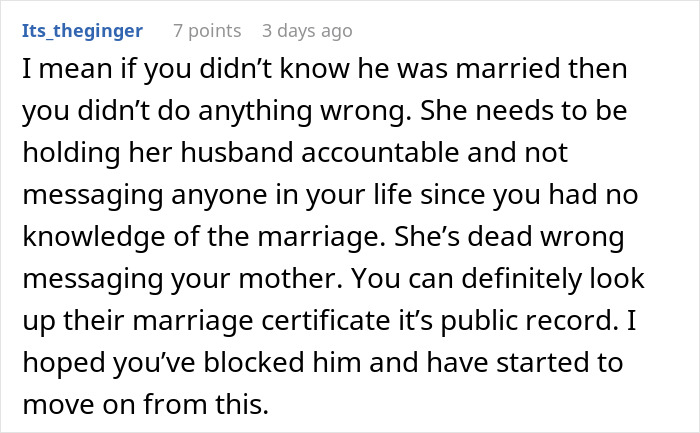
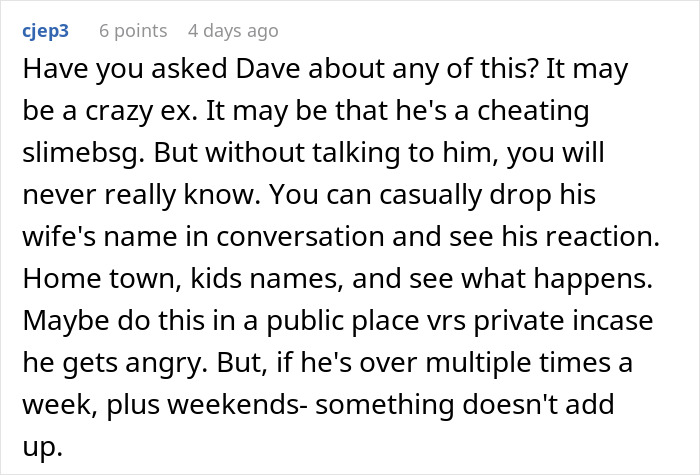
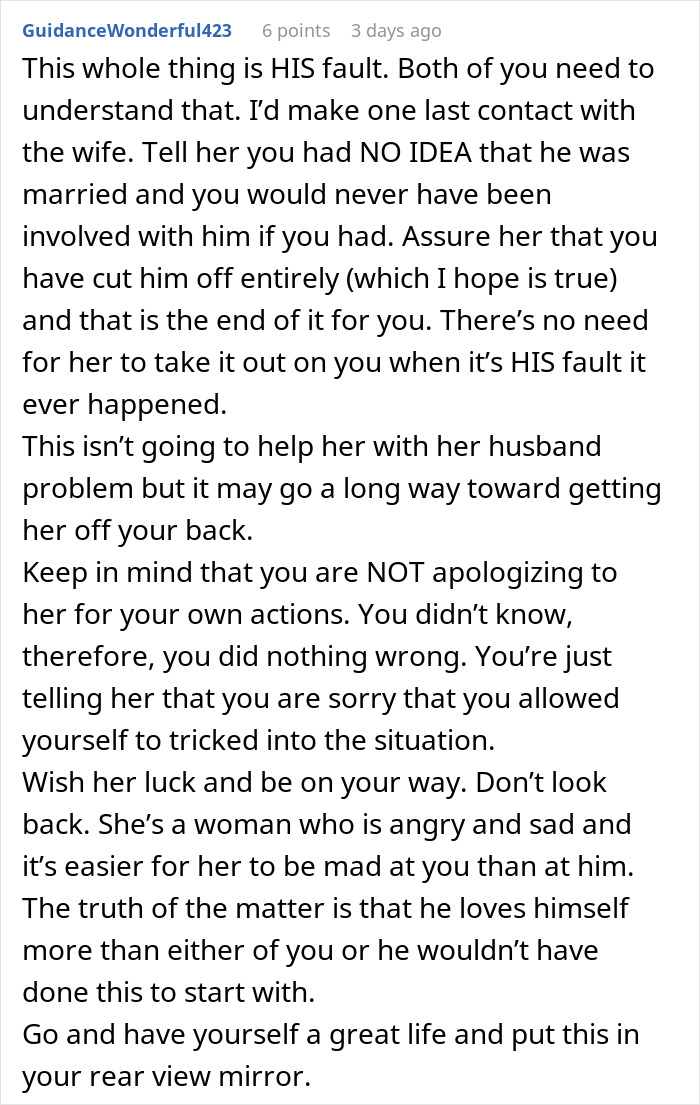
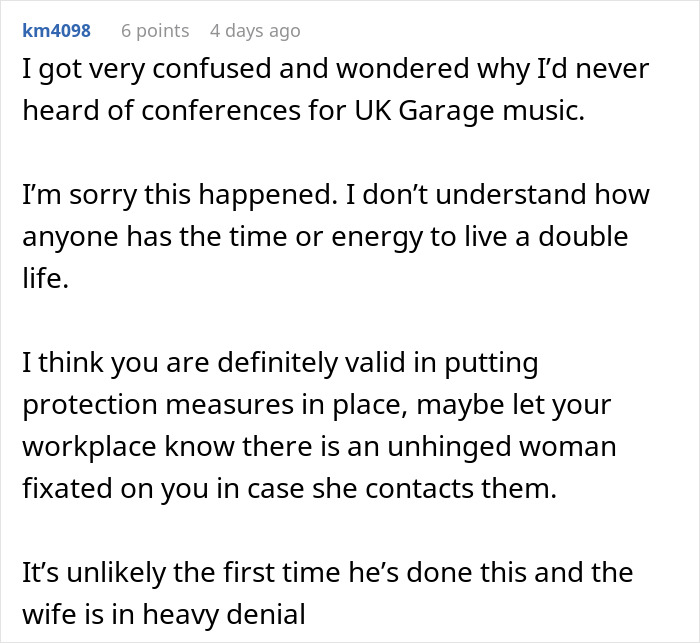
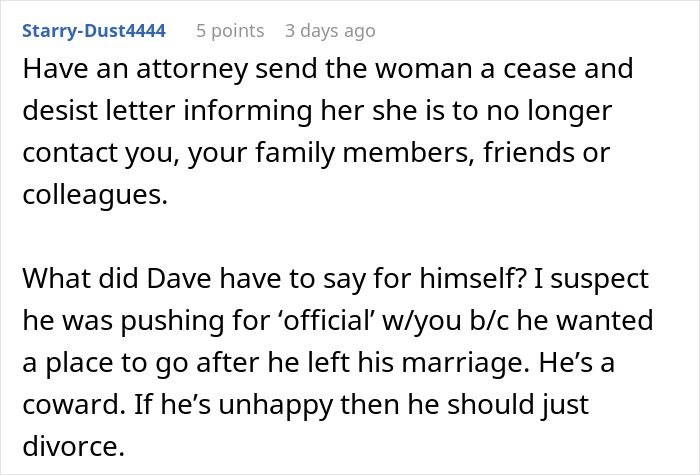
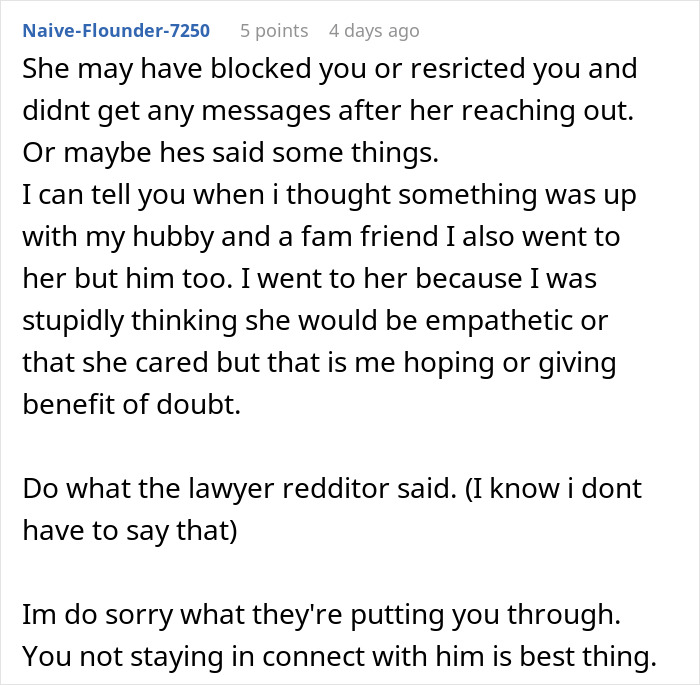
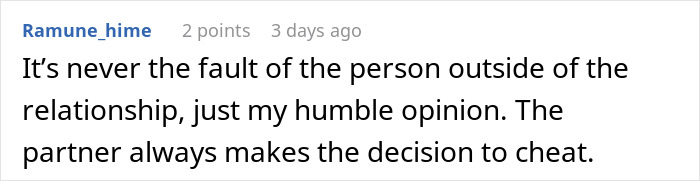
Many people showed support and offered their advice









 Follow Us