The range of ear piercings goes far beyond what most people expect. Some sit in soft tissue and heal quickly, others pass through thick cartilage and demand patience, and each comes with its own look, feel, and level of commitment.
Jewelry choices vary just as much, from understated studs to pieces meant to stand out.
If you’re new to piercings, this guide helps set realistic expectations. If you already have a few, it puts names, placement, and healing timelines to styles you may have seen but never labeled.
#1 Standard Lobe Piercing
The standard lobe piercing sits in the soft, fleshy lower part of the ear and is the most common starting point for ear piercings. Archaeological evidence shows lobe piercings have existed for thousands of years, largely because the area is easy to pierce and heals faster than cartilage-based placements.
Because no cartilage is involved, pain is minimal and typically limited to a quick pinch. Healing usually takes about 6 to 8 weeks when the piercing is cleaned with saline, and the jewelry is left in place for the full recovery period.
Lobe piercings stand out for their practicality. The lobe can support more weight than cartilage, which makes it suitable for studs, hoops, huggies, and drop earrings once healing is complete. This placement often serves as the foundation for additional ear piercings, as it balances heavier jewelry without stressing the ear.
Although lobe piercings are low-risk, irritation usually comes from poor-quality metals or excessively heavy earrings. Sticking to well-made jewelry and limiting movement during healing helps prevent soreness, stretching, and uneven holes.
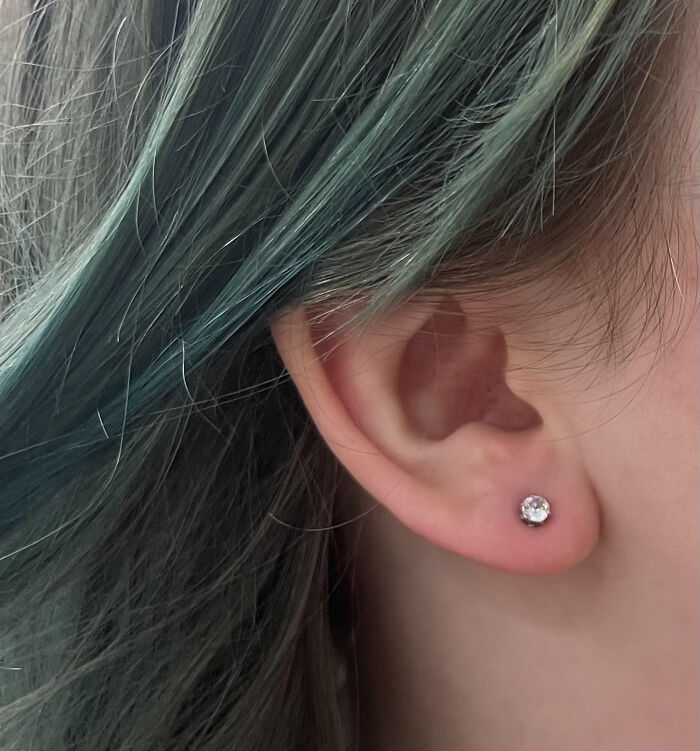
Image source: River_003 / reddit

#2 Helix Piercing
The helix piercing runs through the upper outer rim of the ear, following the curved edge of cartilage above the lobe. Because this area is firm cartilage rather than soft tissue, healing is slower and more demanding than a standard lobe piercing.
Most helix piercings stabilize within three to six months, while full recovery can take closer to a year, depending on irritation and aftercare.
Consistent aftercare determines how smoothly a helix piercing heals. Cleaning twice daily with saline, avoiding pressure during sleep, and keeping hair, clothing, and headphones away from the area helps prevent swelling and snagging. Jewelry should remain in place until healing is complete to avoid reopening the channel.
Thanks to the current helix tattoo trend, helix cartilage piercings have regained visibility. Small hoops, minimalist studs, and threaded pieces are commonly used, especially when multiple helix piercings are stacked along the rim.
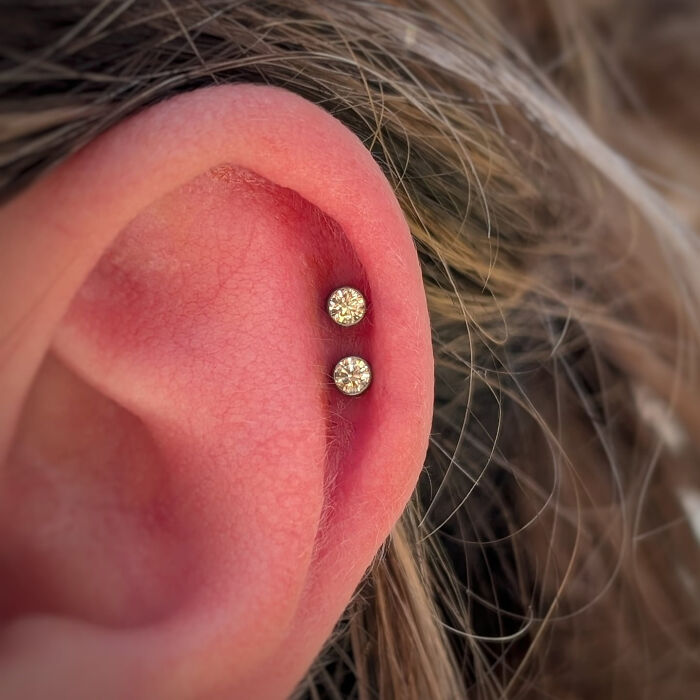
Image source: bryanjpiercing / Instagram
#3 Inner Conch Piercing
The inner conch piercing sits in the deep bowl of cartilage at the center of the ear, close to the ear canal. This area is thick and slow-healing due to limited blood flow, which prolongs recovery compared to most outer-ear placements.
Healing typically falls between three and nine months, with some conch piercings taking closer to a year to fully settle.
Early healing often comes with swelling, redness, and occasional bleeding, especially in the first few weeks. Sticking to a strict saline-cleaning routine helps control irritation and keeps soreness from escalating. Jewelry should stay in place until the piercing has fully healed, since early removal can cause the channel to close or become inflamed.
Styling options are more limited because of the conch’s position, but that central placement is also its strength.
A single, well-sized stud or flat disc draws attention naturally and anchors surrounding piercings without overcrowding the ear. Healing is slow, but careful aftercare pays off by keeping the piercing clean, stable, and visually balanced.
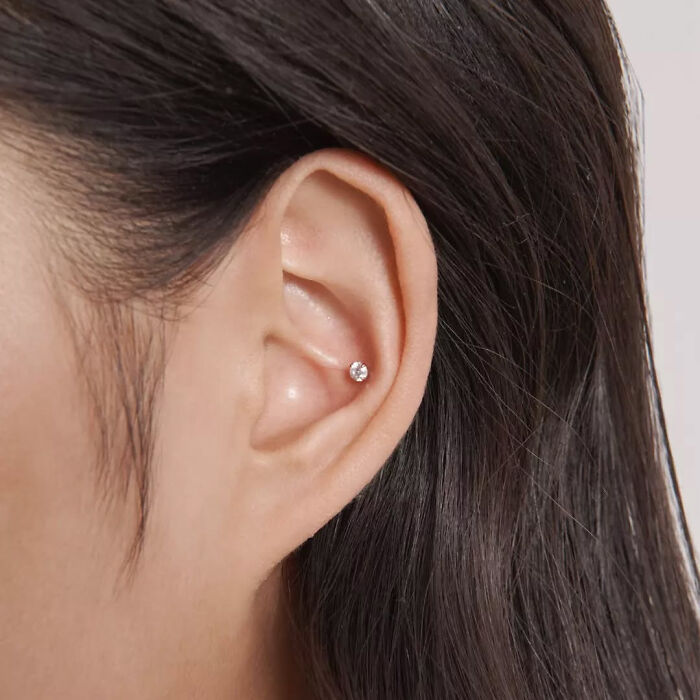
Image source: hairhouseaustralia / Instagram
#4 Transverse Lobe Piercing
A transverse lobe piercing runs horizontally through the thickest part of the earlobe instead of entering from front to back. The exit points sit on opposite sides of the lobe, while the jewelry itself spans straight through, giving the piercing a distinctly engineered, nontraditional look.
Although it passes through soft tissue, the longer channel makes this piercing more intense than a standard lobe. Pain is moderate, and healing typically lasts six months or longer.
Consistent saline cleaning and minimal handling are essential, as excessive movement can irritate the entire length of the piercing.
Because of its horizontal placement, jewelry options are more specific. Straight barbells are the standard choice, though low-profile end balls, micro bars, or small gemstones are often used to highlight the shape without overwhelming the ear.
This piercing stays outside the mainstream and appeals to people who deliberately seek unconventional placements.
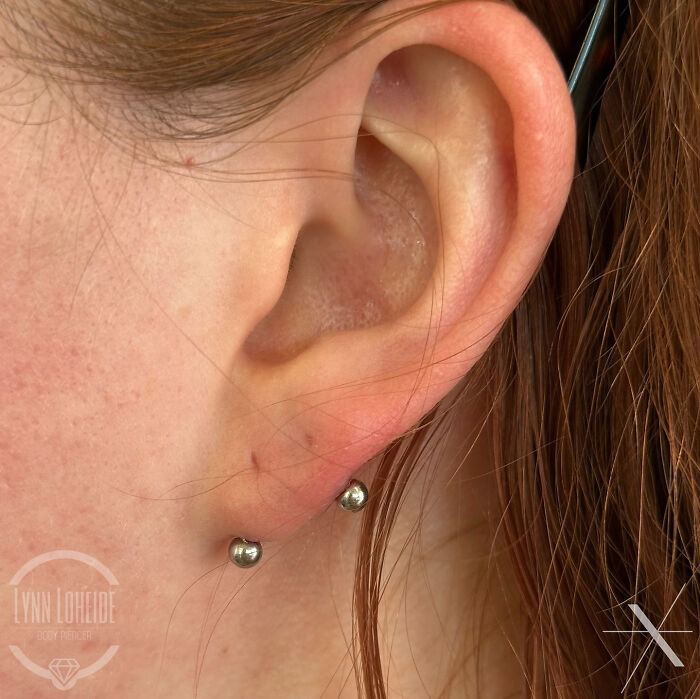
Image source: lynnloheide / Instagram
#5 Tragus Piercing
A tragus piercing passes through the small flap of cartilage that partially covers the ear canal. This is one of the densest cartilage points on the ear, which is why the piercing itself is intense, and the healing process is long.
Full healing typically takes 9 to 12 months, even with careful aftercare.
Because of its location, the tragus is easily irritated by pressure and movement. Saline cleaning should be done consistently, and hair, earbuds, and headphones need to be kept away from the jewelry.
Any pulling or twisting can slow healing and cause swelling deep in the cartilage.
Styling stays intentionally minimal with this placement. Flat-back studs and tight hoops sit closest to the ear and reduce the chance of snagging, which is especially important given how often the area comes into contact with hair and audio devices. The appeal of a tragus piercing is subtle.
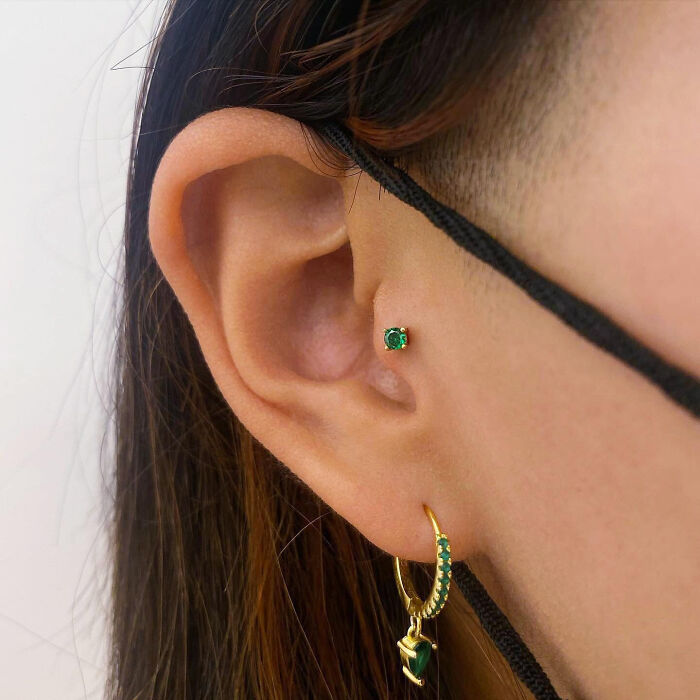
Image source: studs / Instagram
#6 Rook Piercing
A rook piercing passes through the folded ridge of cartilage known as the anti-helix, positioned above the conch and below the standard helix.
The cartilage here is thick and tightly curved, which makes the piercing itself intense and places it firmly in the higher end of the pain scale for ear piercings.
Healing is slow and demanding. Six to twelve months is typical, though irritation or pressure can push recovery well beyond that window.
The fold traps moisture easily, so cleaning twice daily with saline and avoiding sleep pressure are non-negotiable if you want the piercing to settle cleanly.
Despite the long healing period, the rook offers strong visual payoff. Its tucked placement supports curved barbells, small hoops, and compact studs, keeping them securely in place without overpowering the ear.
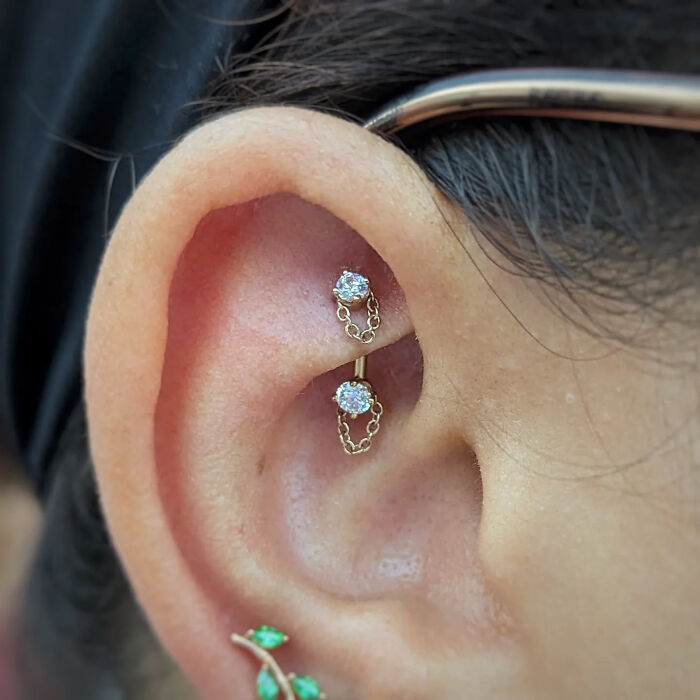
Image source: bryanjpiercing / Instagram
#7 Stacked Lobe Piercing
A stacked lobe piercing uses the vertical height of the earlobe instead of spreading piercings side to side. Multiple holes are placed above one another through the soft tissue, creating a deliberate column of jewelry rather than a single focal point.
Each hole is usually pierced separately to allow for accurate spacing and alignment.
Because stacked lobes sit entirely in soft tissue, pain stays low, and healing is straightforward. Most heal within six to eight weeks, provided the piercings are cleaned with saline, and the jewelry is left undisturbed.
The absence of cartilage makes this setup easier to manage than multi-point cartilage arrangements.
The appeal of stacked lobes is control. Placement determines whether the look reads clean and minimal or dense and decorative.
Studs, small hoops, and lightweight drops are commonly mixed, with balance doing more of the work than size or flash.
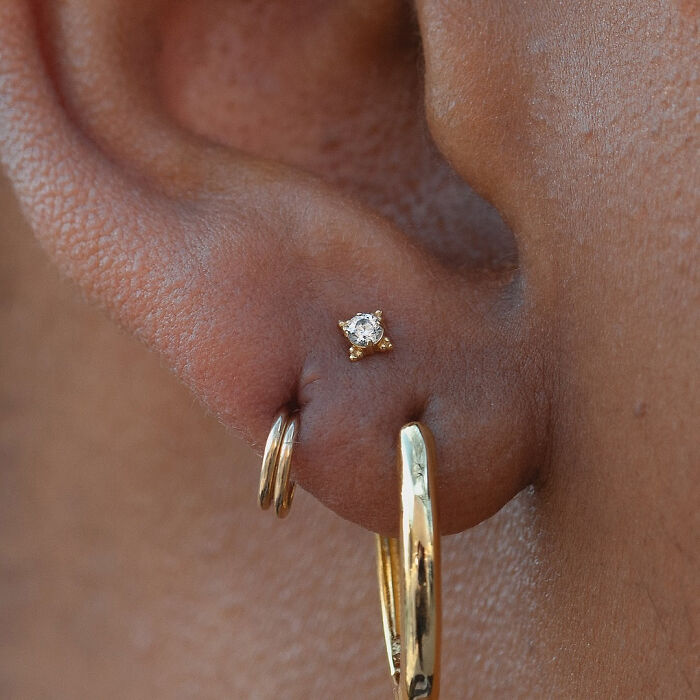
Image source: niasotto and rosefinchbodypiercing / Instagram
#8 Daith Piercing
A daith piercing passes through the innermost fold of cartilage near the ear canal, following a tight natural curve that allows the jewelry to sit tucked inside the ear.
This placement is entirely anatomy-dependent, since the fold must be pronounced enough to safely support the piercing.
The cartilage in this area is dense and rigid, which makes the piercing process intense and the healing period long. Initial swelling often subsides within a few weeks, but full healing commonly takes close to a year.
Anything placed inside the ear canal, including earbuds and cotton swabs, can introduce bacteria or pressure and should be avoided during recovery.
Hoops are the most practical choice for this placement because they follow the cartilage’s curve without forcing movement. Clickers and bead rings are also used, as long as the diameter is appropriate.
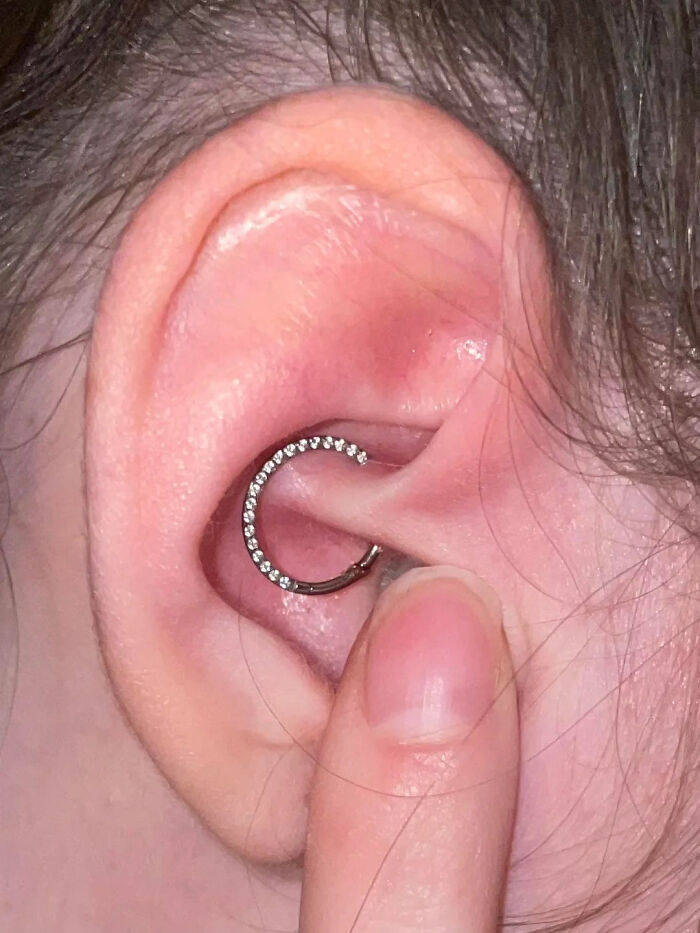
Image source: glitterbandit420 / reddit
#9 Outer Conch Piercing
The outer conch piercing is placed through the flat cartilage at the center of the ear, inside the natural bowl between the rim and the ear canal. This area provides a wide, open surface, which is why conch piercings sit so cleanly and visually anchor the ear.
The tradeoff is cartilage density, which makes the initial piercing noticeably intense.
Pressure is the main challenge during healing. The outer conch is easily irritated by sleeping positions, headphones, and accidental bumps, so daily saline cleaning and minimal jewelry movement are essential. The jewelry should remain in place throughout the healing process, which typically takes 6 to 12 months.
What makes the outer conch appealing is its adaptability. Flat-back studs, discs, and statement gemstones all sit securely in this location and remain visually balanced even at larger sizes.
Precise placement is critical, as even minor alignment issues can prolong healing or lead to persistent soreness.
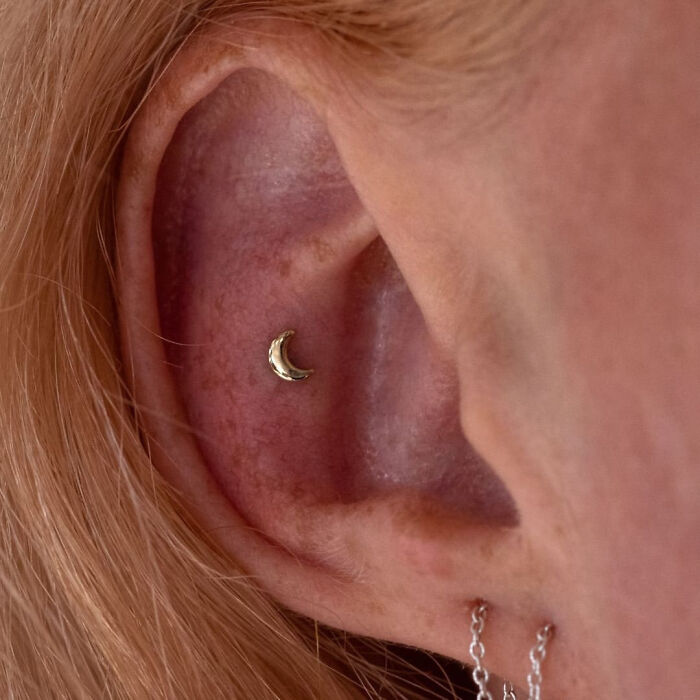
Image source: alchemyadornment / Instagram
#10 Industrial Piercing
An industrial piercing connects two separate cartilage piercings with a single straight bar, usually running diagonally from the upper helix to the forward helix. Because the jewelry spans a large section of the ear, it becomes an immediate focal point rather than a subtle accent.
This piercing is highly anatomically dependent. The angles, cartilage thickness, and spacing between the two entry points all need to align, which is why not every ear can support an industrial safety.
The procedure is demanding, as two cartilage piercings are done in a single session, and healing often takes close to a full year.
Snagging is the most common complication. Hair, headphones, hats, and even pillows can apply uneven pressure to the bar, which affects both holes at once. Both piercings must heal together, so careful placement and disciplined aftercare are critical.
When done correctly, the industrial supports everything from classic steel bars to slimmer, more delicate designs without losing its structural impact.
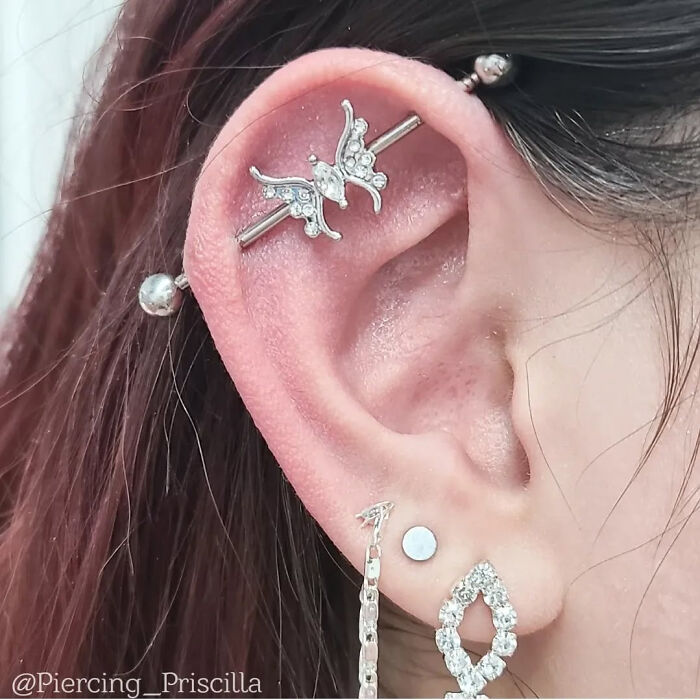
Image source: piercing_priscilla / Instagram
#11 Orbital Piercing
An orbital piercing connects two separate holes with a single ring, creating a continuous loop rather than a straight line.
While orbitals can be placed in different areas, they are most commonly seen along the outer ear near the helix, where the circular shape reads clearly and stays balanced.
When done through cartilage, orbitals are moderately to highly painful and demand patience during healing. Both holes must heal at the same pace while sharing a single piece of jewelry, which slows recovery due to reduced blood flow to the cartilage.
Healing commonly takes up to 12 months, and saline cleaning twice daily is needed to keep irritation under control.
Because the design relies on a continuous curve, jewelry options are limited to hoops and bead rings. Barbells are not suitable because the entry points are too close together.
Orbital piercings remain uncommon largely because of their long healing time and snag risk, but they appeal to people who want a connected look without the rigidity of an industrial piercing.
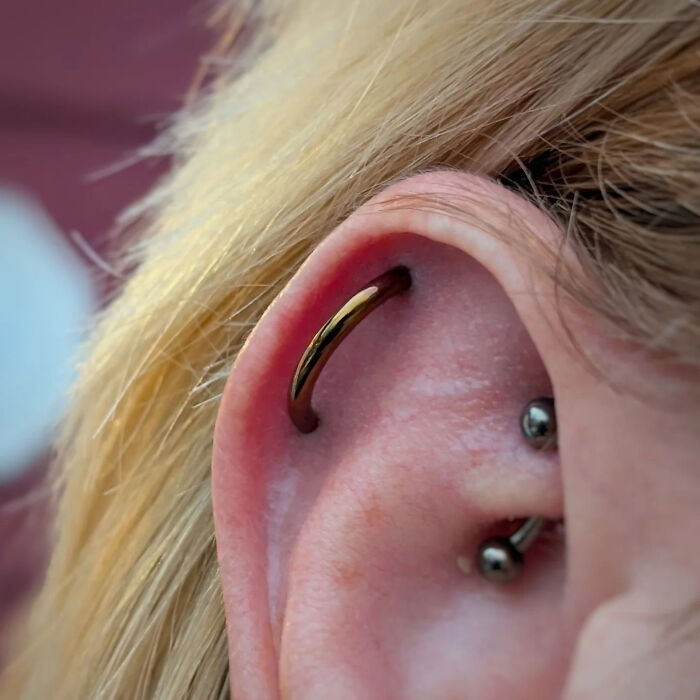
Image source: bryanjpiercing / Instagram
#12 Snug Piercing
A snug piercing runs horizontally through the inner ridge of cartilage along the anti-helix, positioned midway down the ear. Unlike a helix piercing, this placement angles inward toward the ear canal, passing through a tight, highly compressed cartilage fold.
That density makes the snug one of the more physically demanding ear piercings. Pain is significant during the procedure, and healing is slow because the cartilage absorbs impact from both sides.
Recovery commonly takes six to twelve months, with strict twice-daily saline cleaning and zero pressure on the jewelry being essential.
Once healed, snug piercings are typically worn with short curved barbells that sit flush to the ear. Hoops are less common due to pressure and fit limitations.
The snug appeals to people who want a strong inner ear statement without the scale of an industrial, but it requires patience and disciplined aftercare to avoid irritation bumps.
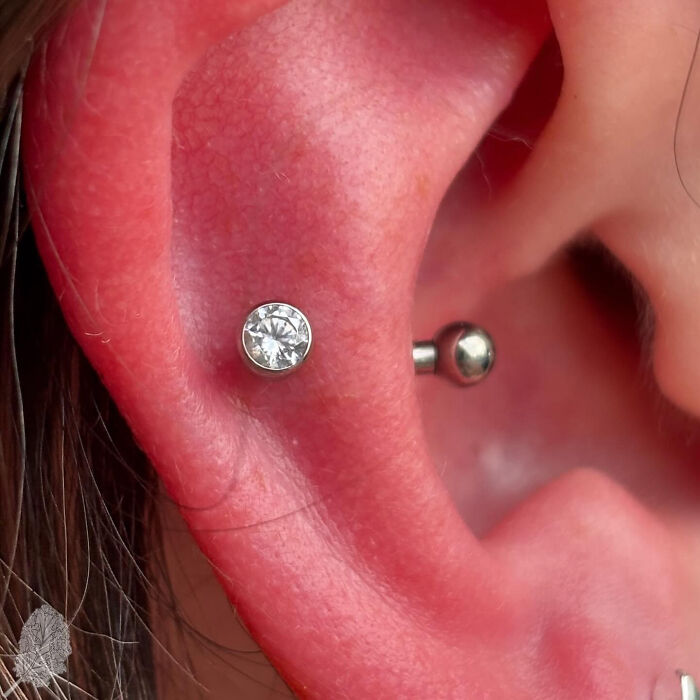
Image source: anatometalinc / Instagram
#13 Forward Helix Piercing
A forward helix piercing sits on the narrow cartilage ridge at the front of the ear, close to the temple and opposite the standard helix.
The area is slim but structured, which is why multiple forward helix piercings are often placed in a tight row rather than spread out.
The piercing involves cartilage, so discomfort is moderate, but healing is usually more predictable than with deeper inner-ear placements. Recovery typically lasts between 3 and 9 months. Glasses, sunglasses, and hair are the main sources of irritation during this period, since repeated contact can inflame the cartilage and slow healing.
Jewelry for the forward helix needs to stay compact. Small studs and flat-back labrets sit flush against the ear and reduce snagging, especially when multiple piercings are placed together.
Tiny hoops are possible once healing is well underway, but precise placement matters, since even slight misalignment becomes noticeable in such a narrow area.
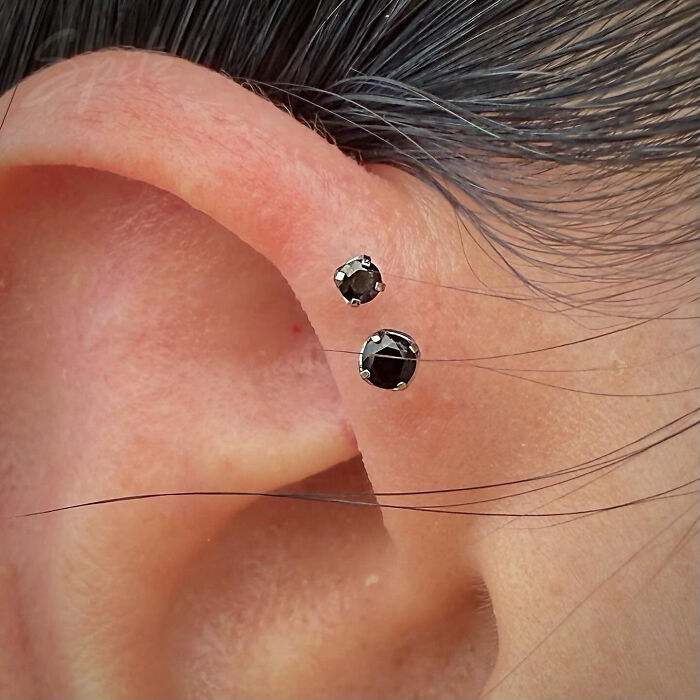
Image source: spitzmantra and mantratattoo / Instagram
FAQ
What is the 3-2 Rule For Piercings?
The 3-2 rule is a popular placement guideline for creating a balanced stack of earrings in one ear. It suggests having three smaller pieces of jewelry in one area, such as the lobe, with two bigger or bolder piercings on the upper part of the ear, such as the helix or conch.
What is the Most Feminine Ear Piercing?
“Femininity” is subjective, but people often associate more delicate piercings with that beauty style. The lobe piercing is often called the most feminine because it’s classic and pretty, but the helix and tragus are also considered elegant, especially when paired with dainty earrings.
 Follow Us